i
Art, Cognition, Education DDH ()


Art, Cognition, Education

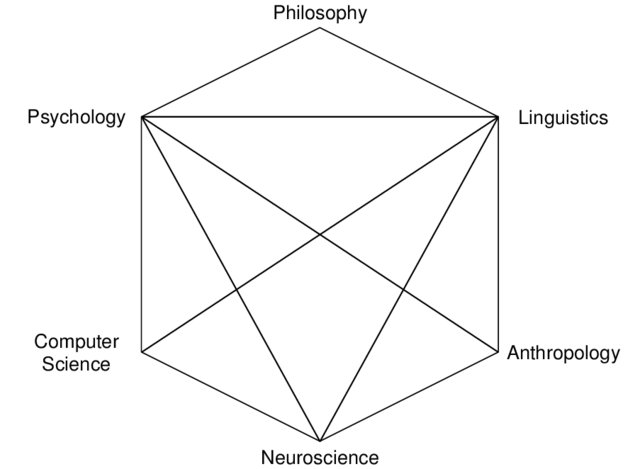
Hexagram%20of%20Cognitive%20Sciences

Hexagram of Cognitive Sciences

The objective of "Art, Cognition, Education" seminar series  is to introduce art students to six canonic (linguistics, psychology, neuroscience, computer science / artificial intelligence, anthropology, philosophy ) - and one applied (pedagogy) cognitive sciences.

Formalities

who am I

who are You

is this a course for You ?

credits (2 ECTS for >75% attendance, +1 for referat/experiment)

Hausarbeit possible

need help ? (tutor: a.terzieva@udk-berlin.de)

Leistungsnachweis

signature-related issues

Smartphone & Feedback box

Introduction to linguistics: From पाणिनि to Čepeto

The seminar will start with a question "What is language and how can You define it ?". Subsequently, we will see how men and women of past and present answered that question - from grammarians of ancient India all the way to most modern theories of phonetics, phonology, morphosyntax, semantics and pragmatics. Special focus will be put on theories of language acquisition, that is, on discussion the process by means of which maternal language is acquired by human children. All this to be able to end the seminar with an answer to the question: "Could artificial intelligences like GPT-X be ever able to understand the meaning of the word meaning ?"

0. Initiation

Session structure

Each session will start with at least 30-min repetition / reactivation of already acquired knowledge. At each session there will be at least:

1 main question

1 sub-discipline

1 language of Your choice

1 linguist

1 read & record exercise

1 interactive / code-cracking exercise

1 Stable Diffusion and 1 Čepeto interaction

1 song, poem or sutra

Sub-disciplines


Precursors

Links

Open Educational Resource (OER): knowledge unit "Art, Cognition, Education" of https://baumhaus.digital repository
 
Matrix room: #edu-linguistics:m3x.baumhaus.digital <- log in for the first code cracking exercise
 

1. Sound

2. Sign

3. From morphemes to sentences

4. Language Acquisition

5. As a large language model ...

Precursors


पाणि

Pāṇini (Devanagari: पाणिनि, pronounced [paːɳɪnɪ]) was a Sanskrit philologist, grammarian, and revered scholar in ancient India variously dated between the 6th and 4th century BCE. Since the discovery and publication of his work Aṣṭādhyāyī by European scholars in the nineteenth century, Pāṇini has been considered the "first descriptive linguist", and even labelled as “the father of linguistics”.

Eat this: पाणिनि's brain encoded Mind whose grammar-induction faculties preceded faculties of all other minds which followed in upcoming 2500 years.

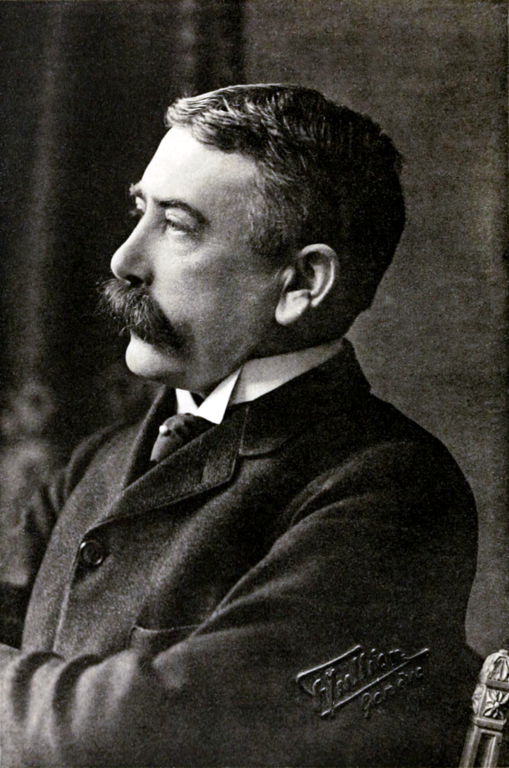
[fɛʁdinɑ̃ də sosyʁ]

Ferdinand de Saussure (26 November 1857 – 22 February 1913) was a Swiss linguist, semiotician and philosopher. His ideas laid a foundation for many significant developments in both linguistics and semiotics in the 20th century.He is widely considered one of the founders of 20th-century linguistics and one of two major founders (together with Charles Sanders Peirce) of semiotics, or semiology, as Saussure called it. 

One of his translators, Roy Harris, summarized Saussure's contribution to linguistics and the study of "the whole range of human sciences. It is particularly marked in linguistics, philosophy, psychoanalysis, psychology, sociology and anthropology."


Noam Chomsky

Chomsky

Leonard Bloomfield

Bloomfield

Michael Tomasello

Tomasello

Human and arti(ficial|stic) intelligence

What is "intelligence" and how is it defined by different people and different cultures ? Is there only one "general" intelligence thanks to which humans and machines solve problems or is it more appropriate to speak about combinations of "multiple intelligences" - emotional, intepersonal, intrapersonal, spatial, visual, logical, mathematical, bodily, moral, narrative, etc. ? Can we speak about intelligence independent of cultural and socio-economical context within which its acts and is embedded ? Do organic (OI) and artificial intelligence (AI) have something in common or are they fundamentally and unreconcilably different ? In order to explore potential answers to these questions, we will look into history of cognitive (psychology, anthropology) and computer  (informatics, cybernetics)  sciences, we will read stories about "idiot savants" and children raised in wilderness and briliant minds of the past in order to ultimately ask our own AI systems to tell them something about themselves.

Sessions 0 and 1

Session 2 :: Development of intelligence

Session 3 :: Form(s) of intelligence


Session 4 :: Other (forms of) intelligence

Session 5 :: 14.12 :: Artificial intelligence

Session 6 :: 11.1 :: Examples of intelligence

Session 7 :: 25.1 :: Art of intelligence, intelligence of art

Session 8 :: 8.2 :: Futurological congress AE9202

Human and Machine Learning


Homo discens

"Man is a 'homo discens,' a learning being. People learn as long as they live. Life is inseparably connected with learning." Horst Siebert

Implicit learning

Implicit learning is the process of acquiring knowledge or skills unconsciously, without intentional effort or explicit awareness of what is being learned. It typically occurs through repeated exposure to patterns, stimuli, or behaviors, allowing individuals to internalize rules or structures without being able to articulate them directly.

Experiential learning

Experiential learning is a process of learning through direct experience, where individuals engage in activities, reflect on their actions, and apply what they’ve learned to new situations. Rather than solely reading or listening, learners actively participate, often experimenting, making mistakes, and adapting.

Supervised learning

Supervised learning is a type of machine learning where a model is trained on labeled data to learn the mapping between input features and corresponding outputs. The goal is to enable the model to make accurate predictions or classifications on unseen data by minimizing the error between its predictions and the true labels. Common tasks include regression (predicting continuous values) and classification (assigning categories). Supervised learning relies on a training dataset with known inputs and outputs and evaluates performance using a separate test dataset. Examples include spam email detection, image recognition, and speech-to-text systems.

Machine Learning

Machine Learning

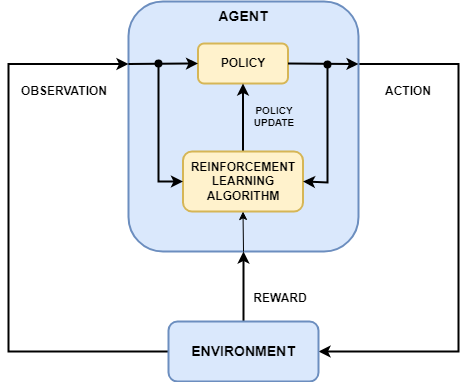
Reinforcement learning

Reinforcement learning (RL) is a machine learning paradigm where an agent learns to make decisions by interacting with an environment. Instead of being told what to do, the agent takes actions and receives feedback in the form of rewards or penalties. The goal is to maximize cumulative rewards over time by discovering an optimal strategy, known as a policy. RL is inspired by trial-and-error learning in humans and animals, where behavior improves through experience. It’s particularly useful for tasks with sequential decision-making, such as robotics, game playing, and autonomous systems, where actions impact not only immediate rewards but also future outcomes.

Social learning

Social learning is "a process in which individuals learn by observing the behaviors of others, imitating them, and experiencing the consequences of these actions." (Bandura, 1977)

Peer learning

Peer learning

Four pillars of learning

Active engagement:::Attention:::Error Feedback:::Consolidation

Human-Machine Peer Learning

Human-Machine Peer Learning

Teaching, Pedagogy, Didactics

Teaching, Pedagogy, Didactics

Artificial Teacher Avatars

Artificial Teacher Avatars

Educational Systems

Educational Systems

Extended Educational Environments

Extended Educational Environments

The Congres

The Congress

Introduction to Psychology: On Anima and other Archetypes

The seminar "Introduction to Psychology: On Anima and Other Archetypes" offers an interdisciplinary exploration of history of psychological thought. Beginning with mythological narratives like Amor and Psyche and philosophical texts such as Aristotle's On the Soul, the seminar aims to integrate cross-cultural perspectives—including animism, panpsychism, the Sāṅkhya concept of Ātman and Islamic / Judaic / Jungian models of "the soul".

Introduction


Student Intervention

15 - 30 minutes

Mythology

Science must begin with myths, and with the criticism of myths.

Sir Karl Raimund Popper CH FRS FBA

Philosophy

Main riddle of this course: Do(es) meaning(s) of the word "soul" evolve in time, or not ?

Psychologic Models and Theories

List of most important psychologic models and theories

20th century Psychology


Archetypes

“The archetype is a tendency to form such representations of a motif—representations that can vary a great deal in detail without losing their basic pattern. They are inborn forms of ‘intuition’, they are perceptions ‘a priori’, and even though the forms are unconscious, they nonetheless behave as if they were conscious ideas in that they seem to pursue certain goals. They are, indeed, an instinctive trend, as marked as the impulse of birds to build nests, or ants to form organized colonies.” (The Archetypes and the Collective Unconscious §91)

Psychotherapy

Psychoanalysis ::: Analytical Psychology ::: Psychodynamic Therapy ::: Cognitive Behavioral Therapy (CBT) ::: Dialectical Behavior Therapy (DBT) ::: Humanistic Therapy ::: Gestalt Therapy ::: Person-Centered Therapy ::: Existential Therapy ::: Logotherapy ::: Narrative Therapy ::: Acceptance and Commitment Therapy (ACT) ::: Mindfulness-Based Cognitive Therapy (MBCT) ::: Systemic Therapy ::: Family Therapy ::: Transactional Analysis ::: Art Therapy ::: EMDR (Eye Movement Desensitization and Reprocessing) ::: Somatic Experiencing ::: Internal Family Systems (IFS) ::: Schema Therapy ::: Interpersonal Therapy (IPT)