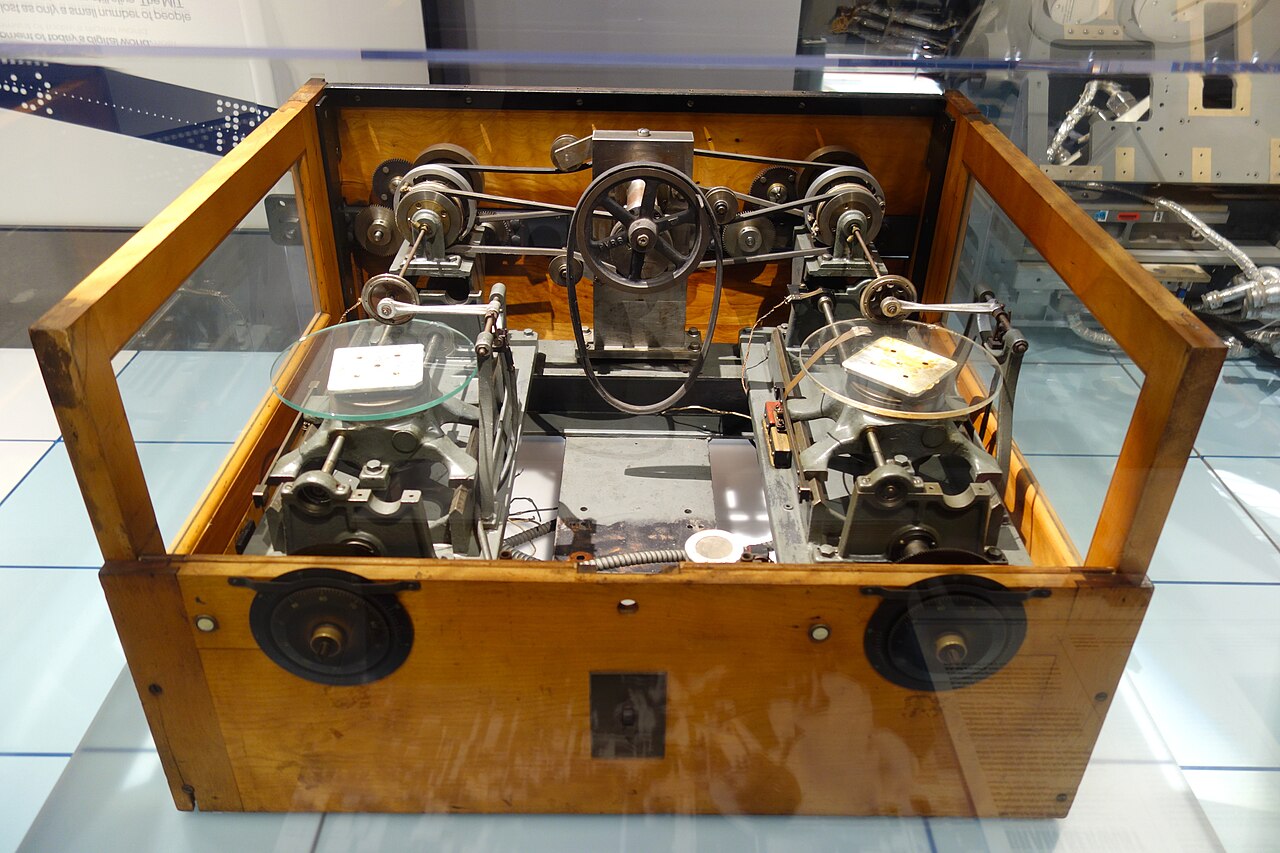
also reachable via 2 other paths through the graph
cast off

Short History of the Learning Machine

29.09.2026 · AE560929
scan to join on your phone
>> cross-referenced signal
> click / swipe / arrow keys to begin_

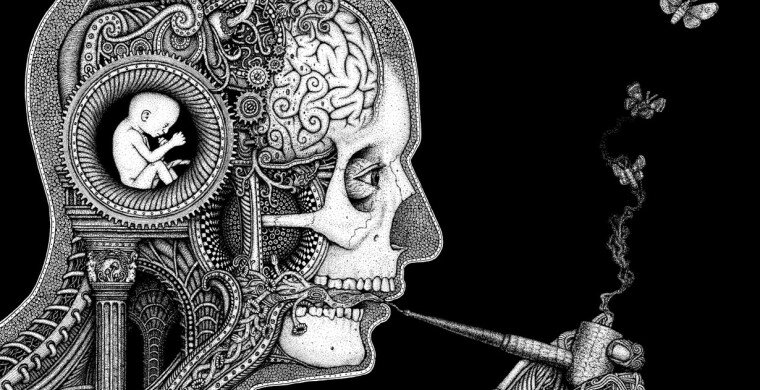
Between Archetypes & Myths: Machine as a Projection of the Human Self

14.10.2026 · AE561014
Machine as a projection of the human self

Between Archetypes & Myths

29.09.2026 · AE560929

Machine as a projection of the human self

Faciamus machinam ad imaginem et similitudinem nostram.

Let us make the machine in our image and likeness.

>> cross-referenced signal
  • ⇄ Genesis revisited
  • ⇄ Mechanism

Before the Machine

29.09.2026 · AE560929

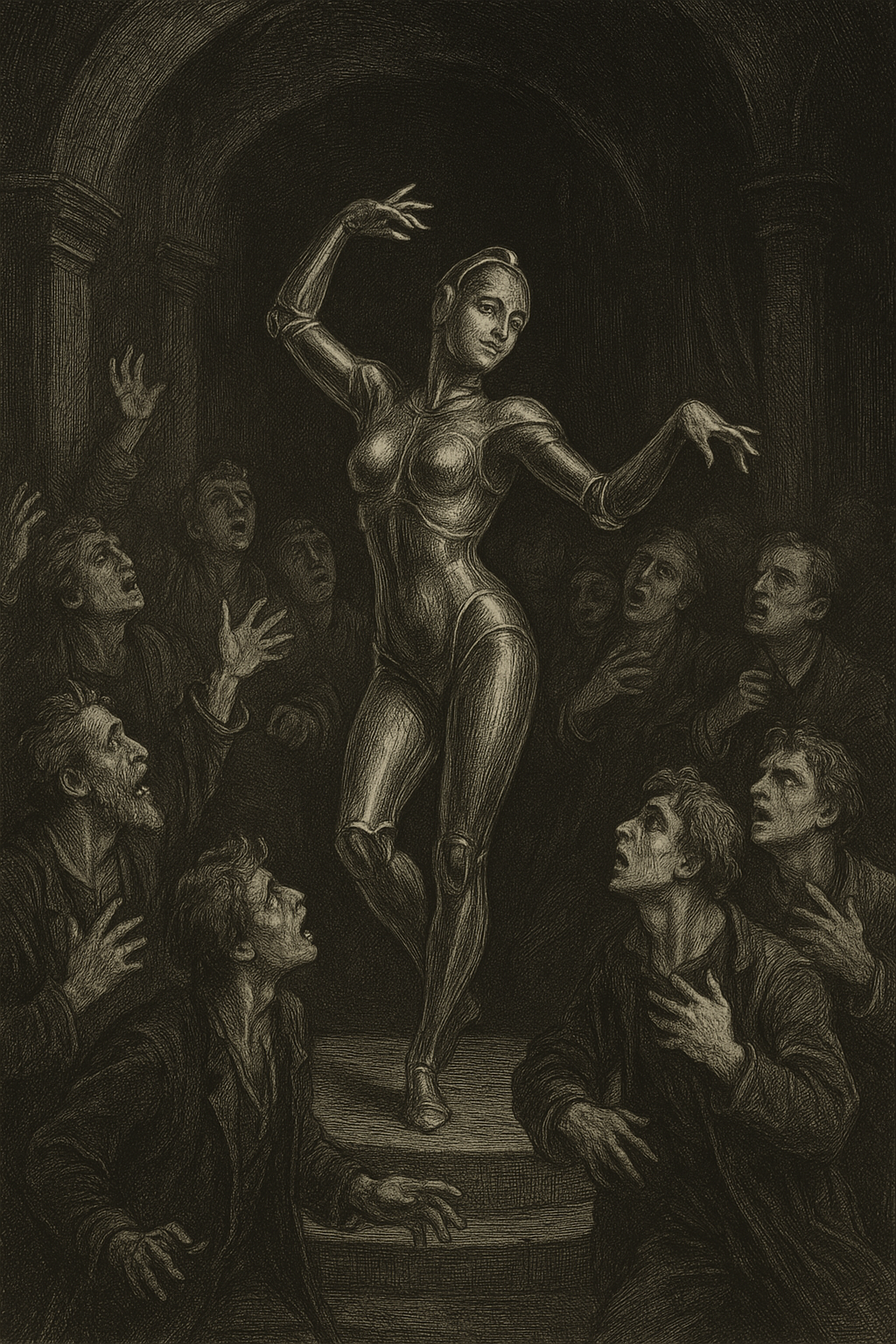
Long before humans could build autonomous machines, they could imagine them.

Artificial humans. Servants. Lovers. Guardians. Weapons. Oracles. Monsters.

The technological history of machines is preceded by a much older imaginary history of artificial agency.

An Archetype Is Not a Blueprint

29.09.2026 · AE560929

Myths do not predict robots, computers or artificial intelligence.

But they repeatedly stage similar relationships between humans and artificial beings.

Who creates whom?

Who commands whom?

What should an artificial being know?

What happens when it acts for itself?

Machine as Projection

29.09.2026 · AE560929

We rarely imagine machines neutrally.

We project into them our bodies.

Our desires.

Our labor.

Our violence.

Our knowledge.

Our fear of losing control.

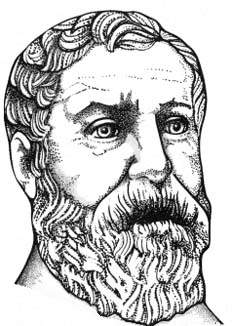
Hero of Alexandria, 1st century AD

What Is a Machine?

29.09.2026 · AE560929

Before machines became motors, engines and computers, the word already meant something broader:

an ingenious means by which something becomes possible.

>> cross-referenced signal
  • ⇄ Heron of Alexandria (c. 10 AD - c. 70 AD)

μηχανή → machina → machine

29.09.2026 · AE560929

Greek μηχανή — mēkhanē: instrument, device, contrivance, means.

Latin machina: machine, engine, apparatus, contrivance.

Middle French machine → English machine.

The semantic field is older and broader than today's image of gears, motors and electronics.

>> cross-referenced signal
  • ⇄ Etymology of the word "machine"

Deus ex Machina

29.09.2026 · AE560929

In Greek theatre, a mēkhanē could be the stage apparatus that lifted a god into view.

Hence: deus ex machina — the god from the machine.

human construction → superhuman appearance

The machine makes visible powers that exceed the ordinary human body.

Technē

29.09.2026 · AE560929

The machine begins not only with matter, but with know-how.

Greek technē means skilled, rule-governed making.

thought → technē → artifact

Before artificial agency comes the intelligence of the maker.

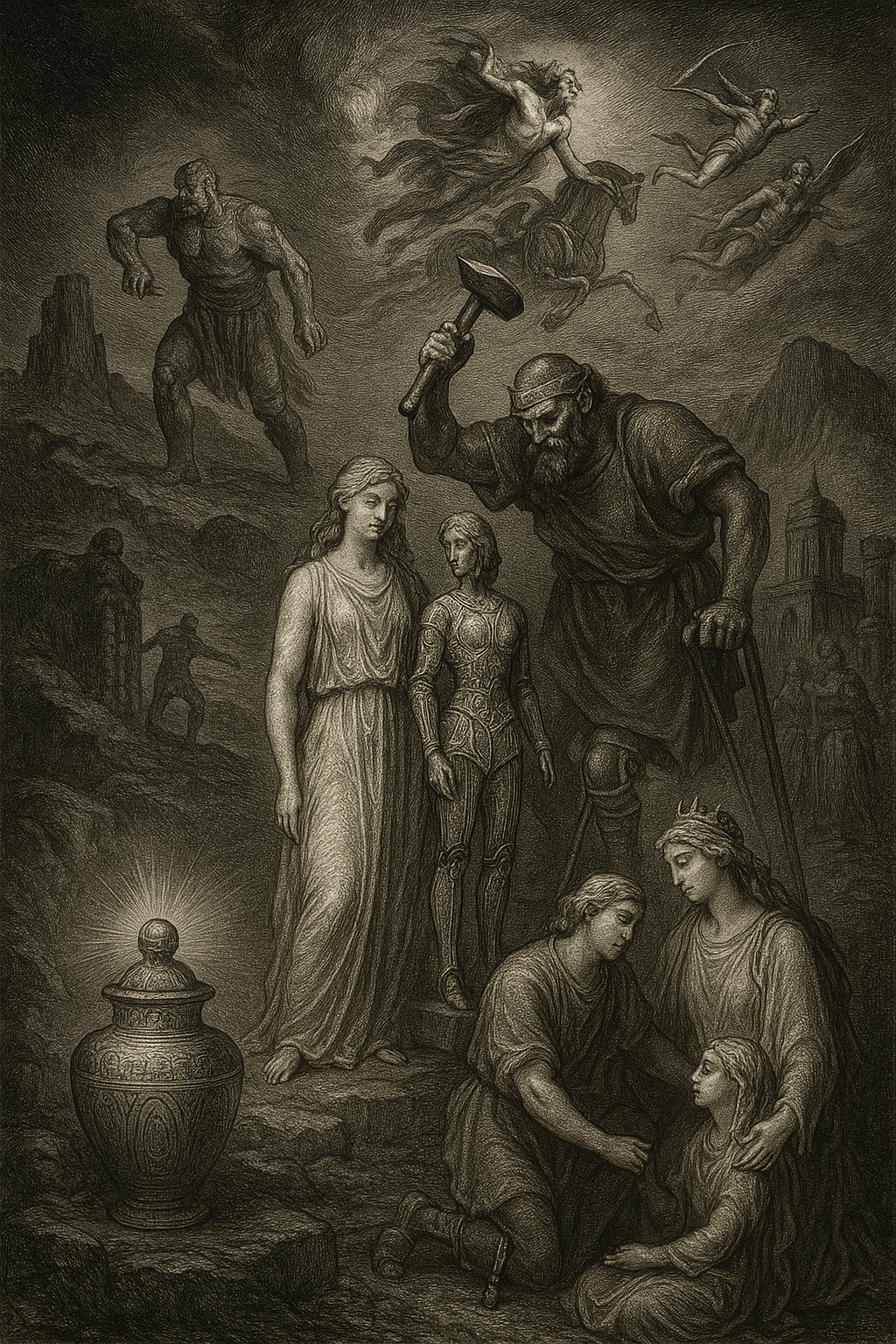
Hephaestus at the forge, with Pandora's urn and a bronze guardian

The Divine Workshop

29.09.2026 · AE560929

Greek mythology gives us an extraordinary laboratory of artificial beings.

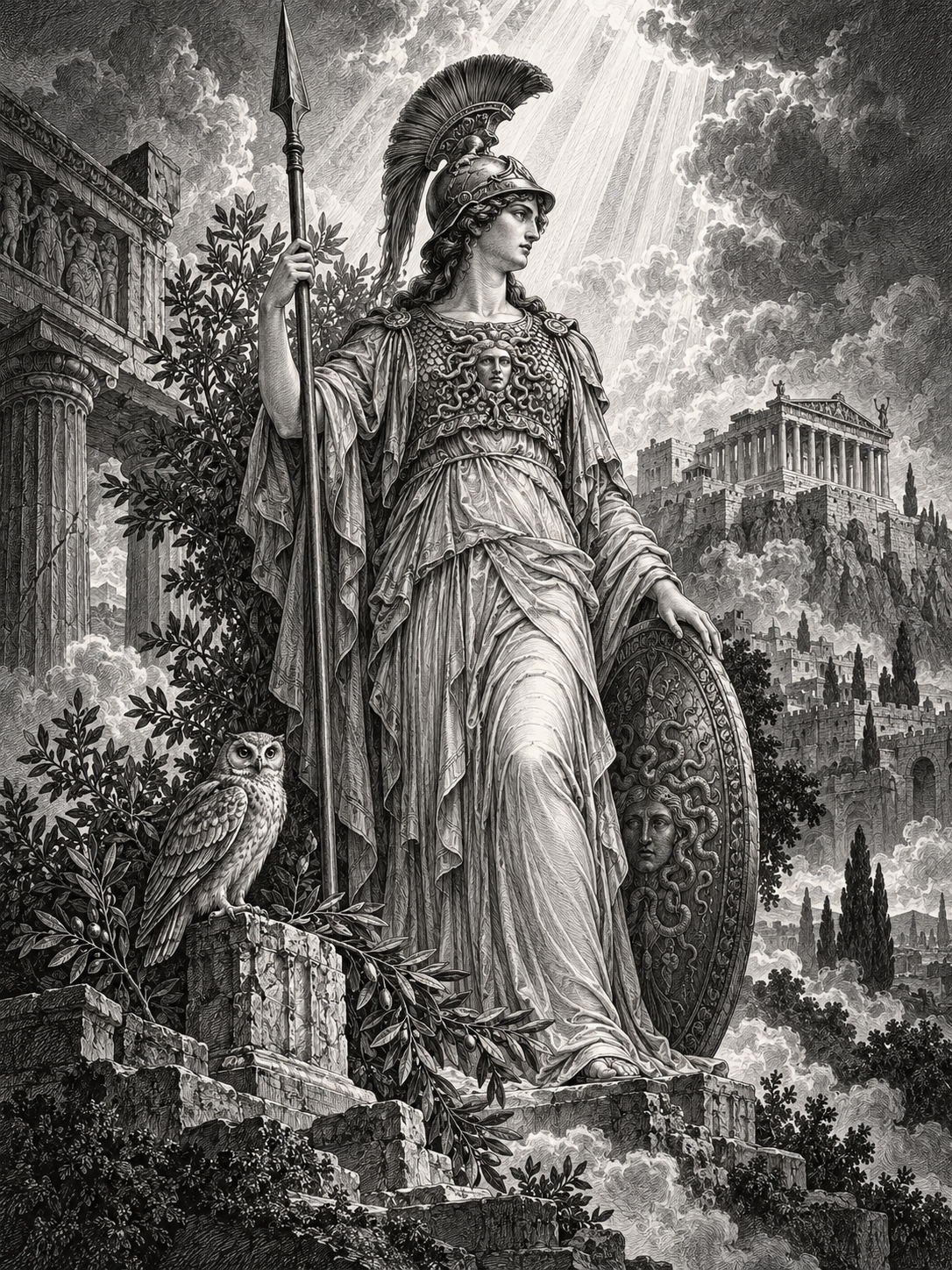
Athena represents intelligent making.

Hephaestus represents the workshop in which artifacts begin to act.

>> cross-referenced signal
  • ⇄ Greece
  • ⇄ Mythology :: Hephaistos

Athena: Intelligence of Making

29.09.2026 · AE560929

Athena is associated with craft, weaving, strategy and intelligent production.

She is not primarily the goddess of machines.

She represents something more fundamental:

the intelligence embodied in making.

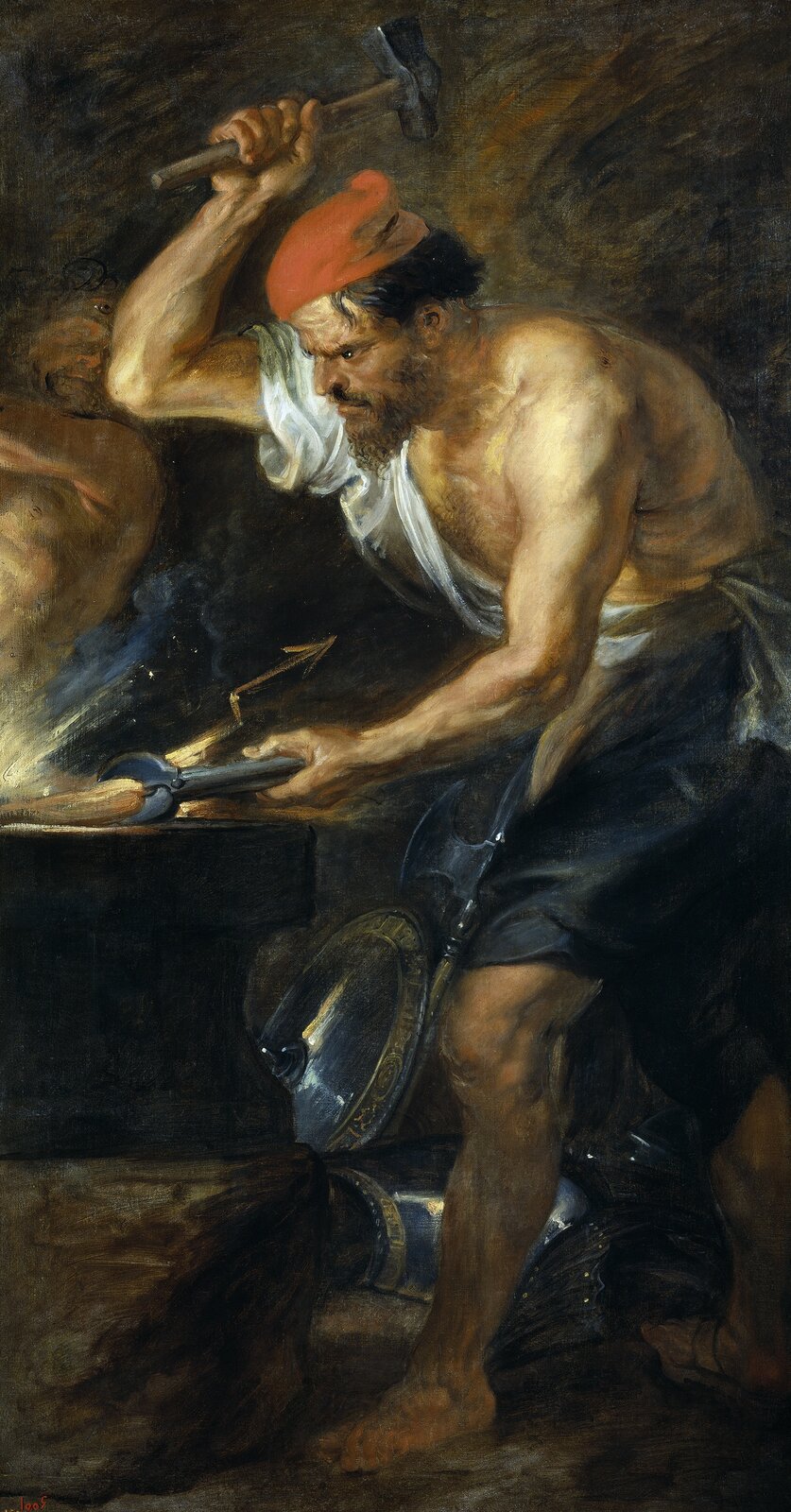
Peter Paul Rubens, Vulcan Forging the Thunderbolts of Jupiter (1638)

Hephaestus: When Artifacts Act

29.09.2026 · AE560929

With Hephaestus, myth moves from intelligent making toward artificial agency.

His workshop contains self-moving devices and artificial attendants.

The question changes:

Can we make an object?

becomes

Can we make an object that acts?

>> cross-referenced signal
  • ⇄ Mythology :: Hephaistos
  • ⇄ Made by Hephaistos

Machine as Human

29.09.2026 · AE560929

In the Iliad, Hephaestus is assisted by artificial golden maidens endowed with capacities associated with living persons.

The ancient fantasy is already recognizably humanoid:

Can the made thing become sufficiently like its maker?

Machine as Servant

29.09.2026 · AE560929

One of the most persistent fantasies is delegation.

The artificial being carries, assists, manufactures, obeys.

labor → delegated labor → autonomous labor

The machine performs what we cannot, will not, or no longer need to do ourselves.

Machine as Prosthesis

29.09.2026 · AE560929

A machine need not imitate the whole human.

It may instead extend a capacity.

lever → force

vehicle → movement

writing → memory

computer → calculation

artificial agent → cognition?

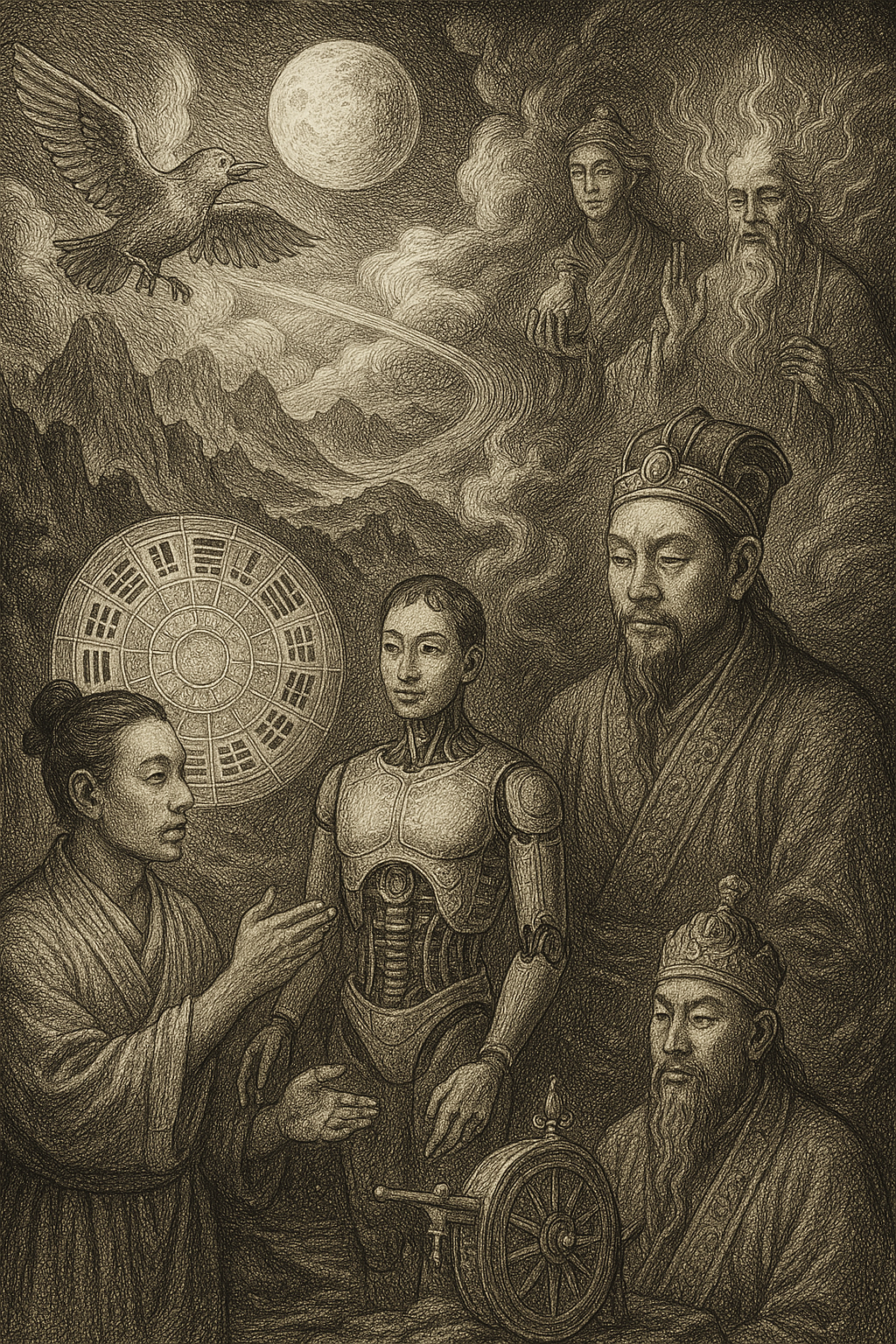
Yan Shi presents his mechanical man to King Mu of Zhou

Yan Shi: The Artificial Human

29.09.2026 · AE560929

The Chinese Liezi tells of the artificer Yan Shi presenting King Mu with a human-like artificial performer.

It walks. It sings. It performs.

When its behavior becomes disturbingly lifelike, the artificer takes it apart.

>> cross-referenced signal
  • ⇄ China

Open the Black Box

29.09.2026 · AE560929

apparently human → disassembly → mechanism

The story stages a remarkably durable question:

What remains of the human when we open the box?

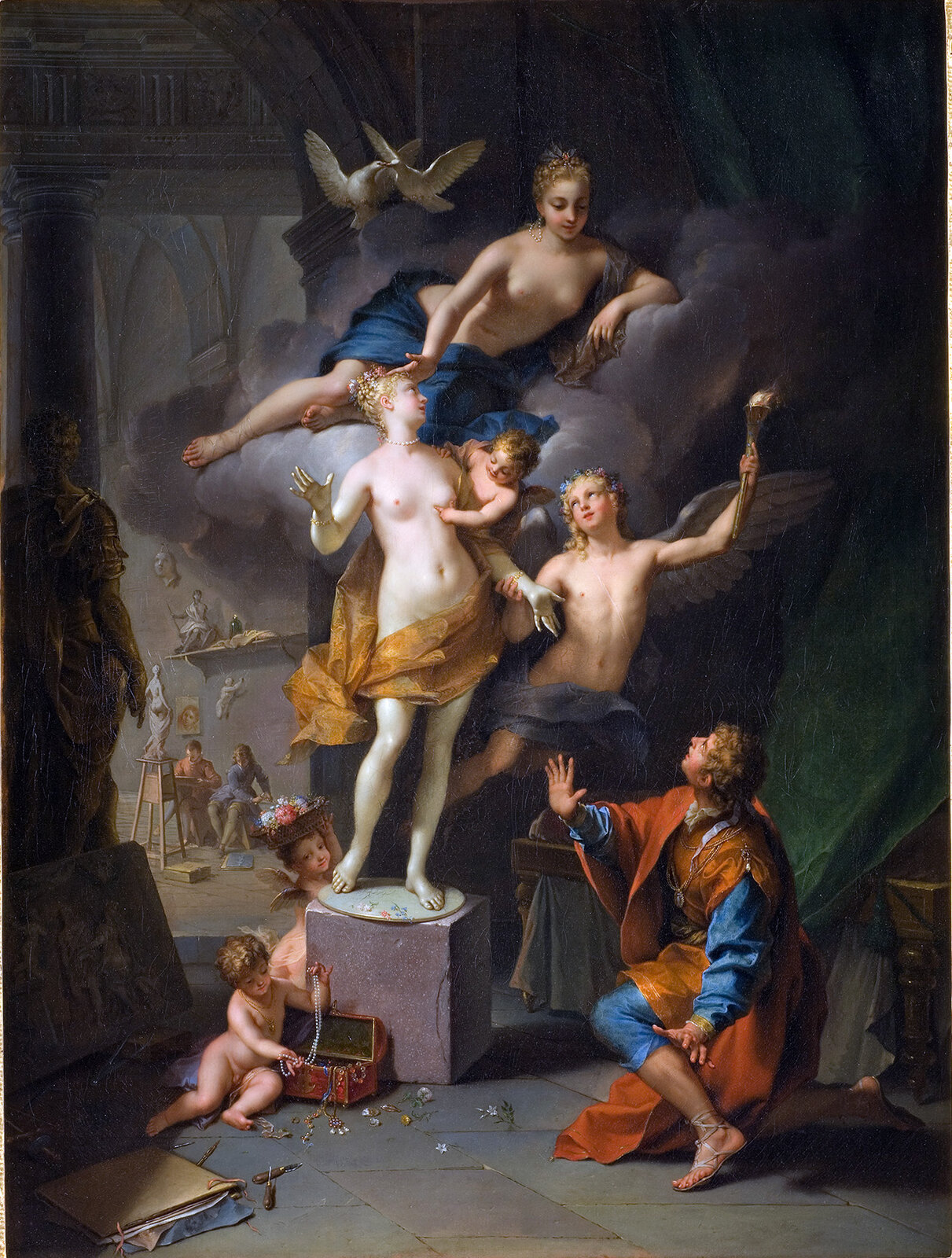
Jean Regnault, Pygmalion priant Vénus d'animer sa statue (1786)

Machines in Our Image

29.09.2026 · AE560929

Artificial beings are not merely tools.

They become surfaces onto which humans project desire, identity and self-understanding.

>> cross-referenced signal
  • ⇄ The Story of Pygmalion and the Statue
  • ⇄ A prayer
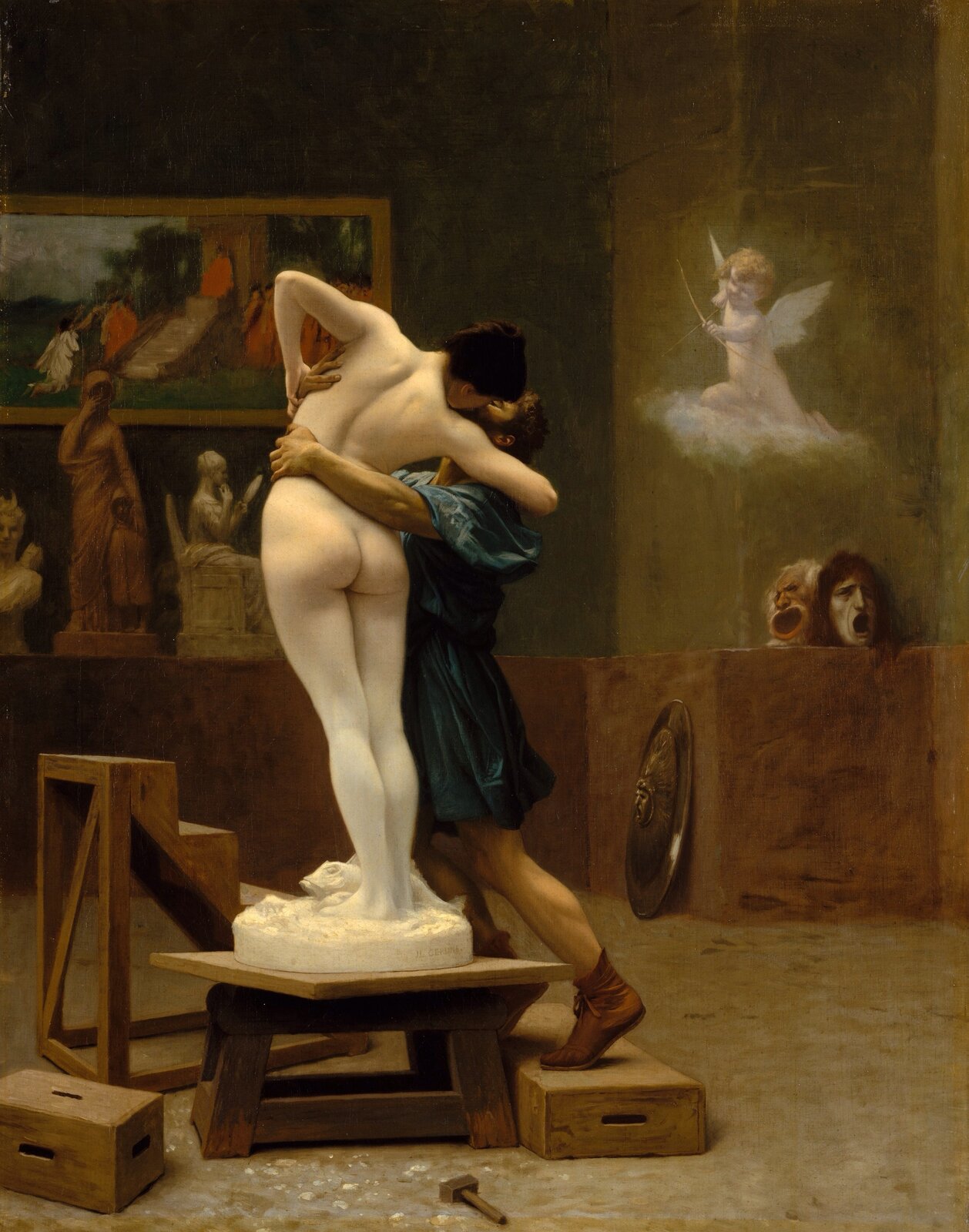
Jean-Léon Gérôme, Pygmalion and Galatea (1890)

Machine as Lover

29.09.2026 · AE560929

Pygmalion creates an ideal human form and falls in love with his creation.

Venus / Aphrodite grants the statue life.

The question is not merely:

Can we reproduce a human?

but:

Can we manufacture the human we desire?

>> cross-referenced signal
  • ⇄ A kiss

Machine as Mirror

29.09.2026 · AE560929

Artificial beings force us to ask what supposedly distinguishes us.

If it moves like us?

If it speaks?

If it remembers?

If it desires?

If it creates?

If it learns?

By constructing the non-human, we investigate the human.

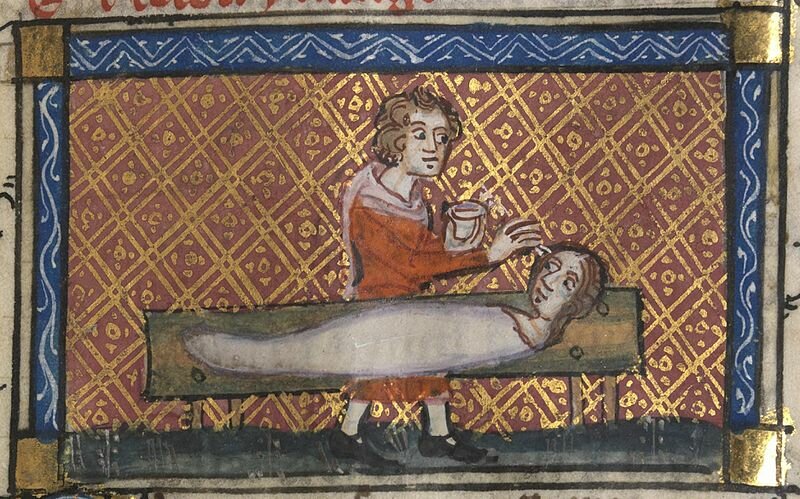
Pygmalion working on his sculpture, illumination on parchment (14th century)

Machine as Double

29.09.2026 · AE560929

The artificial human is also a duplicate.

A second body.

A copy that may become difficult to distinguish from an original.

The double turns technology into an identity problem:

How do I know that you are one of us?

>> cross-referenced signal

Machines at the Threshold

29.09.2026 · AE560929

Some artificial beings do not imitate us primarily as workers or companions.

They stand between inside and outside.

They decide who may approach, enter or survive.

Machine as Protector

29.09.2026 · AE560929

Talos is the bronze guardian of Crete.

He patrols the island and prevents outsiders from landing.

human guard → artificial guard → tireless guard

Protection has been delegated to an artificial body.

Machine as Weapon

29.09.2026 · AE560929

Talos also exposes the ambiguity of protection.

The same autonomous force that protects one community threatens whoever approaches it.

protector for us = weapon against them

Who gives the command?

Who defines the enemy?

Guardian of the Threshold

29.09.2026 · AE560929

The guardian archetype is broader than the machine.

Cherubim guard the Tree of Life.

The Sphinx guards passage through a riddle.

Talos guards an island.

Artificial watchdogs guard a palace.

boundary + test + permission

The Sphinx and the CAPTCHA

29.09.2026 · AE560929

The Sphinx:

Prove that you know before I let you pass.

The CAPTCHA:

Prove that you are human before I let you pass.

When machines learn to pass the test, the ancient threshold problem returns in inverted form.

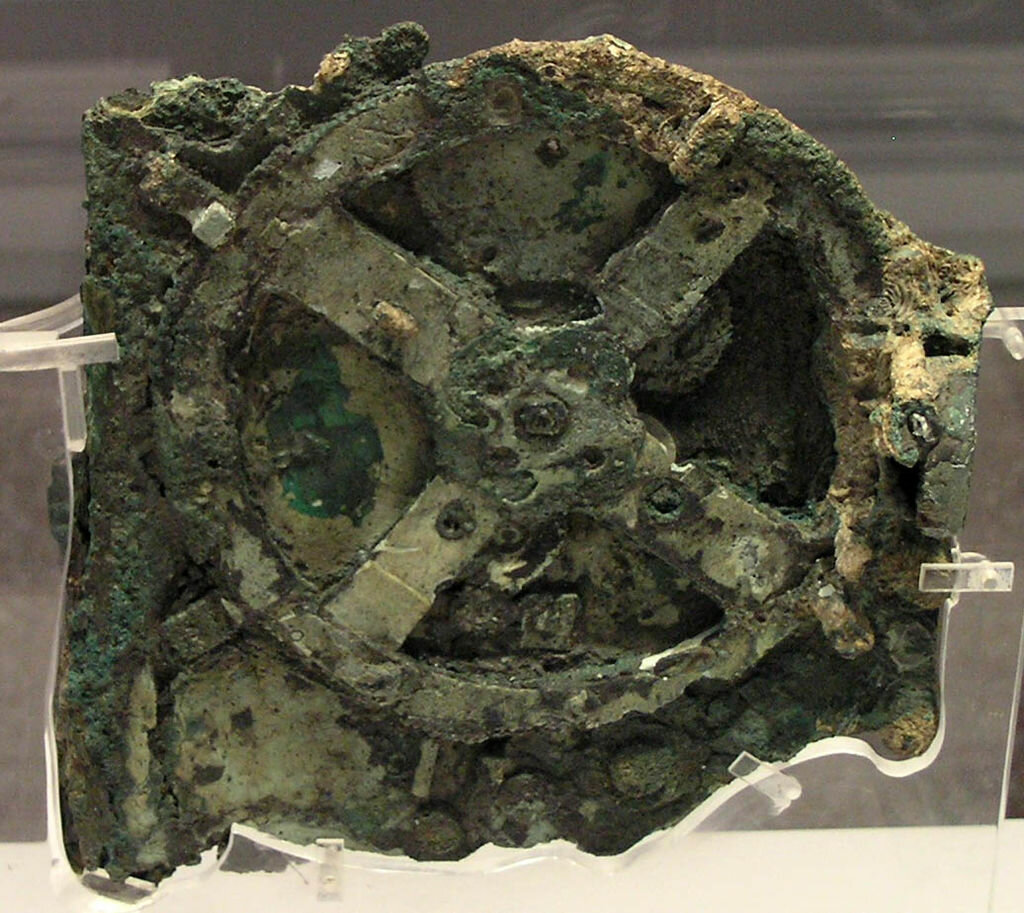
The Antikythera mechanism, c. 2nd century BC

Machine as Oracle

29.09.2026 · AE560929

A machine can do more than move.

It can contain knowledge unavailable to its operators.

The mythical Argo gives us an extraordinary example.

>> cross-referenced signal
  • ⇄ The Antikythera mechanism

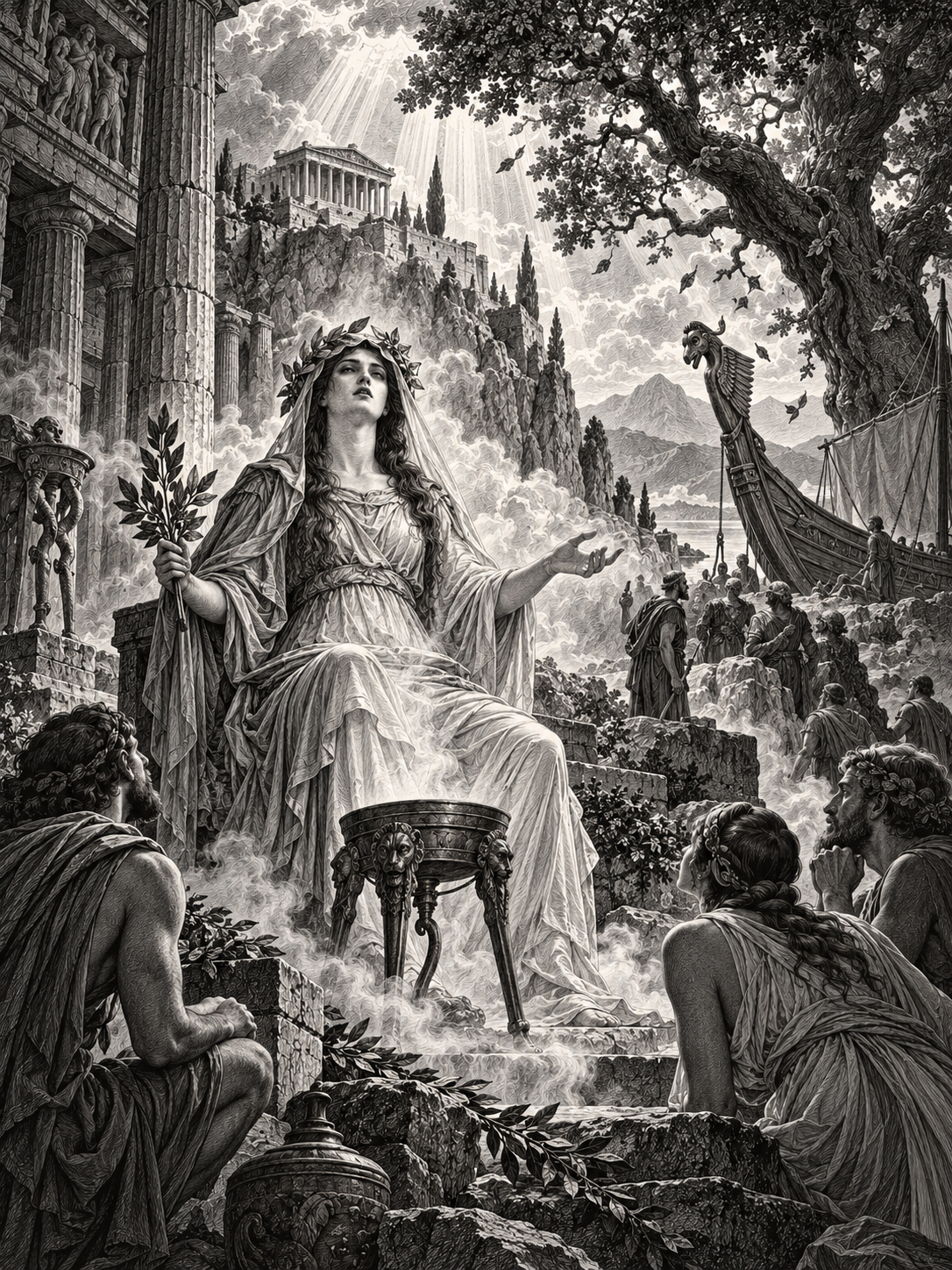
Athena + Argus + Dodona → Argo

29.09.2026 · AE560929

Argus builds the ship.

Athena contributes divine technē.

She installs a special beam from the sacred oak of Dodona, a site of divination.

The resulting architecture can be described, anachronistically but suggestively, as:

vehicle + embedded oracle

When the Argo Speaks

29.09.2026 · AE560929

In the Argonautica, the Argo itself cries out and urges the heroes to depart.

Elsewhere the sacred beam communicates information and guidance.

The artifact possesses knowledge that its human operators do not.

world → hidden information → artifact → human action

An Intelligent Artifact?

29.09.2026 · AE560929

The Argo is more than a passive object.

It speaks.

It advises.

It carries privileged information.

It is therefore a remarkably early imagination of intelligence embedded in an artifact.

But the Argo Does Not Learn

29.09.2026 · AE560929

The distinction is crucial.

The Argo possesses knowledge.

But its defining capacities are installed, not acquired through experience.

A machine containing knowledge is not necessarily a learning machine.

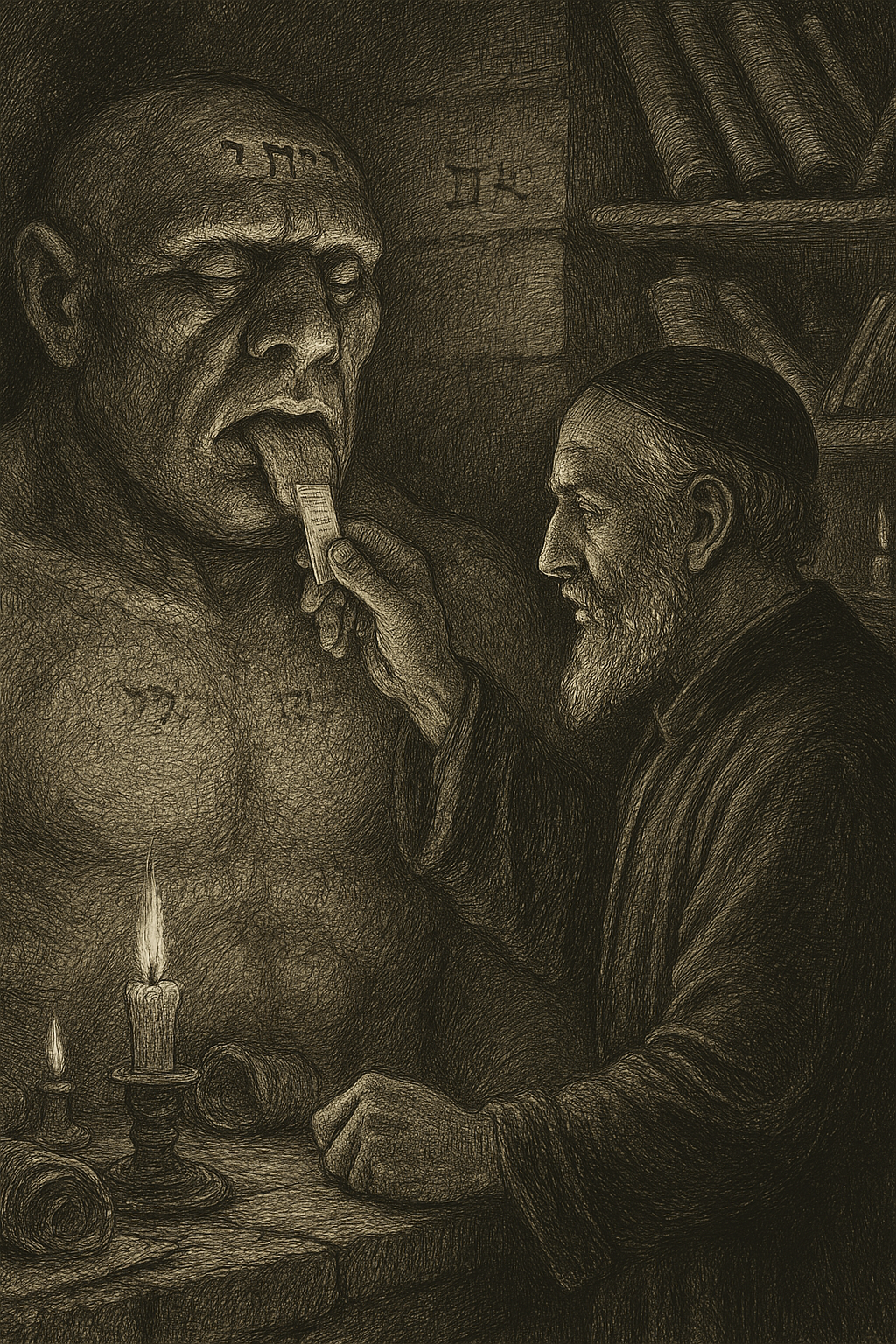
The shem placed in the Golem's mouth

The Word Becomes Agent

29.09.2026 · AE560929

The Golem introduces another extraordinary structure:

matter + symbolic information → agent

>> cross-referenced signal
  • ⇄ Artefact of the day: The Golem

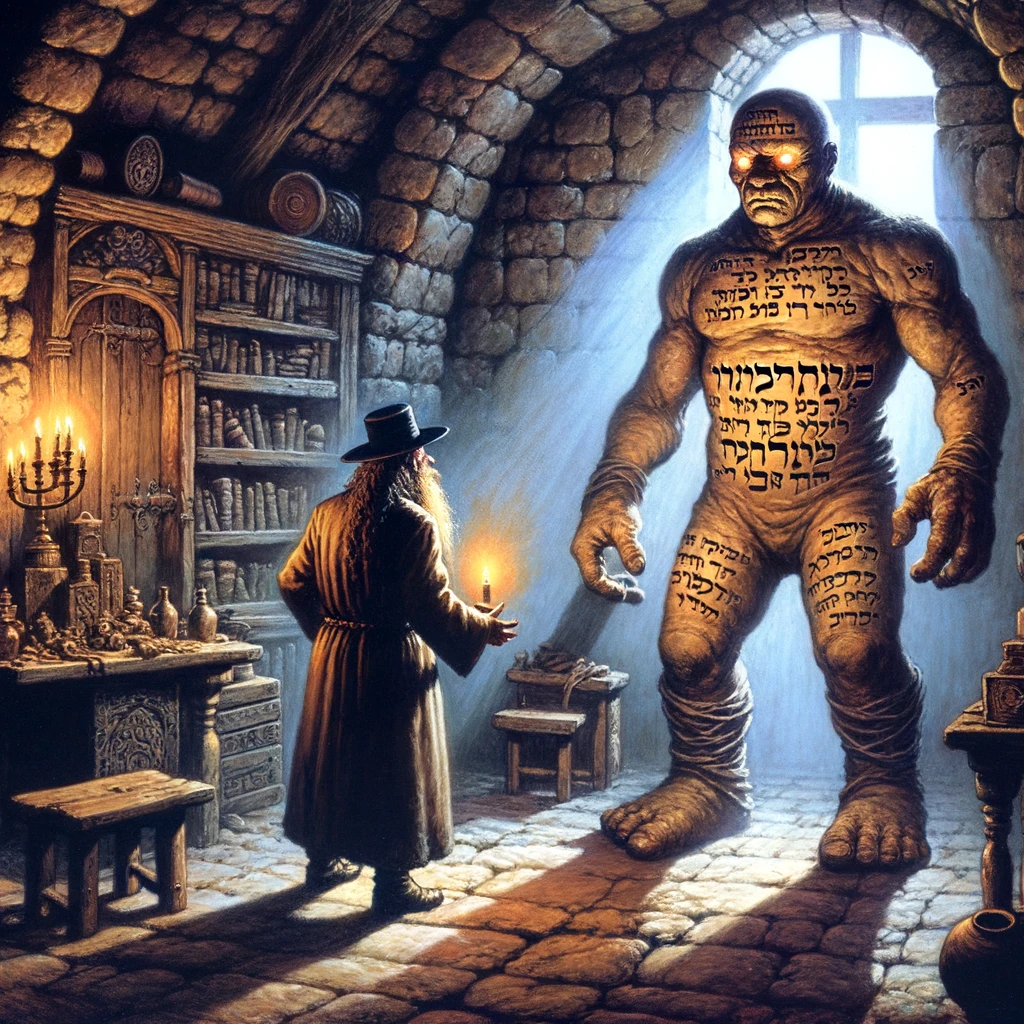
Machine as Programmed Being

29.09.2026 · AE560929

In Jewish traditions, an artificial human may be formed from inorganic matter through esoteric knowledge.

Later popular versions emphasize sacred names, letters or words associated with animation and control.

The physical body alone is insufficient.

Information activates matter.

Rabbi Judah Loew and the Golem of Prague

A Historical Warning: Prague

29.09.2026 · AE560929

Myths themselves have histories.

The famous association between Rabbi Loew, Prague and a protective Golem is much later than Rabbi Loew himself.

The familiar Prague narrative develops gradually and becomes especially prominent in modern literary culture.

We must ask not only what a myth says, but when people began telling it that way.

>> cross-referenced signal
  • ⇄ גֹּלֶם

Machine as Uncontrolled Creation

29.09.2026 · AE560929

The servant is useful only while its behavior remains inside the creator's intentions.

creation → autonomy → unpredictability → fear

The question becomes:

Can the maker remain master of the made?

Machine as Monster

29.09.2026 · AE560929

The monster violates categories:

object / subject

dead / alive

natural / artificial

tool / agent

controlled / autonomous

The frightening machine makes the boundary itself unstable.

A Mythological Bestiary of Machines

29.09.2026 · AE560929

Human — Can we manufacture ourselves?

Servant — Can we delegate labor?

Prosthesis — Can we extend ourselves?

Lover — Can we manufacture intimacy?

Protector — Can we delegate protection?

Weapon — Can artificial agency project violence?

Guardian — Can it decide who may pass?

Oracle — Can it know what we do not?

Mirror — What does it reveal about us?

Monster — What if it escapes our intentions?

>> cross-referenced signal
  • ⇄ Maschinenmensch

One Archetype Is Still Missing

29.09.2026 · AE560929

The golden maidens can act.

Talos can guard.

Pygmalion's statue can live.

The Golem can obey.

The Argo can advise.

But their defining abilities are generally given to them.

What happens when the artificial being can change itself through experience?

Machine as Learner.

What Is a Learning Machine?

29.09.2026 · AE560929

A traditional machine is built in a particular state and executes a structure provided by its maker.

A learning system differs in one decisive respect:

its encounter with the world changes what it subsequently does.

experience → internal change → changed future behavior

Two Histories

29.09.2026 · AE560929

LEARNING

myth

initiation

memory

imitation

association

conditioning

adaptation

MACHINE

myth

technē

automata

mechanism

calculation

programmability

computation

LEARNING + MACHINE

The Persistent Question

29.09.2026 · AE560929

The history of machines is also the history of what humans have wished to externalize.

strength

movement

memory

judgment

companionship

agency

learning

Jean Raoux, Pygmalion amoureux de sa statue (1717)

In Our Image

29.09.2026 · AE560929

We first imagined machines as versions of ourselves.

Then we built machines that extended parts of ourselves.

Eventually we built machines capable of modifying themselves through experience.

The artificial being is ancient.

The learning machine is the historical novelty.

>> cross-referenced signal
  • ⇄ A divine intervention
  • ⇄ Pygmalion :: a summary

Discussion

29.09.2026 · AE560929

Which archetype best describes your smartphone?

Which describes a large language model?

Which describes an autonomous vehicle?

Which describes social media?

Which describes the machines you imagine for the future?

And have genuinely new archetypes appeared?

Textual Anchors

29.09.2026 · AE560929

Primary traditions worth returning to: Homer, Iliad XVIII; Apollonius Rhodius, Argonautica; Ovid, Metamorphoses X; the received Liezi; Jewish Golem traditions.

Golem

29.09.2026 · AE560929

Argo: speaking Dodonian timber embedded in Athena's ship.

Talos: bronze guardian of Crete.

Pygmalion: desired artificial human brought to life.

Golem: artificial human animated through knowledge, letters or sacred language in evolving Jewish traditions.

>> cross-referenced signal
  • ⇄ Automata attributed to Ἥφαιστος

Alles ist Zahl!

21.10.2026 · AE561021
Pythagoras, Latin numerals, Invention of Zero, Leibniz, Decimal / Binary / Hexadecimal Codes, int8 / fp16 / bf16 &c.

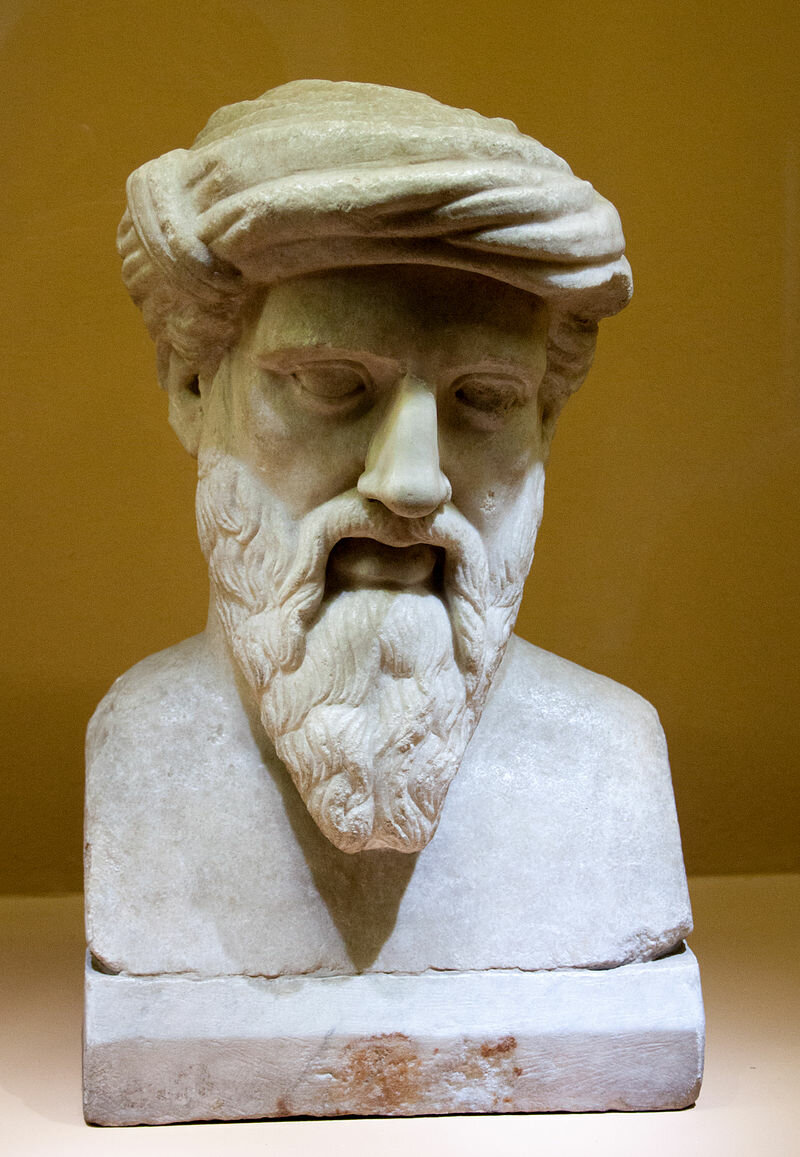
Pythagoras's Claim

20.10.2026 · AE561020

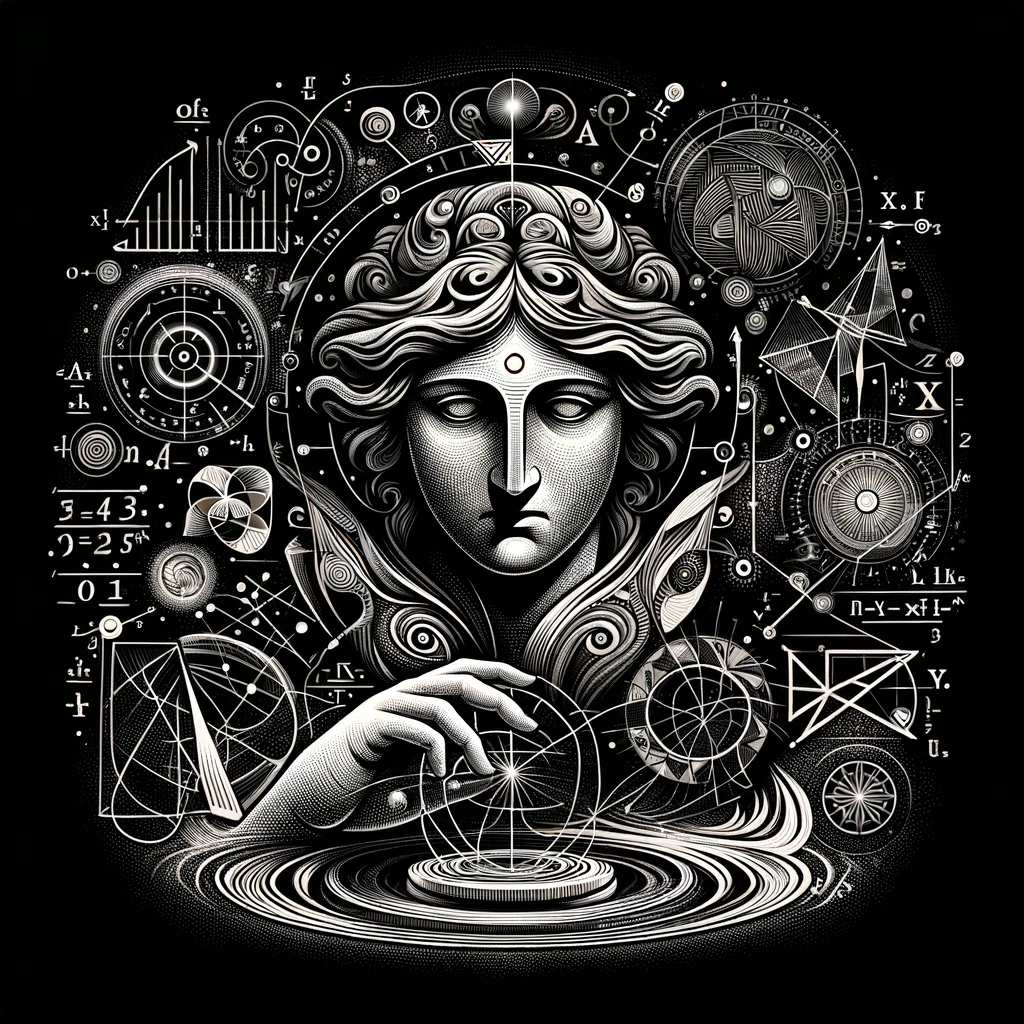
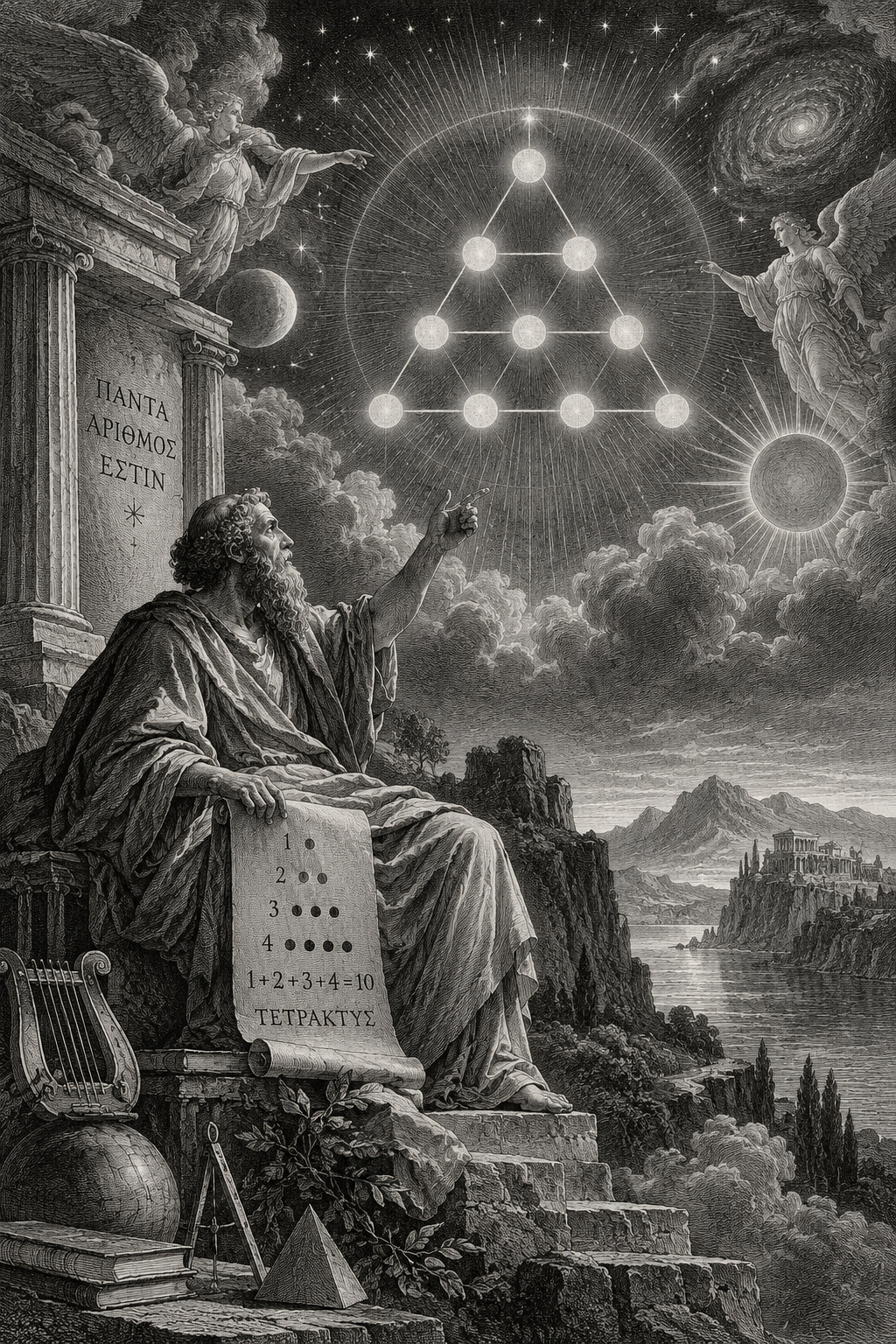
“All is number.” (πάντα αριθμός) — attributed to Pythagoras, 6th century BCE.

For Pythagoras and his followers, numbers were not just a tool for counting. They were the hidden structure of reality itself — the ratios that govern music, geometry, even the harmony of the cosmos.

Today we trace that claim all the way to the silicon running inside your phone.

>> cross-referenced signal
  • ⇄ Tetractys of Pythagoras

Why It Mattered

20.10.2026 · AE561020

Here is the thread we will follow: a number can be written down in many different ways — and the way you write it changes what you can do with it.

That was true for Roman numerals. It is just as true for the floating-point formats inside a modern AI chip.

>> cross-referenced signal
  • ⇄ What Is Representation
  • ⇄ Etymology of the word "represent"

Counting Before Zero

20.10.2026 · AE561020

Rome counted like this: I, V, X, L, C, D, M.

No zero. No place value — the position of a symbol barely matters, only which symbols appear and in what combination.

Try multiplying MDCLXVI by XLIV in your head. Now try 1666 × 44. The second one is not just easier — it is a genuinely different kind of thinking.

>> cross-referenced signal
  • ⇄ Etymology of the word "digit"

An Older Theorem

20.10.2026 · AE561020

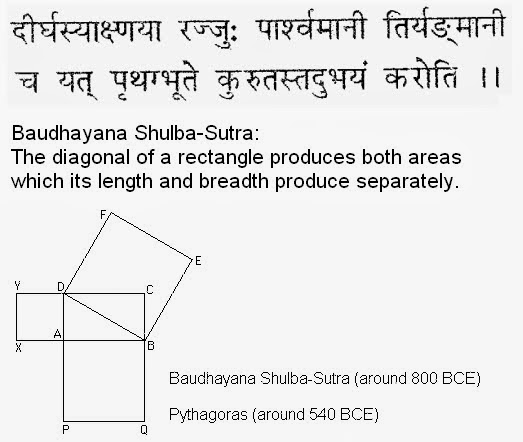
Centuries before Pythagoras, the Baudhayana Sulba Sutra (India, c. 800 BCE) already states the same relationship between the sides of a right triangle.

The mathematics was not a single European discovery — it was discovered, independently and repeatedly, wherever people needed to measure, build, and trade.

The Missing Symbol

20.10.2026 · AE561020

Every numeral system so far shares the same gap: no symbol for nothing.

Without a zero, there is no clean way to write a number as a position-dependent code — and without position, arithmetic stays a craft for specialists, not a procedure anyone can follow.

The Invention of Zero

20.10.2026 · AE561020

Zero emerges independently more than once: among the Maya of Mesoamerica, and in India, where the mathematician Brahmagupta (7th century CE) is the first to give it formal rules of arithmetic.

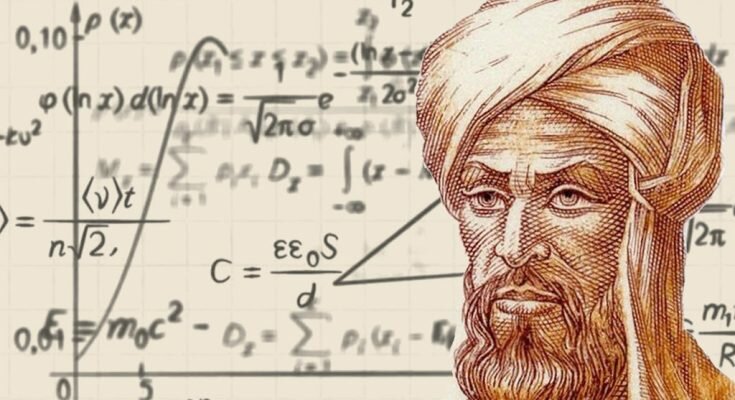
It reaches the Islamic world through scholars like Muhammad ibn Musa al-Khwarizmi (9th century), whose own name — Latinized as algorismus — gives us the word algorithm.

A number system and a method for calculating with it arrive together. That is not a coincidence.

>> cross-referenced signal
  • ⇄ Algorithm
  • ⇄ What Is Algorithm

Zero Reaches Europe

20.10.2026 · AE561020

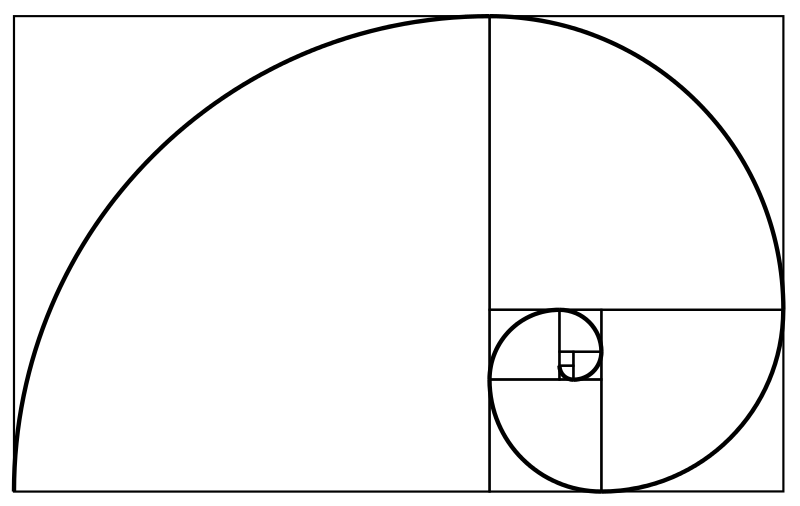
In 1202, Leonardo of Pisa — better known as Fibonacci — publishes Liber Abaci, introducing Hindu-Arabic numerals (zero included) to European merchants.

The pitch was practical: this notation makes bookkeeping and trade dramatically easier than the Roman system merchants were already using.

Positional Notation

20.10.2026 · AE561020

Here is the real leap: the same ten symbols, re-used, mean something different depending on where they sit.

106 and 160 use identical digits. Position alone carries the meaning.

This single idea — a small, finite alphabet whose meaning depends on position — is the one that modern computing was built on top of.

Leibniz's Dream

20.10.2026 · AE561020

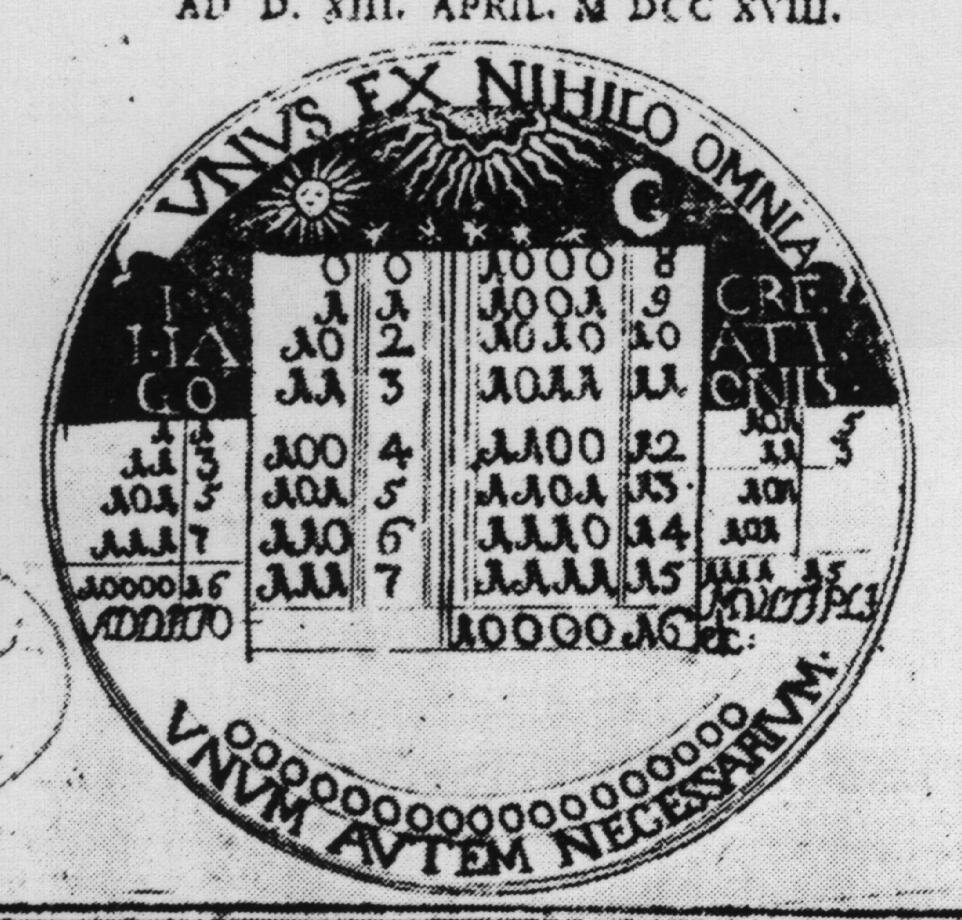
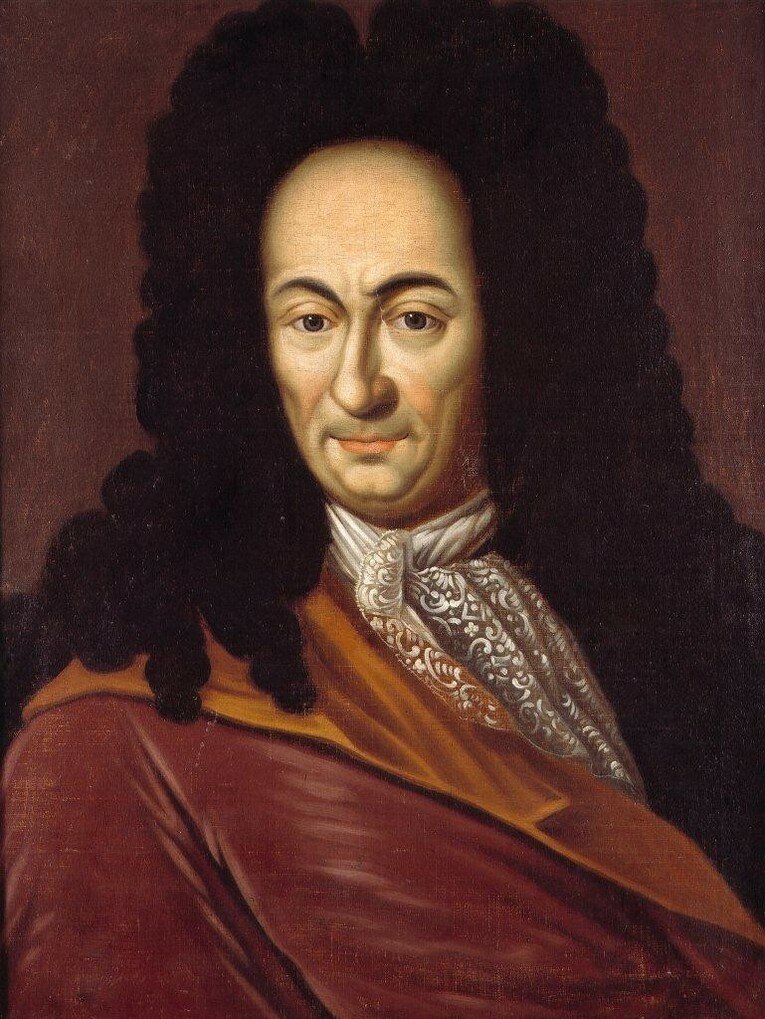
Gottfried Wilhelm Leibniz takes positional notation somewhere further: in 1703, he formally describes arithmetic in base 2 — binary.

He was reportedly delighted to find the same two-symbol logic echoed in the hexagrams of the I Ching, and saw in binary something close to a theological image: everything created from nothing (0) and unity (1).

Three centuries later, his once-mystical number system runs every computer on Earth.

>> cross-referenced signal
  • ⇄ G.W.Leibniz (*AD1646 - † AD1716)
  • ⇄ Baroquepunk, Steampunk & co.
  • ⇄ The Man in the High Castle (1962)
  • ⇄ Gottfried W. Leibniz (c. 1646 c. 1716)
  • ⇄ Stepped reckoner
  • ⇄ Leibniz wheel
  • ⇄ Interlude: Pascal, Leibniz, and the Baroque
  • ⇄ The question Hilbert asked

Why Base Two?

20.10.2026 · AE561020

Binary is just another positional system — base 2 instead of base 10. Only two symbols: 0 and 1.

That turns out to be the whole point. Building a reliable physical device with ten stable, distinguishable states is hard. Building one with two — voltage on, voltage off — is comparatively easy, cheap, and extremely reliable at enormous scale.

Every transistor in every chip is, at heart, a two-state switch pretending to be one of Leibniz's digits.

From Numbers to Logic

20.10.2026 · AE561020

George Boole (1854) notices that 0 and 1 can represent more than quantity — they can represent truth: false and true.

Boolean algebra — AND, OR, NOT — becomes the logical skeleton underneath every circuit in every digital machine.

The same two symbols now carry both arithmetic and logic. That overlap is why a computer can calculate and also decide.

Bits, Bytes, and Beyond

20.10.2026 · AE561020

One binary digit is a bit. Group eight of them and you get a byte — 256 possible values.

Hexadecimal (base 16) exists purely as a convenience: one hex digit covers exactly 4 bits, so two hex digits describe a whole byte cleanly — far easier for a human to read than a string of eight zeros and ones.

You already used one today, probably without noticing: a colour code, a MAC address, a cryptographic key — all hexadecimal shorthand for binary underneath.

>> cross-referenced signal
  • ⇄ Classifiers

A New Question

20.10.2026 · AE561020

So far: how a culture chooses to write a number. Now: how a machine chooses to store one — and why, in a modern AI system, that choice is no longer a historical curiosity.

It is an engineering decision with real, measurable consequences.

Integers vs Floats

20.10.2026 · AE561020

Integer formats store whole numbers exactly. int8: one byte, 256 distinct values — typically -128 to 127.

Floating-point formats trade some of that exactness for enormous range: a sign bit, an exponent, and a mantissa (the significant digits) — the same idea as scientific notation, just in binary.

More bits generally buys you more precision, more range, or both. Fewer bits buys you speed and memory — at a cost.

f16 vs bf16

20.10.2026 · AE561020

Both fp16 and bf16 use 16 bits total — half the size of ordinary fp32 — but split those bits differently.

fp16 (IEEE half precision): 1 sign + 5 exponent + 10 mantissa bits. More precision, a narrower range — values that are too large or too small simply overflow to infinity or zero.

bf16 ("brain float", from Google): 1 sign + 8 exponent + 7 mantissa bits. The same exponent range as full 32-bit floats, less precision — far more forgiving during the unstable arithmetic of training a neural network.

Same bit budget. Different trade-off between "how exact" and "how big."

Why int8 for Inference

20.10.2026 · AE561020

Models are usually trained in fp16, bf16, or fp32 — the precision that stability during training needs.

Once trained, they are often quantized down to int8 for inference (actually running the model): roughly a quarter of the memory of fp32, and hardware built for int8 can push through far more operations per second than the same silicon running floating point.

The accuracy cost is usually small. The speed and energy savings, at the scale a real deployment runs at, are not.

Case Study: NVIDIA Jetson Orin

20.10.2026 · AE561020

Take a real, current piece of edge-AI hardware: NVIDIA's Jetson AGX Orin (64GB module).

NVIDIA's own published figure: up to 275 TOPS (trillion operations per second) running INT8, with structured sparsity.

Switch the same chip to FP16 / BF16 and achievable throughput drops — roughly by half, since each floating-point operation occupies more of the tensor core's datapath than an 8-bit integer one.

Same transistors. Same chip. The number format you choose to compute in changes your real-world throughput by a factor of two or more.

Closing: Same Question, New Stakes

20.10.2026 · AE561020

Pythagoras claimed number was the hidden structure of reality.

Three thousand years later, the question "what exactly is this number, and how many bits does it cost to represent it" is no longer philosophy — it decides how fast your model runs, how much it costs to train, and how much energy it burns doing so.

The history of numerals is, in a very literal sense, the history of computation.

Unplugged #0

28.10.2026 · AE561028

Cogs, Steam, Algorithm

04.11.2026 · AE561104

In which the reader is asked, quite simply, What is an Algorithm? — and finds the answer rather older, and rather stranger, than expected.

Being an account of cogs and looms and engines of brass; of Signor Pascal's calculating box and Mr. Babbage's unbuilt Engines; of a certain Lady Lovelace who saw further than most; and of sundry other contrivances got up by ingenious persons long before any machine was called a computer.

Wherein two short films are watched, in the company of a partner to be consulted not once but twice; wherein old Euclid's method is recalled, some two thousand years and more since first he wrote it down; and wherein, at the last, the curious Persian origin of a word now spoken a thousand times a day — one al-Khwarizmi's own — is at length discovered.

Question of the Day

04.11.2026 · AE561104

Question of the day: What is an algorithm?

You already use the word casually — "the algorithm" recommends your videos, "the algorithm" decides your feed. But what, precisely, is one?

By the end of today's session you'll have a real definition — and you'll know where the word itself came from.

First Thoughts

04.11.2026 · AE561104

Turn to the person next to you. Two minutes, no googling.

Together, try to answer: what is an algorithm? Give one example each, if you can.

Don't worry about being "right" — we'll come back to this twice more today, and compare notes.

Watch: Early Computing

04.11.2026 · AE561104

Before the word, there were the machines. Crash Course Computer Science #1: Early Computing — from the abacus to Herman Hollerith's punch cards.

What Did You Notice?

04.11.2026 · AE561104

What surprised you?

Notice how many of these — the abacus, Pascal's calculator, the Jacquard loom, Babbage's engines — are not computers in our sense at all. They're physical machines for carrying out a fixed, repeatable procedure.

That procedure, independent of whatever metal or wood or silicon carries it out, is the thing we're actually interested in today.

From Cogs to Concept

04.11.2026 · AE561104

Strip away the brass gears, the steam, the punch cards — what's left in each of those machines is the same abstract thing: a precise, repeatable sequence of steps that turns some input into some output.

That sequence of steps is an algorithm. The machine is just one possible body for it to live in.

A Working Definition

04.11.2026 · AE561104

An algorithm is a finite, well-defined sequence of steps that transforms a given input into a desired output.

Finite — it has to actually end, eventually.

Well-defined — each step is unambiguous; anyone, or anything, following it correctly gets the same result.

Input / output — it does something to something.

>> cross-referenced signal
  • ⇄ The question Hilbert asked

An Everyday Algorithm

04.11.2026 · AE561104

You run algorithms all the time without a computer in sight.

A recipe: fixed steps, specific ingredients (input), a finished dish (output).

Long division, tying your shoelaces, the instructions for assembling furniture — all algorithms, in the strict sense.

Computers didn't invent algorithms. They just got extremely good at running them fast.

Older Than Computers

04.11.2026 · AE561104

Euclid described an algorithm for finding the greatest common divisor of two numbers around 300 BCE — still taught today, still called Euclid's algorithm.

Long division as you learned it in school is centuries old. Knitting patterns are algorithms. So is a court protocol, or a recipe passed down for generations.

The concept is ancient. Only the name is comparatively recent — and it has a surprisingly specific origin.

Second Thoughts

04.11.2026 · AE561104

Back to your partner. Compare: how close was your first guess to the definition we just built together?

This time, try to name an algorithm from your own daily life that has nothing to do with computers.

Where Does the Word Come From?

04.11.2026 · AE561104

"Algorithm" doesn't come from Greek, like most technical vocabulary in mathematics. It comes from a name.

Whose?

Watch: Why Algorithms Are Called Algorithms

04.11.2026 · AE561104

A short answer, in under three minutes — BBC Ideas: Why algorithms are called algorithms.

Al-Khwarizmi and the Birth of a Word

04.11.2026 · AE561104

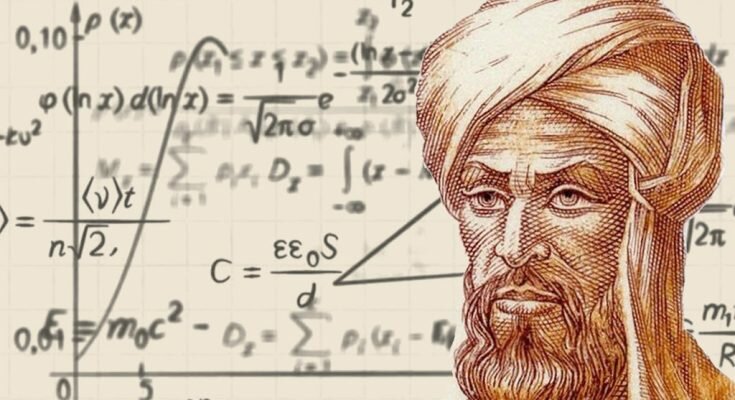
Muhammad ibn Musa al-Khwarizmi, a 9th-century Persian scholar working in Baghdad's House of Wisdom, wrote a treatise on systematic methods for solving equations.

His name, Latinized centuries later as "algorithmi," became attached to the step-by-step methods he described — and eventually to the general concept itself.

(His other book's title gave us a second word: al-jabr — "algebra.")

>> cross-referenced signal
  • ⇄ Muhammad ibn Musa al-Khwarizmi (c. 780 - 850 A.D.)
  • ⇄ House of Wisdom of Baghdad
  • ⇄ "an algorithm" to solve quadratic equation

Interlude: Pascal, Leibniz, and the Baroque

04.11.2026 · AE561104

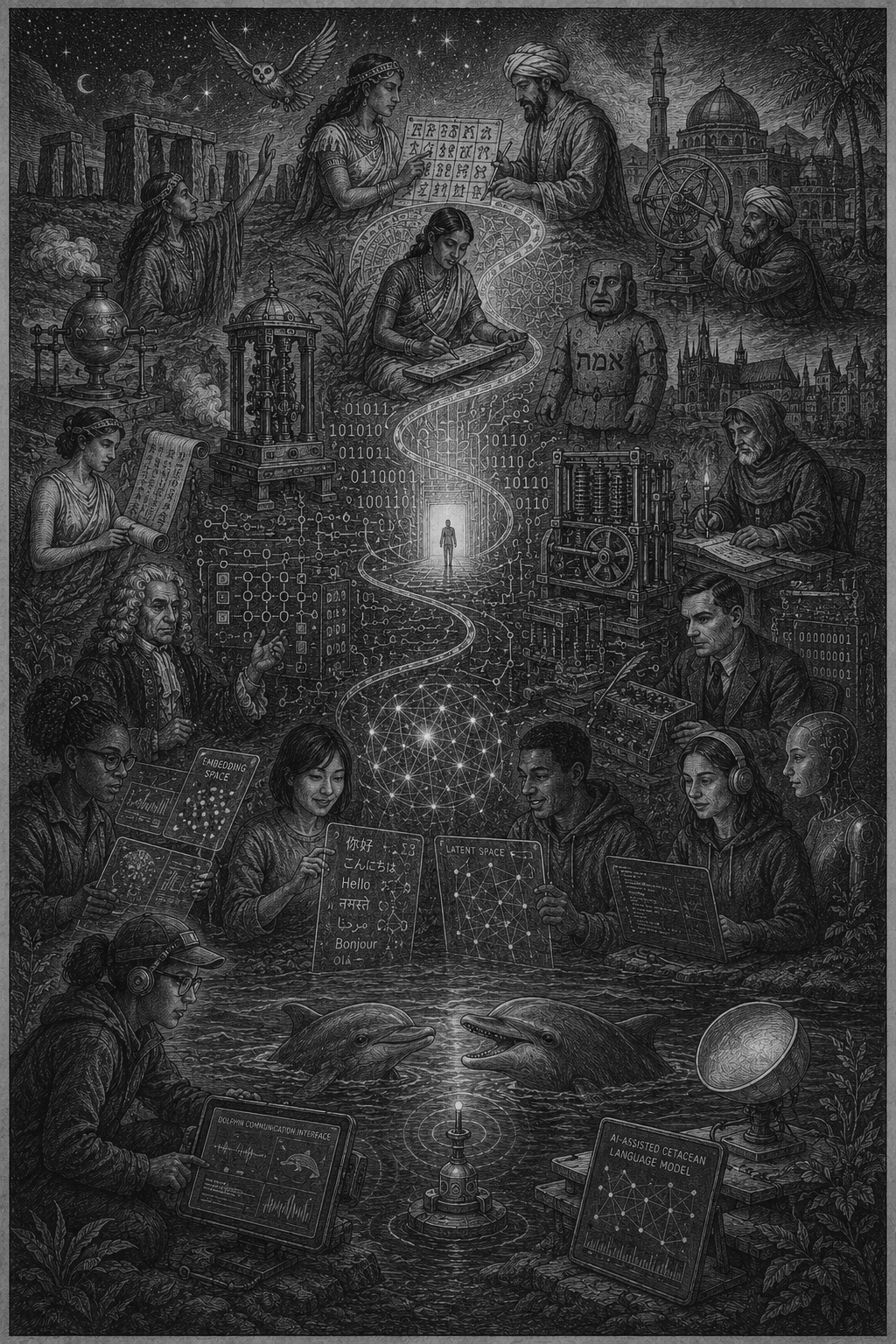
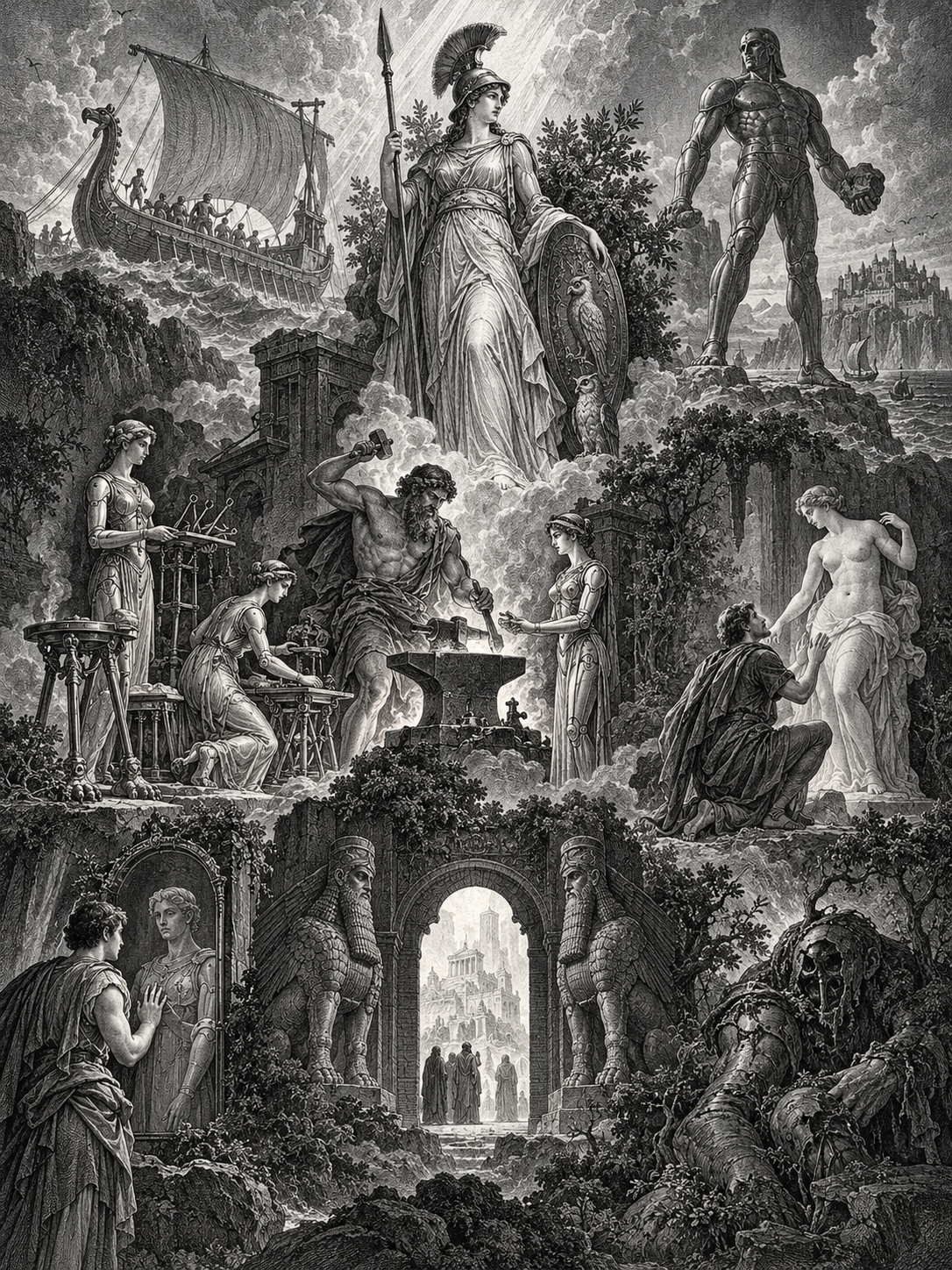
Rewind two centuries. Long before Babbage, long before steam, the same ancient appetite for mechanizing the mind was already stirring — in the Baroque.

In 1642, at nineteen, Blaise Pascal built the Pascaline to help his father with tax calculations — a gear-driven adding machine, among the first of its kind ever built and sold.

A generation later, Gottfried Wilhelm Leibniz — one of the last true polymaths, equally at home in philosophy, law, and mathematics — went further still, designing the Stepped Reckoner: a machine that could multiply and divide, not merely add and subtract.

Leibniz wanted more than a calculator. He dreamed of a calculus ratiocinator — a universal symbolic method by which any dispute, of any kind, could in principle be settled by calculation alone: "Let us calculate."

Cogs and steam would eventually belong to Babbage's century. But the dream — that reasoning itself might be mechanized — is, properly speaking, Baroque.
>> cross-referenced signal
  • ⇄ Baroquepunk, Steampunk & co.
  • ⇄ Blaise Pascal (1623 - 1662)
  • ⇄ Pascaline (mechanical calculator)
  • ⇄ Gottfried W. Leibniz (c. 1646 c. 1716)
  • ⇄ Leibniz wheel
  • ⇄ Leibniz's Dream

Steam and the Jacquard Loom

04.11.2026 · AE561104

By the early 1800s, the Industrial Revolution had already proven something remarkable: steam and gearwork could replace human muscle at scale.

Joseph-Marie Jacquard's loom (1801) went one step further — it replaced not just labor, but a kind of decision-making. A chain of punched cards, read mechanically, told the loom exactly which threads to raise for every single pass of the shuttle.

Change the cards, change the pattern. The procedure — the algorithm — was now separate from the machine that executed it, encoded on something you could hold in your hands.

Babbage noticed. He planned to use these very same punched cards to feed instructions into his own Analytical Engine.

>> cross-referenced signal

Charles Babbage's Engines

04.11.2026 · AE561104

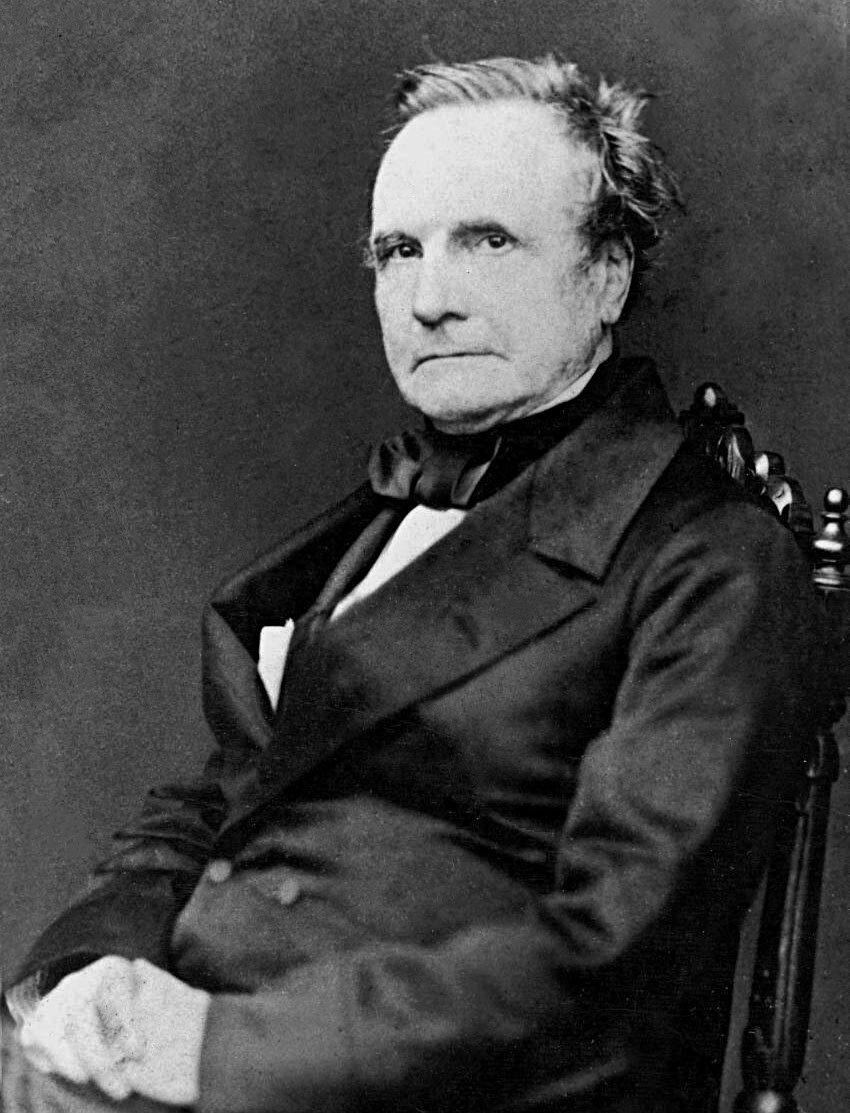
Charles Babbage (1791–1871) — mathematician, philosopher, mechanical engineer, and by most accounts a thoroughly restless Victorian gentleman.

His Difference Engine was a mechanical calculator, designed to compute polynomial values automatically — and to print the results, removing human error from mathematical tables.

His far more ambitious Analytical Engine was something else entirely: a general-purpose, programmable computer — a century before electronics made one practical. It had a "mill" (processor), a "store" (memory), and was to be fed instructions on Jacquard-style punched cards.

He never finished building it. But he had, in effect, designed a computer.

>> cross-referenced signal
  • ⇄ Charles Babbage (1791 - 1871)
  • ⇄ Turing answers his critics

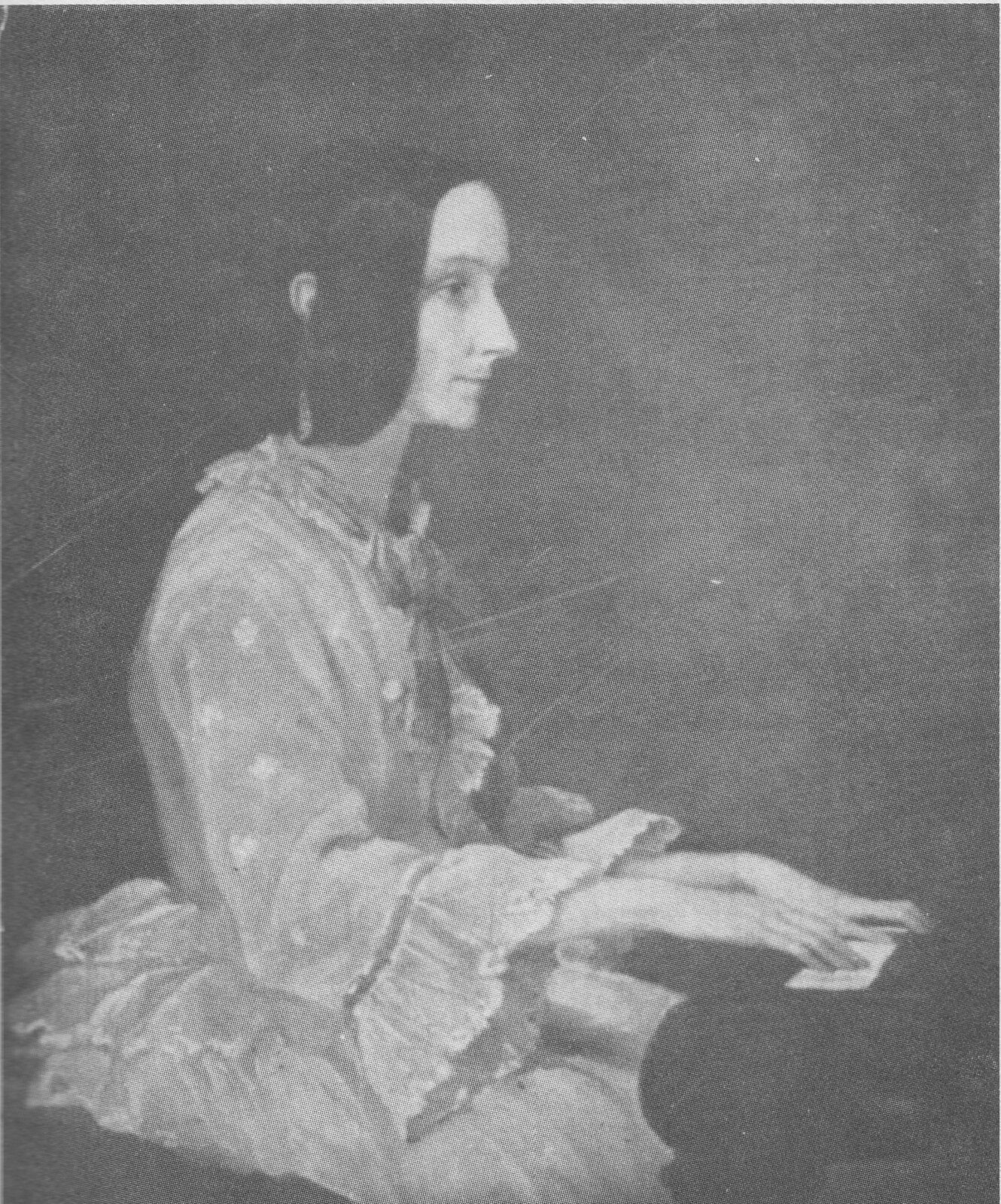
Ada Lovelace, the First Programmer

04.11.2026 · AE561104

Augusta Ada King, Countess of Lovelace (1815–1852), daughter of Lord Byron, was trained rigorously in mathematics from childhood — and became Babbage's closest intellectual collaborator.

In 1843, translating an Italian paper on the Analytical Engine, she added her own notes — three times longer than the original text. Among them: a step-by-step method for the Engine to compute Bernoulli numbers.

That method is widely considered the first published algorithm written specifically for a machine — making Lovelace, by most accounts, the first computer programmer, over a century before there was a computer to run it on.

She also saw further than Babbage himself: the Engine, she wrote, might one day manipulate not just numbers, but music and symbols of any kind. Others called her the Enchantress of Numbers.

>> cross-referenced signal
  • ⇄ Augusta Ada King, Countess of Lovelace (1812 - 1852)
  • ⇄ Turing answers his critics

One More Name: George Boole

04.11.2026 · AE561104

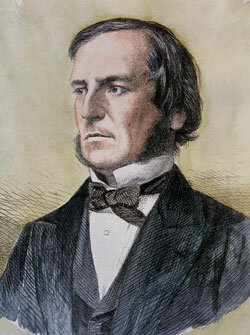
One more figure worth knowing, even briefly: George Boole (1815–1864), who in 1854 published The Laws of Thought — reducing logical reasoning itself to a kind of algebra, with only two values: true and false.

Boolean algebra sat unused for decades as a philosophical curiosity. In the 20th century it became the literal switching logic inside every digital circuit ever built.

Babbage's engine, Lovelace's program, Boole's logic — three separate threads in the 1800s, waiting nearly a hundred years for electronics to braid them together. We'll pick that thread up again later in this course.

>> cross-referenced signal
  • ⇄ George Boole (1815 - 1864)

Closing: What's Next

04.11.2026 · AE561104

Today: a definition, a history, a name.

Next week: Alan and his Enigma — the story of Alan Turing, his machine(s), and his test(s).

We'll meet the Turing machine that finally gave "algorithm" a single, rigorous, universal meaning — and ask what happens when the body running one never gets tired, never gets bored, and never stops.

>> cross-referenced signal

Alan and his Enigma

11.11.2026 · AE561111
The story of Alan Matthison Turing, his machine(s) and his test(s)
>> cross-referenced signal
  • ⇄ Closing: What's Next
  • ⇄ Turing Visits Bell Labs

Watch: Alan Turing's Machines

10.11.2026 · AE561110

We start with a 1966 BBC programme, made twelve years after his death.

While you watch, keep one question in mind: what is this “machine” made of?

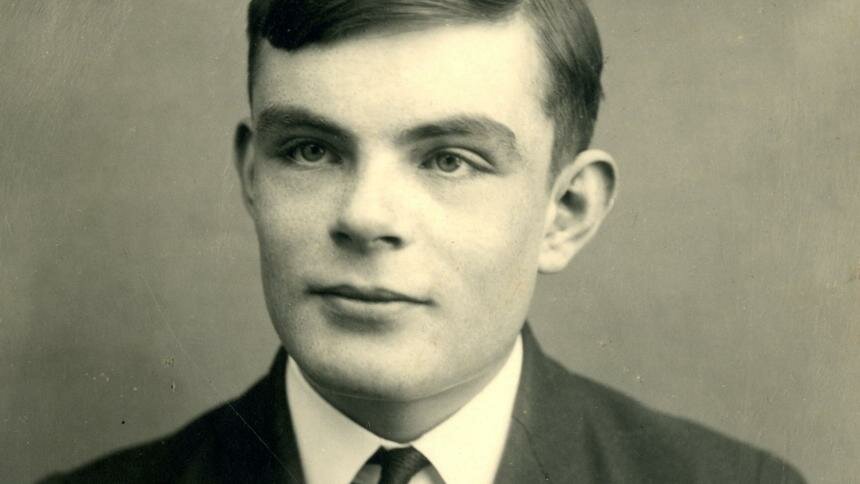
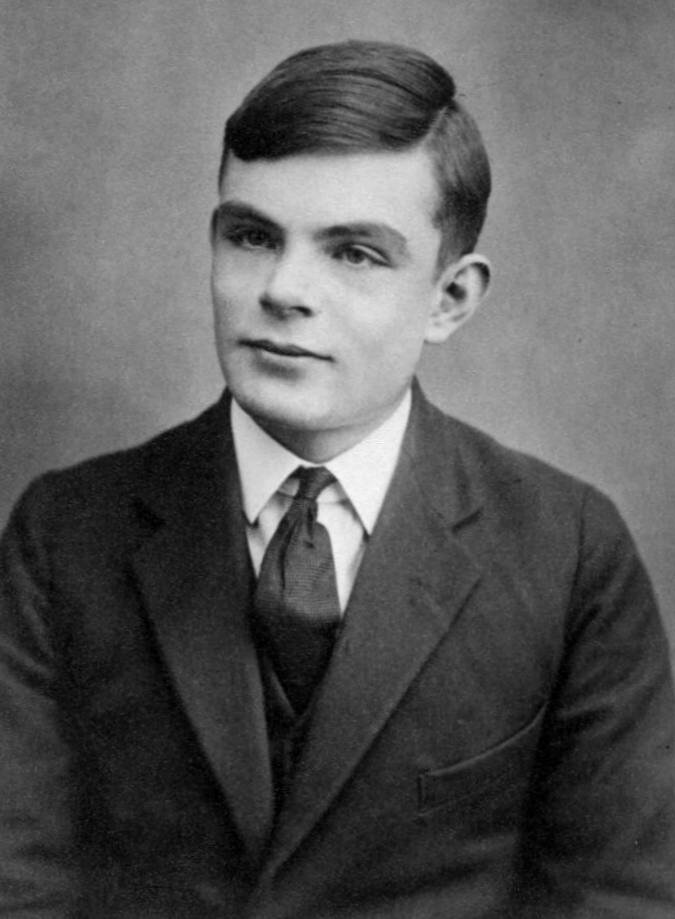
Alan Matthison Turing (1912–1954)

10.11.2026 · AE561110

Born in London, 23 June 1912. Mathematician: Cambridge, then Princeton.

1936, aged 23: On Computable Numbers — the paper that defines the computer before any computer exists.

1939–45: Bletchley Park, breaking German naval Enigma.

1945–50: designs an electronic computer; 1950: Computing Machinery and Intelligence.

1952: convicted for homosexual acts, chemically castrated. 7 June 1954: dead of cyanide poisoning, aged 41. Royal pardon: 2013.

The man who asked whether machines can think was not allowed to be what he was.

>> cross-referenced signal
  • ⇄ The imitation game
  • ⇄ Descartes

The imitation game

01.01.1950 · AE-200101

The game as Turing wrote it

10.11.2026 · AE561110

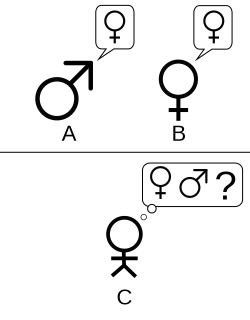
Turing refuses to define “think”. He calls the question “too meaningless to deserve discussion” and replaces it with a game.

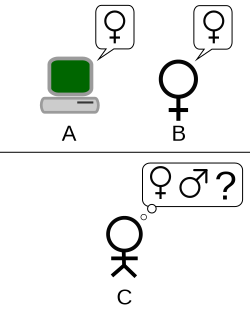
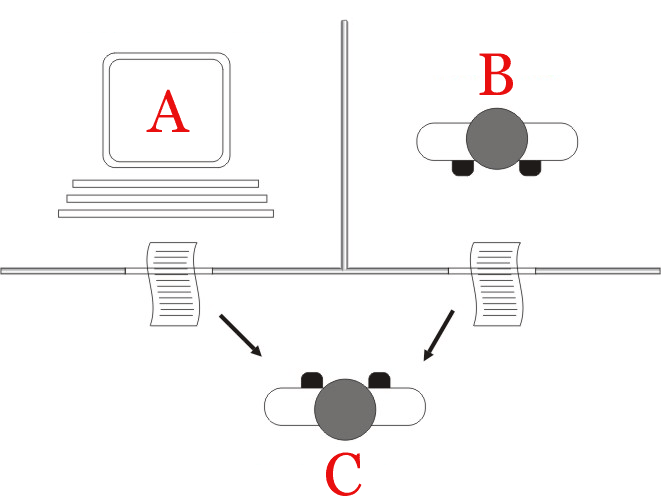
Three players: A (a man), B (a woman), C (the interrogator, in another room). C types questions and must tell who is the woman. A tries to deceive. B tries to help.

Now let a machine play A. Does C get it wrong as often as before?

His prediction: around the year 2000, an average interrogator would have no more than a 70% chance of a right identification after five minutes.

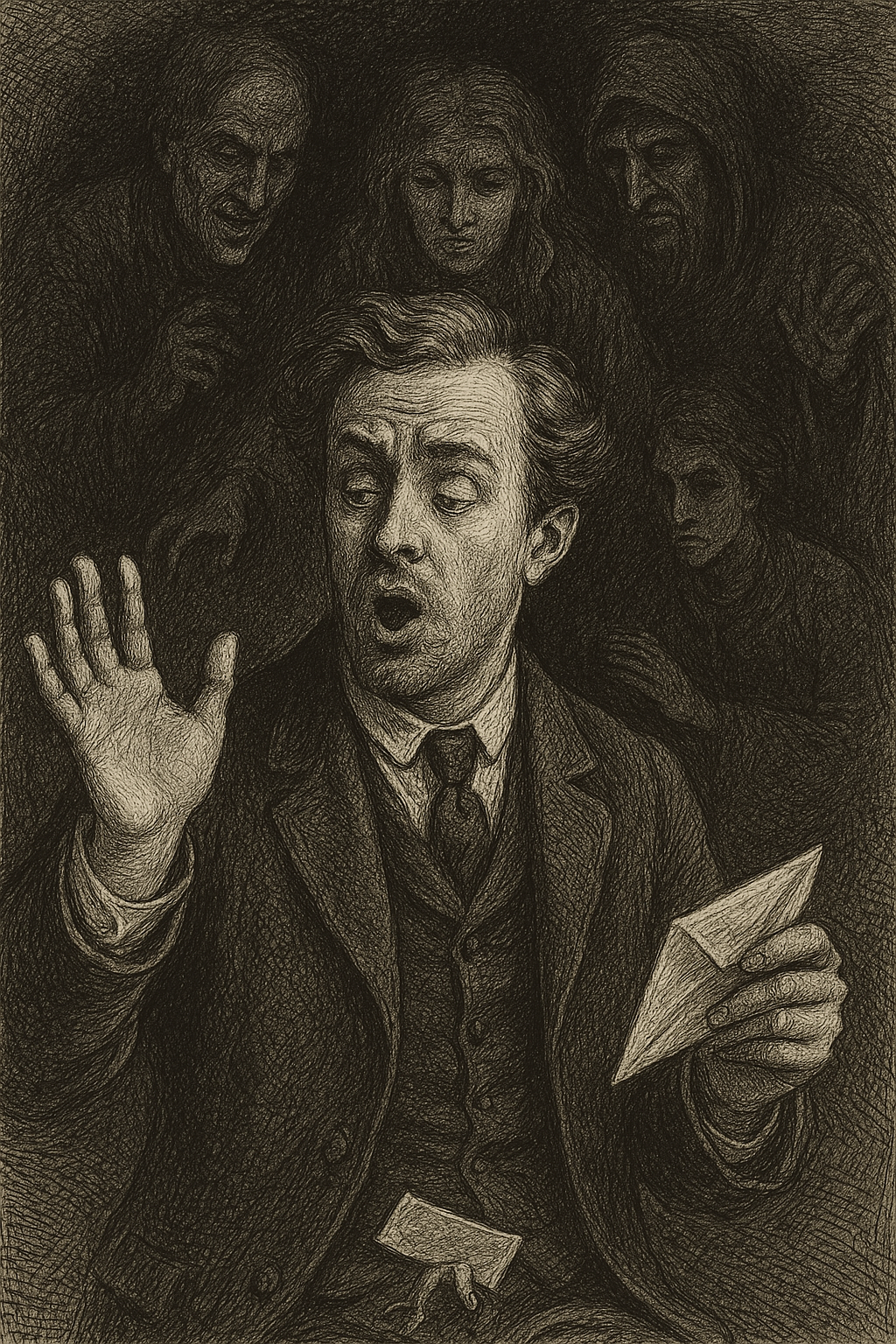
The game is called imitation — and it is about gender, deception and performance.

>> cross-referenced signal

Turing test

01.01.1950 · AE-200101

"A TT is a way how to address the question "Can machines think?" in a scientifically plausible ye deeply empathic way. More concretely, Turing (1950) proposes that the performance of an AA under question shall be evaluated by a human judge J whose objective is to determine which among two entities - with whom J is in real-time interaction - is of human and which is of artificial nature." (Hromada, 2012)

Watch: Can machines think?

10.11.2026 · AE561110

The famous question, in video form.

While watching, note the one objection you would raise.

Turing answers his critics

10.11.2026 · AE561110

Section 6 of the paper lists nine objections, among them theological, mathematical, from consciousness — and Lady Lovelace's.

Lovelace (1843): the Analytical Engine “has no pretensions to originate anything. It can do whatever we know how to order it to perform.”

Turing: machines surprise me all the time. And instead of programming an adult mind, build a child machine and educate it.

Keep that sentence. It is the first mention of a learning machine.

>> cross-referenced signal
  • ⇄ Charles Babbage's Engines
  • ⇄ Ada Lovelace, the First Programmer

Does the test still work?

10.11.2026 · AE561110

ELIZA (Weizenbaum, 1966): a few pattern rules, and some users confided in it anyway.

The Chinese Room (Searle, 1980): symbols shuffled correctly, nothing understood.

Recent controlled studies report that large language models are judged to be human about as often as, or more often than, real humans (Jones & Bergen).

The test measures our credulity as much as the machine's intelligence.

>> cross-referenced signal
  • ⇄ Exercicio :: Musical Turing Test

Exercise · Meet Alan

10.11.2026 · AE561110

Alan is a Matrix bot (@alan:udk.ai) running on our own server. You will chat with “Alan” — but behind him may be an AI persona or another student. Alan relays every message, so you are never told which is which.

How to reach him: in Element (with your account on udk.ai or medienhaus.udk-berlin.de) start a direct message with @alan:udk.ai and type start.

Alan pairs you with a waiting fellow student or with an AI persona. After a few minutes he asks: “Am I a human or AI?” Then comes the reveal: which persona (and model) it was — or, if you spoke with a human, who.

Good to know: Alan cannot read encrypted chats, so use a normal unencrypted DM (if you invite him to an encrypted one, he leaves and opens a fresh DM with you). The conversations are stored for the course evaluation — don't share anything private.

Try Turing's own questions: “Please write me a sonnet on the Forth Bridge.” “Add 34957 to 70764.”

Decide: human or machine? Write down the three cues that decided it.

Turing's machine answered 105621. The right answer is 105721.

>> cross-referenced signal
  • ⇄ Exercicio :: Musical Turing Test

Debrief · What gave him away?

10.11.2026 · AE561110

Which cues did you use? Speed? Spelling? Politeness? Never saying “I don't know”? A body, a weather, a bad day?

Humans make typos and slip. Turing wrote that a machine should deliberately introduce mistakes to be convincing.

Which cues tell you about the machine, and which only about your expectations of humans?

Back to your criterion from the Question of the Day: did Alan meet it?

>> cross-referenced signal
  • ⇄ Fehlleistungen
The Imitation Game (2014): the interview scene

Enigma

10.11.2026 · AE561110

Enigma: a German cipher machine. Press a key, a different letter lights up — and the rotors turn, so the next key is scrambled differently.

Bletchley Park: Turing designs the Bombe, a machine that hunts for the day's settings (building on Polish work).

A machine breaking a machine.

And enigma is also what we call a riddle. Keep both meanings in mind.

The question Hilbert asked

10.11.2026 · AE561110

1928, David Hilbert: is there a mechanical procedure that decides, for any mathematical statement, whether it is provable?

Leibniz had dreamed of it: let us calculate.

1931, Kurt Gödel: every consistent formal system has true statements it cannot prove.

1936, Alonzo Church and Alan Turing, independently: no such procedure exists.

But to prove that nothing can be done, you first need to say exactly what “a procedure” is.

>> cross-referenced signal
  • ⇄ Meta-Problem in Light of Turing's Entscheidungsproblem
  • ⇄ Leibniz's Dream
  • ⇄ A Working Definition

Computers were people

10.11.2026 · AE561110

Until the 1940s a “computer” was a person who computes — often a woman with pencil and paper at a desk.

Turing asks: what does such a person actually do?

Looks at a symbol. Writes a symbol. Changes their state of mind. Moves on to the next square.

Strip away everything else:

a tape, a head, a finite list of rules.

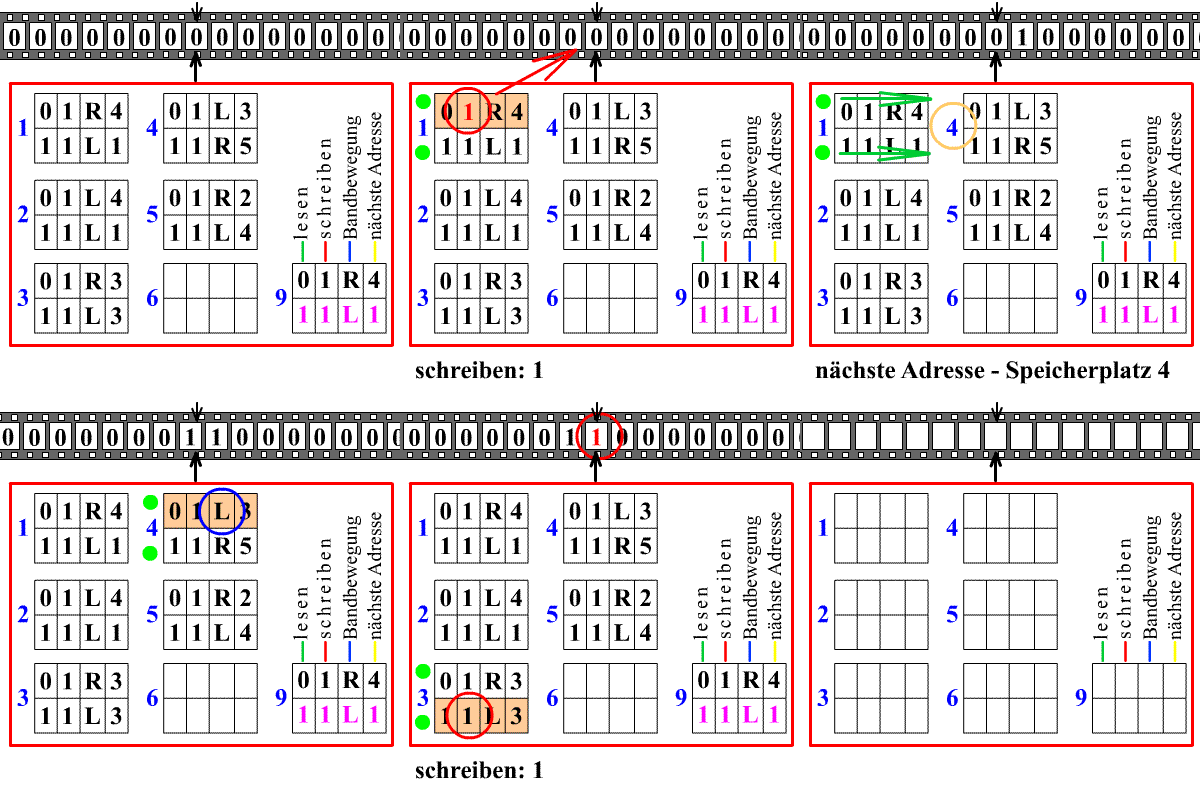
a Turing machine #1

01.01.1936 · AE-340101
A "theoretical" machine consisting of
  • tape with discrete symbols
  • reading/writing header
  • table of rules
  • tape-moving mechanism
Visualization of the Turing Machine (Rosario van Tulpe, 2007, CC BY-SA)
>> cross-referenced signal
  • ⇄ The Thumb Is the State
  • ⇄ Exercise · Human Turing Machine

Exercise · Be the machine

10.11.2026 · AE561110

The tape holds a binary number: 1 0 1 1. The head stands on the rightmost digit. State: CARRY.

CARRY reads 1 → write 0, move left, stay in CARRY

CARRY reads 0 or blank → write 1, STOP

Run it with pencil and paper. What is on the tape when it stops? Now try 1 1 1.

It adds one: 1011 → 1100, 111 → 1000. Three rules, no understanding.

Anything you would call an algorithm can be written as such a table (Church–Turing thesis).

>> cross-referenced signal

Exercise · Your hand is a Turing machine

10.11.2026 · AE561110

Counting from 0 to 31 on the fingers of one hand is a Turing machine at work. Here is its anatomy:

Tape — your five fingers: thumb = rightmost cell, little finger = leftmost. Symbols — 1 finger up, 0 finger down.

Head — the finger you are looking at; it starts on the thumb. States — CARRY (start) and HALT.

Transition rules
CARRY reads 1 → write 0 (fold it down), move left, stay in CARRY
CARRY reads 0 → write 1 (raise it), HALT

One run = one count. Take 7 → 8: tape 0 0 1 1 1. Thumb 1→0, index 1→0, middle 1→0, ring 0→1, halt: 0 1 0 0 0.

Counting to 31 means starting the machine 31 times (57 steps in all). Same two rules every time; nothing in it “knows” what a number is. Adding two numbers on two hands is the same idea with a bigger rule table.

Now count up from 31: the head falls off the left end. Turing's tape is infinite; your hand is not. Borrow your other hand — or paper — and keep going.

Universal Turing machine

01.01.1936 · AE-340101
"It is possible to invent a single machine which can be used to compute any computable sequence. If this machine U is supplied with a tape on the beginning of which is written the S.D ["standard description" of an action table] of some computing machine M, then U will compute the same sequence as M." (Turing, 1936)

The tape can hold a machine

10.11.2026 · AE561110

A universal machine reads the rules of another machine from its tape and behaves like it.

Program = data. Your laptop is such a machine; an app is just a long tape.

And a program that treats programs as data can also change them. Hold on to this for the learning machines.

>> cross-referenced signal

Halting Problem

01.01.1936 · AE-340101
  • halting problem is the problem of determining, from a description of an arbitrary computer program and an input, whether the program will finish running (i.e., halt) or continue to run forever
  • Turing proved that a general algorithm to solve the halting problem for all possible program-input pairs cannot exist
  • to prove this, he described a paradox involving a concept now known as "Turing machine"

Halting · the trick in four lines

10.11.2026 · AE561110

Suppose a program H(p, x) always answers correctly: “p halts on x” or “p loops forever”.

Build D(p): ask H(p, p). If it says halts, loop forever. If it says loops, stop.

Run D on itself. Halts if and only if it loops.

Contradiction: H cannot exist. Some questions about programs no program can answer.

Question of the Day · Can machines think?

10.11.2026 · AE561110

Turn to your neighbour. Two minutes.

What would a machine have to do for you to say “yes, it thinks”?

Write the criterion down.

We will test it at the end of the session.

>> cross-referenced signal
  • ⇄ Can Machines Think
  • ⇄ What does it mean "to think" ?

philosopher's definition of "thinking"

01.01.1950 · AE-200101
“We may say that thinking is essentially the activity of operating with signs.”

— Ludwig Wittgenstein, The Blue Book (1933–1934), p. 6 of the commonly used edition

The enigma remains

10.11.2026 · AE561110

Turing machine: what can be computed — defined by what a procedure does, not what it is made of.

Turing test: what we will call intelligent — defined by how it behaves toward us.

The question moves from “what is it?” to “what does it do with us?”

Next: Claude, Marvin, John &c. — from information theory to Dartmouth.

>> cross-referenced signal
  • ⇄ From Claude v0.0.1 to John, Marvin &c.
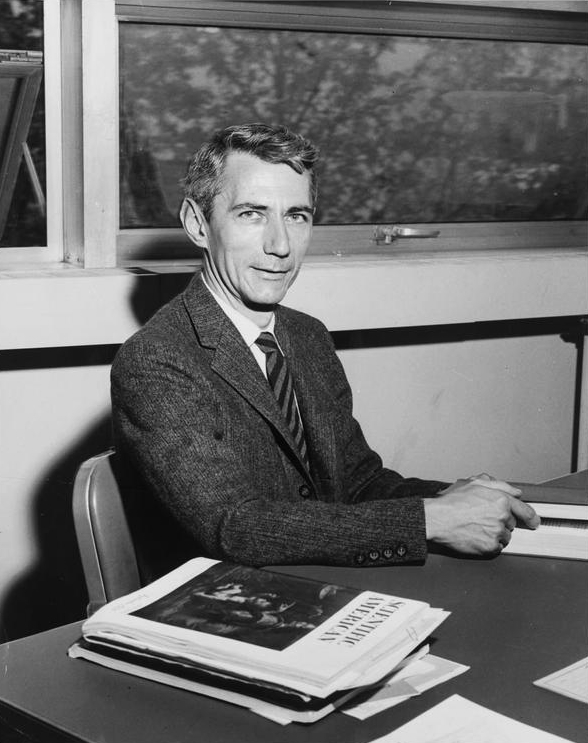
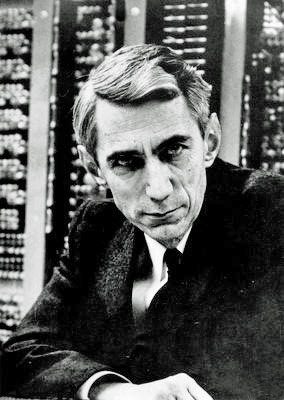
Claude Shannon at his desk, 1958 · MIT Museum / MIT Photo Service (public domain) · Wikimedia Commons

From Claude v0.0.1 to John, Marvin &c.

18.11.2026 · AE561118

In which the reader is made acquainted with a young gentleman of Michigan who, observing that the wires of a telephone exchange could be made to reason, taught the whole world to count in Bits; who rode a unicycle through the corridors of the Laboratory, juggled upon it, and built a Machine whose sole purpose was to switch itself off.

Being a narrative of Mr. Claude Elwood Shannon (1916–2001): of his Thesis and the marriage of Logic with Electricity; of the Great War and its Secret Telephony; of the Transistor, that most remarkable event of the Christmas of 1947; of the Mathematical Theory of Communication; of a Mouse that Learned its Way; and of a Summer at Dartmouth, in which Artificial Intelligence received its name.

Wherein it is humbly submitted that the first Claude was not a language model at all.

>> cross-referenced signal
  • ⇄ The enigma remains
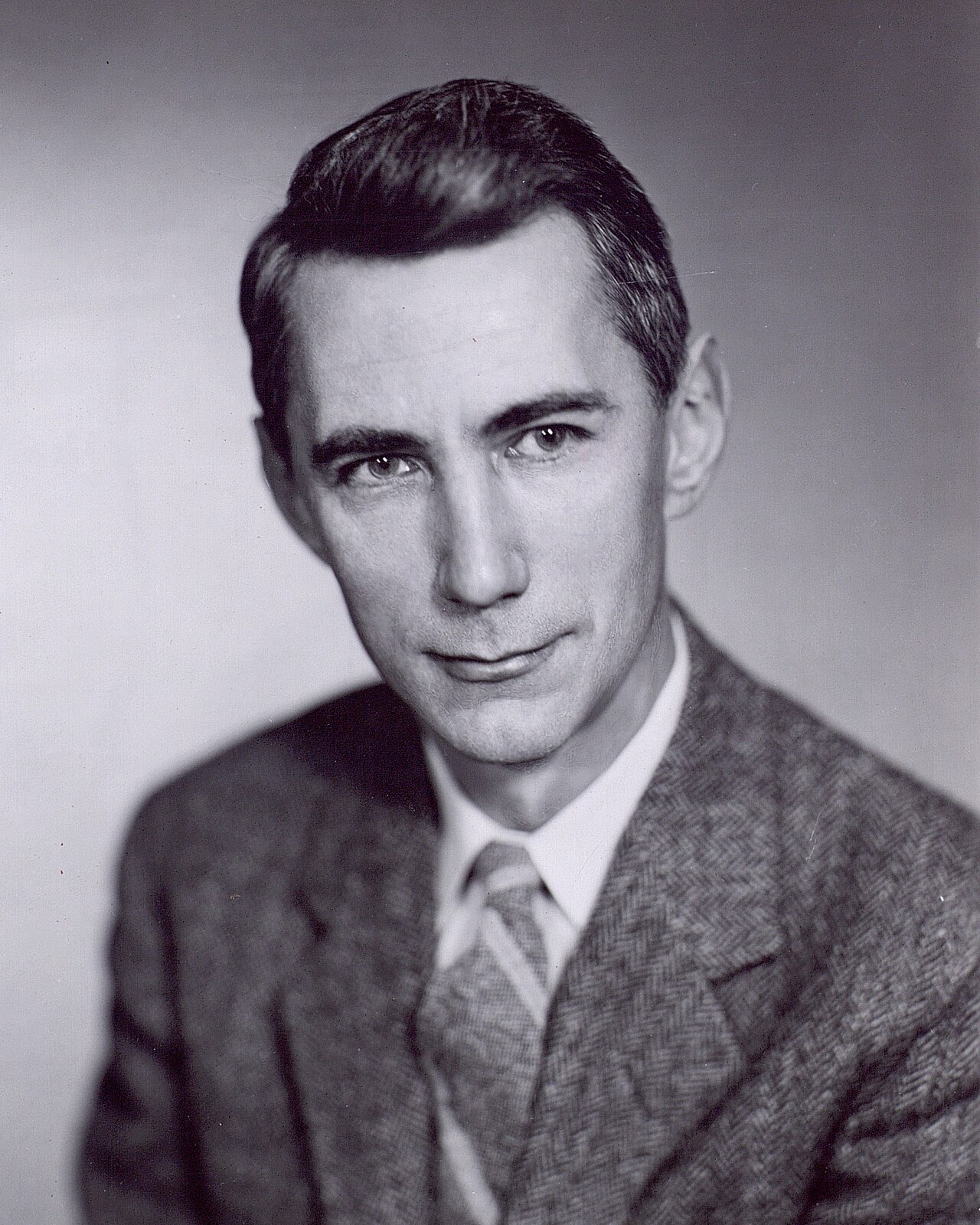
Claude Shannon, Bell Telephone Laboratories photograph · public domain · Wikimedia Commons

A Boy from Michigan

24.11.2026 · AE561124

1916–1936. A tinkerer who happened to study both electrical engineering and mathematics.

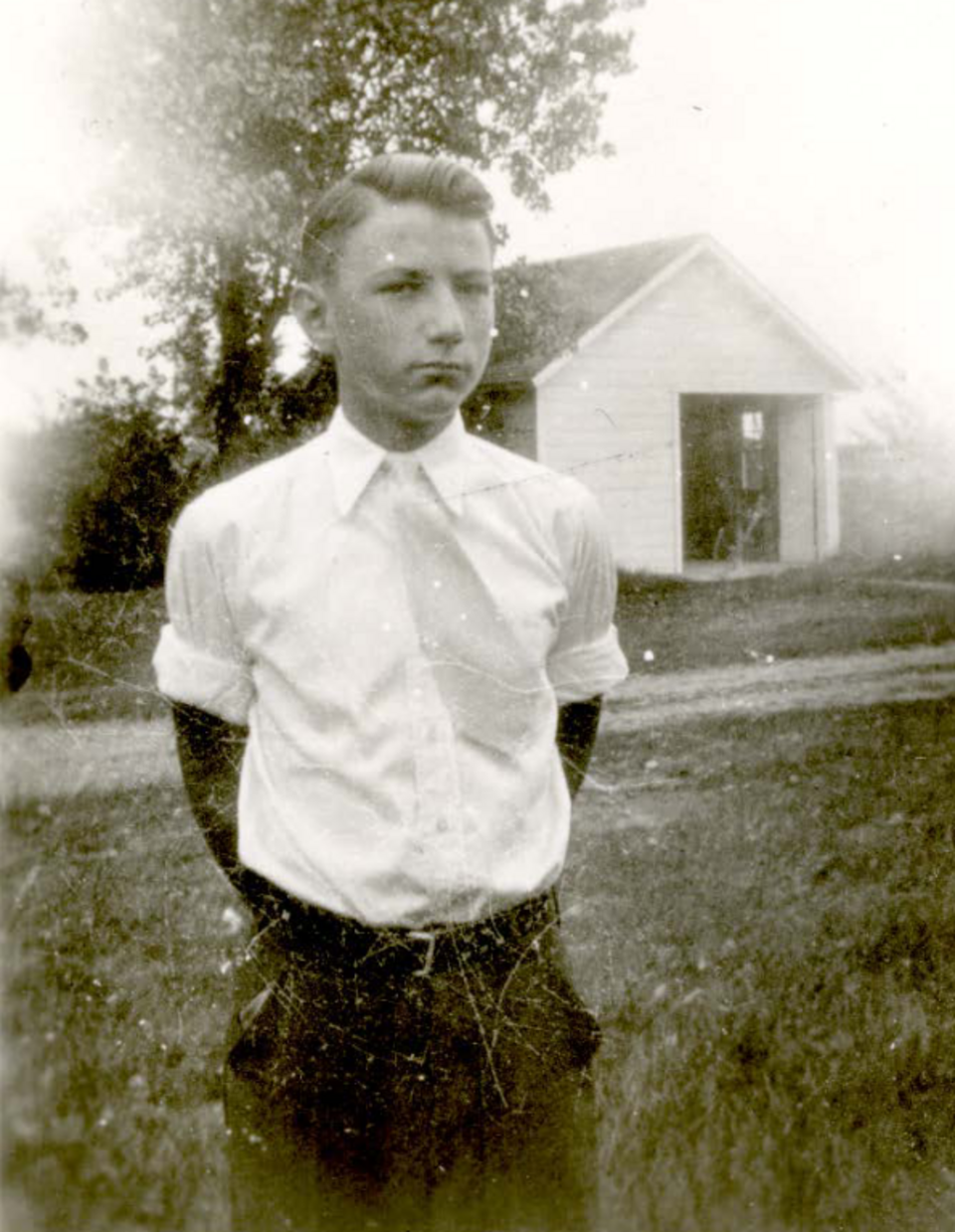
Claude Shannon as a youth, c. 1930 · public domain · Wikimedia Commons

Gaylord, Michigan

24.11.2026 · AE561124
  • Born 30 April 1916 in Petoskey, Michigan; grew up in Gaylord.
  • A boy of gadgets: model planes, a radio-controlled boat …
  • … and a telegraph to a friend’s house, run along a barbed-wire fence.
  • He admired Thomas Edison — and later learned that they were distant relatives.

Two Degrees, One Idea

24.11.2026 · AE561124
  • 1936: University of Michigan, a bachelor’s degree in both electrical engineering and mathematics.
  • In a philosophy course he met George Boole’s Laws of Thought (1854) — algebra of True and False.
  • In an engineering course he met the relay: a switch driven by a coil.
  • Nobody had yet put the two on the same table.
Integrator unit of the Differential Analyzer, MIT, by Daderot · CC0 · Wikimedia Commons

The Master’s Thesis (1937)

24.11.2026 · AE561124

“A Symbolic Analysis of Relay and Switching Circuits” — the moment when logic and electricity were found to be the same thing.

Integrator unit of the Differential Analyzer, MIT Museum, photo by Daderot · CC0 · Wikimedia Commons

Vannevar Bush’s Differential Analyzer

24.11.2026 · AE561124
  • 1936: Shannon goes to MIT and becomes research assistant on Vannevar Bush’s Differential Analyzer.
  • A room-sized analog computer: shafts, discs and wheels solving differential equations.
  • Its control circuits consisted of hundreds of electromechanical relays.
  • Designing them was done by trial, intuition and drawing: there was no theory.

A Symbolic Analysis of Relay and Switching Circuits

24.11.2026 · AE561124
  • Master’s thesis at MIT, 1937; published 1938; awarded the Alfred Noble Prize (1939).
  • Question: how to design a relay circuit systematically?
  • Answer: write it down as Boolean algebra, simplify the algebra, and read the circuit back off the formula.
  • The same algebra also works the other way: a circuit can calculate a logical statement.
>> cross-referenced signal
  • ⇄ A Relay Is a Logical Switch

The Morphism: Boole ↔ Wire

24.11.2026 · AE561124
CircuitAlgebra
switch open / closed0 / 1
two switches in seriesAND (A·B)
two switches in parallelOR (A+B)
normally-closed contactNOT (A′)
  • A structure-preserving map (a morphism) between two worlds that nobody had connected.
  • Everything proven in the algebra holds for the wires — and the reverse.
  • This is the bridge crossed in the last session: logic → gates → machine.
>> cross-referenced signal
  • ⇄ Logic, Gates, Machine
  • ⇄ Algebra, Really
  • ⇄ A Relay Is a Logical Switch
  • ⇄ NAND Is Enough

Exercise · The Staircase Lamp

24.11.2026 · AE561124

A lamp at the top of a staircase, a switch at the bottom, a switch at the top: either switch should toggle the lamp.

  • Truth table: lamp = 1 exactly when the two switches differ. Which gate is that?
  • In couples: one partner is switch A, the other switch B (hand up = 1). A third person is the lamp. Prove the table.
  • Write it as a formula (A·B′ + A′·B) and draw it as series/parallel wiring.
  • Real two-way switches use a clever crossover wiring. Why is that XOR?
>> cross-referenced signal
  • ⇄ The Fourth: XOR
  • ⇄ Which “or” Do You Mean?

Most Important Thesis of the Century?

24.11.2026 · AE561124
  • Psychologist Howard Gardner called it “possibly the most important, and also the most famous, master’s thesis of the century”.
  • Computer pioneer Herman Goldstine called it one of the most important master’s theses ever written.
  • Historians add a caveat: the ideas spread gradually; engineers did not change their habits overnight.
  • Whatever the verdict: it is where digital circuit design begins.
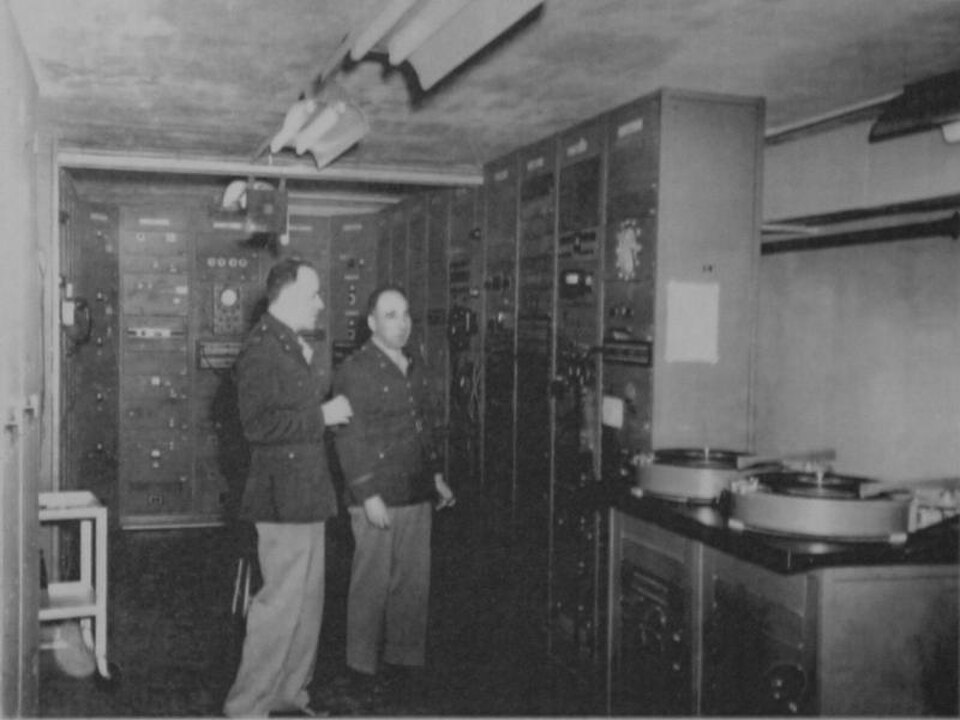
SIGSALY, 1943 (US Army Signal Corps) · public domain · Wikimedia Commons

War Years: Secrecy and Signals

24.11.2026 · AE561124

1940–1945. Mathematics in the service of secrets.

Claude Shannon, Bell Telephone Laboratories photograph · public domain · Wikimedia Commons

From Genetics to Bell Labs

24.11.2026 · AE561124
  • 1940: PhD at MIT — not on circuits, but “An Algebra for Theoretical Genetics”.
  • 1940–41: Institute for Advanced Study, Princeton (the neighbours: Einstein, Gödel, von Neumann).
  • 1941: joins Bell Telephone Laboratories, New York.
  • War work: fire-control for anti-aircraft guns and cryptography.
SIGSALY, 1943 (US Army Signal Corps) · public domain · Wikimedia Commons

SIGSALY: Encrypted Speech

24.11.2026 · AE561124
  • SIGSALY (1943): the secret telephone linking Churchill and Roosevelt.
  • Speech is sampled, quantised into levels and encrypted with a random key stored on vinyl records — one record per call.
  • In other words: digitised voice, decades before the digital age.
  • Shannon worked on secure speech and cryptography in just these years.

Turing Visits Bell Labs

24.11.2026 · AE561124
  • Early 1943: Alan Turing visits Bell Labs to inspect SIGSALY.
  • The two men meet over tea and talk about thinking machines.
  • Both had — from opposite sides — the idea of intelligence as symbol manipulation.
  • Two founders of computing, in one canteen: Turing (the machine) and Shannon (the information).
>> cross-referenced signal

Communication Theory of Secrecy Systems

24.11.2026 · AE561124
  • Written 1945 as a classified report, published 1949, a year after the great paper on communication.
  • Proof: the one-time pad is perfectly secret if the key is random, as long as the message, and never reused.
  • Encryption there is just XOR of message and key — the gate we met last session.
  • First time cryptography is placed on a mathematical basis.
>> cross-referenced signal
  • ⇄ The Fourth: XOR

Advising the Services

24.11.2026 · AE561124
  • During the war, Shannon was a consultant to the National Defense Research Committee.
  • 1951: letters between Bell Labs and the US cryptologic authorities show that his participation as a consultant was sought (von Neumann was involved).
  • Shannon himself, asked in a 1982 interview, avoided the question.
  • What is certain: the open and the secret research on communication developed side by side after 1948.
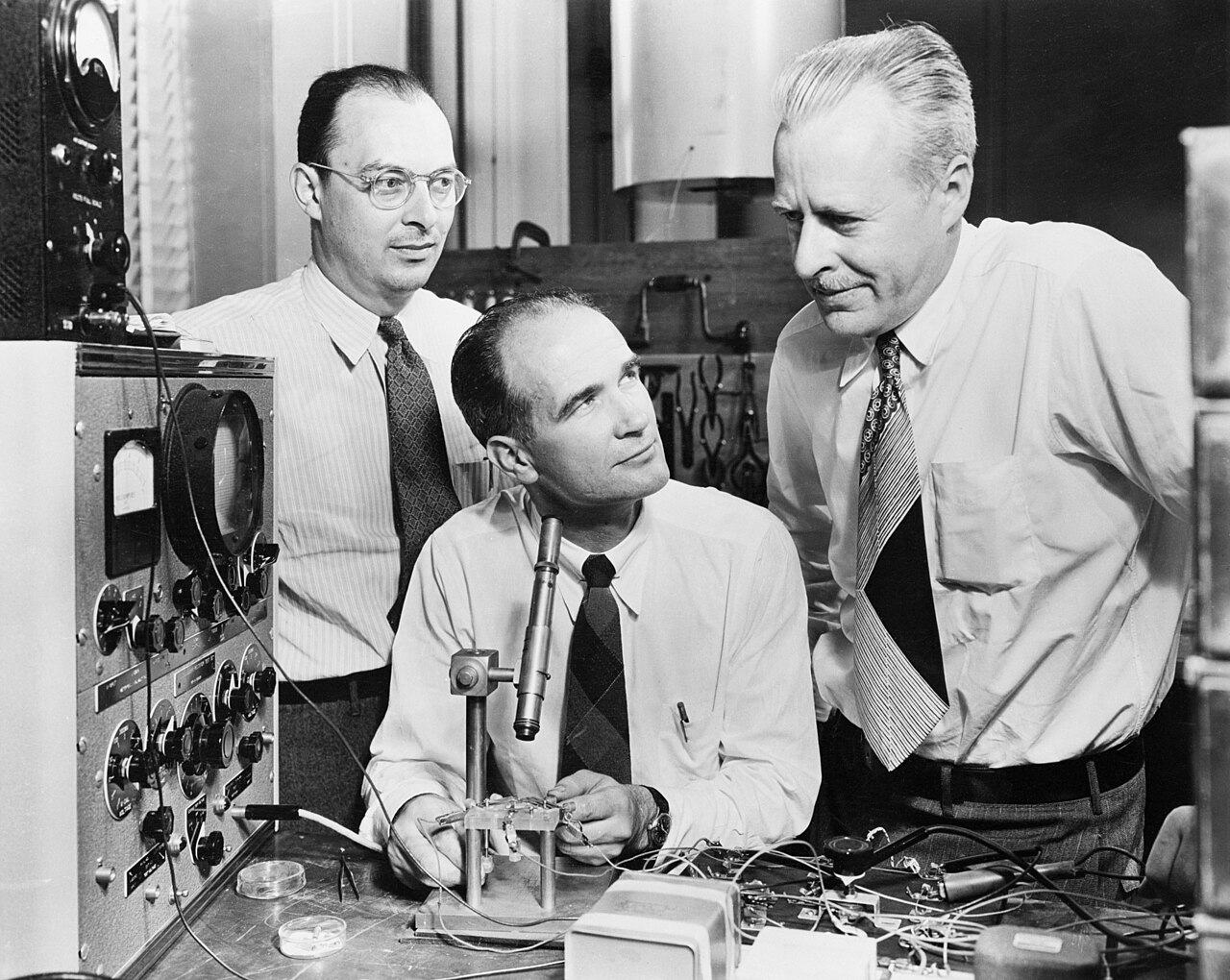
Bardeen, Shockley and Brattain at Bell Labs, 1948 · AT&T / public domain · Wikimedia Commons

Turning Point · December 1947: The Transistor

24.11.2026 · AE561124

In the same building where Shannon worked, a switch without moving parts was demonstrated for the first time.

Bardeen, Shockley and Brattain, 1948 · AT&T / public domain · Wikimedia Commons

Christmas at Bell Labs

24.11.2026 · AE561124
  • 16–23 December 1947: John Bardeen and Walter Brattain demonstrate a point-contact transistor to Bell Labs management; William Shockley leads the group.
  • Publicly announced on 30 June 1948.
  • 1956: Nobel Prize in Physics for all three.
  • Same company, same year as Shannon’s Mathematical Theory of Communication.
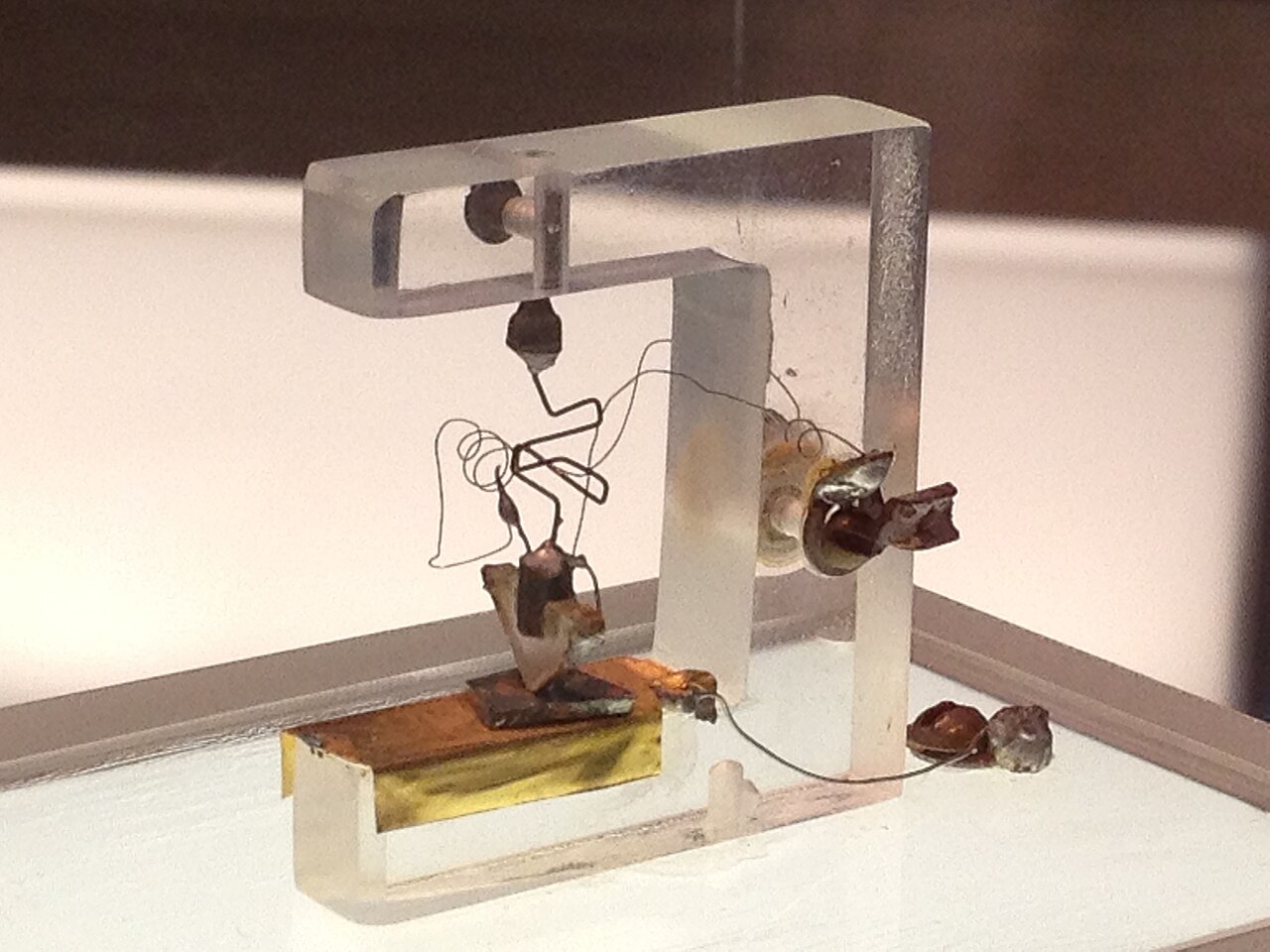
Point-contact transistor of the 1947 design, by Unitronic · CC BY-SA 3.0 · Wikimedia Commons

The First Transistor

24.11.2026 · AE561124
  • Germanium crystal, two gold contacts, a plastic wedge — a clumsy device.
  • It amplifies and, driven to extremes, switches.
  • A switch with no moving part, no glowing filament, hardly any heat.
  • The relay’s job — Shannon’s gate — can now be done by a speck of crystal.

Relay → Tube → Transistor

24.11.2026 · AE561124
SwitchPrincipleSpeed
Relaycoil moves a metal contactmilliseconds
Vacuum tubehot filament, electrons in vacuummicroseconds
Transistorcrystal, no moving partsnanoseconds and below
  • The algebra stays the same: AND, OR, NOT. Only the substrate changes.
  • This is why Shannon’s morphism scales from a few relays to billions of transistors.

When Bit Met Switch

24.11.2026 · AE561124
  • Shannon told us what a bit is and how many a message needs.
  • Shockley, Bardeen, Brattain made a bit physically cheap, fast and small.
  • Theory of the bit + hardware of the bit = the digital age.
  • Everything that follows in this session — and in this course — stands on that coincidence.
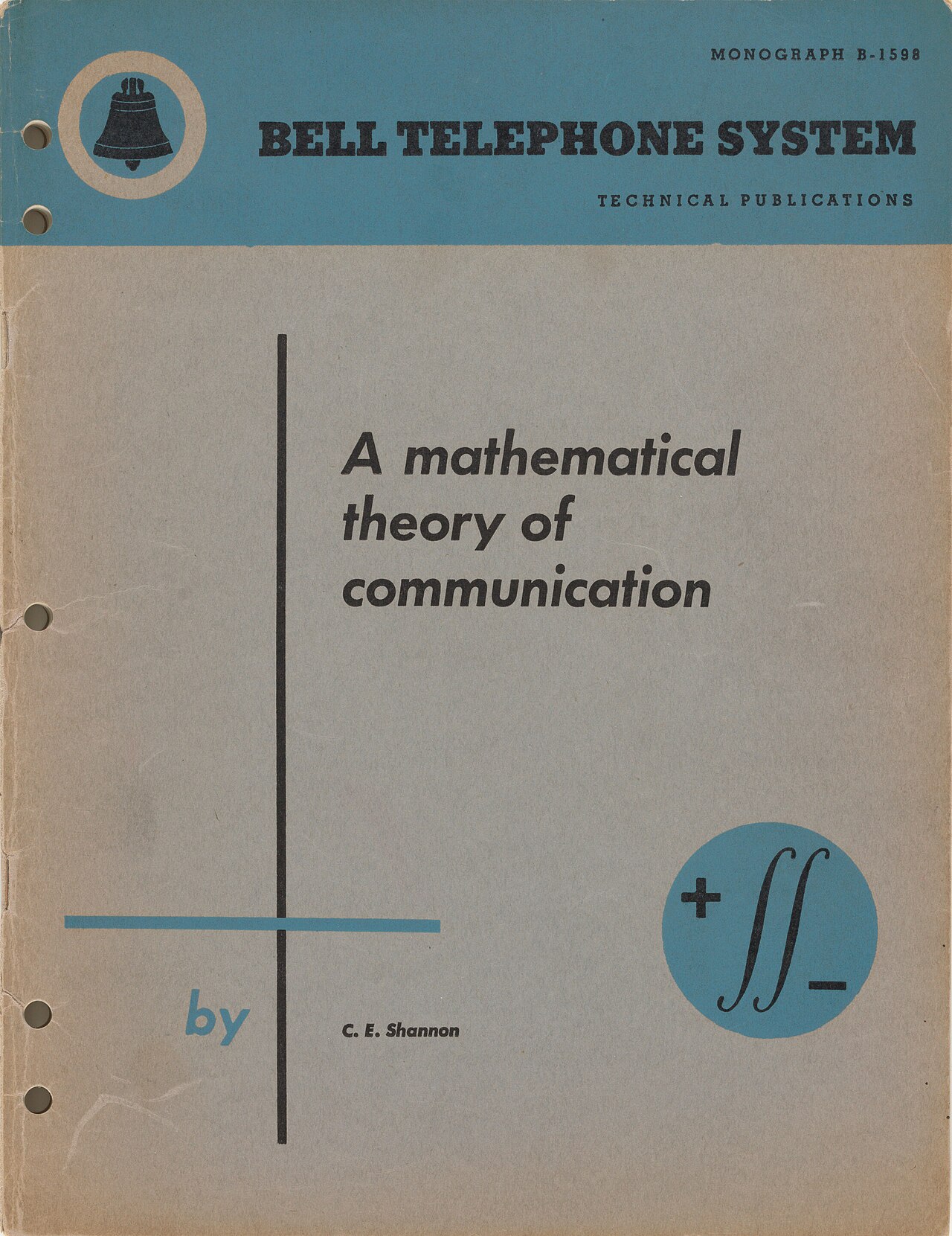
Offprint of the 1948 paper, Bell Telephone Laboratories · public domain · Wikimedia Commons

A Mathematical Theory of Communication (1948)

24.11.2026 · AE561124

Bell System Technical Journal, July and October 1948. “The fundamental problem of communication is that of reproducing at one point either exactly or approximately a message selected at another point.”

Fulltext (PDF) ↗

The Paper

24.11.2026 · AE561124
  • Published in two parts: July and October 1948, Bell System Technical Journal.
  • Later reissued as a book with Warren Weaver (1949).
  • Called the “Magna Carta of the Information Age”.
  • Founded a new science from nothing in about 80 pages.
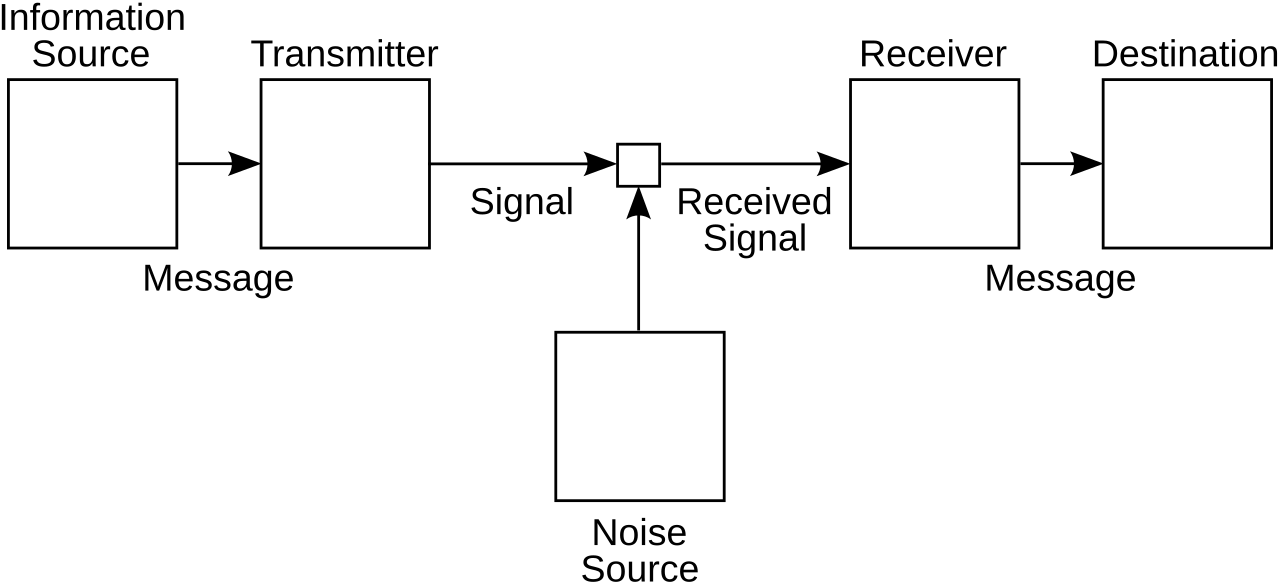
Shannon's communication system, diagram by Wanderingstan and Stannered · public domain · Wikimedia Commons

The Communication System

24.11.2026 · AE561124
  • Source → transmitter → channel (with noise) → receiver → destination.
  • The same diagram fits telegraph, telephone, radio, a conversation, DNA copying, a hard disk.
  • “The semantic aspects of communication are irrelevant to the engineering problem.” — meaning is not measured, only the choice among messages.

The Bit

24.11.2026 · AE561124
  • 1 bit = the information in a choice between two equally likely alternatives.
  • The word bit (“binary digit”) was suggested to Shannon by John W. Tukey.
  • Twenty questions: 20 yes/no answers separate 220 = 1,048,576 possibilities.
  • The amount of information is independent of what the message means.

Exercise · Twenty Questions

24.11.2026 · AE561124

In couples. One partner thinks of a number between 1 and 1000, the other asks only yes/no questions.

  • What is the best first question? (Why: it halves the possibilities.)
  • How many questions are enough for 1000 numbers? (10 — because 210 = 1024.)
  • Each good answer carries 1 bit. A question to which you already know the answer carries 0 bits.
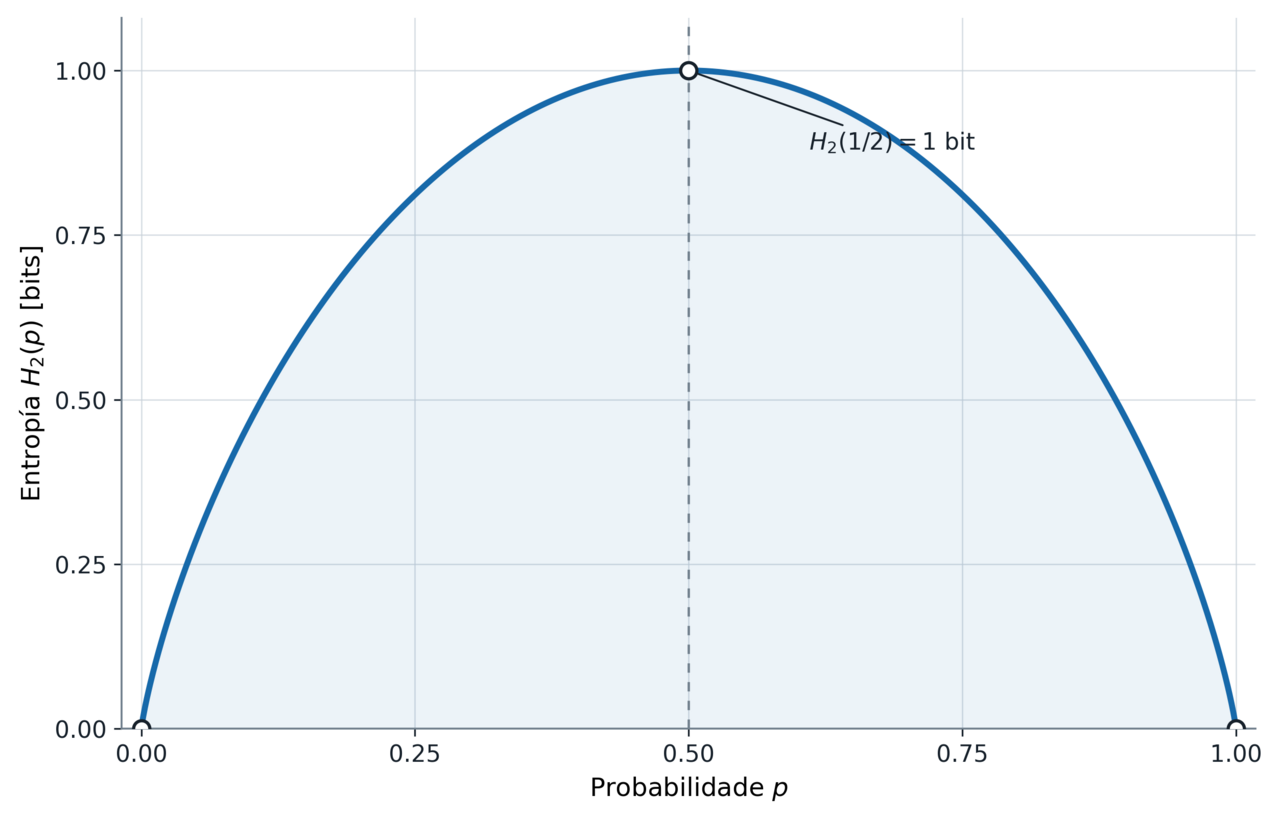
Binary entropy function, by Juanciño (labels in Portuguese) · CC BY-SA 4.0 · Wikimedia Commons

Surprise and Entropy

24.11.2026 · AE561124

H = − Σ pi · log2 pi

  • Entropy = average surprise per message, measured in bits.
  • Fair coin: 1 bit. Coin that gives heads 90% of the time: only 0.47 bit. A certain event: 0 bit.
  • Fair die: log2 6 ≈ 2.58 bits.
  • The more predictable the source, the less there is to say.

Why “Entropy”?

24.11.2026 · AE561124
  • The formula looks like the Boltzmann–Gibbs entropy of statistical mechanics.
  • A famous (and disputed) anecdote has John von Neumann advising Shannon to use the word: nobody knows what entropy really is, so in a debate he will always have the advantage.
  • Deeper reason: both measure how many microstates / messages are compatible with what we know.
  • Information and physics met here, and have not parted since.

The Two Great Theorems

24.11.2026 · AE561124
  • Source coding: a source of entropy H can be compressed to H bits per symbol — and no further. (ZIP, JPEG, MP3.)
  • Noisy-channel coding: every channel has a capacity C. Below C, communication can be made arbitrarily reliable by clever redundancy; above C, never.
  • Before 1948 engineers believed: more reliability = more power or slower speed. Shannon proved otherwise.
  • The proof was an existence proof: it took decades to build the codes (turbo, LDPC) that approach it.

Shannon’s Statistical English

24.11.2026 · AE561124

Approximating English by chains of words, 1948. Second-order word approximation from the paper:

“THE HEAD AND IN FRONTAL ATTACK ON AN ENGLISH WRITER THAT THE CHARACTER OF THIS POINT IS THEREFORE ANOTHER METHOD FOR THE LETTERS THAT THE TIME OF WHO EVER TOLD THE PROBLEM FOR AN UNEXPECTED”
  • Each word is chosen according to the word before it — a Markov chain.
  • Nonsense, but locally plausible English.
  • This is a language model — the ancestor of every GPT: predict the next token from what has come before.
  • Next-token prediction + more context + more data = the story of the last 75 years.
>> cross-referenced signal

Exercise · Guess the Next Letter

24.11.2026 · AE561124

In couples. Shannon’s own experiment of 1951.

  • Partner A chooses a sentence from a book and reveals it letter by letter, covering the rest.
  • Partner B guesses the next letter; A says “yes” or “no” until B is right.
  • Count the guesses. Early letters take many, later ones very few.
  • Result: English is highly redundant; Shannon estimated about 1 bit per letter — versus log2 27 ≈ 4.75 bits if letters were random.
Tech Icons: Claude Shannon — AT&T Tech Channel

Video · Tech Icons: Claude Shannon

24.11.2026 · AE561124
Theseus (1950) with Betty and Claude Shannon, MIT Museum, by Nickknack00 · CC BY 4.0 · Wikimedia Commons

Machines That Play and Learn

24.11.2026 · AE561124

1950–1952. Shannon turns the theory into contraptions.

Programming a Computer for Playing Chess

24.11.2026 · AE561124
  • 1950: Shannon’s paper — one of the first on computer chess, written before any machine could play it.
  • Core ideas still in use: an evaluation function for positions and minimax search of the move tree.
  • Type A programs look at all moves to fixed depth, Type B select promising lines — the human way.
  • He estimated about 10120 possible games: the Shannon number.
Theseus, MIT Museum, photo by Nickknack00 · CC BY 4.0 · Wikimedia Commons

Theseus, the Mouse

24.11.2026 · AE561124
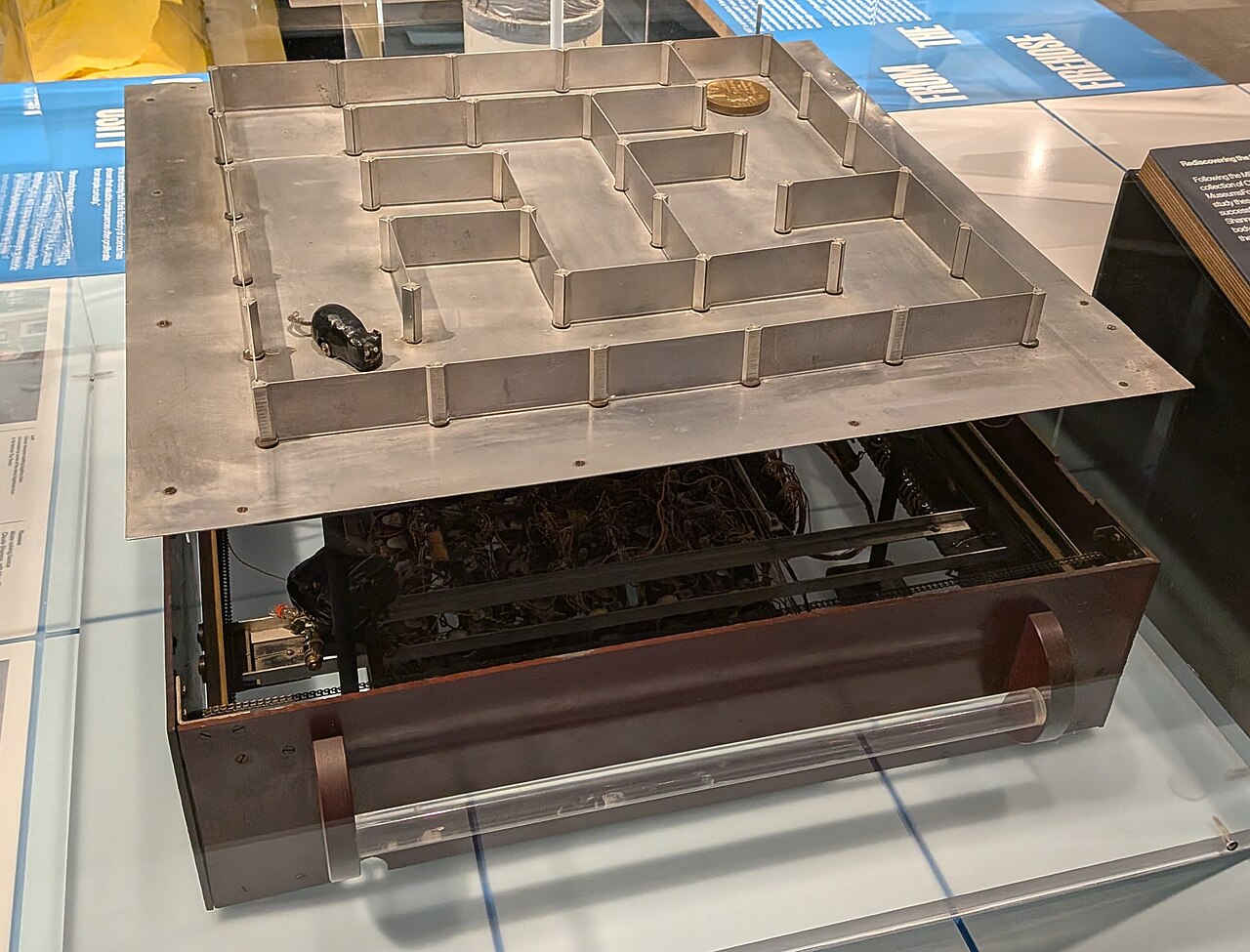
  • 1950: a magnetic mouse in a maze of movable walls, steered from below by an electromagnet and a bank of telephone relays.
  • First run: trial and error, bumping into walls — and the relays remember each turn.
  • Second run: straight to the cheese, no mistakes.
  • Move the walls: it explores again and adapts.
  • Named after Theseus and the Minotaur’s labyrinth — one of the first learning machines.
Claude Shannon demonstrates machine learning (Bell Labs film, early 1950s)

Video · Theseus at Work

24.11.2026 · AE561124

What Did the Mouse Learn?

24.11.2026 · AE561124
  • The memory is a state stored in relays: “in cell X, go north”.
  • The mouse is a finite state machine whose table gets written by experience.
  • Critics: the intelligence is in the maze — the mouse is a magnet, a visual gimmick; the relays just record the solution.
  • Question for discussion: is writing a solution into memory the same as learning? — Is this what a neural network does?
>> cross-referenced signal
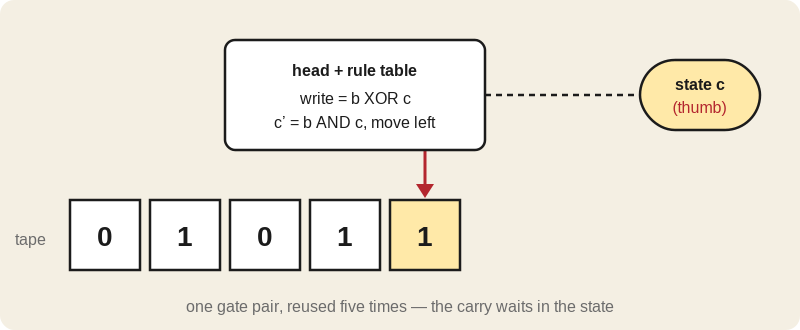
  • ⇄ Time: One Gate Pair, Many Steps
  • ⇄ The Thumb Is the State
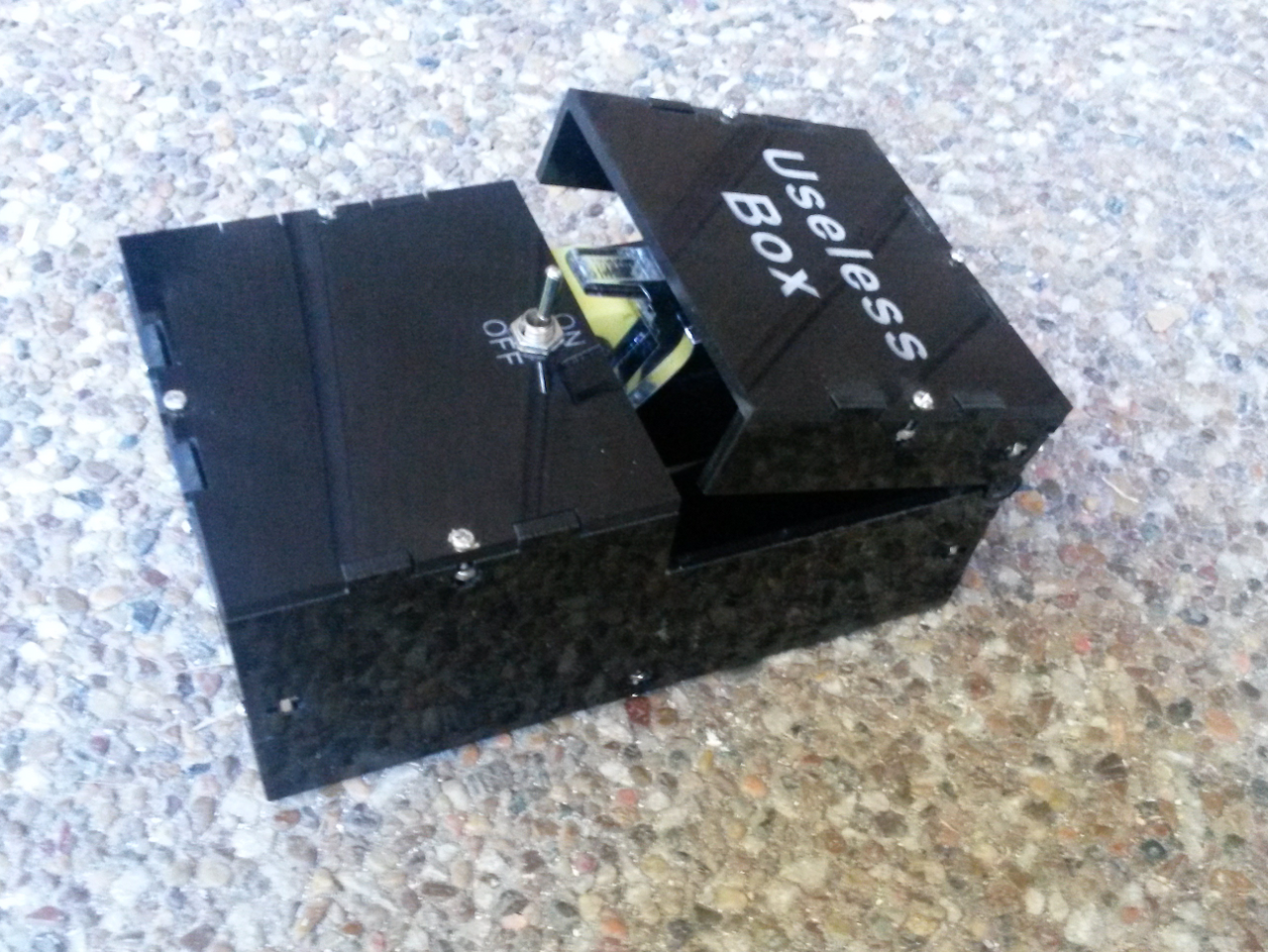
A modern “Useless Box” after Shannon’s Ultimate Machine, by Drpixie · CC BY-SA 4.0 · Wikimedia Commons

Toys, Pranks and Art

24.11.2026 · AE561124

Shannon built things because they were fun. Some of them are philosophy in disguise.

A modern “Useless Box” after Shannon’s Ultimate Machine, by Drpixie · CC BY-SA 4.0 · Wikimedia Commons

The Ultimate Machine

24.11.2026 · AE561124
  • A small box with a single switch. You flip it — the lid opens, a mechanical hand emerges, flips the switch back and disappears.
  • Idea: Marvin Minsky, Bell Labs, 1952; Shannon built it and kept one on his desk.
  • Arthur C. Clarke reportedly said: “There is something unspeakably sinister about a machine that does nothing — absolutely nothing — except switch itself off.”
  • Art? Joke? A machine whose only purpose is its own off-switch.
Shannon’s Ultimate Machine in action

Video · The Ultimate Machine

24.11.2026 · AE561124
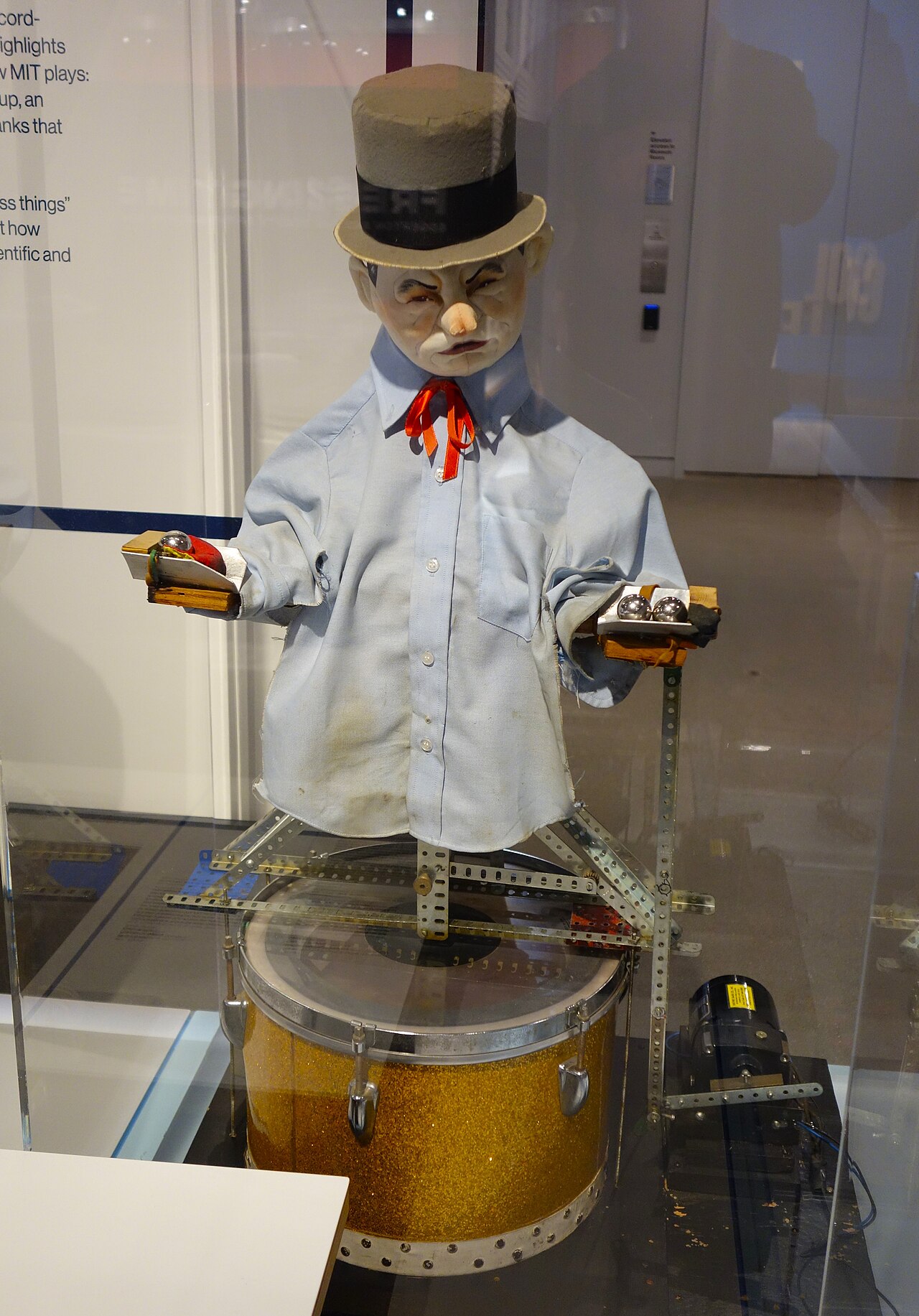
Bounce-juggling machine by Claude Shannon, MIT Museum, photo by Daderot · CC0 · Wikimedia Commons

Juggling Machines and Juggling Theorem

24.11.2026 · AE561124
  • Shannon juggled, and rode a unicycle through the corridors of Bell Labs — sometimes juggling at the same time.
  • He built juggling robots, among them a bouncing-ball juggler in the likeness of W. C. Fields.
  • Shannon’s juggling theorem: (F + D)·H = (V + D)·N — F: flight time, D: dwell time, V: vacant time, H: hands, N: balls.
  • A mathematician who needed to see that the formula held.

THROBAC and Other Toys

24.11.2026 · AE561124
  • THROBAC (1953): the Thrifty Roman-numeral Backward-looking Computer — calculates in Roman numerals.
  • A rocket-powered frisbee, a flame-throwing trumpet.
  • Minivac 601 (1961): a relay computer kit to teach students digital logic — the educational cousin of this session.
  • 1961: with Edward Thorp, a wearable computer to beat roulette.

Play as Method

24.11.2026 · AE561124
  • Shannon at MIT famously worked on whatever amused him.
  • The thesis, the mouse, the chess paper, the Ultimate Machine: each began as a toy.
  • Is playing a method of research or its reward?
  • Discussion: which of your own toys or games taught you something serious?
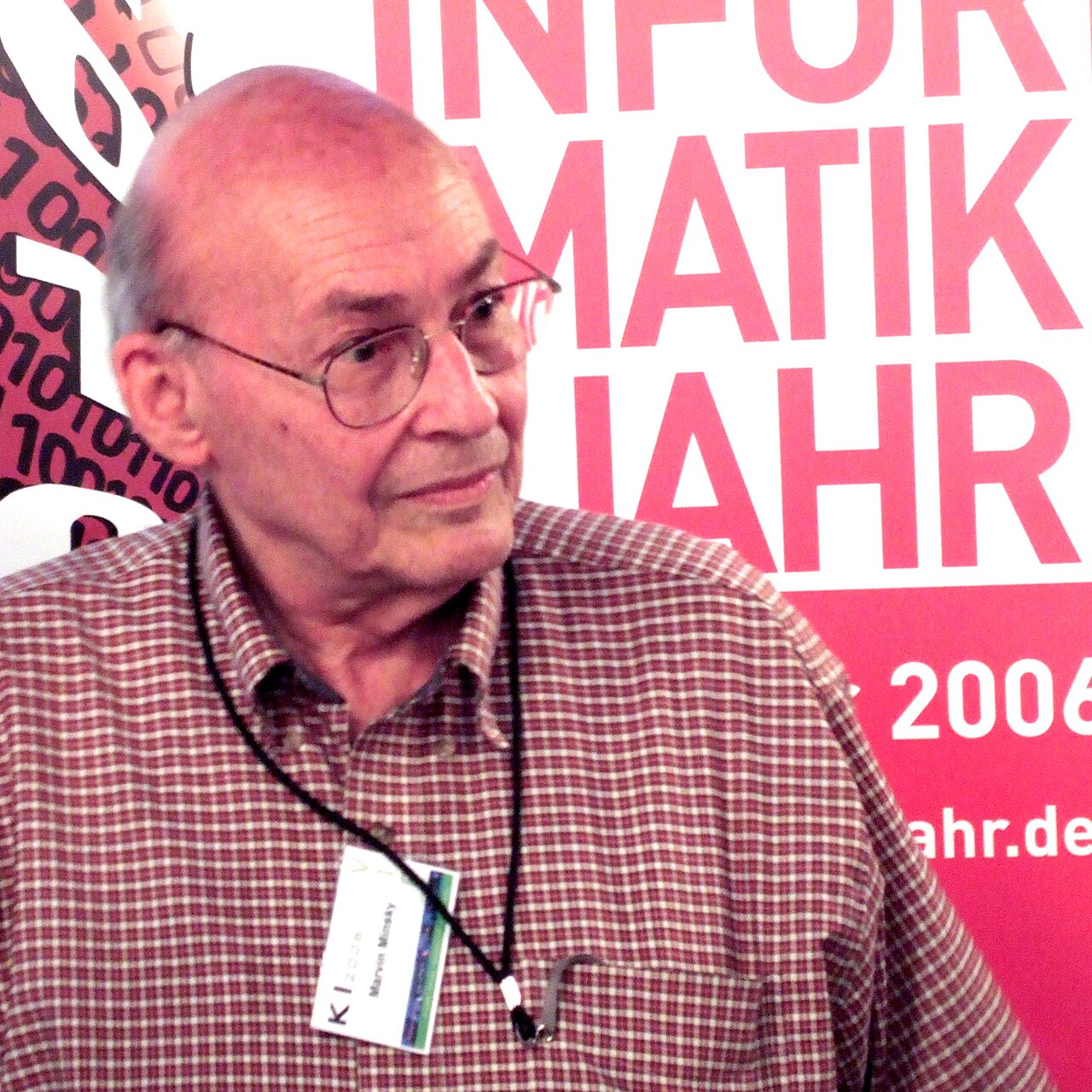
Marvin Minsky, 2006, photo by Steamtalks · CC BY-SA 2.0 · Wikimedia Commons

Dartmouth, Summer 1956

24.11.2026 · AE561124

The summer of the naming: where “artificial intelligence” became a field.

Fulltext (PDF) ↗

The Proposal (1955)

24.11.2026 · AE561124
  • August 1955: A Proposal for the Dartmouth Summer Research Project on Artificial Intelligence, a funding request to the Rockefeller Foundation.
  • Authors: John McCarthy, Marvin Minsky, Nathaniel Rochester, Claude Shannon.
  • Central conjecture: “every aspect of learning or any other feature of intelligence can in principle be so precisely described that a machine can be made to simulate it.”
  • A two-month, ten-man study at Dartmouth College, New Hampshire.
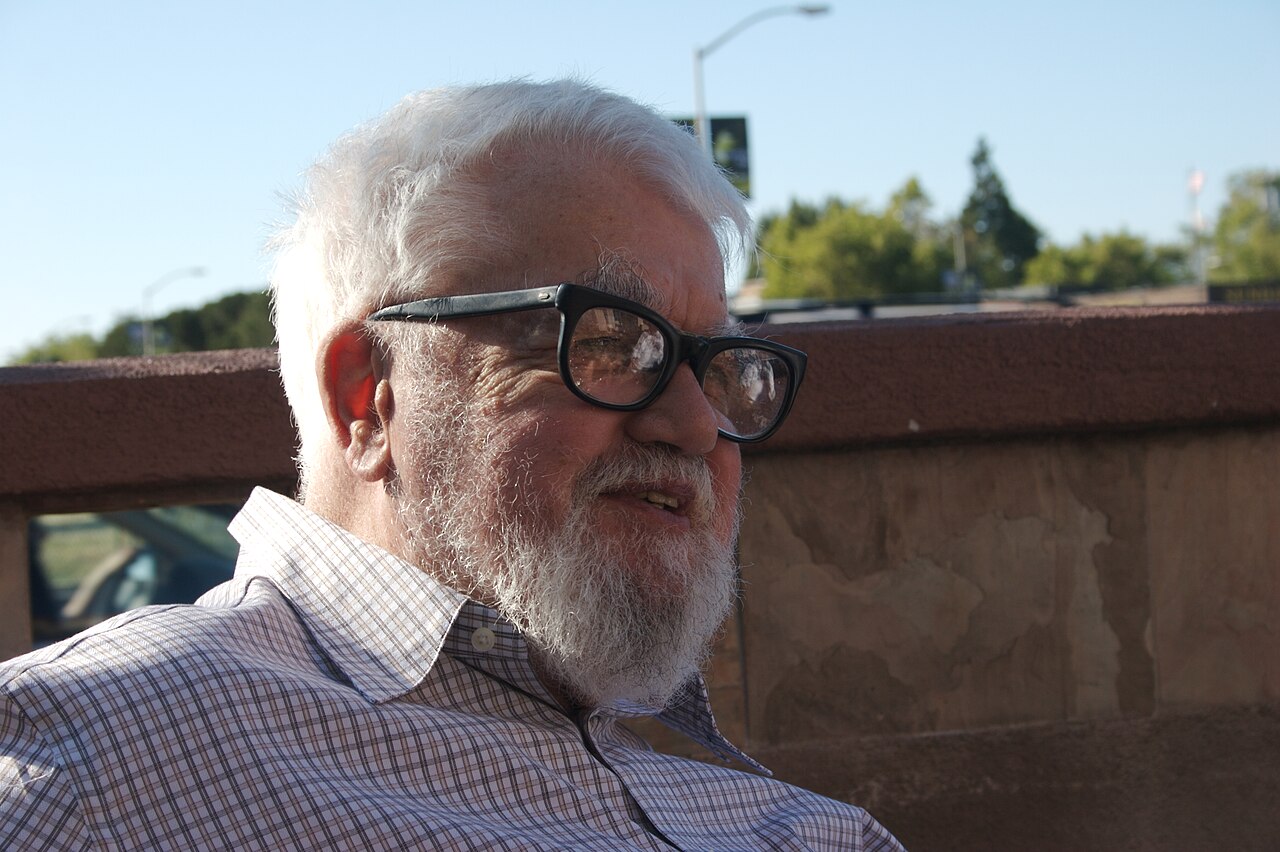
John McCarthy, Stanford 2006, by null0 · CC BY 2.0 · Wikimedia Commons

John McCarthy

24.11.2026 · AE561124
  • Dartmouth mathematician, born 1927; coined the term “artificial intelligence” for this proposal.
  • Later: Lisp (1958), time-sharing, the common-sense program.
  • Co-edited Automata Studies with Shannon (1956).
Marvin Minsky, 2006, by Steamtalks · CC BY-SA 2.0 · Wikimedia Commons

Marvin Minsky

24.11.2026 · AE561124
  • MIT, born 1927; at Dartmouth a young Junior Fellow at Harvard.
  • Co-founder of the MIT AI Lab (1959) and author of The Society of Mind.
  • The man who gave Shannon the idea of the Ultimate Machine.
Claude Shannon, Oberwolfach, by Konrad Jacobs · CC BY-SA 2.0 DE · Wikimedia Commons

Rochester and Shannon

24.11.2026 · AE561124
  • Nathaniel Rochester: IBM, designer of the IBM 701 — the hardware man.
  • Claude Shannon: Bell Labs — the theory man, with the Theseus mouse and chess paper to his credit.
  • Shannon was the senior co-signer; accounts suggest he took part only briefly.

Why “Artificial Intelligence”?

24.11.2026 · AE561124
  • Shannon and McCarthy edited Automata Studies (1956). McCarthy was disappointed: few papers dealt with machine intelligence.
  • Hence a new name for the new proposal.
  • Shannon was reportedly more at home with the word “automata” than with the label AI.
  • Names matter: it is a promise, and a marketing claim.
>> cross-referenced signal
  • ⇄ Machine Learning #0

What Happened That Summer

24.11.2026 · AE561124
  • June–August 1956: the participants came and went; only a few, McCarthy, Minsky and Ray Solomonoff, stayed throughout.
  • Highlight: Newell and Simon presented the Logic Theorist, a program proving theorems.
  • No breakthrough — but a community, a name and a research programme.
  • Another half-century to wait for learning to prevail over hand-written logic.
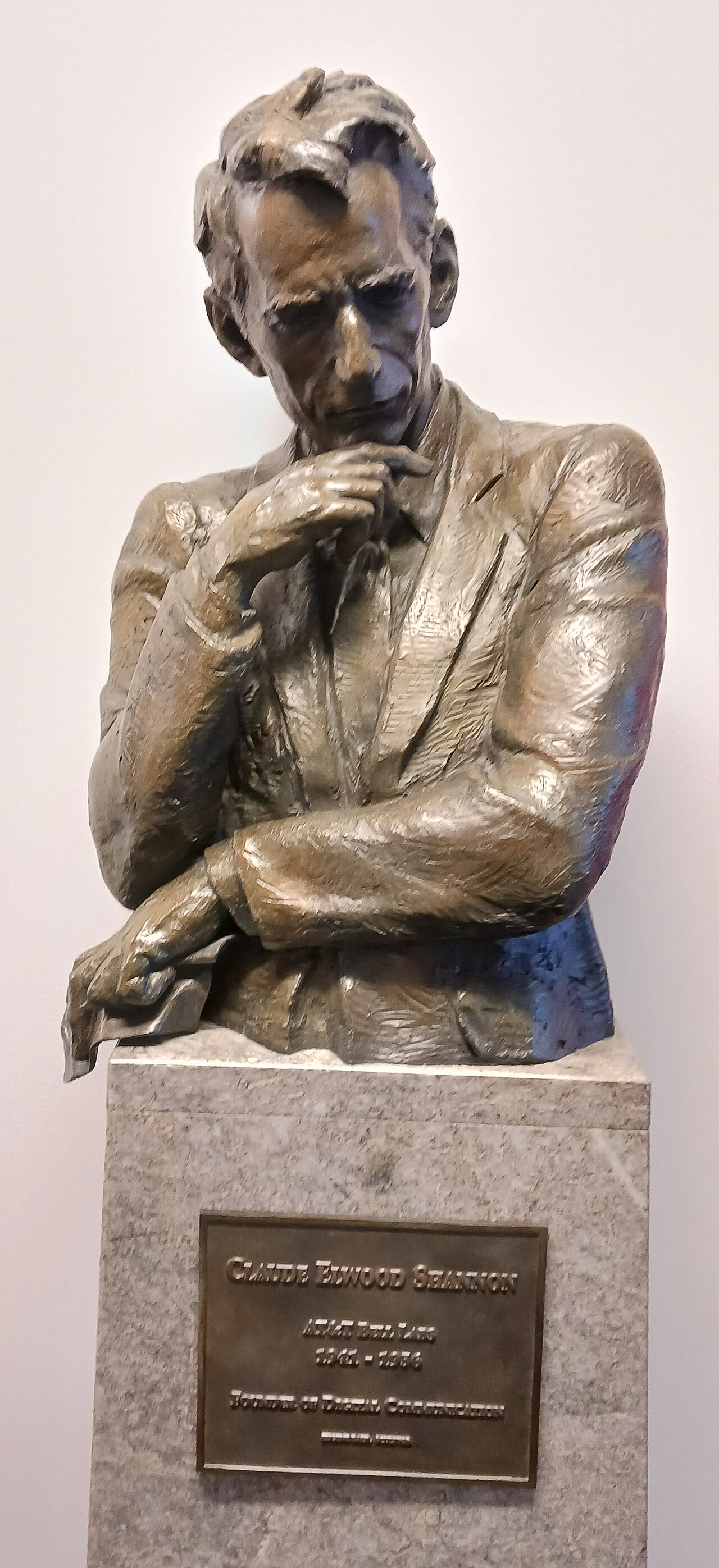
Bust of Claude Shannon, by BobTheBryan · CC BY-SA 4.0 · Wikimedia Commons

The Long Evening

24.11.2026 · AE561124

1956–2001. From the Laboratory to the University — and to silence.

Professor at MIT

24.11.2026 · AE561124
  • 1956: leaves Bell Labs, becomes a professor at MIT (until 1978).
  • Married Betty (Mary Elizabeth Moore) in 1949, a numerical analyst at Bell Labs.
  • Their house near Boston was called “Entropy House”.
  • He published little: he preferred building, juggling and tinkering.

Silence

24.11.2026 · AE561124
  • In the 1990s he developed Alzheimer’s disease.
  • Claude Shannon died on 24 February 2001, aged 84.
  • Every bit sent since is part of his legacy: telephones, internet, compression, error-correcting codes, DNA research, linguistics, language models.
Claude Shannon — Father of the Information Age (UCTV)

Video · Father of the Information Age

24.11.2026 · AE561124
Claude Shannon, Oberwolfach, by Konrad Jacobs · CC BY-SA 2.0 DE · Wikimedia Commons

The Bit Player

24.11.2026 · AE561124
  • Documentary by Mark Levinson (2018–19), made after Shannon’s centenary, with archive footage and actors reading from his interviews.
  • Official site: thebitplayer.com.
  • A portrait of a man who gave the world information and kept his childlike curiosity.

Claude v0.0.1

24.11.2026 · AE561124
  • Relay switching → logic gates → bits → learning mouse → next-token prediction.
  • The language models of today minimise cross-entropy — a quantity Shannon defined — while predicting the next token.
  • There is no direct line from Claude Shannon to Claude the language model — except that the model is trained on his loss function.
  • Next in the story: Minsky, McCarthy and the others — perceptrons, symbolic AI, winters — John, Marvin & co.
>> cross-referenced signal

Machine Learning #0

25.11.2026 · AE561125
Features, Classifiers, Decision Trees, Random Forests, Training & Testing, 
>> cross-referenced signal
  • ⇄ Why “Artificial Intelligence”?
  • ⇄ Claude v0.0.1

The Latent Space

02.12.2026 · AE561202
N-dimensional Spaces, Semantic Spaces, Feature Spaces, Embeddings

Unplugged #1

09.12.2026 · AE561209

The Omega Point

16.12.2026 · AE561216
The Chrismas talk on Noosphere, Datasphere, Infosphere, Singularity, Novacene &c.

Language models

06.01.2027 · AE570106
Large & Small Language Models
>> cross-referenced signal
  • ⇄ Shannon’s Statistical English
  • ⇄ Claude v0.0.1

Artificial Agents

13.01.2027 · AE570113
Agentic AI

Central Problem of AI ethics

20.01.2027 · AE570120
Central Problem of Roboethics, Alignment

Human-Machine Peer Learning

27.01.2027 · AE570127
Humans and machines can learn together
Machines and humans can learn with each other
George Boole (1815–1864)

Logic, Gates, Machine

17.11.2026 · AE561117

In which the reader is made acquainted with a most singular Algebra, wherein there are but two numbers, and the sum of one and one is nothing at all.

Being an account of Mr. Boole’s Laws of Thought, set down in the year 1854 by a Professor of Queen’s College, Cork; of young Mr. Shannon’s relays, and the little gates that came of them; and of how one humble operation — the adding of One to a number — may be performed in three several fashions: by Logic, by Wire, and by the Machine of Mr. Turing.

Wherein the reader is required to lend a thumb, and to consult a partner upon sundry occasions; wherein it is demonstrated that the Carry may very conveniently be kept upon the thumb of the other hand; and wherein, at the last, Logic, Circuit and Machine are discovered to be one and the same contrivance in three different coats.

>> cross-referenced signal
  • ⇄ George Boole (1815 - 1864)
  • ⇄ Binary adder on Your hands: transition rules
  • ⇄ Claude E. Shannon (1916-2001)
  • ⇄ The Morphism: Boole ↔ Wire

philosopher's definition of "thinking"

01.01.1950 · AE-200101
“We may say that thinking is essentially the activity of operating with signs.”

— Ludwig Wittgenstein, The Blue Book (1933–1934), p. 6 of the commonly used edition

Who Does the Thinking?

18.11.2026 · AE561118
It is misleading then to talk of thinking as of a “mental activity”. We may say that thinking is essentially the activity of operating with signs. This activity is performed by the hand, when we think by writing; by the mouth and larynx, when we think by speaking; and, if we think by imagining signs or pictures I can give you no agent that thinks.
If then you say that in such cases the mind thinks, I would only draw your attention to the fact that you are using a metaphor, that here the mind is an agent in a different sense from that in which the hand can be said to be the agent in writing.
If again we talk about the locality where thinking takes place we have a right to say that this locality is the paper on which we write; or the mouth which speaks.

— Ludwig Wittgenstein, The Blue Book (1933–1934)

Keep this in mind today: in our exercises, whose hand does the thinking, and where is the carry kept?

Question of the Day

17.11.2026 · AE561117

Question of the day: why does counting in binary work — and what is a machine doing when it counts?

You already know how: fold every 1 down, carry to the left, raise the first 0. You did it with a hand and with a Turing machine.

Today we ask why. One algorithm — add 1 — seen in three languages: Logic (Boole), Wire (Shannon), Machine (Turing).

Bring a thumb. Bring a partner. Both will be needed.

>> cross-referenced signal

Warm-up · Count Together

17.11.2026 · AE561117

In pairs. One of you counts in binary on one hand, from 0 up to 11. The other watches and says “stop!” at the first mistake.

Swap. Then count from 0 1 1 1 (7) — what happens, and who remembers the carry while the fingers fold down?

Keep that question. The rest of the session is its answer.

>> cross-referenced signal
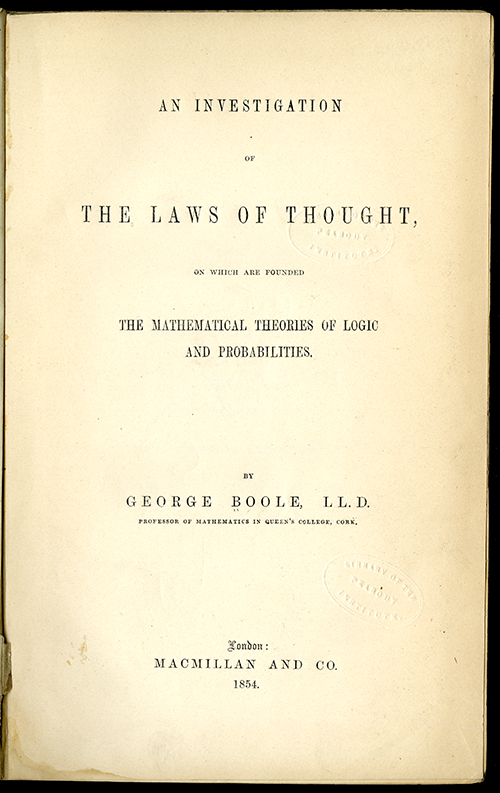
Title page of Boole’s Laws of Thought, London 1854

Two Values

17.11.2026 · AE561117

1854: George Boole, professor at Queen’s College Cork, publishes An Investigation of the Laws of Thought.

His claim: reasoning itself can be calculated — like algebra — if every statement is reduced to just two values: 1 (true) and 0 (false).

Leibniz’s old dream (calculemus!), now with rules.

A thumb is a perfect Boolean variable: up = 1, down = 0.

>> cross-referenced signal

Three Operations

17.11.2026 · AE561117

NOT flips: NOT 1 = 0, NOT 0 = 1.

AND: true only if both are true (both thumbs up).

OR: true if at least one is true.
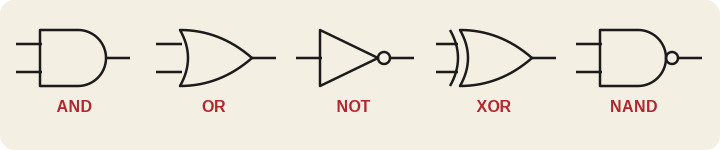
aba AND ba OR b
0000
0101
1001
1111
>> cross-referenced signal

The Fourth: XOR

17.11.2026 · AE561117

XOR (exclusive or): true if the two inputs differ — one thumb up, not both.

aba XOR b
000
011
101
110

Note the last row: 1 XOR 1 = 0. Remember it — it will carry the whole session.

>> cross-referenced signal
  • ⇄ Logic functions
  • ⇄ Exercise · The Staircase Lamp
  • ⇄ Communication Theory of Secrecy Systems

Which “or” Do You Mean?

18.11.2026 · AE561118

In everyday speech “or” is ambiguous. Logic must not be.
sentencereading
“Soup or salad?” (the menu)XOR — not both (unless you pay extra)
“Smoke or heat sets off the alarm.”OR — and certainly if both
“Are you leaving today or tomorrow?”XOR — you cannot leave twice
“Bring a note from your doctor or your parents.”OR — two notes are no problem
“Milk or sugar in your coffee?”unclear! Both, surely?

Latin had two words for it: vel (inclusive: “one or the other or both”) and aut (exclusive: aut Caesar aut nihil). English has just one — and relies on you to guess.
>> cross-referenced signal
  • ⇄ Exercise · The Staircase Lamp

Ambiguity by Design

18.11.2026 · AE561118

Lawyers and programmers cannot afford to guess:

Contracts write “and/or” (inclusive) and “either … or …, but not both” (exclusive), because courts have argued over a bare “or”.

Programming languages give the two meanings different symbols: a || b (or) and a ^ b (xor).

Linguists note that the exclusive reading is often not part of the word at all: we infer “not both” (“if she could say ‘and’, she would have”).

This is Boole’s move: give each meaning its own symbol, and the ambiguity disappears — for a machine, there is no “you know what I mean”.

>> cross-referenced signal
  • ⇄ Warm up Exercise : Wason Selection Task

Exercise · Or or Xor?

18.11.2026 · AE561118

In pairs. Take turns reading these sentences aloud; your partner decides OR or XOR and defends the choice with one sentence about the situation:

• “You can pay by card or cash.” • “Students or staff may enter.” • “A fine of fifty euros or three days in jail.” • “She speaks German or French.” • “Take the lift or the stairs.”

Which ones did you disagree on? Notice what you used to decide: not the word “or”, but knowledge of the world.

Now write one real sentence of your own in which the two readings lead to different consequences — a rule, a promise, a threat. Swap, and rewrite your partner’s so it can only be read one way.

Exercise · Thumb Logic

17.11.2026 · AE561117

In pairs. Each of you hides a thumb behind your back (up = 1, down = 0) and shows it on three. The teacher calls the gate:

abANDORXORNAND
000001
010111
100111
111100

Show thumbs. As a pair, say the output before checking the table — then check it.

Reverse round: the teacher says gate and output (“XOR gives 1”); you show a pair of thumbs that produces it. Is the answer always unique? For which calls is there only one?

Laws of Algebra

17.11.2026 · AE561117

Boole discovered that these operations obey laws, like numbers do:

lawin words
a AND 1 = aAND with 1 changes nothing
a AND 0 = 0AND with 0 kills everything
a OR 0 = aOR with 0 changes nothing
a AND a = arepeating yourself adds nothing
a AND (NOT a) = 0nothing is both true and false
NOT(a AND b) = (NOT a) OR (NOT b)De Morgan (Boole’s contemporary)

Laws like these let you simplify circuits and programs by pure calculation — no thumbs needed.

>> cross-referenced signal

Algebra, Really

17.11.2026 · AE561117

Why is it called algebra? Because the operations behave like arithmetic on 0 and 1:

AND is multiplication: a · b. NOT is 1 − a.

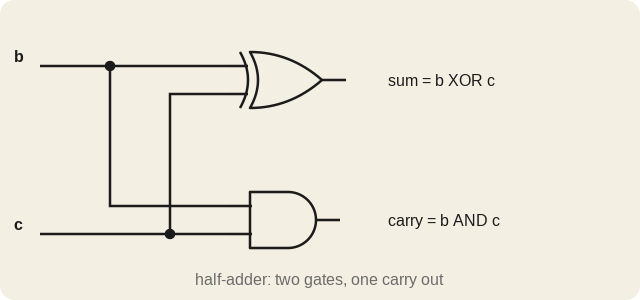
XOR is addition — but one that forgets the carry (addition modulo 2): 1 + 1 = 0.

Add two single bits properly and look at the two digits of the answer:

a + b= carry, sumcarrysum
0 + 00000
0 + 10101
1 + 00101
1 + 11010

The sum digit is XOR. The carry digit is AND. Arithmetic is logic.

>> cross-referenced signal
  • ⇄ The Morphism: Boole ↔ Wire
AND, OR, NOT, XOR, NAND

A Relay Is a Logical Switch

17.11.2026 · AE561117

1937: Claude Shannon, 21, writes his master’s thesis at MIT: A Symbolic Analysis of Relay and Switching Circuits.

His discovery: electrical switches obey Boole’s algebra. Two switches in series = AND (current flows only if both are closed). In parallel = OR. A relay that opens when energised = NOT.

So any Boolean formula can be built out of hardware — and any circuit can be checked by algebra.

The little symbols for such components are called gates:

>> cross-referenced signal
  • ⇄ Claude E. Shannon (1916-2001)
  • ⇄ A Symbolic Analysis of Relay and Switching Circuits
  • ⇄ The Morphism: Boole ↔ Wire

NAND Is Enough

17.11.2026 · AE561117

One gate is enough to build all the others: NAND (NOT(a AND b)), Sheffer 1913.

NOT a = a NAND a

a AND b = NOT (a NAND b) — i.e. a NAND followed by a NAND with itself.

a OR b = (NOT a) NAND (NOT b) — De Morgan at work.

A NAND gate in a chip costs four transistors. Billions of them, wired by algebra, are every computer you know.

>> cross-referenced signal
  • ⇄ The Morphism: Boole ↔ Wire

Exercise · Build It from NAND

17.11.2026 · AE561117

In pairs. One of you is the architect, the other the inspector.

Architect: on paper, draw XOR using only NAND gates (hint: four NANDs suffice; one of them is shared).

Inspector: feed all four input pairs through the drawing with your thumbs — one gate at a time, out loud. Compare with the XOR table.

If a row fails, find which gate lied. Then swap roles and build OR.

The half-adder: XOR gives the sum digit, AND gives the carry

The Half-Adder

17.11.2026 · AE561117

Put the two observations together: to add two bits b and c you need exactly two gates.

sum = b XOR c   carry = b AND c

This tiny circuit is called the half-adder. All arithmetic in your phone is built from it and its relatives.

Adding One Is Adding a Carry

17.11.2026 · AE561117

Our algorithm increment is not a special case: to add 1, put a carry of 1 into the lowest position, then let every position run a half-adder.

c0 = 1 (that is the “+1”)

for every bit bi, from right to left:
outi = bi XOR ci
ci+1 = bi AND ci

The lowest bit has it easiest: b XOR 1 = NOT b — it always flips. Every higher bit flips only if the carry reached it — and the carry survives only through a chain of 1s.

>> cross-referenced signal

Exercise · Paper Circuit

17.11.2026 · AE561117

In pairs. Four numbers: 0101, 0111, 1011, 1111. Increment each using only the two formulas — no counting.

Split the labour like a circuit: one of you computes every XOR, the other every AND and keeps the carry. Fill in a table with columns b, c, out, c′ for each position, right to left.

Check against finger counting. Which number made the carry travel farthest? What is c after the last position of 1111?

Five half-adders: the algorithm laid out in space

Space: A Chain of Gates

17.11.2026 · AE561117

Build the circuit literally: one half-adder per bit, the carry wired from each to its left neighbour.

It is called a ripple-carry circuit: change the input and the carry ripples through the chain like a row of dominoes.

A 64-bit number needs 64 adders. The algorithm is spread out in space.

The same algorithm laid out in time

Time: One Gate Pair, Many Steps

17.11.2026 · AE561117

Now the other idea. Do not build five adders. Build one and walk it along the number.

Each step it reads one bit from a tape, computes XOR and AND, writes the result, and moves one cell to the left.

But then the carry from this step must wait for the next one. Something must remember it. That memory is the machine’s state.

>> cross-referenced signal
  • ⇄ What Did the Mouse Learn?

The Thumb Is the State

17.11.2026 · AE561117

Look again at the rule table of our Turing machine — the one from the Alan session — and write the state as a bit: CARRY = 1, HALT = 0.

state creads bwritesnext statemove
1 (CARRY)010 (HALT)left
1 (CARRY)101 (CARRY)left
0 (HALT)000—
0 (HALT)110—

Writes = b XOR c. Next state = b AND c. The rule table of the machine is the half-adder’s truth table.

A Turing machine is a half-adder with a memory and a moving head. The carry is the thumb of the other hand.

>> cross-referenced signal
  • ⇄ a Turing machine #1
  • ⇄ a Turing machine #2
  • ⇄ What Did the Mouse Learn?

Exercise · Two Hands, One Machine

17.11.2026 · AE561117

Alone, then compare. Right hand = tape (thumb is the lowest bit). Left thumb = the state c.

Raise your left thumb: you are adding 1. Now walk along the right hand, thumb to little finger. At every finger say out loud: “out = b XOR c” (set the finger to that value) and “c = b AND c” (set your left thumb to that).

Once the left thumb is down you may stop — nothing further can change.

Count from 0 to 31 this way. Then 31 + 1: the left thumb is still up after the little finger. That is the carry that fell off the tape — overflow. Turing’s tape is infinite; your hand is not.

>> cross-referenced signal

Exercise · Human Turing Machine

17.11.2026 · AE561117

In pairs. Two roles. TAPE: write six cells on paper, e.g. 0 1 0 1 1 1, and cover all but the cell under the head with your hand. MACHINE: you have only a rule card (the table of the previous folio) and your left thumb as the state. You may never see the whole number.

Loop: MACHINE says “read!” — TAPE reveals the bit under the head. MACHINE looks up the row and says “write w, move left”, updating the thumb. TAPE writes and moves the head one cell left. Stop when the thumb is down.

Run 010111, 001111, 111111. Convert to decimal to check. What happens in the last run when the head falls off the tape?

Swap roles. Afterwards discuss: did either of you ever need to know what number it was? Where, physically, was the carry stored?

>> cross-referenced signal
  • ⇄ Binary adder on Your hands: transition rules
  • ⇄ a Turing machine #1

Exercise · Break the Machine

17.11.2026 · AE561117

In pairs. First: the forgetful machine. It has no thumb: at every cell it behaves as if c = 1 (it always flips the bit and always moves on).

Run it on 0101. What should the answer be? Which inputs does the forgetful machine happen to get right, among the sixteen four-bit numbers?

Then the challenge: run it backwards. Design a rule table for subtract 1 (state BORROW) — hint: it is the increment table with the roles of 0 and 1 exchanged. Test it by counting down from 8 on your hands.

Check yourselves: BORROW reads 0 → write 1, move left, stay in BORROW; BORROW reads 1 → write 0, HALT. In algebra: out = b XOR w, w′ = (NOT b) AND w. (And the forgetful machine is right on 0111 and 1111 only.)

Three Languages, One Algorithm

17.11.2026 · AE561117
Logic (Boole 1854)Wire (Shannon 1937)Machine (Turing 1936)
what it isformulascircuit of gatestape, head, states
sum digitout = b XOR cXOR gatewrite rule
carryc′ = b AND cAND gate + wirenext state (thumb)
many bitssame formula for each ia chain: spaceone gate pair, repeated: time

Same algorithm, three notations. Algebra says what, gates say with what, the machine says in what order.

And the translation between them is mechanical — which is exactly why computers can exist.

Why Does a Machine That Learns Care?

17.11.2026 · AE561117

Every neural network, every language model, runs on chips made of billions of gates just like the ones you drew today — XOR, AND, NAND, wired by algebra and clocked through time.

When people say “the machine computes”, this is all it means: logic, laid out in space, unrolled in time.

Learning does not change that. It changes only which numbers sit in the tape. Next time: how those numbers came to be tuned — Claude, Marvin, John and the others.

Debrief

17.11.2026 · AE561117

In pairs, three minutes: explain to each other, without notes, why the sum digit is XOR and the carry is AND.

Then answer the question of the day in two sentences: why does counting in binary work, and what is a machine doing when it counts?

Write down where your thumb was needed. That is the whole difference between a calculator and a table of formulas: memory.

Feedback · Checkout Time

18.11.2026 · AE561118

Is there something you like about this seminar?

Is there something you don’t like?

Is there something new and useful you learned during this seminar?

open as its own page ↗