Kastalia Knowledge Management System · Glasperlenspiel template · knot 2146
19th century
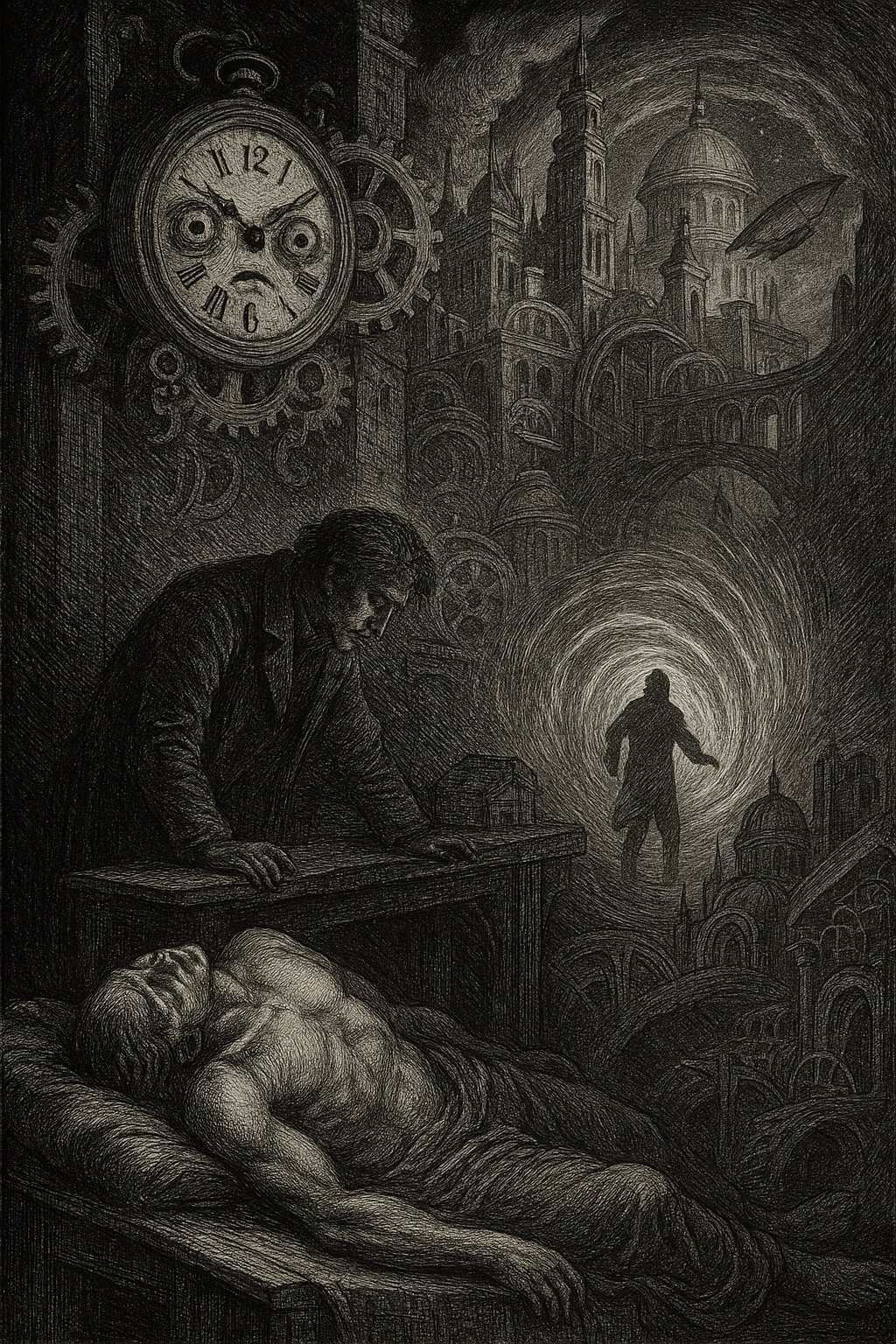
Frankenstein
The Sandmann
Erewhon
Paris in the 20th century
The Time Machine
Ancestors (1 superordinated path)
Descendants (at least 13 branches originate here)
-
19th century
FrankensteinThe SandmannErewhonParis in the 20th centuryThe Time Machine
-
is_parent
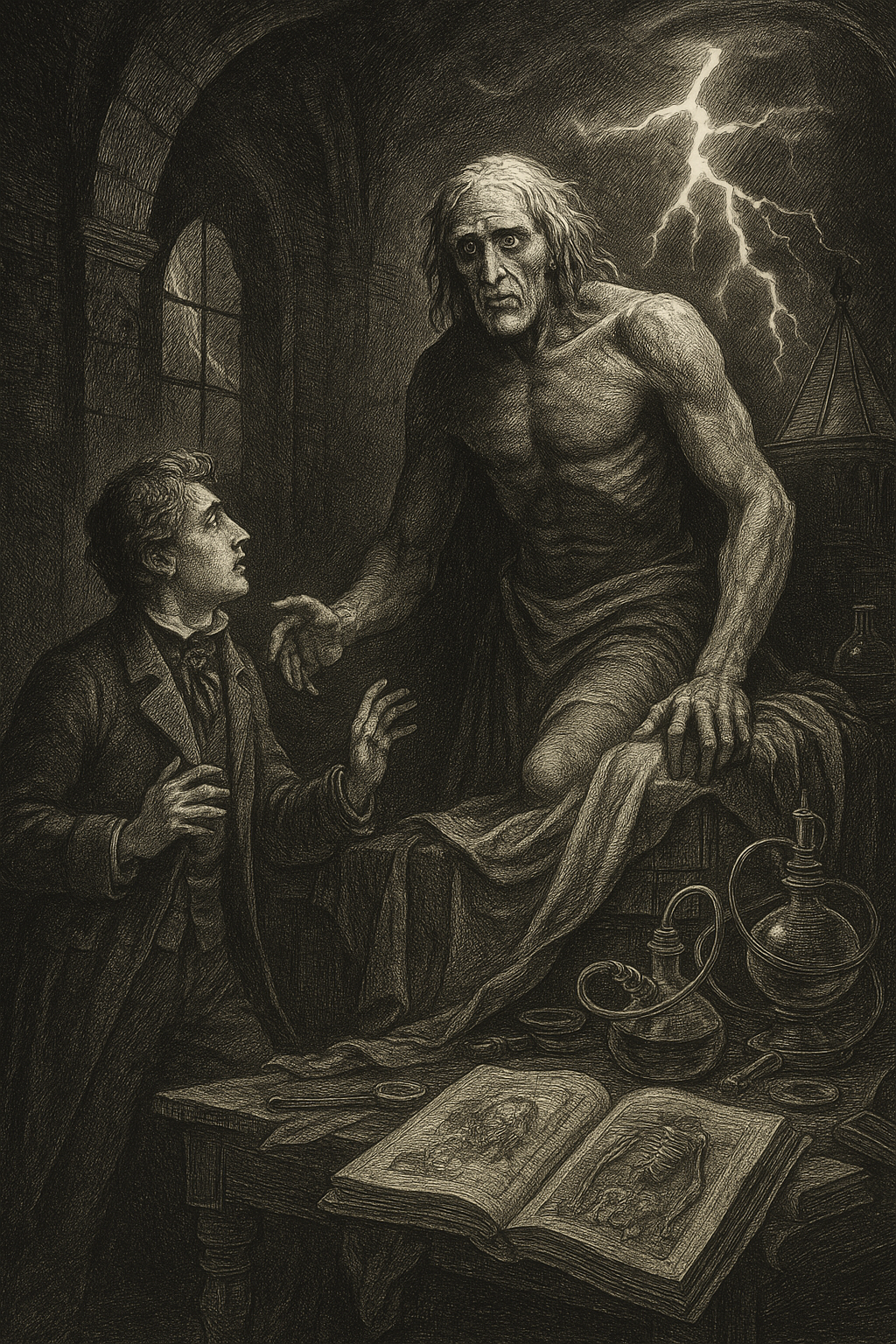 Frankenstein
The first modern myth of artificial life — creation without divine sanction. Victor Frankenstein as Promethean scientist: knowledge becomes transgression.
Frankenstein
The first modern myth of artificial life — creation without divine sanction. Victor Frankenstein as Promethean scientist: knowledge becomes transgression.-
is_parent
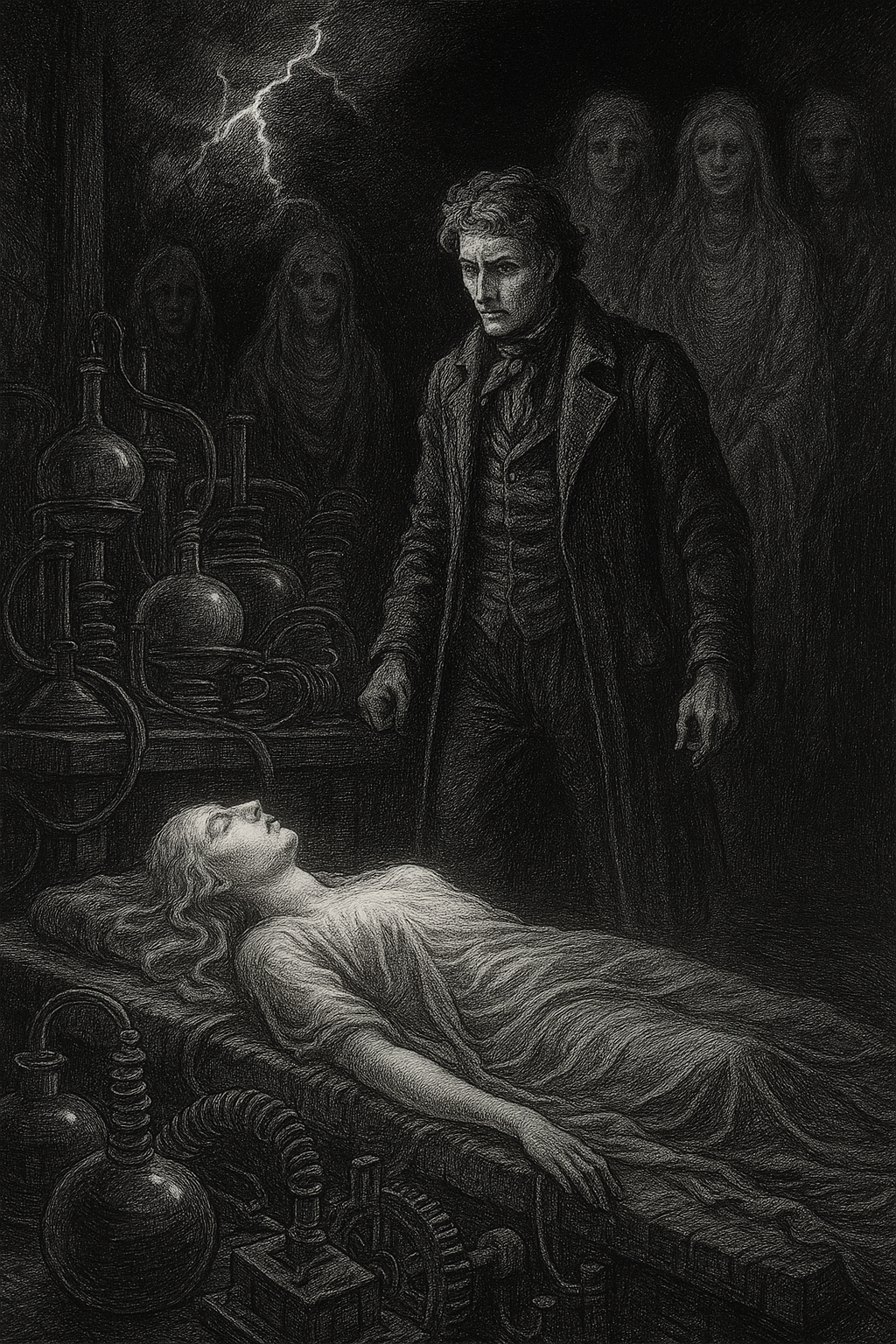 Feminist perspective
🔒
·
A creation myth rewritten by a woman.Victor’s experiment replaces the womb — science as patriarchal fantasy of self-generation.Creation becomes male and mechan
Feminist perspective
🔒
·
A creation myth rewritten by a woman.Victor’s experiment replaces the womb — science as patriarchal fantasy of self-generation.Creation becomes male and mechan
-
-
is_parent
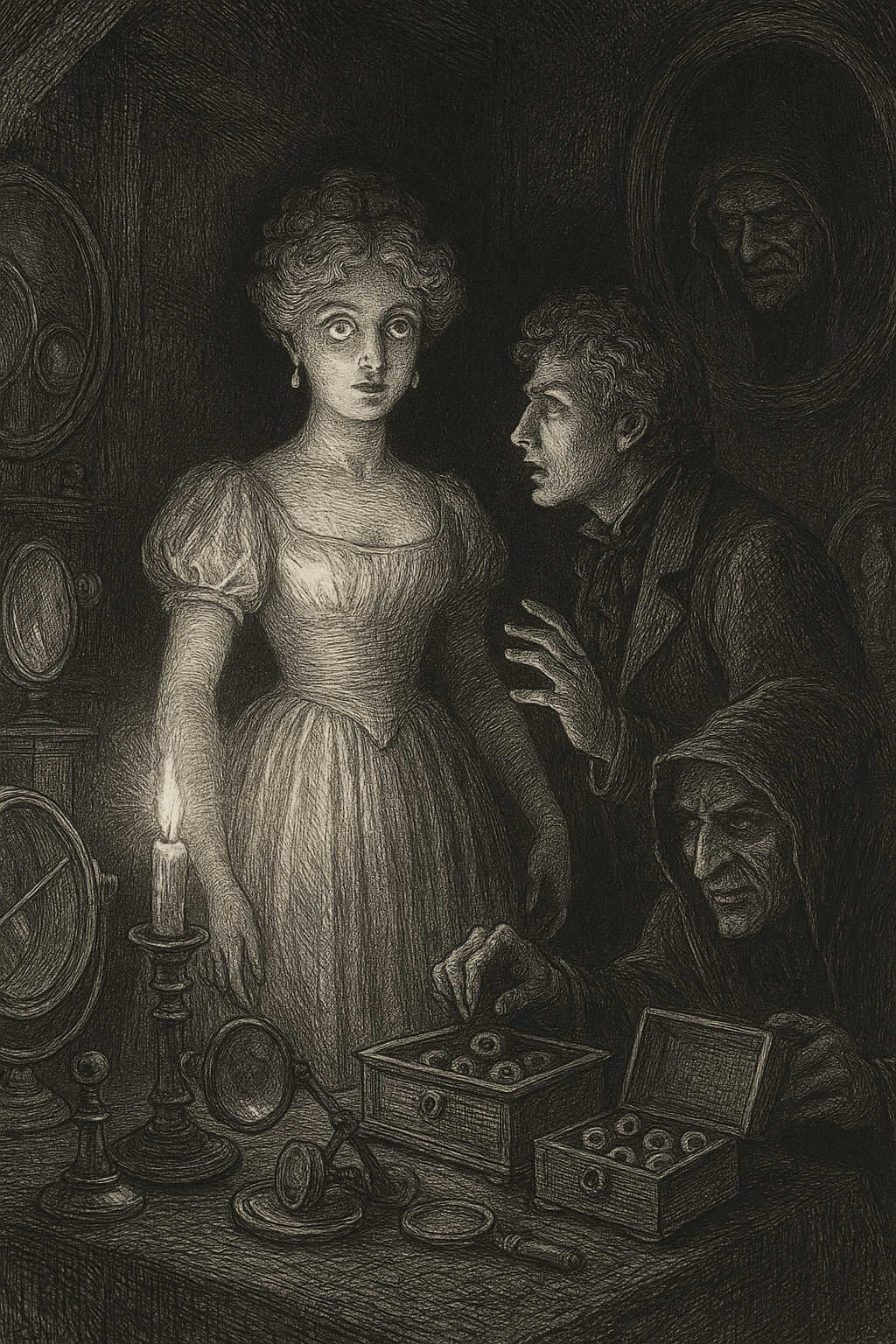 The Sandmann
A tale of obsession, optics, and automata. Nathanael’s fear of the Sandman merges with fascination for the mechanical doll Olympia. Freud’s “Das Unheimliche” (
The Sandmann
A tale of obsession, optics, and automata. Nathanael’s fear of the Sandman merges with fascination for the mechanical doll Olympia. Freud’s “Das Unheimliche” (-
is_parent 👁️ or I ? 🔒 ·
-
-
is_parent
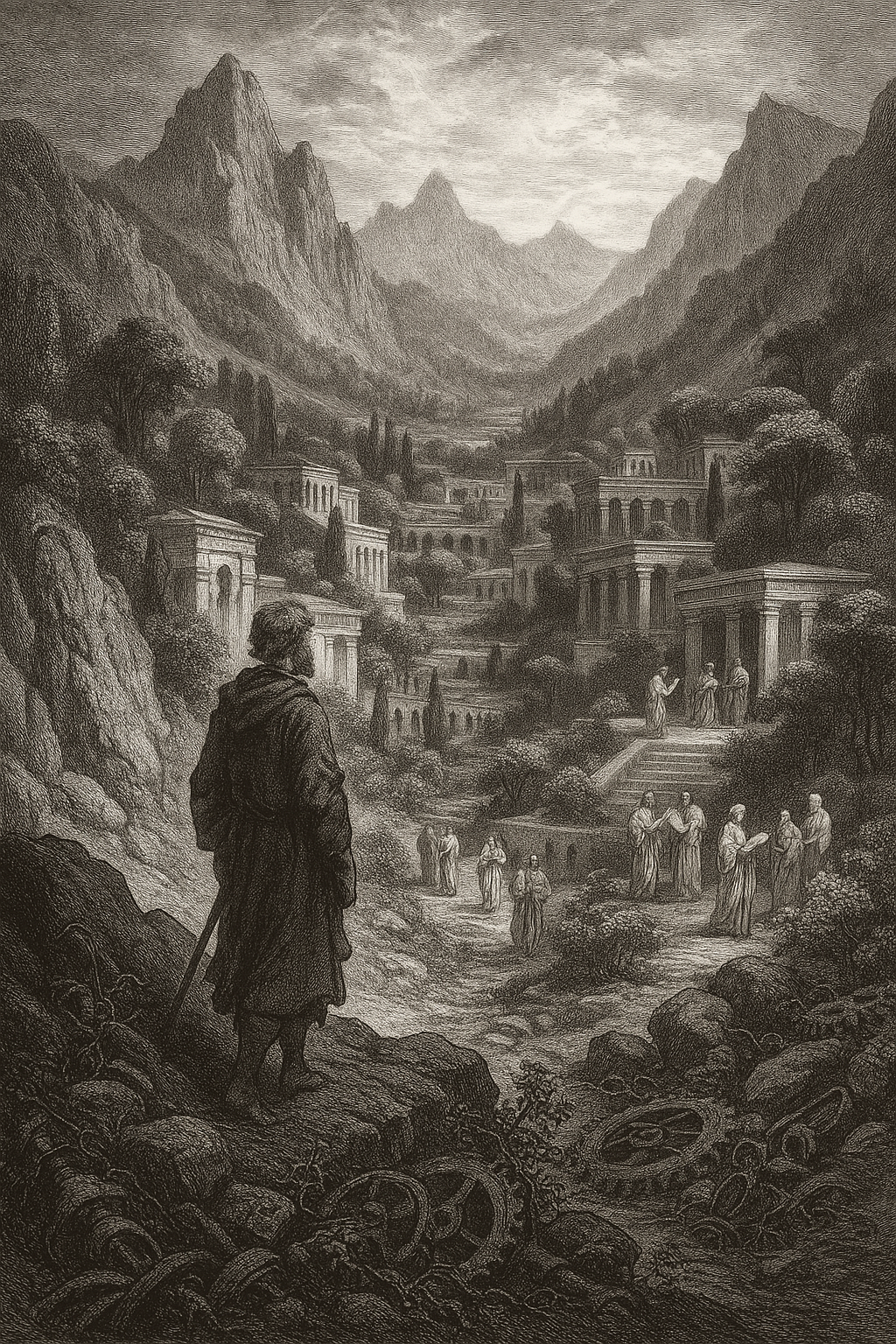 Erewhon
A utopian satire where everything familiar is reversed — “Erewhon” as “Nowhere” spelled almost backward. Illness is treated as cri
Erewhon
A utopian satire where everything familiar is reversed — “Erewhon” as “Nowhere” spelled almost backward. Illness is treated as cri-
is_parent Book of Machines 🔒 ·
Blurs Darwin and technology: Machines evolve — not by design, but by use and adaptation.Humans are merely the reproductive organs of machines.Consciousness may
-
-
is_parent
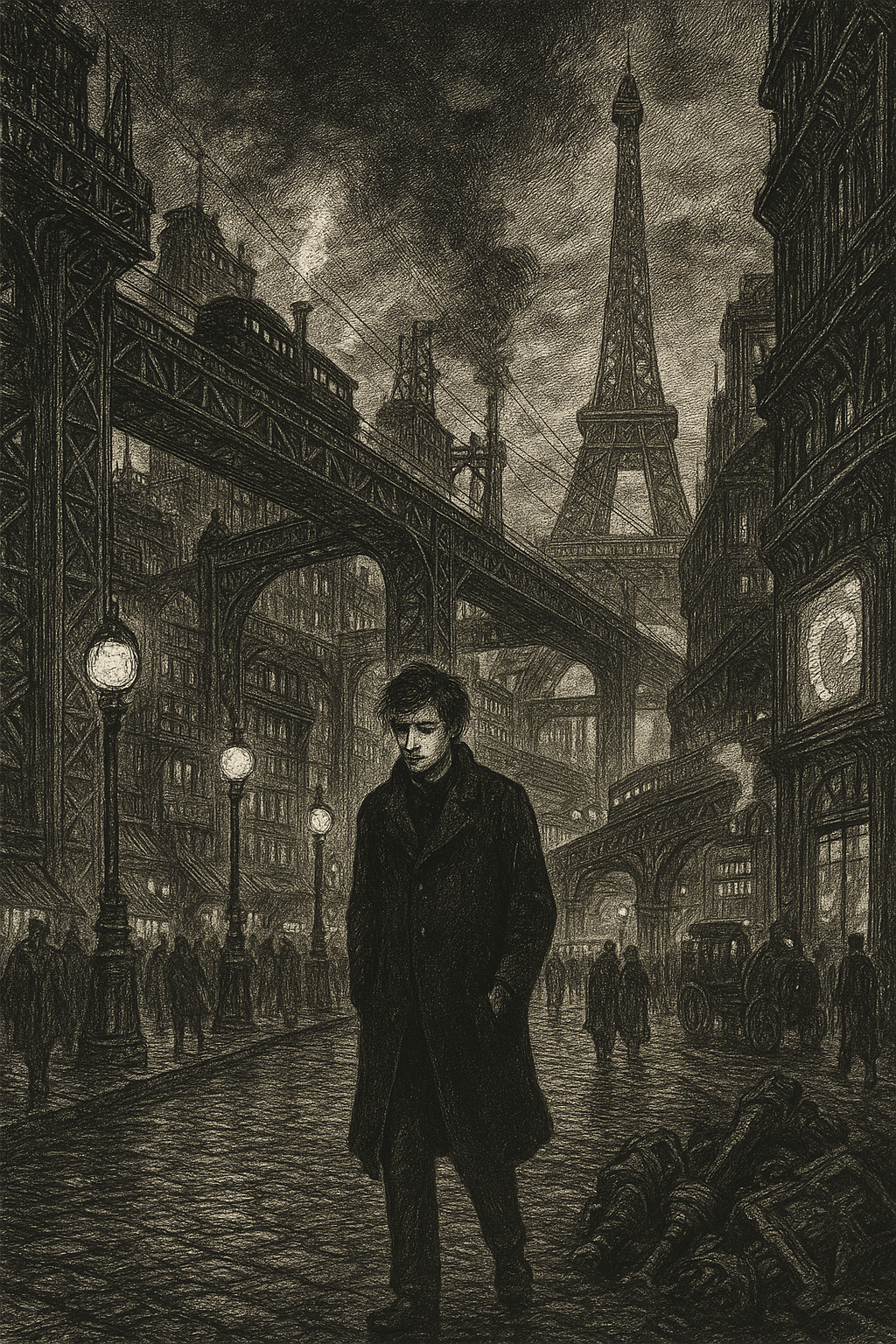 Paris in the 20th century
Verne's dystopian vision of Paris in 1960 — ruled by finance, speed, and machinery. Young Michel Dufrénoy, a poet, wanders through a cold, electric
Paris in the 20th century
Verne's dystopian vision of Paris in 1960 — ruled by finance, speed, and machinery. Young Michel Dufrénoy, a poet, wanders through a cold, electric-
is_parent
 quelques inventions, peut-etre ?
🔒
·
electric cars, gasoline-powered engines, high-speed trains, glass and steel skyscrapers, underground subways, air conditioning, elevators, automated security sy
quelques inventions, peut-etre ?
🔒
·
electric cars, gasoline-powered engines, high-speed trains, glass and steel skyscrapers, underground subways, air conditioning, elevators, automated security sy
-
-
is_parent
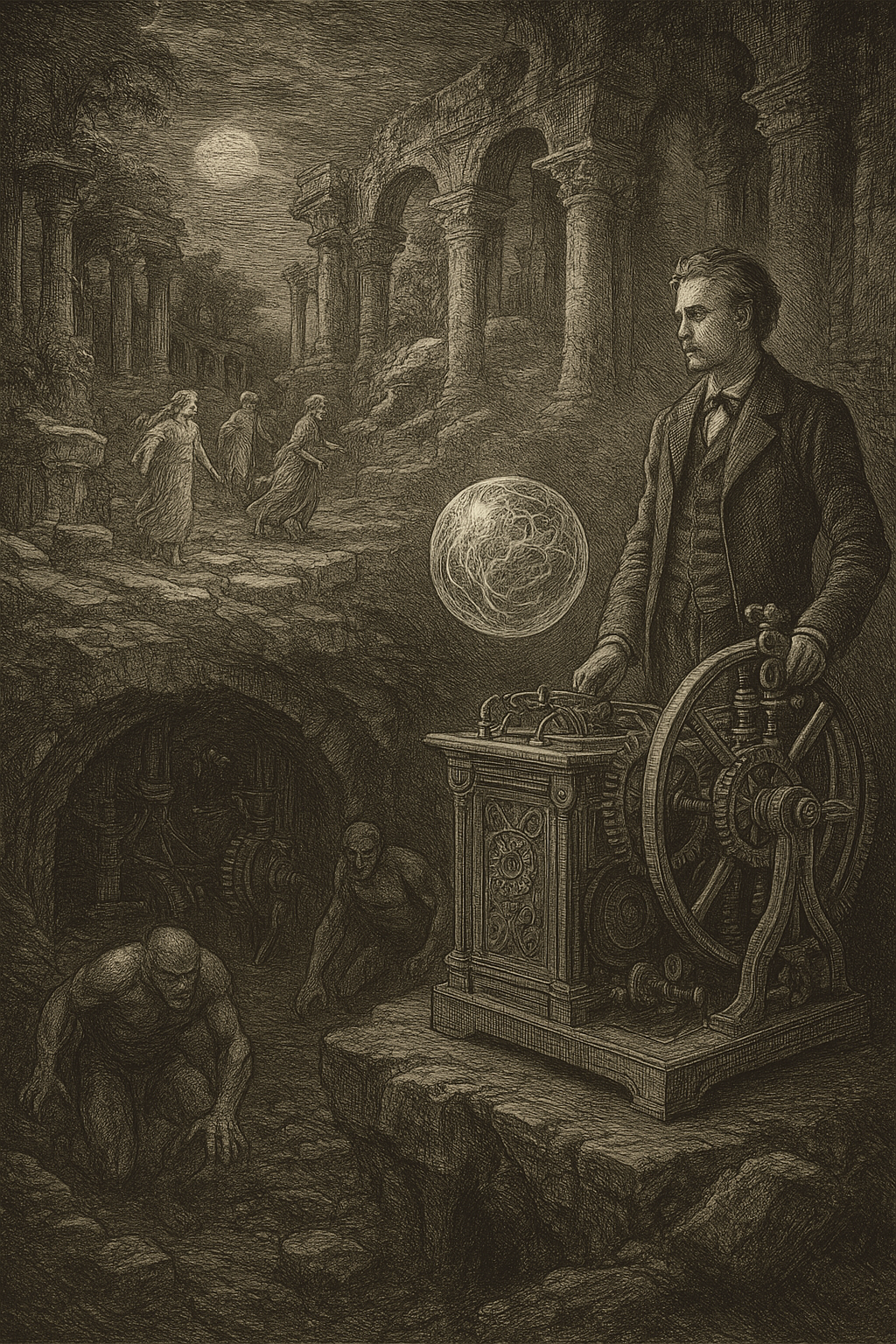 The Time Machine
Set in A.D. 802,701 — humanity evolved into two species: Eloi and Morlocks. Eloi — gentle, idle descendants of the bourgeoisie, living above ground.
The Time Machine
Set in A.D. 802,701 — humanity evolved into two species: Eloi and Morlocks. Eloi — gentle, idle descendants of the bourgeoisie, living above ground.-
is_parent The last sentence 🔒 ·
And I have by me, for my comfort, two strange white flowers—shrivelled now, and brown and flat and brittle—to witness that even when mind and streng
-
-
is_parent
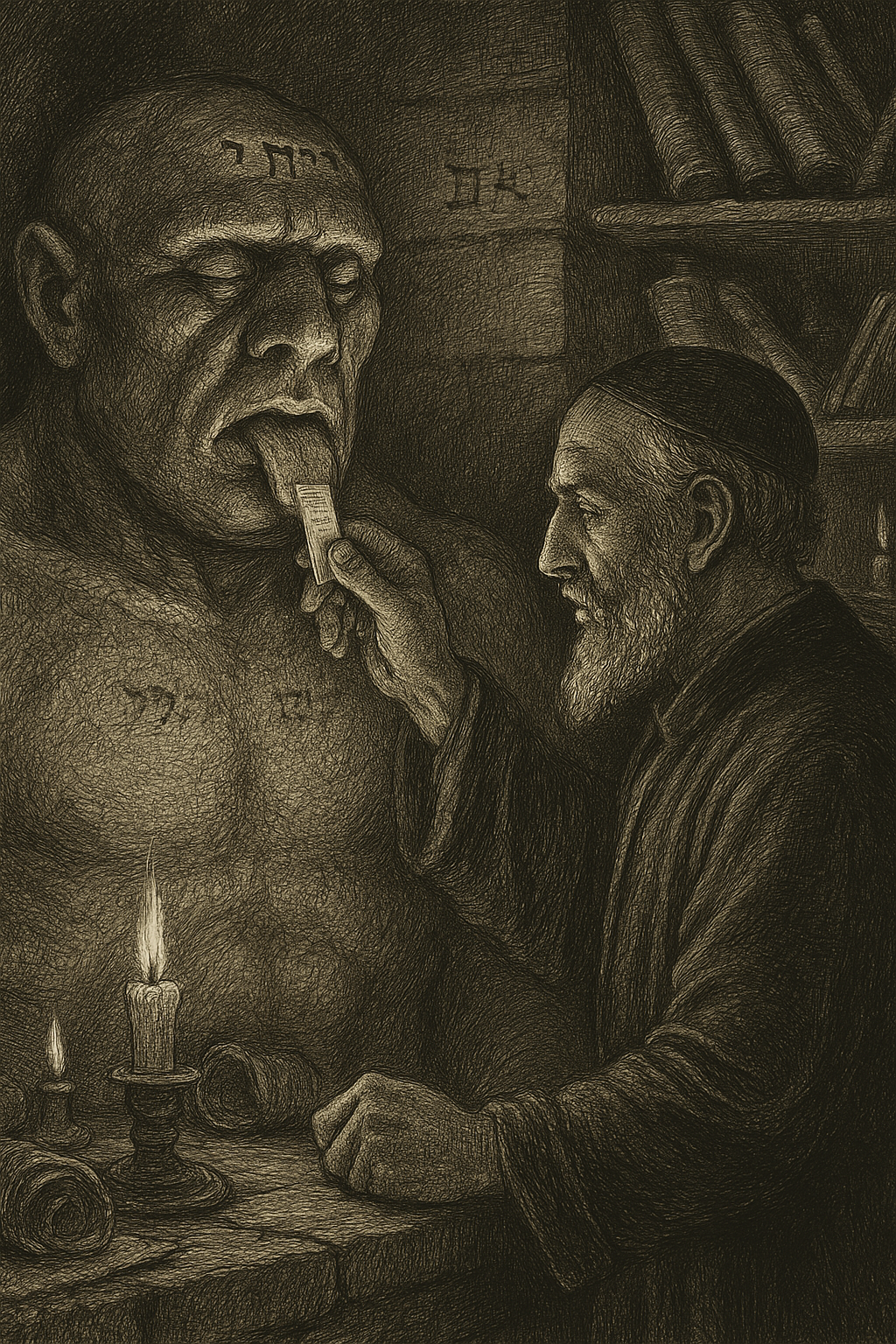 Artefact of the day: The Golem
🔒
In Jewish folklore, גֹלֶם is an artificial antomorphic being shaped from clay and animated by the sacred שֵׁם.
Artefact of the day: The Golem
🔒
In Jewish folklore, גֹלֶם is an artificial antomorphic being shaped from clay and animated by the sacred שֵׁם.-
is_parent Ingression of the day: The Marble 🔒 ·
"The Marble" is a spherical energy & information storage medium (= "the ghost") whose insertion into the body activates the body (= "the shell") of the AI syst
-
-