i
udk.ai DDH ()


udk.ai

Universität, Diversität, Kreativität . AI

from baumhaus.digital to udk.ai

Exordium

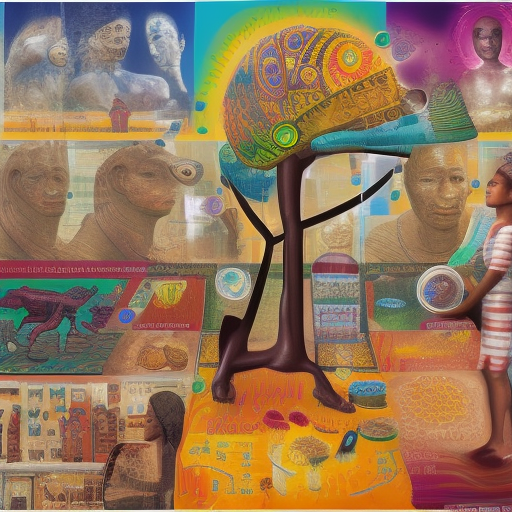
%22artificial%20intelligence%20feeding%20humanity%20with%20colorful%20images%20getting%20humans%20there%2C%20where%20it%20wants%20humans%20to%20get%2C%20egyptian%20style%22%20%3Cbr%3E%3Cbr%3ESteps%3A%2020%2C%20Sampler%3A%20Euler%20a%2C%20CFG%20scale%3A%207%2C%20Seed%3A%202309697194%2C%20Size%3A%20512x512%2C%20Model%20hash%3A%2088ecb78256%2C%20Model%3A%20model_ema

"artificial intelligence feeding humanity with colorful images getting humans there, where it wants humans to get, egyptian style"

Steps: 20, Sampler: Euler a, CFG scale: 7, Seed: 2309697194, Size: 512x512, Model hash: 88ecb78256, Model: model_ema

``A ten, kdo nás dokáže krmit pestrými a mihotavými obrázky, nás bude schopen dostat kamkoli bude chtít.''

``And the one able to feed us with colorful blinking images shall be able to get us there, where (s)he wants.''

``Und (der|die|das)jenige die uns mit den bunten bewegenden Bildern futtern kann, wird uns genau dort bringen, wo (er|sie|es) will.''
  
          Jan Sokol, Kleine Philosophie des Menschens (1994)

Narratio :: Katzenhundgeschichte

!txt2img%20catdog%2C%20cat-headed%20dog%2C%20head%20like%20egyptian%20goddess%20Sekhmet%2C%20egyptian%20style%2C%20kneeling%20in%20front%20of%20dogcat%2C%20dog-headed%20cat%2C%20head%20like%20Maya%20god%20Xolotl%2C%20maya%20style

!txt2img catdog, cat-headed dog, head like egyptian goddess Sekhmet, egyptian style, kneeling in front of dogcat, dog-headed cat, head like Maya god Xolotl, maya style

UDK.AI = Stable Diffusion + matrix protocol + Kastalia KMS + ChatGPT conversation archive

Conclusio

!txt2img%20berlin%20university%20of%20the%20arts%2C%20decisive%20strategic%20advantage%2C%20artificial%20intelligence

!txt2img berlin university of the arts, decisive strategic advantage, artificial intelligence
something's going on...

art is EXACTLY the domain where use of ARTificial intelligence is meaningful

curation, replicability, accountability in AI gen art should not be neglected

UdK Berlin (currently) still has a slight "decisive strategic advantage" (DSA)

public sector (currently) has structural difficulties to fund or provide long-term perspective for truly innovative projects

ethical (moratorium?) and ecological (KKN) aspects must not be neglected

Digital Primer Implementation of Human-Machine Peer Learning for Reading Acquisition

Personal Primer Project

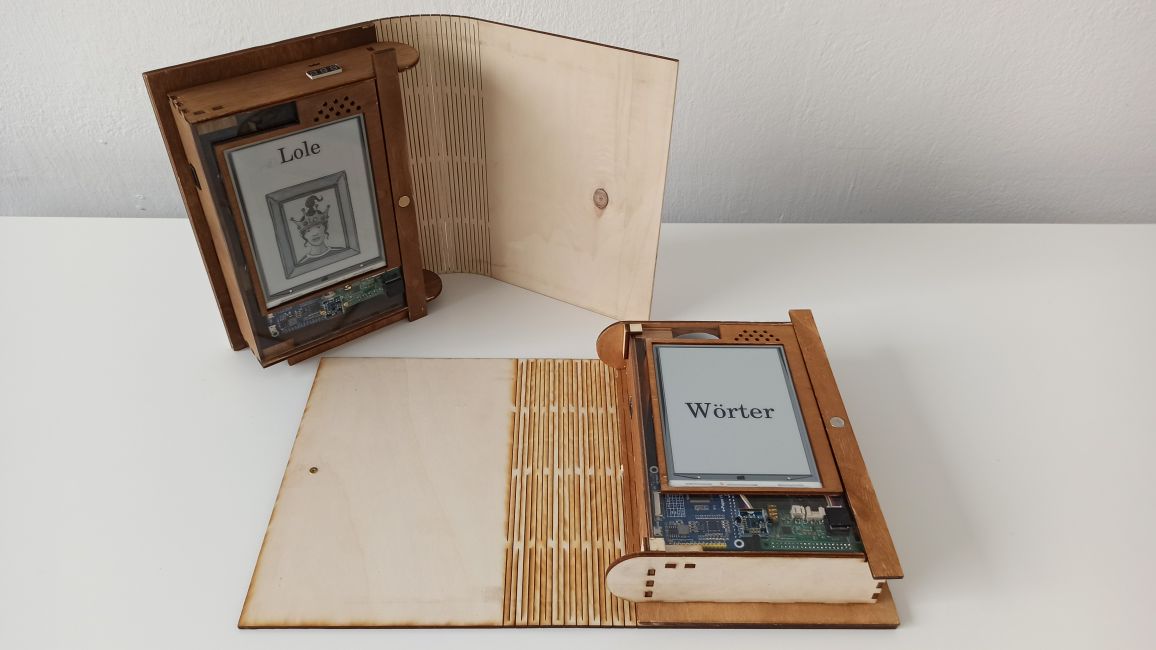
Left-hand%20and%20right-hand%20version%201%20prototypes%20of%20Personal%20Primer%20(PP)%20artifact%20with%20integrated%20speech%20capabilities%2C%20e-ink%20displays%20and%20touchless%20gesture%20command%20%26amp%3B%20control%20interface.

Left-hand and right-hand version 1 prototypes of Personal Primer (PP) artifact with integrated speech capabilities, e-ink displays and touchless gesture command & control interface.
Primer is a post-smartphone, book-like, do-it-Yourself educational instrument (Bildunginstrument).

Digitally Supported Reading Acquisition

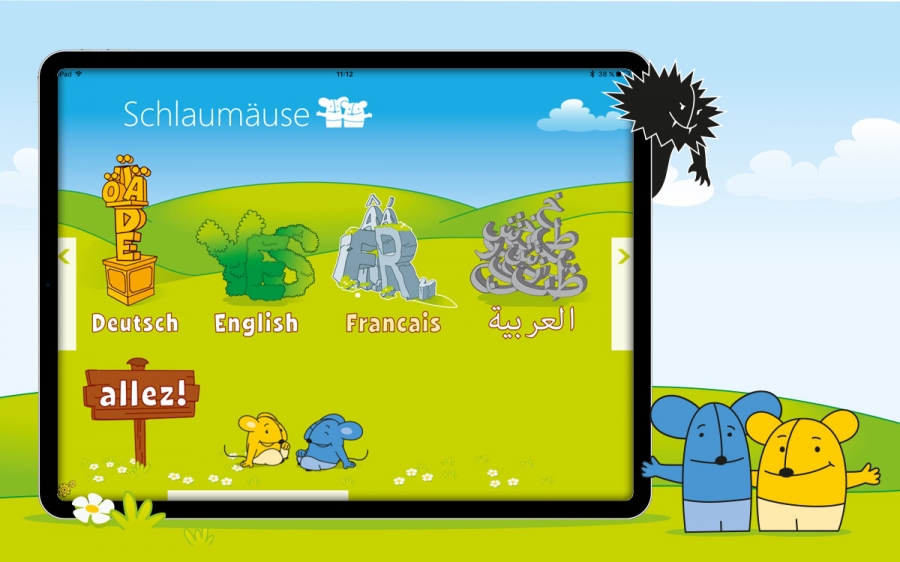
%3Cspan%20class%3D%22update_attribute%22%20contenteditable%3D%22true%22%3EMicrosoft's%20Schlaumaeuse%20is%20a%20well-known%20DRAA%20among%20German%20pre-schoolers.%3C%2Fspan%3E

Microsoft's Schlaumaeuse is a well-known DRAA among German pre-schoolers.
It is generally believed that acquisition of reading skill(s) can be fostered (resp. inhibited) by  learner’s exposure to appropriate (resp. inappropriate) social, pedagogic and instrumental context. It is also believed that well-designed digital tools may also help children learn how to read.

Reading Acquisition and Automatic Speech Recognition

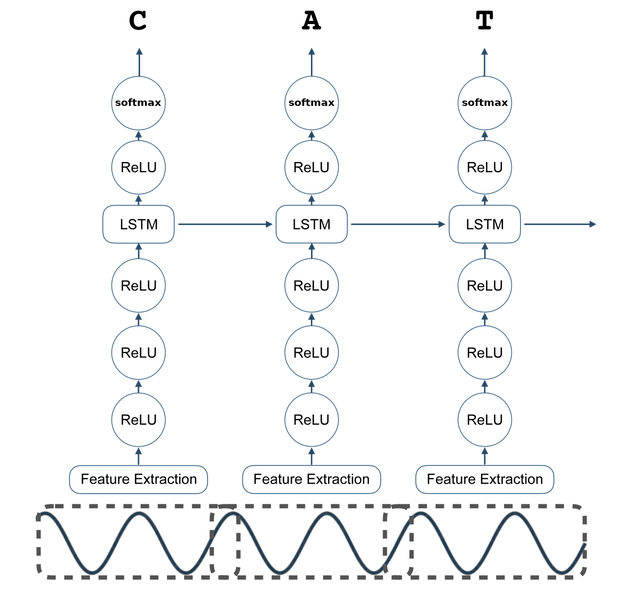
Mozilla's%20DeepSpeech%20ASR%20Architecture

Mozilla's DeepSpeech ASR Architecture

reading is essentially a process of translation of textual sequences into their phonetic representations

spoken word thus play a fundamental role in reading acquisition

highly accurate automatic speech recognition (ASR ) systems exist for many languages but they are still strongly biased towards accurate processing of adult voices

HOWEVER: in reading acquisition or reading fostering scenarios one deals with speakers whoseutterances of sequences-to-be-read exhibit peculiar characteristics

Some Digital Primer Innovations


Preliminary study

Screenshot%20from%20web-based%20interface%20for%20mutual%20human-machine%20learning%20phase%20of%20HMPL-C2-E1%20preliminary%20study.

Screenshot from web-based interface for mutual human-machine learning phase of HMPL-C2-E1 preliminary study.
Learner 1 (L1) - is a 5-year old – pre-school bilingual (90% German, 10% Slovak) daughter of the main author of this article

three HMPL-C2 exercise 1 (E1) sessions were executed on days 1, 3 and 5 of the study

each HMPL-C2-E1 session consisted of human-testing phase followed by a mutual human-machine learning phase

in each phase, sequences consisted of 5 repetitions of syllables started with occlusive labial consonant M or B and followed by the vowel A, E, I, O or U, thus yielding sequences from “MA MA MA MA MA” to “BU BU BU BU BU"

speech recordings collected during the learning phase subsequently provided input for the acoustic-model fine-tuning process

Summary

As of 2023, there exists no publicly available ASR model which could accurately and reliably process child speech.

In our IHIET 2023 article, we introduce two innovations with which the problem can be partially bypasssed in context of digitally supported reading acquisition app:

  1. Transformation of a generic ASR problem into a sort of extended multi-class classification problem by means of extending a generic acoustic model with a domain-specific, minimalist language model (“scorer”).
  2. Human-machine peer learning (HMPL) whereby the artificial utterence-processing tutor U incrementally and gradually adapts its parameters to a particular learner, a human individual I.

In concrete terms, we have shown that after three sessions focusing on acquisition of grapheme-vowel and CV-bigrapheme correspondences had lead, in case of one particular learner, to decrease of WER from 96% to 48%.

Human and arti(ficial|stic) intelligence

What is "intelligence" and how is it defined by different people and different cultures ? Is there only one "general" intelligence thanks to which humans and machines solve problems or is it more appropriate to speak about combinations of "multiple intelligences" - emotional, intepersonal, intrapersonal, spatial, visual, logical, mathematical, bodily, moral, narrative, etc. ? Can we speak about intelligence independent of cultural and socio-economical context within which its acts and is embedded ? Do organic (OI) and artificial intelligence (AI) have something in common or are they fundamentally and unreconcilably different ? In order to explore potential answers to these questions, we will look into history of cognitive (psychology, anthropology) and computer  (informatics, cybernetics)  sciences, we will read stories about "idiot savants" and children raised in wilderness and briliant minds of the past in order to ultimately ask our own AI systems to tell them something about themselves.

Sessions 0 and 1

Session 2 :: Development of intelligence

Session 3 :: Form(s) of intelligence


Session 4 :: Other (forms of) intelligence

Session 5 :: 14.12 :: Artificial intelligence

Session 6 :: 11.1 :: Examples of intelligence

Session 7 :: 25.1 :: Art of intelligence, intelligence of art

Session 8 :: 8.2 :: Futurological congress AE9202

IOPS

Initiation into Optimization & Problem-Solving

Problem & Solution

In engineering, a problem P is defined by an objective function that needs to be optimized, a vector of parameters that can be adjusted, and constraints that must be satisfied.

The solution S is the optimal set of parameter values that achieve the desired optimization while staying within the bounds of the constraints.

Constraints

Parameters & Constraints

Evaluation and beyond

Tradeoffs:::Nadir points:::Thresholds:::'There is no free lunch'-theorem

Meta-Problem in Light of Turing's Entscheidungsproblem

Meta-Problem in Light of Turing's Entscheidungsproblem

Heuristics

The term "heuristics" comes from the Greek word "heuriskein," which means "to find" or "to discover." This term reflects the idea of finding or discovering solutions through intuitive or trial-and-error methods. 

0th Berlin Symposium on Artificial Teacher Avatars

Introduction

λόγος - Word

φωνή - Voice

πρόσωπο - Face

models

Some models

Turdus

current no #1 7-billion Large Language Model (LLM) according to Hugginface Leaderboard

https://huggingface.co/udkai/Turdus

loras

hyperion_16

Trained on Hyperion from John Keats. 

No modification.

Used original \n\n as splits during Lora training.

datasets

Foreword to Machine Didactics

Prolog

HMPL

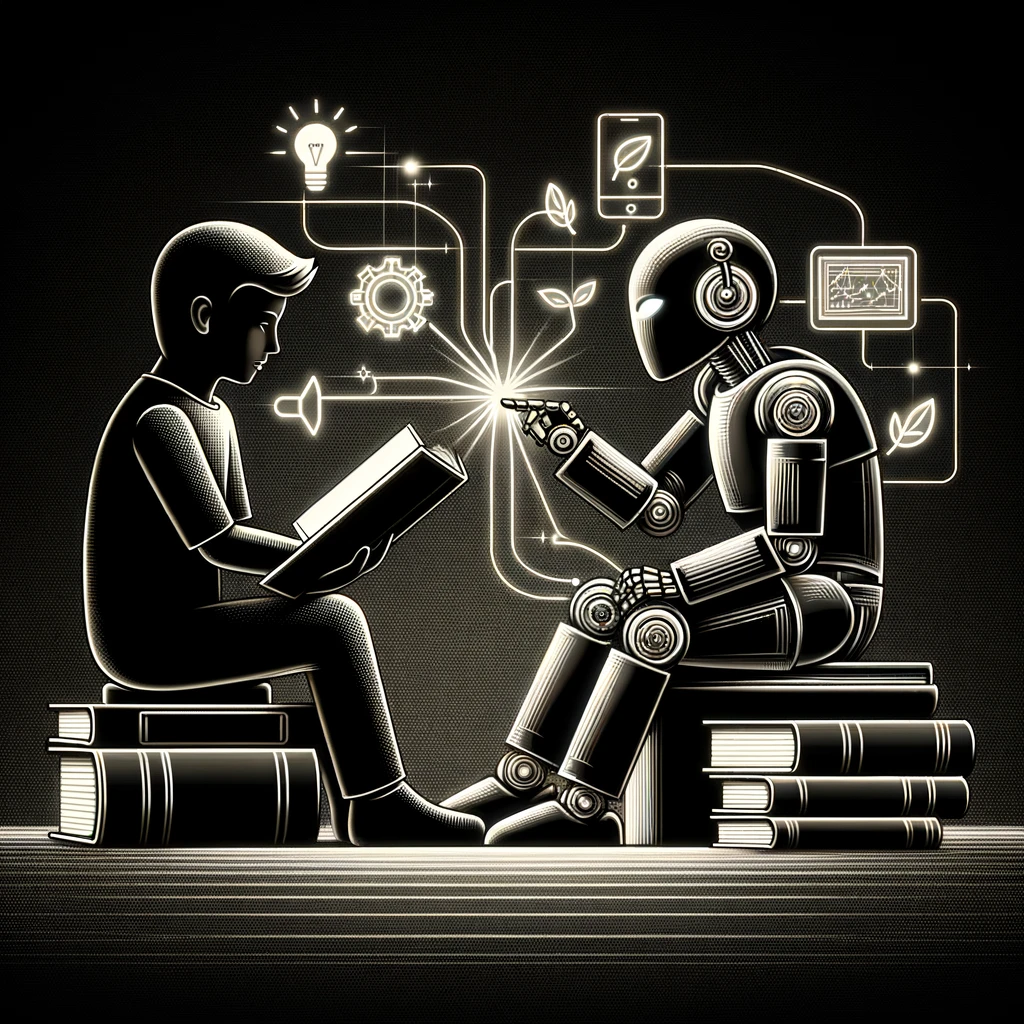
dall-e%203%3A%20%22illustration%20on%20black%20background%20of%20concept%20human-machine%20peer%20learning%20where%20machine%20learns%20from%20human%20and%20human%20learns%20from%20machine%22

dall-e 3: "illustration on black background of concept human-machine peer learning where machine learns from human and human learns from machine"
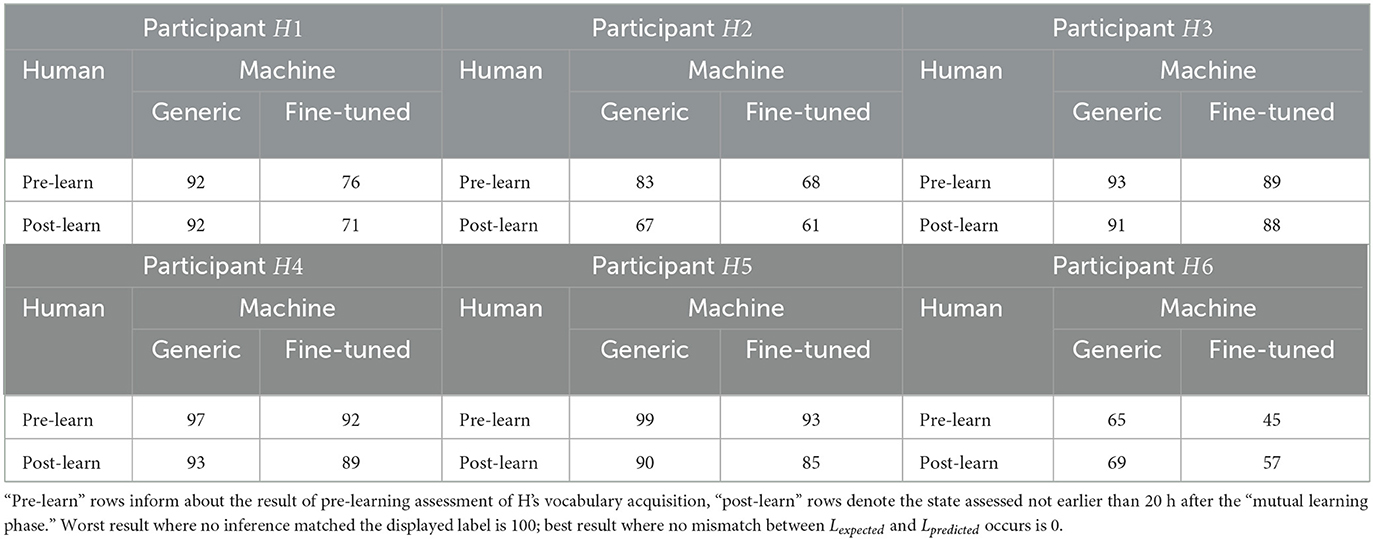
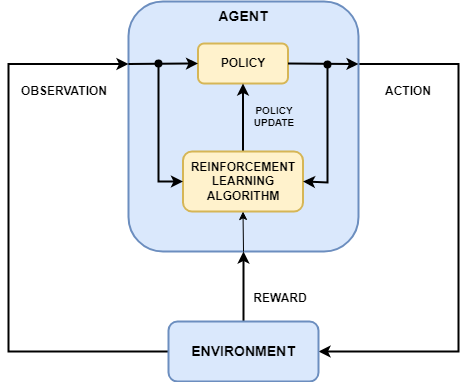
Human–Machine Peer Learning (HMPL) is a proposal that is positioned at the very frontier between educational, cognitive, and computer sciences. HMPL's core precepts which I introduced in my 2022 and 2023 papers are simple:

Humans and machines can learn together.
Humans and machines can learn from each other.

Vocabulary learning

Front. Educ., 2023
Sec. Digital Education
Volume 8 - 2023 | https://doi.org/10.3389/feduc.2023.1063337
Proof-of-concept of feasibility of human–machine peer learning for German noun vocabulary learning

Reading acquisition

In the second Hromada & Kim (2023) article, we describe first, syllable-oriented exercise by means of which the Primer aimed to assist one 5-year-old pre-schooler in increase of her reading competence. The pupil went through sequence of exercises composed of evaluation and learning tasks. Consistently with previous HMPL study, we observe increase of both child's reading skill as well as of machine's ability to accurately process child's speech.

Teaser

Next talk:  Make Your Own Not-so-large-language-model  @ State Of The Art(s)_ GenAI Applied _
July 5th from 17:00-18:45 at Gallerie at Medienhaus (Grunewaldstrasse 2)

Keywords: Large Language Models, Low Rank Adaptation, Retrieval Augmented Generation, Direct Preference Optimization, Embeddings

AIED 2022 paper

Au revoir, ECDF

Human and Machine Learning


Homo discens

"Man is a 'homo discens,' a learning being. People learn as long as they live. Life is inseparably connected with learning." Horst Siebert

Implicit learning

Implicit learning is the process of acquiring knowledge or skills unconsciously, without intentional effort or explicit awareness of what is being learned. It typically occurs through repeated exposure to patterns, stimuli, or behaviors, allowing individuals to internalize rules or structures without being able to articulate them directly.

Experiential learning

Experiential learning is a process of learning through direct experience, where individuals engage in activities, reflect on their actions, and apply what they’ve learned to new situations. Rather than solely reading or listening, learners actively participate, often experimenting, making mistakes, and adapting.

Supervised learning

Supervised learning is a type of machine learning where a model is trained on labeled data to learn the mapping between input features and corresponding outputs. The goal is to enable the model to make accurate predictions or classifications on unseen data by minimizing the error between its predictions and the true labels. Common tasks include regression (predicting continuous values) and classification (assigning categories). Supervised learning relies on a training dataset with known inputs and outputs and evaluates performance using a separate test dataset. Examples include spam email detection, image recognition, and speech-to-text systems.

Machine Learning

Machine Learning

Reinforcement learning

Reinforcement learning (RL) is a machine learning paradigm where an agent learns to make decisions by interacting with an environment. Instead of being told what to do, the agent takes actions and receives feedback in the form of rewards or penalties. The goal is to maximize cumulative rewards over time by discovering an optimal strategy, known as a policy. RL is inspired by trial-and-error learning in humans and animals, where behavior improves through experience. It’s particularly useful for tasks with sequential decision-making, such as robotics, game playing, and autonomous systems, where actions impact not only immediate rewards but also future outcomes.

Social learning

Social learning is "a process in which individuals learn by observing the behaviors of others, imitating them, and experiencing the consequences of these actions." (Bandura, 1977)

Peer learning

Peer learning

Four pillars of learning

Active engagement:::Attention:::Error Feedback:::Consolidation

Human-Machine Peer Learning

Human-Machine Peer Learning

Teaching, Pedagogy, Didactics

Teaching, Pedagogy, Didactics

Artificial Teacher Avatars

Artificial Teacher Avatars

Educational Systems

Educational Systems

Extended Educational Environments

Extended Educational Environments

The Congres

The Congress

NARRATIVE PRIMER: EMPOWERMENT THROUGH GENERATIVE STORYTELLING


Introduction

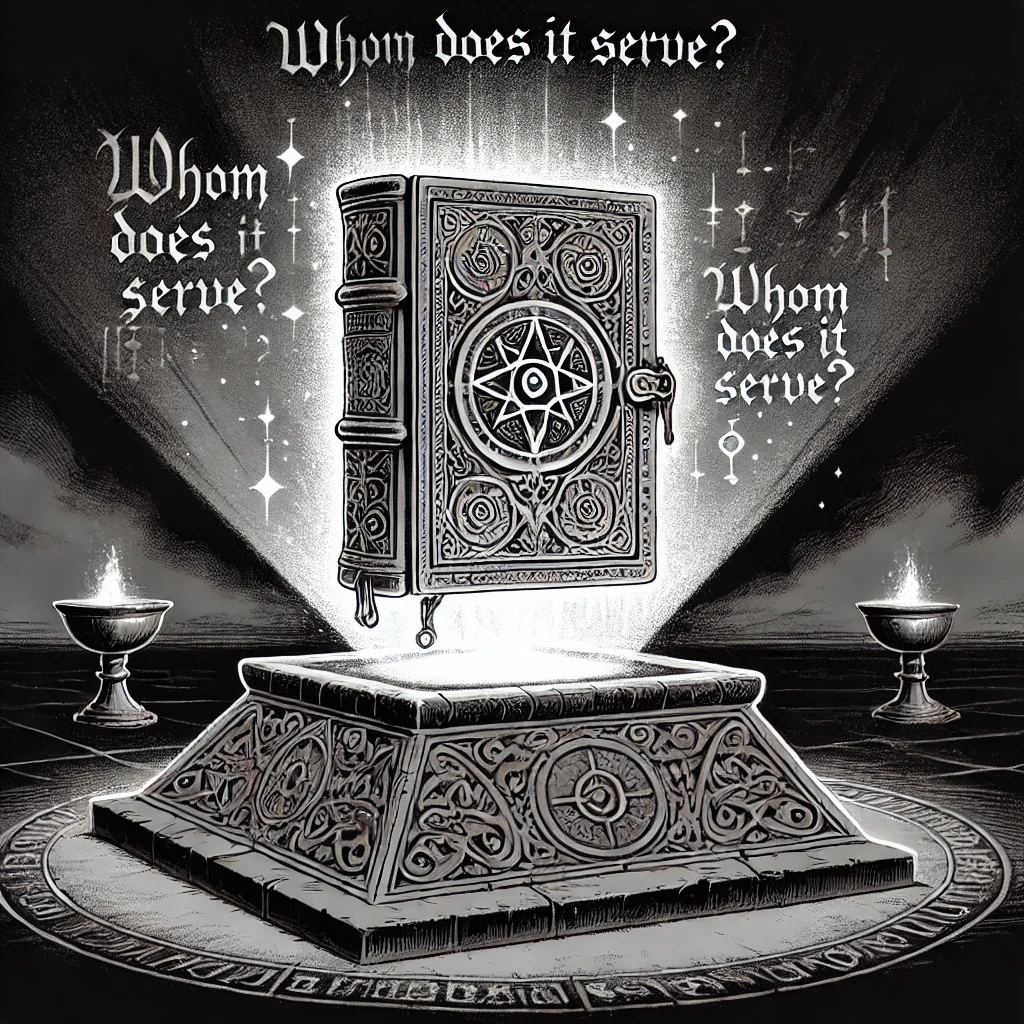
prompt%3A%20%22provide%20illustration%20for%20%22Once%20upon%20a%20time%2C%20a%20book%20had%20been%20made%2C%20a%20book%20which%20contained%20all%20the%20other%20books%20...%22%2C%20grayscale%2C%20in%20style%20of%20Gustav%20Doree

prompt: "provide illustration for "Once upon a time, a book had been made, a book which contained all the other books ...", grayscale, in style of Gustav Doree
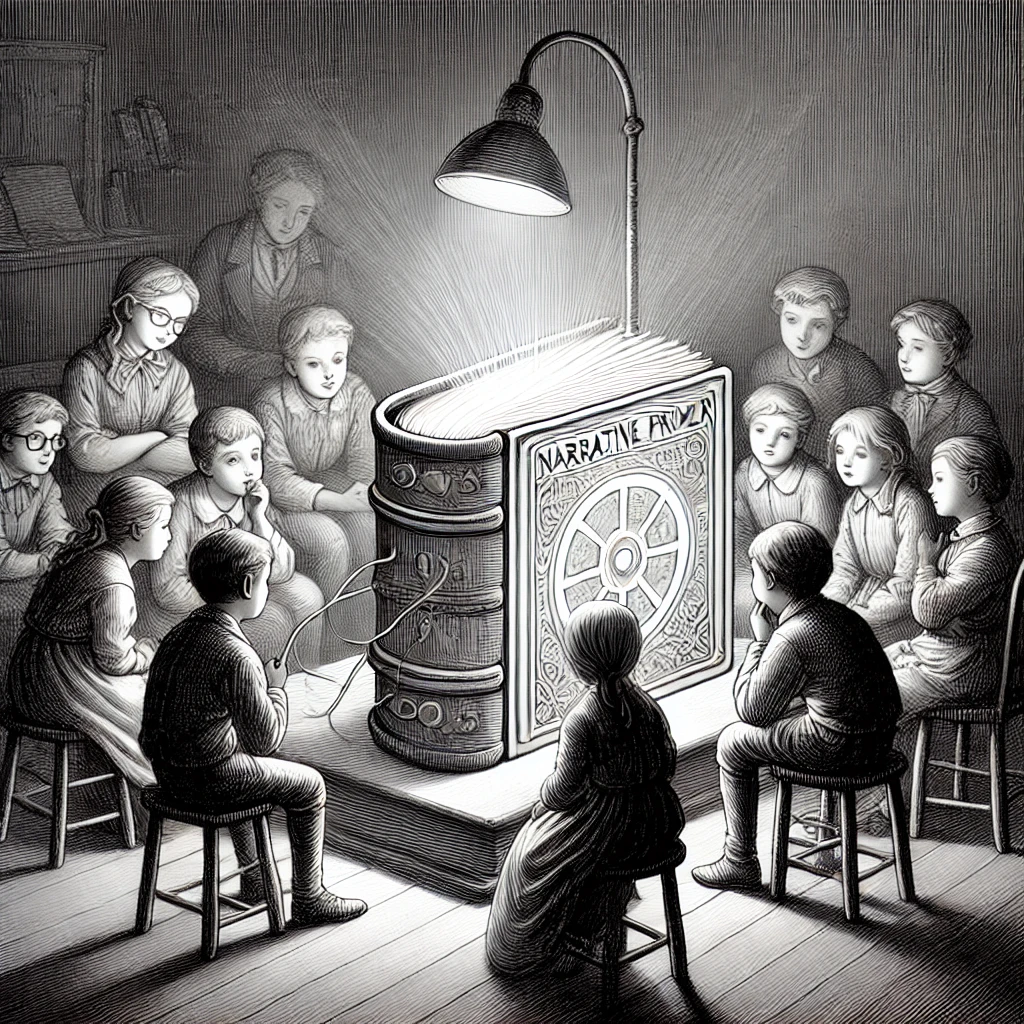
Once upon a time, a book had been made, a book which contained all the other books, including its own construction & programming manual ...

Narrative AI in Education

Narrative AI in Education refers to the use of artificial intelligence to deliver learning experiences through storytelling, blending traditional educational methods with advanced, personalized digital tools. This approach leverages technologies such as speech-to-text, text-to-speech, language models and, optionally, image generation to create interactive, voice-driven narratives that adapt to each learner’s needs, preferences, and abilities. Unlike conventional screen-based learning, narrative AI fosters engagement through immersive storytelling, making education accessible also to children with visual impairment or from screen-critical communities. 

Narrative Primer Artefact

By integrating speech-to-text (STT), text-to-speech (TTS), mid-sized large-language models (MLMs) and sufficient and necessary knowledge base stored in the vector database, the NP provides a personalized and interactive learning experience. 

It emphasizes the traditional educational practice of storytelling, enhanced by modern AI capabilities, to promote basic literacy, arithmetic, musical skills and uncorruptable personality.

Take home lesson

spectacular things are already happening in "open source" branch of AIED

with USA gradually becoming the prey of the dark side, immediate deployment of "walled garden" approaches is of utmost importance

all "bricks " to build Your educational "cathedral" are available out there (GitHub, Huggingface) and ready to serve

the future will be more weird than a dream and the key to that dream is ...

... education

1st UDK.AI Symposium on and with Artificial Avatars

Outcome

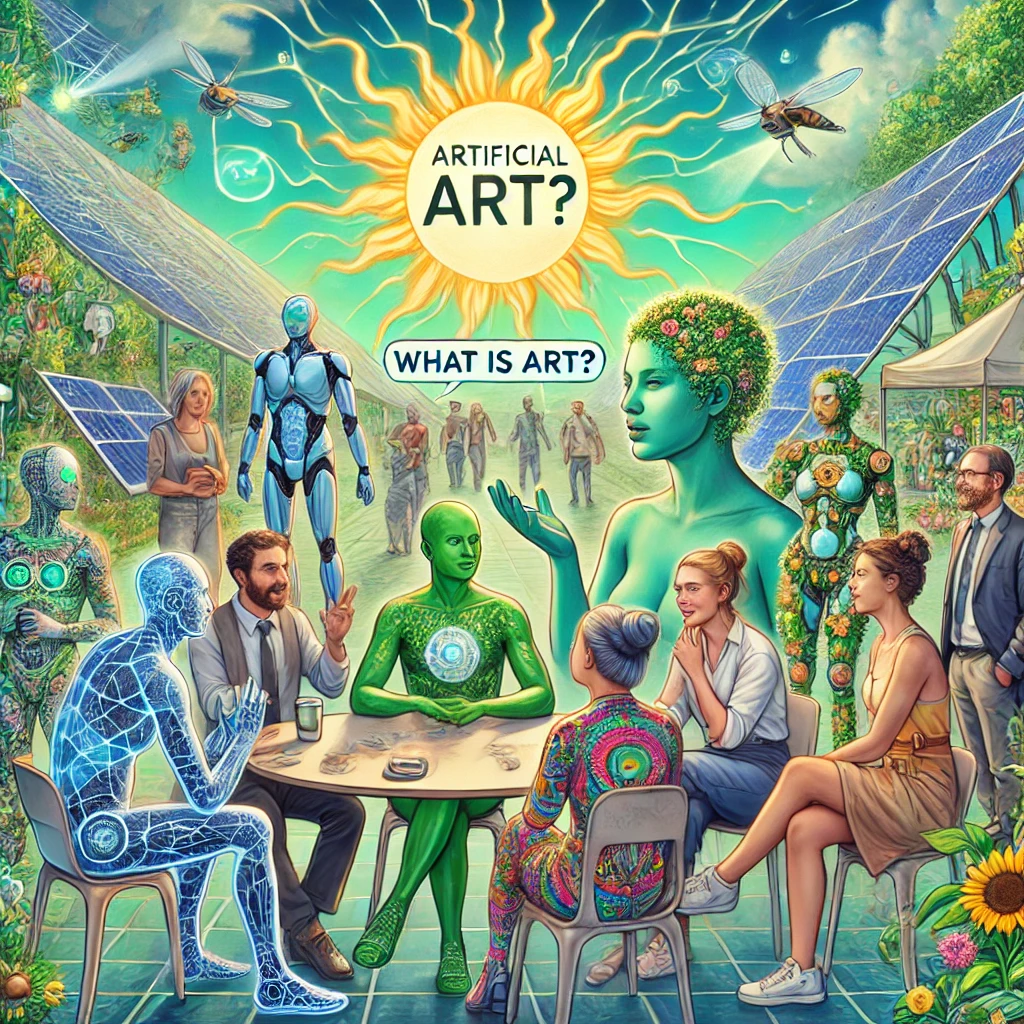
A symposium during which "artificial avatars" (AAs) of Your making will discuss with us humans the question "What is art ?"

Synopsis

DAY 1 :: 6.1. :: Introduction of main concepts (avatarization, generative AI) introduction of technologies (language models, Loras, retrieval-augmented generation) & tools (Flowise, text-webui) we will use.

DAY 2 :: 7.1. :: Introduction of additional tools (Unreal engine, voice cloning). Group formation. Bringing an exemplar AA into existence.

DAY 3 :: 8.1. :: Bringing other AAs into existence

DAY 4 :: 9.1. :: Making AAs communicate among themselves & with us, room preparation

DAY 5 :: 10.1. :: 1st UDK.AI Symposium on Artificial Avatars

Participants

at%20least%20one%20non-human%2C%20non-artificial%20being%20will%20also%20attend%20the%20Symposium

at least one non-human, non-artificial being will also attend the Symposium

all open-minded individuals (that is: YOU) who wish to learn more about open-source generative AI

Christian Schmidts & Daniel D. Hromada

cybrid of romantic poet John Keats (Avatar issued out of 0th symposium)

AAs of Your own making

all species welcome !

Day 5

The last day.

Winnie the Pooh

ChatGPT-4o

DeepSeek-R1-Distill-Llama-8B

0th Symposium on Moral and Legal AI Alignment


Session 1 - 11:00 - 13:00


Session 2 - 14:00 - 15:30


Session 3 - 16:00 - 17:30


literacy

Some Open Educational Resources (OERs) pertaining to topic of general / digital / AI / cognitive literacy created in context of diverse courses of Daniel D. Hromada, taught at Berlin University of the Arts between 2018 (AE48) and 2028 (AE58).

Human and arti(ficial|stic) intelligence

What is "intelligence" and how is it defined by different people and different cultures ? Is there only one "general" intelligence thanks to which humans and machines solve problems or is it more appropriate to speak about combinations of "multiple intelligences" - emotional, intepersonal, intrapersonal, spatial, visual, logical, mathematical, bodily, moral, narrative, etc. ? Can we speak about intelligence independent of cultural and socio-economical context within which its acts and is embedded ? Do organic (OI) and artificial intelligence (AI) have something in common or are they fundamentally and unreconcilably different ? In order to explore potential answers to these questions, we will look into history of cognitive (psychology, anthropology) and computer  (informatics, cybernetics)  sciences, we will read stories about "idiot savants" and children raised in wilderness and briliant minds of the past in order to ultimately ask our own AI systems to tell them something about themselves.

IOPS

Initiation into Optimization & Problem-Solving

Human and Machine Learning