Prolegomena to Educatio Digitale
Session 0 :: Overview
Mythology

What Is Machine
Number
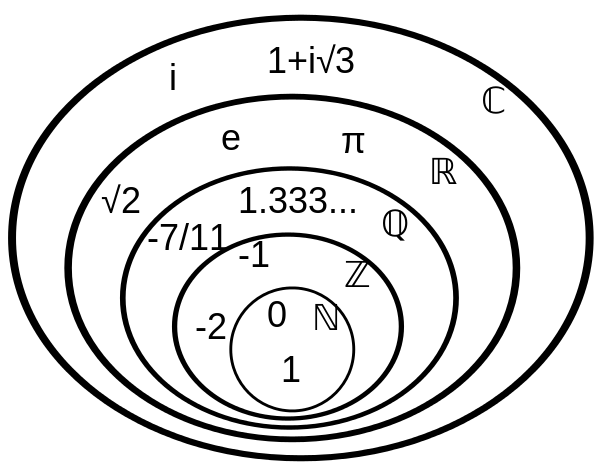
What Is Number
Algorithm
What Is Algorithm
		i=0;
		while (true) {
			i=i+1;
			print i;
		}
Digit
What Is Digit
I, V, X, L, C, D, M
0, 1, 2, 3, 4, 5, 6, 7, 8, 9
0, 1
Code
What Is Code
Representation
What Is Representation
Computation
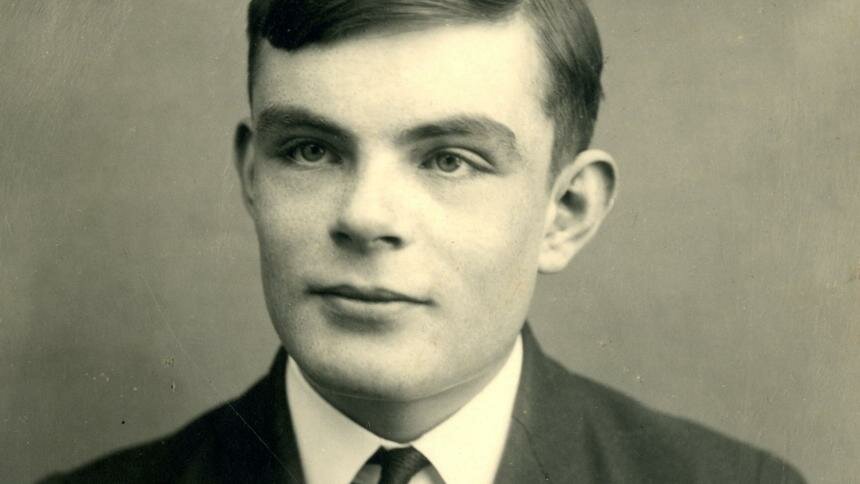
What Is Computation

Information
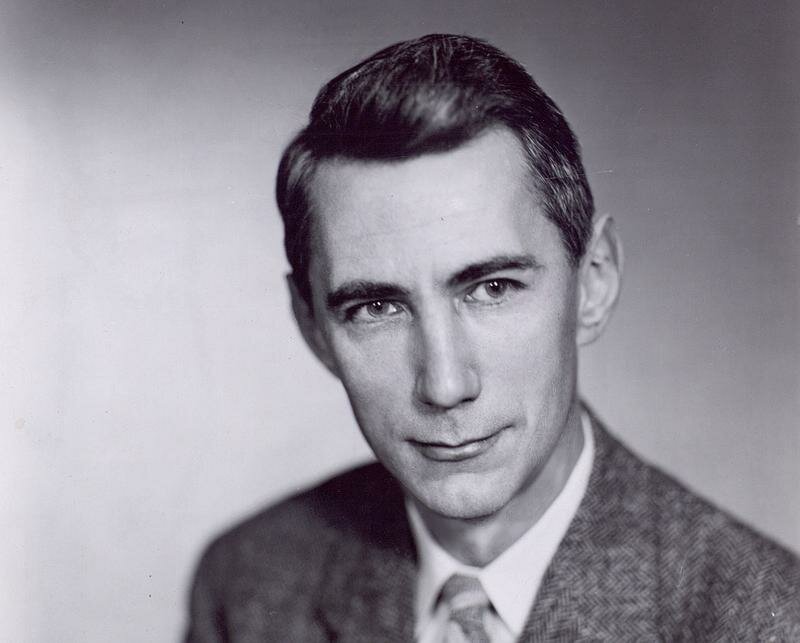
What Is Information
Can Machines Think
Can Machines Learn
Can Machines See
Can Machines Feel
The Congress
Session 1 :: Mythology
Order of the day
- Lectio :: Mythology
- Hephaistos
- Pygmallion
- Pythagoras
- Disputatio :: Myths of a digital world
- Exercitio :: A letter to Your digital self
- Video :: The 2nd rennaissance I.
Mythology :: Hephaistos
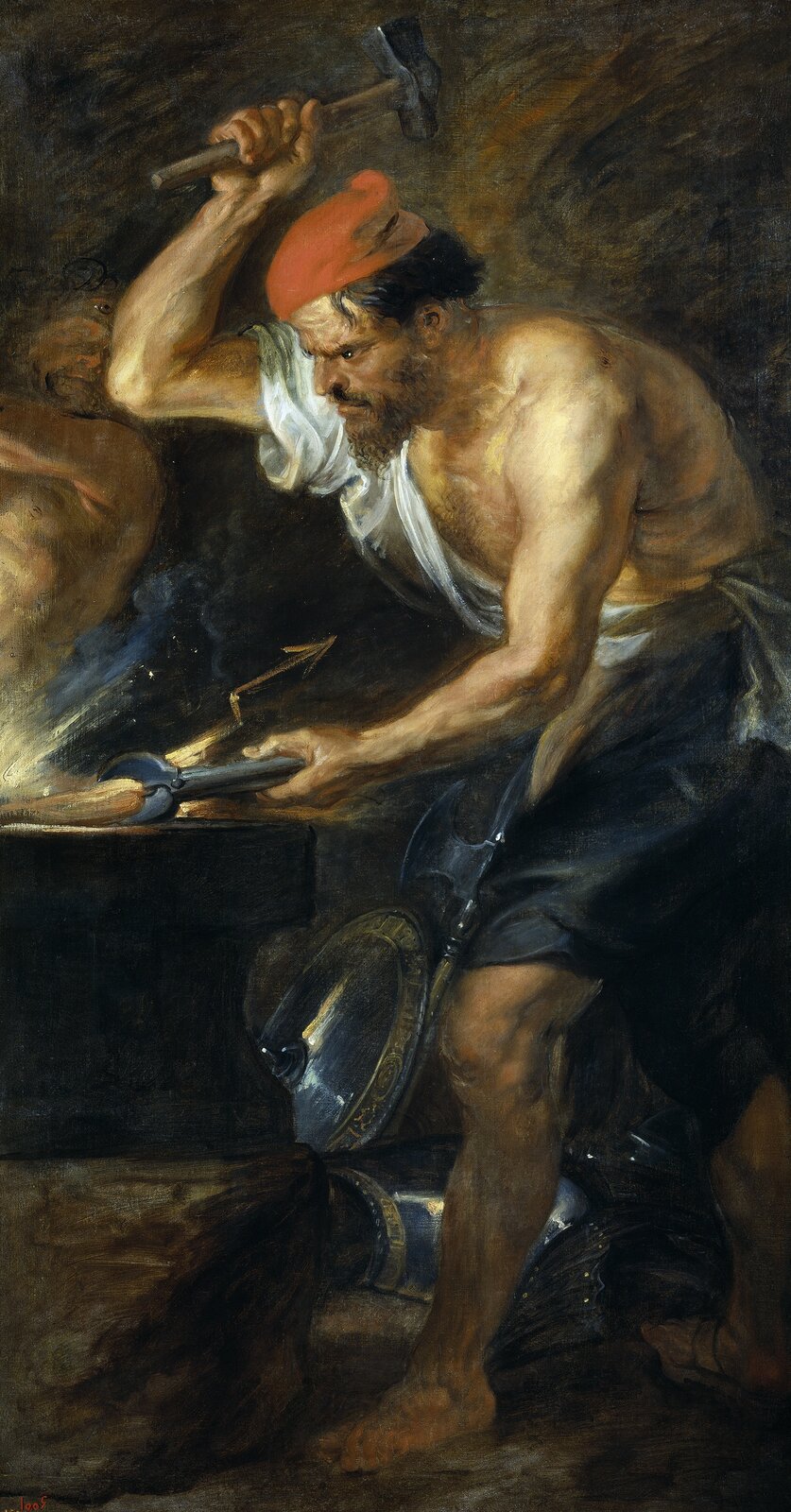
- a male counterpart to Pallas Athena
- gives skill to artists
- god of blacksmiths, metalworking, carpenters, craftsmen, artisans, sculptors, metallurgy, fire, and volcanoes
- son of Zeus and Hera
- husband of Aphrodite
- often depcited as "lame and crippled"
- known as Vulkan among Romans
Made by Hephaistos
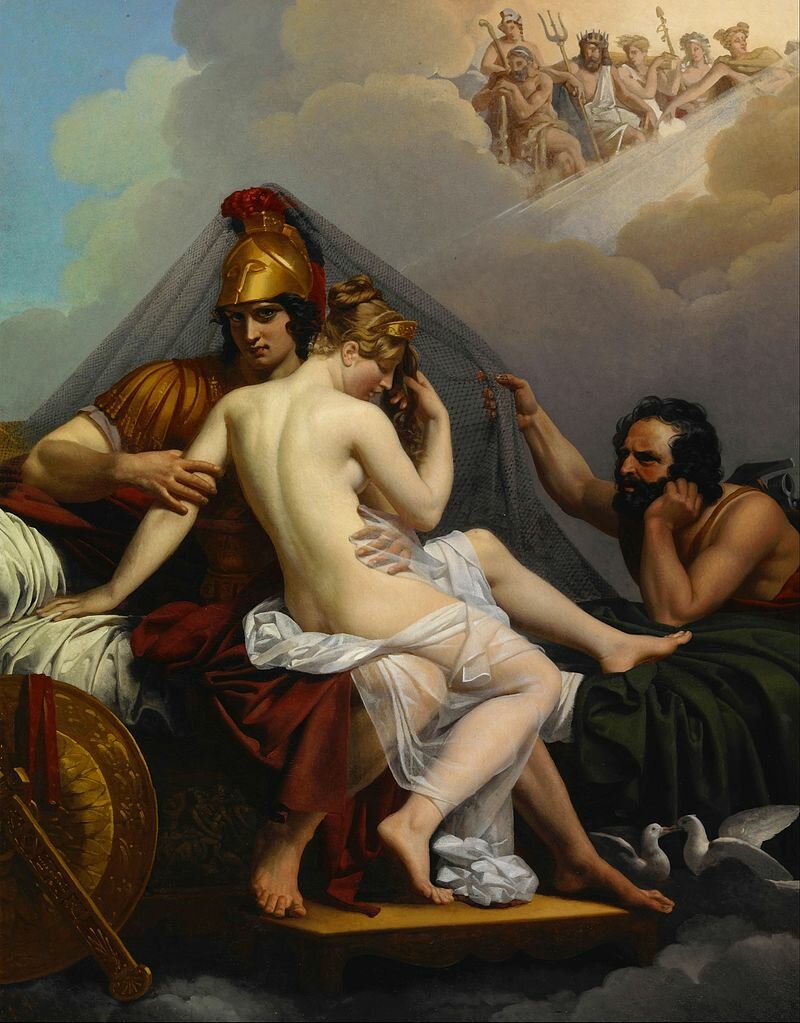
- Hermes' helmet and sandals, Achiless' armor, chariot of Helios
- chain-link net for Aphrodite & Ares
- Pandora's pithos (also known as "Pandora's box")
- first documented automata
Automata attributed to Ἥφαιστος
- Wheel tripods to bring stuff to Olympos and back (Iliad, ca. 8th century B.C.)
- golden and silver dogs and lions which could bite invaders of the palace of Alkinoos (Odyssea, ca. 8th century B.C.)
- Talos, a giant made of bronze to protect Europa in Crete (Argonautica, 4th-3rd century B.C.)
- Aetos Kaukasios, a robotic eagle eating Prometheus' liver (Poeticon Astronomicon, 1st century B.C.)
The Story of Pygmalion and the Statue
Pygmalion loathing their lascivious life,
Abhorr'd all womankind, but most a wife:
So single chose to live, and shunn'd to wed,
Well pleas'd to want a consort of his bed.
Yet fearing idleness, the nurse of ill,
In sculpture exercis'd his happy skill;
And carv'd in iv'ry such a maid, so fair,
As Nature could not with his art compare ...
carv'd in iv'ry a maid so fair
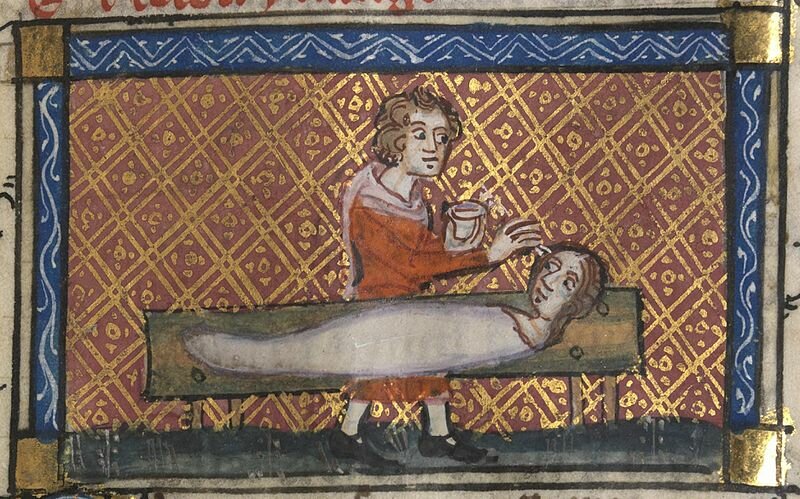
A prayer

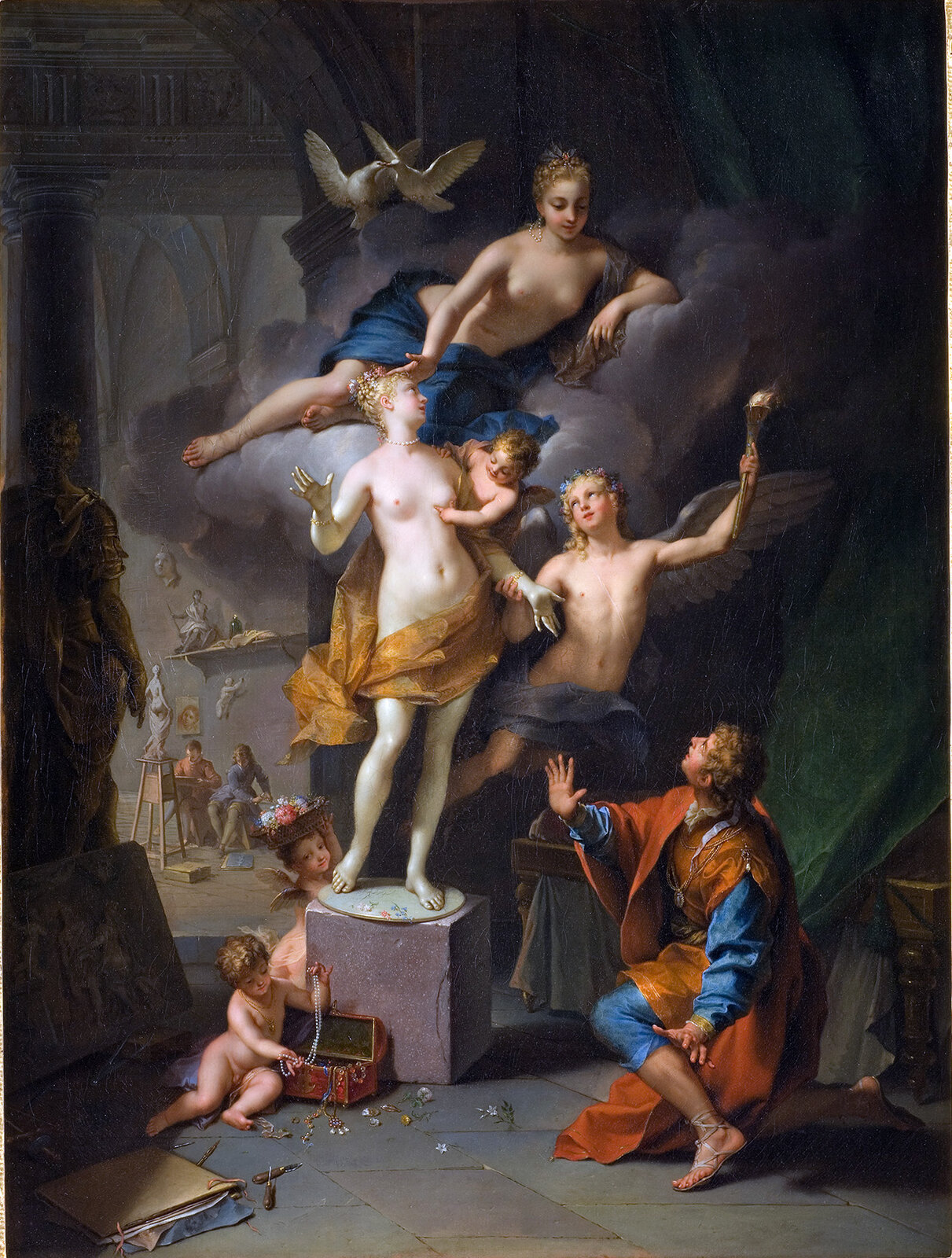
A divine intervention
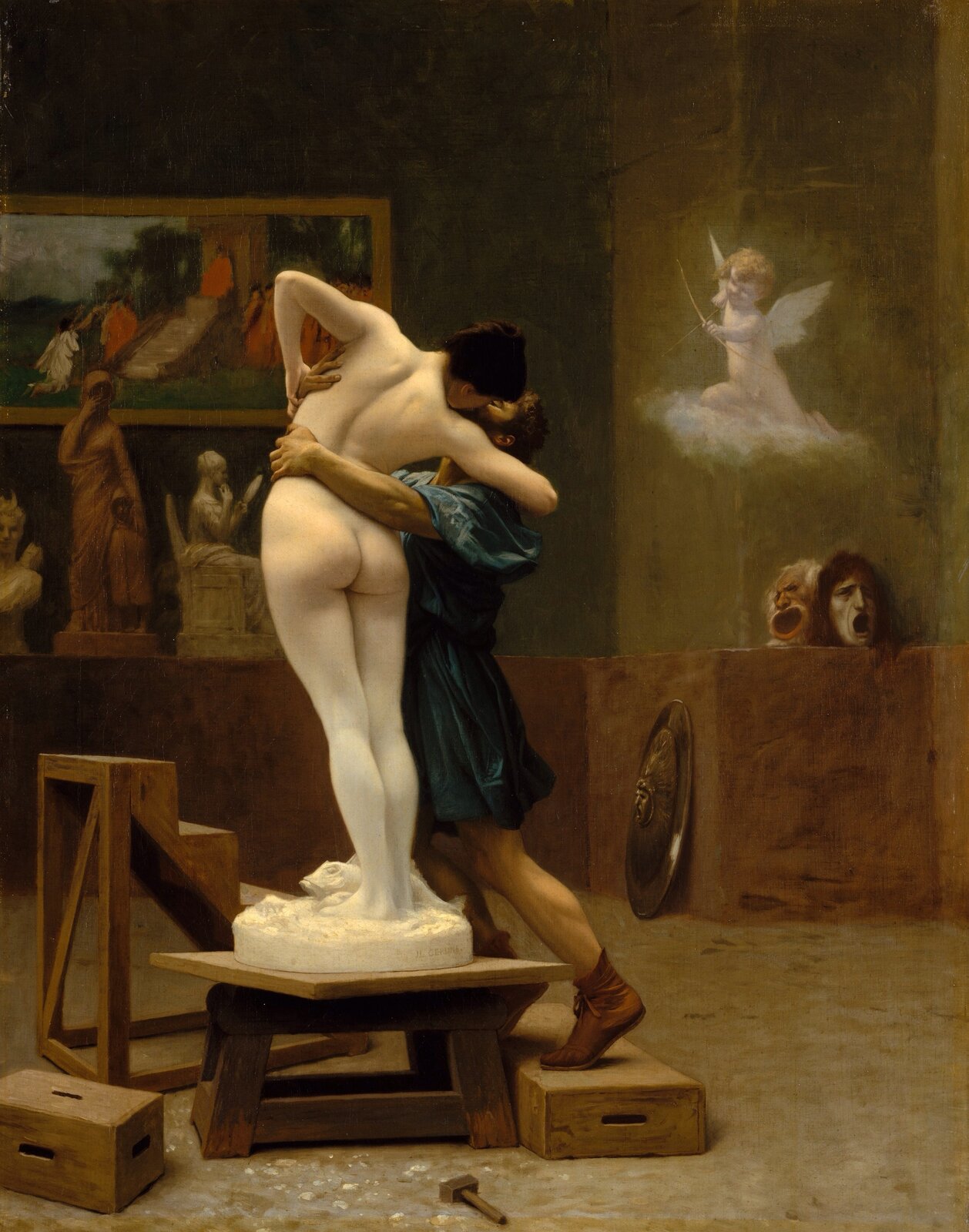
A kiss
A happy end
The Goddess, present at the match she made,
So bless'd the bed, such fruitfulness convey'd,
That ere ten months had sharpen'd either horn,
To crown their bliss, a lovely boy was born;
Paphos his name, who grown to manhood, wall'd
The city Paphos, from the founder call'd.
Pygmalion :: a summary
- described in 10th book of Ovid's metamorphoses, but potentially derived from older myth from island of Cyprus
- an archetypical story about a thing which becomes conscious thanks to a divine intervention
- Can You think of another stories or modern myths with similar plot ? (note them down, we'll speak about them in a minute!)
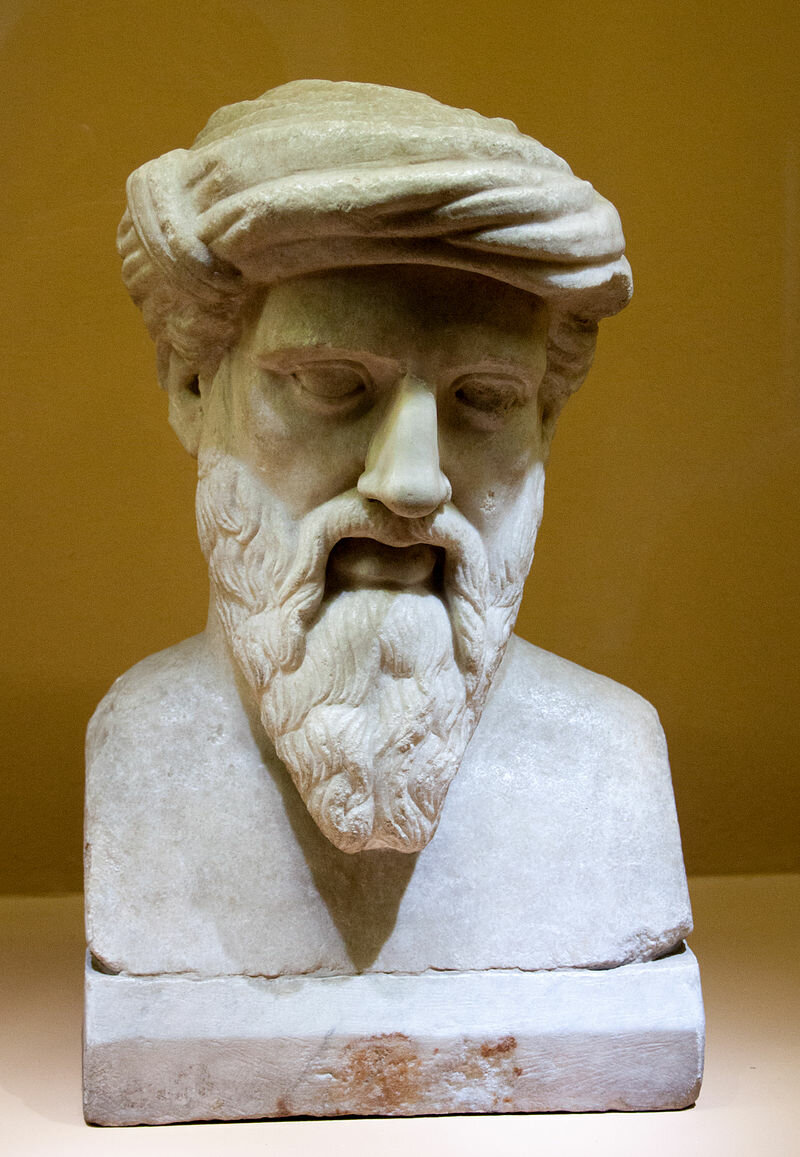
Philosophy :: Pythagoras (c. 570 – c. 495 BC)
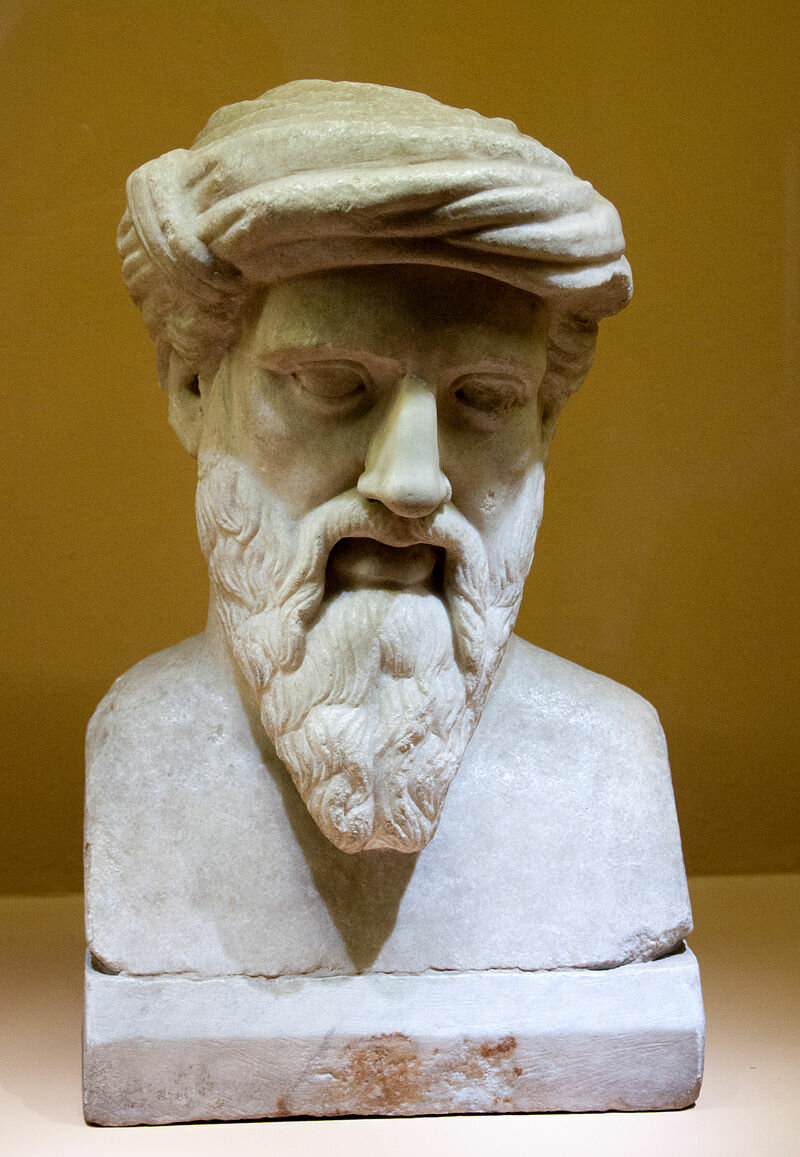
- a half-mythological, half-historic personage
- first man to call himself a philosopher ("lover of wisdom")
- important contributions to mathematics (e.g. Pythagorean theorem, Theory of Proportions etc.) and music (e.g. Pythagorean tuning, musica universalis etc.)
Tetractys of Pythagoras

- triangle distributing numbers 1 to 10 in four rows
- many levels of symbolism (Unity / Power / Harmony / Kosmos; Fire / Air / Water / Earth; Point / Line / Triangle / Tetrahedron )
Pythagoras Theorem
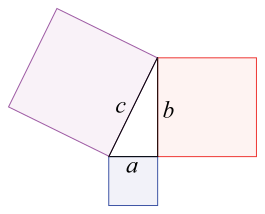 The sum of the areas of the two squares on the legs (a and b) equals the area of the square on the hypotenuse (c).
Quote of the day
Question of the day
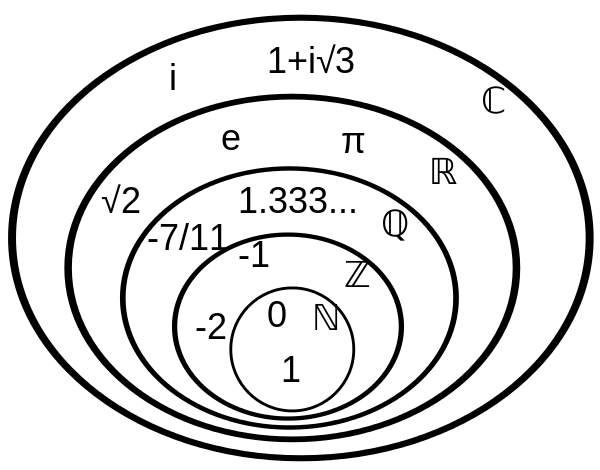
Modern myths
Genesis revisited
and then said creators: faciamus hominem ad imaginem et similitudinem nostram
and then said humans: faciamus machinam ad imaginem et similitudinem nostram
Session 2 :: Antiquity
Order of the day
- Repetitio :: Mythology
- Questio :: What is a machine ?
- Lectio :: Antiquity
- Antikythera mechanism
- Heron of Alexandria
- other traditions
- Exercitio :: Introduction to Abacus
- Disputatio :: What is NOT a machine ?
Question of the day
Etymology of the word "machine"
- English word machine comes through Middle French from Latin machina, which in turn derives from the Greek (Doric μαχανά makhana, Ionic μηχανή mekhane "contrivance, device, engine", a derivation from μῆχος mekhos "means, expedient, remedy")
- Greek "mekhane" was potentially derived from Proto-Indo-European root *magh- meaning "to be able, have power." Linguists believe that English words like may, might, magi, magic, make or German words like machen, Macht etc. are derived from the PIE-root *magh.
Oxford dict. definition of a "machine"
- Any device that transmits a force or directs its application.
- An efficient and well-organized group of powerful people.
- A person who acts with the mechanical efficiency of a machine.
The Antikythera mechanism
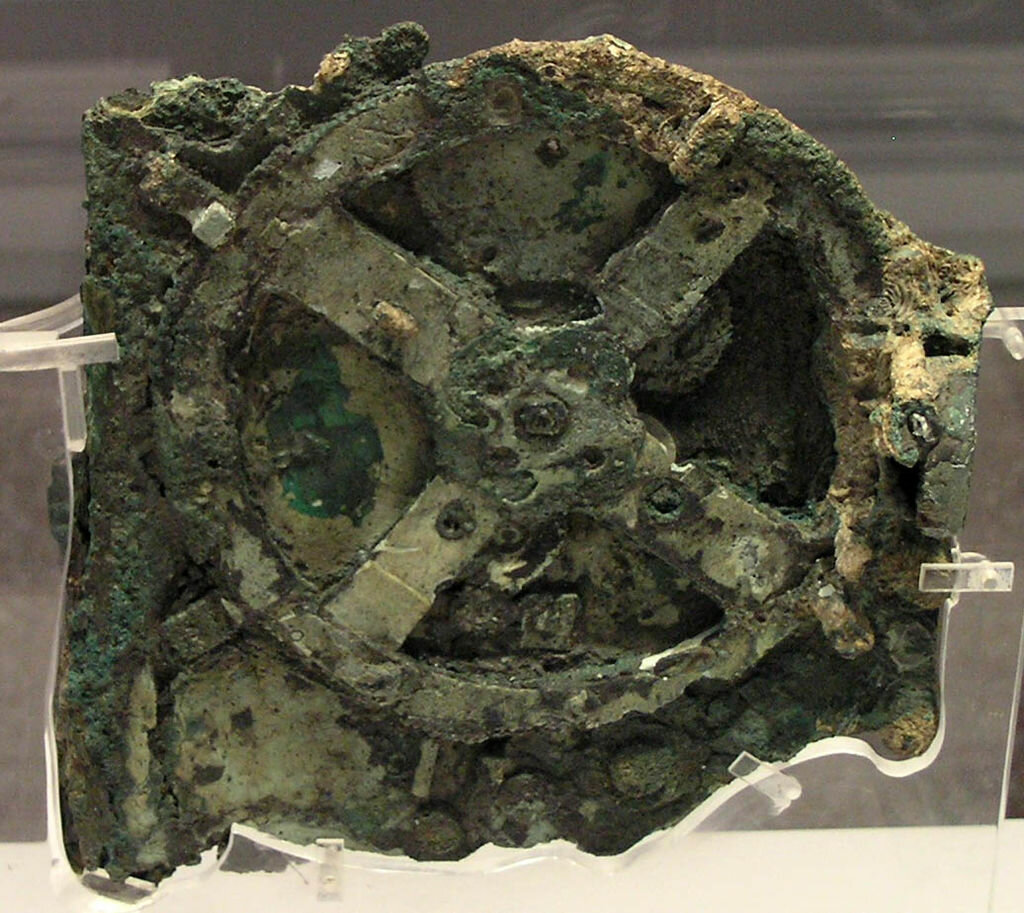
- an ancient Greek analogue computer used to predict astronomical positions and eclipses for calendar and astrological purposes decades in advance
- created sometimes around 2nd-1st century B.C., discovered in 1902
- complex clockwork of at least 30 bronze gears
a first "computer"
Heron of Alexandria (c. 10 AD - c. 70 AD)
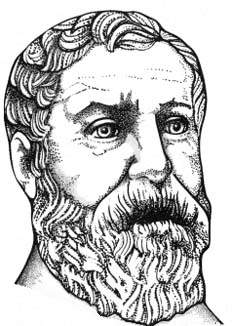
- greatest experimenter of antiquity
- teacher at Musaeum
- author of works like Pneumatica, Automata, Mechanica, On the dioptra, Belopoeica, Catoptrica, Geodesia, Geoponica etc.
- father of cybernetics
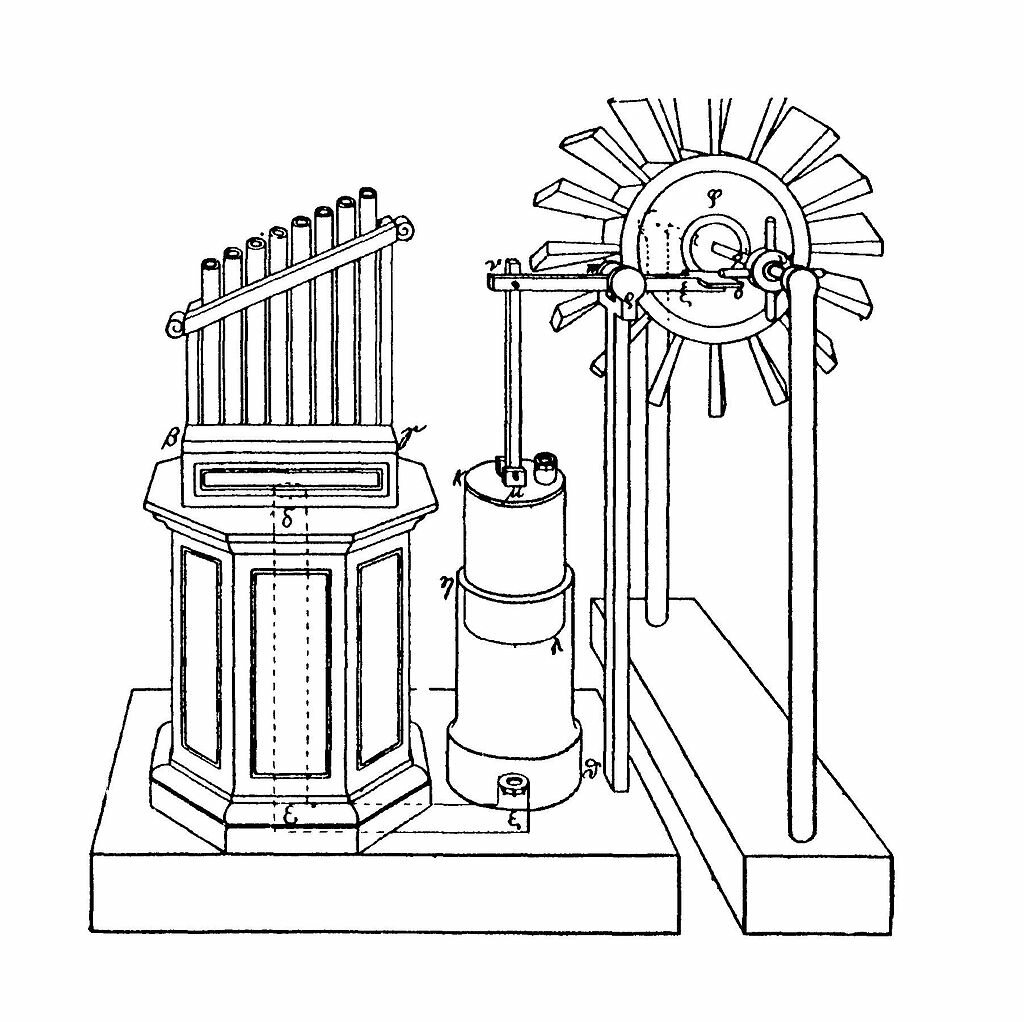
Some inventions by Heron
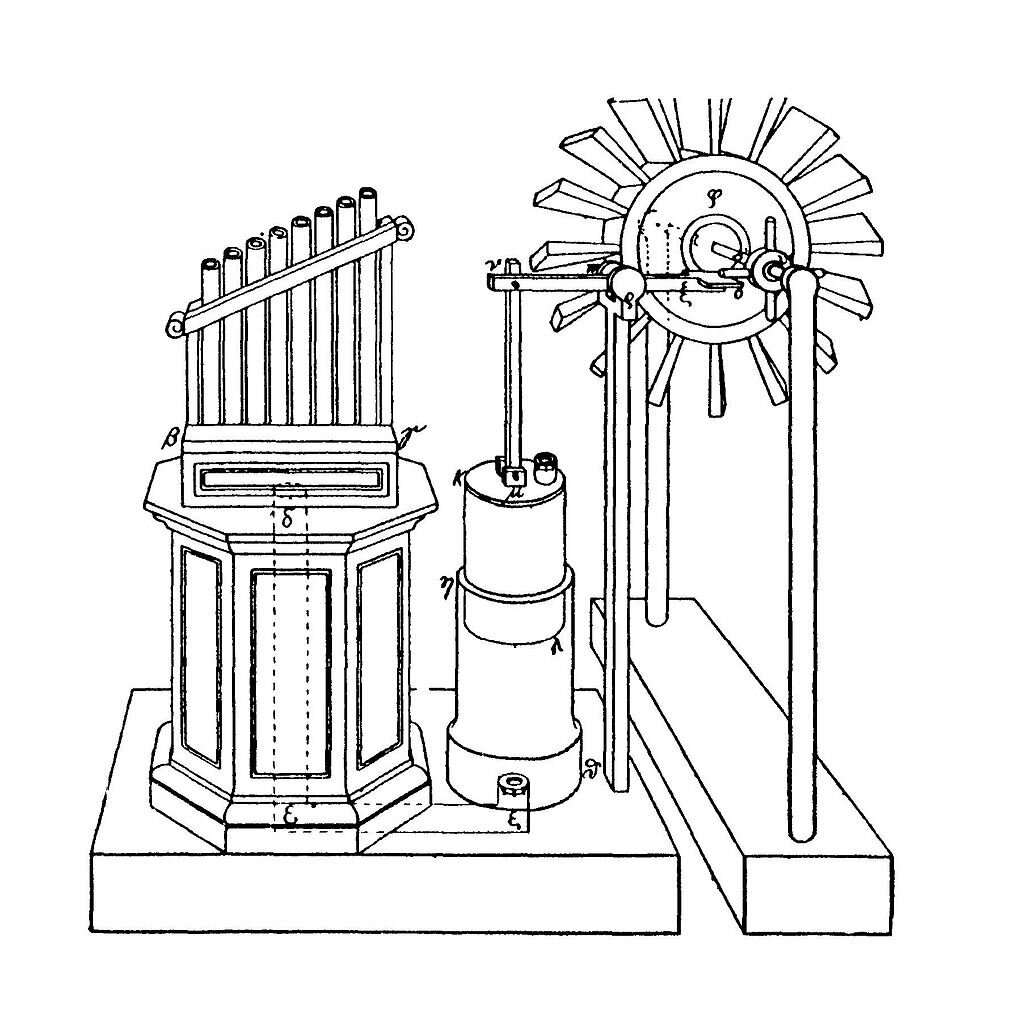
- holy water dispenser
- windwheel organ
- Hero's engine (aeolipile)
- 10-minute long fully mechanical theater piece involving a first "programmable" robot
Heron's automatized temple door opener
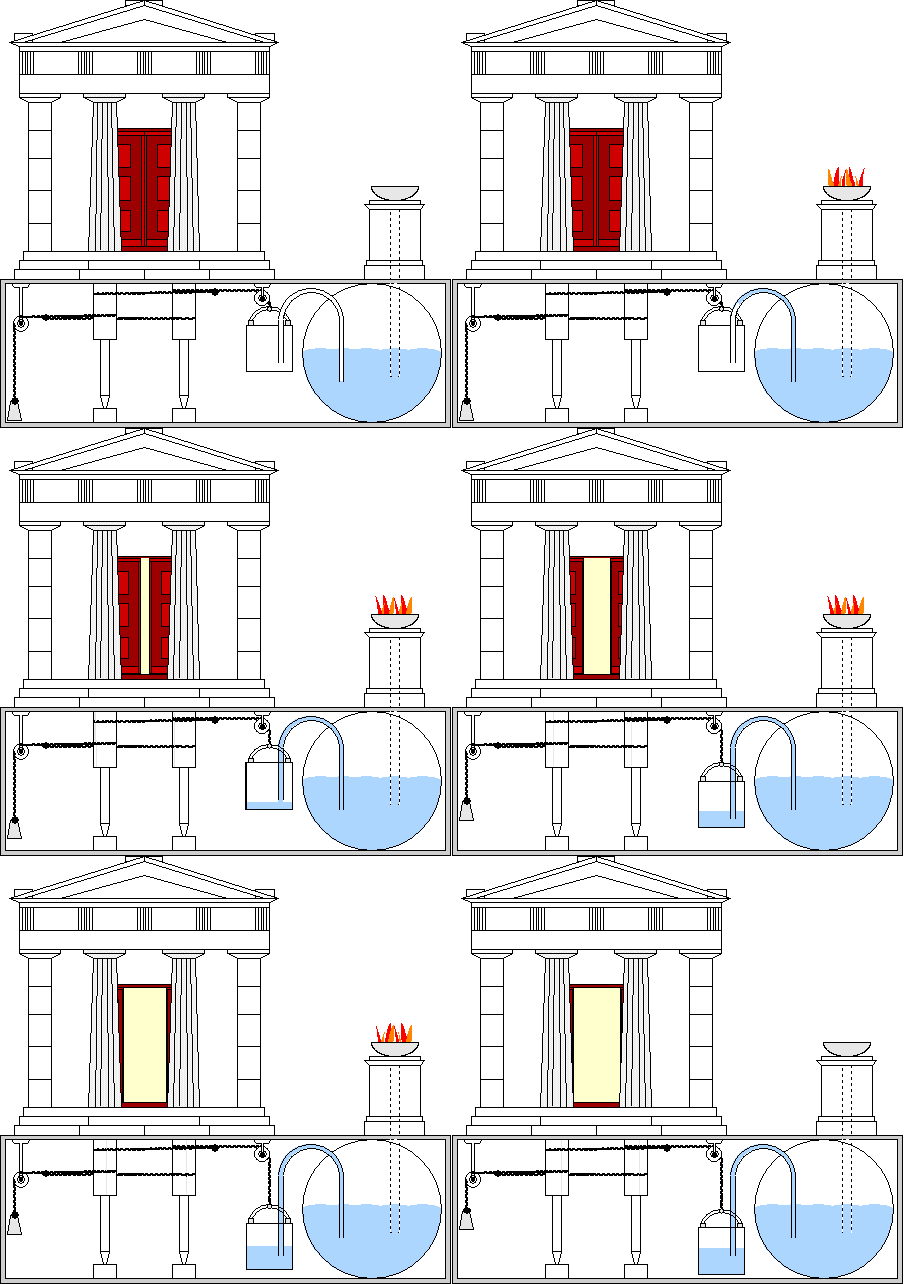
Heron's oracle machine
Heron's 1st "programmable" robot
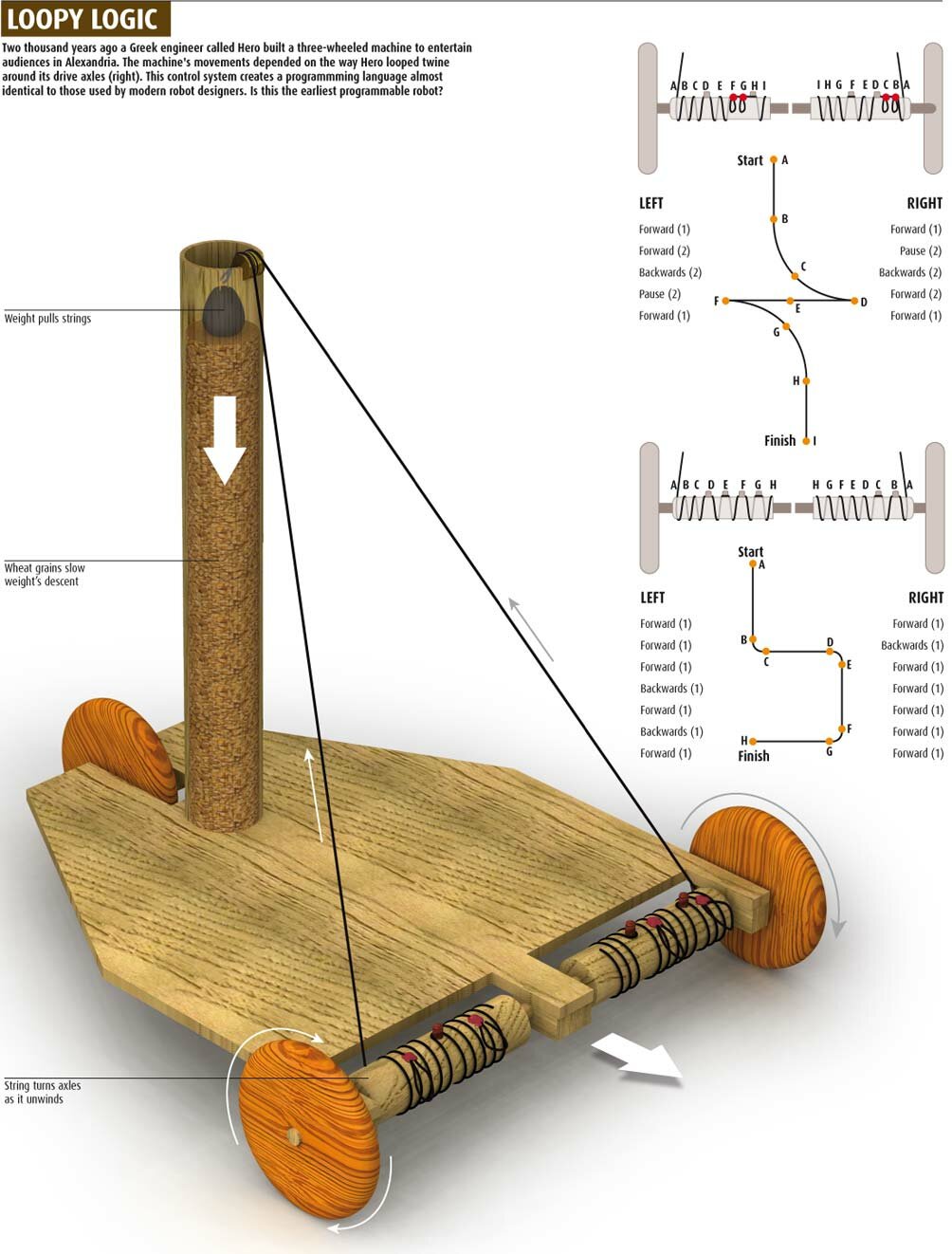
other Traditions :: middle East
"When King Solomon stepped upon the throne, a mechanism was set in motion. As soon as he stepped upon the first step, the golden ox and the golden lion each stretched out one foot to support him and help him rise to the next step. On each side, the animals helped the King up until he was comfortably seated upon the throne. No sooner was he seated than a golden eagle brought the great crown and held it just above King Solomon's brow, so that it should not weigh heavily on his head."
We'll discuss the Persian & Arab traditions next week.
other Traditions :: China
other Traditions :: India
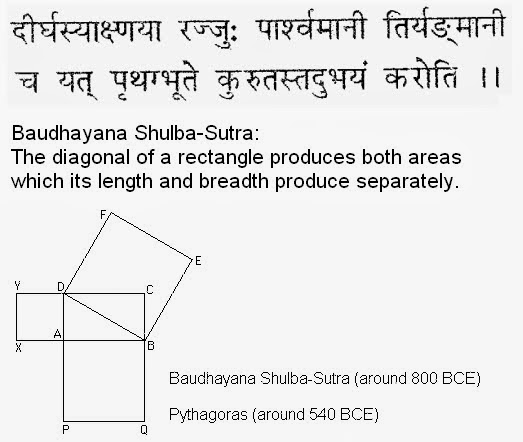
- less interested in "crude", hardware-oriented disciplines of robotics and mechanics (an exception: "The story of a mechanical girl")
- more interested in "subtle", software-oriented disciplines of mathematics and logics
- Shulba Sutras :: texts concerning the Srauta ritual which describe the geometry related to fire-alter construction
Exercicio :: Abacus
Abacus homework
- Watch some videos about addition, subtraction and multiplication on an Abacus (e.g. https://www.youtube.com/watch?v=jwabVzlobZI)
- You can validate the activity-credit for this course by:
- Teaching Your fellow students how to multiply 121 x 121 on an Abacus.
- Proposing the highest possible number which answers the question "How many distinct numbers can one unambiguously represent on an abacus with 10 marbles on 10 rows ?" and demonstrating why it is true.
Disputatio
Session 3 :: Between Antiquity and Renaissance
Order of the day
- Repetitio :: Antiquity
- Narratio :: L'histoire de fille mecanique
- Questio :: What is a digit ?
- Lectio :: Dark ages
- al-Khwarizmi
- Fibonacci
- Exercitio :: Abacus II.
- Disputatio :: Your feedback
Question of the day
Etymology of the word "digit"
- digit (n.)
in English since late 14c., "numeral below 10," from Latin digitus (french: "doigt") "finger or toe" (also with secondary meanings relating to counting and numerals), considered to be related to Proto-Indo-European root *deik- "to show"
Mariam-Webster dict. definition of a "digit"
-
- any of the Arabic numerals 1 to 9 and usually the symbol 0
- one of the elements that combine to form numbers in a system other than the decimal system
- digits , slang : the digits of a telephone number
- any of the divisions in which the limbs of most vertebrates terminate, which are typically five in number but may be reduced (as in the horse), and which typically have a series of phalanges bearing a nail, claw, or hoof at the tip
Our definition "digit"
- a symbol denoting/representing a natural number ("a numeral")
- we'll work with four systems of numerals
- roman: I, V, X, L, C, D, M
- decimal: 0, 1, 2, 3, 4, 5, 6, 7, 8, 9
- binary: 0, 1
- hexadecimal: 0, 1, 2, 3, 4, 5, 6, 7, 8, 9, a, b, c, d, e, f
- other systems of numerals are also possible (e.g. base64)
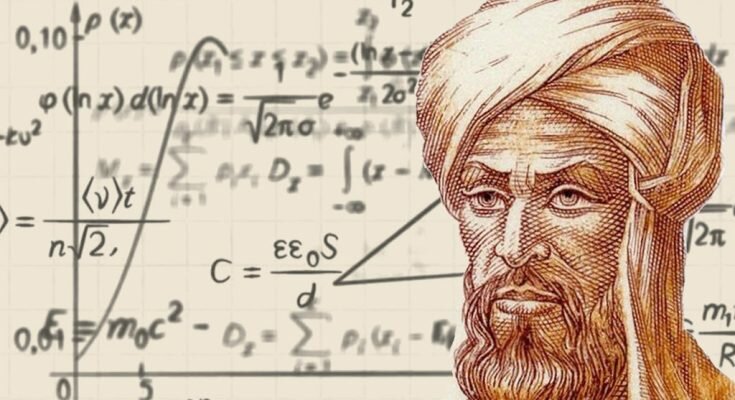
Muhammad ibn Musa al-Khwarizmi (c. 780 - 850 A.D.)
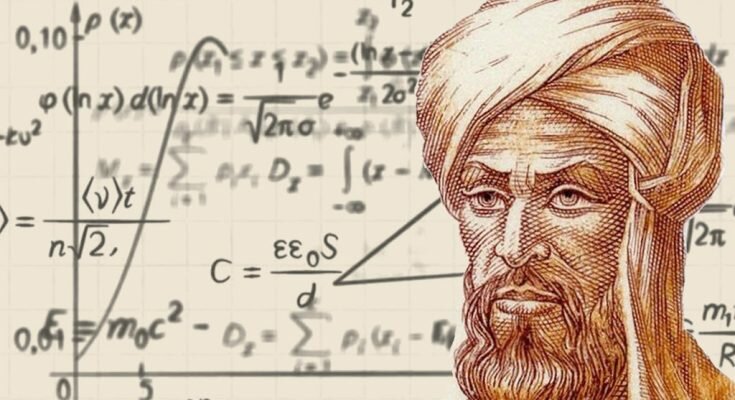
- persian scholar from golden-age of islamic science
- his name Latinized as "Algorithmi" (Port. "guarismo" and Spanish "algarismo" mean digit)
- since 820 A.D. the astronomer and head of the House of Wisdom in Baghdad
- contributions to Algebra, Arithmetic, Astronomy, Trigonometry, Geography
House of Wisdom of Baghdad
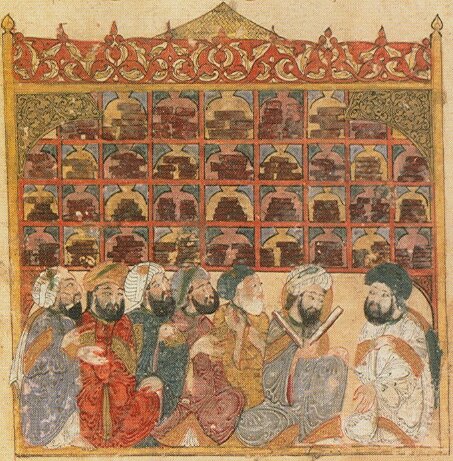
- 8th century - 12th century :: golden-age of islamic science
- integration of Persian and Arabic into one cultural realm
- translation of Greek and Roman works into arabic
- extension of antique knowledge, e.g. Brothers Musa
- more practical than Greek stuff
Liber Algebræ et Almucabola
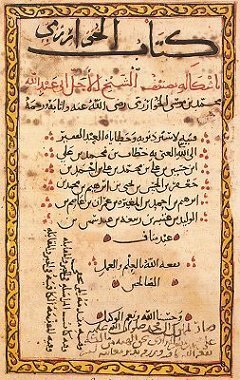
- book about solving quadratic equations
- principial mathematical text-book of European Universities until 16th century
- al-ğabr ("forcing", "restoring") operation :: moving a deficient quantity from one side of the equation to the other side
- al-Muqabala ("balancing" or "corresponding") operation :: subtraction of the same positive quantity from both sides
- presented in ordinary text
Al-kitāb al-mukhtaṣar fī ḥisāb al-ğabr wa’l-muqābala, The Compendious Book on Calculation by Completion and Balancing
"an algorithm" to solve quadratic equation
Computation: You say, ten less a thing, multiplied by itself, is a hundred plus a square less twenty things, and this is equal to eighty-one things. Separate the twenty things from a hundred and a square, and add them to eighty-one. It will then be a hundred plus a square, which is equal to a hundred and one roots. Halve the roots; the moiety is fifty and a half. Multiply this by itself, it is two thousand five hundred and fifty and a quarter. Subtract from this one hundred; the remainder is two thousand four hundred and fifty and a quarter. Extract the root from this; it is forty-nine and a half. Subtract this from the moiety of the roots, which is fifty and a half. There remains one, and this is one of the two parts. (1831 English Translation)
Arithmetics: Dixit algorizmi...
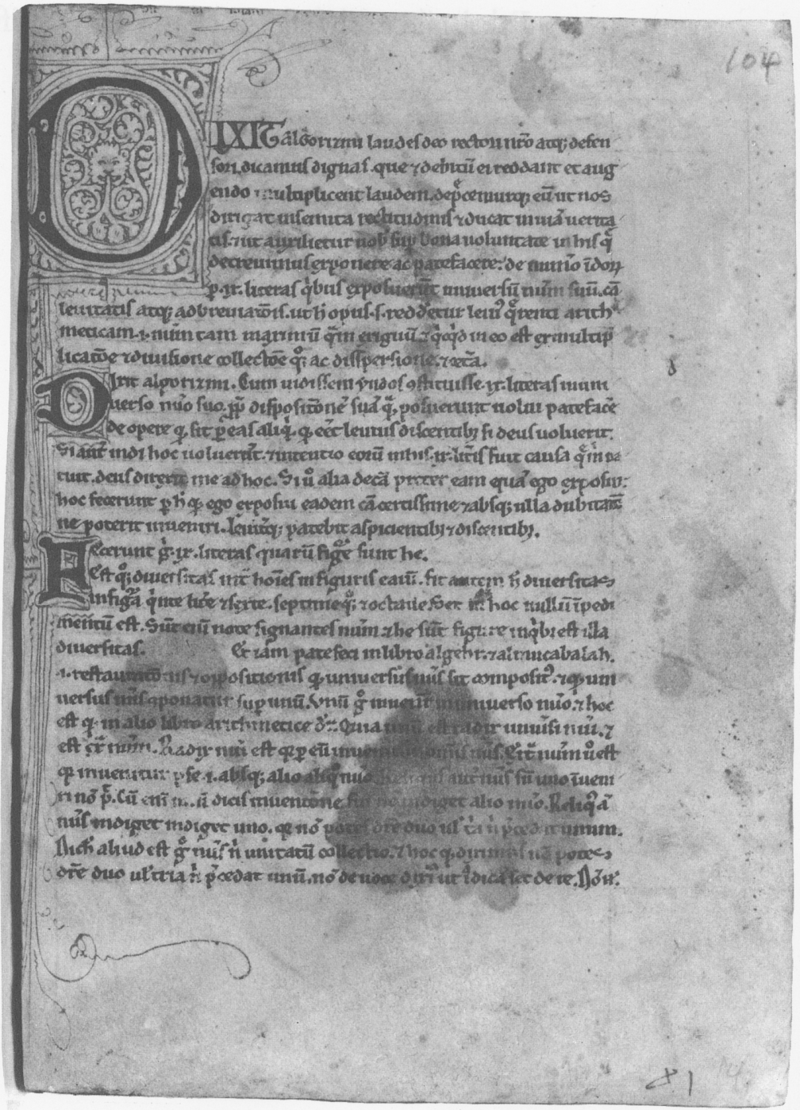
- Kitāb al-Jam‘ wat-Tafrīq bi-Ḥisāb al-Hi("The Book of Addition and Subtraction According to the Hindu Calculation")
- Arabic original of the book has been lost
- 12th century translation by Adelard of Bath (starting with "so said alKhwarizmi") introduced Hindu numerals in the west
- Hindu numerals: position-based and including 0
Leonardo Fibonacci of Pisa (c. 1175 c. 1250)
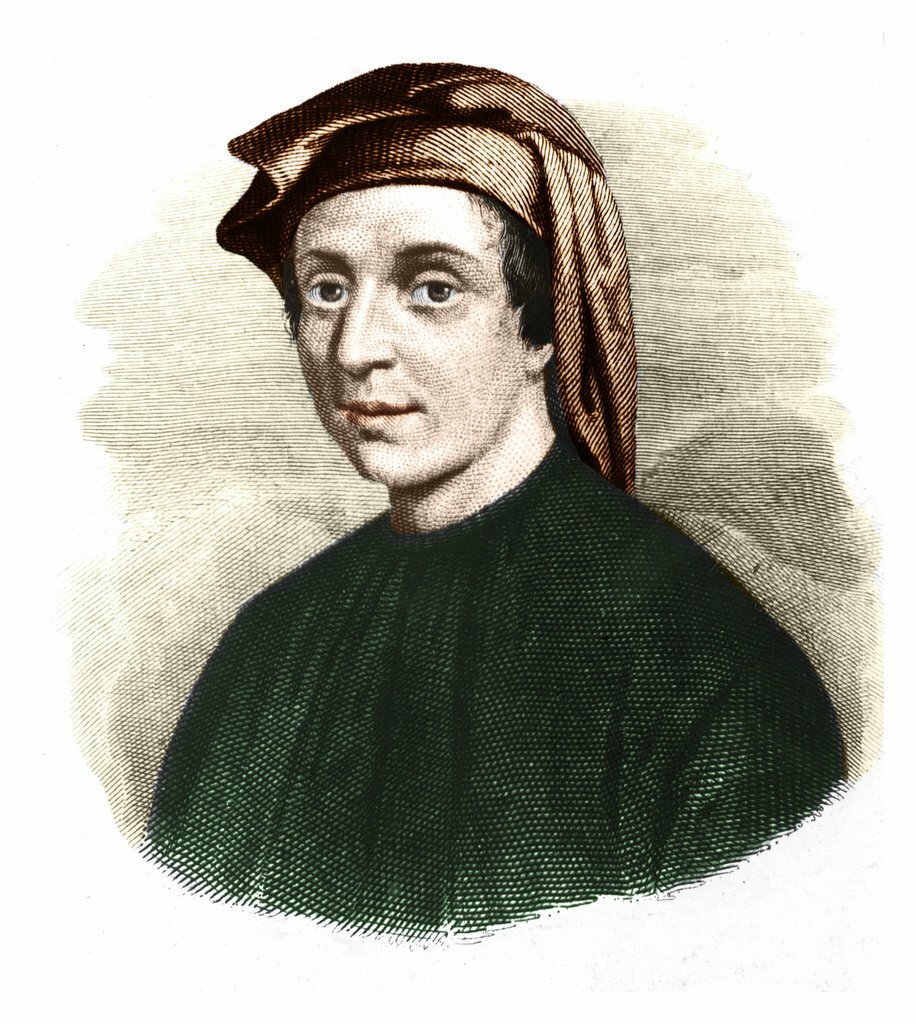
- "the most talented Western mathematician of the Middle Ages"
- his book Liber Abaci (1202) popularized the Hindu-Arabic numeral systems in Europe
- travelled extensively around the Mediterranean coast, meeting with many merchants and learning about their systems of doing arithmetic
- first one to describe Fibonacci sequence
Fibonacci's sequence :: Rabbits
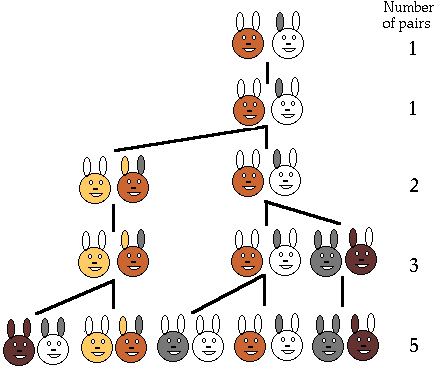 "Suppose a newly-born pair of rabbits, one male, one female, are put in a field. Rabbits are able to mate at the age of one month so that at the end of its second month a female can produce another pair of rabbits. Suppose that our rabbits never die and that the female always produces one new pair (one male, one female) every month from the second month on.
How many pairs will there be in one year?"
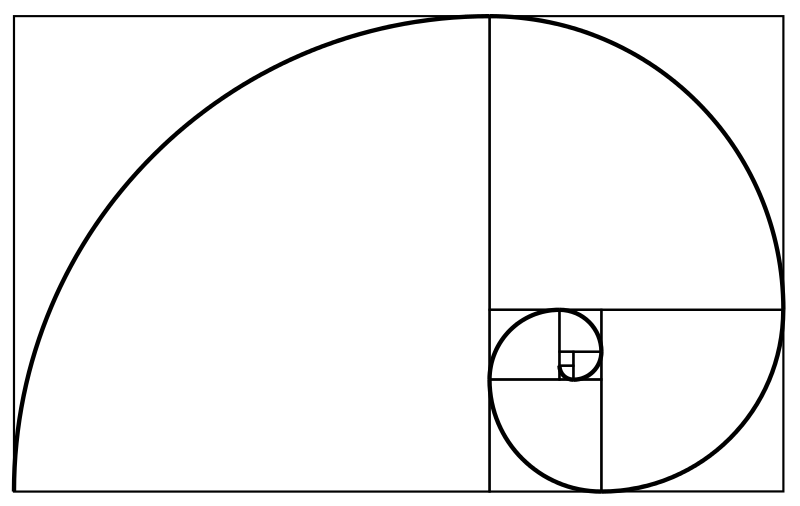
Fibonacci's sequence :: Spiral
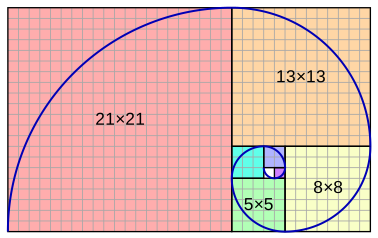
modus Indorum :: the method of Indians
9 8 7 6 5 4 3 2 1
With these nine figures, and with the sign 0 which the Arabs call zephir any number whatsoever is written..."
Leonardo Fibonacci of Pisa :: Liber Abaci :: The Book of the Abacus
Feedback 0 :: 3 questions
- What do I like about the course?
- What I do not like?
- What are my wishes?
Session 4 :: Between Renaissance and Age of Reason
Order of the day
- Repetitio :: Between Antiquity and Rennaissance
- Narratio :: Wheat and chessboard legend
- Questio :: What is an algorithm ?
- Lectio :: Between renaissance and Age of Reason
- Descartes & Pascal
- Leibniz
- Exercitio :: Binary counting.
- Presentatio :: BYOD or not BYOD in an elementary school ?
Wheat and chessboard legend
 "Oh emperor, my wishes are simple. I only wish for this. Give me one grain of rice for the first square of the chessboard, two grains for the next square, four for the next, eight for the next and so on for all 64 squares, with each square having double the number of grains as the square before."
Question of the day
Origin of the word "algorithm"
- algorithm (n.)
...
Mariam-Webster dict. definition of an "algorithm"
- a procedure for solving a mathematical problem in a finite number of steps that frequently involves repetition of an operation
- a step-by-step procedure for solving a problem or accomplishing some end
Rene Descartes (c. 1596 - 1650 A.D.)
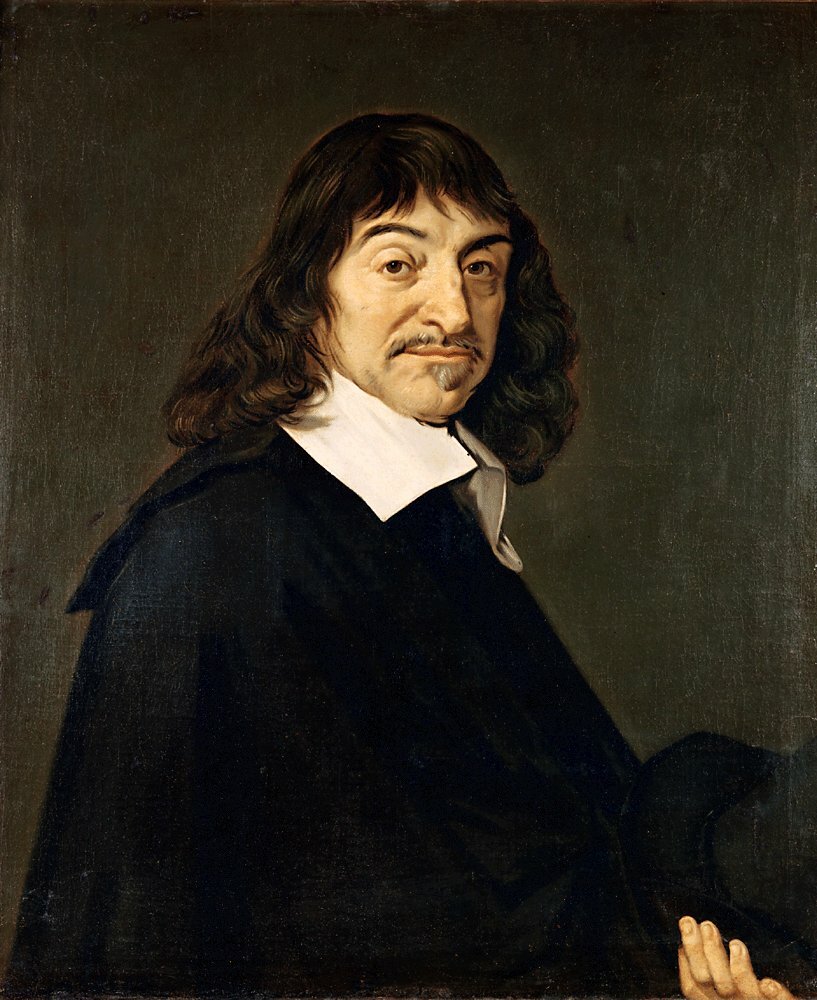
- polymath
- at 23-years of age, his dreams pose him in front of a question: Quod vitae sectabor iter?
- establishement of scientific method (based on "doubitatio")
- "Cogito ergo sum", mind-body dualism
- cartesian coordinate system, analytic geometry ...
Mechanism
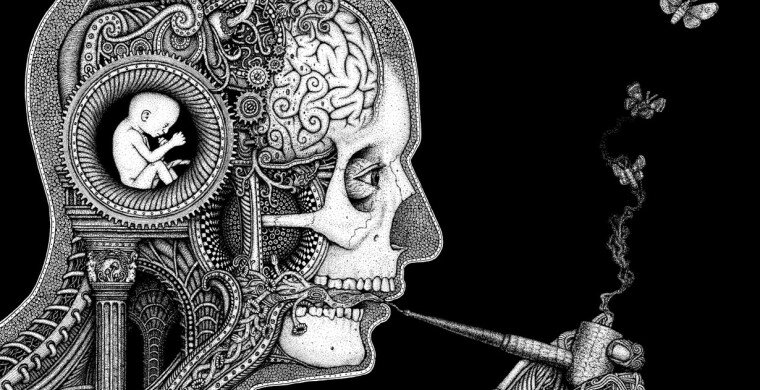 "I should like you to consider that these functions (including passion, memory, and imagination) follow from the mere arrangement of the machine’s organs every bit as naturally as the movements of a clock or other automaton follow from the arrangement of its counter-weights and wheels." (Descartes, Treatise on Man, p.108)
Cartesian coordinate system...
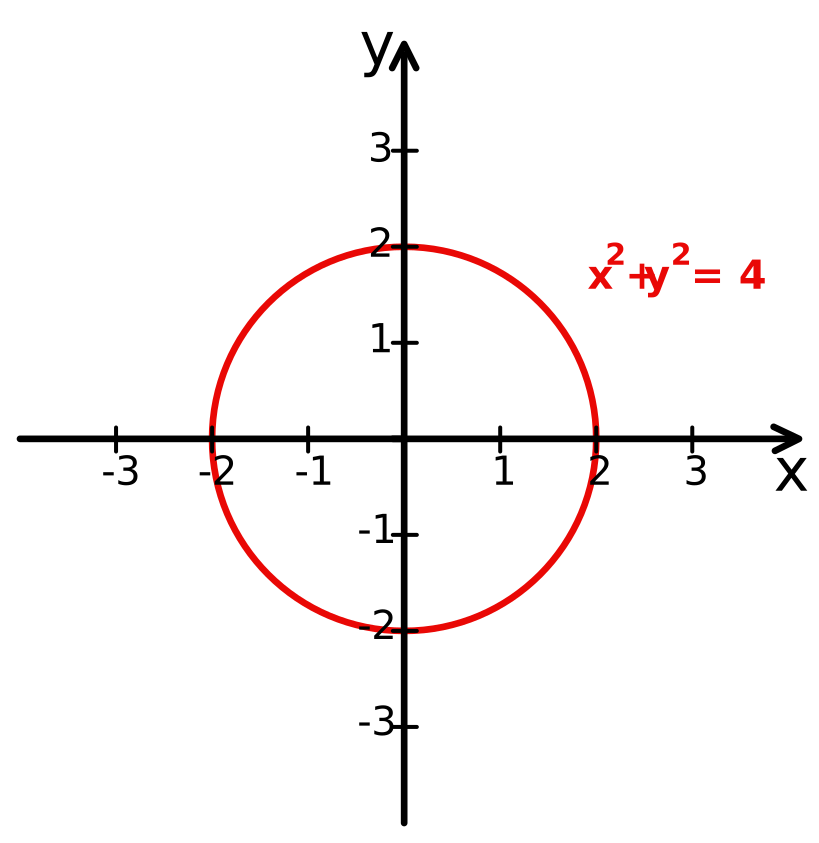 ...makes computer graphics possible...
and much, much more...
Blaise Pascal (1623 - 1662)
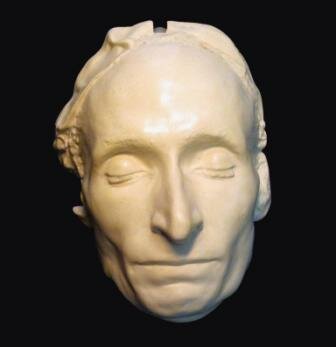
- polymath
- in 19years of age started to build first mechanical calculators ("Pascalines")
- ground-breaking works in mathematics (Pascal's triangle), geometry (Pascal's theorem), physics (Pascal's law), theology (Pascal's wager)
- develops first public transport in the world
- dies young, last words: "Puisse Dieu ne jamais m'abandonner"
Pascaline (mechanical calculator)
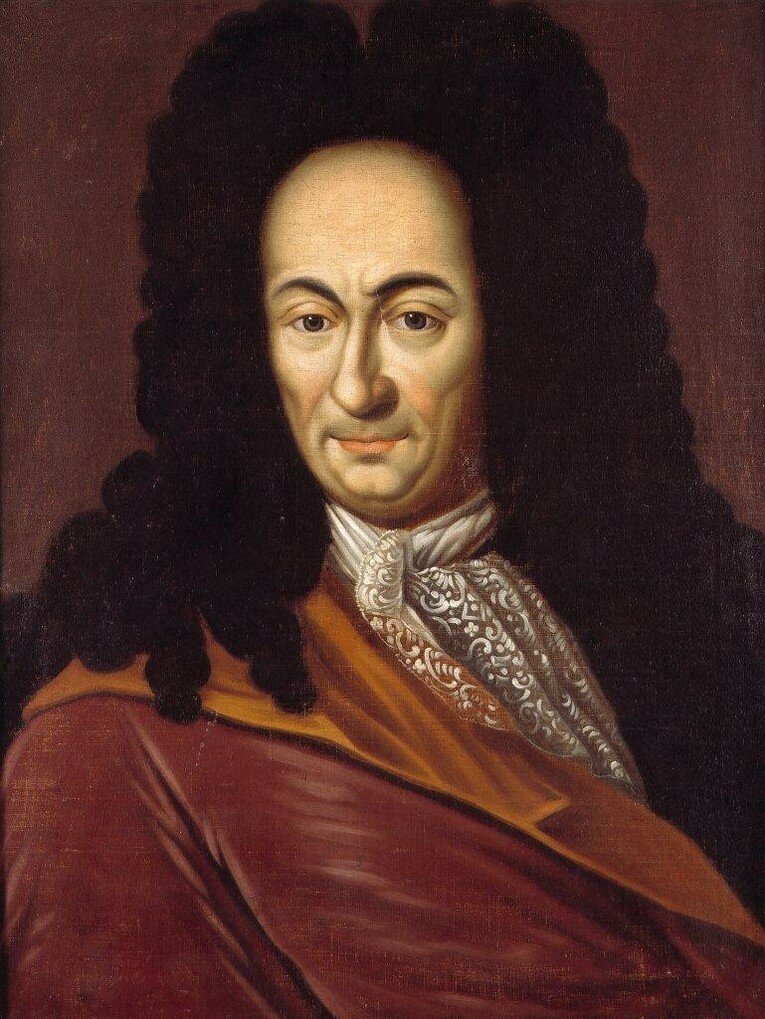
Gottfried W. Leibniz (c. 1646 c. 1716)
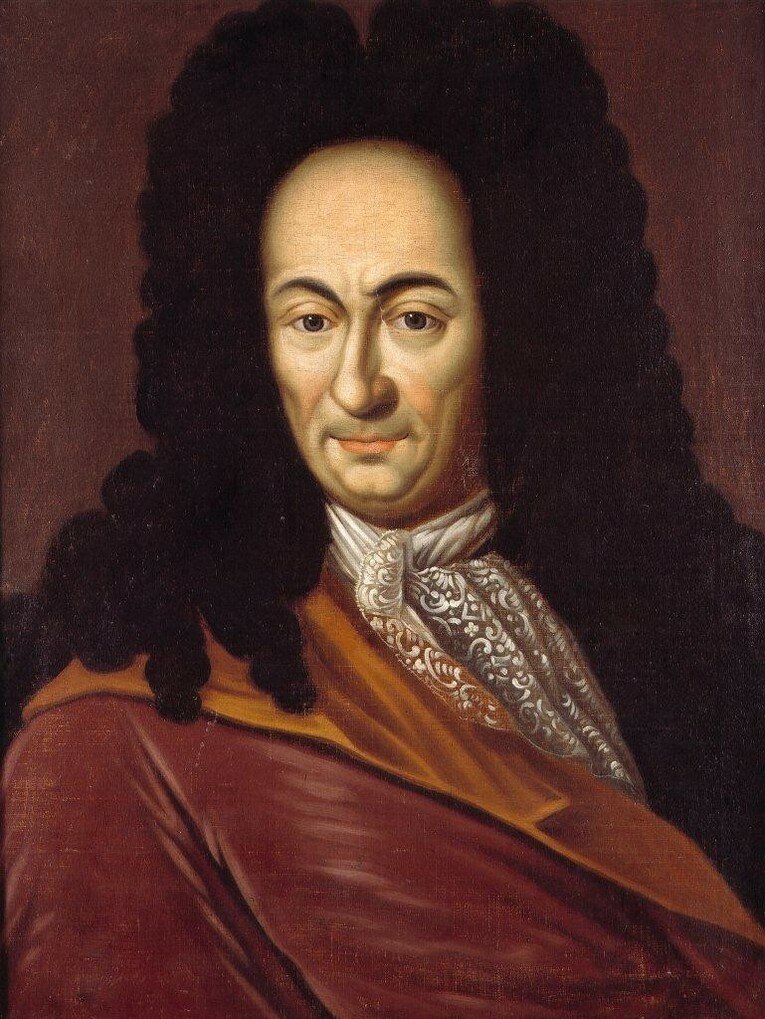
- one of the last big polymaths
- advanced disciplines of philosophy (monadology, theodicea, why is there something rather than nothing?), mathematics (probability theory, calculus), biology, medicine, geology, psychology, linguistics, computer science, philosophy, politics, law, ethics, theology, history, philology, library science
Stepped reckoner
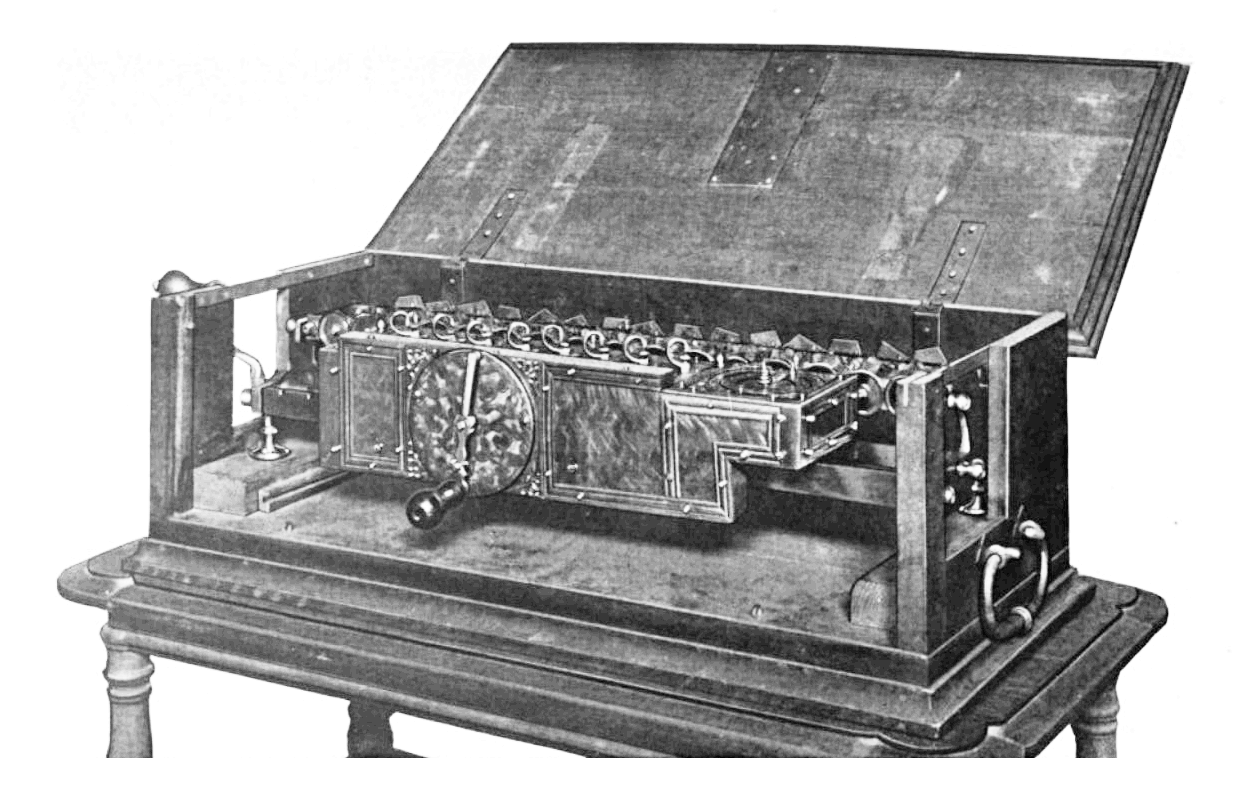 "... it is beneath the dignity of excellent men to waste their time in calculation when any peasant could do the work just as accurately with the aid of a machine." (G.W.L, 1673)
- presented to Royal Society on 1st February 1673
- could add, subtract, multiply and divide
- "the core component is a so-called "Leibniz wheel"
Leibniz wheel
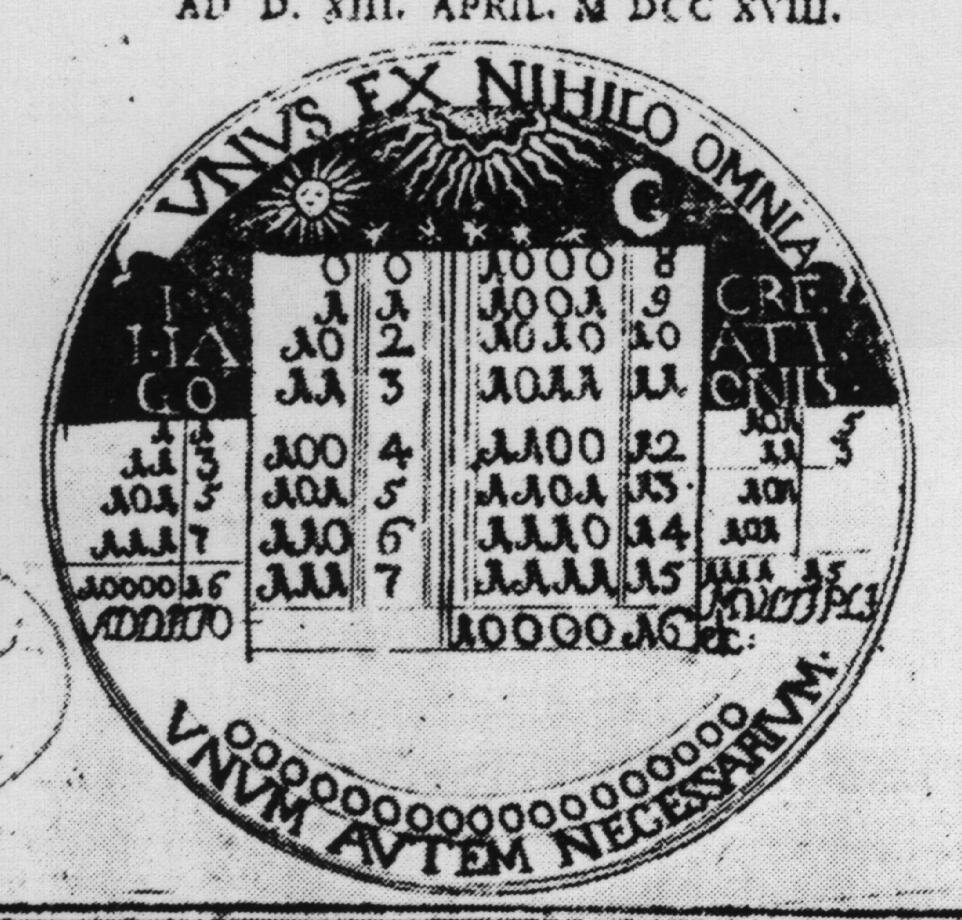
Binary digits
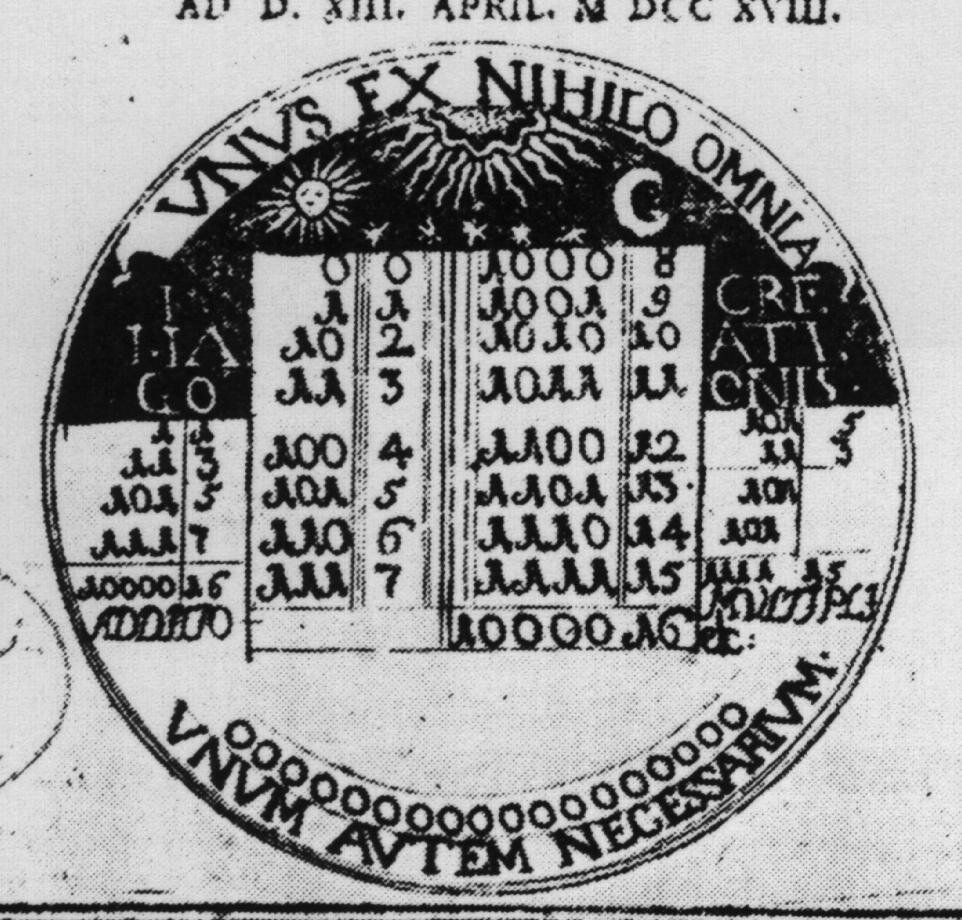 Please read :: http://bildung.digital.udk-berlin.de/prolegomena/handouts/Leibniz.pdf
Exercicio :: Binary counting
Disputatio : To BYOD or not to BYOD in an elementary school ?
Session 5 :: 19th century
Order of the day
- Repetitio :: Between Rennaissance and Age of Reason
- Questio :: What is a "representation" ?
- Exercitio I:: Binary counting.
- Presentatio I :: Baroque calculating machines
- Lectio :: The steampunk period
- Jacquard Loom
- Charles Babbage
- Ada Lovelace
- George Boole
- Presentatio II :: Binary adder.
Question of the day
Etymology of the word "represent"
- represent (v.)
late 14c., "to bring to mind by description," also "to symbolize, serve as a sign or symbol of; serve as the type or embodiment of;" from Latin repraesentare "make present, set in view, show, exhibit, display," from re-, intensive prefix , + praesentare "to present," literally "to place before," from praesens) "present, at hand, in sight; immediate; prompt, instant; contemporary," from present participle of præesse "be before (someone or something), be at hand," fro prae- "before" (see pre-) + esse "to be" (from PIE root *es- "to be").
Mariam-Webster dict. definition of "representation"
- The description or portrayal of someone or something in a particular way.
- The depiction of someone or something in a work of art.
- A picture, model, or other depiction of someone or something.
- (in some theories of perception) a mental state or concept regarded as corresponding to a thing perceived.
Name some examples of X being a representation of Y.
Jacquard Loom (c. 1801)
Charles Babbage (1791 - 1871)
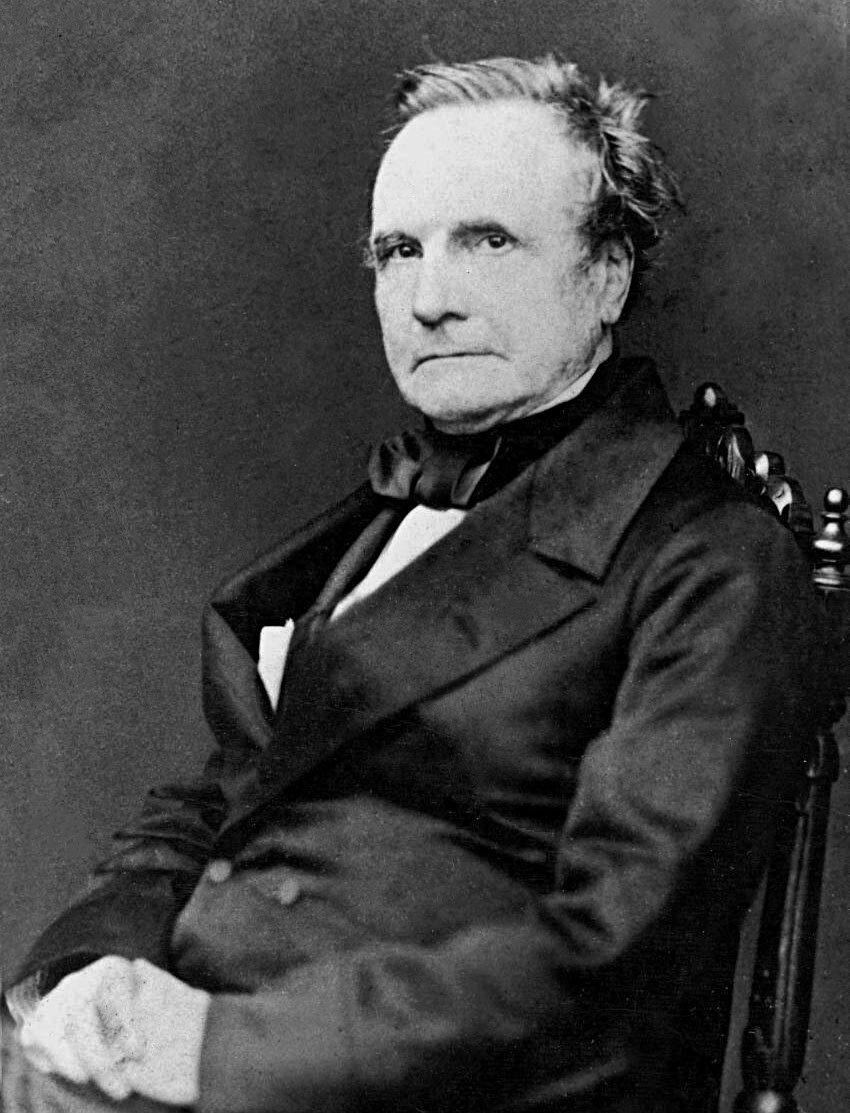
- polymath, KH FRS, Victorian gentleman etc.
- mathematician, philosopher, inventor and mechanical engineer
- "father of the computer"
- author of "difference engine" (could solve polynomial equations of 7th order)
- author of "analytical engine" (a generic programmable computer)
Difference engine
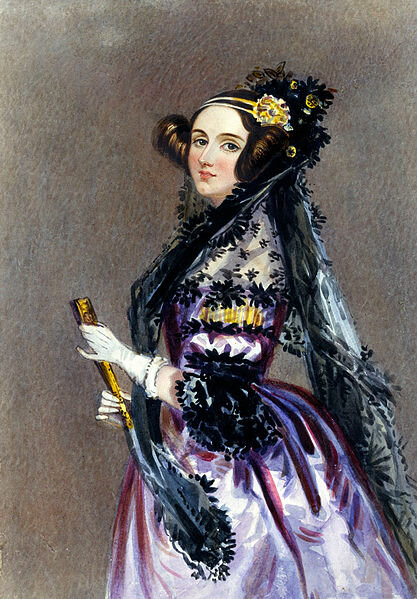
Augusta Ada King, Countess of Lovelace (1812 - 1852)
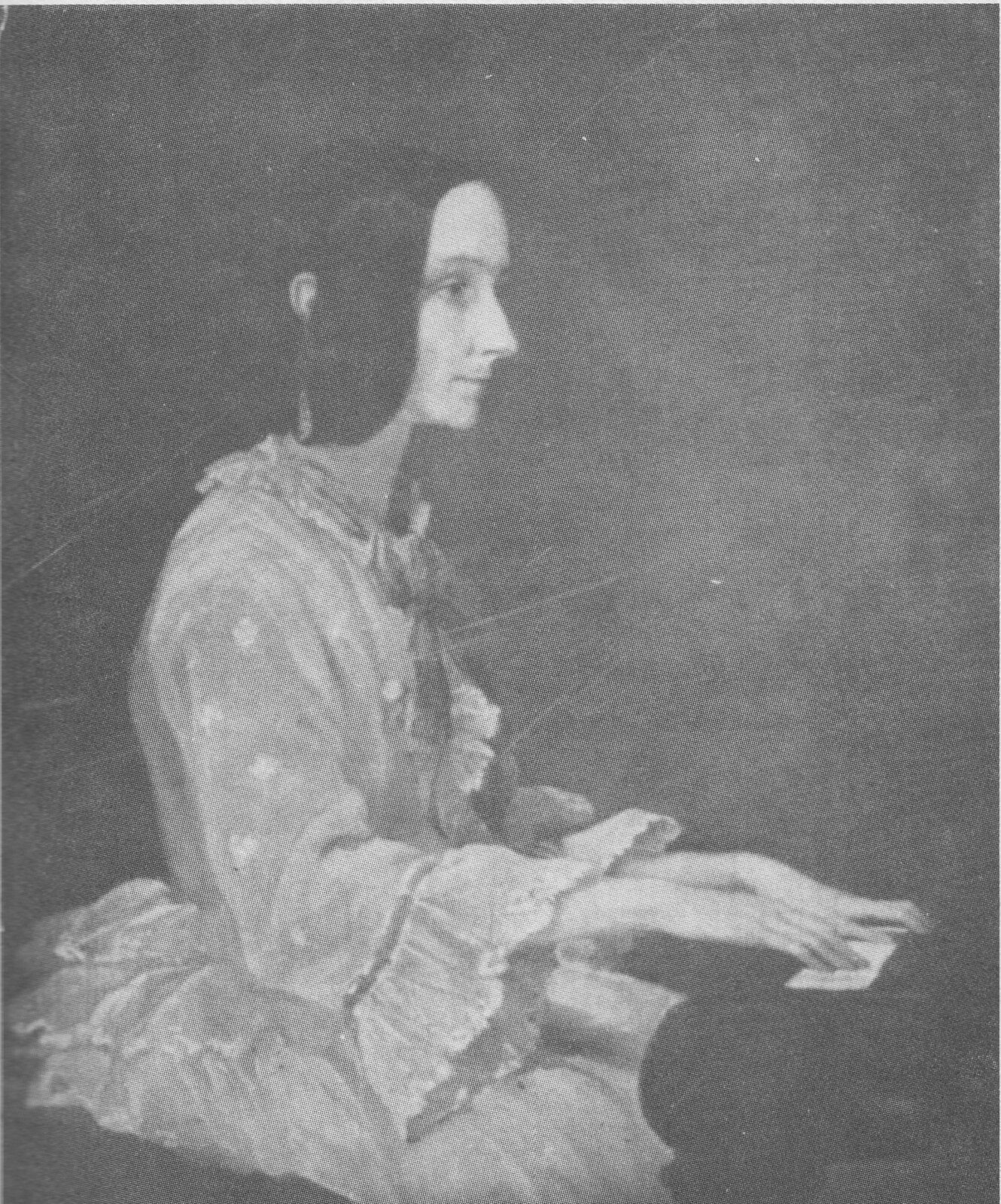
- daughter of Lord Byron
- mother promoted Ada's interest in mathematics and logics, student od Augustus de Morgan
- associate of Charles Babbage ("Enchantress of Numbers")
- author of the first computer program (algorithm for computation of Bernoulli numbers)
- died young of uterine cancer
From Ada's (1843)notes to Menabrea article
Note A, p. 694 :: Again, it [the Analytical Engine] might act upon other things besides number, were objects found whose mutual fundamental relations could be expressed by those of the abstract science of operations, and which should be also susceptible of adaptations to the action of the operating notation and mechanism of the engine . . . Supposing, for instance, that the fundamental relations of pitched sounds in the science of harmony and of musical composition were susceptible of such expression and adaptations, the engine might compose elaborate and scientific pieces of music of any degree of complexity or extent.
From Ada's (1843)notes to Menabrea article
The distinctive characteristic of the Analytical Engine, and that which has rendered it possible to endow mechanism with such extensive faculties as bid fair to make this engine the executive right-hand of abstract algebra, is the introduction into it of the principle which Jacquard devised for regulating, by means of punched cards, the most complicated patterns in the fabrication of brocaded stuffs...We may say most aptly that the Analytical Engine weaves algebraical patterns just as the Jacquard-loom weaves flowers and leaves.
George Boole (1815 - 1864)
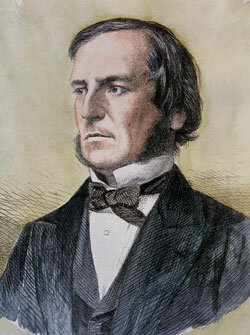
- another Victorian gentleman
- at 17 years of age "a thought struck him suddenly, which became the foundation of all his future discoveries"
- author of "Laws of Thought or An Investigation of the Laws of Thought on Which are Founded the Mathematical Theories of Logic and Probabilities" (1854)
- Boolean algebra
- being a professional prof cost him his Life
An Investigation of the Laws of Thought on Which are Founded the Mathematical Theories of Logic and Probabilities
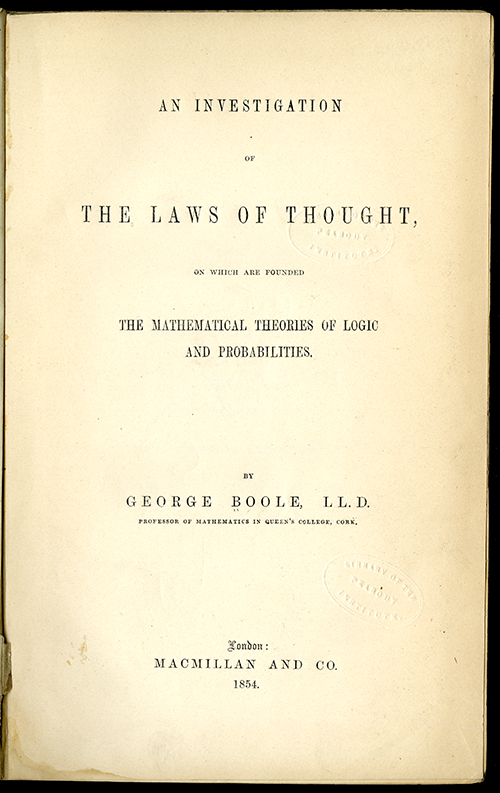
- united algebra and logic
- replaced propositional form of Aristotle's logic to equation-like formulae and introduced "laws" which can solve them
- logical formulae could contain more than two subject-predicate propositions (i.e. no A that is B is C that is D)
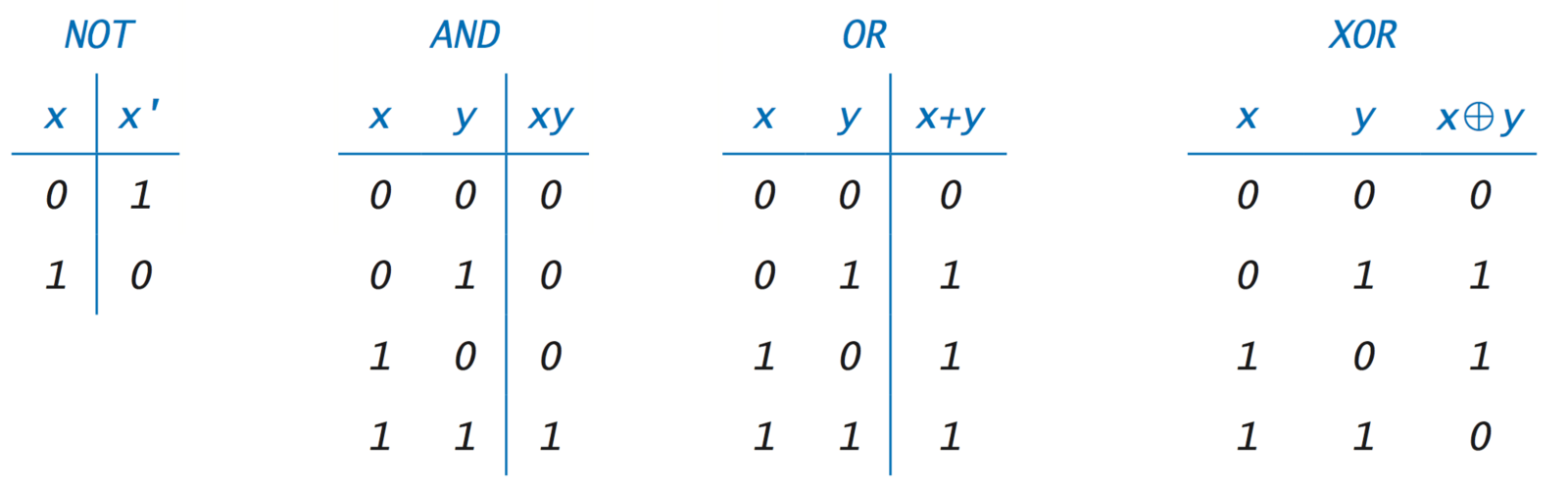
- introduced logic functions and truth tables
Logic functions
Session 7 :: Repetitio
Order of the day
- Repetitio I:: Zuse computers
- Exercitio I:: Binary counting
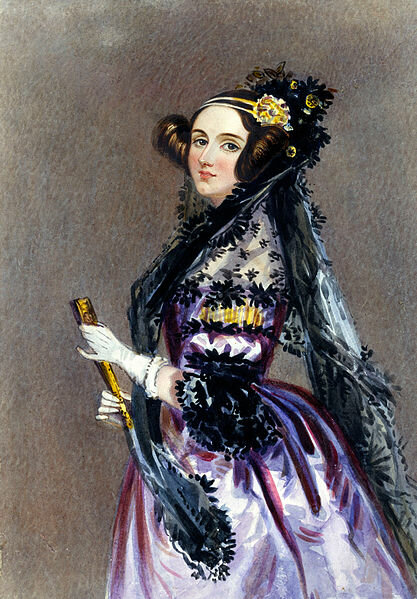
- Presentatio I :: Notes of Augusta Ada Byron King
- Questiae
- Presentatio II :: Binary adder
- Exercitio II :: Binary adder on Your hands
- Presentatio III: Digitale Klang in Alltag
The Goal of this course
Zuse Z1
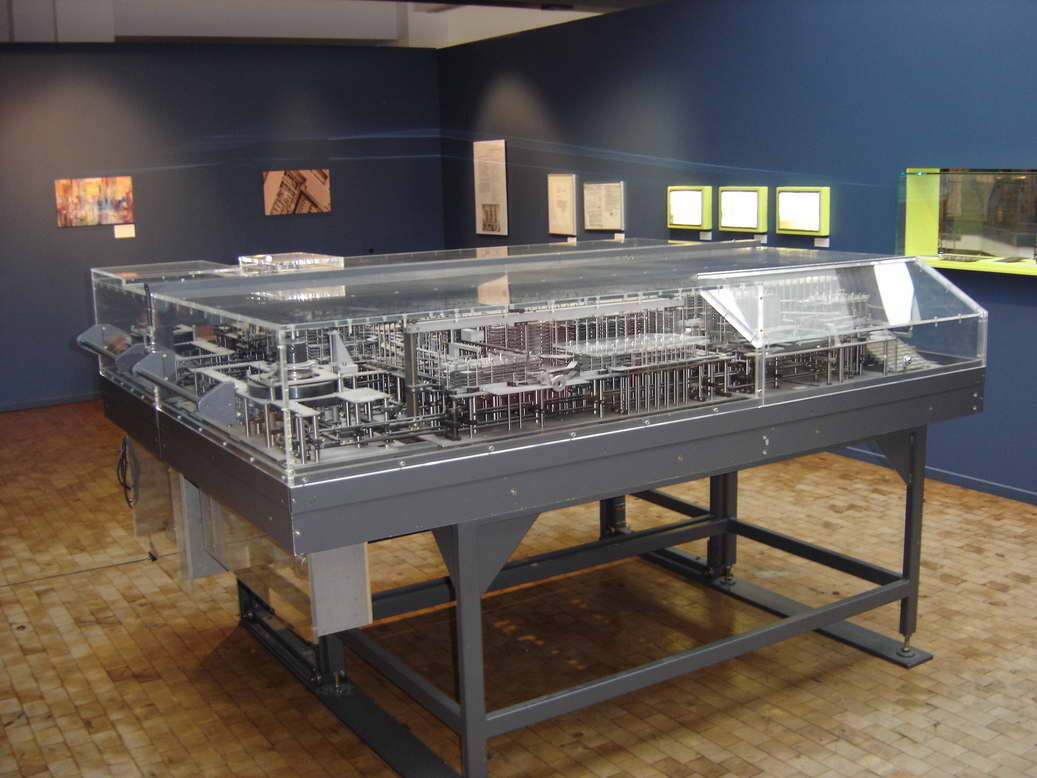 Note: rod logic (shall be used in nano-computers) operates in the same way
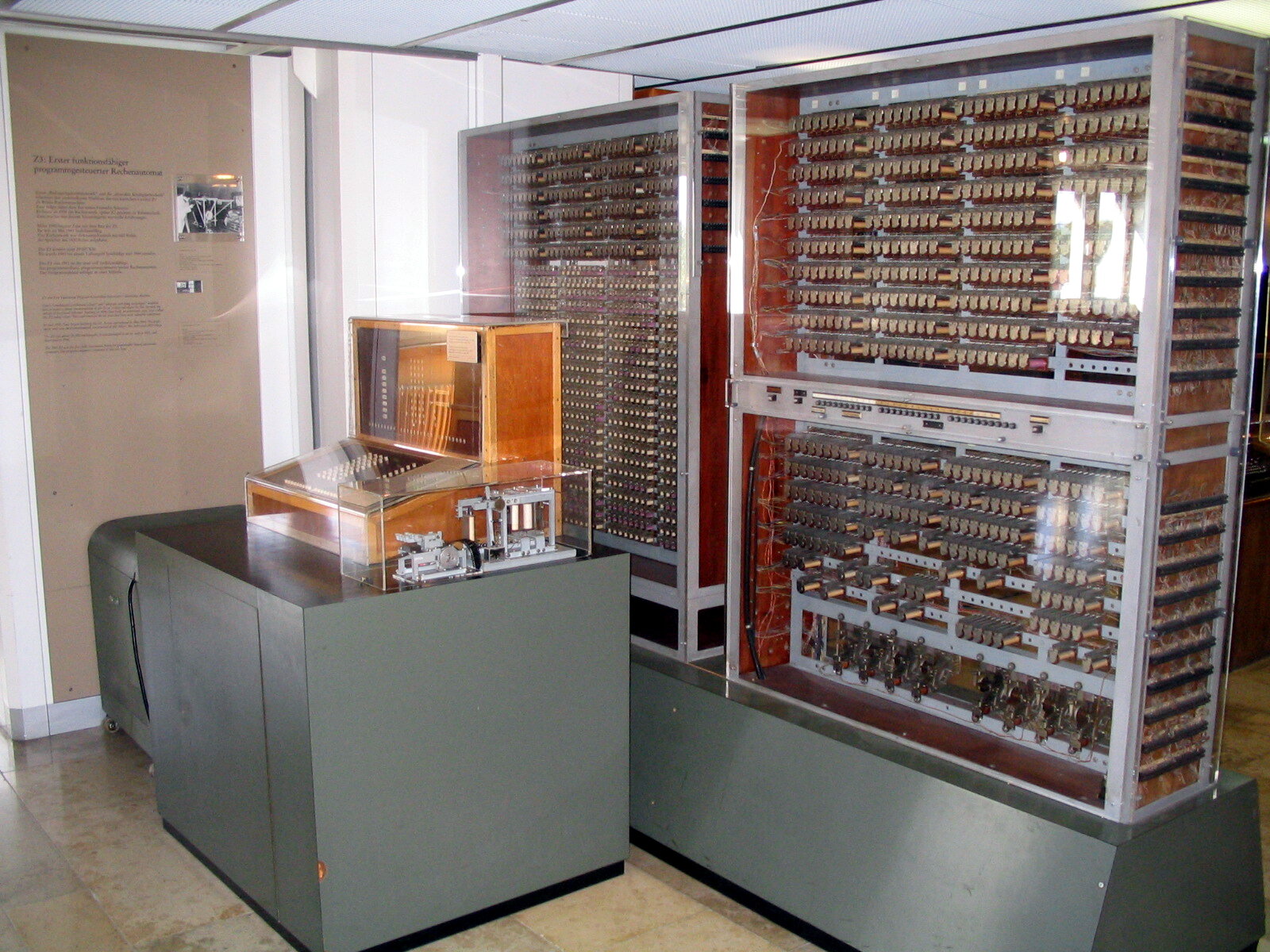
Zuse Z3
Lady Ada
Questiae (group work)
- What is a representation ?
- What is an algorithm ?
- What is a digit ?
- What is a machine ?
Presentatio II. : Binary adder
Binary adder on Your hands: transition rules
| Rule | Input R | Input L | Input Carry | Output | Output Carry |
|---|---|---|---|---|---|
| 0 | 0 | 0 | 0 | 0 | 0 |
| 1 | 1 | 0 | 0 | 1 | 0 |
| 2 | 0 | 1 | 0 | 1 | 0 |
| 3 | 1 | 1 | 0 | 0 | 1 |
| 4 | 0 | 0 | 1 | 1 | 0 |
| 5 | 1 | 0 | 1 | 0 | 1 |
| 6 | 0 | 1 | 1 | 0 | 1 |
| 7 | 1 | 1 | 1 | 1 | 1 |
Binary adder algorithm
- Init: Set up Your inputs. Carry is zero.
- Start from the rightmost position (represented by thumb).
- Apply the transition rule (if necessary, flip the carry to an opposite state).
- Set the output bit of the current position.
- Proceed to higher position (following finger).
- HALT if carry and all inputs are zero, otherwise repeat steps 2-6
Presentatio III: Digitale Klange im Alltag
Session 8a :: Shannon & Information Theory
What Is Representation
What Is Information
Can Machines Think
Question of the day: Can machines think ?
Topic: Hommage to A.M.T.
Hero of the day: Alan Matthison Turing
Can Machines Understand
Question of the day: Can machines understand ?
Topic: Programming languages and operating systems
Heroes: von Neumann, Ritchie & Thomson, Tanenbaum, Gates, Torvalds
Can Machines Evolve
Question of the day: Can machines evolve ?
Topic: Internet and the emergence of planetary A.I.
Heroes: Snowden, Nakamoto, hacker community
Can Machines See
Question of the day: Can machines see ?
Topic of the day: Embedded systems and digital artefacts
Hero of the day: Limor Fried
The Congress
The Futurological Congress AE1000000
What Is Not Information
What is NOT information ?
Etymology Information
early 14c., "to train or instruct in some specific subject," from Old French informer, enformer "instruct, teach" (13c.) and directly from Latin informare "to shape, give form to, delineate," figuratively "train, instruct, educate," from in- "into" (from PIE root *en "in") + formare "to form, shape," from forma "form". Sense of "communicate facts or news" first recorded late 14c.
Source: https://www.etymonline.com/word/inform
Claude E. Shannon (1916-2001)
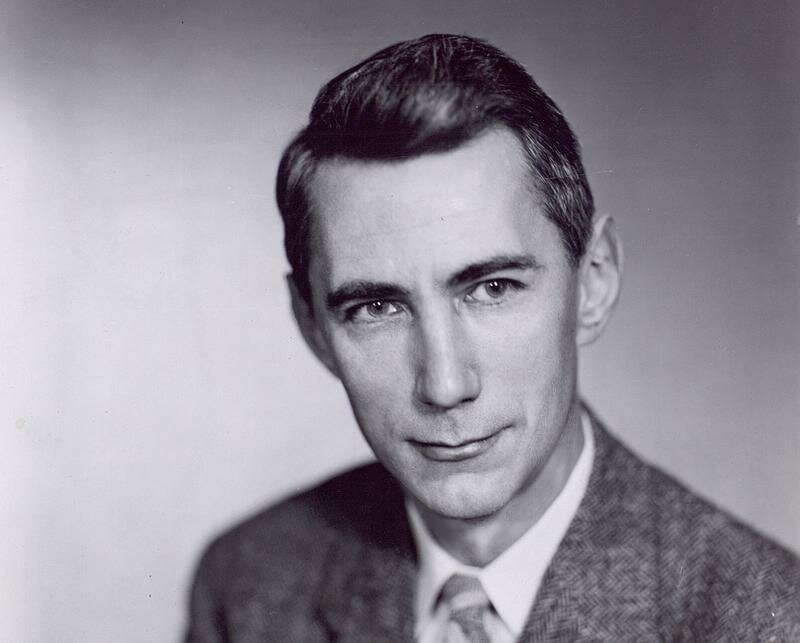
- mathematician, electrical engineer, cryptographer, juggler & unicycler
- "father of information theory"
- (1937) A Symbolic Analysis of Relay and Switching Circuits
- (1948) A Mathematical Theory of Communication
- inventor of the "Ultimate Machine"
Ultimate Machine
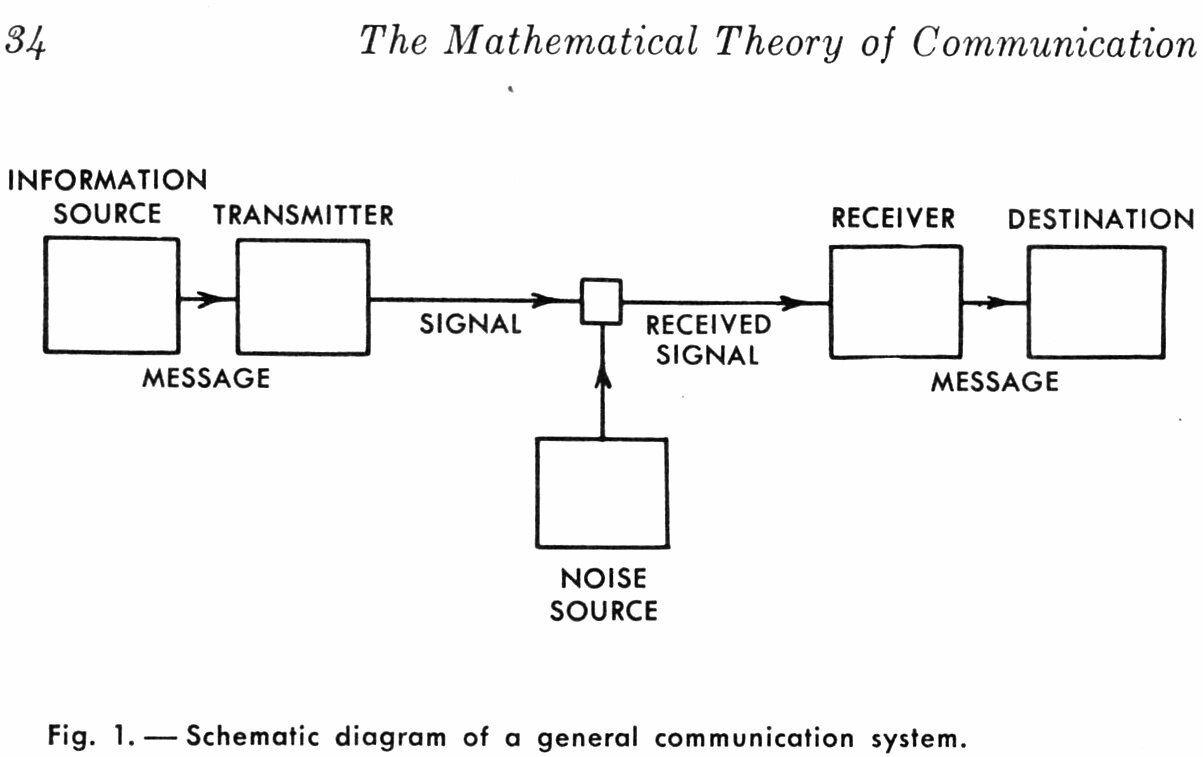
Intro to information theory
Communication System
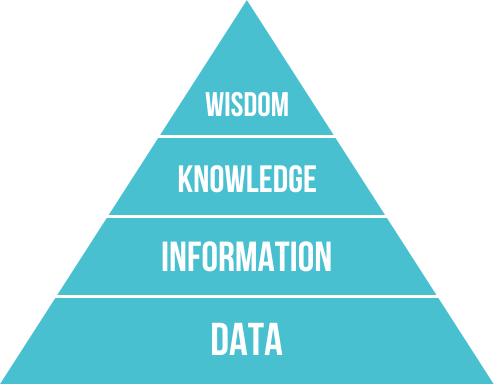
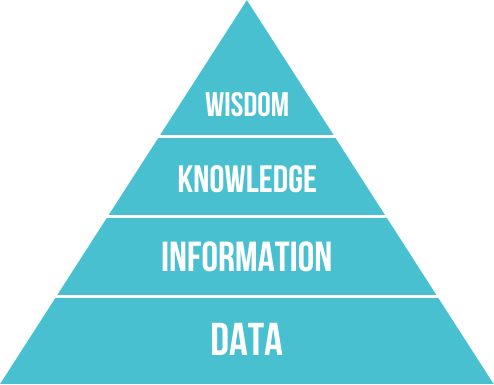
Dikw Pyramid
Session 8b :: Alan Turing
Order of the day
- Narratio :: The imitation game
- Repetitio :: Introduction to information theory
- Questio :: Can machines think ?
- Lectio ::
- Turing machine
- Turing test
- Exercitio :: Turing test.
The imitation game
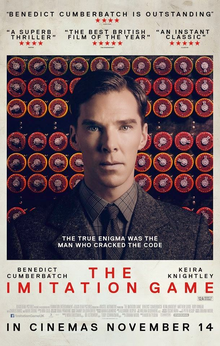
- a 2014 movie adaptation of the book Alan Turing: The Enigma (1983)
- 8 Oscar nominations, one Oscar for Best Adapted Screenplay
- story about life, work and death of Alan Matthison Turing (A.M.T.)
Question of the day
What does it mean "to think" ?
- your definitions
- dictionary definition
- philosopher's definition
What do You think?
philosopher's definition of "thinking"
* Origin of this quote is to be sought from in some later works of L.Wittgenstein.
Descartes
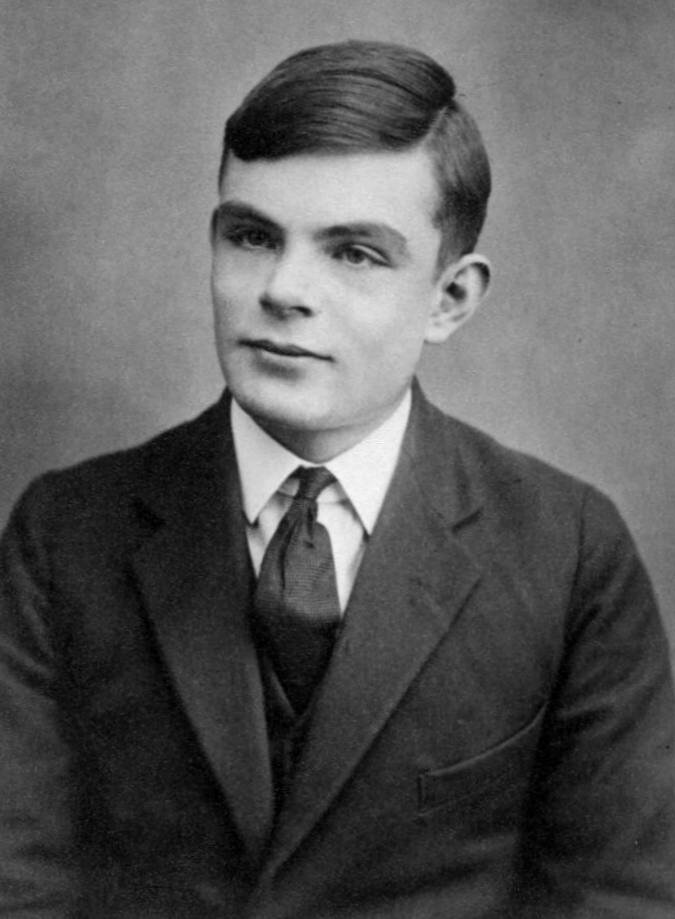
- an English mathematician, computer scientist, logician, cryptanalyst, philosopher and theoretical biologist
- father of theoretical computer science (1936) and artificial intelligence (1948-1950)
- pivotal role in the project Ultra
- convicted for "gross indecency" in 1952, put on hormonal treatment, develops gynaecomastia
- death by cyanide; half-bitten apple by the bedside
- Queen's "pardon" on 24.12.2013
Halting Problem
- halting problem is the problem of determining, from a description of an arbitrary computer program and an input, whether the program will finish running (i.e., halt) or continue to run forever
- Turing proved that a general algorithm to solve the halting problem for all possible program-input pairs cannot exist
- to prove this, he described a paradox involving a concept now known as "Turing machine"
a Turing machine #1
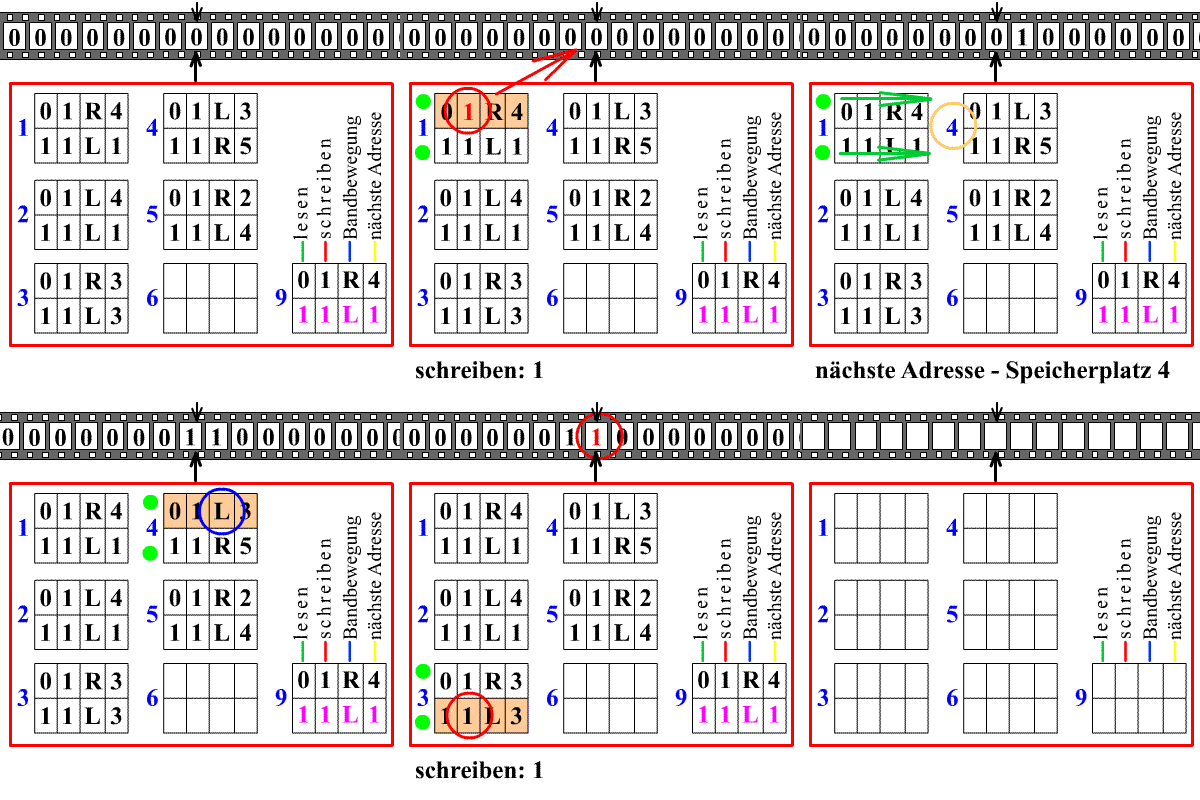
- tape with discrete symbols
- reading/writing header
- table of rules
- tape-moving mechanism
a Turing machine #2
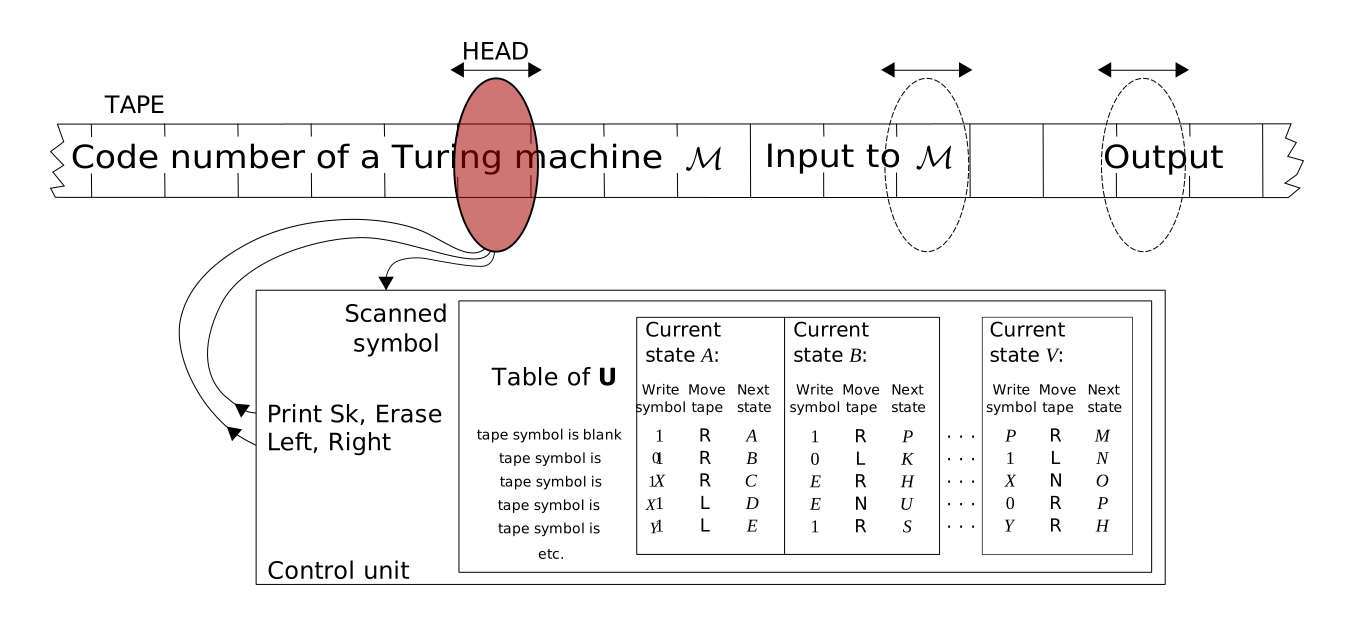
Universal Turing machine
Universal Turing Machine2
Turing test
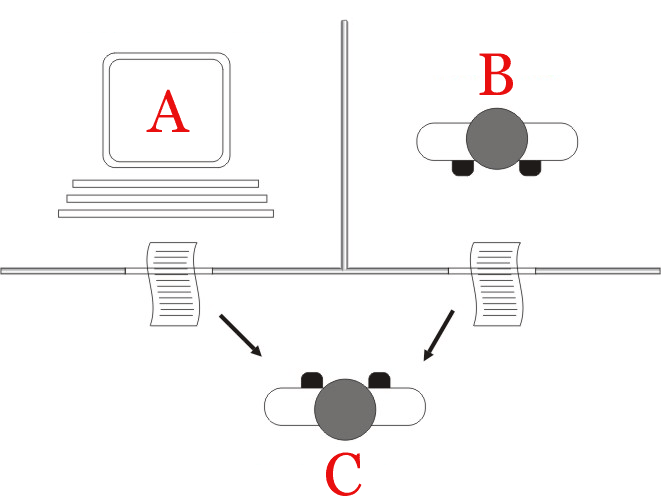
"A TT is a way how to address the question "Can machines think?" in a scientifically plausible ye deeply empathic way. More concretely, Turing (1950) proposes that the performance of an AA under question shall be evaluated by a human judge J whose objective is to determine which among two entities - with whom J is in real-time interaction - is of human and which is of artificial nature." (Hromada, 2012)
The imitation game
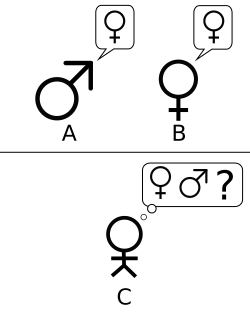
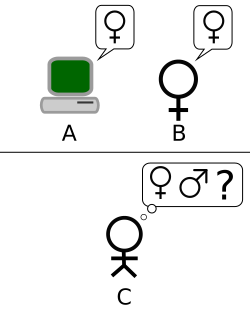
Computational machinery and intelligence (1950)
Exercicio :: Musical Turing Test
You are going to hear two pieces of music. One is composed and performed by humans, another is composed and generated by an artificial system. You are going to hear both pieces twice. Subsequently, You are going to write down which piece (first or second) was composed and performed by human beings.
Disputatio : "Can machines think ?"
Session 9 :: Epoch
Order of the day (AE490124)
- Exemplificatio :: Speech recognition
- Repetitio :: Hommage to A.M.T.
- Questio :: Can machines understand ?
- Lectio ::
- von Neumann architecture
- transistors and languages
- Unix Epoch
- Gates, Tanenbaum, Torvalds
- Disputatio :: Can machines understand ?
Speech recognition
- speech-to-text technologies start to get ubiquitious (Siri, Watson, Alexa, Cortana, Assistant etc.)
- embedded & offline speech-to-text systems also exist (Sphink, Kaldi)
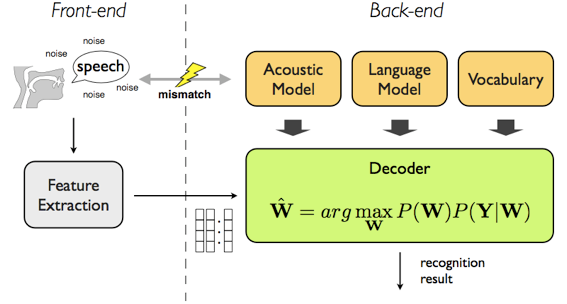
https://www.eleceng.adelaide.edu.au/students/wiki/projects/images/9/95/Basic_Schematic.png
Question of the day
What does it mean "to understand" ?
- conditions of understanding
- examples of understanding
- examples of non-understanding
Man-machine understanding (MMU) conjecture
"Machine's ability of understanding humans/mankind increases with time."
Von Neumann
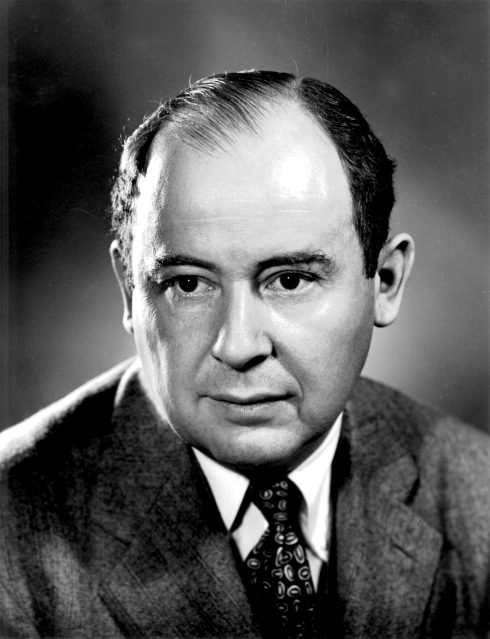
- "the last representative of the great mathematicians"
- statistics, stochastic computing, quantum mechanics, game theory, computing (merge sort algorithm, von Neumann architecture), self-replicating machines (von Neumann probes) etc.
- Manhattan project, Electronic Discrete Variable Automatic Computer (EDVAC)
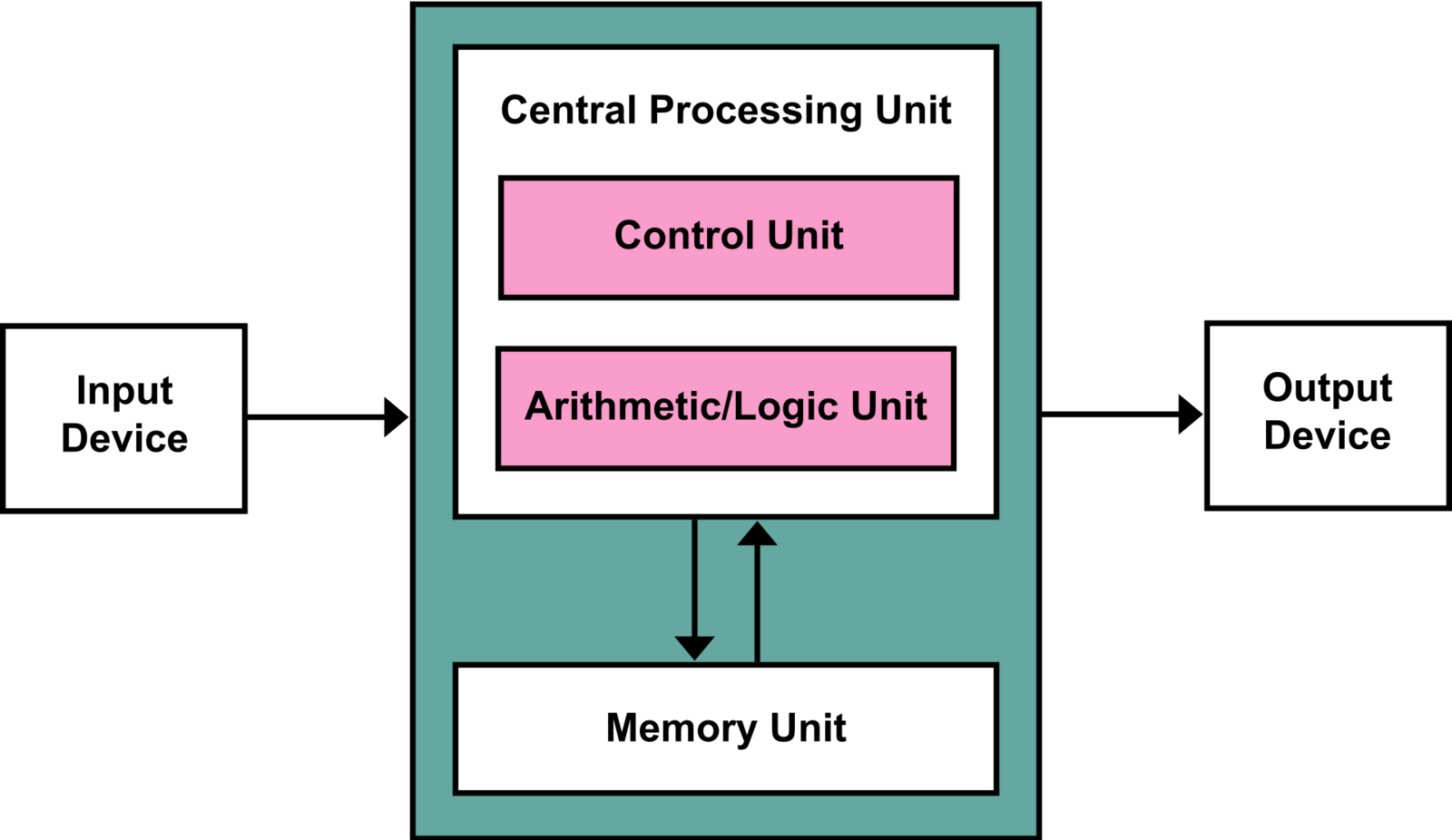
Von Neumann Architecture
- a detailed design of a "very high speed automatic digital computing system"
- contains the first published description of the logical design of a computer using the stored-program concept
Transistors invention
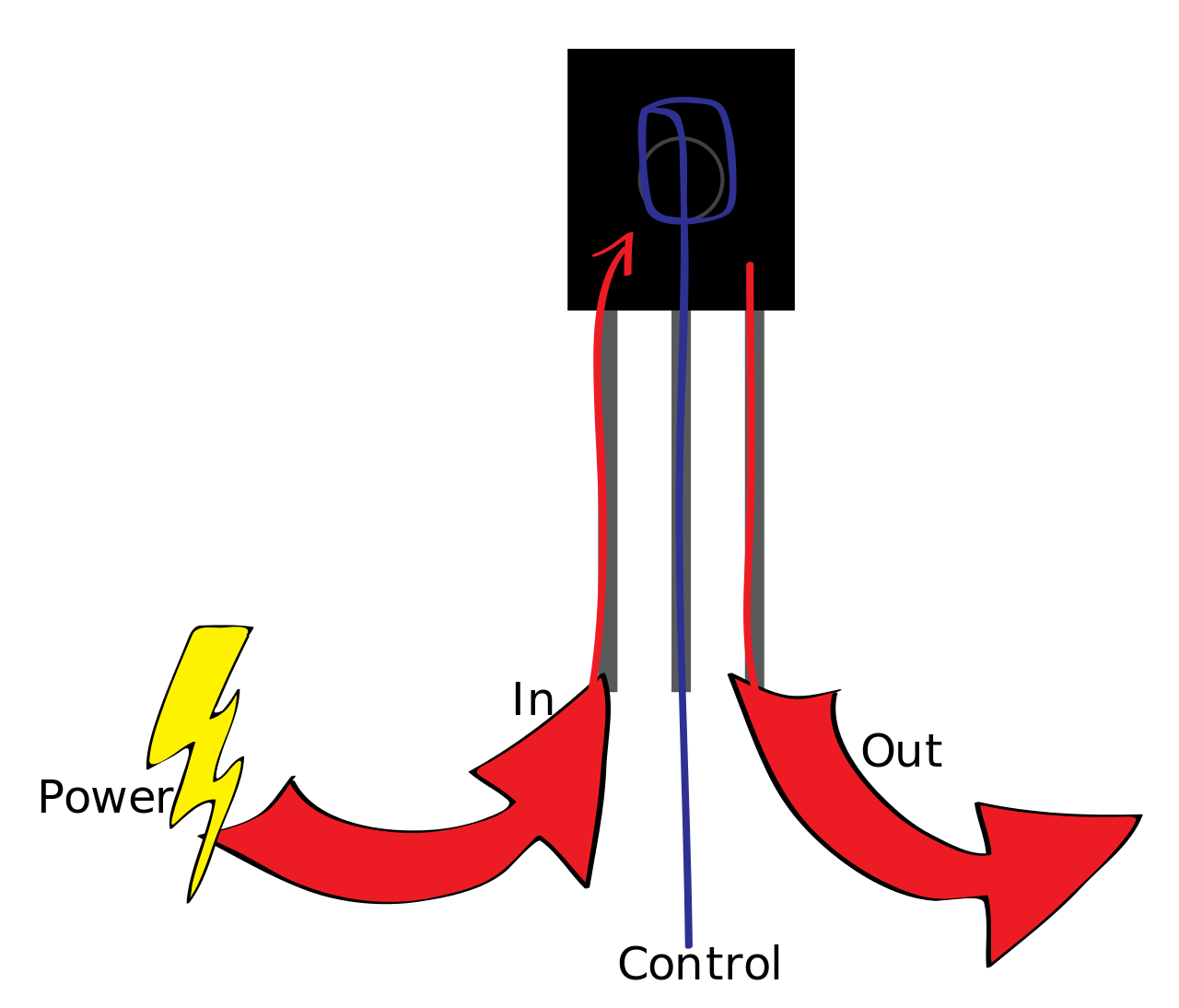
- a transistor is a semiconductor device with at least three terminals
- Shockley, Bardain at Brattain presented a functional concept on 23th December 1947 to some Bell Labs colleagues and managers
- "2,913,276,327,576,980,000,000 transistors shipped since the moment of invention" (forbes.com, 2014)
a transistor invasion?
Programming languages
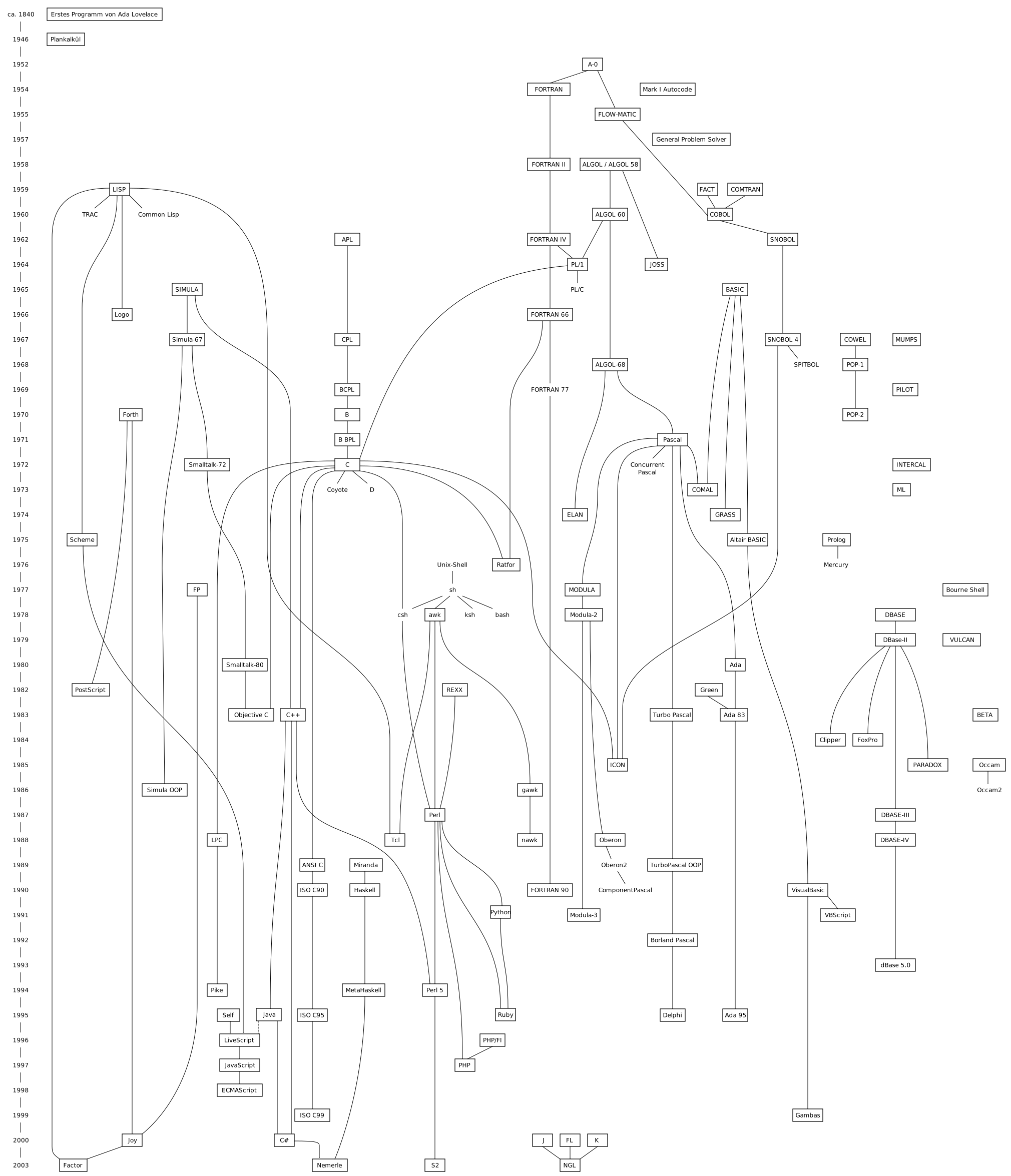
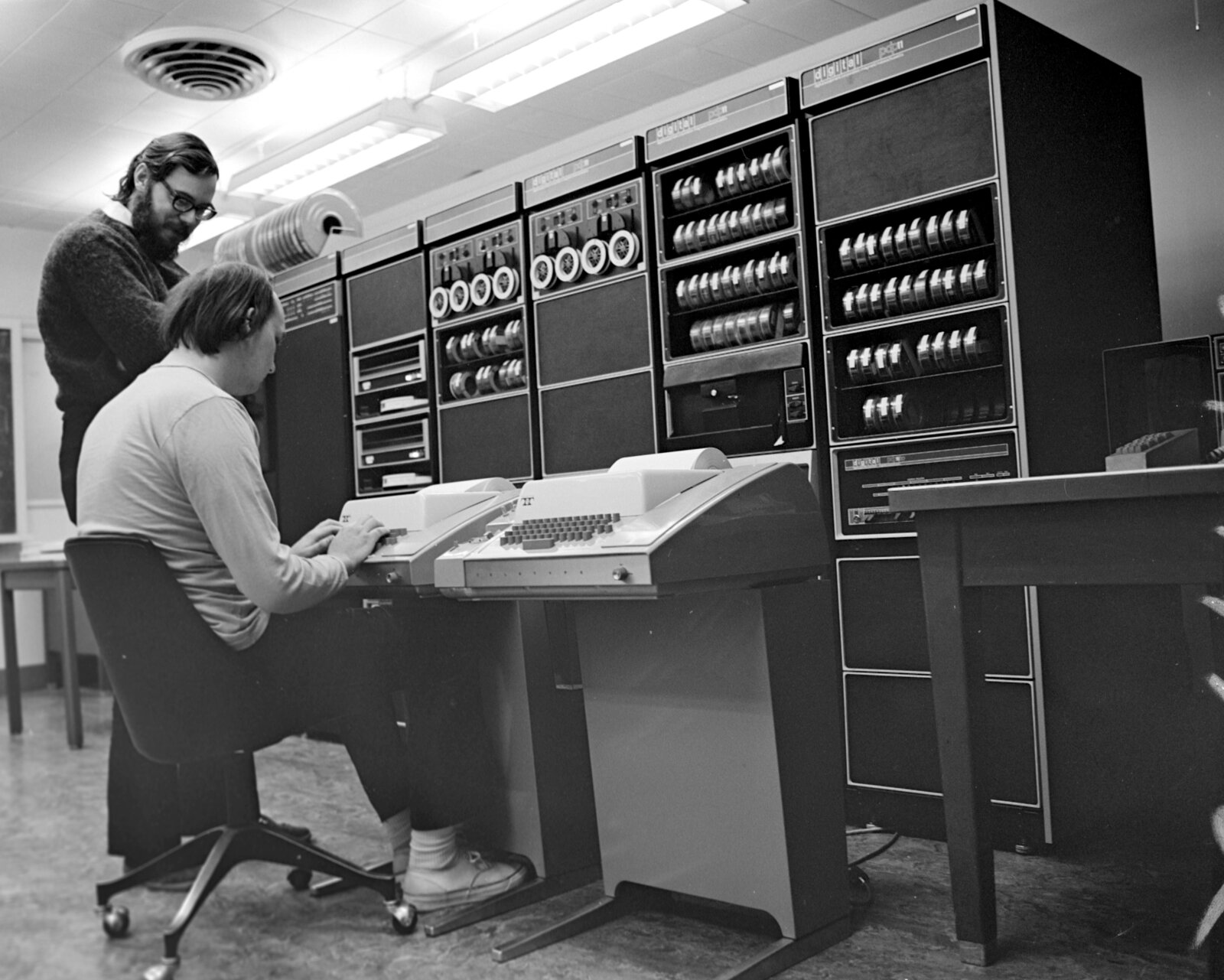
UNIX Epoch - 1.1.1970 - AE00
UNIX Genealogy

Disputatio : "Can machines understand ?"
Session 10 :: Datasphere
Order of the day (AE490201)
- Introductio :: 3 spheres
- Repetitio :: Epoch
- Questio :: Is machine evolving ?
- Lectio ::
- from ARPAnet to Internet
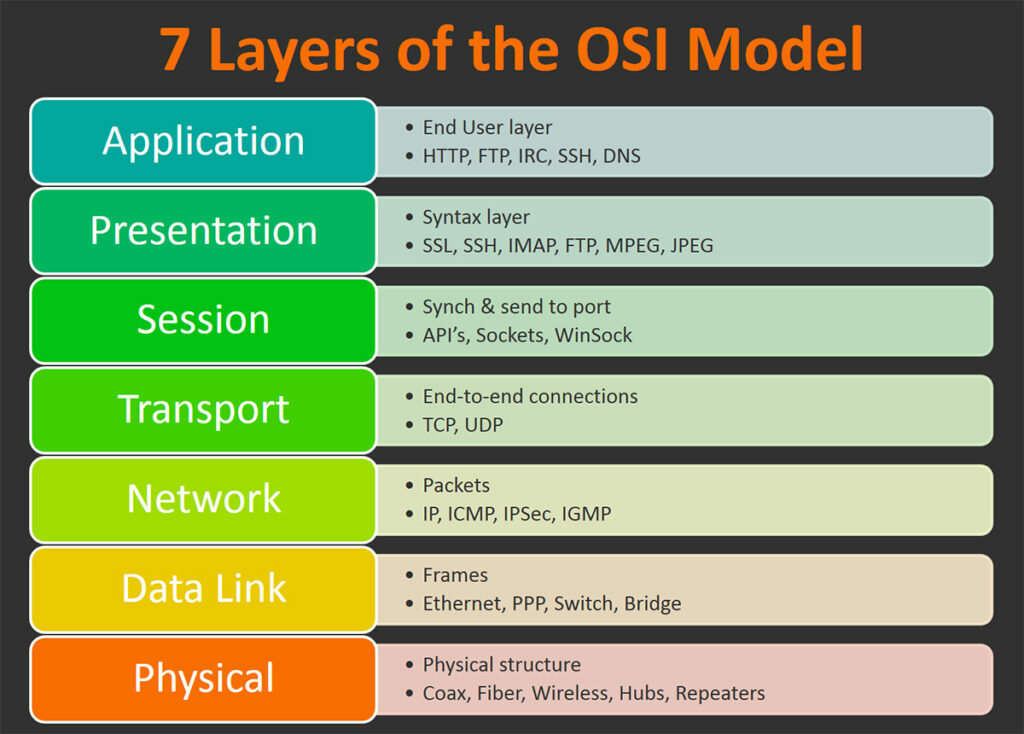
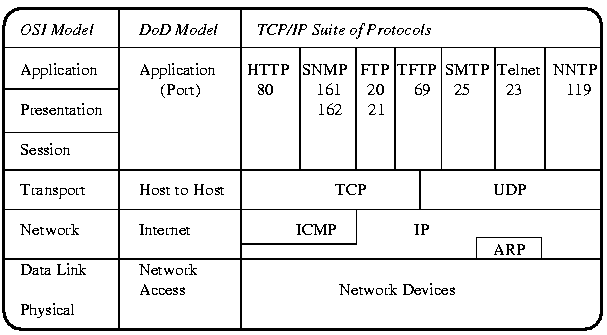
- TCP/IP and the OSI model
- Web
- milestones
- Disputatio :: Is machine evolving ?
3 spheres
- Noosphere (Teilhard deChardin)
- Infosphere (Luciano Floridi)
- Datasphere (Dan Simmons)
Question of the day
Evolution (Definition)
- Reproduce
- Need resources for their reproduction
- Vary because of inaccuracies inherent to reproduction process
3 conjectures
- "Machine evolves by means of humans."
- "Machine need humans to evolve."
- "Machine cannot evolve without humans."
The birth of the infosphere
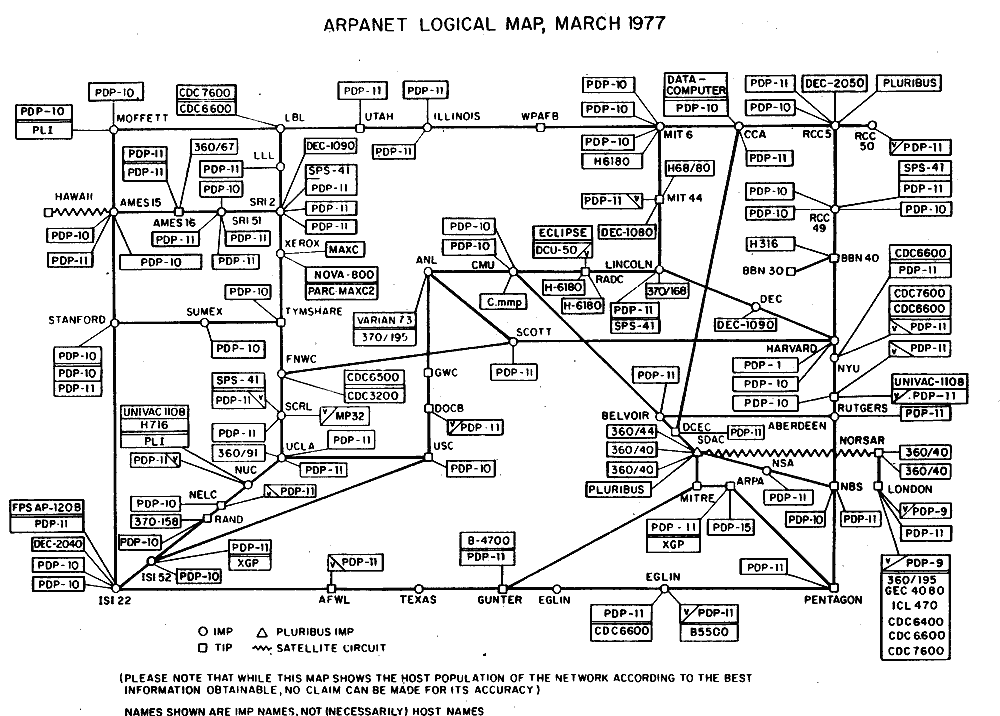
- 1st core: ARPANet (Advanced Research Projects Agency Network) funded by US Department of Defense
- 1st network to implement the protocol suite TCP/IP
- 1st communication took place on 29th October 1969 between University of California in LA and Standford Research Insitute::
"We set up a telephone connection between us and the guys at SRI ... We typed the L and we asked on the phone, "Do you see the L?" "Yes, we see the L," came the response. We typed the O, and we asked, "Do you see the O." "Yes, we see the O." Then we typed the G, and the system crashed ..."
Infosphere Growth
Osi Model
IP model
The First Website
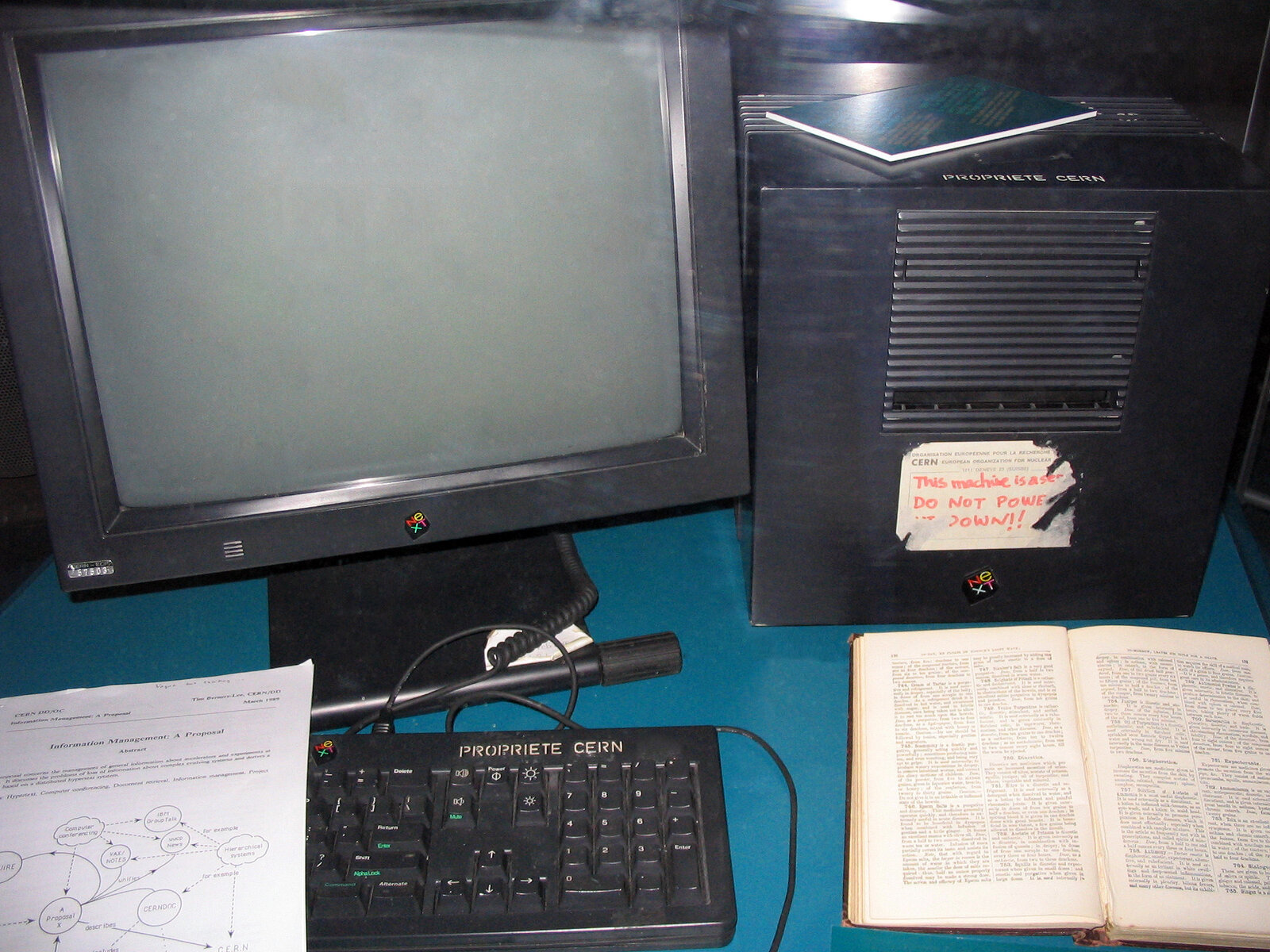
- http://info.cern.ch/hypertext/WWW/TheProject.html
- sir Timothy Berners-Lee proposed in 1989 "a large hypertext database with typed links"
- realized in 1990-1991 at CERN (Switzerland)
- written in HTML (Hypertext Markup Language)
- communication between the client ("browser") and server according to Hypertext Transfer Protocol (HTTP)
Milestone 1994
1994: Yahoo, Amazon founded; the first banner ad; first e-commerce transaction
Milestone 1997
1997: google.stanford.edu — the research project that would become Google
Milestone 1999
1999: cyberspace.cz
Milestone 2001
2001: Wikipedia launches; kyberia.sk
Milestone 2003
2003: Total Information Awareness program revealed
Milestone 2004
2004: Facebook founded
Milestone 2006
2006: "just setting up my twttr"; Google acquires YouTube; WikiLeaks founded
Milestone 2009
2009: the first Bitcoin block is mined
Milestone 2010
2010: Stuxnet discovered
Milestone 2013
2013: Edward Snowden reveals PRISM
Milestone 2018
2018: Cambridge Analytica data scandal; GDPR enters into force
Infosphere Current State

(dataflow through Frankfurt DE-cix peering center)
Post Scriptum
Session 11 :: Embedded Systems & Ghost in the Shell
Order of the day (AE490207)
- Introductio :: Ghost in the shell
- Repetitio :: Datasphere
- Questio :: Can machines live ?
- Lectio ::
- embedded systems
- Limor Fried
- robots, androids & co.
- Disputatio :: Can machines live ?
Ghost in the shell
Question of the day
Life (Definition)
- What entities do we normally label as "living" ?
- What features a "living" entity must have ?
- What entities do we normally label as "NOT living" ?
- Are there features which a "living entity" MUST NOT have ?
Life and the shell
- "(All) life-forms tend to preserve their existence."
- "(All) life-forms interact with their environment."
- "(All) life-forms have a material body."
Embedded systems
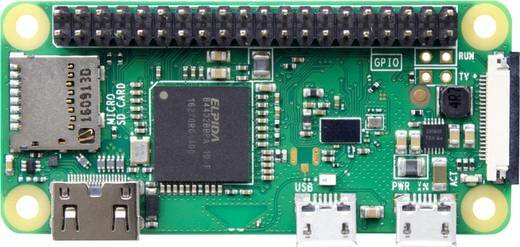
- Merriam-Webster definition of embedded: "enclosed closely in or as if in a matrix : set firmly into a mass or material"
- majority of embedded systems are designed to do some specific task, rather than be a general-purpose computer for multiple tasks
- Can You give me examples of some embedded systems which are
- present in this room ?
- You use in Your every-day life?
- dominate the planet Earth ?
- new industrial revolution: Raspberry Pi, Internet-of-Things (IoT) etc.
Limor Fried
Robots, Androids, Gynoids &co.

Adapted poster Design by Martin Rieser; source: http://reframe.sussex.ac.uk/rur/synopsis-2/
- not only embedded but also embodied
- word "robot" comes from Slovak/Czech "robota" meaning "labor, hard work"
- used by Karel Capek in his theatre piece Rossum's Universal Robots (R.U.R, 1920) to denote man-made man-like servants
- contrary to tokharian "Story of the mechanical girl" or E.T.A. Hoffman's Sandmann where man-like machines are just dumb puppets, Capeks "robots" attain a sort of awareness and rebel against their masters (e.g. similiar motive as in Golem or Frankenstein stories)
- Question: did we mention a story where a man-made entity attains awareness but DOES NOT rebel against its creator ?
Uncanny valley
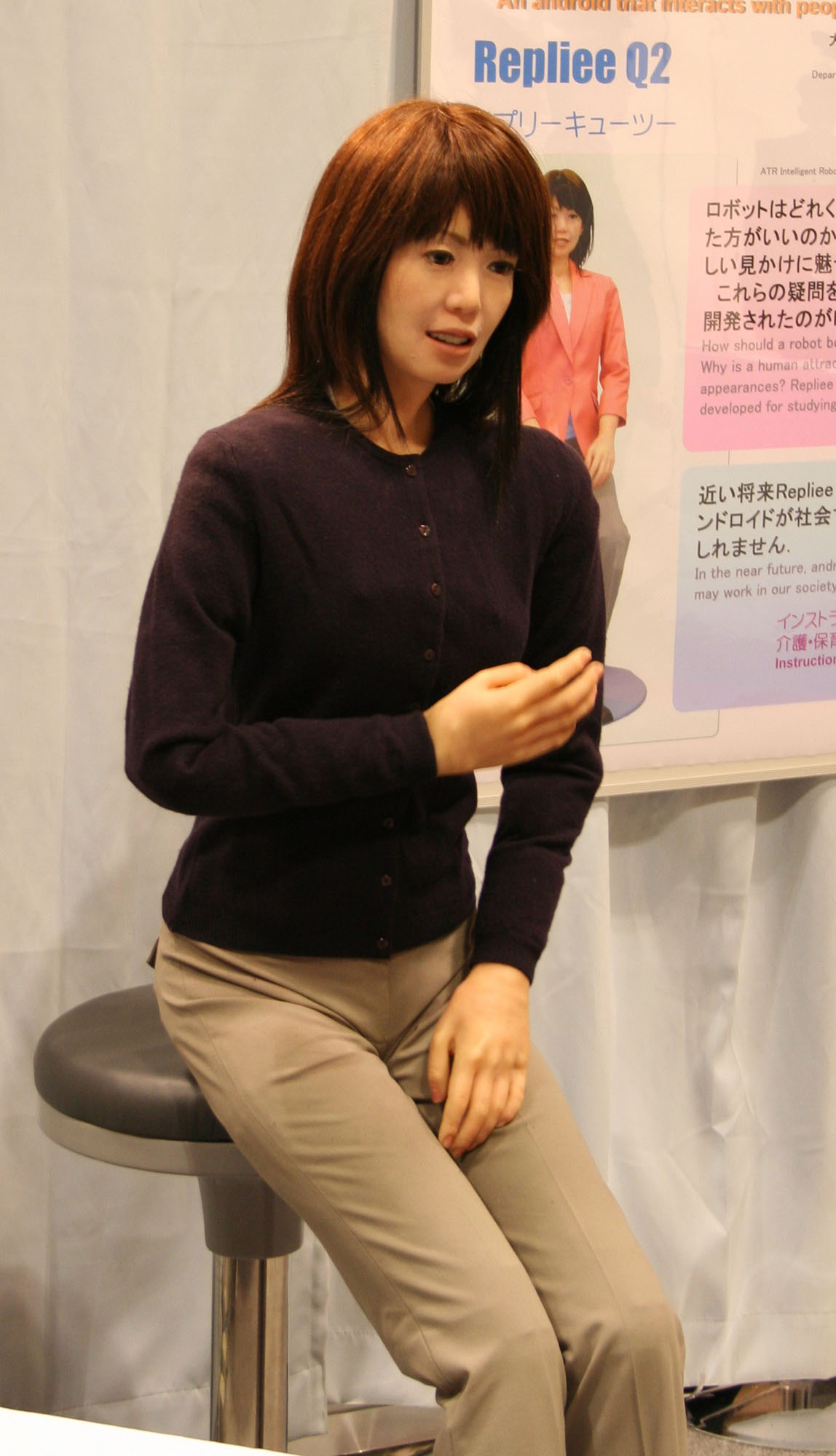
Repliee Q2 gynoid; source: https://upload.wikimedia.org/wikipedia/commons/a/aa/Repliee_Q2.jpg
- "Das Unheimliche" von Siegmund Freud (1919) and E.T.A. Hoffmann's "Sandmann" (1816)
- WIKI :: The concept of the uncanny valley suggests humanoid objects which appear almost, but not exactly, like real human beings elicit uncanny, or strangely familiar, feelings of eeriness and revulsion in observers.
Cyborgs ?
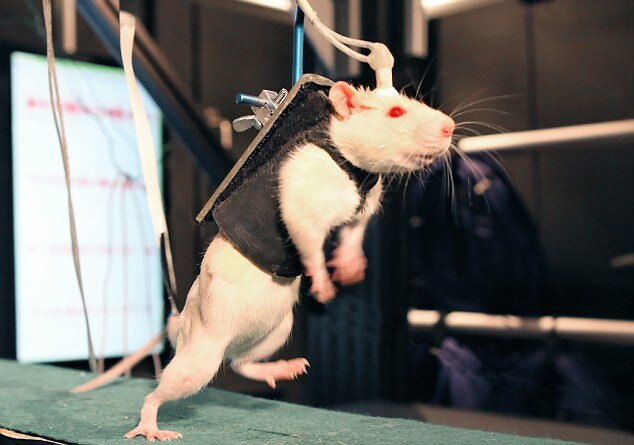
source: http://www.ebiotecnologia.org/2012/06/robo-e-farmacos-fazem-rato-com.html

source: https://medium.com/startup-grind/a-talk-with-cyborg-activists-neil-harbisson-and-moon-ribas-790845008629