i
Human and arti(ficial|stic) intelligence DDH ()


Human and arti(ficial|stic) intelligence

What is "intelligence" and how is it defined by different people and different cultures ? Is there only one "general" intelligence thanks to which humans and machines solve problems or is it more appropriate to speak about combinations of "multiple intelligences" - emotional, intepersonal, intrapersonal, spatial, visual, logical, mathematical, bodily, moral, narrative, etc. ? Can we speak about intelligence independent of cultural and socio-economical context within which its acts and is embedded ? Do organic (OI) and artificial intelligence (AI) have something in common or are they fundamentally and unreconcilably different ? In order to explore potential answers to these questions, we will look into history of cognitive (psychology, anthropology) and computer  (informatics, cybernetics)  sciences, we will read stories about "idiot savants" and children raised in wilderness and briliant minds of the past in order to ultimately ask our own AI systems to tell them something about themselves.

Sessions 0 and 1

Session 0 :: Introduction

Hello world, formalities, recommended literature, means of communication etc.

Session 1 :: Definition of intelligence

Session 2 :: Development of intelligence

Repetitio

Repetitio mater studiorum.

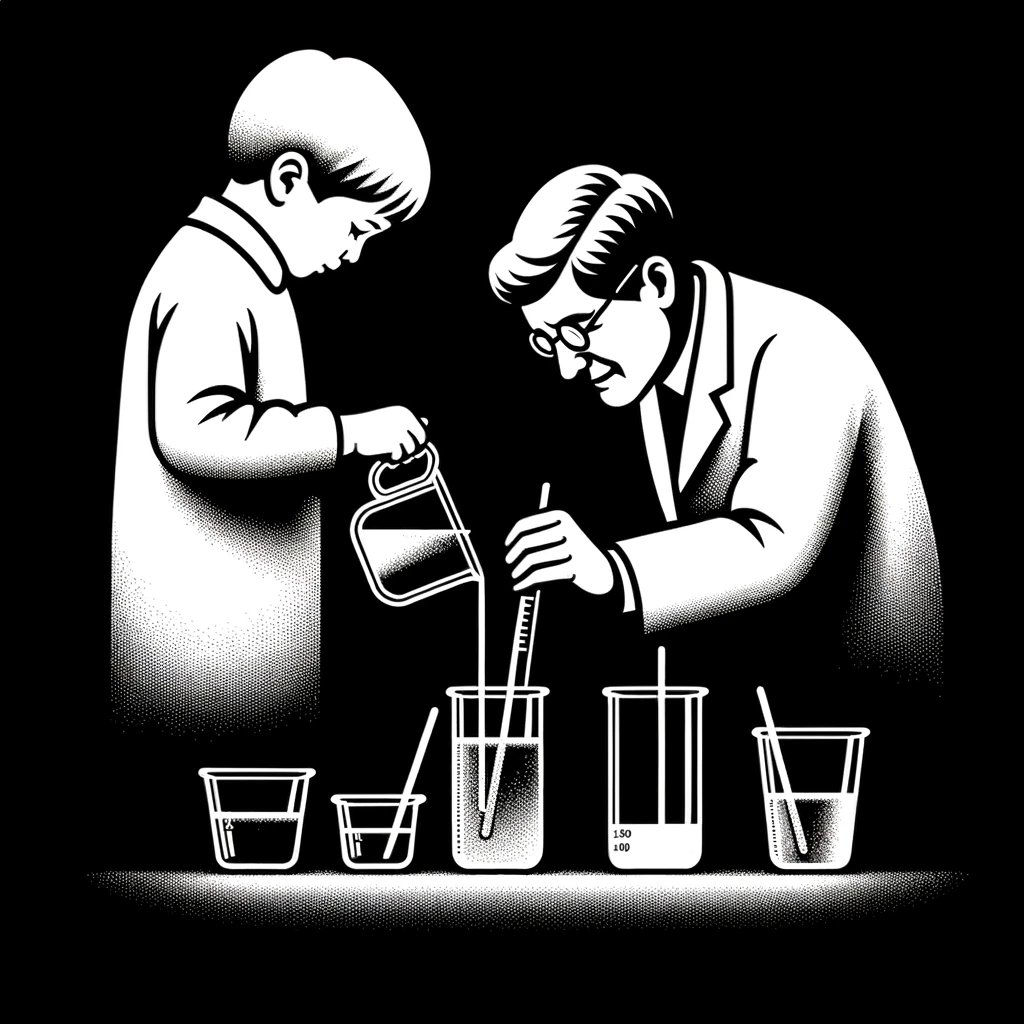
Piaget

Illustration%20of%20jean%20piaget%20making%20and%20his%20son%20performing%20his%20famous%20experiment%20with%20water%20conservation%20in%20different%20glasses

Illustration of jean piaget making and his son performing his famous experiment with water conservation in different glasses
Jean Piaget (1896-1980) was a Swiss developmental psychologist and philosopher best known for his pioneering work in the study of child development and his theory of cognitive development.  He studied natural sciences at the University of Neuchâtel and later obtained a Ph.D. in zoology. However, his professional trajectory shifted when he began working at the Binet Institute in Paris, where he was tasked with standardizing intelligence tests for children. Through his observations, Piaget became intrigued by the systematic errors made by children, leading him to hypothesize that children think differently than adults. This marked the beginning of his extensive research into the nature and development of human intelligence.

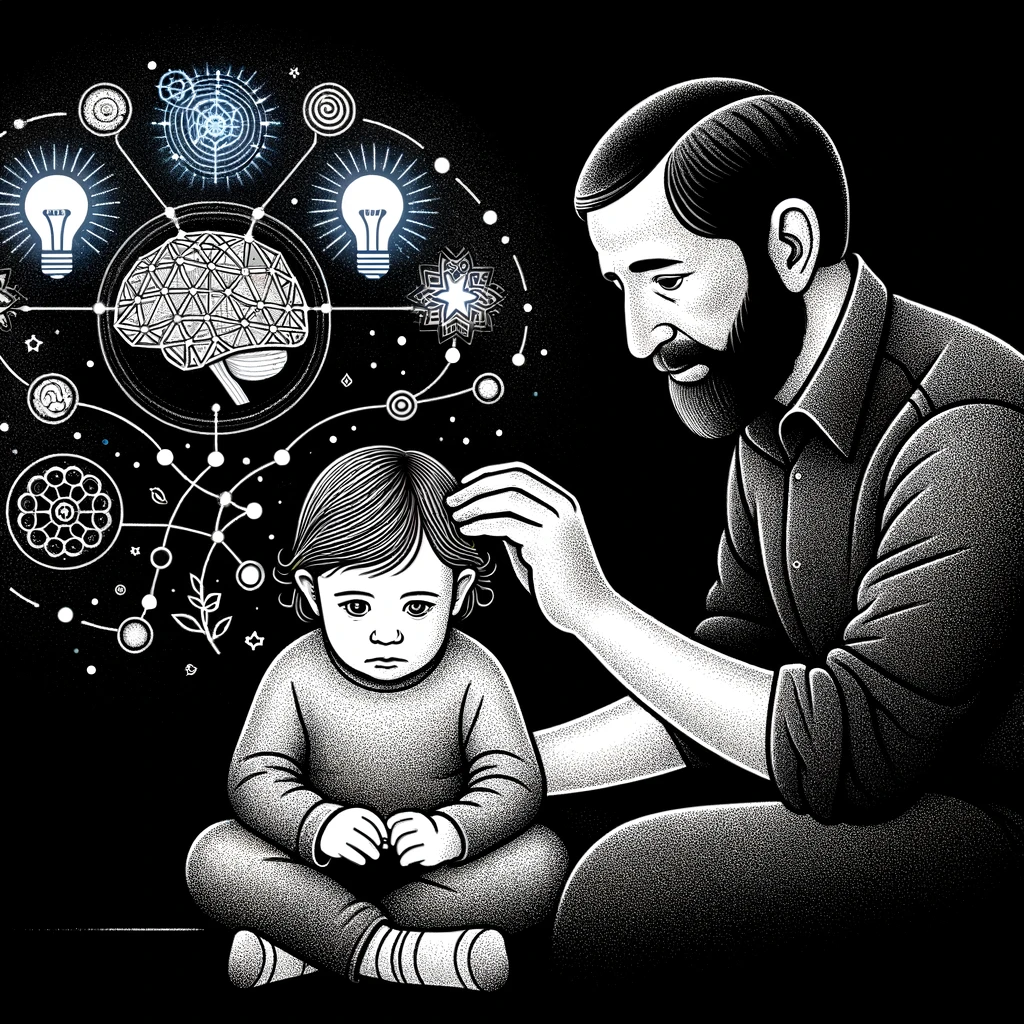
Feuerstein

illustration%20on%20black%20background%20of%20reuven%20feurstein%20helping%20a%20traumatized%20child%20to%20expand%20its%20cognitive%20potential

illustration on black background of reuven feurstein helping a traumatized child to expand its cognitive potential
Reuven Feuerstein (1921-2014) was an Israeli psychologist renowned for his theory of Structural Cognitive Modifiability (SCM) and the concept of Mediated Learning Experience (MLE). Born in Romania, Feuerstein's work was significantly influenced by his experiences during World War II, assisting child survivors of the Holocaust. His main belief was that intelligence is not a static trait but can be modified under the right educational interventions.

Did Feuerstein meet Piaget ? Compare what GPT4 says with what wikipedia says ...

Session 2 Take home lesson

Intelligence is not a static trait but can be modified under the right educational interventions.

Session 3 :: Form(s) of intelligence


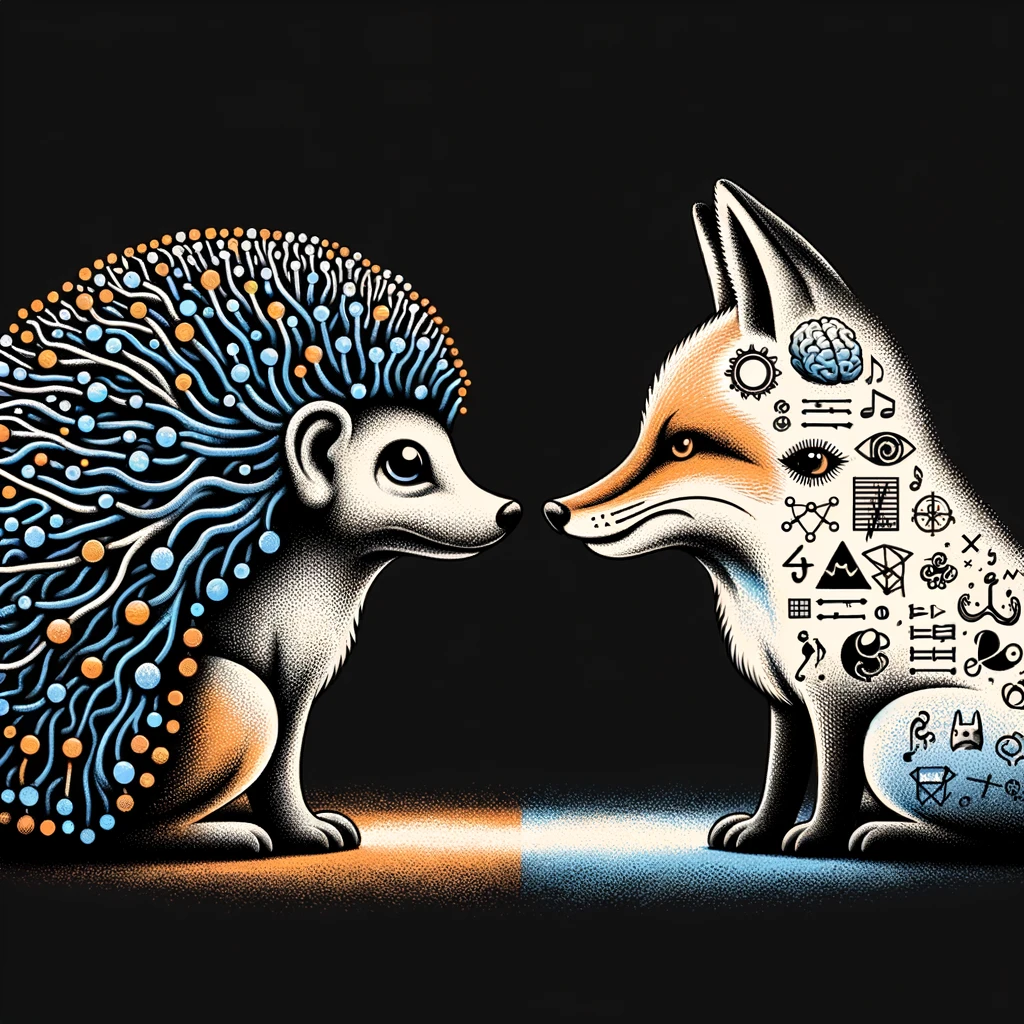
Hedgehogs and foxes

πόλλ' οἶδ' ἀλώπηξ, ἀλλ' ἐχῖνος ἓν μέγα

Multa novit vulpes, verum echinus unum magnum

"a fox knows many things, but a hedgehog knows one big thing"

General Intelligence

Generic intelligence refers to the overall, broad cognitive ability that an individual possesses. It's a general concept that encompasses a range of cognitive skills, including memory, reasoning, problem-solving, and learning. In an educational context for undergraduates, think of generic intelligence as the foundational mental capacity that enables you to adapt to new situations, solve diverse problems, and acquire knowledge in various domains. It's not limited to academic learning but also includes practical problem-solving and everyday reasoning. This concept suggests that some aspects of intelligence are universal and not specific to a particular skill or area of knowledge.

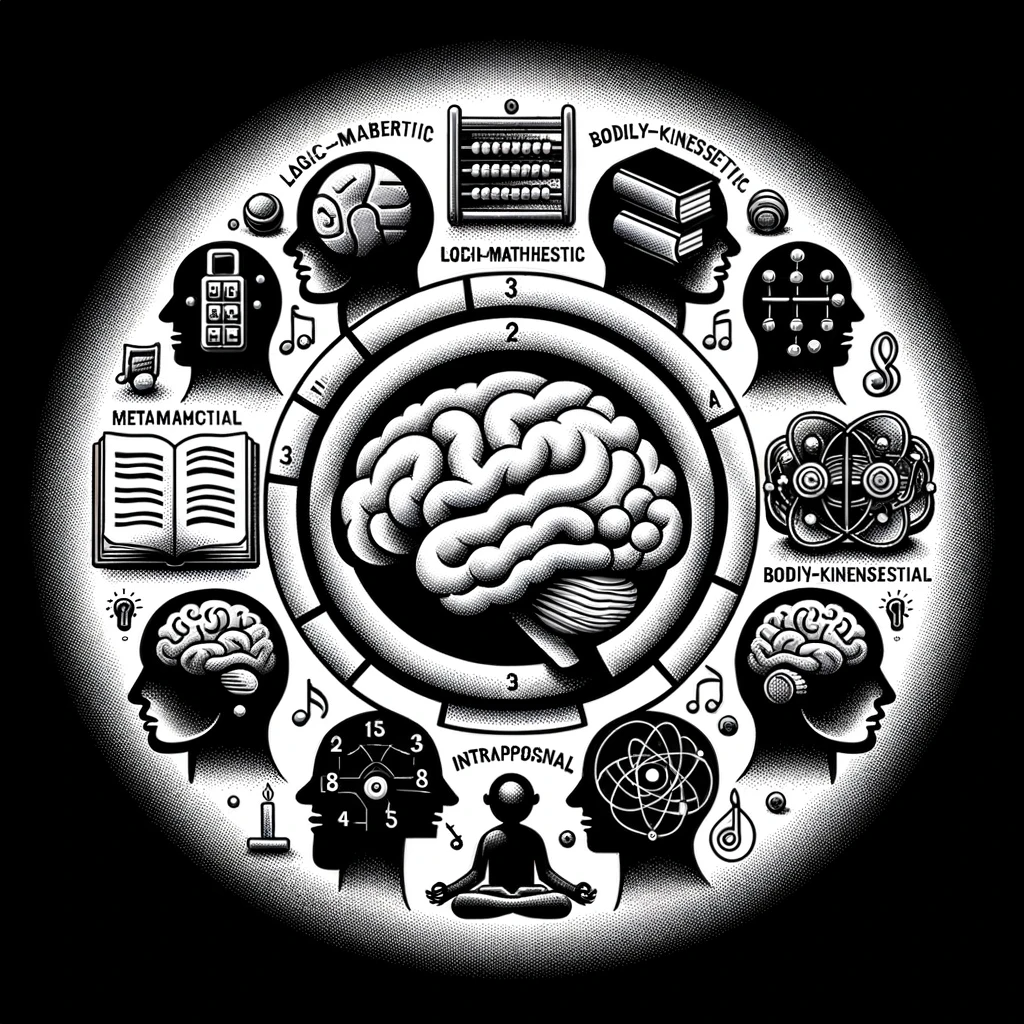
Theory of Multiple Intelligences

Contrasting traditional views that focus on a single, general intelligence, Theory of Multiple Intelligences proposed by Howard Gardner in 1983 posits that humans possess a variety of distinct intelligences. These include linguistic, logical-mathematical, spatial, musical, bodily-kinesthetic, interpersonal, intrapersonal, and naturalistic intelligences. Each intelligence represents a different way of processing information and solving problems, challenging the notion of intelligence as a singular, measurable trait. This theory emphasizes the unique cognitive strengths individuals have and suggests a more personalized approach to education and learning.

Hausaufgabe

in #edu-intelligence room, put an emoticon of Your choice under intelligence X of Your choice

take note of who else is in Your group

read the chapter in Gardner's Frames of Mind

read additional literature

every group should present X in any way You find appropriate (be creative!)

topics which should be adressed in the presentation: Gardner's 8 criteria respective to X; examples of persons who exemplified high (or low) degree of X; relations of X to other inteligences

two most important questions: How would You evaluate X of human subjects ? How would You evaluate X of a machine ?

Session 4 :: Other (forms of) intelligence

Questio 1

What intelligences would You add to Gardner's "canonic seven" ?

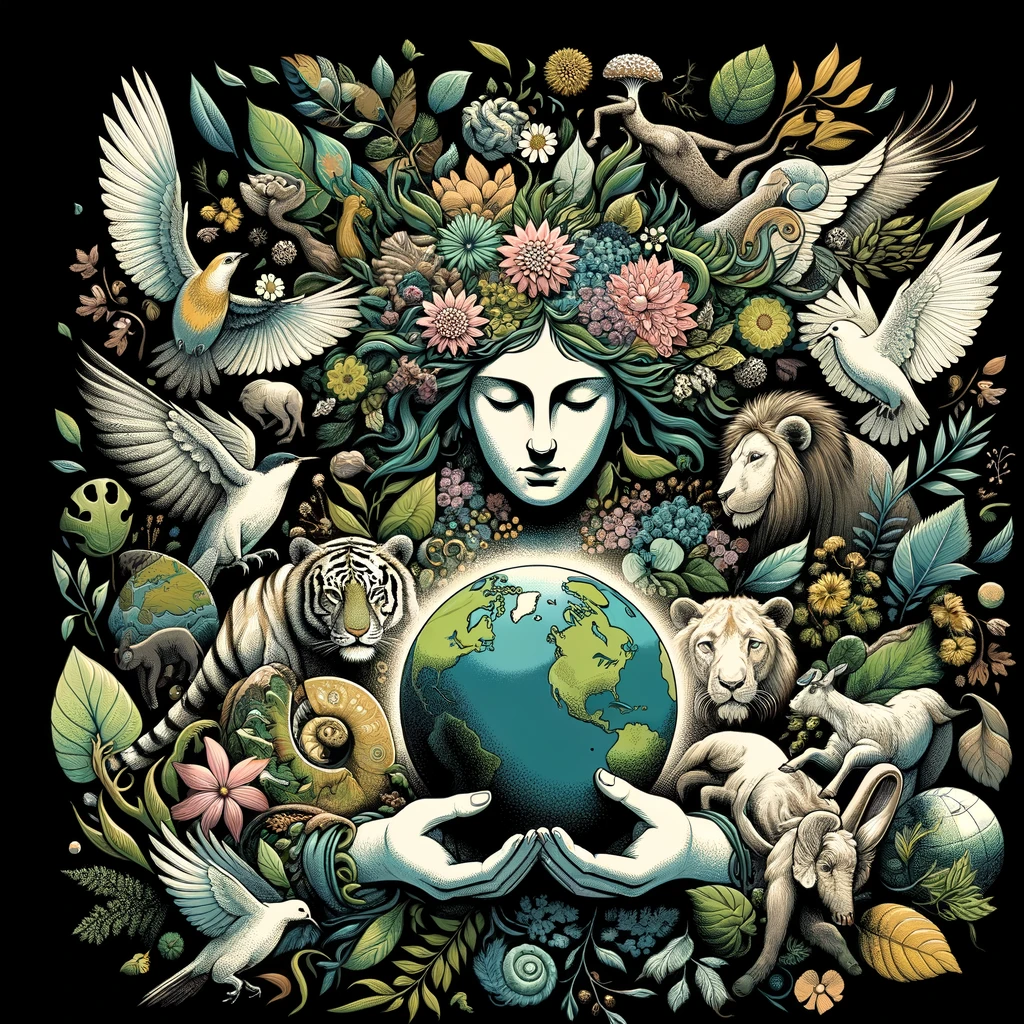
Naturalistic intelligence(s)

Gardner defines Naturalistic Intelligence as the ability to recognize, categorize, and draw upon certain features of the environment. It's one of the intelligences in his Theory of Multiple Intelligences. This type of intelligence is not just about knowledge of nature, but also involves a deep understanding of living things and being attuned to natural phenomena. People with high naturalistic intelligence are skilled at identifying and classifying various aspects of the natural world, like animals, plants, weather patterns, and geographic formations.

Questio 2

Choose one or more among the topics just mentioned (e.g. Health & Hygiene, Food & Poison, Parasites & Symbionts, Predators & Preys, Courtship & Mating, Care for the little ones or Death) and thematize them in Your group in terms of cases/examples of:

stupid behaviour

clever behaviour have fun !

Moral intelligence

Moral intelligence refers to the capacity to understand and distinguish right from wrong, and to behave based on this understanding. It encompasses the ability to navigate complex ethical dilemmas, make moral judgments, and act in ways that are consistent with one's ethical and moral principles. This form of intelligence involves empathy, conscience, and a strong sense of fairness, guiding individuals in making decisions that are not only beneficial to themselves but also respectful and considerate of others and the broader community.

Session 5 :: 14.12 :: Artificial intelligence

Session 6 :: 11.1 :: Examples of intelligence

Session 7 :: 25.1 :: Art of intelligence, intelligence of art

Session 8 :: 8.2 :: Futurological congress AE9202