i
Making of a digital artefact DDH ()


Making of a digital artefact

Artefact (sometimes also spelled as ``artifact'') is a man-made object. Artefact can be both tangible & physical - a tool, a sculpture, a book - or intangible - a musical tune, a piece of code.

In the context of this course, we define ``artefacts'' as man-made objects with individual, unique and distinguishable history and contrast these to mass-produced ``products'' which lack such history.

Personal Primer

Make Your Own Device

Der Mensch ist kein Nutzer sondern ein Schöpfer.

Young Hacker's Illustrated Primer

"A Young Lady's Illustrated Primer" is a central and symbolic artifact in Neal Stephenson's "The Diamond Age." 

The Primer is an advanced, interactive, nanotech-driven book, and its main properties include: adaptive story-telling, interactive, voice-activated, lieflong companion, teaching practical skills, nanotechnological, encrypted, socially impacting.


Make Your Own Digital Primer

This How To aims to demonstrate how anyone, including teachers, parents, and students, can create their own Personal Primer - a book-like educational instrument that combines digital education objectives.

The session will cover existing Primer prototypes and off-the-shelf components, such as Raspberry Pi Zero and e-ink display, needed to build the Primer. Participants will learn how to design and deploy personalized educational instruments that differ from smartphones and tablets.

Videos

Magic Wand 1

How to reunite the bamboo stick

ID

Cocoon

Made to textile, wood and ropes. Person would enter in. Drop-like form. Measure breath, create a breath-sound feedback loop.

Language-based artefacts

Session 0:::Session 1:::Session 2:::Session 3:::Session 4

Session 0

What:::Why:::When & where:::Software:::Hardware & Material

Session 1

Session 1

Session 2

Session 2

Session 3

Session 3

Session 4

Session 4

Vibe-Coding HoloLens

This semester we will experiment with HoloLens Extended Reality waveguide displays. Using Unity, we will explore rapid “vibe-coding” approaches to prototype immersive experiences that merge perception, joint attention and gaze&point interaction. Participants will learn by building, improvising, and iterating on their own ideas. The seminar is open to all, regardless of prior experience, welcoming anyone curious about XR, creativity, and experimental interfaces. 

What is HoloLens 2 ?

The HoloLens 2 lens is a transparent glass waveguide with nanoscale diffractive gratings. A tiny laser-based light engine generates the image, the waveguide traps and steers that light through the lens by internal reflection, and then other grating regions send it into the eye. The practical per-eye render size is 1440 by 936, and the system is designed to run at 60 hertz.

Plot twist

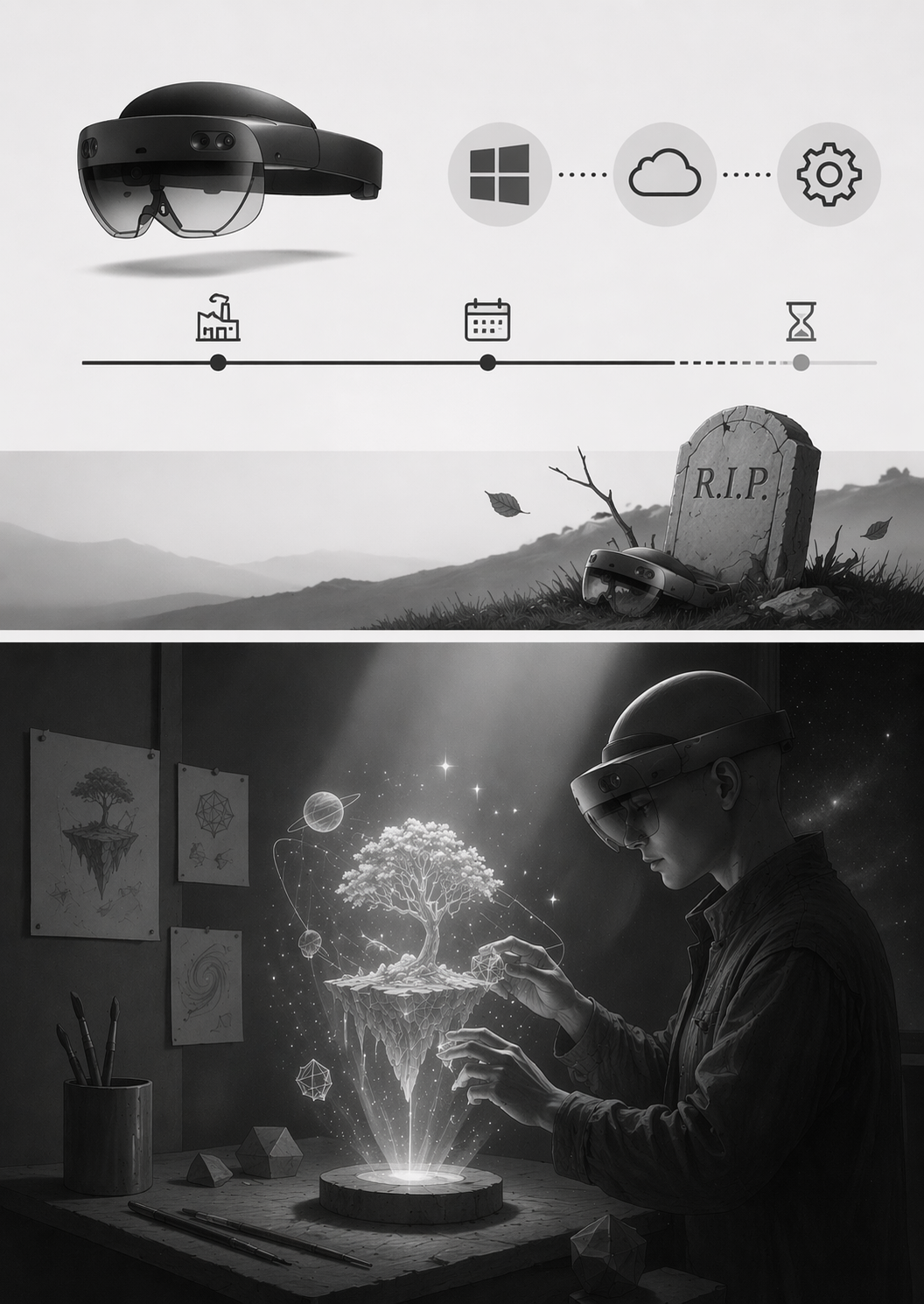
HoloLens 2 comes with an important strategic caveat: being a closed Microsoft product, its viability is in great extent dependent on Microsoft’s ecosystem and support lifecycle. Since Microsoft stopped producing HoloLens 2 in October 2024 and committed support only through December 31, 2027, HoloLens 2 should be best understood as a mature but discontinued residue of one highly specialized branch of technological evolution.

Vibe Coding

In computer programming, vibe coding is a software development practice assisted by artificial intelligence (AI) such as by chatbots (such as Codex or Claude Code) or AI agents (e.g. OpenClaw). The software developer describes a project or task in a prompt to a large language model (LLM), which generates source code automatically. Vibe coding may involve accepting AI-generated code without reviewing the output thoroughly, instead relying on results and follow-up prompts to guide changes.

Question: Do You vibe code ? If yes, how &with what model/tool ?

(Y)our projects

Which dream would You like to realize ? 

Which project would You like to build ?


Dev environment

In order to develop HoloLens appz, one needs:

Windows ;(

Unity 2022.3 LTS (e.g. 2022.3.62f3) + Universal Windows Platform Build Support + Windows Build Support (IL2CPP)

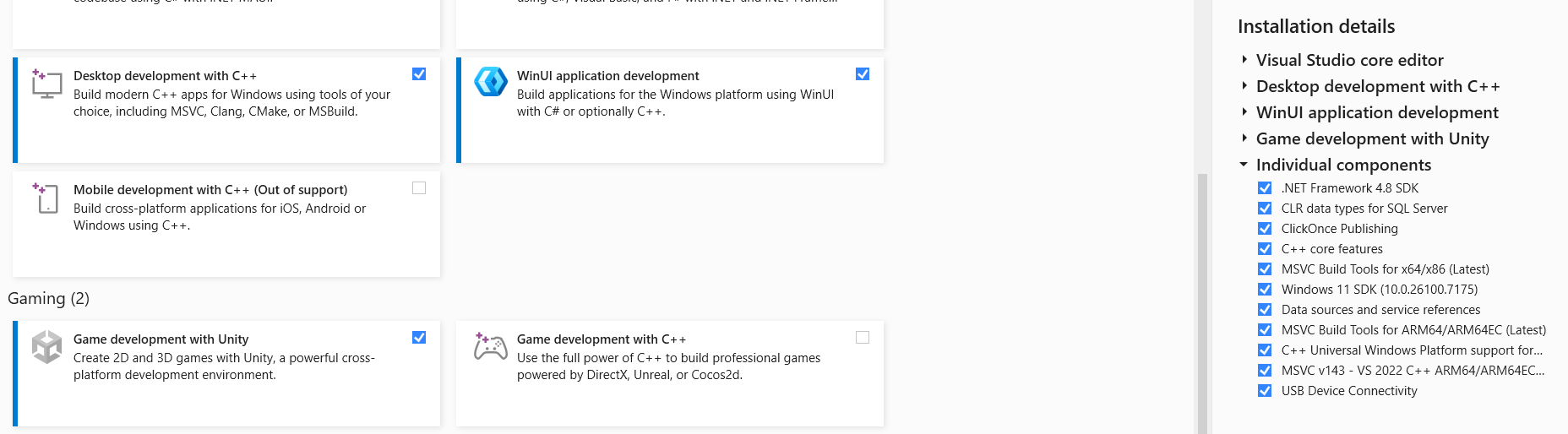
Visual Studio + Visual Studio Installer + bunch of dependencies

OpenXR plugins