i
baumhaus.digital DDH ()


baumhaus.digital

baumhaus.digital is a repository of course foliae for all seminars and lectures given by Daniel Devatman Hromada and members of his team since summer semester 2023 onwards

Bildung Biodigitale

Welcome to the Bildung Biodigitale repository activated at baumhaus.digital on 18th April 2023 (AE530418)
 

What is Bildung Biodigitale ?

Old definition: BB is an educational curriculum integrating paradigms of computer-oriented sciences (e.g. informatics, cybernetics, AI etc.) and nature-oriented sciences (e.g. biology, ecology, botanics etc.) into a life-centered didactic package. Instead of being composed of dry indoor frontal teaching lectures, BB seminars mostly take place outdoor, some of them are peripatetic –i.e. walking– and apart from „aesthetic“ and „theoretical“ components always include a „survival“ component.

New definition: Bildung Biodigitale is a seminar cycle which deploys eco-artificial education within University context.


What is eco-artificial education ?

``Ecoartificial education (EAE) integrates those forms of pedagogical and didactic practice where artificially intelligent systems are being deployed for the purpose of increase of Wuman’s knowledge and respect of the surrounding biosphere.''

EAE is about cultivating what Charles Darwin called ``the most noble attribute of man''

Games

Papers

Degrowth ??? NOW !!!

Exploited, Earth is dying in front of our eyes and we - artists, researchers, professors - are only rarely part of the solution. Most of the time, we are part of the problem. 

Mislead by ambiguity of terms like "Nachhaltigkeit"; corrupted by lobbyist promises on one hand and our own fears of uncertain future on the other, we are unable to do the only thing that counts: change our habits...

UdK2300: On Teaching and Telling

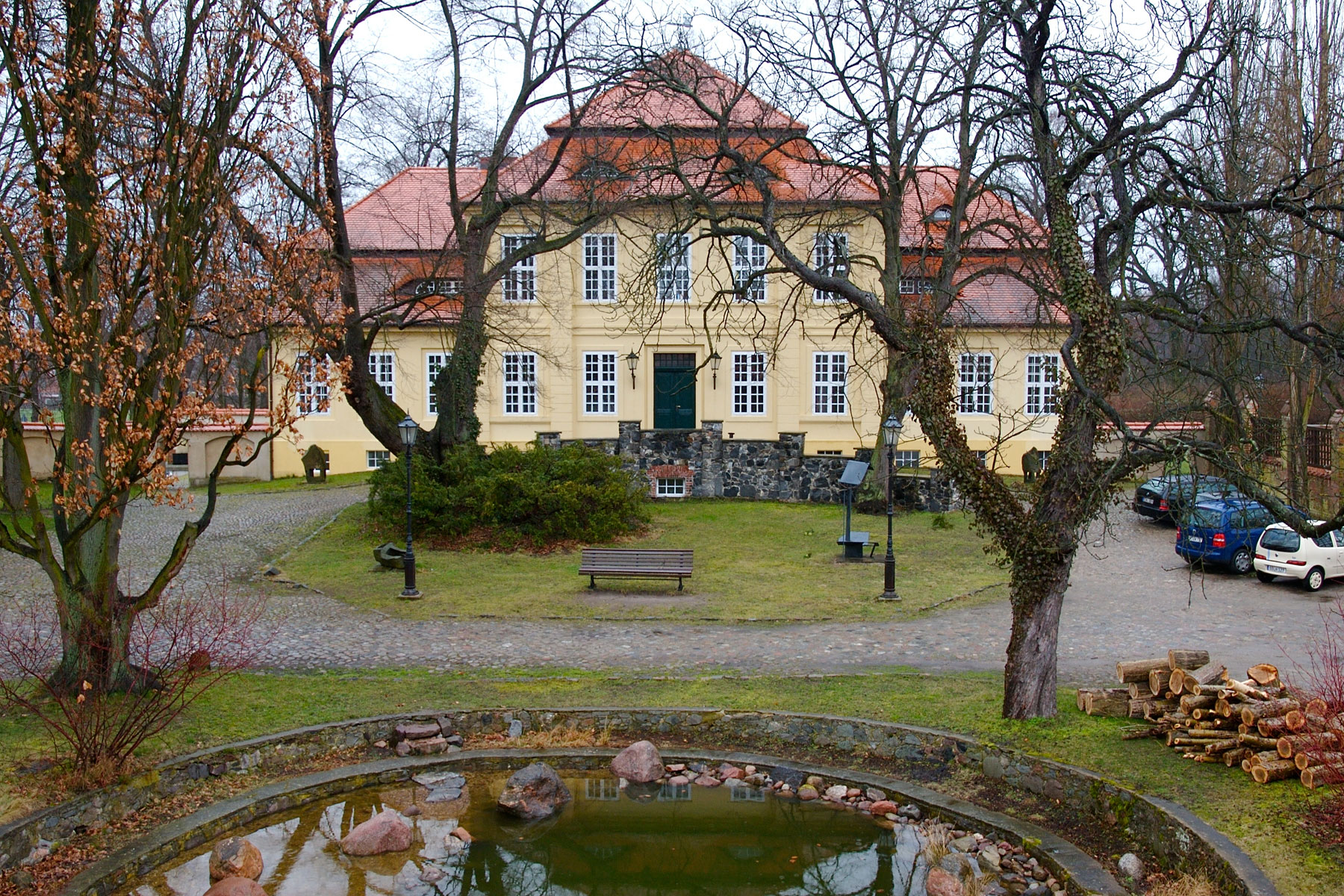
Humans are story-telling animals. In the peri(patetic|cycletic) SoSe2026 seminar at Gutshof Sauen, we shall reflect upon history of story-telling as it has been, since times immemorial, practiced in different cultures and different contexts (artistic, educational, political etc.). We will ask questions like: "How will story-telling look like in the future ? What methods, instruments and media will be used to-tell-the-story in year 2300 ? Will AIs and corporations be the principal story-tellers or are they just temporary actors reminding us how important it is that humanity should protect its "narrative sovereignity" ? What stories will be told, by whom, and to whom ?". But first and foremost: we will practice. Outdoor and indoor; by a fireplace and in Extended Reality, we - You, me, us - will be telling stories. And, hopefully, also learning in the process.

Animals

We eat them, kill them, crush them, exploit them, misunderstand them and in some lucky cases also love and venerate them. Being so different and so similar, they fascinate us, inspire us and scare us in the same time. They are us: animals.

share

Formalities

who am I

who are You

is this a course for You ?

credits (2 ECTS for >75% attendance, +1 for referat/experiment)

Hausarbeit possible

need help ? (tutor: a.terzieva@udk-berlin.de)

Leistungsnachweis

signature-related issues

Smartphone & Feedback box

Bye & thanks for all the fish

see You in #edu-linguistics or in 2 weeks (same time, same place)

daniel@udk-berlin.de / Sprechstunden Wednesday 13:00 - 14:00 R313 Medienhaus

Feedbackbox

Please answer (anonymously) on the piece of paper at least one among following questions:

1. What did You learn ?

2. What did You like ?

3. What did disturb You?

4. What did You not like ?

and throw it into Feedbackbox.

Art, Cognition, Education

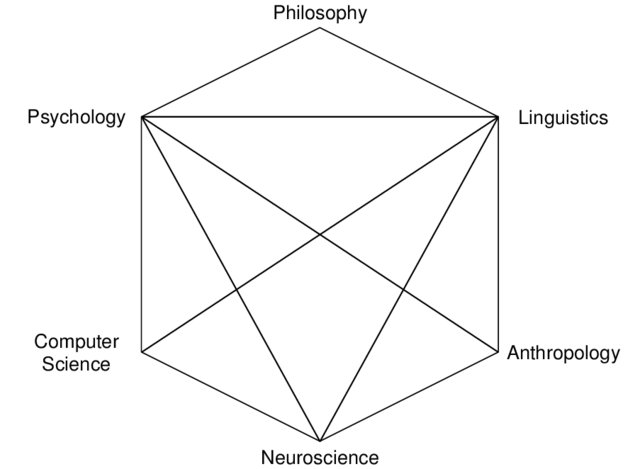
Hexagram%20of%20Cognitive%20Sciences

Hexagram of Cognitive Sciences

The objective of "Art, Cognition, Education" seminar series  is to introduce art students to six canonic (linguistics, psychology, neuroscience, computer science / artificial intelligence, anthropology, philosophy ) - and one applied (pedagogy) cognitive sciences.

Formalities

who am I

who are You

is this a course for You ?

credits (2 ECTS for >75% attendance, +1 for referat/experiment)

Hausarbeit possible

need help ? (tutor: a.terzieva@udk-berlin.de)

Leistungsnachweis

signature-related issues

Smartphone & Feedback box

Introduction to linguistics: From पाणिनि to Čepeto

The seminar will start with a question "What is language and how can You define it ?". Subsequently, we will see how men and women of past and present answered that question - from grammarians of ancient India all the way to most modern theories of phonetics, phonology, morphosyntax, semantics and pragmatics. Special focus will be put on theories of language acquisition, that is, on discussion the process by means of which maternal language is acquired by human children. All this to be able to end the seminar with an answer to the question: "Could artificial intelligences like GPT-X be ever able to understand the meaning of the word meaning ?"

Precursors


Human and arti(ficial|stic) intelligence

What is "intelligence" and how is it defined by different people and different cultures ? Is there only one "general" intelligence thanks to which humans and machines solve problems or is it more appropriate to speak about combinations of "multiple intelligences" - emotional, intepersonal, intrapersonal, spatial, visual, logical, mathematical, bodily, moral, narrative, etc. ? Can we speak about intelligence independent of cultural and socio-economical context within which its acts and is embedded ? Do organic (OI) and artificial intelligence (AI) have something in common or are they fundamentally and unreconcilably different ? In order to explore potential answers to these questions, we will look into history of cognitive (psychology, anthropology) and computer  (informatics, cybernetics)  sciences, we will read stories about "idiot savants" and children raised in wilderness and briliant minds of the past in order to ultimately ask our own AI systems to tell them something about themselves.

Human and Machine Learning


Introduction to Psychology: On Anima and other Archetypes

The seminar "Introduction to Psychology: On Anima and Other Archetypes" offers an interdisciplinary exploration of history of psychological thought. Beginning with mythological narratives like Amor and Psyche and philosophical texts such as Aristotle's On the Soul, the seminar aims to integrate cross-cultural perspectives—including animism, panpsychism, the Sāṅkhya concept of Ātman and Islamic / Judaic / Jungian models of "the soul".

Making of a digital artefact

Artefact (sometimes also spelled as ``artifact'') is a man-made object. Artefact can be both tangible & physical - a tool, a sculpture, a book - or intangible - a musical tune, a piece of code.

In the context of this course, we define ``artefacts'' as man-made objects with individual, unique and distinguishable history and contrast these to mass-produced ``products'' which lack such history.

Personal Primer

Magic Wand 1

ID

Cocoon

Made to textile, wood and ropes. Person would enter in. Drop-like form. Measure breath, create a breath-sound feedback loop.

Language-based artefacts

Session 0:::Session 1:::Session 2:::Session 3:::Session 4

Vibe-Coding HoloLens

This semester we will experiment with HoloLens Extended Reality waveguide displays. Using Unity, we will explore rapid “vibe-coding” approaches to prototype immersive experiences that merge perception, joint attention and gaze&point interaction. Participants will learn by building, improvising, and iterating on their own ideas. The seminar is open to all, regardless of prior experience, welcoming anyone curious about XR, creativity, and experimental interfaces. 

Miscellanous

Presentations

Portfolio

Symposia

Workshops


Kolloquiae

Vormittag:::Nachmittag

Policies

UDK AI Leitlinien

Conversations

Healing plants for Berlin.

Household Zoology

Animal Guessing Game.

Who is DDH ?

Upgrading Linux Mint 17.3 to 21.3

Weight difference of battery

Emil Tischbein Information Unknown

Plant Identification Apps

Write German Lowercase

CSS HTML Color Codes

Apfeleis Rezept Beschreiben

Delfi und Felix heiraten

Using ChatGPT for Moral Education

Roman Emperor Best Role Model

A****lochisierung

Stories

Zauberbuch

Carrots and Rabbits Jokes

Design & Computation

Perspectives in Engineering

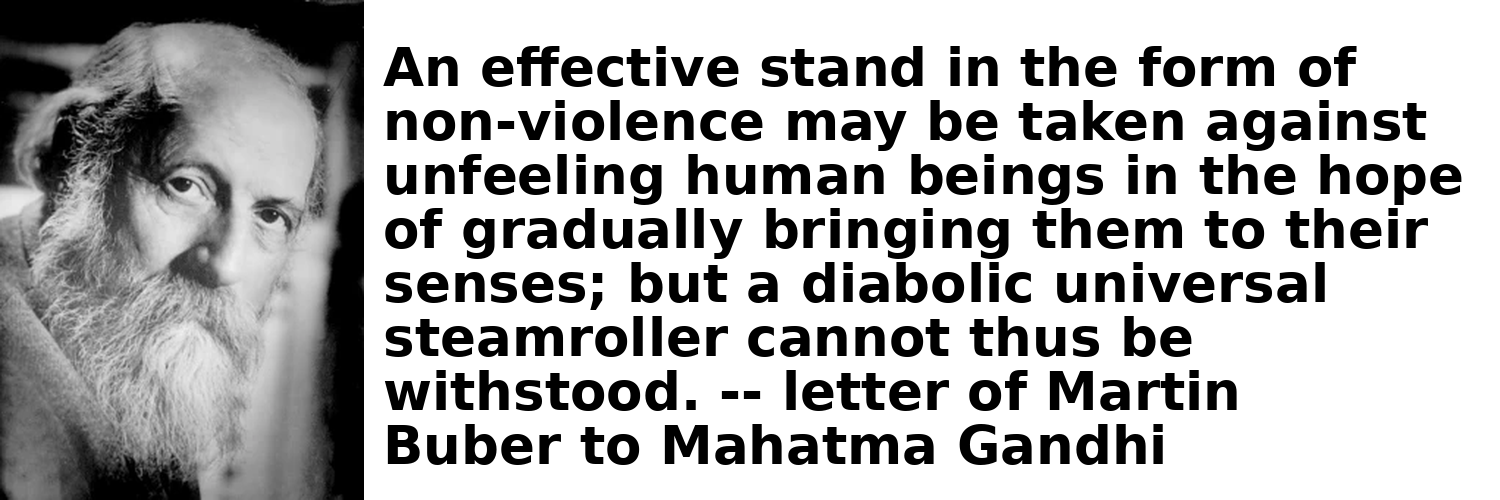
I and Thou

Part One

Twofold world:::Primary words signify relations:::Existence of I:::Realms of "it" and "Thou":::Experiencing:::Experience arises:::Experience vs. Relation:::Three spheres of Thou

Studium Generale

Studium Generale courses

Mythologies of possible futures: Between Science Fiction and Reality


UdK2300: On Teaching and Telling

Humans are story-telling animals. In the peri(patetic|cycletic) SoSe2026 seminar at Gutshof Sauen, we shall reflect upon history of story-telling as it has been, since times immemorial, practiced in different cultures and different contexts (artistic, educational, political etc.). We will ask questions like: "How will story-telling look like in the future ? What methods, instruments and media will be used to-tell-the-story in year 2300 ? Will AIs and corporations be the principal story-tellers or are they just temporary actors reminding us how important it is that humanity should protect its "narrative sovereignity" ? What stories will be told, by whom, and to whom ?". But first and foremost: we will practice. Outdoor and indoor; by a fireplace and in Extended Reality, we - You, me, us - will be telling stories. And, hopefully, also learning in the process.