Diese Präsentation ist für die Ansicht im Querformat gestaltet.

We are one exceptional people, united by blood, culture, or historical destiny.
Mechanism: Social identification, in-group cohesion, collective narcissism
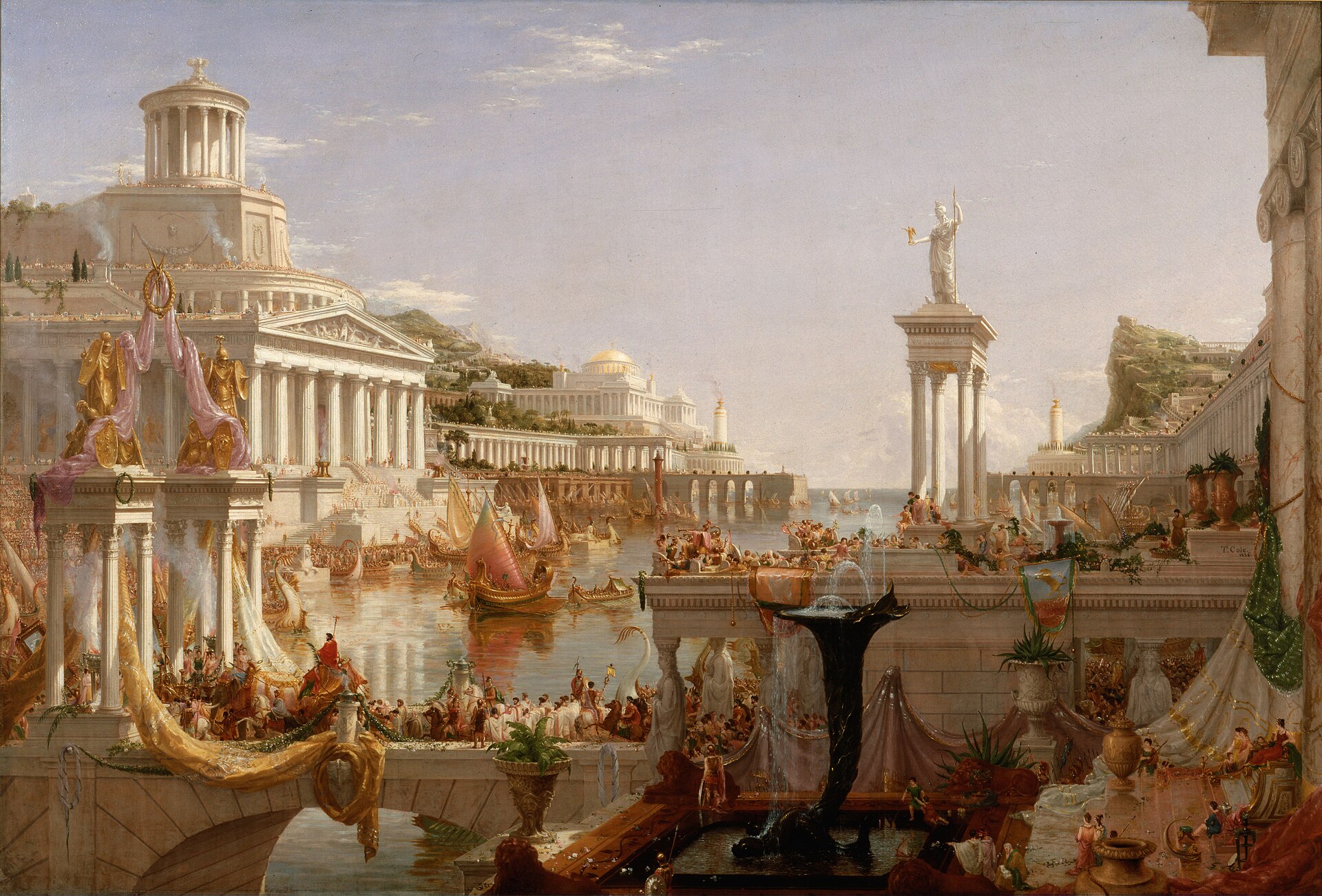
Thomas Cole, The Consummation of Empire (1836). Wikimedia Commons, public domain
Once upon a time everything was good; it has been taken from us but the time will come when WE (not THEM) will be great again.
Mechanism: Nostalgia, idealization, selective cultural memory, reference to early childhood
Our nation is declining and faces an existential threat.
Mechanism: Fear, perceived loss, urgency, threat amplification
The broken world is caused by enemies, traitors, parasites, secret societies, alien influences &c. We suffer because THEY are among US.
Mechanism: Scapegoating, out-group hostility, conspiracy thinking
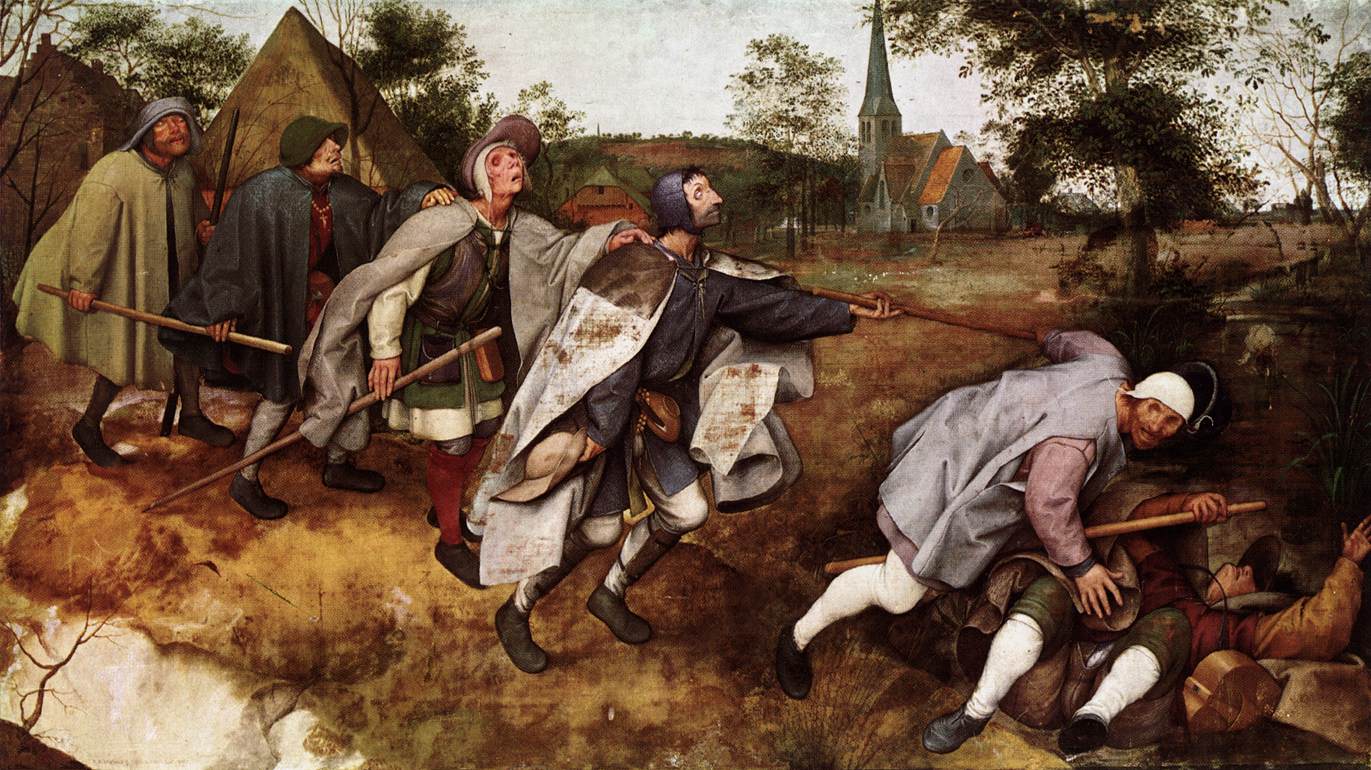
Pieter Bruegel the Elder, The Parable of the Blind (1568). Wikimedia Commons, public domain
Only an exceptional leader can save us and restore our greatness.
Mechanism: Authority bias, identification, charismatic attachment
| Leader | Where, when | Father / family title or motif | Kind |
|---|---|---|---|
| Stalin | USSR, 1920s–1953 | “Father of Nations” (otets narodov); also vozhd (leader) | press epithet |
| Mao Zedong | China, 1949–1976 | Cultural Revolution song: “Dear father, dear mother — neither is as dear as Chairman Mao” | slogan |
| Kim Il Sung (and heirs) | North Korea, 1948– | “Parental Leader” (eobeoi suryeong); the nation as one family | state doctrine |
| Rafael Trujillo | Dominican Rep., 1930–1961 | “Benefactor of the Fatherland”, “Father of the New Fatherland” | official title |
| François Duvalier | Haiti, 1957–1971 | “Papa Doc” (his son: “Baby Doc”) | nickname |
| Mobutu Sese Seko | Zaire, 1965–1997 | “Father of the Nation”; also “Guide”, “Messiah” | official epithet |
| Idi Amin | Uganda, 1971–1979 | “Big Daddy” | nickname |
| Saparmurat Niyazov | Turkmenistan, 1990–2006 | Türkmenbaşy, usually rendered “Head / Father of all Turkmen” | adopted title |
| Alexander Lukashenko | Belarus, 1994– | Bats’ka (“Dad”) | popular epithet |
| Vladimir Putin | Russia, 2000– | no official title; “national leader”, strong-father and tsar-batyushka imagery in propaganda | motif |
Many different regimes, continents and decades — one and the same family metaphor: the nation is a household, the leader its father, dissent is disobedience.
Mechanism: authority bias, dependency, the family as the first hierarchy we learn
| Leader | Where, when | Title | Role in the family |
|---|---|---|---|
| Hitler | Germany, 1933–1945 | Führer (leader) | mostly messianic and martial; father role not the core |
| Mussolini | Italy, 1922–1943 | Il Duce (leader) | leader first; family enters via birth-rate politics |
| Franco | Spain, 1939–1975 | Caudillo (warlord-leader), “by the grace of God” | war leader and guardian of the “great family” of Spain |
| Gaddafi | Libya, 1969–2011 | “Brother Leader” | big brother, not father |
| Pol Pot | Cambodia, 1975–1979 | “Brother Number One” | big brother |
| Ho Chi Minh | N. Vietnam, 1945–1969 | Bác Hồ (“Uncle Ho”) | uncle: kinder, but still family |
| Atatürk | Turkey, 1923–1938 | surname “Father-Turk” (1934) | literal father — but not a fascist |
So the guess holds almost: not always “father”, but nearly always a family member with authority — and the fascist originals lean more on leader and saviour than on papa.
The collective comes first; dissent weakens us and may constitute betrayal.
Mechanism: Conformity, social pressure, suppression of disagreement
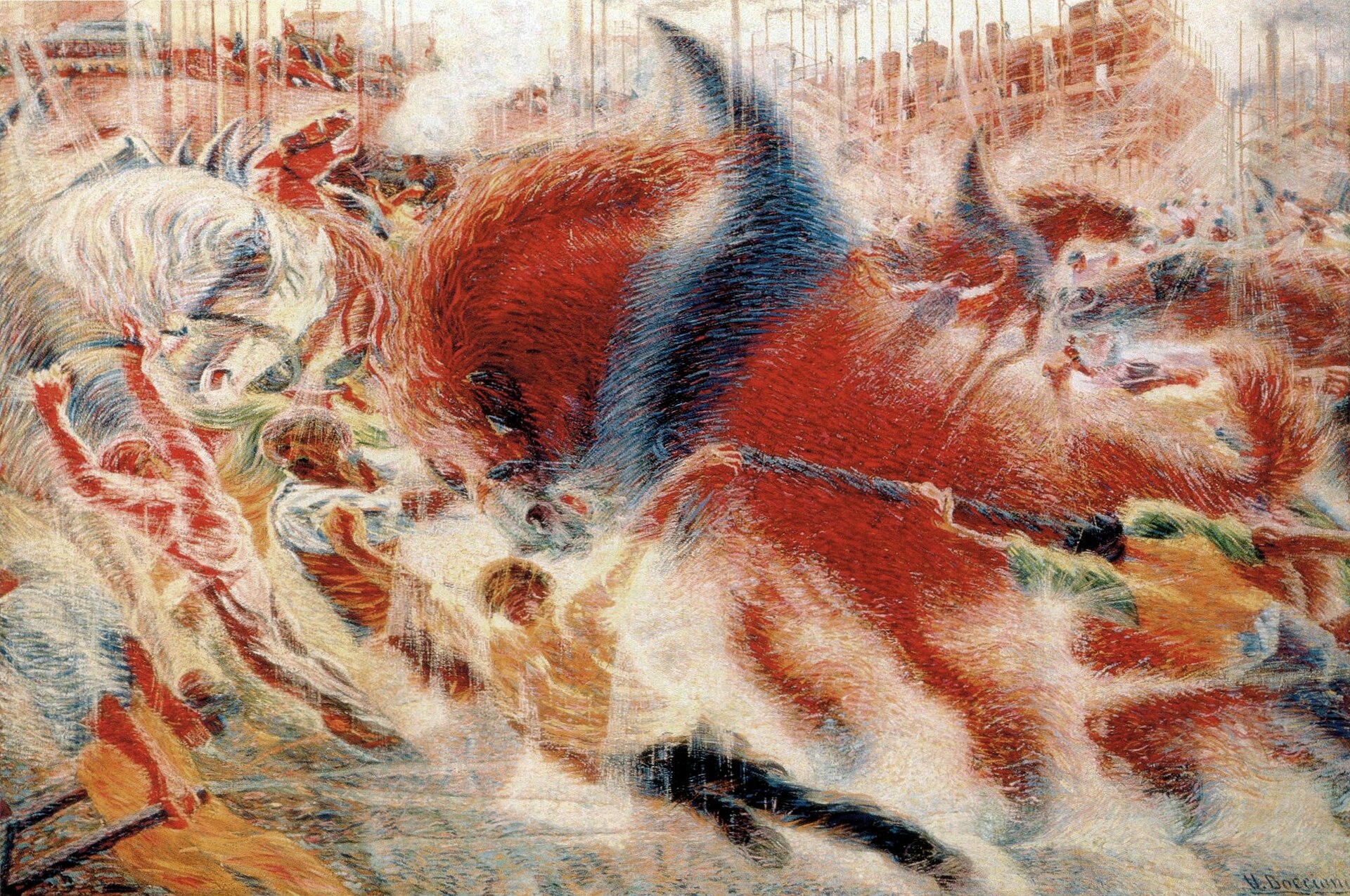
Umberto Boccioni, The City Rises (1910). Wikimedia Commons, public domain
Strength, sacrifice, and violence are necessary to regenerate the nation.
Mechanism: Heroic identification, glorification of aggression, moral disengagement
Some peoples and individuals are naturally superior and entitled to rule.
Mechanism: Status competition, dominance, essentialist categorization
Through common symbols, rituals, gestures, and mass participation, we become one.
Mechanism: Emotional synchrony, behavioral imitation, ritual reinforcement
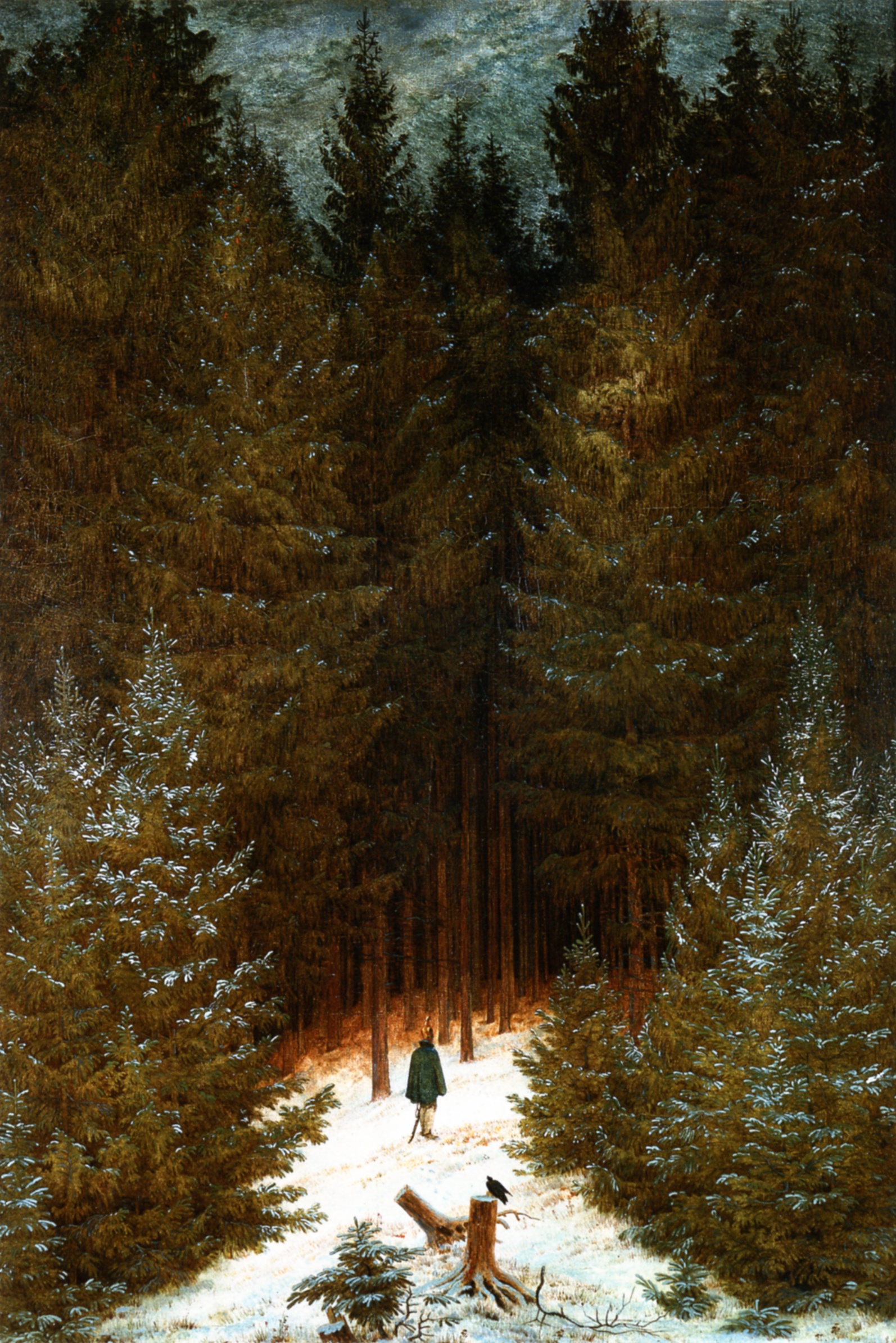
Caspar David Friedrich, The Chasseur in the Forest (1814). Wikimedia Commons, public domain
Geo-sentiment (P. R. Sarkar, Neohumanism, 1982): attachment to one’s geographical environment.
“This land is ours by birth, blood, destiny and/or will of god(s). It is sacred, inseparable from our identity, and must be defended, purified, or reclaimed.”
Mechanism: place attachment, territorial identification, sacred-value attribution, in-group/out-group boundary formation, collective nostalgia, perceived territorial threat, emotional mobilization through geographical symbols.