Interlude: Pascal, Leibniz, and the Baroque
04.11.2026 · AE561104
Rewind two centuries. Long before Babbage, long before steam, the same ancient appetite for mechanizing the mind was already stirring — in the Baroque.In 1642, at nineteen, Blaise Pascal built the Pascaline to help his father with tax calculations — a gear-driven adding machine, among the first of its kind ever built and sold.A generation later, Gottfried Wilhelm Leibniz — one of the last true polymaths, equally at home in philosophy, law, and mathematics — went further still, designing the Stepped Reckoner: a machine that could multiply and divide, not merely add and subtract.Leibniz wanted more than a calculator. He dreamed of a calculus ratiocinator — a universal symbolic method by which any dispute, of any kind, could in principle be settled by calculation alone: "Let us calculate."Cogs and steam would eventually belong to Babbage's century. But the dream — that reasoning itself might be mechanized — is, properly speaking, Baroque.

>> cross-referenced signal
-
⇄ Baroquepunk, Steampunk & co.
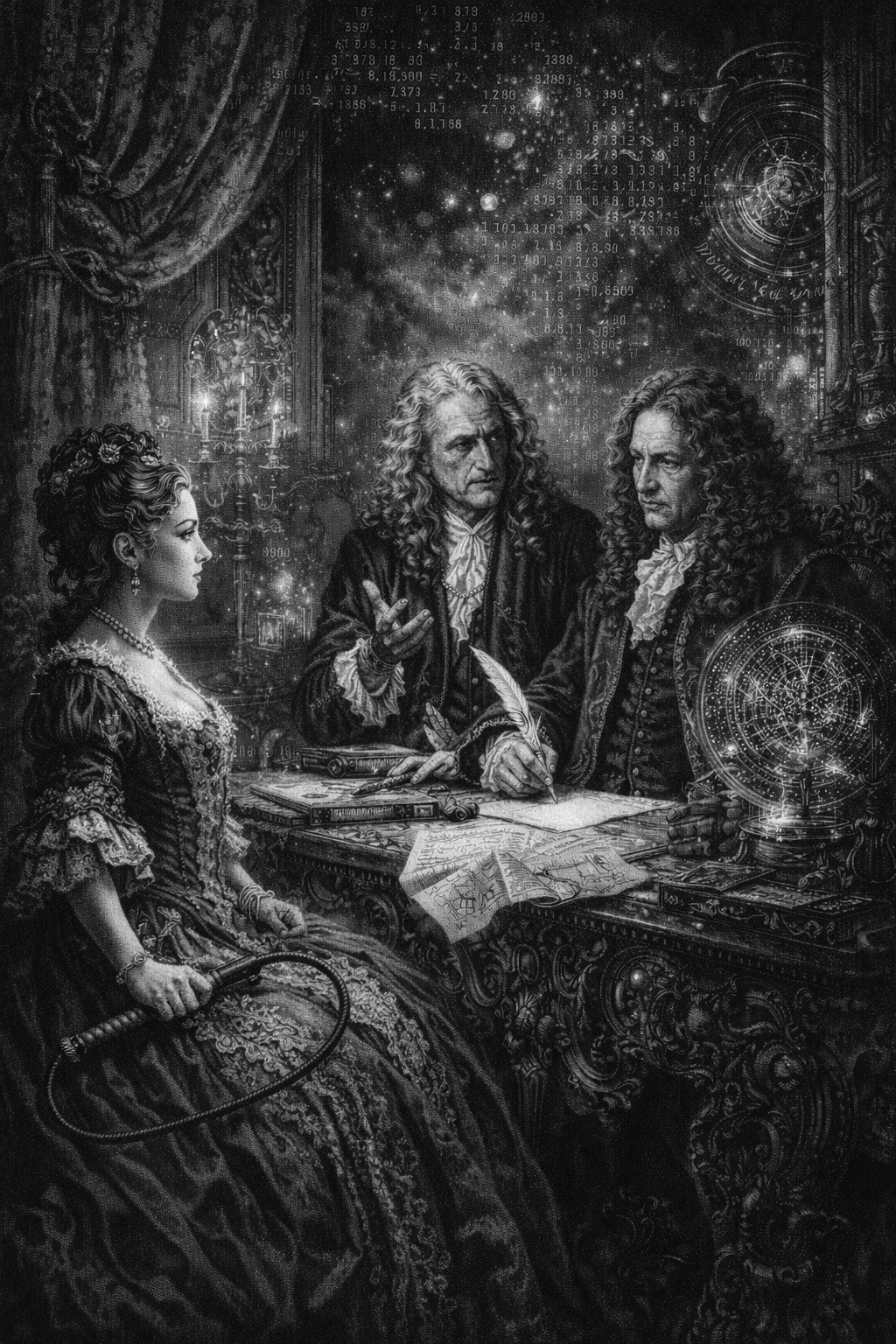 Baroquepunk, Steampunk & co.
Baroquepunk is a speculative genre where ornament, excess, and early-modern worldviews collide with systems thinking. Inspired by Stephenson's Baroque Cycle, it treats the Baroq...
-
⇄ Blaise Pascal (1623 - 1662)
Blaise Pascal (1623 - 1662)
polymath in 19years of age started to build first mechanical calculators ("Pascalines") ground-breaking works in mathematics (Pascal's triangle), geometry (Pasca...
-
⇄ Pascaline (mechanical calculator)
Pascaline (mechanical calculator)
-
⇄ Gottfried W. Leibniz (c. 1646 c. 1716)
Gottfried W. Leibniz (c. 1646 c. 1716)
one of the last big polymaths advanced disciplines of philosophy (monadology, theodicea, why is there something rather than nothing?), mathematics (probability theory,...
-
⇄ Leibniz wheel
Leibniz wheel
-
⇄ Leibniz's Dream
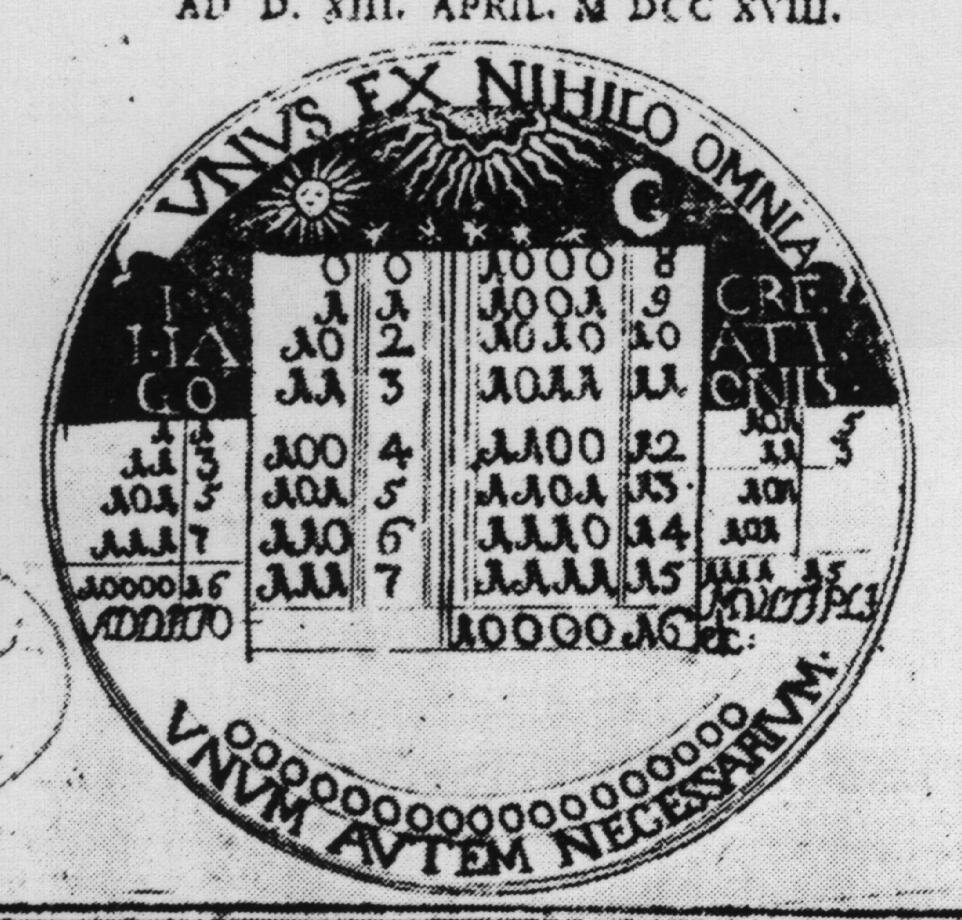 Leibniz's Dream
Gottfried Wilhelm Leibniz takes positional notation somewhere further: in 1703, he formally describes arithmetic in base 2 — binary.He was reportedly delighted to find the...
> click / swipe / arrow keys to begin_
