Mamoru Oshii's (1995) depiction of a manga comics tells the story of a cyborg Motoko Kusanagi whose cyberbrain was hacked by an entity called Puppet Master who wishes to preserve itself and pass on its ideas as any biological creature would.
Question of the day
Can machines live ?
Life (Definition)
Please try to answer the question "What is life ?" by pondering following questions:
What entities do we normally label as "living" ?
What features a "living" entity must have ?
What entities do we normally label as "NOT living" ?
Are there features which a "living entity" MUST NOT have ?
Life and the shell
"(All) life-forms tend to preserve their existence."
"(All) life-forms interact with their environment."
Adapted poster Design by Martin Rieser; source: http://reframe.sussex.ac.uk/rur/synopsis-2/
not only embedded but also embodied
word "robot" comes from Slovak/Czech "robota" meaning "labor, hard work"
used by Karel Capek in his theatre piece Rossum's Universal Robots (R.U.R, 1920) to denote man-made man-like servants
contrary to tokharian "Story of the mechanical girl" or E.T.A. Hoffman's Sandmann where man-like machines are just dumb puppets, Capeks "robots" attain a sort of awareness and rebel against their masters (e.g. similiar motive as in Golem or Frankenstein stories)
Question: did we mention a story where a man-made entity attains awareness but DOES NOT rebel against its creator ?
"Das Unheimliche" von Siegmund Freud (1919) and E.T.A. Hoffmann's "Sandmann" (1816)
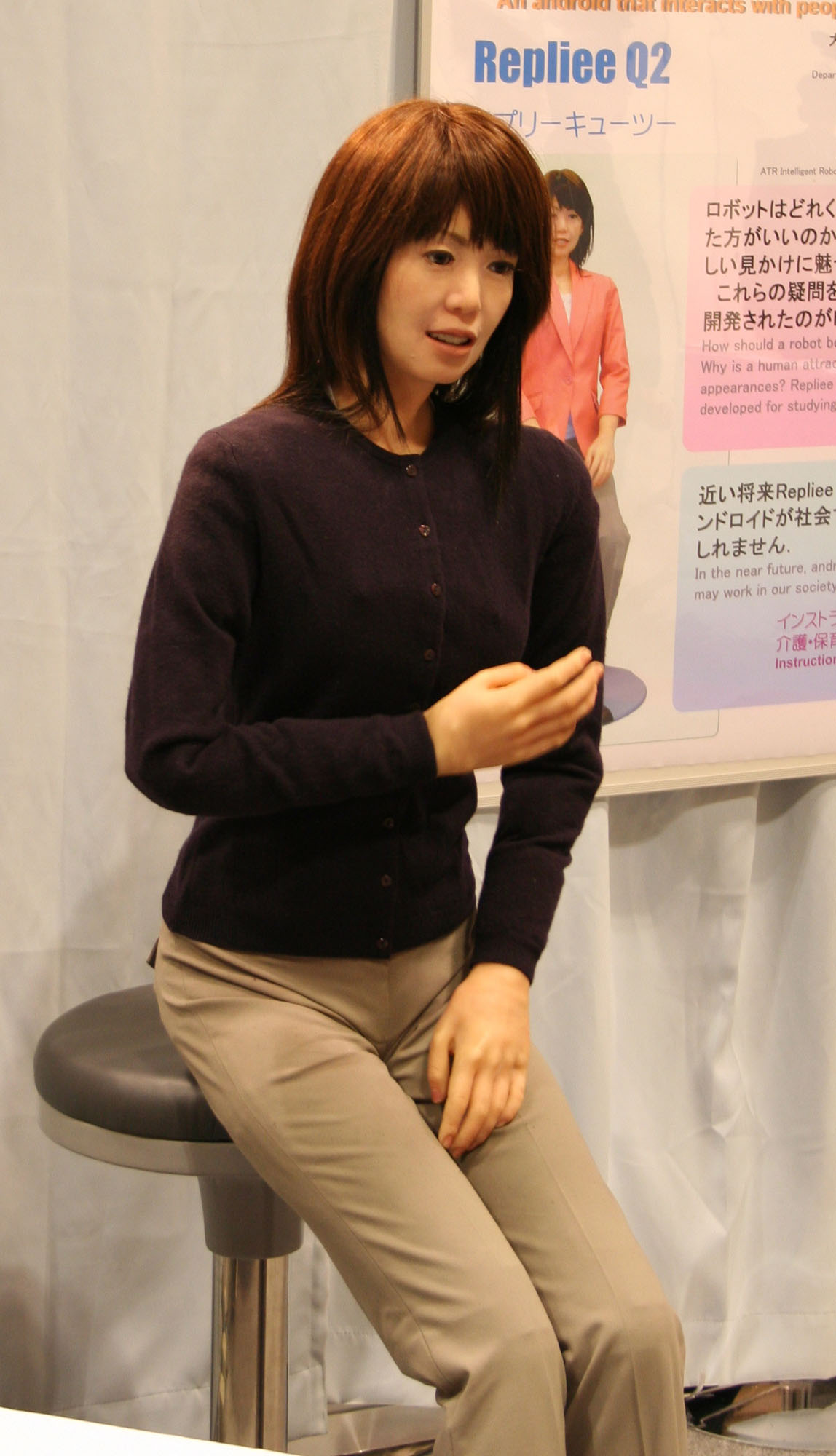
WIKI :: The concept of the uncanny valley suggests humanoid objects which appear almost, but not exactly, like real human beings elicit uncanny, or strangely familiar, feelings of eeriness and revulsion in observers.