👂 🎴 🕸️
<
ol
><
li
>
Narratio
::
The
imitation
game
li
><
li
>
Repetitio
::
<
a
href
=
„
/
prolegomena
/
level1
/#
intro
to
infotheory
“
target
=
„
blank
“
>
Introduction
to
information
theory
a
>
li
><
li
>
Questio
::
Can
machines
think
?<
br
/>
li
><
li
>
Lectio
::
<
ul
><
li
>
Turing
machine
li
><
li
>
Turing
test
li
>
ul
>
li
><
li
>
Exercitio
::
Turing
test
.
<
img
loading
=
„
lazy
“
style
=
„
width
:
auto
;
height
:
55vh
;
float
:
left
;
margin
-
right
:
50px
;
margin
-
top
:
50px
;
“
src
=
„
/
images
/
prolegomena
/
turing
/
imitation
game
.
png
“
/><
ul
style
=
„
margin
-
top
:
20px
;
“
><
li
>
a
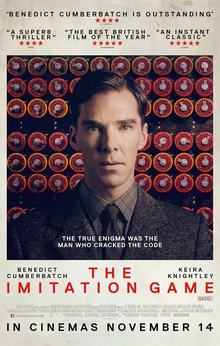
2014
movie
adaptation
of
the
book
Alan
Turing
:
The
Enigma
(
1983
)<
li
>
8
Oscar
nominations
''
one
Oscar
for
Best
Adapted
Screenplay
<
li
>
story
about
life
''
work
and
death
of
Alan
Matthison
Turing
(
A
.
M
.
T
.)
ul
>
<
div
style
=
„
font
-
size
:
100px
;
“
>
Can
machines
think
?
div
><
br
/>
<
ul
style
=
„
margin
-
top
:
20px
;
“
><
li
>
your
definitions
<
li
>
dictionary
definition
<
li
>
philosopher
'
s
definition
ul
><
h2
>
What
do
You
think
?
h2
>
<
div
style
=
„
font
-
size
:
60px
;
“
><
i
>
What
I
want
to
tell
You
is
...
that
„
thinking
“
consists
of
execution
of
operation
with
signs
.
i
>
*
div
><
br
/>*
Origin
of
this
quote
is
to
be
sought
from
in
some
later
works
of
L
.
Wittgenstein
.
<
div
class
=
„
slidetitle
“
style
=
„
font
-
size
:
42px
;
“
>
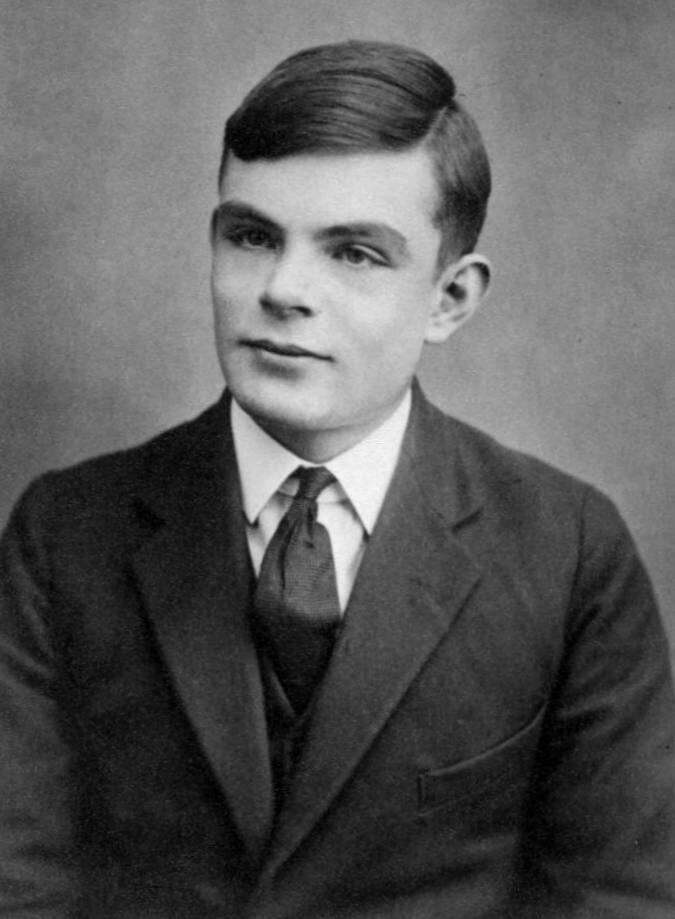
A
.
M
.
T
.
OBE
FRS
(
23
.
6
.
1912
-
7
.
6
.
1954
)
div
>
<
img
loading
=
„
lazy
“
style
=
„
width
:
auto
;
height
:
50vh
;
float
:
left
;
margin
-
right
:
50px
;
“
src
=
„
/
images
/
prolegomena
/
turing
/
alan
.
jpg
“
/><
ul
style
=
„
margin
-
left
:
80px
;
font
-
size
:
36px
;
“
><
li
>
an
English
mathematician
''
computer
scientist
''
logician
''
cryptanalyst
''
philosopher
and
theoretical
biologist
<
li
>
father
of
theoretical
computer
science
(
1936
)
and
artificial
intelligence
(
1948
-
1950
)<
li
>
pivotal
role
in
the
project
<
i
>
Ultra
i
><
li
>
convicted
for
„
gross
indecency
“
in
1952
''
put
on
hormonal
treatment
''
develops
gynaecomastia
<
li
>
death
by
cyanide
;
half
-
bitten
apple
by
the
bedside
<
li
>
Queen
'
s
„
pardon
“
on
24
.
12
.
2013
ul
>
<
div
class
=
„
slidetitle
“
style
=
„
font
-
size
:
40px
;
“
><
a
href
=
„
/
handouts
/
turing
-
on
-
computable
-
numbers
.
pdf
“
target
=
„
blank
“
>
On
Computable
Numbers
''
with
an
Application
to
the
„
Entscheidungsproblem
“
(
1936
)
a
>
div
><
ul
style
=
„
margin
-
left
:
80px
;
font
-
size
:
36px
;
“
><
li
><
b
>
halting
problem
b
>
is
the
problem
of
determining
''
from
a
description
of
an
arbitrary
computer
program
and
an
input
''
whether
the
program
will
finish
running
(
i
.
e
.''
halt
)
or
continue
to
run
forever
<
li
>
Turing
proved
that
a
general
algorithm
to
solve
the
halting
problem
for
all
possible
program
-
input
pairs
cannot
exist
<
li
>
to
prove
this
''
he
described
a
paradox
involving
a
concept
now
known
as
„
Turing
machine
“
ul
>
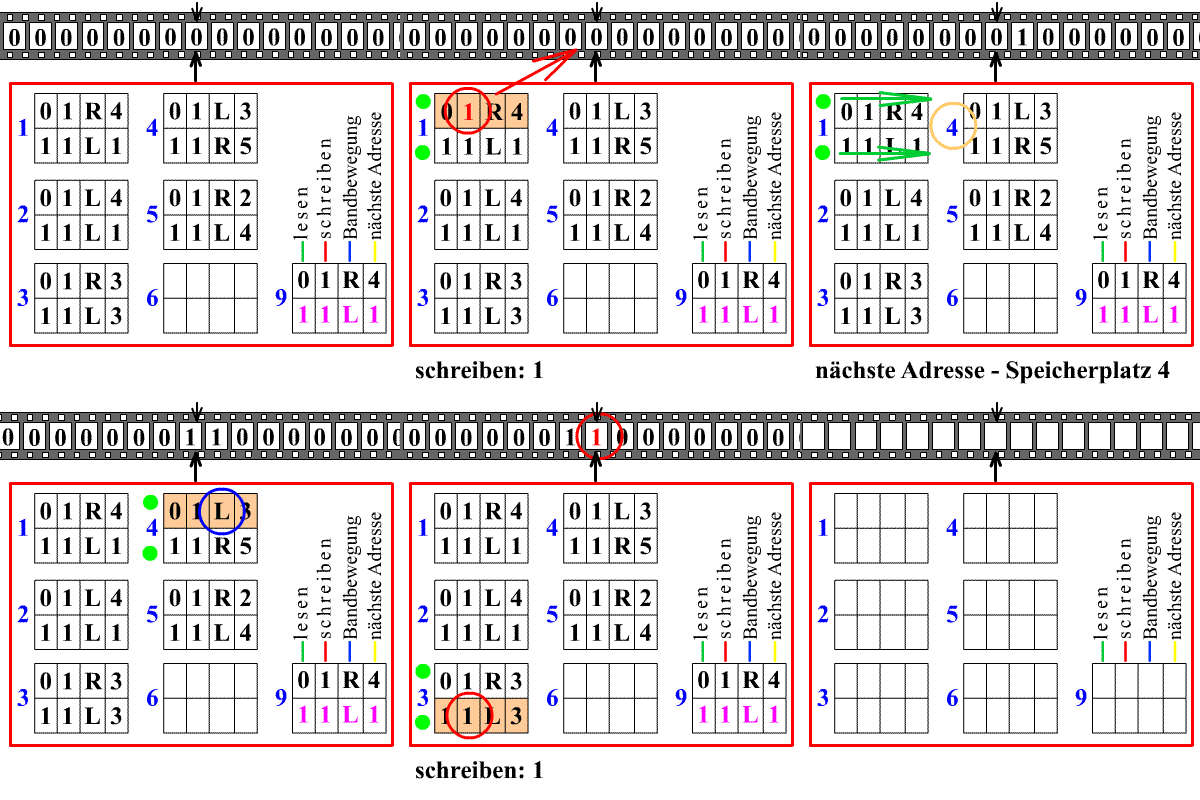
A
„
theoretical
“
machine
consisting
of
<
img
loading
=
„
lazy
“
style
=
„
width
:
auto
;
height
:
70vh
;
float
:
left
;
margin
-
right
:
50px
;
“
src
=
„
/
images
/
prolegomena
/
turing
/
machine
.
gif
“
/><
ul
style
=
„
margin
-
left
:
80px
;
“
><
li
>
tape
with
discrete
symbols
<
li
>
reading
/
writing
header
<
li
><
a
href
=
„
/
prolegomena
/
repetitio
/
index
.
html
#
binary
adder
fingers
“
target
=
„
blank
“
>
table
of
rules
a
><
li
>
tape
-
moving
mechanism
li
>
ul
><
div
class
=
„
copyfck
“
style
=
„
left
:
5vw
;
top
:
110vh
;
“
>
Visualization
of
the
Turing
Machine
(
Rosario
van
Tulpe
''
2007
''
CC
BY
-
SA
)
div
>
<
iframe
width
=
„
800
“
height
=
„
600
“
src
=
„
https
://
www
.
youtube
.
com
/
embed
/
dNRDvLACg5Q
“
frameborder
=
„
0
“
allow
=
„
accelerometer
;
autoplay
;
encrypted
-
media
;
gyroscope
;
picture
-
in
-
picture
“
allowfullscreen
>
iframe
>
„
<
i
>
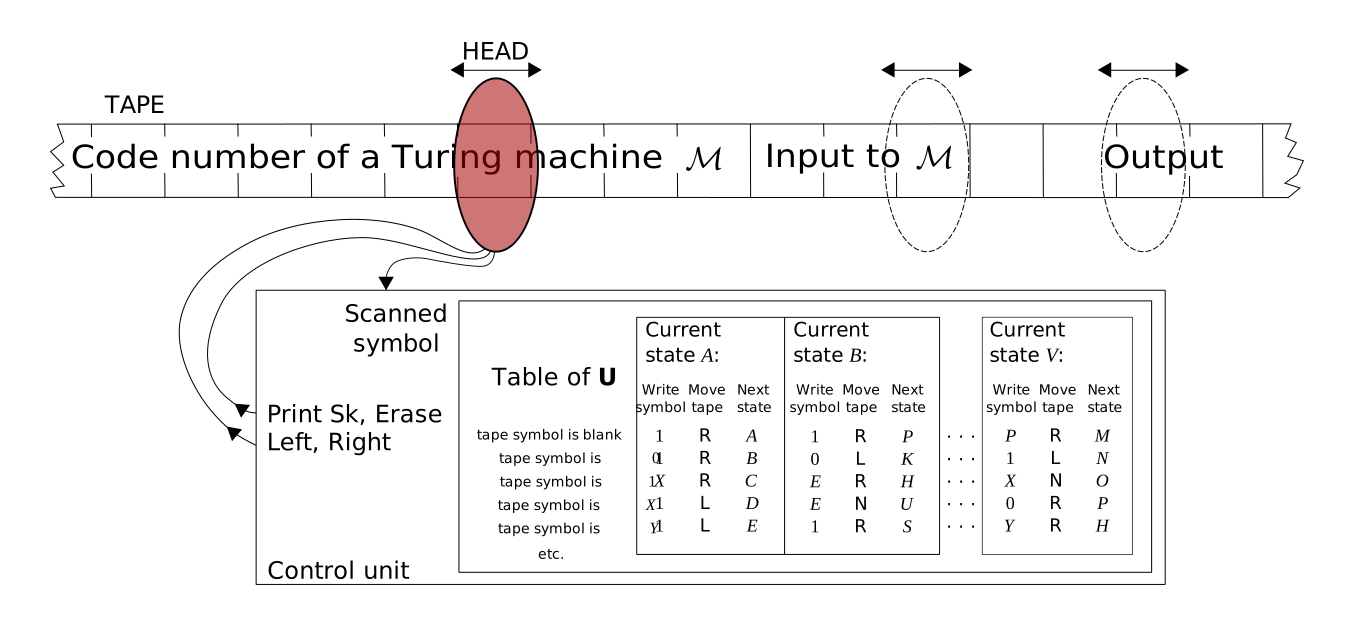
It
is
possible
to
invent
a
single
machine
which
can
be
used
to
compute
any
computable
sequence
.
If
this
machine
U
is
supplied
with
a
tape
on
the
beginning
of
which
is
written
the
S
.
D
[
“
standard
description
„
of
an
action
table
]
of
some
computing
machine
M
''
then
U
will
compute
the
same
sequence
as
M
i
>.
“
(
Turing
''
1936
)
<
img
loading
=
„
lazy
“
style
=
„
width
:
100
%;
max
-
height
:
70vh
;
object
-
fit
:
contain
;
“
src
=
„
/
images
/
prolegomena
/
turing
/
Universal
Turing
machine
.
svg
“
/>
<
img
loading
=
„
lazy
“
style
=
„
width
:
100
%;
max
-
height
:
70vh
;
object
-
fit
:
contain
;
“
src
=
„
/
images
/
prolegomena
/
turing
/
turingtest
.
png
“
/><
p
style
=
„
font
-
size
:
32px
;
“
><
i
>
„
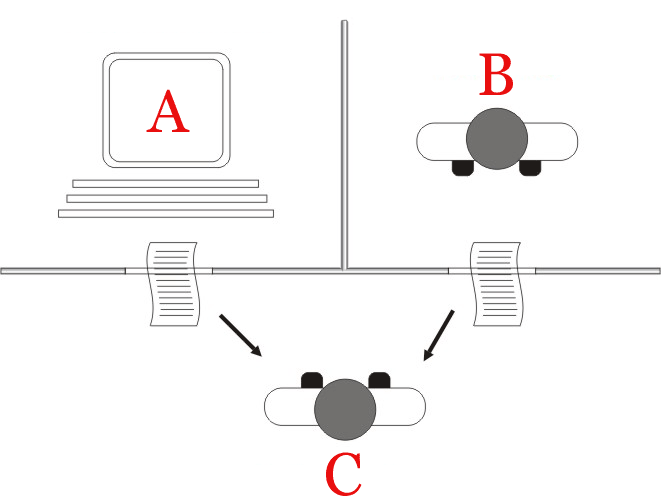
A
TT
is
a
way
how
to
address
the
question
“
Can
machines
think
?
„
a
>
in
a
scientifically
plausible
ye
deeply
empathic
way
.
More
concretely
''
Turing
(
1950
)
proposes
that
the
performance
of
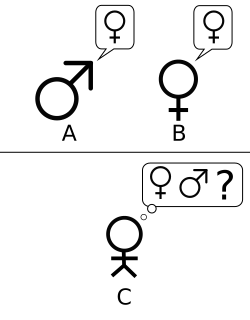
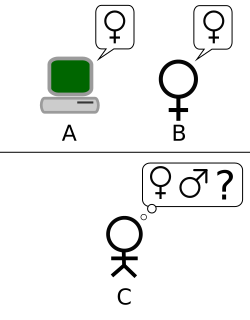
an
AA
under
question
shall
be
evaluated
by
a
human
judge
J
whose
objective
is
to
determine
which
among
two
entities
-
with
whom
J
is
in
real
-
time
interaction
-
is
of
human
and
which
is
of
artificial
nature
.
“
i
>
(
Hromada
''
2012
)
p
>
<
img
loading
=
„
lazy
“
style
=
„
width
:
auto
;
height
:
61vh
;
float
:
left
;
margin
-
right
:
10px
;
“
src
=
„
/
images
/
prolegomena
/
turing
/
imitation1
.
svg
“
/><
img
loading
=
„
lazy
“
style
=
„
width
:
auto
;
height
:
61vh
;
float
:
right
;
margin
-
right
:
10px
;
“
src
=
„
/
images
/
prolegomena
/
turing
/
imitation2
.
svg
“
/>
<
i
><
a
href
=
„
/
handouts
/
turing
-
essentials
.
pdf
“
target
=
„
blank
“
>
I
propose
to
consider
the
question
''
„
Can
machines
think
?
“
This
should
begin
with
defnitions
of
the
meaning
of
the
terms
„
machine
“
and
„
think
“
.
a
>
i
>(
Turing
''
1950
)
<
p
style
=
„
font
-
size
:
36px
;
“
>
You
are
going
to
hear
two
pieces
of
music
.
One
is
composed
and
performed
by
humans
''
another
is
composed
and
generated
by
an
artificial
system
.
You
are
going
to
hear
both
pieces
twice
.
Subsequently
''
You
are
going
to
write
down
which
piece
(
first
or
second
)
was
composed
and
performed
by
human
beings
.
p
>
[Impressum, Datenschutz, Login] Other subprojects of udk.ai linkring: baumhaus.digital fibel.digital gardens.digital refused.science teacher.solar