i
Session 5 :: 19th century daniel-hromada ()


Session 5 :: 19th century

Order of the day

  1. Repetitio :: Between Rennaissance and Age of Reason
  2. Questio :: What is a "representation" ?
  3. Exercitio I:: Binary counting.
  4. Presentatio I :: Baroque calculating machines
  5. Lectio :: The steampunk period
    • Jacquard Loom
    • Charles Babbage
    • Ada Lovelace
    • George Boole
  6. Presentatio II :: Binary adder.

Question of the day

What is a representation ?

Etymology of the word "represent"

  • represent (v.)
    late 14c., "to bring to mind by description," also "to symbolize, serve as a sign or symbol of; serve as the type or embodiment of;" from Latin repraesentare "make present, set in view, show, exhibit, display," from re-, intensive prefix , + praesentare "to present," literally "to place before," from praesens) "present, at hand, in sight; immediate; prompt, instant; contemporary," from present participle of præesse "be before (someone or something), be at hand," fro prae- "before" (see pre-) + esse "to be" (from PIE root *es- "to be").

Mariam-Webster dict. definition of "representation"

  • The description or portrayal of someone or something in a particular way.
    1. The depiction of someone or something in a work of art.
    2. A picture, model, or other depiction of someone or something.
    3. (in some theories of perception) a mental state or concept regarded as corresponding to a thing perceived.
      Name some examples of X being a representation of Y.

Jacquard Loom (c. 1801)

Somebody willing to make a video of the Jacquard Loom at the TM next week ?

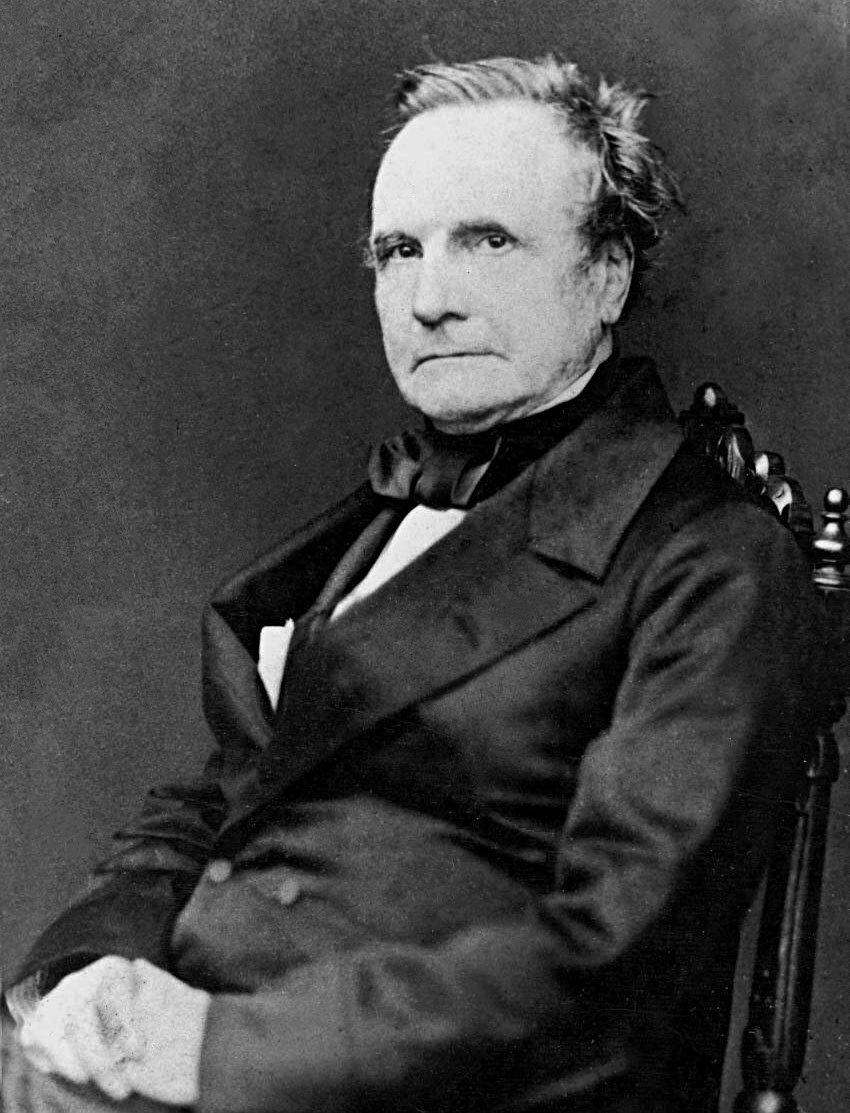
Charles Babbage (1791 - 1871)

  • polymath, KH FRS, Victorian gentleman etc.
  • mathematician, philosopher, inventor and mechanical engineer
  • "father of the computer"
  • author of "difference engine" (could solve polynomial equations of 7th order)
  • author of "analytical engine" (a generic programmable computer)
"the true value of ... religion rested, not on speculative [theology] upon those doctrines of kindness and benevolence which that religion claims and enforces, not merely in favour of man himself but of every creature susceptible of pain or of happiness" C. Babbage

Difference engine

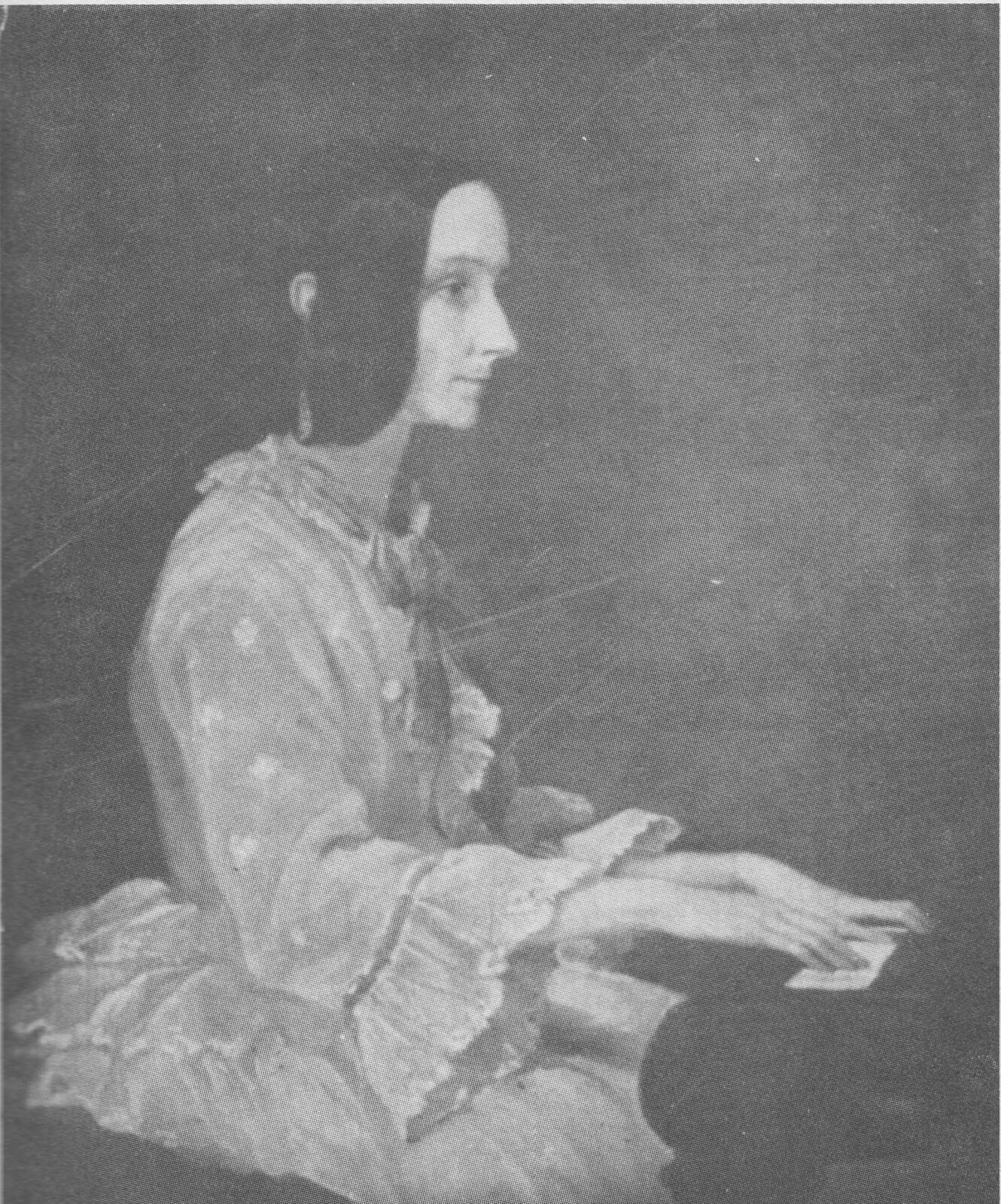
Augusta Ada King, Countess of Lovelace (1812 - 1852)

  • daughter of Lord Byron
  • mother promoted Ada's interest in mathematics and logics, student od Augustus de Morgan
  • associate of Charles Babbage ("Enchantress of Numbers")
  • author of the first computer program (algorithm for computation of Bernoulli numbers)
  • died young of uterine cancer

From Ada's (1843)notes to Menabrea article

Note A, p. 694 :: Again, it [the Analytical Engine] might act upon other things besides number, were objects found whose mutual fundamental relations could be expressed by those of the abstract science of operations, and which should be also susceptible of adaptations to the action of the operating notation and mechanism of the engine . . . Supposing, for instance, that the fundamental relations of pitched sounds in the science of harmony and of musical composition were susceptible of such expression and adaptations, the engine might compose elaborate and scientific pieces of music of any degree of complexity or extent.


From Ada's (1843)notes to Menabrea article

The distinctive characteristic of the Analytical Engine, and that which has rendered it possible to endow mechanism with such extensive faculties as bid fair to make this engine the executive right-hand of abstract algebra, is the introduction into it of the principle which Jacquard devised for regulating, by means of punched cards, the most complicated patterns in the fabrication of brocaded stuffs...We may say most aptly that the Analytical Engine weaves algebraical patterns just as the Jacquard-loom weaves flowers and leaves.

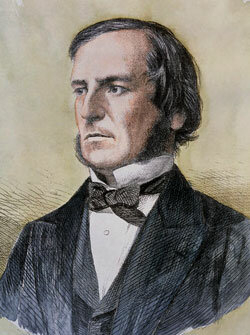
George Boole (1815 - 1864)

  • another Victorian gentleman
  • at 17 years of age "a thought struck him suddenly, which became the foundation of all his future discoveries"
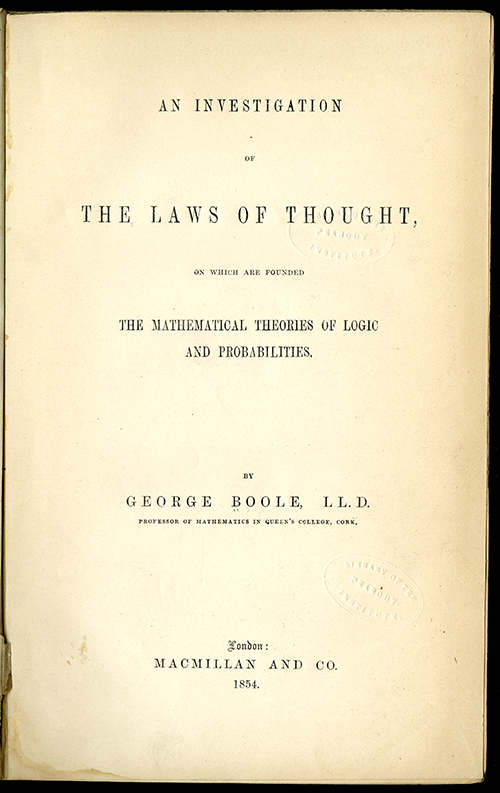
  • author of "Laws of Thought or An Investigation of the Laws of Thought on Which are Founded the Mathematical Theories of Logic and Probabilities" (1854)
  • Boolean algebra
  • being a professional prof cost him his Life
Think what must have been the effect of the intense Hinduizing of three such men as Babbage, De Morgan, and George Boole on the mathematical atmosphere of 1830 - 1864. What share had it in generating the Vector Analysis and the mathematics by which investigations in physical science are now conducted? Mary Boole

An Investigation of the Laws of Thought on Which are Founded the Mathematical Theories of Logic and Probabilities

  • united algebra and logic
  • replaced propositional form of Aristotle's logic to equation-like formulae and introduced "laws" which can solve them
  • logical formulae could contain more than two subject-predicate propositions (i.e. no A that is B is C that is D)
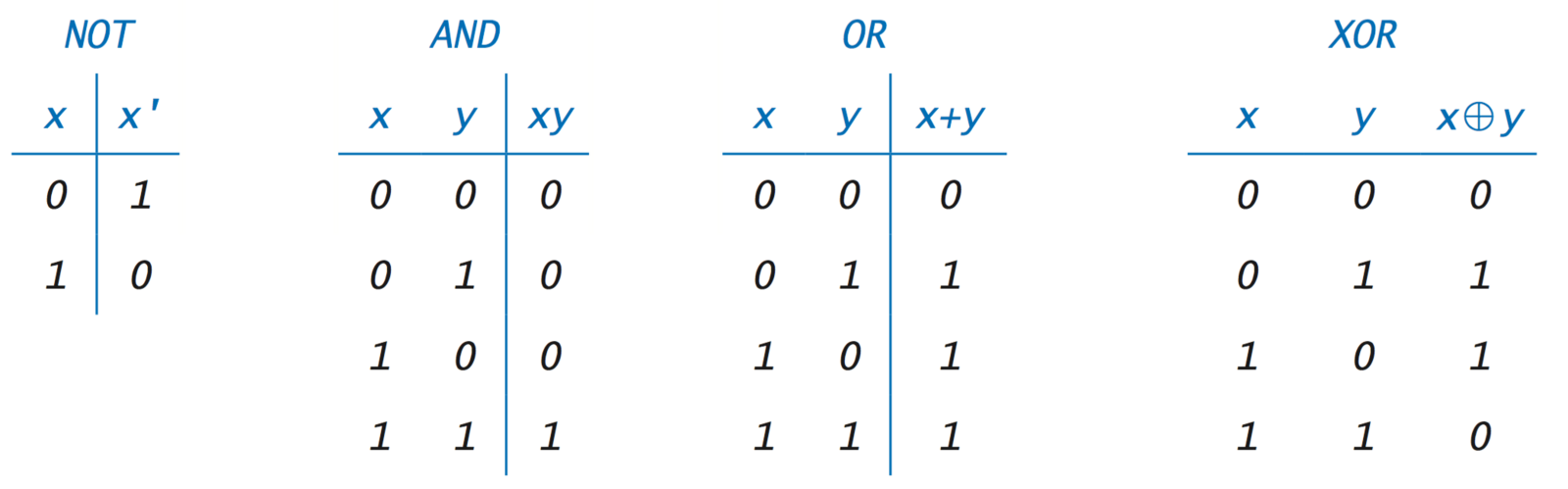
  • introduced logic functions and truth tables

Logic functions