👂 🎴 🕸️
<
ol
><
li
>
Repetitio
::
<
a
href
=
„
/
prolegomena
/
antiquity
/
“
target
=
„
blank
“
>
Antiquity
a
>
li
><
li
>
Narratio
::
<
a
href
=
„
/
prolegomena
/
texts
/
the
story
of
mechanical
girl
.
txt
“
>
L
'
histoire
de
fille
mecanique
a
>
li
><
li
>
Questio
::
What
is
a
digit
?<
br
/><
br
/>
li
><
li
>
Lectio
::
Dark
ages
<
ul
><
li
>
al
-
Khwarizmi
li
><
li
>
Fibonacci
li
>
ul
><
br
/>
li
><
li
>
Exercitio
::
Abacus
II
.<
li
>
Disputatio
::
Your
feedback
<
div
style
=
„
font
-
size
:
100px
;
“
>
What
is
a
digit
?
div
><
br
/>
<
ul
style
=
„
margin
-
top
:
20px
;
“
><
li
>
digit
(
n
.)<
br
/>
in
English
since
late
14c
.''
„
numeral
below
10
''
“
from
Latin
digitus
(
french
:
„
doigt
“
)
„
finger
or
toe
“
(
also
with
secondary
meanings
relating
to
counting
and
numerals
)''
considered
to
be
related
to
Proto
-
Indo
-
European
root
*
deik
-
„
to
show
“
li
>
ul
>
<
ol
><
li
><
ul
><
li
>
any
of
the
Arabic
<
b
>
numerals
b
>
1
to
9
and
usually
the
symbol
0
li
><
li
>
one
of
the
elements
that
combine
to
form
numbers
in
a
system
other
than
the
decimal
system
li
><
li
>
digits
''
slang
:
the
digits
of
a
telephone
number
ul
>
li
><
li
>
any
of
the
divisions
in
which
the
limbs
of
most
vertebrates
terminate
''
which
are
typically
five
in
number
but
may
be
reduced
(
as
in
the
horse
)''
and
which
typically
have
a
series
of
phalanges
bearing
a
nail
''
claw
''
or
hoof
at
the
tip
li
>
<
ul
><
li
>
a
symbol
<
b
>
denoting
/
representing
b
>
a
natural
number
(
„
a
numeral
“
)
li
><
li
>
we
'
ll
work
with
four
systems
of
numerals
<
ol
><
li
>
roman
:
I
''
V
''
X
''
L
''
C
''
D
''
M
<
li
>
decimal
:
0
''
1
''
2
''
3
''
4
''
5
''
6
''
7
''
8
''
9
<
li
>
binary
:
0
''
1
<
li
>
hexadecimal
:
0
''
1
''
2
''
3
''
4
''
5
''
6
''
7
''
8
''
9
''
a
''
b
''
c
''
d
''
e
''
f
ol
><
li
>
other
systems
of
numerals
are
also
possible
(
e
.
g
.
base64
)
ul
>
<
img
loading
=
„
lazy
“
style
=
„
width
:
auto
;
height
:
42vh
;
float
:
left
;
margin
-
right
:
30px
;
“
src
=
„
/
images
/
prolegomena
/
darkages
/
AlKhwarizmi
.
jpg
“
/><
ul
style
=
„
margin
-
top
:
10px
;
“
><
li
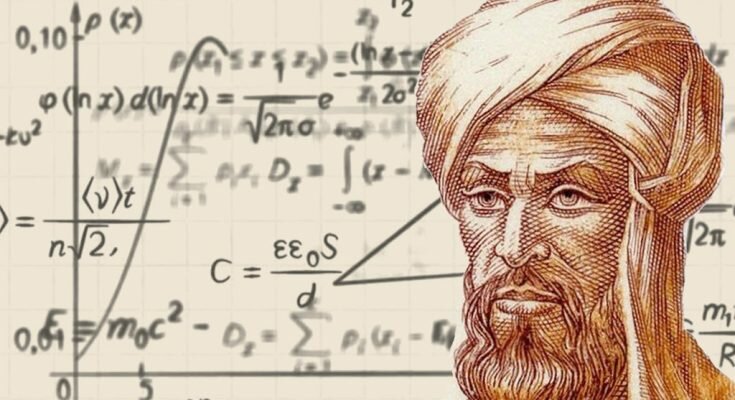
>
persian
scholar
from
golden
-
age
of
islamic
science
<
li
>
his
name
Latinized
as
„
Algorithmi
“
(
Port
.
„
guarismo
“
and
Spanish
„
algarismo
“
mean
digit
)<
li
>
since
820
A
.
D
.
the
astronomer
and
head
of
the
House
of
Wisdom
in
Baghdad
<
li
>
contributions
to
Algebra
''
Arithmetic
''
Astronomy
''
Trigonometry
''
Geography
ul
>
<
img
loading
=
„
lazy
“
style
=
„
width
:
auto
;
height
:
42vh
;
float
:
left
;
margin
-
right
:
30px
;
“
src
=
„
/
images
/
prolegomena
/
darkages
/
Houseof
.
jpg
“
/><
ul
style
=
„
margin
-
top
:
10px
;
“
><
li
>
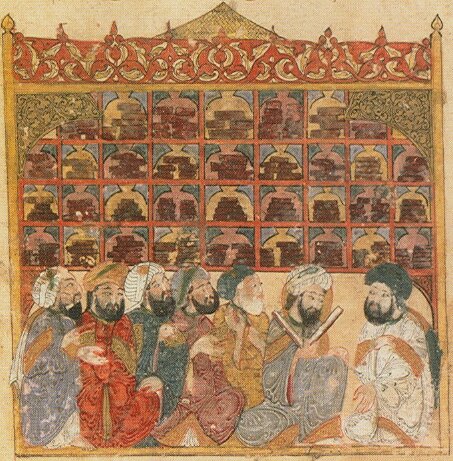
8th
century
-
12th
century
::
golden
-
age
of
islamic
science
<
li
>
integration
of
Persian
and
Arabic
into
one
cultural
realm
<
li
>
translation
of
Greek
and
Roman
works
into
arabic
<
li
>
extension
of
antique
knowledge
''
e
.
g
.
Brothers
Musa
<
li
>
more
practical
than
Greek
stuff
ul
>
<
img
loading
=
„
lazy
“
style
=
„
width
:
auto
;
height
:
42vh
;
float
:
left
;
margin
-
right
:
50px
;
“
src
=
„
/
images
/
prolegomena
/
darkages
/
alKitab
.
jpg
“
/><
ul
><
li
>
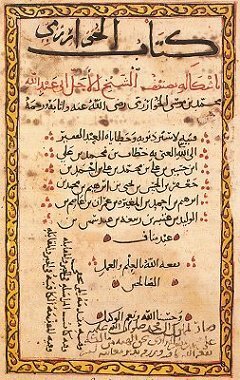
book
about
solving
quadratic
equations
<
li
>
principial
mathematical
text
-
book
of
European
Universities
until
16th
century
<
li
>
al
-
ğabr
(
„
forcing
“
''
„
restoring
“
)
operation
::
moving
a
deficient
quantity
from
one
side
of
the
equation
to
the
other
side
<
li
>
al
-
Muqabala
(
„
balancing
“
or
„
corresponding
“
)
operation
::
subtraction
of
the
same
positive
quantity
from
both
sides
<
li
>
presented
in
ordinary
text
<
div
class
=
„
copyfck
“
style
=
„
left
:
5vw
;
top
:
55vh
;
“
>
Al
-
kitāb
al
-
mukhtaṣar
fī
ḥisāb
al
-
ğabr
wa
’
l
-
muqābala
''
The
Compendious
Book
on
Calculation
by
Completion
and
Balancing
div
>
<
i
>
If
some
one
says
:
„
You
divide
ten
into
two
parts
:
multiply
the
one
by
itself
;
it
will
be
equal
to
the
other
taken
eighty
-
one
times
.
“
<
br
/>
Computation
:
You
say
''
ten
less
a
thing
''
multiplied
by
itself
''
is
a
hundred
plus
a
square
less
twenty
things
''
and
this
is
equal
to
eighty
-
one
things
.
Separate
the
twenty
things
from
a
hundred
and
a
square
''
and
add
them
to
eighty
-
one
.
It
will
then
be
a
hundred
plus
a
square
''
which
is
equal
to
a
hundred
and
one
roots
.
Halve
the
roots
;
the
moiety
is
fifty
and
a
half
.
Multiply
this
by
itself
''
it
is
two
thousand
five
hundred
and
fifty
and
a
quarter
.
Subtract
from
this
one
hundred
;
the
remainder
is
two
thousand
four
hundred
and
fifty
and
a
quarter
.
Extract
the
root
from
this
;
it
is
forty
-
nine
and
a
half
.
Subtract
this
from
the
moiety
of
the
roots
''
which
is
fifty
and
a
half
.
There
remains
one
''
and
this
is
one
of
the
two
parts
.
i
>
(
1831
English
Translation
)
<
img
loading
=
„
lazy
“
style
=
„
width
:
auto
;
height
:
42vh
;
float
:
left
;
margin
-
right
:
50px
;
“
src
=
„
/
images
/
prolegomena
/
darkages
/
dixit
.
png
“
/><
ul
><
li
>
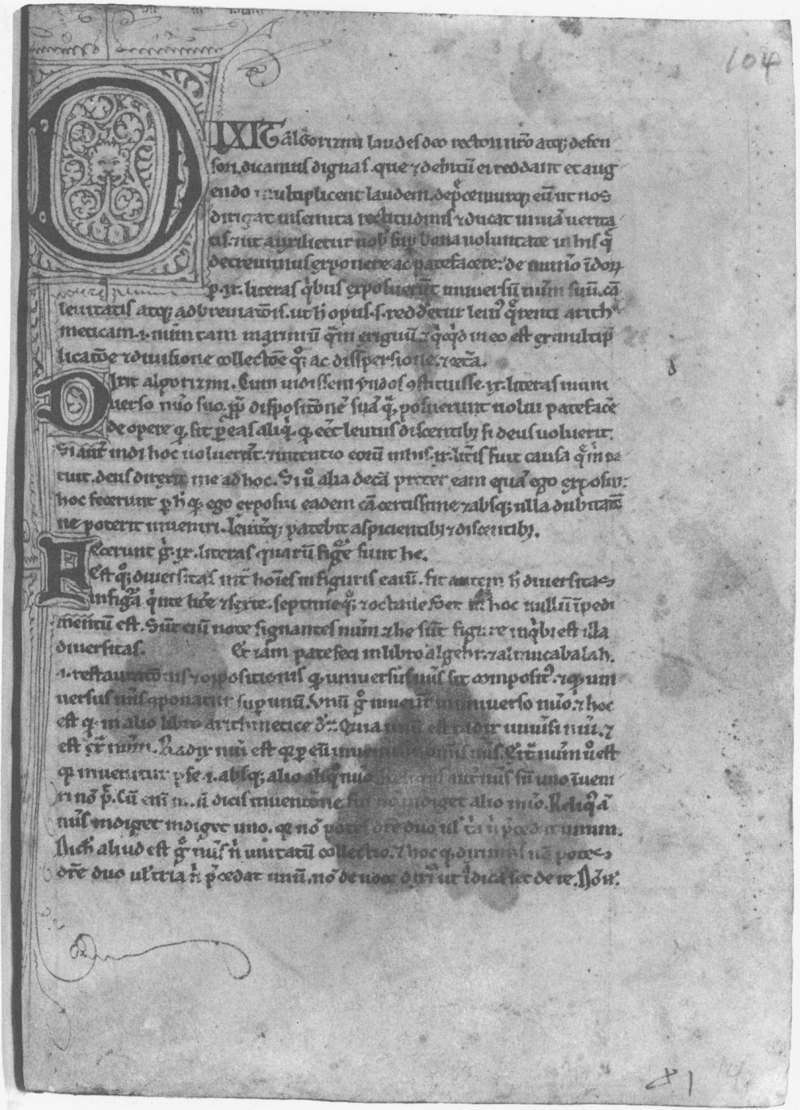
Kitāb
al
-
Jam
‘
wat
-
Tafrīq
bi
-
Ḥisāb
al
-
Hi
(
„
The
Book
of
Addition
and
Subtraction
According
to
the
Hindu
Calculation
“
)<
li
>
Arabic
original
of
the
book
has
been
lost
<
li
>
12th
century
translation
by
Adelard
of
Bath
(
starting
with
„
so
said
alKhwarizmi
“
)
introduced
Hindu
numerals
in
the
west
<
li
>
Hindu
numerals
:
<
b
>
position
-
based
b
>
and
including
<
b
>
0
b
>
ul
>
<
img
loading
=
„
lazy
“
style
=
„
width
:
auto
;
height
:
61vh
;
float
:
left
;
margin
-
right
:
100px
;
“
src
=
„
/
images
/
prolegomena
/
darkages
/
fibonacci
.
jpg
“
/><
ul
style
=
„
margin
-
top
:
10px
;
“
><
li
>
„
the
most
talented
Western
mathematician
of
the
Middle
Ages
“
<
li
>
his
book
Liber
Abaci
(
1202
)
popularized
the
Hindu
-
Arabic
numeral
systems
in
Europe
<
li
>
travelled
extensively
around
the
Mediterranean
coast
''
meeting
with
many
merchants
and
learning
about
their
systems
of
doing
arithmetic
<
li
>
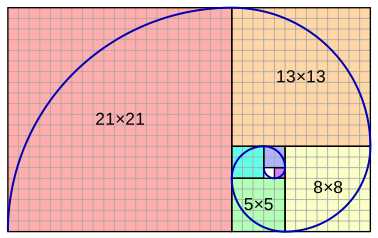
first
one
to
describe
Fibonacci
sequence
ul
>
<
img
loading
=
„
lazy
“
style
=
„
width
:
auto
;
height
:
41vh
;
float
:
left
;
margin
:
50px
;
“
src
=
„
/
images
/
prolegomena
/
darkages
/
fibrab
.
gif
“
/>
„
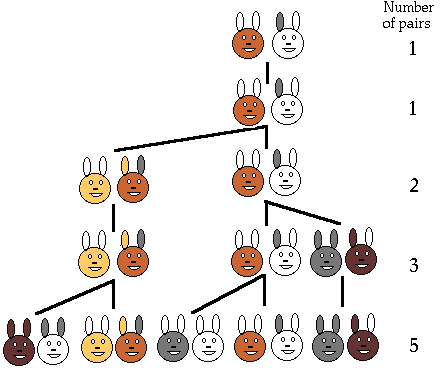
Suppose
a
newly
-
born
pair
of
rabbits
''
one
male
''
one
female
''
are
put
in
a
field
.
Rabbits
are
able
to
mate
at
the
age
of
one
month
so
that
at
the
end
of
its
second
month
a
female
can
produce
another
pair
of
rabbits
.
Suppose
that
our
rabbits
never
die
and
that
the
female
always
produces
one
new
pair
(
one
male
''
one
female
)
every
month
from
the
second
month
on
.
<
br
/>
How
many
pairs
will
there
be
in
one
year
?
“
<
div
class
=
„
copyfck
“
style
=
„
left
:
20vw
;
top
:
55vh
;
“
>
http
://
www
.
maths
.
surrey
.
ac
.
uk
/
hosted
-
sites
/
R
.
Knott
/
Fibonacci
/
fibnat
.
html
div
>
<
img
loading
=
„
lazy
“
style
=
„
width
:
auto
;
height
:
67vh
;
float
:
left
;
margin
-
right
:
100px
;
“
src
=
„
/
images
/
prolegomena
/
darkages
/
FibonacciSpiral
.
svg
“
/>
<
center
>
„
<
i
style
=
“
font
-
size
:
64px
;
„
>
The
nine
Indian
figures
are
:<
br
/>
9
8
7
6
5
4
3
2
1
<
br
/>
With
these
nine
figures
''
and
with
the
sign
0
which
the
Arabs
call
zephir
any
number
whatsoever
is
written
...
i
>
“
<
br
/><
br
/>
Leonardo
Fibonacci
of
Pisa
::
Liber
Abaci
::
The
Book
of
the
Abacus
center
>
<
ul
><
li
>
What
do
I
like
about
the
course
?<
li
>
What
I
do
not
like
?<
li
>
What
are
my
wishes
?
ul
>
[Impressum, Datenschutz, Login] Other subprojects of udk.ai linkring: refused.science baumhaus.digital fibel.digital teacher.solar gardens.digital