i
Session 2 :: Antiquity daniel-hromada ()


Session 2 :: Antiquity

Order of the day

  1. Repetitio :: Mythology
  2. Questio :: What is a machine ?
  3. Lectio :: Antiquity
    • Antikythera mechanism
    • Heron of Alexandria
    • other traditions
  4. Exercitio :: Introduction to Abacus
  5. Disputatio :: What is NOT a machine ?

Question of the day

What is "a machine" ?

Etymology of the word "machine"

  • English word machine comes through Middle French from Latin machina, which in turn derives from the Greek (Doric μαχανά makhana, Ionic μηχανή mekhane "contrivance, device, engine", a derivation from μῆχος mekhos "means, expedient, remedy")
  • Greek "mekhane" was potentially derived from Proto-Indo-European root *magh- meaning "to be able, have power." Linguists believe that English words like may, might, magi, magic, make or German words like machen, Macht etc. are derived from the PIE-root *magh.

Oxford dict. definition of a "machine"

An apparatus using mechanical power and having several parts, each with a definite function and together performing a particular task.
  • Any device that transmits a force or directs its application.
  • An efficient and well-organized group of powerful people.
  • A person who acts with the mechanical efficiency of a machine.

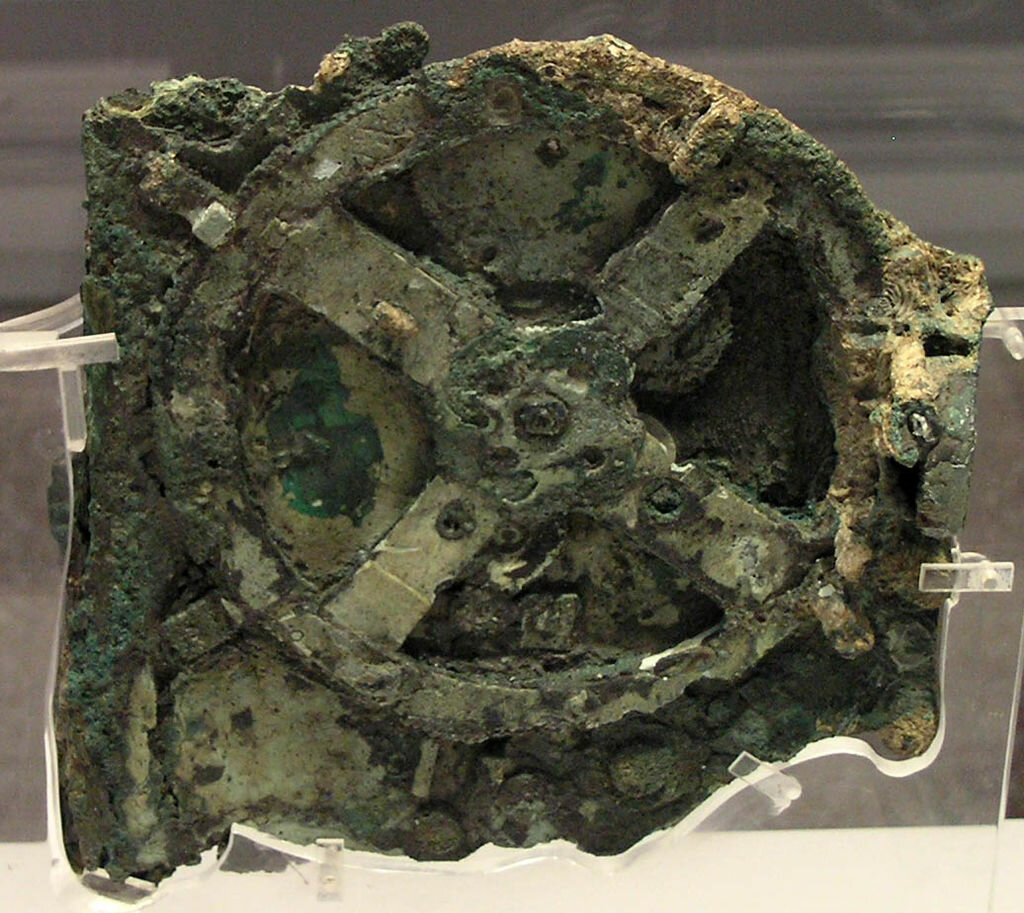
The Antikythera mechanism

  • an ancient Greek analogue computer used to predict astronomical positions and eclipses for calendar and astrological purposes decades in advance
  • created sometimes around 2nd-1st century B.C., discovered in 1902
  • complex clockwork of at least 30 bronze gears
The main gear (fragment A) of the Antikythera mechanism

a first "computer"

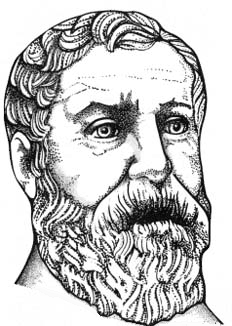
Heron of Alexandria (c. 10 AD - c. 70 AD)

  • greatest experimenter of antiquity
  • teacher at Musaeum
  • author of works like Pneumatica, Automata, Mechanica, On the dioptra, Belopoeica, Catoptrica, Geodesia, Geoponica etc.
  • father of cybernetics
17th-century German depiction of Hero

Some inventions by Heron


  • holy water dispenser
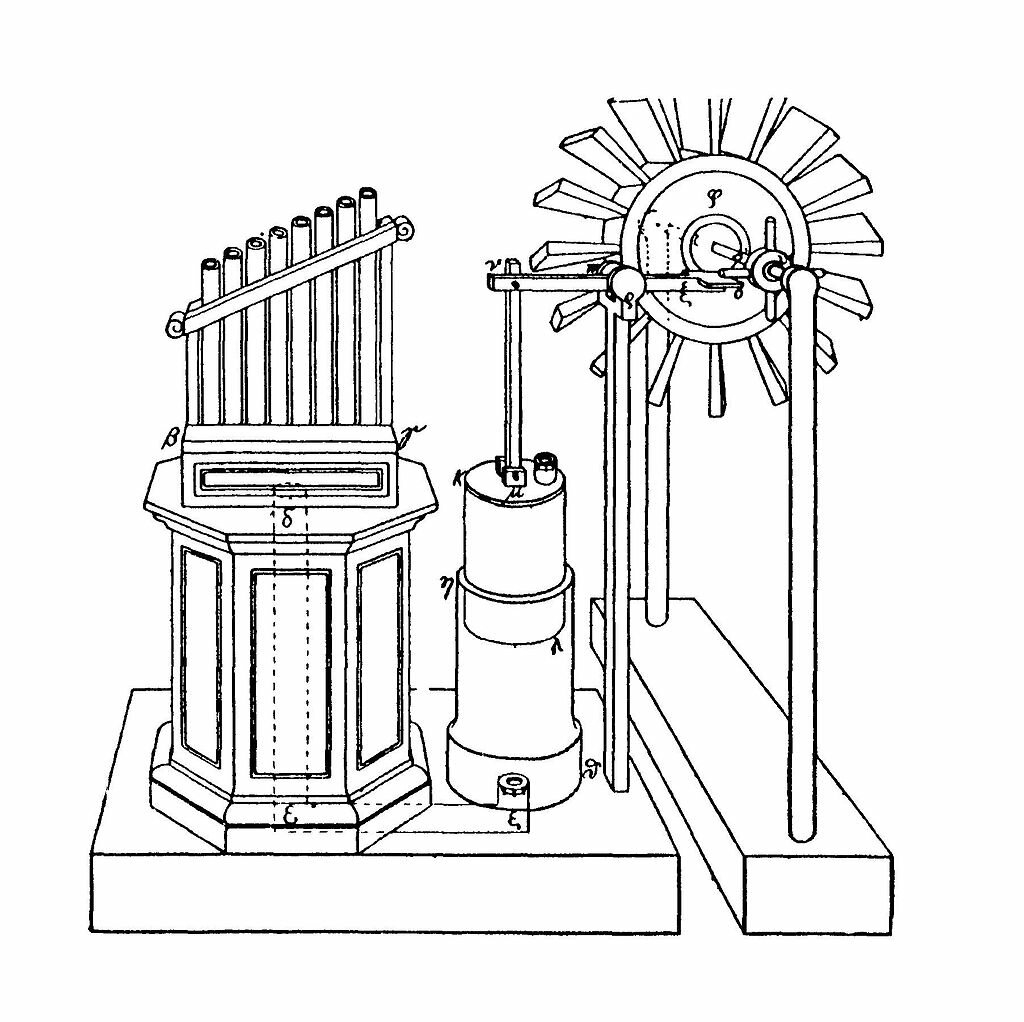
  • windwheel organ
  • Hero's engine (aeolipile)
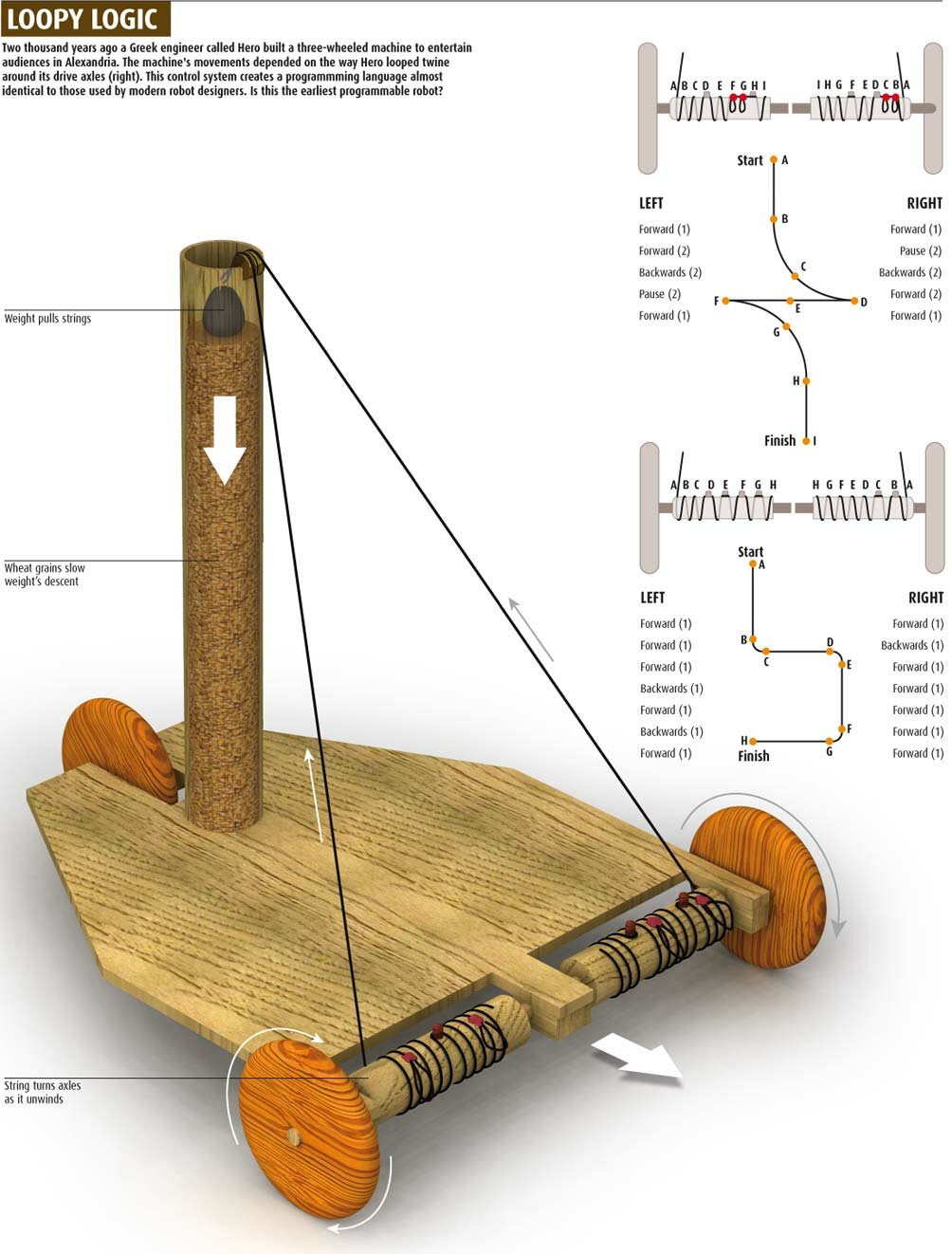
  • 10-minute long fully mechanical theater piece involving a first "programmable" robot
Windwheel organ (ὕδραυλις) of Hero of Alexandria (62AD)

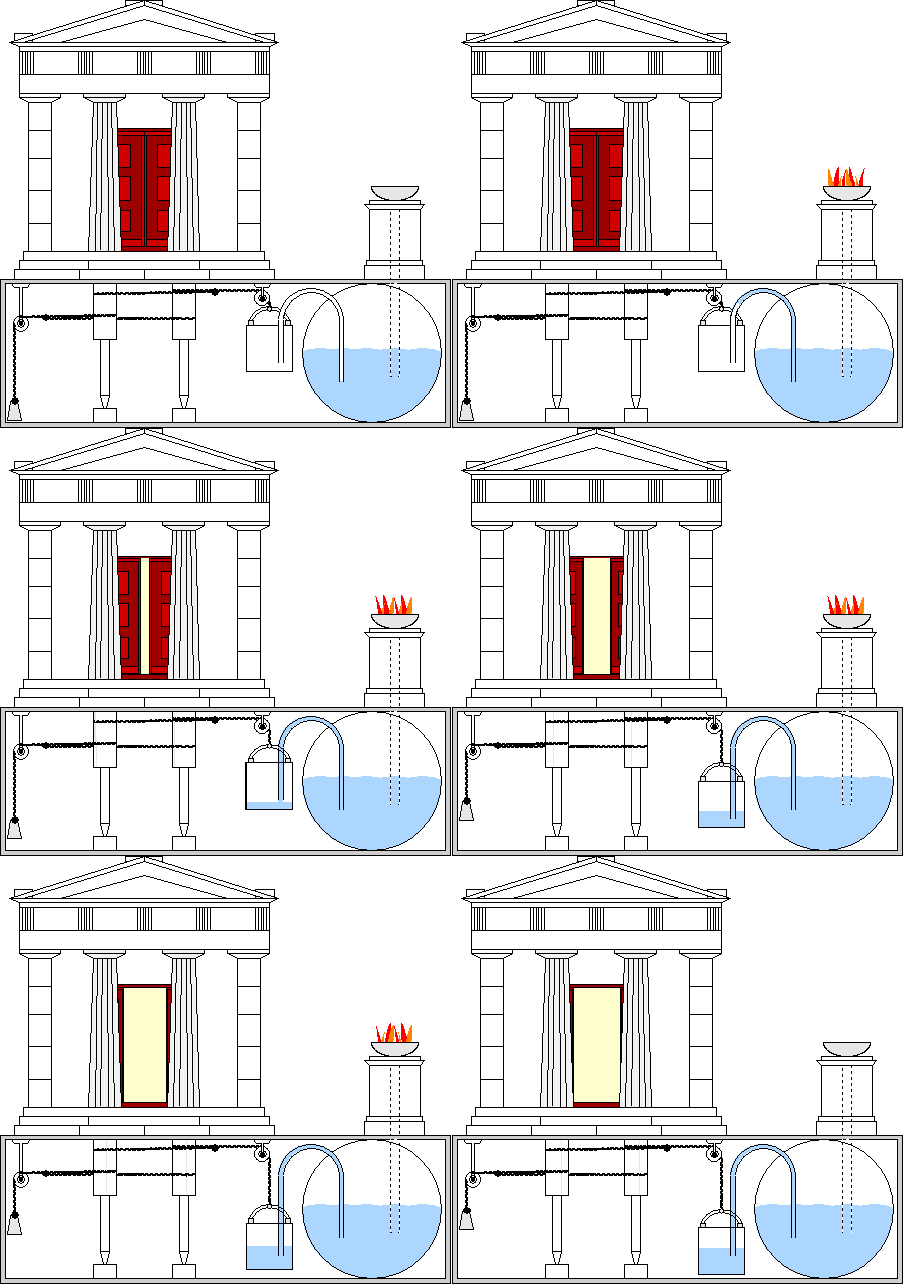
Heron's automatized temple door opener


Heron's oracle machine

Heron's 1st "programmable" robot


other Traditions :: middle East

"When King Solomon stepped upon the throne, a mechanism was set in motion. As soon as he stepped upon the first step, the golden ox and the golden lion each stretched out one foot to support him and help him rise to the next step. On each side, the animals helped the King up until he was comfortably seated upon the throne. No sooner was he seated than a golden eagle brought the great crown and held it just above King Solomon's brow, so that it should not weigh heavily on his head."


We'll discuss the Persian & Arab traditions next week.

other Traditions :: China

The king stared at the figure in astonishment. It walked with rapid strides, moving its head up and down, so that anyone would have taken it for a live human being. The artificer touched its chin, and it began singing, perfectly in tune. He touched its hand, and it began posturing, keeping perfect time...As the performance was drawing to an end, the robot winked its eye and made advances to the ladies in attendance, whereupon the king became incensed and would have had Yen Shih executed on the spot had not the latter, in mortal fear, instantly taken the robot to pieces to let him see what it really was. And, indeed, it turned out to be only a construction of leather, wood, glue and lacquer, variously coloured white, black, red and blue. (3rd century B.C.)

other Traditions :: India


  • less interested in "crude", hardware-oriented disciplines of robotics and mechanics (an exception: "The story of a mechanical girl")
  • more interested in "subtle", software-oriented disciplines of mathematics and logics
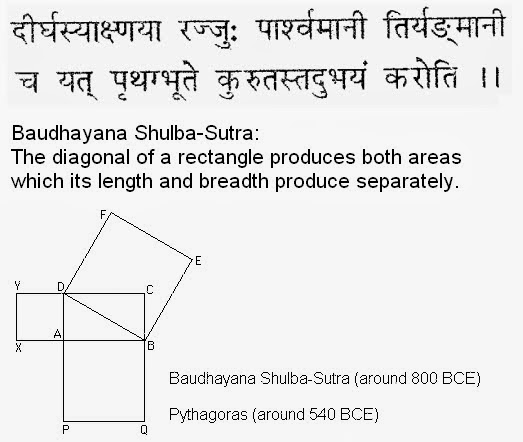
    • Shulba Sutras :: texts concerning the Srauta ritual which describe the geometry related to fire-alter construction

Exercicio :: Abacus

Abacus homework

  • Watch some videos about addition, subtraction and multiplication on an Abacus (e.g. https://www.youtube.com/watch?v=jwabVzlobZI)
  • You can validate the activity-credit for this course by:
    1. Teaching Your fellow students how to multiply 121 x 121 on an Abacus.
    2. Proposing the highest possible number which answers the question "How many distinct numbers can one unambiguously represent on an abacus with 10 marbles on 10 rows ?" and demonstrating why it is true.

Disputatio

What is NOT "a machine" ?