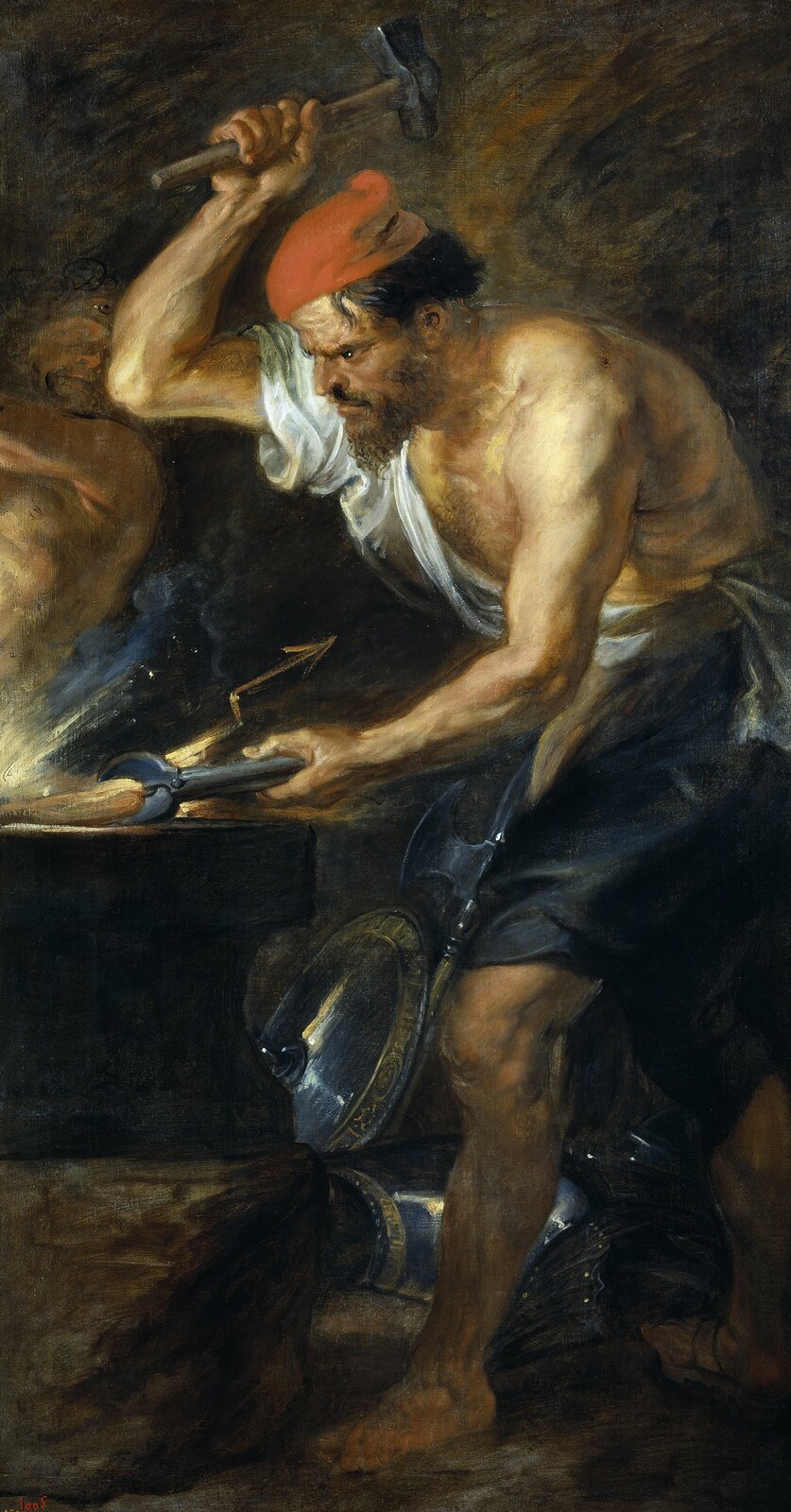
god of blacksmiths, metalworking, carpenters, craftsmen, artisans, sculptors, metallurgy, fire, and volcanoes
son of Zeus and Hera
husband of Aphrodite
often depcited as "lame and crippled"
known as Vulkan among Romans
Peter Paul Rubens :: Vulcan forging the Thunderbolts of Jupiter (1638)
Made by Hephaistos
Hermes' helmet and sandals, Achiless' armor, chariot of Helios
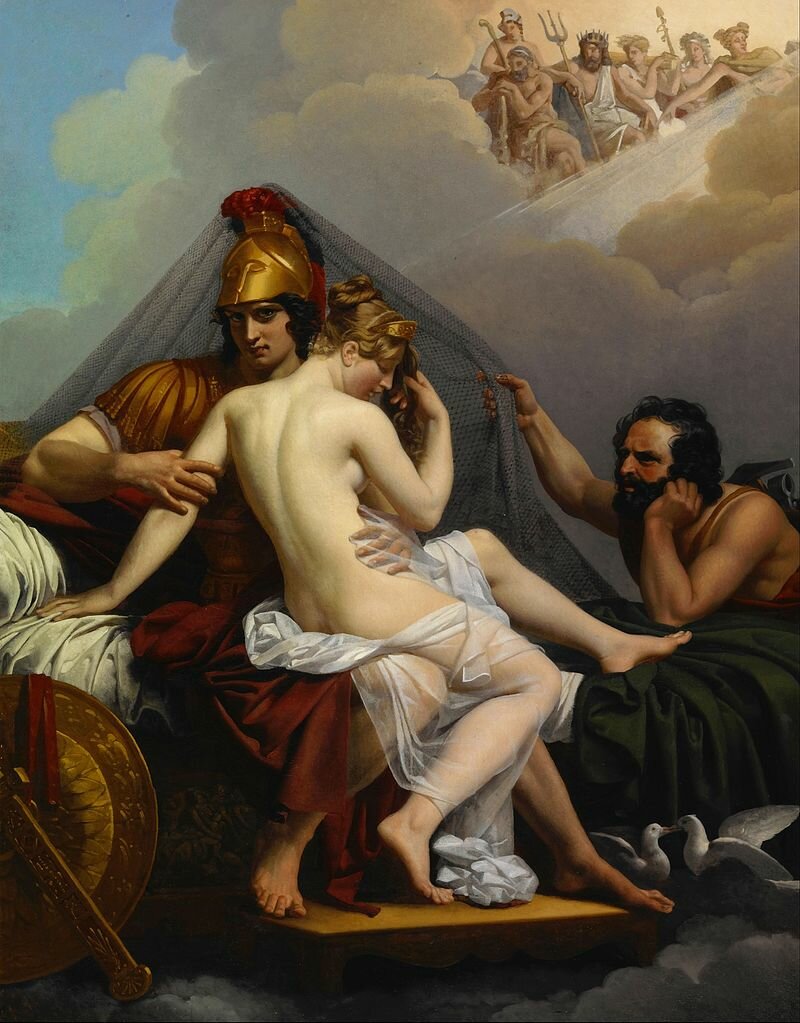
chain-link net for Aphrodite & Ares
Pandora's pithos (also known as "Pandora's box")
first documented automata
A.C.Guillemot :: Mars and Venus Surprised by Vulcan (1827)
Automata attributed to Ἥφαιστος
Wheel tripods to bring stuff to Olympos and back (Iliad, ca. 8th century B.C.)
golden and silver dogs and lions which could bite invaders of the palace of Alkinoos (Odyssea, ca. 8th century B.C.)
Talos, a giant made of bronze to protect Europa in Crete (Argonautica, 4th-3rd century B.C.)
Aetos Kaukasios, a robotic eagle eating Prometheus' liver (Poeticon Astronomicon, 1st century B.C.)
The Story of Pygmalion and the Statue
Pygmalion loathing their lascivious life,
Abhorr'd all womankind, but most a wife:
So single chose to live, and shunn'd to wed,
Well pleas'd to want a consort of his bed.
Yet fearing idleness, the nurse of ill,
In sculpture exercis'd his happy skill;
And carv'd in iv'ry such a maid, so fair,
As Nature could not with his art compare ...
Publius Ovidius Naso :: Metamorphoses, book X. (8. A.D.)
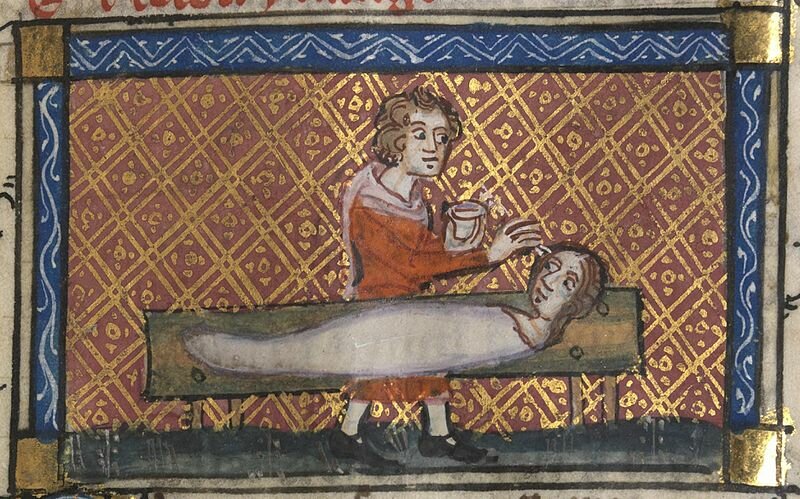
carv'd in iv'ry a maid so fair
Pygmalion working on his sculpture :: Illumination on parchment (14th century)
A prayer
Jean Regnault :: Pygmalion priant Vénus d'animer sa statue (1786)
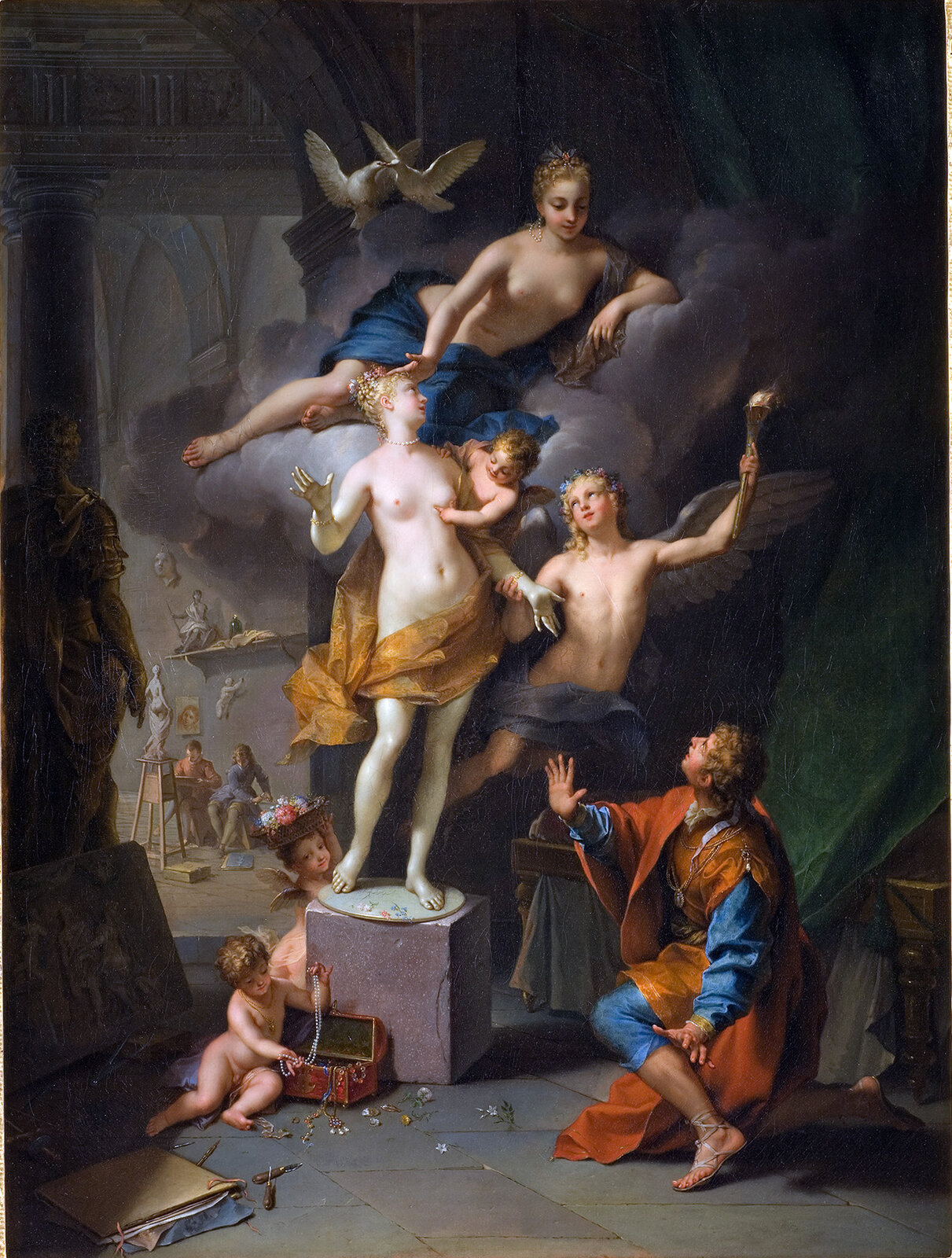
A divine intervention
Jean Raoux :: Pygmalion amoureux de sa statue (1717)
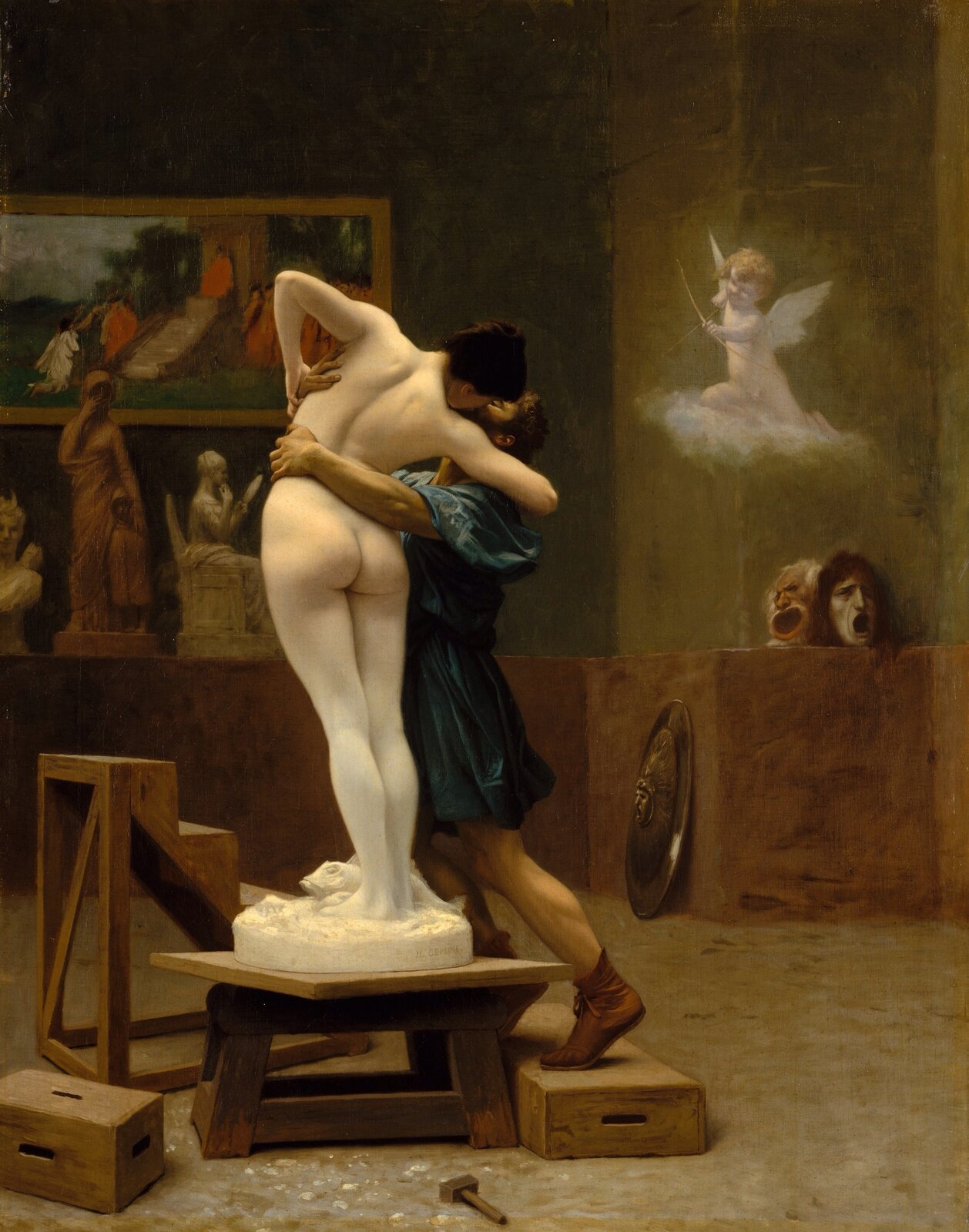
A kiss
J.L.Gerome :: Pygmalion and Galatea (1890)
A happy end
The Goddess, present at the match she made,
So bless'd the bed, such fruitfulness convey'd,
That ere ten months had sharpen'd either horn,
To crown their bliss, a lovely boy was born;
Paphos his name, who grown to manhood, wall'd
The city Paphos, from the founder call'd.
Publius Ovidius Naso :: Metamorphoses, book X. (8. A.D.)
Pygmalion :: a summary
described in 10th book of Ovid's metamorphoses, but potentially derived from older myth from island of Cyprus
an archetypical story about a thing which becomes conscious thanks to a divine intervention
Can You think of another stories or modern myths with similar plot ? (note them down, we'll speak about them in a minute!)
Philosophy :: Pythagoras (c. 570 – c. 495 BC)
a half-mythological, half-historic personage
first man to call himself a philosopher ("lover of wisdom")
important contributions to mathematics (e.g. Pythagorean theorem, Theory of Proportions etc.) and music (e.g. Pythagorean tuning, musica universalis etc.)
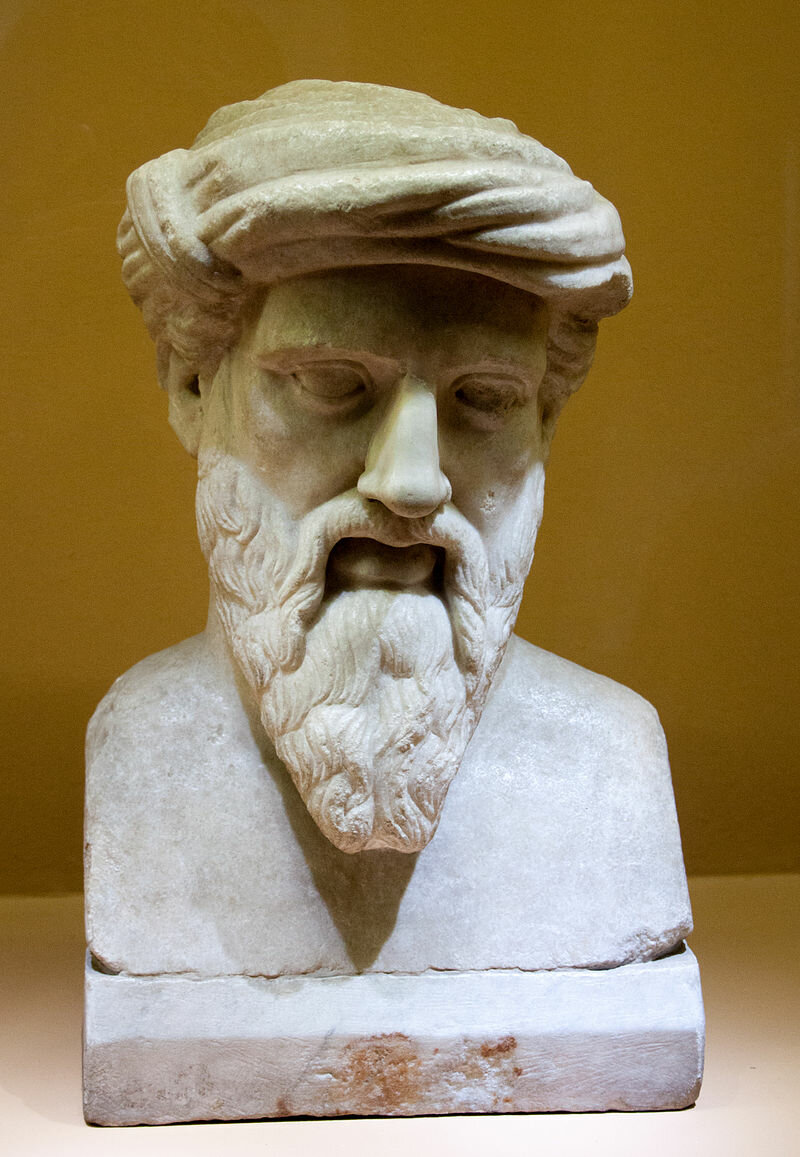
Bust of Pythagoras from Forum Romanum, Rome
Tetractys of Pythagoras
triangle distributing numbers 1 to 10 in four rows
many levels of symbolism (Unity / Power / Harmony / Kosmos; Fire / Air / Water / Earth; Point / Line / Triangle / Tetrahedron )
A Pythagorean prayer : "Bless us, divine number, thou who generated gods and men! O holy, holy Tetractys, thou that containest the root and source of the eternally flowing creation! For the divine number begins with the profound, pure unity until it comes to the holy four ..."
Pythagoras Theorem
The sum of the areas of the two squares on the legs (a and b) equals the area of the square on the hypotenuse (c).
Quote of the day
"Alles ist Zahl."
Pythagoras of Samos, 6th century BC.
Question of the day
What is a number?
WikiMedia User HB, licence CC BY NC SA 4.0
Modern myths
Can You think of any modern myths in which machines, robots, virtual reality, numbers or digitalisation play a key role ?
Genesis revisited
and then said creators: faciamus hominem ad imaginem et similitudinem nostram
and then said humans: faciamus machinam ad imaginem et similitudinem nostram




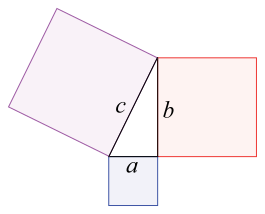 The sum of the areas of the two squares on the legs (a and b) equals the area of the square on the hypotenuse (c).