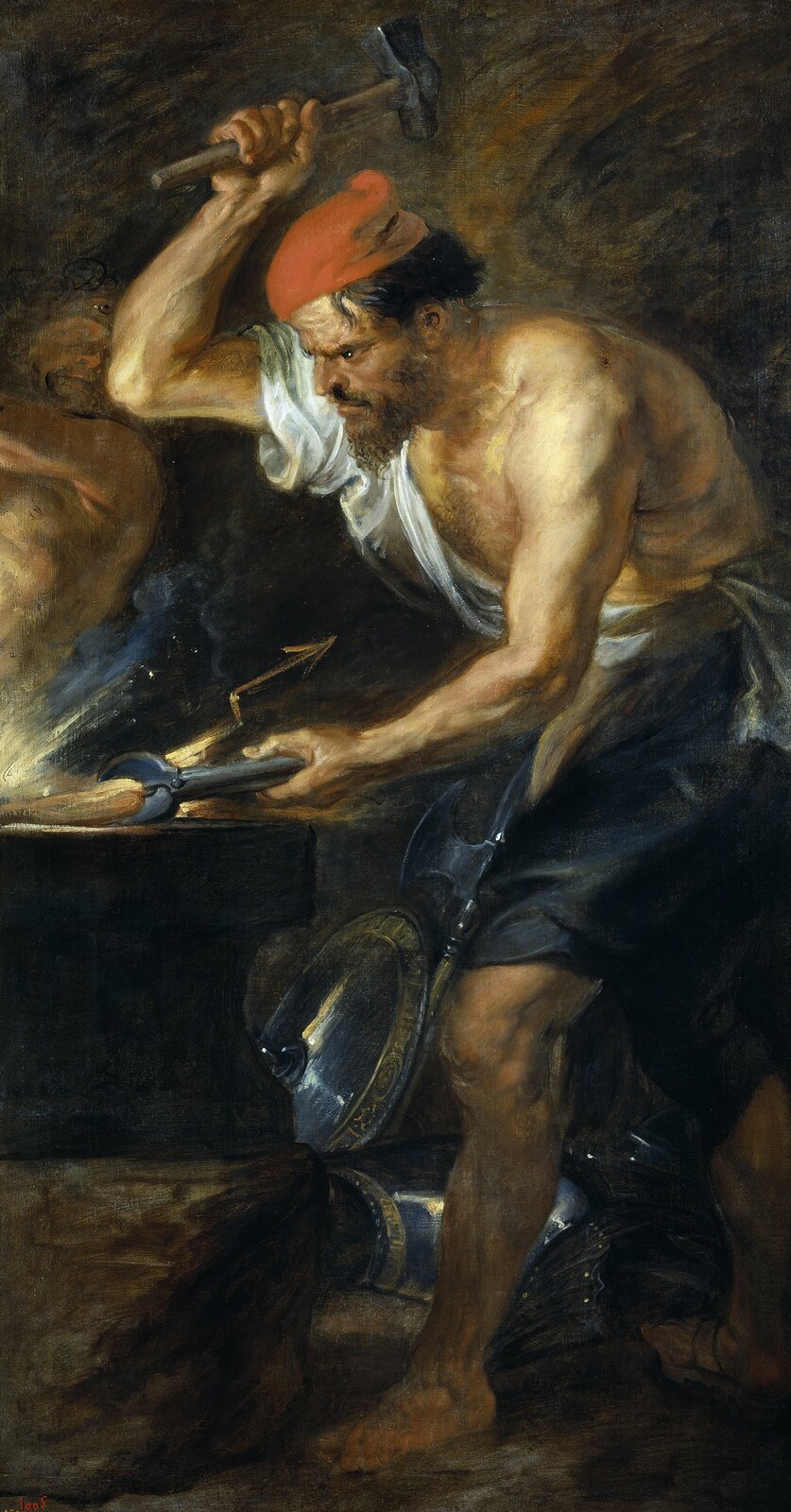
god of blacksmiths, metalworking, carpenters, craftsmen, artisans, sculptors, metallurgy, fire, and volcanoes
son of Zeus and Hera
husband of Aphrodite
often depcited as "lame and crippled"
known as Vulkan among Romans
Peter Paul Rubens :: Vulcan forging the Thunderbolts of Jupiter (1638)
3806
<
img
loading
=
„
lazy
“
style
=
„
width
:
auto
;
height
:
61vh
;
float
:
left
;
margin
-
right
:
100px
;
“
src
=
„
/
images
/
prolegomena
/
mythology
/
Hephaistos
Rubens
.
jpg
“
/><
ul
style
=
„
margin
-
top
:
20px
;
“
><
li
>
a
male
counterpart
to
Pallas
Athena
li
><
li
>
gives
skill
to
artists
li
><
li
>
god
of
blacksmiths
''
metalworking
''
carpenters
''
craftsmen
''
artisans
''
sculptors
''
metallurgy
''
fire
''
and
volcanoes
<
li
>
son
of
Zeus
and
Hera
<
li
>
husband
of
Aphrodite
li
><
li
>
often
depcited
as
„
lame
and
crippled
“
<
li
>
known
as
Vulkan
among
Romans
ul
><
div
class
=
„
copyfck
“
style
=
„
left
:
30vw
;
bottom
:
-
15vh
;
“
>
Peter
Paul
Rubens
::
Vulcan
forging
the
Thunderbolts
of
Jupiter
(
1638
)
div
>
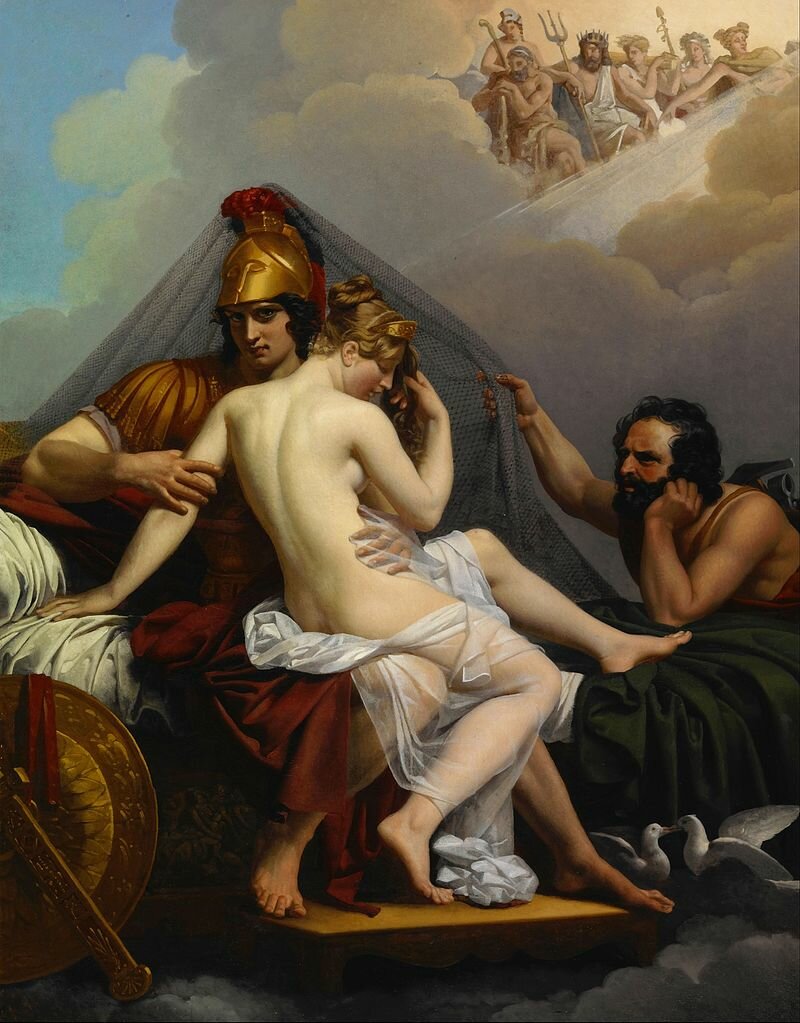
Hermes' helmet and sandals, Achiless' armor, chariot of Helios
chain-link net for Aphrodite & Ares
Pandora's pithos (also known as "Pandora's box")
first documented automata
A.C.Guillemot :: Mars and Venus Surprised by Vulcan (1827)
3807
<
img
loading
=
„
lazy
“
style
=
„
width
:
auto
;
height
:
61vh
;
float
:
left
;
margin
-
right
:
100px
;
“
src
=
„
/
images
/
prolegomena
/
mythology
/
MarsVenus
Guillemot
.
jpg
“
/><
ul
style
=
„
margin
-
top
:
20px
;
“
><
li
>
Hermes
'
helmet
and
sandals
''
Achiless
'
armor
''
chariot
of
Helios
li
><
li
>
chain
-
link
net
for
Aphrodite
&
Ares
<
li
>
Pandora
'
s
pithos
(
also
known
as
„
Pandora
'
s
box
“
)<
li
>
first
documented
automata
ul
><
div
class
=
„
copyfck
“
style
=
„
left
:
30vw
;
bottom
:
-
15vh
;
“
>
A
.
C
.
Guillemot
::
Mars
and
Venus
Surprised
by
Vulcan
(
1827
)
div
>
Wheel tripods to bring stuff to Olympos and back (Iliad, ca. 8th century B.C.)
golden and silver dogs and lions which could bite invaders of the palace of Alkinoos (Odyssea, ca. 8th century B.C.)
Talos, a giant made of bronze to protect Europa in Crete (Argonautica, 4th-3rd century B.C.)
Aetos Kaukasios, a robotic eagle eating Prometheus' liver (Poeticon Astronomicon, 1st century B.C.)
3808
<
ul
><
li
>
Wheel
tripods
to
bring
stuff
to
Olympos
and
back
(
Iliad
''
ca
.
8th
century
B
.
C
.)
li
><
li
>
golden
and
silver
dogs
and
lions
which
could
bite
invaders
of
the
palace
of
Alkinoos
(
Odyssea
''
ca
.
8th
century
B
.
C
.)
li
><
li
>
Talos
''
a
giant
made
of
bronze
to
protect
Europa
in
Crete
(
Argonautica
''
4th
-
3rd
century
B
.
C
.)
li
><
li
>
Aetos
Kaukasios
''
a
robotic
eagle
eating
Prometheus
'
liver
(
Poeticon
Astronomicon
''
1st
century
B
.
C
.)
li
>
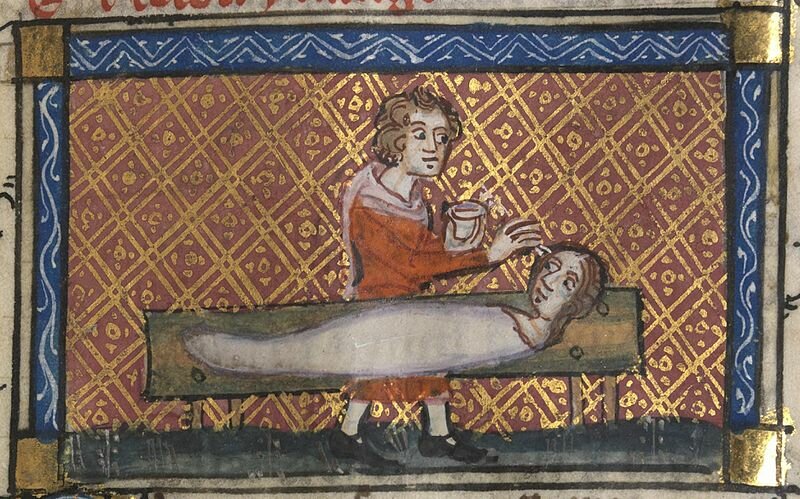
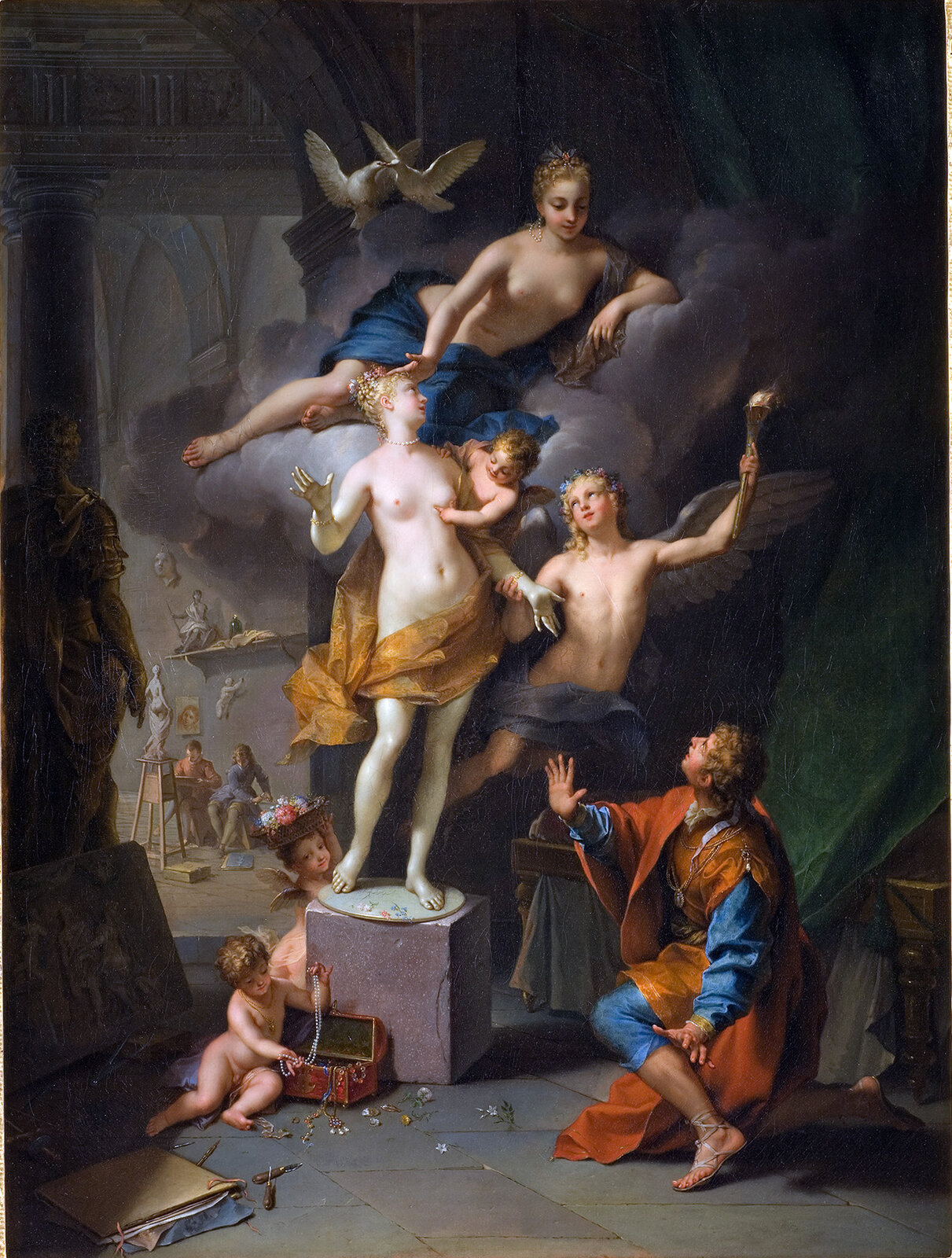
Pygmalion loathing their lascivious life,
Abhorr'd all womankind, but most a wife:
So single chose to live, and shunn'd to wed,
Well pleas'd to want a consort of his bed.
Yet fearing idleness, the nurse of ill,
In sculpture exercis'd his happy skill;
And carv'd in iv'ry such a maid, so fair,
As Nature could not with his art compare ...
Publius Ovidius Naso :: Metamorphoses, book X. (8. A.D.)
3809
<
i
><
center
><
pre
>
Pygmalion
loathing
their
lascivious
life
''
Abhorr
'
d
all
womankind
''
but
most
a
wife
:
So
single
chose
to
live
''
and
shunn
'
d
to
wed
''
Well
pleas
'
d
to
want
a
consort
of
his
bed
.
Yet
fearing
idleness
''
the
nurse
of
ill
''
In
sculpture
exercis
'
d
his
happy
skill
;
And
carv
'
d
in
iv
'
ry
such
a
maid
''
so
fair
''
As
Nature
could
not
with
his
art
compare
...
pre
>
center
>
i
><
div
class
=
„
copyfck
“
>
Publius
Ovidius
Naso
::
Metamorphoses
''
book
X
.
(
8
.
A
.
D
.)
div
>
Pygmalion working on his sculpture :: Illumination on parchment (14th century)
3810
<
img
loading
=
„
lazy
“
style
=
„
width
:
auto
;
height
:
61vh
;
“
src
=
„
/
images
/
prolegomena
/
mythology
/
Pygmalion
Miniature
.
jpg
“
/><
br
/><
div
class
=
„
copyfck
“
style
=
„
width
:
100
%;
left
:
20vw
“
>
Pygmalion
working
on
his
sculpture
::
Illumination
on
parchment
(
14th
century
)
div
>
Jean Regnault :: Pygmalion priant Vénus d'animer sa statue (1786)
3811
<
img
loading
=
„
lazy
“
style
=
„
width
:
auto
;
height
:
61vh
;
“
src
=
„
/
images
/
prolegomena
/
mythology
/
Pygmalion
Regnault
.
jpg
“
/><
br
/><
div
class
=
„
copyfck
“
>
Jean
Regnault
::
Pygmalion
priant
Vénus
d
'
animer
sa
statue
(
1786
)
div
>
Jean Raoux :: Pygmalion amoureux de sa statue (1717)
3812
<
img
loading
=
„
lazy
“
style
=
„
width
:
auto
;
height
:
61vh
;
“
src
=
„
/
images
/
prolegomena
/
mythology
/
Pygmalion
Raoux
.
jpg
“
/><
br
/><
div
class
=
„
copyfck
“
>
Jean
Raoux
::
Pygmalion
amoureux
de
sa
statue
(
1717
)
div
>
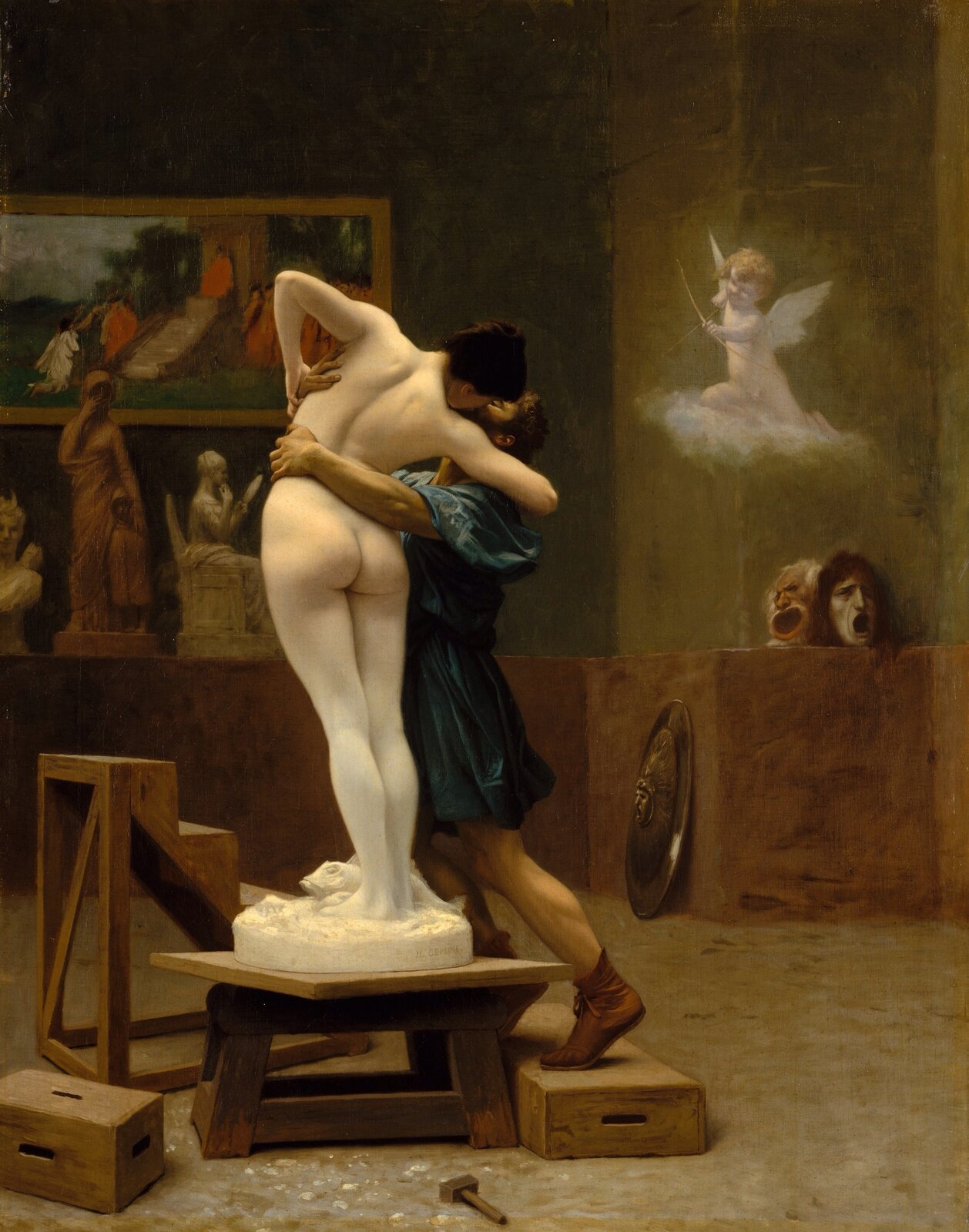
J.L.Gerome :: Pygmalion and Galatea (1890)
3813
<
img
loading
=
„
lazy
“
style
=
„
width
:
auto
;
height
:
61vh
;
“
src
=
„
/
images
/
prolegomena
/
mythology
/
Pygmalion
Gerome
.
jpg
“
/><
br
/><
div
class
=
„
copyfck
“
>
J
.
L
.
Gerome
::
Pygmalion
and
Galatea
(
1890
)
div
>
The Goddess, present at the match she made,
So bless'd the bed, such fruitfulness convey'd,
That ere ten months had sharpen'd either horn,
To crown their bliss, a lovely boy was born;
Paphos his name, who grown to manhood, wall'd
The city Paphos, from the founder call'd.
Publius Ovidius Naso :: Metamorphoses, book X. (8. A.D.)
3814
<
i
><
center
><
pre
>
The
Goddess
''
present
at
the
match
she
made
''
So
bless
'
d
the
bed
''
such
fruitfulness
convey
'
d
''
That
ere
ten
months
had
sharpen
'
d
either
horn
''
To
crown
their
bliss
''
a
lovely
boy
was
born
;
Paphos
his
name
''
who
grown
to
manhood
''
wall
'
d
The
city
Paphos
''
from
the
founder
call
'
d
.
pre
>
center
>
i
><
div
class
=
„
copyfck
“
>
Publius
Ovidius
Naso
::
Metamorphoses
''
book
X
.
(
8
.
A
.
D
.)
div
>
described in 10th book of Ovid's metamorphoses, but potentially derived from older myth from island of Cyprus
an archetypical story about a thing which becomes conscious thanks to a divine intervention
Can You think of another stories or modern myths with similar plot ? (note them down, we'll speak about them in a minute!)
3815
<
ul
style
=
„
margin
-
top
:
20px
;
“
><
li
>
described
in
10
<
sup
>
th
sup
>
book
of
Ovid
'
s
metamorphoses
''
but
potentially
derived
from
older
myth
from
island
of
Cyprus
<
li
>
an
<
b
>
archetypical
story
b
>
about
a
thing
which
becomes
conscious
thanks
to
a
divine
intervention
li
><
li
>
Can
You
think
of
another
stories
or
<
b
>
modern
myths
b
>
with
similar
plot
?
(
note
them
down
''
we
'
ll
speak
about
them
in
a
minute
!)
li
>
ul
>
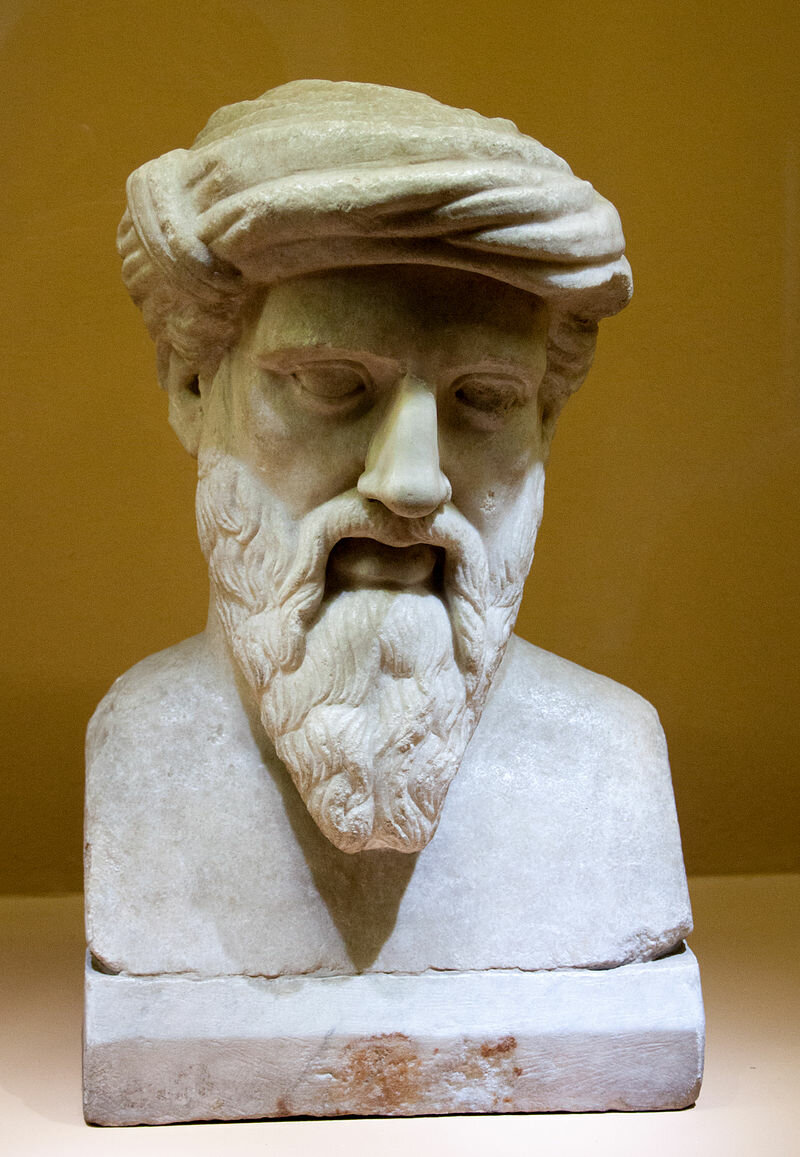
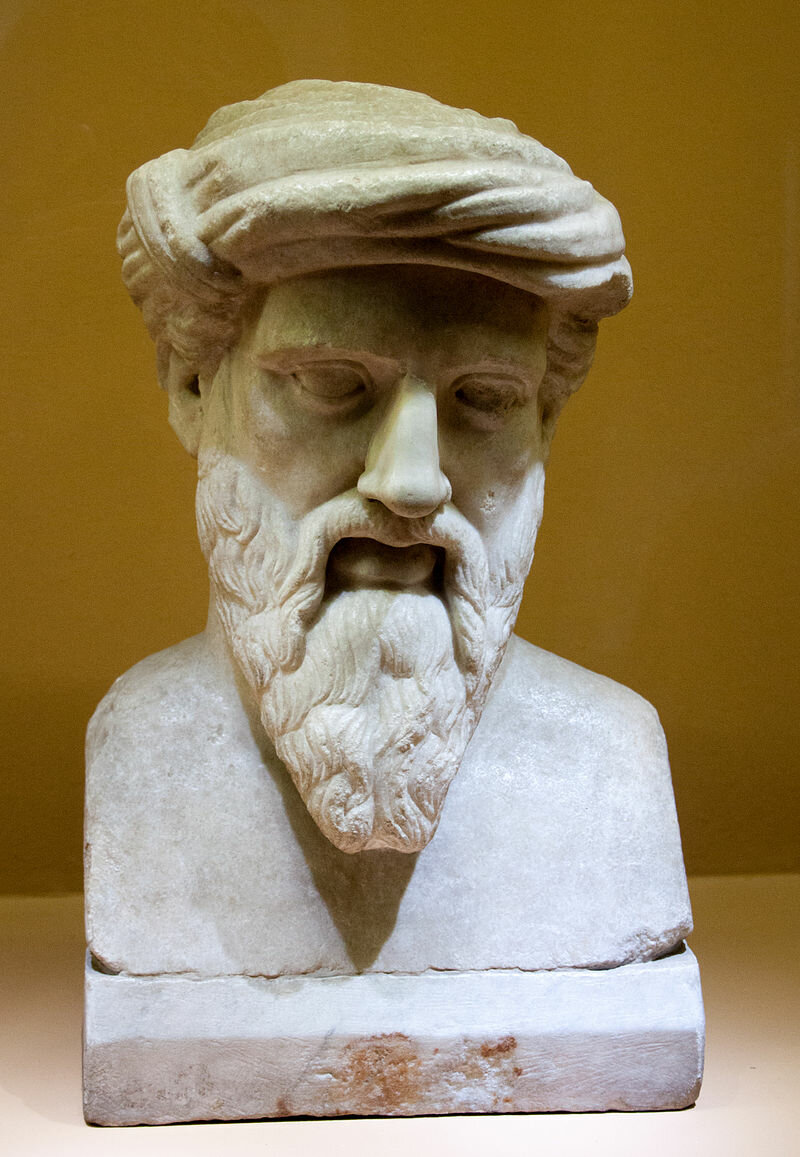
a half-mythological, half-historic personage
first man to call himself a philosopher ("lover of wisdom")
important contributions to mathematics (e.g. Pythagorean theorem, Theory of Proportions etc.) and music (e.g. Pythagorean tuning, musica universalis etc.)
Bust of Pythagoras from Forum Romanum, Rome
3816
<
img
loading
=
„
lazy
“
style
=
„
width
:
auto
;
height
:
61vh
;
float
:
left
;
margin
-
right
:
100px
;
“
src
=
„
/
images
/
prolegomena
/
mythology
/
Pythagoras
ForumRomanum
.
jpg
“
/><
ul
style
=
„
margin
-
top
:
10px
;
“
><
li
>
a
half
-
mythological
''
half
-
historic
personage
<
li
>
first
man
to
call
himself
a
philosopher
(
„
lover
of
wisdom
“
)<
li
>
important
contributions
to
mathematics
(
e
.
g
.
Pythagorean
theorem
''
Theory
of
Proportions
etc
.)
and
music
(
e
.
g
.
Pythagorean
tuning
''
<
i
>
musica
universalis
i
>
etc
.)
ul
><
div
class
=
„
copyfck
“
style
=
„
left
:
30vw
;
“
>
Bust
of
Pythagoras
from
Forum
Romanum
''
Rome
div
>
triangle distributing numbers 1 to 10 in four rows
many levels of symbolism (Unity / Power / Harmony / Kosmos; Fire / Air / Water / Earth; Point / Line / Triangle / Tetrahedron )
A Pythagorean prayer : "Bless us, divine number, thou who generated gods and men! O holy, holy Tetractys, thou that containest the root and source of the eternally flowing creation! For the divine number begins with the profound, pure unity until it comes to the holy four ..."
3817
<
img
loading
=
„
lazy
“
style
=
„
width
:
auto
;
height
:
41vh
;
float
:
right
;
margin
-
right
:
100px
;
“
src
=
„
/
images
/
prolegomena
/
mythology
/
Tetractys
.
svg
“
/><
ul
style
=
„
margin
-
top
:
10px
;
“
><
li
>
triangle
distributing
numbers
1
to
10
in
four
rows
<
li
>
many
levels
of
symbolism
(
Unity
/
Power
/
Harmony
/
Kosmos
;
Fire
/
Air
/
Water
/
Earth
;
Point
/
Line
/
Triangle
/
Tetrahedron
)
ul
><
div
class
=
„
copyfck
“
style
=
„
left
:
30vw
;
margin
-
top
:
20px
;
“
>
A
Pythagorean
prayer
:
„
Bless
us
''
divine
number
''
thou
who
generated
gods
and
men
!
O
holy
''
holy
Tetractys
''
thou
that
containest
the
root
and
source
of
the
eternally
flowing
creation
!
For
the
divine
number
begins
with
the
profound
''
pure
unity
until
it
comes
to
the
holy
four
...
“
div
>
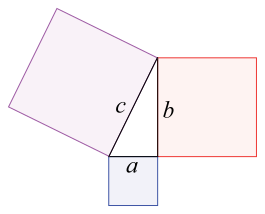
The sum of the areas of the two squares on the legs (a and b) equals the area of the square on the hypotenuse (c).
3818
<
img
loading
=
„
lazy
“
style
=
„
width
:
auto
;
height
:
41vh
;
float
:
left
;
margin
-
right
:
100px
;
“
src
=
„
/
images
/
prolegomena
/
mythology
/
Pythagorean
.
svg
“
/>
The
sum
of
the
areas
of
the
two
squares
on
the
legs
(
a
and
b
)
equals
the
area
of
the
square
on
the
hypotenuse
(
c
).
"Alles ist Zahl."
Pythagoras of Samos, 6th century BC.
3819
<
div
style
=
„
margin
-
top
:
100px
;
font
-
size
:
124px
;
“
><
i
>
„
Alles
ist
Zahl
.
“
i
>
div
><
br
/><
div
class
=
„
copyfck
“
style
=
„
left
:
10vw
;
“
>
Pythagoras
of
Samos
''
6th
century
BC
.
div
>
What is a number?
WikiMedia User HB, licence CC BY NC SA 4.0
3820
<
div
style
=
„
font
-
size
:
56px
;
“
>
What
is
a
number
?
div
><
br
/>
<
img
loading
=
„
lazy
“
style
=
„
width
:
auto
;
height
:
45vh
;
“
src
=
„
/
images
/
prolegomena
/
mythology
/
NumberSets
.
png
“
/><
br
/><
div
class
=
„
copyfck
“
>
WikiMedia
User
HB
''
licence
CC
BY
NC
SA
4
.
0
div
>
Can You think of any modern myths in which machines, robots, virtual reality, numbers or digitalisation play a key role ?
3821
Can
You
think
of
any
modern
myths
in
which
machines
''
robots
''
virtual
reality
''
numbers
or
digitalisation
play
a
key
role
?
and then said creators: faciamus hominem ad imaginem et similitudinem nostram
and then said humans: faciamus machinam ad imaginem et similitudinem nostram
English word machine comes through Middle French from Latin machina, which in turn derives from the Greek (Doric μαχανά makhana, Ionic μηχανή mekhane "contrivance, device, engine", a derivation from μῆχος mekhos "means, expedient, remedy")
Greek "mekhane" was potentially derived from Proto-Indo-European root *magh- meaning "to be able, have power." Linguists believe that English words like may, might, magi, magic, make or German words like machen, Macht etc. are derived from the PIE-root *magh.
3826
<
ul
style
=
„
margin
-
top
:
20px
;
“
><
li
>
English
word
machine
comes
through
Middle
French
from
Latin
machina
''
which
in
turn
derives
from
the
Greek
(
Doric
μαχανά
makhana
''
Ionic
μηχανή
mekhane
„
contrivance
''
device
''
engine
“
''
a
derivation
from
μῆχος
mekhos
„
means
''
expedient
''
remedy
“
)
li
><
li
>
Greek
„
mekhane
“
was
potentially
derived
from
Proto
-
Indo
-
European
root
<
b
>*
magh
-
b
>
meaning
„
<
b
>
to
be
able
''
have
power
b
>.
“
Linguists
believe
that
English
words
like
may
''
might
''
magi
''
magic
''
make
or
German
words
like
machen
''
Macht
etc
.
are
derived
from
the
PIE
-
root
*
magh
.
ul
>
An apparatus using mechanical power and having several parts, each with a definite function and together performing a particular task.
Any device that transmits a force or directs its application.
An efficient and well-organized group of powerful people.
A person who acts with the mechanical efficiency of a machine.
3827
An
apparatus
using
mechanical
power
and
having
several
parts
''
each
with
a
definite
function
and
together
performing
a
particular
task
.<
ul
><
li
>
Any
device
that
transmits
a
force
or
directs
its
application
.
li
><
li
>
An
efficient
and
well
-
organized
group
of
powerful
people
.
li
><
li
>
A
person
who
acts
with
the
mechanical
efficiency
of
a
machine
.
li
>
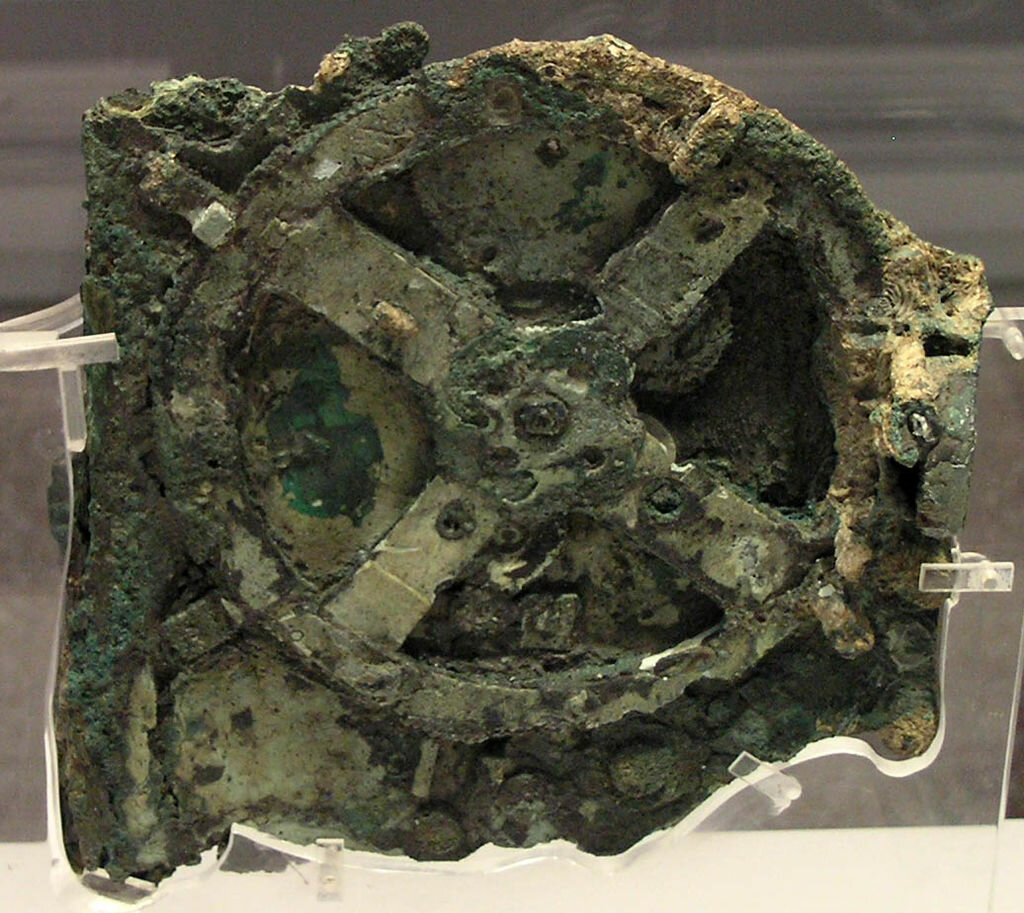
an ancient Greek analogue computer used to predict astronomical positions and eclipses for calendar and astrological purposes decades in advance
created sometimes around 2nd-1st century B.C., discovered in 1902
complex clockwork of at least 30 bronze gears
The main gear (fragment A) of the Antikythera mechanism
3828
<
img
loading
=
„
lazy
“
style
=
„
width
:
auto
;
height
:
51vh
;
float
:
left
;
margin
-
right
:
50px
;
“
src
=
„
/
images
/
prolegomena
/
antiquity
/
Antikythera
.
jpg
“
/><
ul
style
=
„
margin
-
top
:
10px
;
“
><
li
>
an
ancient
Greek
analogue
computer
used
to
predict
astronomical
positions
and
eclipses
for
calendar
and
astrological
purposes
decades
in
advance
<
li
>
created
sometimes
around
2nd
-
1st
century
B
.
C
.''
discovered
in
1902
<
li
>
complex
clockwork
of
at
least
30
bronze
gears
ul
><
div
class
=
„
copyfck
“
style
=
„
left
:
20vw
;
top
:
62vh
;
“
>
The
main
gear
(
fragment
A
)
of
the
Antikythera
mechanism
div
>
3829
<
iframe
width
=
„
1200
“
height
=
„
700
“
src
=
„
https
://
www
.
youtube
.
com
/
embed
/
UpLcnAIpVRA
“
frameborder
=
„
0
“
allow
=
„
accelerometer
;
autoplay
;
encrypted
-
media
;
gyroscope
;
picture
-
in
-
picture
“
allowfullscreen
>
iframe
>
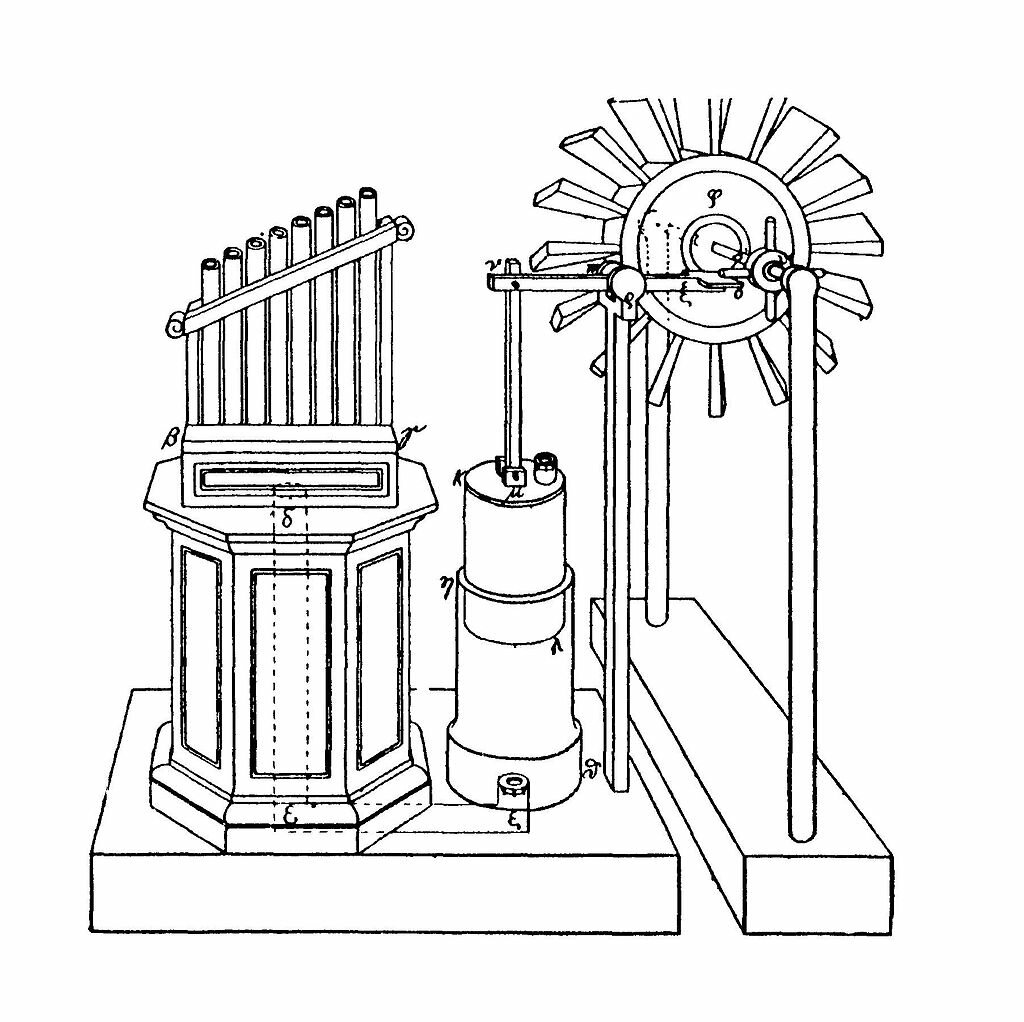
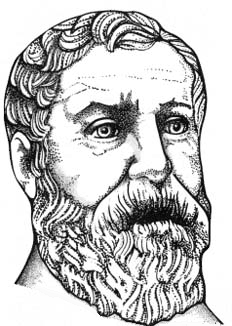
greatest experimenter of antiquity
teacher at Musaeum
author of works like Pneumatica, Automata, Mechanica, On the dioptra, Belopoeica, Catoptrica, Geodesia, Geoponica etc.
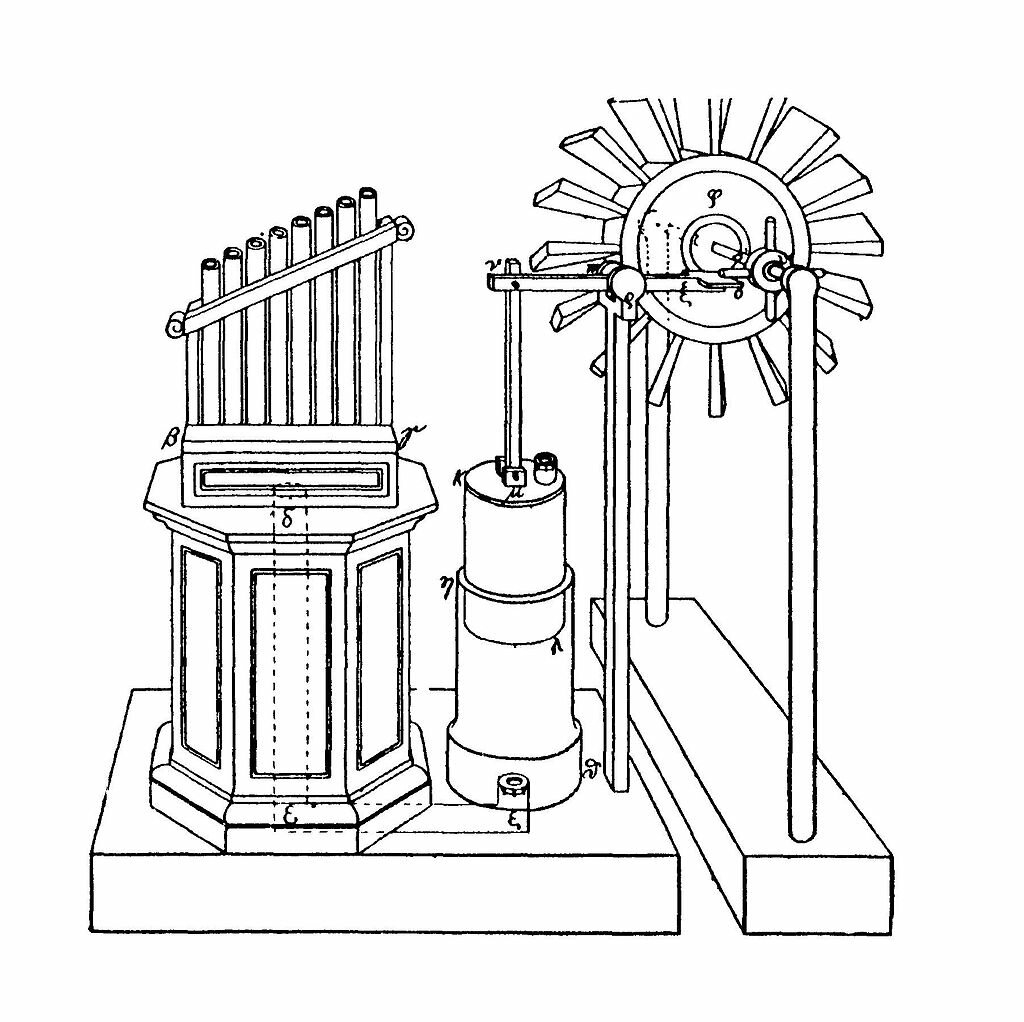
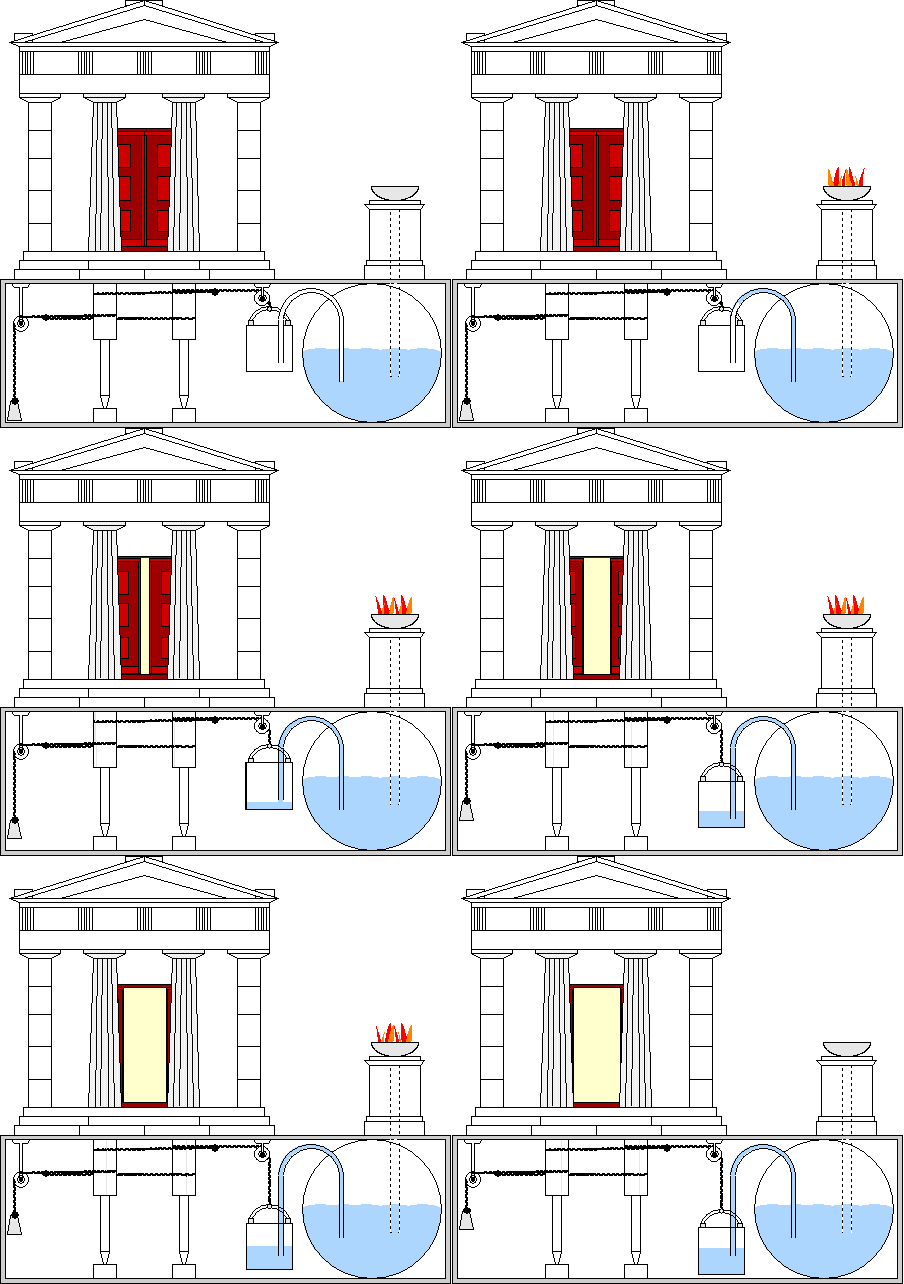
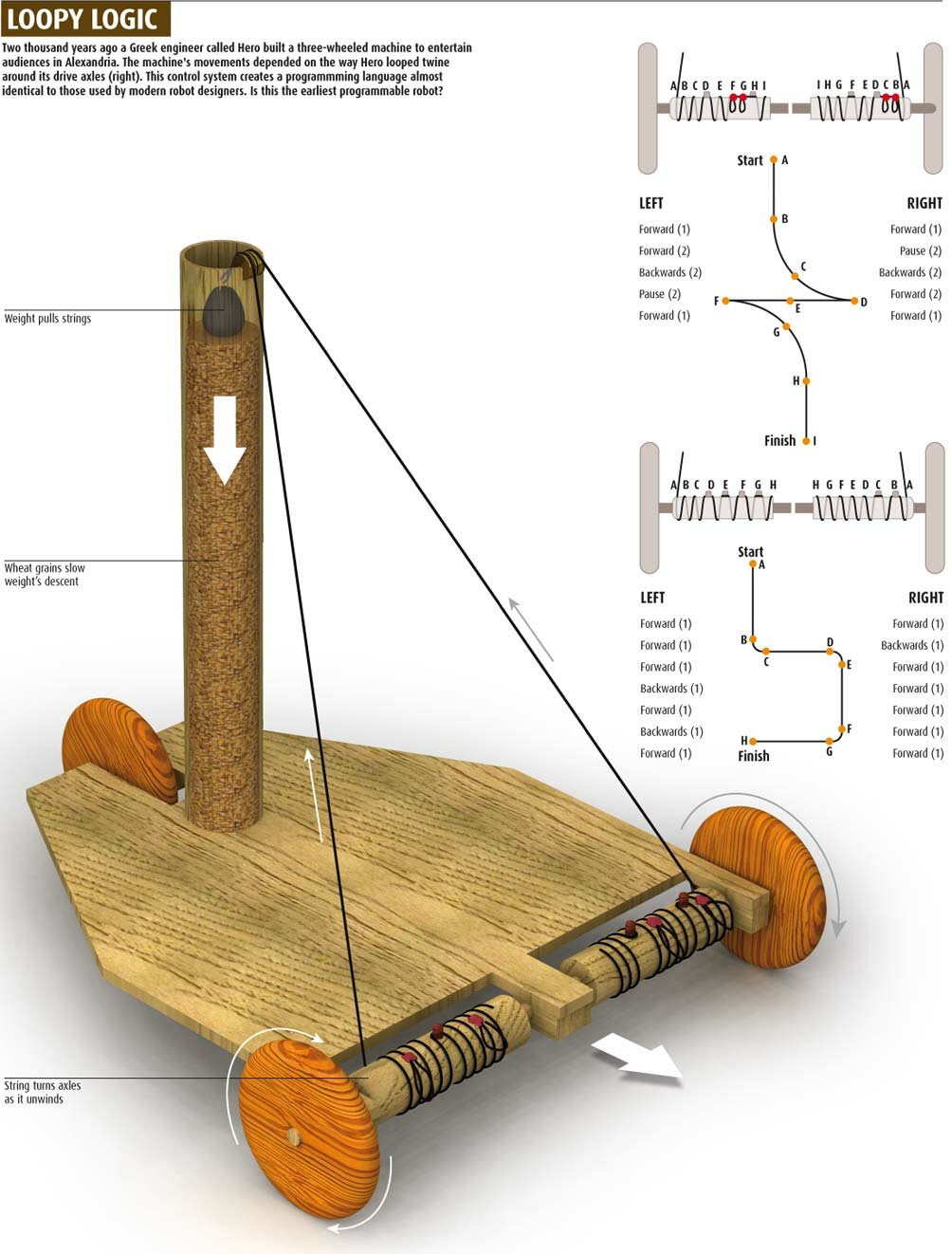
10-minute long fully mechanical theater piece involving a first "programmable" robot
Windwheel organ (ὕδραυλις) of Hero of Alexandria (62AD)
3831
<
img
loading
=
„
lazy
“
style
=
„
width
:
auto
;
height
:
51vh
;
margin
:
50px
;
float
:
left
;
“
src
=
„
/
images
/
prolegomena
/
antiquity
/
Heron
Orgel
.
jpg
“
/><
br
/><
ul
style
=
„
“
><
li
>
holy
water
dispenser
<
li
>
windwheel
organ
<
li
>
Hero
'
s
engine
(<
a
href
=
https
://
en
.
wikipedia
.
org
/
wiki
/
Aeolipile
>
aeolipile
a
>)<
li
>
10
-
minute
long
fully
mechanical
theater
piece
involving
a
first
„
programmable
“
robot
ul
><
div
class
=
„
copyfck
“
style
=
„
left
:
32vw
;
top
:
70vh
;
“
>
Windwheel
organ
(
ὕδραυλις
)
of
Hero
of
Alexandria
(
62AD
)
div
>
3832
<
img
loading
=
„
lazy
“
style
=
„
width
:
auto
;
height
:
51vh
;
margin
:
50px
;
float
:
left
;
“
src
=
„
/
images
/
prolegomena
/
antiquity
/
Heron
Temple
Opener
.
gif
“
/><
br
/>
3833
<
iframe
width
=
„
800
“
height
=
„
600
“
src
=
„
https
://
www
.
youtube
.
com
/
embed
/
kYyzVCXVOy0
“
frameborder
=
„
0
“
allow
=
„
accelerometer
;
autoplay
;
encrypted
-
media
;
gyroscope
;
picture
-
in
-
picture
“
allowfullscreen
>
iframe
>
3834
<
img
loading
=
„
lazy
“
style
=
„
width
:
auto
;
height
:
51vh
;
margin
:
50px
;
float
:
left
;
“
src
=
„
/
images
/
prolegomena
/
antiquity
/
Heron
First
Robot
.
jpg
“
/><
br
/>
"When King Solomon stepped upon the throne, a mechanism was set in motion. As soon as he stepped upon the first step, the golden ox and the golden lion each stretched out one foot to support him and help him rise to the next step. On each side, the animals helped the King up until he was comfortably seated upon the throne. No sooner was he seated than a golden eagle brought the great crown and held it just above King Solomon's brow, so that it should not weigh heavily on his head."
We'll discuss the Persian & Arab traditions next week.
3835
<
p
>
„
When
King
Solomon
stepped
upon
the
throne
''
a
mechanism
was
set
in
motion
.
As
soon
as
he
stepped
upon
the
first
step
''
the
golden
ox
and
the
golden
lion
each
stretched
out
one
foot
to
support
him
and
help
him
rise
to
the
next
step
.
On
each
side
''
the
animals
helped
the
King
up
until
he
was
comfortably
seated
upon
the
throne
.
No
sooner
was
he
seated
than
a
golden
eagle
brought
the
great
crown
and
held
it
just
above
King
Solomon
'
s
brow
''
so
that
it
should
not
weigh
heavily
on
his
head
.
“
p
><
p
><
br
/>
We
'
ll
discuss
the
Persian
&
Arab
traditions
next
week
.
p
>
The king stared at the figure in astonishment. It walked with rapid strides, moving its head up and down, so that anyone would have taken it for a live human being. The artificer touched its chin, and it began singing, perfectly in tune. He touched its hand, and it began posturing, keeping perfect time...As the performance was drawing to an end, the robot winked its eye and made advances to the ladies in attendance, whereupon the king became incensed and would have had Yen Shih executed on the spot had not the latter, in mortal fear, instantly taken the robot to pieces to let him see what it really was. And, indeed, it turned out to be only a construction of leather, wood, glue and lacquer, variously coloured white, black, red and blue. (3rd century B.C.)
3836
<
i
>
The
king
stared
at
the
figure
in
astonishment
.
It
walked
with
rapid
strides
''
moving
its
head
up
and
down
''
so
that
anyone
would
have
taken
it
for
a
live
human
being
.
The
artificer
touched
its
chin
''
and
it
began
singing
''
perfectly
in
tune
.
He
touched
its
hand
''
and
it
began
posturing
''
keeping
perfect
time
...
As
the
performance
was
drawing
to
an
end
''
the
robot
winked
its
eye
and
made
advances
to
the
ladies
in
attendance
''
whereupon
the
king
became
incensed
and
would
have
had
Yen
Shih
executed
on
the
spot
had
not
the
latter
''
in
mortal
fear
''
instantly
taken
the
robot
to
pieces
to
let
him
see
what
it
really
was
.
And
''
indeed
''
it
turned
out
to
be
only
a
construction
of
leather
''
wood
''
glue
and
lacquer
''
variously
coloured
white
''
black
''
red
and
blue
.
i
>
(
3rd
century
B
.
C
.)
less interested in "crude", hardware-oriented disciplines of robotics and mechanics (an exception: "The story of a mechanical girl")
more interested in "subtle", software-oriented disciplines of mathematics and logics
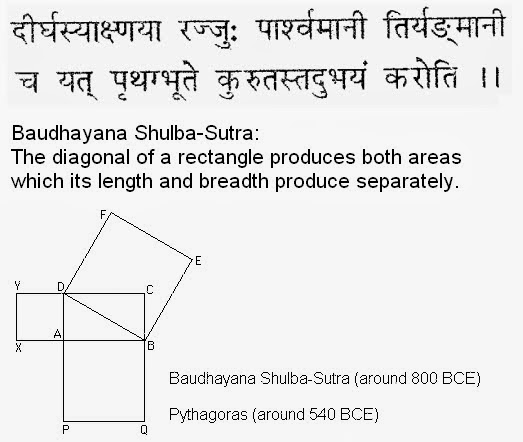
Shulba Sutras :: texts concerning the Srauta ritual which describe the geometry related to fire-alter construction
You can validate the activity-credit for this course by:
Teaching Your fellow students how to multiply 121 x 121 on an Abacus.
Proposing the highest possible number which answers the question "How many distinct numbers can one unambiguously represent on an abacus with 10 marbles on 10 rows ?" and demonstrating why it is true.
digit (n.)
in English since late 14c., "numeral below 10," from Latin digitus (french: "doigt") "finger or toe" (also with secondary meanings relating to counting and numerals), considered to be related to Proto-Indo-European root *deik- "to show"
3844
<
ul
style
=
„
margin
-
top
:
20px
;
“
><
li
>
digit
(
n
.)<
br
/>
in
English
since
late
14c
.''
„
numeral
below
10
''
“
from
Latin
digitus
(
french
:
„
doigt
“
)
„
finger
or
toe
“
(
also
with
secondary
meanings
relating
to
counting
and
numerals
)''
considered
to
be
related
to
Proto
-
Indo
-
European
root
*
deik
-
„
to
show
“
li
>
ul
>
any of the Arabic numerals 1 to 9 and usually the symbol 0
one of the elements that combine to form numbers in a system other than the decimal system
digits , slang : the digits of a telephone number
any of the divisions in which the limbs of most vertebrates terminate, which are typically five in number but may be reduced (as in the horse), and which typically have a series of phalanges bearing a nail, claw, or hoof at the tip
3845
<
ol
><
li
><
ul
><
li
>
any
of
the
Arabic
<
b
>
numerals
b
>
1
to
9
and
usually
the
symbol
0
li
><
li
>
one
of
the
elements
that
combine
to
form
numbers
in
a
system
other
than
the
decimal
system
li
><
li
>
digits
''
slang
:
the
digits
of
a
telephone
number
ul
>
li
><
li
>
any
of
the
divisions
in
which
the
limbs
of
most
vertebrates
terminate
''
which
are
typically
five
in
number
but
may
be
reduced
(
as
in
the
horse
)''
and
which
typically
have
a
series
of
phalanges
bearing
a
nail
''
claw
''
or
hoof
at
the
tip
li
>
a symbol denoting/representing a natural number ("a numeral")
we'll work with four systems of numerals
roman: I, V, X, L, C, D, M
decimal: 0, 1, 2, 3, 4, 5, 6, 7, 8, 9
binary: 0, 1
hexadecimal: 0, 1, 2, 3, 4, 5, 6, 7, 8, 9, a, b, c, d, e, f
other systems of numerals are also possible (e.g. base64)
3846
<
ul
><
li
>
a
symbol
<
b
>
denoting
/
representing
b
>
a
natural
number
(
„
a
numeral
“
)
li
><
li
>
we
'
ll
work
with
four
systems
of
numerals
<
ol
><
li
>
roman
:
I
''
V
''
X
''
L
''
C
''
D
''
M
<
li
>
decimal
:
0
''
1
''
2
''
3
''
4
''
5
''
6
''
7
''
8
''
9
<
li
>
binary
:
0
''
1
<
li
>
hexadecimal
:
0
''
1
''
2
''
3
''
4
''
5
''
6
''
7
''
8
''
9
''
a
''
b
''
c
''
d
''
e
''
f
ol
><
li
>
other
systems
of
numerals
are
also
possible
(
e
.
g
.
base64
)
ul
>
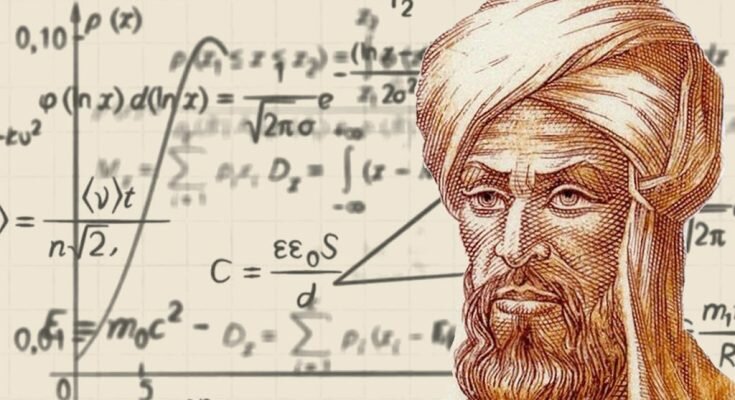
persian scholar from golden-age of islamic science
his name Latinized as "Algorithmi" (Port. "guarismo" and Spanish "algarismo" mean digit)
since 820 A.D. the astronomer and head of the House of Wisdom in Baghdad
contributions to Algebra, Arithmetic, Astronomy, Trigonometry, Geography
3847
<
img
loading
=
„
lazy
“
style
=
„
width
:
auto
;
height
:
42vh
;
float
:
left
;
margin
-
right
:
30px
;
“
src
=
„
/
images
/
prolegomena
/
darkages
/
AlKhwarizmi
.
jpg
“
/><
ul
style
=
„
margin
-
top
:
10px
;
“
><
li
>
persian
scholar
from
golden
-
age
of
islamic
science
<
li
>
his
name
Latinized
as
„
Algorithmi
“
(
Port
.
„
guarismo
“
and
Spanish
„
algarismo
“
mean
digit
)<
li
>
since
820
A
.
D
.
the
astronomer
and
head
of
the
House
of
Wisdom
in
Baghdad
<
li
>
contributions
to
Algebra
''
Arithmetic
''
Astronomy
''
Trigonometry
''
Geography
ul
>
8th century - 12th century :: golden-age of islamic science
integration of Persian and Arabic into one cultural realm
translation of Greek and Roman works into arabic
extension of antique knowledge, e.g. Brothers Musa
more practical than Greek stuff
3848
<
img
loading
=
„
lazy
“
style
=
„
width
:
auto
;
height
:
42vh
;
float
:
left
;
margin
-
right
:
30px
;
“
src
=
„
/
images
/
prolegomena
/
darkages
/
Houseof
.
jpg
“
/><
ul
style
=
„
margin
-
top
:
10px
;
“
><
li
>
8th
century
-
12th
century
::
golden
-
age
of
islamic
science
<
li
>
integration
of
Persian
and
Arabic
into
one
cultural
realm
<
li
>
translation
of
Greek
and
Roman
works
into
arabic
<
li
>
extension
of
antique
knowledge
''
e
.
g
.
Brothers
Musa
<
li
>
more
practical
than
Greek
stuff
ul
>
book about solving quadratic equations
principial mathematical text-book of European Universities until 16th century
al-ğabr ("forcing", "restoring") operation :: moving a deficient quantity from one side of the equation to the other side
al-Muqabala ("balancing" or "corresponding") operation :: subtraction of the same positive quantity from both sides
presented in ordinary text
Al-kitāb al-mukhtaṣar fī ḥisāb al-ğabr wa’l-muqābala, The Compendious Book on Calculation by Completion and Balancing
3849
<
img
loading
=
„
lazy
“
style
=
„
width
:
auto
;
height
:
42vh
;
float
:
left
;
margin
-
right
:
50px
;
“
src
=
„
/
images
/
prolegomena
/
darkages
/
alKitab
.
jpg
“
/><
ul
><
li
>
book
about
solving
quadratic
equations
<
li
>
principial
mathematical
text
-
book
of
European
Universities
until
16th
century
<
li
>
al
-
ğabr
(
„
forcing
“
''
„
restoring
“
)
operation
::
moving
a
deficient
quantity
from
one
side
of
the
equation
to
the
other
side
<
li
>
al
-
Muqabala
(
„
balancing
“
or
„
corresponding
“
)
operation
::
subtraction
of
the
same
positive
quantity
from
both
sides
<
li
>
presented
in
ordinary
text
<
div
class
=
„
copyfck
“
style
=
„
left
:
5vw
;
top
:
55vh
;
“
>
Al
-
kitāb
al
-
mukhtaṣar
fī
ḥisāb
al
-
ğabr
wa
’
l
-
muqābala
''
The
Compendious
Book
on
Calculation
by
Completion
and
Balancing
div
>
If some one says: "You divide ten into two parts: multiply the one by itself; it will be equal to the other taken eighty-one times."
Computation: You say, ten less a thing, multiplied by itself, is a hundred plus a square less twenty things, and this is equal to eighty-one things. Separate the twenty things from a hundred and a square, and add them to eighty-one. It will then be a hundred plus a square, which is equal to a hundred and one roots. Halve the roots; the moiety is fifty and a half. Multiply this by itself, it is two thousand five hundred and fifty and a quarter. Subtract from this one hundred; the remainder is two thousand four hundred and fifty and a quarter. Extract the root from this; it is forty-nine and a half. Subtract this from the moiety of the roots, which is fifty and a half. There remains one, and this is one of the two parts. (1831 English Translation)
3850
<
i
>
If
some
one
says
:
„
You
divide
ten
into
two
parts
:
multiply
the
one
by
itself
;
it
will
be
equal
to
the
other
taken
eighty
-
one
times
.
“
<
br
/>
Computation
:
You
say
''
ten
less
a
thing
''
multiplied
by
itself
''
is
a
hundred
plus
a
square
less
twenty
things
''
and
this
is
equal
to
eighty
-
one
things
.
Separate
the
twenty
things
from
a
hundred
and
a
square
''
and
add
them
to
eighty
-
one
.
It
will
then
be
a
hundred
plus
a
square
''
which
is
equal
to
a
hundred
and
one
roots
.
Halve
the
roots
;
the
moiety
is
fifty
and
a
half
.
Multiply
this
by
itself
''
it
is
two
thousand
five
hundred
and
fifty
and
a
quarter
.
Subtract
from
this
one
hundred
;
the
remainder
is
two
thousand
four
hundred
and
fifty
and
a
quarter
.
Extract
the
root
from
this
;
it
is
forty
-
nine
and
a
half
.
Subtract
this
from
the
moiety
of
the
roots
''
which
is
fifty
and
a
half
.
There
remains
one
''
and
this
is
one
of
the
two
parts
.
i
>
(
1831
English
Translation
)
Kitāb al-Jam‘ wat-Tafrīq bi-Ḥisāb al-Hi("The Book of Addition and Subtraction According to the Hindu Calculation")
Arabic original of the book has been lost
12th century translation by Adelard of Bath (starting with "so said alKhwarizmi") introduced Hindu numerals in the west
Hindu numerals: position-based and including 0
3851
<
img
loading
=
„
lazy
“
style
=
„
width
:
auto
;
height
:
42vh
;
float
:
left
;
margin
-
right
:
50px
;
“
src
=
„
/
images
/
prolegomena
/
darkages
/
dixit
.
png
“
/><
ul
><
li
>
Kitāb
al
-
Jam
‘
wat
-
Tafrīq
bi
-
Ḥisāb
al
-
Hi
(
„
The
Book
of
Addition
and
Subtraction
According
to
the
Hindu
Calculation
“
)<
li
>
Arabic
original
of
the
book
has
been
lost
<
li
>
12th
century
translation
by
Adelard
of
Bath
(
starting
with
„
so
said
alKhwarizmi
“
)
introduced
Hindu
numerals
in
the
west
<
li
>
Hindu
numerals
:
<
b
>
position
-
based
b
>
and
including
<
b
>
0
b
>
ul
>
"the most talented Western mathematician of the Middle Ages"
his book Liber Abaci (1202) popularized the Hindu-Arabic numeral systems in Europe
travelled extensively around the Mediterranean coast, meeting with many merchants and learning about their systems of doing arithmetic
first one to describe Fibonacci sequence
3852
<
img
loading
=
„
lazy
“
style
=
„
width
:
auto
;
height
:
61vh
;
float
:
left
;
margin
-
right
:
100px
;
“
src
=
„
/
images
/
prolegomena
/
darkages
/
fibonacci
.
jpg
“
/><
ul
style
=
„
margin
-
top
:
10px
;
“
><
li
>
„
the
most
talented
Western
mathematician
of
the
Middle
Ages
“
<
li
>
his
book
Liber
Abaci
(
1202
)
popularized
the
Hindu
-
Arabic
numeral
systems
in
Europe
<
li
>
travelled
extensively
around
the
Mediterranean
coast
''
meeting
with
many
merchants
and
learning
about
their
systems
of
doing
arithmetic
<
li
>
first
one
to
describe
Fibonacci
sequence
ul
>
"Suppose a newly-born pair of rabbits, one male, one female, are put in a field. Rabbits are able to mate at the age of one month so that at the end of its second month a female can produce another pair of rabbits. Suppose that our rabbits never die and that the female always produces one new pair (one male, one female) every month from the second month on.
How many pairs will there be in one year?"
"The nine Indian figures are:
9 8 7 6 5 4 3 2 1
With these nine figures, and with the sign 0 which the Arabs call zephir any number whatsoever is written..."
Leonardo Fibonacci of Pisa :: Liber Abaci :: The Book of the Abacus
Presentatio :: BYOD or not BYOD in an elementary school ?
3858
<
ol
><
li
>
Repetitio
::
<
a
href
=
„
/
prolegomena
/
darkages
/
“
target
=
„
blank
“
>
Between
Antiquity
and
Rennaissance
a
>
li
><
li
>
Narratio
::
Wheat
and
chessboard
legend
li
><
li
>
Questio
::
What
is
an
algorithm
?<
br
/>
li
><
li
>
Lectio
::
Between
renaissance
and
Age
of
Reason
<
ul
><
li
>
Descartes
&
Pascal
li
><
li
>
Leibniz
li
>
ul
>
li
><
li
>
Exercitio
::
Binary
counting
.<
li
>
Presentatio
::
BYOD
or
not
BYOD
in
an
elementary
school
?
"Oh emperor, my wishes are simple. I only wish for this. Give me one grain of rice for the first square of the chessboard, two grains for the next square, four for the next, eight for the next and so on for all 64 squares, with each square having double the number of grains as the square before."
3859
<
img
loading
=
„
lazy
“
style
=
„
width
:
auto
;
height
:
42vh
;
float
:
left
;
margin
-
right
:
30px
;
“
src
=
„
/
images
/
prolegomena
/
lumieres
/
Wheat
and
chessboard
problem
.
jpg
“
/>
„
Oh
emperor
''
my
wishes
are
simple
.
I
only
wish
for
this
.
Give
me
one
grain
of
rice
for
the
first
square
of
the
chessboard
''
two
grains
for
the
next
square
''
four
for
the
next
''
eight
for
the
next
and
so
on
for
all
64
squares
''
with
each
square
having
double
the
number
of
grains
as
the
square
before
.
“
What is an algorithm ?
3860
<
div
style
=
„
font
-
size
:
100px
;
“
>
What
is
an
algorithm
?
div
><
br
/>
algorithm (n.)
...
3861
<
ul
style
=
„
margin
-
top
:
20px
;
“
><
li
>
algorithm
(
n
.)<
br
/>...
ul
>
a procedure for solving a mathematical problem in a finite number of steps that frequently involves repetition of an operation
a step-by-step procedure for solving a problem or accomplishing some end
Name some examples of an algorithm.
3862
<
ul
><
li
>
a
procedure
for
solving
a
mathematical
problem
in
a
finite
number
of
steps
that
frequently
involves
repetition
of
an
operation
li
><
li
>
a
step
-
by
-
step
procedure
for
solving
a
problem
or
accomplishing
some
end
li
><
ul
><
div
style
=
„
color
:
red
;
margin
-
top
:
25px
;
margin
-
left
:
25px
;
“
>
Name
some
examples
of
an
algorithm
.
div
>
polymath
at 23-years of age, his dreams pose him in front of a question: Quod vitae sectabor iter?
establishement of scientific method (based on "doubitatio")
"I should like you to consider that these functions (including passion, memory, and imagination) follow from the mere arrangement of the machine’s organs every bit as naturally as the movements of a clock or other automaton follow from the arrangement of its counter-weights and wheels." (Descartes, Treatise on Man, p.108)
3864
<
img
loading
=
„
lazy
“
style
=
„
width
:
auto
;
height
:
33vh
;
float
:
left
;
margin
-
right
:
30px
;
“
src
=
„
/
images
/
prolegomena
/
lumieres
/
Homunculus
.
jpg
“
/>
„
I
should
like
you
to
consider
that
these
functions
(
including
passion
''
memory
''
and
imagination
)
follow
from
the
mere
arrangement
of
the
machine
’
s
organs
every
bit
as
naturally
as
the
movements
of
a
clock
or
other
automaton
follow
from
the
arrangement
of
its
counter
-
weights
and
wheels
.
“
(
Descartes
''
Treatise
on
Man
''
p
.
108
)
...makes computer graphics possible...
and much, much more...
3865
<
img
loading
=
„
lazy
“
style
=
„
width
:
auto
;
height
:
77vh
;
float
:
left
;
margin
-
right
:
50px
;
“
src
=
„
/
images
/
prolegomena
/
lumieres
/
Cartesian
-
coordinate
-
system
-
with
-
circle
.
svg
“
/>...
makes
computer
graphics
possible
...<
br
/><
br
/>
and
much
''
much
more
...
polymath
in 19years of age started to build first mechanical calculators ("Pascalines")
ground-breaking works in mathematics (Pascal's triangle), geometry (Pascal's theorem), physics (Pascal's law), theology (Pascal's wager)
develops first public transport in the world
dies young, last words: "Puisse Dieu ne jamais m'abandonner"
Death mask of Blaise Pascal
3866
<
img
loading
=
„
lazy
“
style
=
„
width
:
auto
;
height
:
42vh
;
float
:
left
;
margin
-
right
:
50px
;
“
src
=
„
/
images
/
prolegomena
/
lumieres
/
001Paskal
.
JPG
“
/><
ul
style
=
„
margin
-
left
:
80px
;
“
><
li
>
polymath
<
li
>
in
19years
of
age
started
to
build
first
mechanical
calculators
(
„
Pascalines
“
)
i
><
li
>
ground
-
breaking
works
in
mathematics
(
Pascal
'
s
triangle
)''
geometry
(
Pascal
'
s
theorem
)''
physics
(
Pascal
'
s
law
)''
theology
(
Pascal
'
s
wager
)<
li
>
develops
first
public
transport
in
the
world
li
><
li
>
dies
young
''
last
words
:
„
Puisse
Dieu
ne
jamais
m
'
abandonner
“
li
>
ul
><
div
class
=
„
copyfck
“
style
=
„
left
:
5vw
;
top
:
57vh
;
“
>
Death
mask
of
Blaise
Pascal
div
>
3867
<
iframe
width
=
„
800
“
height
=
„
600
“
src
=
„
https
://
www
.
youtube
.
com
/
embed
/
GX4RQK
__
fQc
“
frameborder
=
„
0
“
allow
=
„
accelerometer
;
autoplay
;
encrypted
-
media
;
gyroscope
;
picture
-
in
-
picture
“
allowfullscreen
>
iframe
>
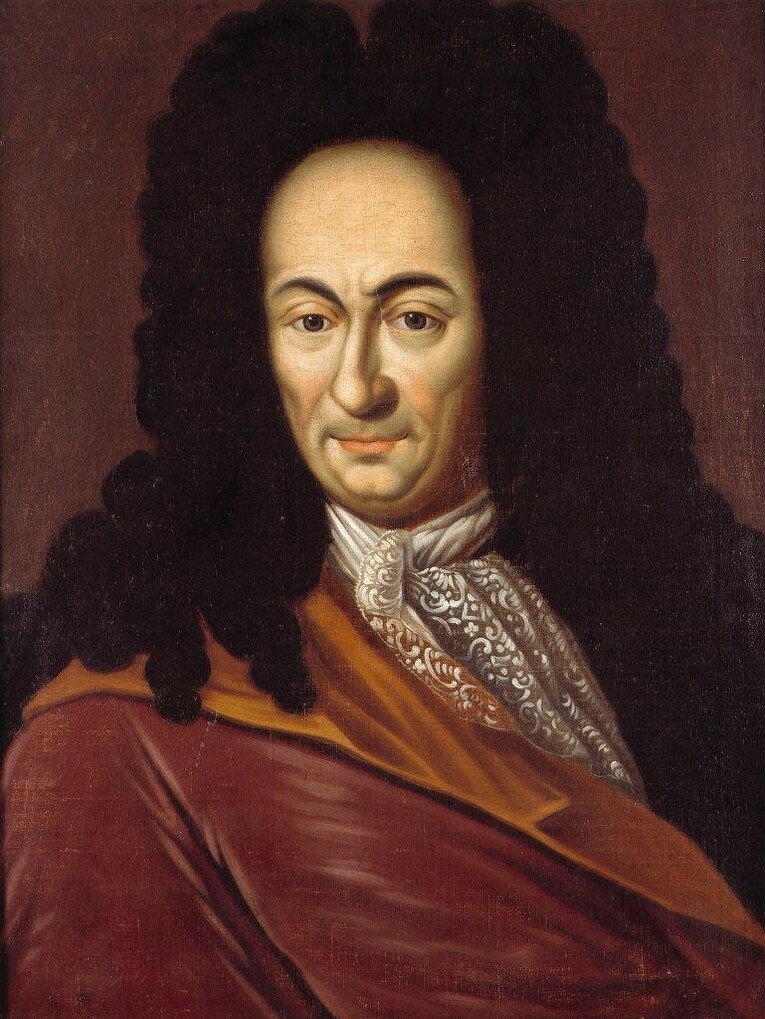
one of the last big polymaths
advanced disciplines of philosophy (monadology, theodicea, why is there something rather than nothing?), mathematics (probability theory, calculus), biology, medicine, geology, psychology, linguistics, computer science, philosophy, politics, law, ethics, theology, history, philology, library science
3868
<
img
loading
=
„
lazy
“
style
=
„
width
:
auto
;
height
:
31vh
;
float
:
left
;
margin
-
right
:
100px
;
“
src
=
„
/
images
/
prolegomena
/
lumieres
/
Leibniz
.
jpg
“
/><
ul
style
=
„
margin
-
top
:
10px
;
“
><
li
>
one
of
the
last
big
polymaths
<
li
>
advanced
disciplines
of
philosophy
(
monadology
''
theodicea
''
why
is
there
something
rather
than
nothing
?)''
mathematics
(
probability
theory
''
calculus
)''
biology
''
medicine
''
geology
''
psychology
''
linguistics
''
computer
science
''
philosophy
''
politics
''
law
''
ethics
''
theology
''
history
''
philology
''
library
science
ul
>
"... it is beneath the dignity of excellent men to waste their time in calculation when any peasant could do the work just as accurately with the aid of a machine." (G.W.L, 1673)
presented to Royal Society on 1st February 1673
could add, subtract, multiply and divide
"the core component is a so-called "Leibniz wheel"
represent (v.)
late 14c., "to bring to mind by description," also "to symbolize, serve as a sign or symbol of; serve as the type or embodiment of;" from Latin repraesentare "make present, set in view, show, exhibit, display," from re-, intensive prefix , + praesentare "to present," literally "to place before," from praesens) "present, at hand, in sight; immediate; prompt, instant; contemporary," from present participle of præesse "be before (someone or something), be at hand," fro prae- "before" (see pre-) + esse "to be" (from PIE root *es- "to be").
3877
<
ul
style
=
„
margin
-
top
:
20px
;
“
><
li
>
represent
(
v
.)<
br
/>
late
14c
.''
„
<
i
>
to
bring
to
mind
by
description
i
>''
“
also
„
<
i
>
to
symbolize
''
serve
as
a
sign
or
symbol
of
;
serve
as
the
type
or
embodiment
of
;
i
>
“
from
Latin
repraesentare
„
<
i
>
make
present
''
set
in
view
''
show
''
exhibit
''
display
i
>''
“
from
<
b
>
re
-
b
>''
intensive
prefix
''
+
<
b
>
praesentare
b
>
„
to
present
''
“
literally
„
to
place
before
''
“
from
praesens
)
„
present
''
at
hand
''
in
sight
;
immediate
;
prompt
''
instant
;
contemporary
''
“
from
present
participle
of
præesse
„
be
before
(
someone
or
something
)''
be
at
hand
''
“
fro
<
b
>
prae
-
„
before
“
b
>
(
see
pre
-)
+
<
b
>
esse
„
to
be
“
b
>
(
from
PIE
root
*
es
-
„
to
be
“
).
ul
>
The description or portrayal of someone or something in a particular way.
The depiction of someone or something in a work of art.
A picture, model, or other depiction of someone or something.
(in some theories of perception) a mental state or concept regarded as corresponding to a thing perceived.
Name some examples of X being a representation of Y.
3878
<
ul
><
li
>
The
description
or
portrayal
of
someone
or
something
in
a
particular
way
.<
ol
><
li
>
The
depiction
of
someone
or
something
in
a
work
of
art
.<
li
>
A
picture
''
model
''
or
other
depiction
of
someone
or
something
.<
li
>
(
in
some
theories
of
perception
)
a
mental
state
or
concept
regarded
as
corresponding
to
a
thing
perceived
.
ol
><
ul
><
div
style
=
„
color
:
red
;
margin
-
top
:
25px
;
margin
-
left
:
25px
;
“
>
Name
some
examples
of
X
being
a
representation
of
Y
.
div
>
Somebody willing to make a video of the Jacquard Loom at the TM next week ?
3879
<
iframe
width
=
„
800
“
height
=
„
600
“
src
=
„
https
://
www
.
youtube
.
com
/
embed
/
lwozgRPLVC8
“
frameborder
=
„
0
“
allow
=
„
accelerometer
;
autoplay
;
encrypted
-
media
;
gyroscope
;
picture
-
in
-
picture
“
allowfullscreen
>
iframe
><
div
style
=
„
color
:
red
;
margin
-
top
:
25px
;
margin
-
left
:
25px
;
“
>
Somebody
willing
to
make
a
video
of
the
Jacquard
Loom
at
the
TM
next
week
?
div
>
polymath, KH FRS, Victorian gentleman etc.
mathematician, philosopher, inventor and mechanical engineer
"father of the computer"
author of "difference engine" (could solve polynomial equations of 7th order)
author of "analytical engine" (a generic programmable computer)
"the true value of ... religion rested, not on speculative [theology] upon those doctrines of kindness and benevolence which that religion claims and enforces, not merely in favour of man himself but of every creature susceptible of pain or of happiness" C. Babbage
3880
<
img
loading
=
„
lazy
“
style
=
„
width
:
auto
;
height
:
42vh
;
float
:
left
;
margin
-
right
:
50px
;
“
src
=
„
/
images
/
prolegomena
/
information
/
Babbage
.
jpg
“
/><
ul
style
=
„
margin
-
left
:
80px
;
“
><
li
>
polymath
''
KH
FRS
''
Victorian
gentleman
etc
.
li
><
li
>
mathematician
''
philosopher
''
inventor
and
mechanical
engineer
li
><
li
>
„
father
of
the
computer
“
li
><
li
>
author
of
„
difference
engine
“
(
could
solve
polynomial
equations
of
7th
order
)
<
li
>
author
of
„
analytical
engine
“
(
a
generic
programmable
computer
)
li
>
ul
><
div
class
=
„
copyfck
“
style
=
„
left
:
5vw
;
top
:
57vh
;
“
><
i
>
„
the
true
value
of
...
religion
rested
''
not
on
speculative
[
theology
]
upon
those
doctrines
of
kindness
and
benevolence
which
that
religion
claims
and
enforces
''
not
merely
in
favour
of
man
himself
but
of
every
creature
susceptible
of
pain
or
of
happiness
“
i
>
C
.
Babbage
div
>
3881
<
iframe
width
=
„
800
“
height
=
„
600
“
src
=
„
https
://
www
.
youtube
.
com
/
embed
/
0anIyVGeWOI
“
frameborder
=
„
0
“
allow
=
„
accelerometer
;
autoplay
;
encrypted
-
media
;
gyroscope
;
picture
-
in
-
picture
“
allowfullscreen
>
iframe
>
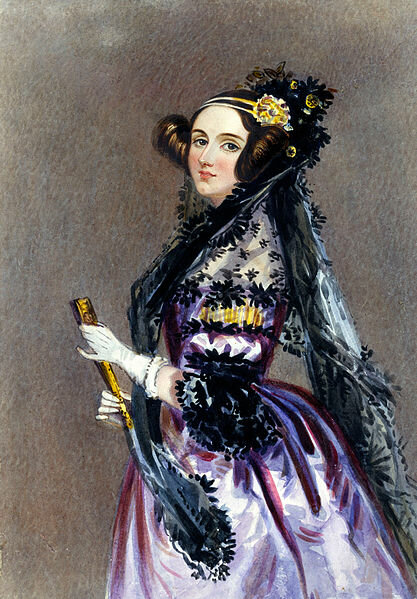
daughter of Lord Byron
mother promoted Ada's interest in mathematics and logics, student od Augustus de Morgan
associate of Charles Babbage ("Enchantress of Numbers")
author of the first computer program (algorithm for computation of Bernoulli numbers)
died young of uterine cancer
3882
<
img
loading
=
„
lazy
“
style
=
„
width
:
auto
;
height
:
41vh
;
float
:
left
;
margin
-
right
:
100px
;
“
src
=
„
/
images
/
prolegomena
/
information
/
Ada1852
.
jpg
“
/><
ul
style
=
„
margin
-
top
:
10px
;
“
><
li
>
daughter
of
Lord
Byron
<
li
>
mother
promoted
Ada
'
s
interest
in
mathematics
and
logics
''
student
od
Augustus
de
Morgan
<
li
>
associate
of
Charles
Babbage
(
„
Enchantress
of
Numbers
“
)<
li
>
author
of
the
first
computer
program
(
algorithm
for
computation
of
Bernoulli
numbers
)<
li
>
died
young
of
uterine
cancer
ul
>
Note A, p. 694 :: Again, it [the Analytical Engine] might act upon other things besides number, were objects found whose mutual fundamental relations could be expressed by those of the abstract science of operations, and which should be also susceptible of adaptations to the action of the operating notation and mechanism of the engine . . . Supposing, for instance, that the fundamental relations of pitched sounds in the science of harmony and of musical composition were susceptible of such expression and adaptations, the engine might compose elaborate and scientific pieces of music of any degree of complexity or extent.
3883
<
p
>
Note
A
''
p
.
694
::
Again
''
it
[
the
Analytical
Engine
]
might
<
b
>
act
upon
other
things
besides
number
b
>''
were
objects
found
whose
mutual
fundamental
relations
could
be
expressed
by
those
of
the
<
b
>
abstract
science
of
operations
b
>''
and
which
should
be
also
susceptible
of
adaptations
to
the
action
of
the
operating
notation
and
mechanism
of
the
engine
.
.
.
Supposing
''
for
instance
''
that
the
fundamental
relations
of
pitched
sounds
in
the
science
of
harmony
and
of
musical
composition
were
susceptible
of
such
expression
and
adaptations
''
the
engine
might
compose
elaborate
and
scientific
pieces
of
music
of
any
degree
of
complexity
or
extent
.
p
>
The distinctive characteristic of the Analytical Engine, and that which has rendered it possible to endow mechanism with such extensive faculties as bid fair to make this engine the executive right-hand of abstract algebra, is the introduction into it of the principle which Jacquard devised for regulating, by means of punched cards, the most complicated patterns in the fabrication of brocaded stuffs...We may say most aptly that the Analytical Engine weaves algebraical patterns just as the Jacquard-loom weaves flowers and leaves.
3884
<
p
>
The
distinctive
characteristic
of
the
Analytical
Engine
''
and
that
which
has
rendered
it
possible
to
endow
mechanism
with
such
extensive
faculties
as
bid
fair
to
make
this
engine
the
executive
right
-
hand
of
abstract
algebra
''
is
the
introduction
into
it
of
the
principle
which
Jacquard
devised
for
<
b
>
regulating
''
by
means
of
punched
cards
''
the
most
complicated
patterns
b
>
in
the
fabrication
of
brocaded
stuffs
...
We
may
say
most
aptly
that
the
Analytical
Engine
weaves
<
b
>
algebraical
patterns
b
>
just
as
the
Jacquard
-
loom
weaves
flowers
and
leaves
.
p
>
another Victorian gentleman
at 17 years of age "a thought struck him suddenly, which became the foundation of all his future discoveries"
author of "Laws of Thought or An Investigation of the Laws of Thought on Which are Founded the Mathematical Theories of Logic and Probabilities" (1854)
Boolean algebra
being a professional prof cost him his Life
Think what must have been the effect of the intense Hinduizing of three such men as Babbage, De Morgan, and George Boole on the mathematical atmosphere of 1830 - 1864. What share had it in generating the Vector Analysis and the mathematics by which investigations in physical science are now conducted? Mary Boole
3885
<
img
loading
=
„
lazy
“
style
=
„
width
:
auto
;
height
:
42vh
;
float
:
left
;
margin
-
right
:
50px
;
“
src
=
„
/
images
/
prolegomena
/
information
/
Boole
.
jpg
“
/><
ul
style
=
„
margin
-
left
:
80px
;
“
><
li
>
another
Victorian
gentleman
li
><
li
>
at
17
years
of
age
„
a
thought
struck
him
suddenly
''
which
became
the
foundation
of
all
his
future
discoveries
“
li
><
li
>
author
of
„
Laws
of
Thought
or
An
Investigation
of
the
Laws
of
Thought
on
Which
are
Founded
the
Mathematical
Theories
of
Logic
and
Probabilities
“
(
1854
)<
li
>
Boolean
algebra
<
li
>
being
a
professional
prof
cost
him
his
Life
ul
><
div
class
=
„
copyfck
“
style
=
„
left
:
5vw
;
top
:
57vh
;
“
><
i
>
Think
what
must
have
been
the
effect
of
the
intense
Hinduizing
of
three
such
men
as
Babbage
''
De
Morgan
''
and
George
Boole
on
the
mathematical
atmosphere
of
1830
-
1864
.
What
share
had
it
in
generating
the
Vector
Analysis
and
the
mathematics
by
which
investigations
in
physical
science
are
now
conducted
?
i
>
Mary
Boole
div
>
united algebra and logic
replaced propositional form of Aristotle's logic to equation-like formulae and introduced "laws" which can solve them
logical formulae could contain more than two subject-predicate propositions (i.e. no A that is B is C that is D)
introduced logic functions and truth tables
3886
<
img
loading
=
„
lazy
“
style
=
„
width
:
auto
;
height
:
42vh
;
float
:
right
;
margin
-
left
:
50px
;
“
src
=
„
/
images
/
prolegomena
/
information
/
Laws
.
png
“
/><
ul
style
=
„
margin
-
right
:
80px
;
“
><
li
>
united
algebra
and
logic
<
li
>
replaced
propositional
form
of
Aristotle
'
s
logic
to
equation
-
like
formulae
and
introduced
„
laws
“
which
can
solve
them
<
li
>
logical
formulae
could
contain
more
than
two
subject
-
predicate
propositions
(
i
.
e
.
no
A
that
is
B
is
C
that
is
D
)<
li
>
introduced
logic
functions
and
truth
tables
ul
>
3887
<
img
loading
=
„
lazy
“
style
=
„
width
:
auto
;
width
:
80vw
;
float
:
right
;
margin
-
left
:
50px
;
“
src
=
„
/
images
/
prolegomena
/
information
/
truth
-
table
.
png
“
/>
3888
Repetitio I:: Zuse computers
Exercitio I:: Binary counting
Presentatio I :: Notes of Augusta Ada Byron King
Questiae
Presentatio II :: Binary adder
Exercitio II :: Binary adder on Your hands
Presentatio III: Digitale Klang in Alltag
3889
<
ol
><
li
>
Repetitio
I
::
Zuse
computers
<
li
>
Exercitio
I
::
Binary
counting
<
li
>
Presentatio
I
::
Notes
of
Augusta
Ada
Byron
King
<
li
>
Questiae
<
li
>
Presentatio
II
::
Binary
adder
<
li
>
Exercitio
II
::
Binary
adder
on
Your
hands
<
li
>
Presentatio
III
:
Digitale
Klang
in
Alltag
ol
>
... is to make You experience main operatory principles of information-processing machines.
3890
<
div
style
=
„
font
-
size
:
82px
;
“
>...
is
to
make
You
<
b
>
experience
b
>
main
operatory
principles
of
information
-
processing
machines
.
div
><
br
/>
Note: rod logic (shall be used in nano-computers) operates in the same way
3891
<
img
loading
=
„
lazy
“
src
=
„
/
images
/
prolegomena
/
repetitio
/
Z1
.
jpg
“
style
=
„
height
:
61vh
;
float
:
left
;
“
>
Note
:
<
a
href
=
„
http
://
www
.
halfbakedmaker
.
org
/
blog
/
58
“
>
rod
logic
a
>
(
shall
be
used
in
nano
-
computers
)
operates
in
the
same
way
3892
<
p
style
=
„
margin
-
top
:
20px
;
“
><
img
loading
=
„
lazy
“
src
=
„
/
images
/
prolegomena
/
repetitio
/
Z3
.
jpg
“
>
p
>
3893
What is a representation ?
What is an algorithm ?
What is a digit ?
What is a machine ?
Please give not only definitions but also examples!
3894
<
ul
><
li
>
What
is
a
representation
?
li
><
li
>
What
is
an
algorithm
?
li
><
li
>
What
is
a
digit
?
li
><
li
>
What
is
a
machine
?
li
>
ul
>
Please
give
not
only
definitions
but
also
examples
!
3895
Rule
Input R
Input L
Input Carry
Output
Output Carry
0
0
0
0
0
0
1
1
0
0
1
0
2
0
1
0
1
0
3
1
1
0
0
1
4
0
0
1
1
0
5
1
0
1
0
1
6
0
1
1
0
1
7
1
1
1
1
1
3896
<
table
style
=
„
width
:
100
%;
border
:
solid
1px
;
“
><
tr
><
th
>
Rule
td
><
th
>
Input
R
th
><
th
>
Input
L
th
><
th
>
Input
Carry
th
><
th
>
Output
th
><
th
>
Output
Carry
th
>
tr
><
tr
><
td
>
0
td
><
td
>
0
td
><
td
>
0
td
><
td
>
0
td
><
td
>
0
td
><
td
>
0
td
>
tr
><
tr
><
td
>
1
td
><
td
>
1
td
><
td
>
0
td
><
td
>
0
td
><
td
>
1
td
><
td
>
0
td
>
tr
><
tr
><
td
>
2
td
><
td
>
0
td
><
td
>
1
td
><
td
>
0
td
><
td
>
1
td
><
td
>
0
td
>
tr
><
tr
><
td
>
3
td
><
td
>
1
td
><
td
>
1
td
><
td
>
0
td
><
td
>
0
td
><
td
>
1
td
>
tr
><
tr
><
td
>
4
td
><
td
>
0
td
><
td
>
0
td
><
td
>
1
td
><
td
>
1
td
><
td
>
0
td
>
tr
><
tr
><
td
>
5
td
><
td
>
1
td
><
td
>
0
td
><
td
>
1
td
><
td
>
0
td
><
td
>
1
td
>
tr
><
tr
><
td
>
6
td
><
td
>
0
td
><
td
>
1
td
><
td
>
1
td
><
td
>
0
td
><
td
>
1
td
>
tr
><
tr
><
td
>
7
td
><
td
>
1
td
><
td
>
1
td
><
td
>
1
td
><
td
>
1
td
><
td
>
1
td
>
tr
>
table
>
Init: Set up Your inputs. Carry is zero.
Start from the rightmost position (represented by thumb).
Apply the transition rule (if necessary, flip the carry to an opposite state).
Set the output bit of the current position.
Proceed to higher position (following finger).
HALT if carry and all inputs are zero, otherwise repeat steps 2-6
3897
<
ol
><
li
>
Init
:
Set
up
Your
inputs
.
Carry
is
zero
.<
li
>
Start
from
the
rightmost
position
(
represented
by
thumb
).<
li
>
Apply
the
transition
rule
(
if
necessary
''
flip
the
carry
to
an
opposite
state
).<
li
>
Set
the
output
bit
of
the
current
position
.<
li
>
Proceed
to
higher
position
(
following
finger
).<
li
>
HALT
if
carry
and
all
inputs
are
zero
''
otherwise
repeat
steps
2
-
6
ol
>
3898
3899
What is a representation ?
portrait of Ada King, countess of Lovelace (cca 1840)
3900
What
is
a
representation
?<
br
/>
<
img
loading
=
„
lazy
“
style
=
„
width
:
auto
;
height
:
61vh
;
“
src
=
„
/
images
/
prolegomena
/
level1
/
AdaLovelace
.
jpg
“
/><
br
/><
div
class
=
„
copyfck
“
style
=
„
left
:
30vw
;
“
>
portrait
of
Ada
King
''
countess
of
Lovelace
(
cca
1840
)
div
>
What is information ?
3901
What
is
information
?<
br
/>
17th January
Question of the day: Can machines think ?
Topic: Hommage to A.M.T.
Hero of the day: Alan Matthison Turing
3902
17th
January
<
br
>
Question
of
the
day
:
Can
machines
think
?<
br
/>
Topic
:
Hommage
to
A
.
M
.
T
.<
br
/>
Hero
of
the
day
:
Alan
Matthison
Turing
<
br
>
24th January
Question of the day: Can machines understand ?
Topic: Programming languages and operating systems
Heroes: von Neumann, Ritchie & Thomson, Tanenbaum, Gates, Torvalds
3903
24th
January
<
br
/>
Question
of
the
day
:
Can
machines
understand
?<
br
/>
Topic
:
Programming
languages
and
operating
systems
<
br
/>
Heroes
:
von
Neumann
''
Ritchie
&
Thomson
''
Tanenbaum
''
Gates
''
Torvalds
<
br
/>
31th January
Question of the day: Can machines evolve ?
Topic: Internet and the emergence of planetary A.I.
Heroes: Snowden, Nakamoto, hacker community
3904
31th
January
<
br
/>
Question
of
the
day
:
Can
machines
evolve
?<
br
/>
Topic
:
Internet
and
the
emergence
of
planetary
A
.
I
.<
br
/>
Heroes
:
Snowden
''
Nakamoto
''
hacker
community
<
br
/>
7th February
Question of the day: Can machines see ?
Topic of the day: Embedded systems and digital artefacts
Hero of the day: Limor Fried
3905
7th
February
<
br
/>
Question
of
the
day
:
Can
machines
see
?<
br
/>
Topic
of
the
day
:
Embedded
systems
and
digital
artefacts
<
br
/>
Hero
of
the
day
:
Limor
Fried
14th February
The Futurological Congress AE1000000
3906
14th
February
<
br
/><
h1
>
The
Futurological
Congress
AE1000000
h1
>
What is information ?
What is NOT information ?
3907
What
is
information
?<
br
/>
What
is
NOT
information
?<
br
/>
Etymology of the word "to inform"
early 14c., "to train or instruct in some specific subject," from Old French informer, enformer "instruct, teach" (13c.) and directly from Latin informare "to shape, give form to, delineate," figuratively "train, instruct, educate," from in- "into" (from PIE root *en "in") + formare "to form, shape," from forma "form". Sense of "communicate facts or news" first recorded late 14c.