Fascism is a memeplex whose components parasitize our inborn propensities.
Father & family → kinship. Leader → dominance hierarchy. Nation → tribe. Enemy → fear & disgust.
It invents nothing. It hijacks.
Mechanism: evolved social instincts exploited by replicating ideas
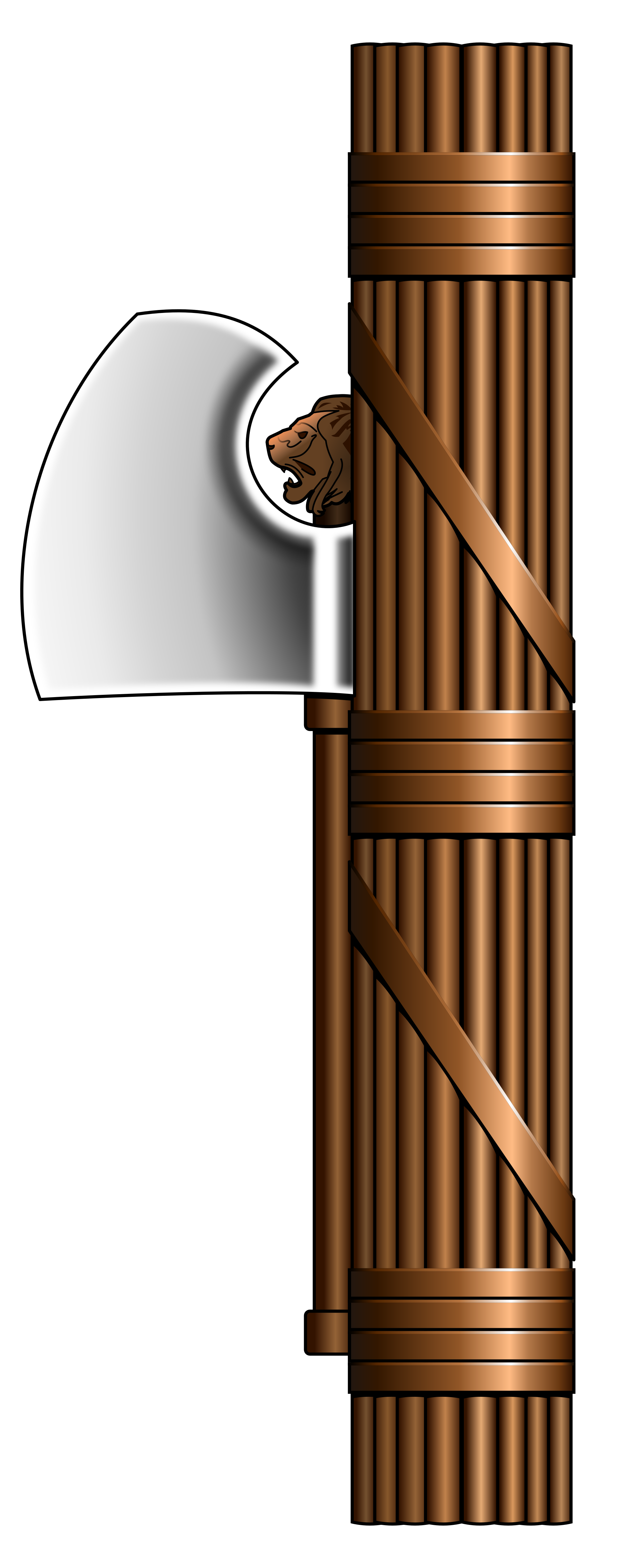
Fasces lictoriae. Wikimedia Commons, public domain
A word everyone uses, and no two people mean the same by.
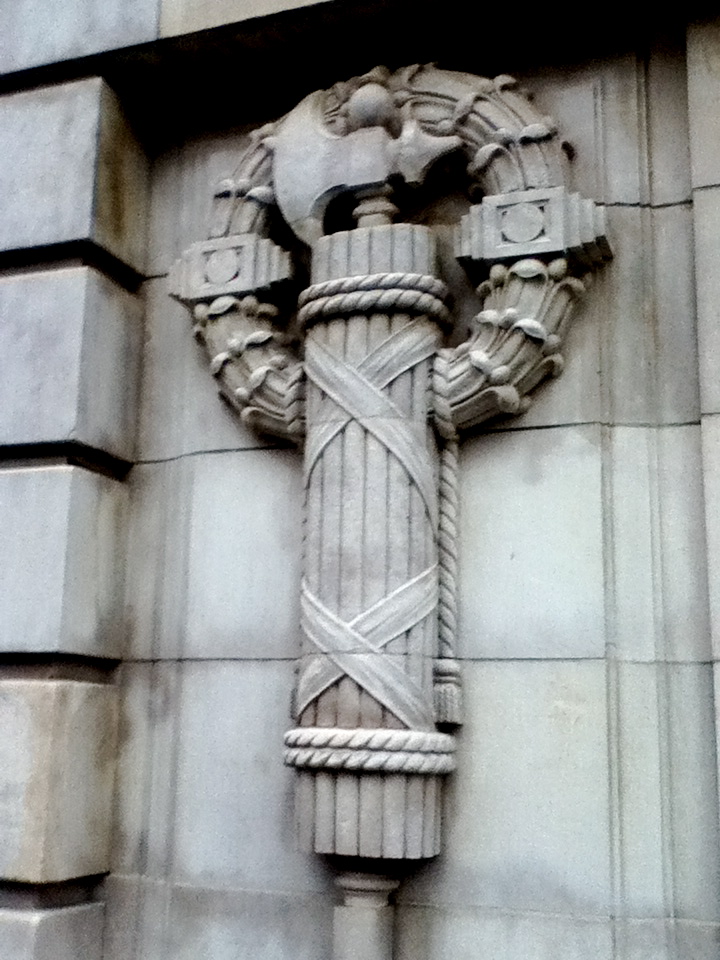
Fasces relief on a building. Alan Myers, Wikimedia Commons, CC BY 2.0
Fascio: a bundle of rods. One rod breaks. The bundle does not.
The more the word is used, the less it says.
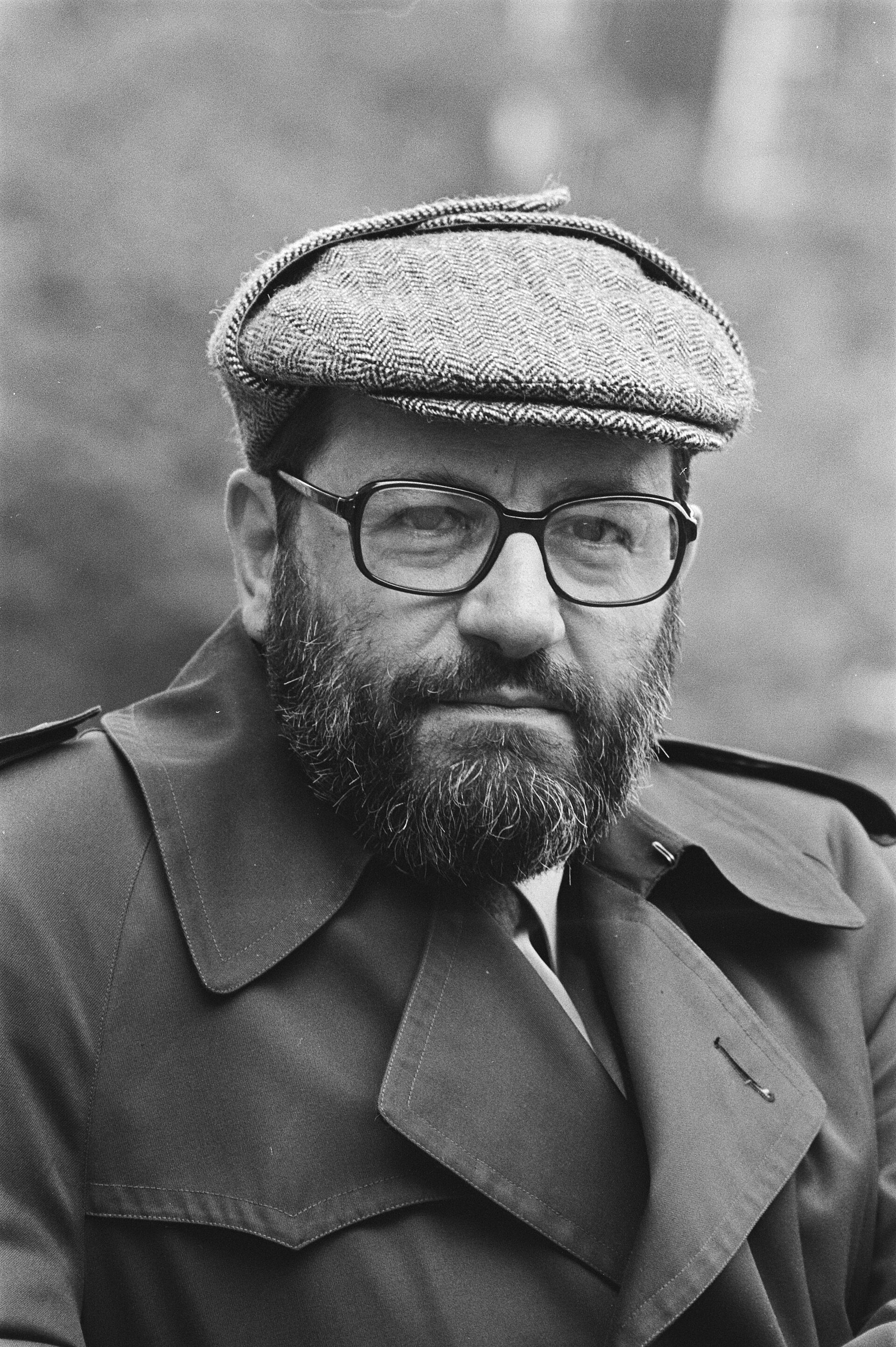
Umberto Eco. Rob Bogaerts / Anefo, Wikimedia Commons, CC0
Eco, 1995: fourteen features, no system — and one is enough for fascism to coagulate around it.
We are one exceptional people, united by blood, culture, or historical destiny.
Mechanism: Social identification, in-group cohesion, collective narcissism
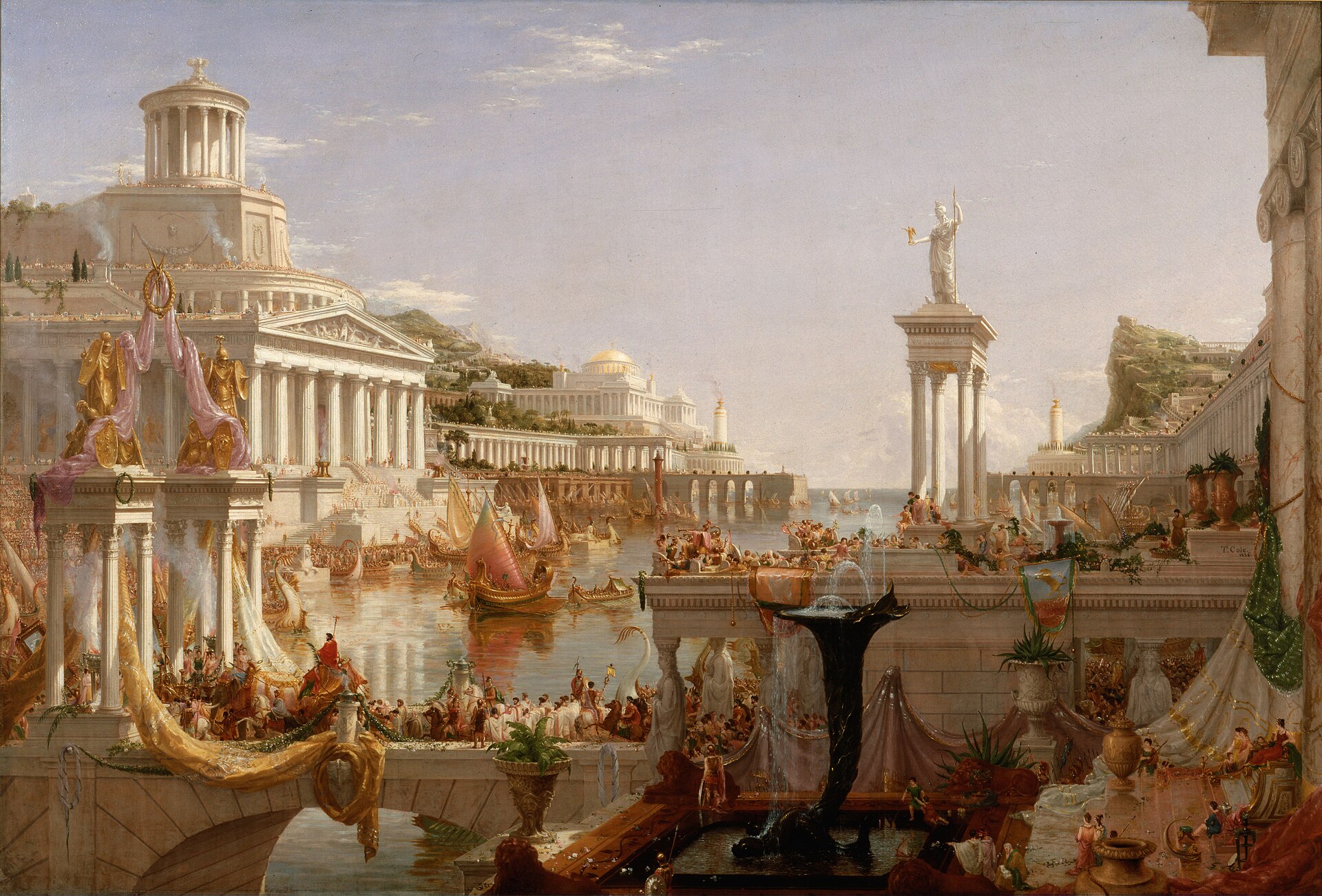
Thomas Cole, The Consummation of Empire (1836). Wikimedia Commons, public domain
Once upon a time everything was good; it has been taken from us but the time will come when WE (not THEM) will be great again.
Mechanism: Nostalgia, idealization, selective cultural memory, reference to early childhood
Our nation is declining and faces an existential threat.
Mechanism: Fear, perceived loss, urgency, threat amplification
The broken world is caused by enemies, traitors, parasites, secret societies, alien influences &c. We suffer because THEY are among US.
Mechanism: Scapegoating, out-group hostility, conspiracy thinking
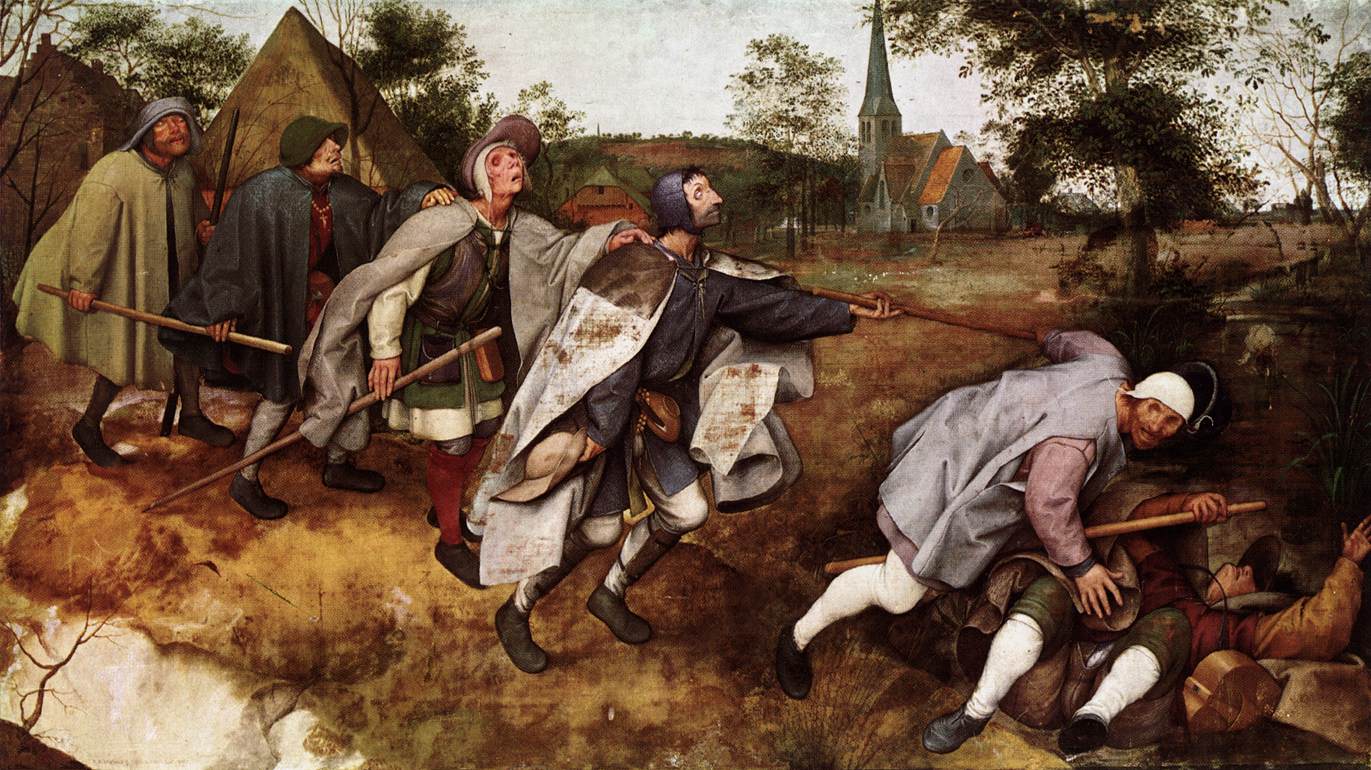
Pieter Bruegel the Elder, The Parable of the Blind (1568). Wikimedia Commons, public domain
Only an exceptional leader can save us and restore our greatness.
Mechanism: Authority bias, identification, charismatic attachment
The collective comes first; dissent weakens us and may constitute betrayal.
Mechanism: Conformity, social pressure, suppression of disagreement
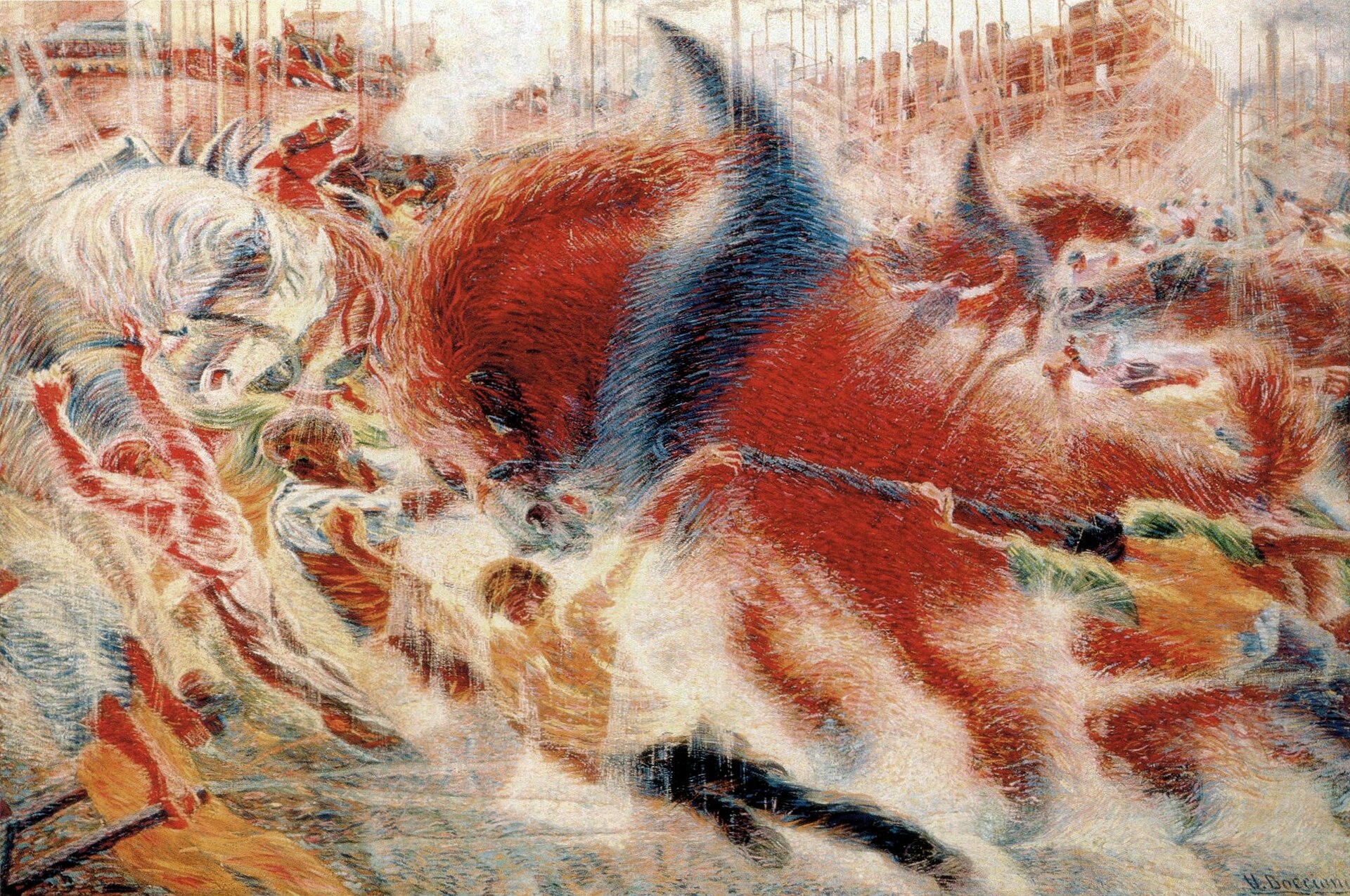
Umberto Boccioni, The City Rises (1910). Wikimedia Commons, public domain
Strength, sacrifice, and violence are necessary to regenerate the nation.
Mechanism: Heroic identification, glorification of aggression, moral disengagement
Some peoples and individuals are naturally superior and entitled to rule.
Mechanism: Status competition, dominance, essentialist categorization
Through common symbols, rituals, gestures, and mass participation, we become one.
Mechanism: Emotional synchrony, behavioral imitation, ritual reinforcement
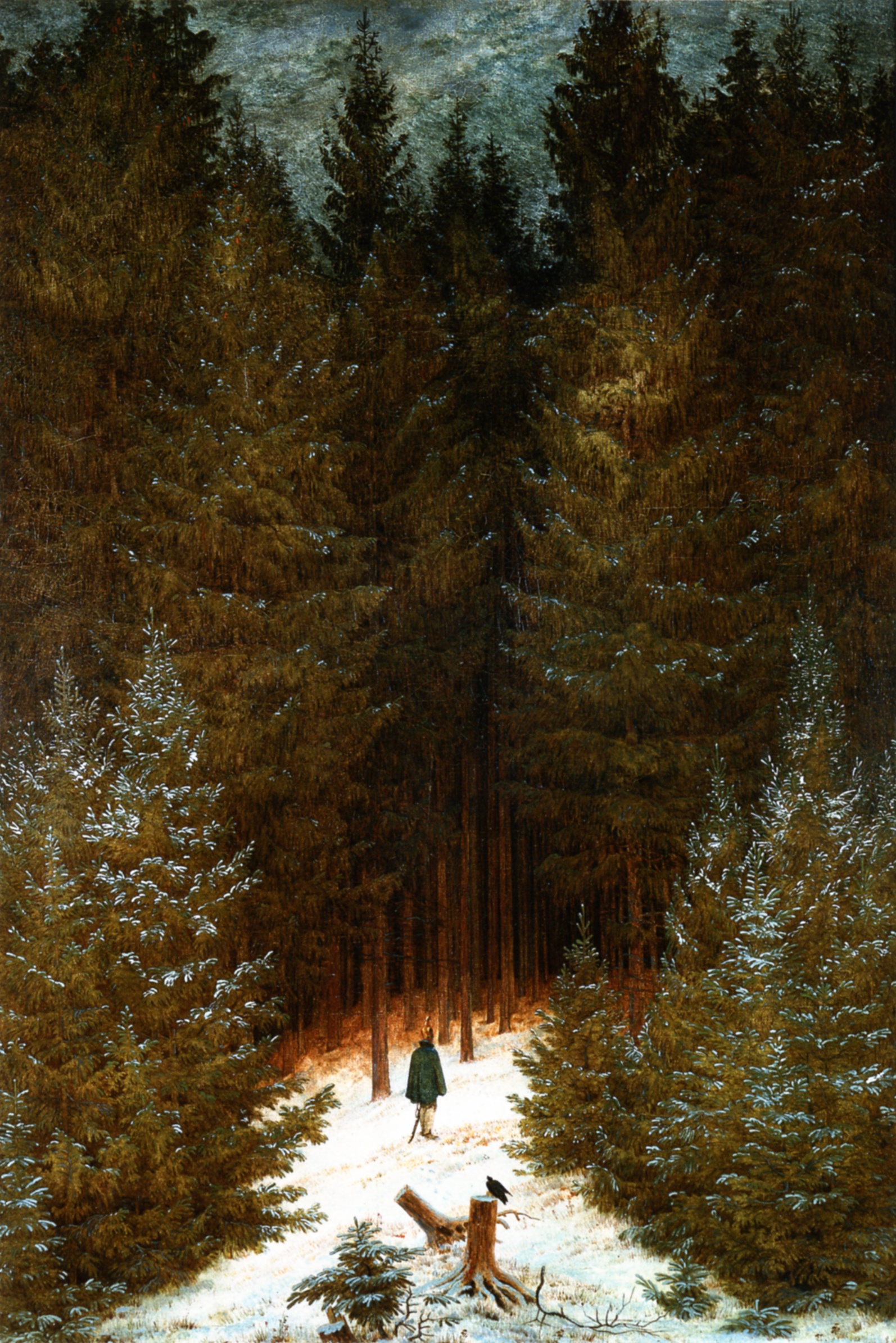
Caspar David Friedrich, The Chasseur in the Forest (1814). Wikimedia Commons, public domain
Geo-sentiment (P. R. Sarkar, Neohumanism, 1982): attachment to one’s geographical environment.
“This land is ours by birth, blood, destiny and/or will of god(s). It is sacred, inseparable from our identity, and must be defended, purified, or reclaimed.”
Mechanism: place attachment, territorial identification, sacred-value attribution, in-group/out-group boundary formation, collective nostalgia, perceived territorial threat, emotional mobilization through geographical symbols.
A memeplex spreads through what we already have: bodies, symbols, belonging.
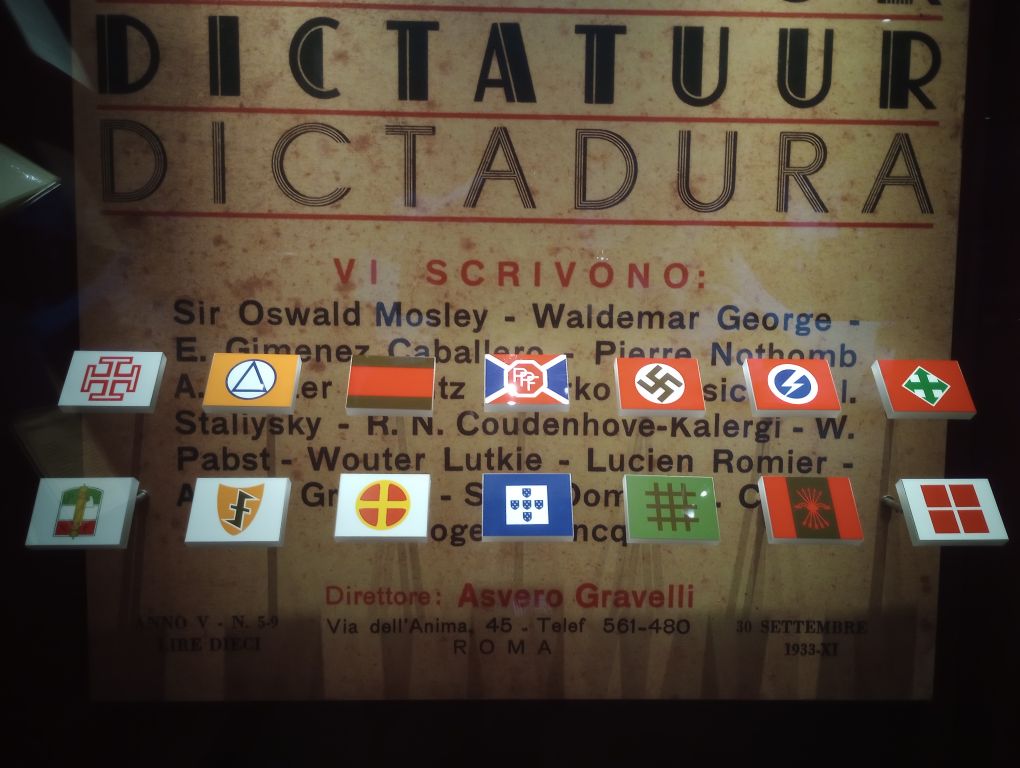
A symbol is a meme small enough to fit on an armband.
Look first not at what the signs mean, but at how they are made.
Form is not guilt: the swastika is thousands of years older than the Nazis. But form is what lets a sign be copied, massed and obeyed.
Fascist words come in two sets: order for us, vermin for them.
| for “us” | for “them” |
|---|---|
| Ordnung — order Reinheit — purity Volksgesundheit — the nation’s health Blut und Boden — blood and soil Wiedergeburt — rebirth | Ungeziefer — vermin Volksschädling — “pest of the people” (Nazi legal term, 1939) Ratten — rats inyenzi — cockroaches (Rwanda, 1994) “spit them out like a gnat” (Putin, 2022) |
Purity words make us clean. Pest words make them disgusting — and violence against them feel like pest control.
Mechanism: disgust, moral purity, dehumanisation
Under every uniform, a primate counting its rank.
Four ingredients: belonging, rank, a grandiose leader, and projection of what we cannot bear in ourselves.
It never returns in the same uniform.
Same genome, different host.
The host brings its myths. Fascism brings the structure.
And the host brings more: the whole evolutionary package — the primate in every one of us. Rank, belonging, fear of the outsider, imitation of the strong.
Myths change with the country. The chimp does not.
Italy 1922, Germany 1933, Spain 1939, Romania 1930s: four countries, four costumes.
Italy: the state, Roman antiquity, the fasces.
Germany: race, Volk, blood and soil.
Spain: national Catholicism.
Romania: Orthodox martyrdom and mysticism (Iron Guard).
What stays: the ten memes.
Mutation alters a meme. Cross-over marries two memeplexes.
fascism × Roman antiquity = Italian fascism
fascism × Catholicism = Francoism
fascism × Soviet victory cult × Orthodoxy × empire = ?
The offspring inherits features of both parents — and the host’s best-loved myth as camouflage.
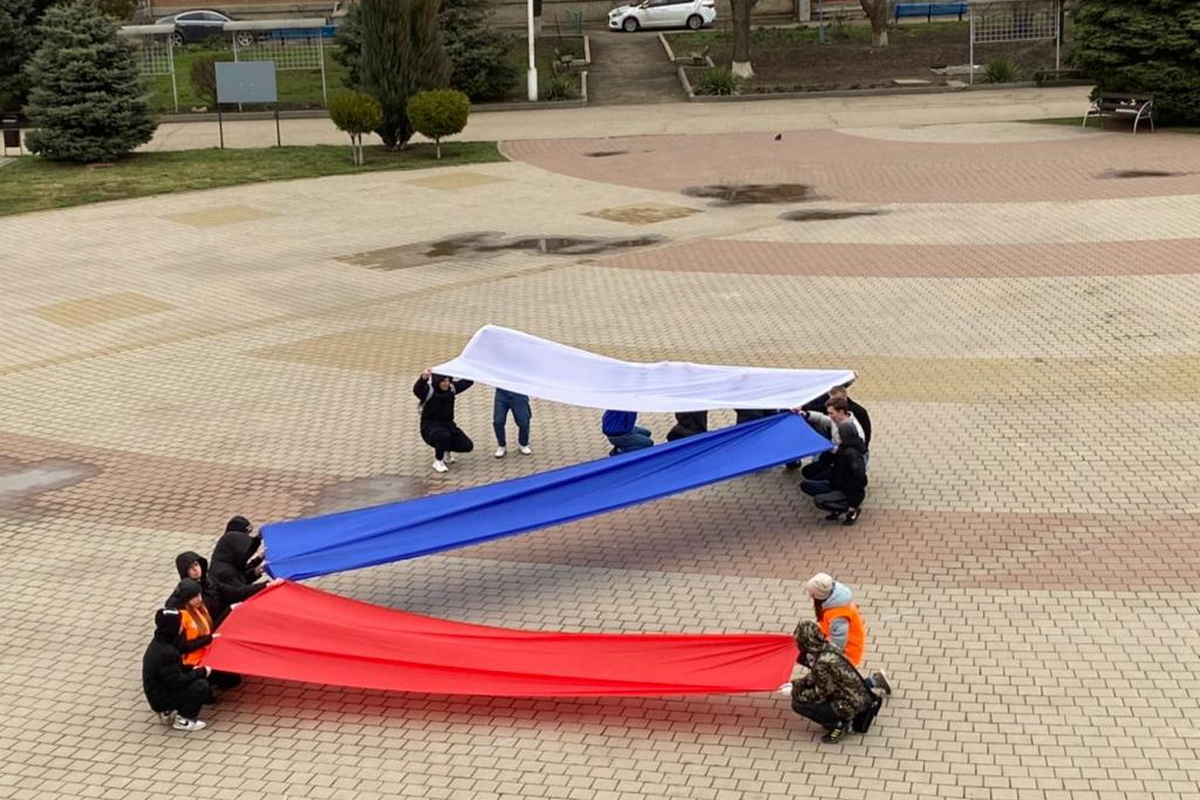
Z symbol, military school in Krasnodar, March 2022. Russian Ministry of Defence, Wikimedia Commons, CC BY 4.0
An autopsy in ten principles.
Ruscism: a cross-over of fascism with the Soviet victory cult, Orthodoxy and empire.
Ten memes. Ten specimens. Count them.
Monty Python: “How To Do It”
enter the dialogue with the person
by focus on use of 1st person singular or plural ("I know", "We are certain" etc.) assess the extent of the infection (in what extent did the memplex already became a constitutive component of H's egoplex)
do not waste time on patients where the infection got into irreversible stage
identify the set of memes which constitute the memplex kernel
re-wire circuits in a manner which will channel the memetic libido of the memplex against its kernel
Note: it's less about reason, logics and evidence and more about emotions, sentiments and basic instincts (e.g. food, security etc.)“Every joke is a tiny revolution.”
— George Orwell, Funny, But Not Vulgar (1945)
“If you can make people laugh at him, then you’re one up on him.”
— Mel Brooks, on Hitler, 60 Minutes (2001)
“Artists are here to disturb the peace.”
— James Baldwin, interview with Studs Terkel (1961)
“You cannot fear something that you laugh at.”
— Bassem Youssef, NPR interview (2017)
“Laughter liberates not only from external censorship but first of all from the great interior censor.”
— Mikhail Bakhtin, Rabelais and His World (1968)