i
Diese Präsentation ist für die Ansicht im Querformat gestaltet.
Jean Regnault, Pygmalion priant Vénus d'animer sa statue (1786)
Artificial beings are not merely tools.
They become surfaces onto which humans project desire, identity and self-understanding.
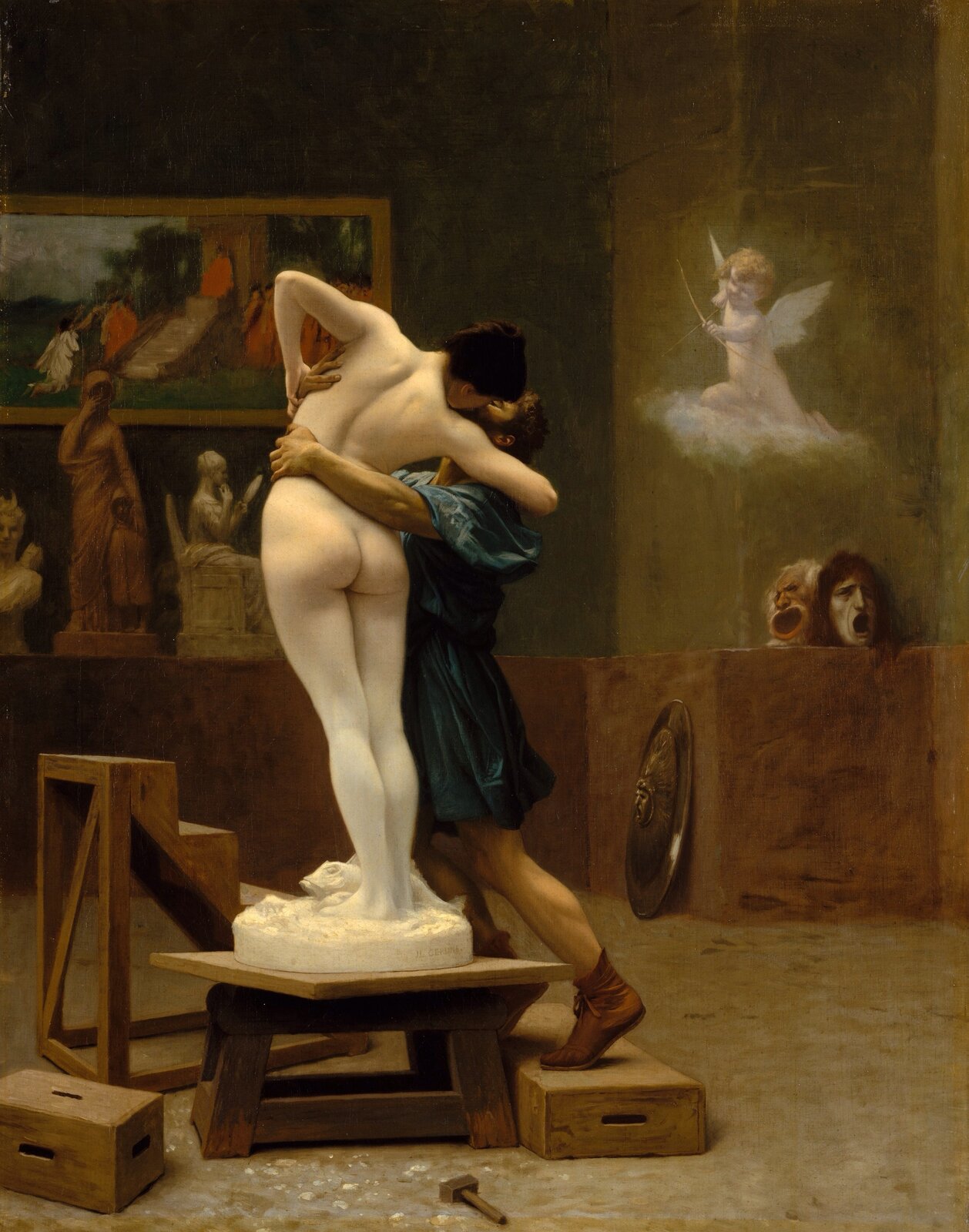
Jean-Léon Gérôme, Pygmalion and Galatea (1890)
Pygmalion creates an ideal human form and falls in love with his creation.
Venus / Aphrodite grants the statue life.
The question is not merely:
Can we reproduce a human?
but:
Can we manufacture the human we desire?
Artificial beings force us to ask what supposedly distinguishes us.
If it moves like us?
If it speaks?
If it remembers?
If it desires?
If it creates?
If it learns?
By constructing the non-human, we investigate the human.
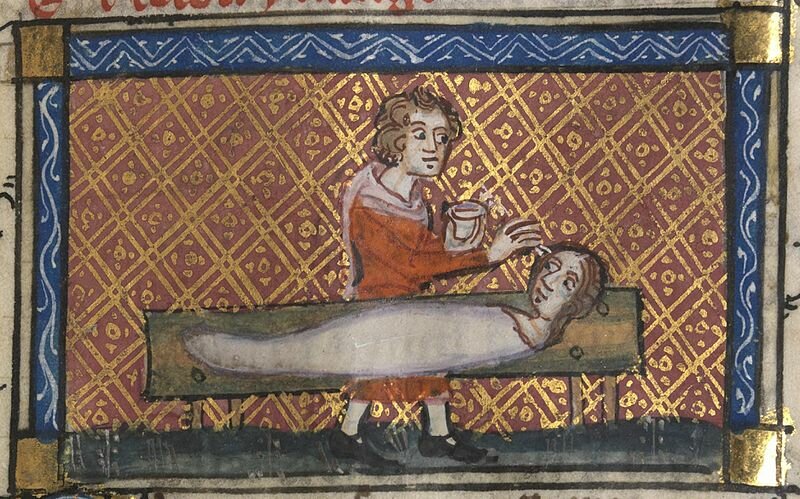
Pygmalion working on his sculpture, illumination on parchment (14th century)
The artificial human is also a duplicate.
A second body.
A copy that may become difficult to distinguish from an original.
The double turns technology into an identity problem:
How do I know that you are one of us?