i
Diese Präsentation ist für die Ansicht im Querformat gestaltet.
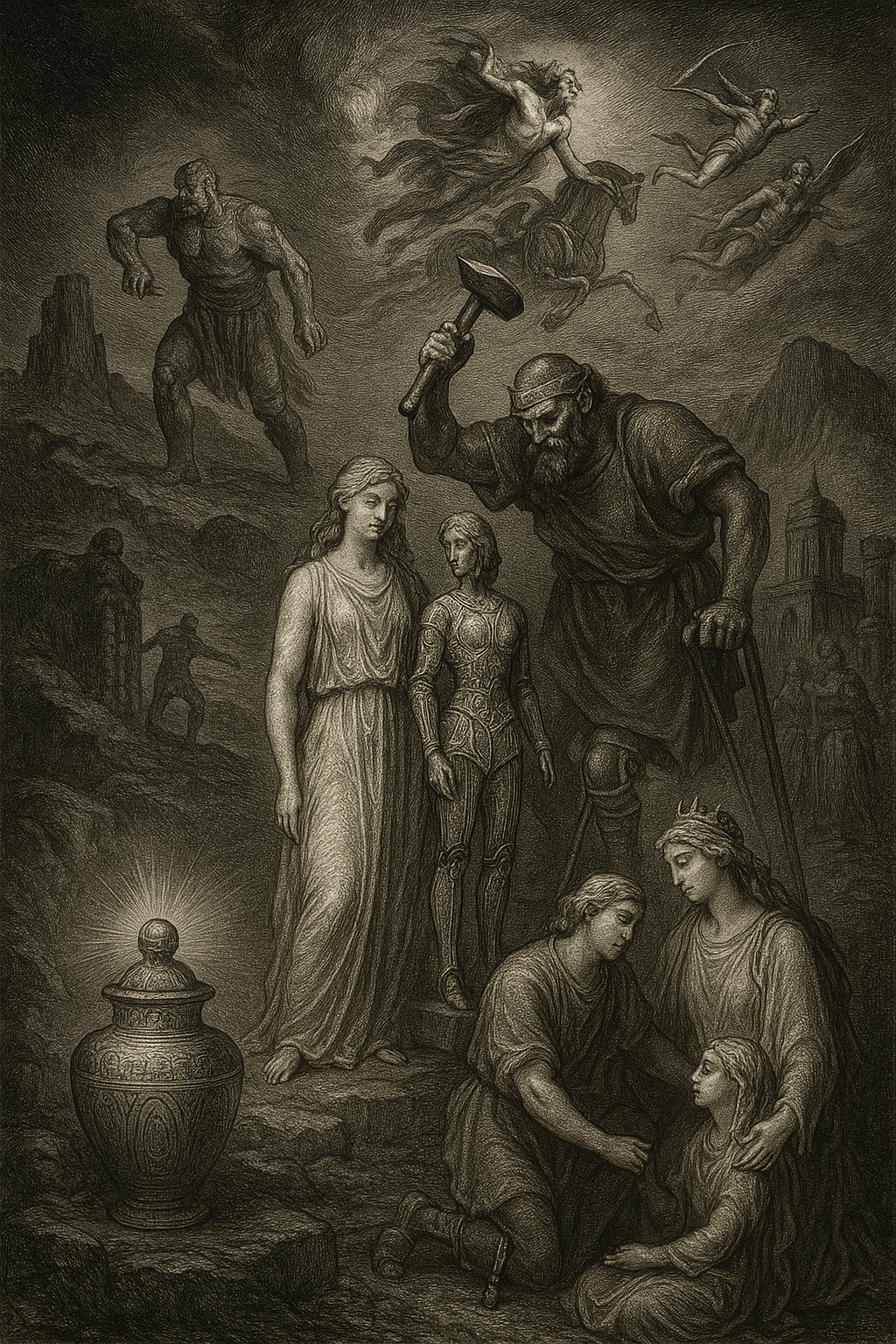
Hephaestus at the forge, with Pandora's urn and a bronze guardian
Greek mythology gives us an extraordinary laboratory of artificial beings.
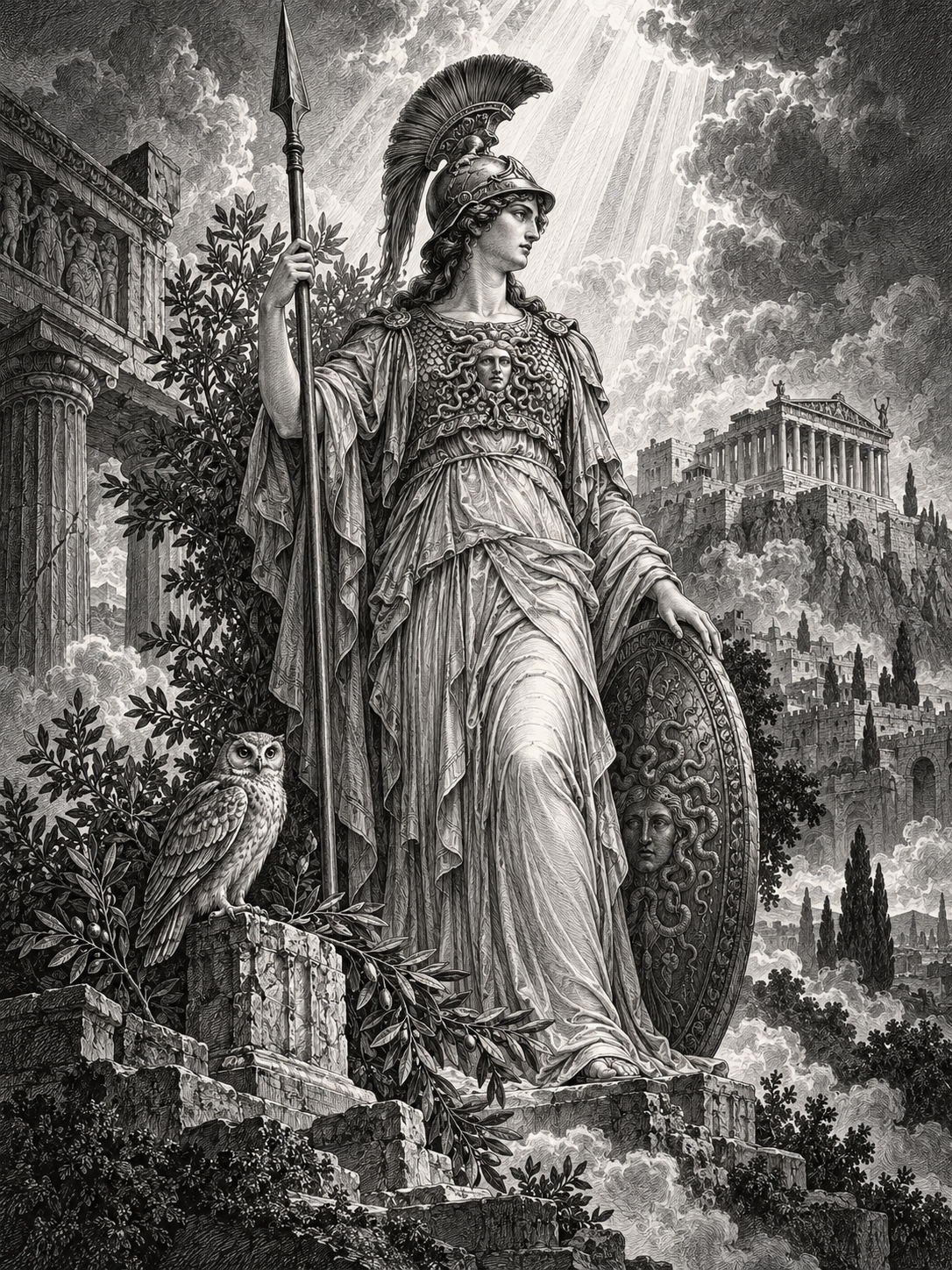
Athena represents intelligent making.
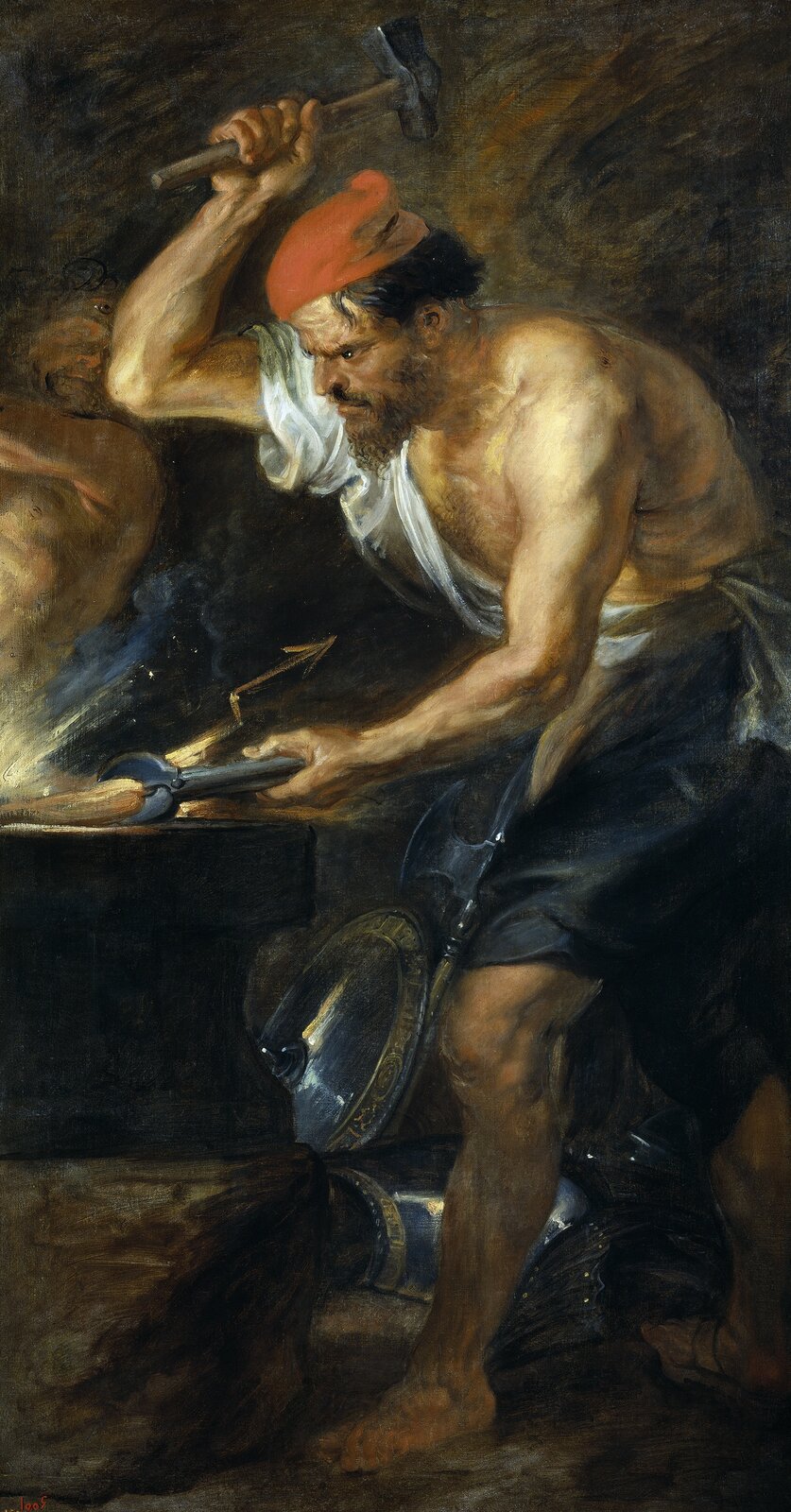
Hephaestus represents the workshop in which artifacts begin to act.
Athena is associated with craft, weaving, strategy and intelligent production.
She is not primarily the goddess of machines.
She represents something more fundamental:
the intelligence embodied in making.
Peter Paul Rubens, Vulcan Forging the Thunderbolts of Jupiter (1638)
With Hephaestus, myth moves from intelligent making toward artificial agency.
His workshop contains self-moving devices and artificial attendants.
The question changes:
Can we make an object?
becomes
Can we make an object that acts?
In the Iliad, Hephaestus is assisted by artificial golden maidens endowed with capacities associated with living persons.
The ancient fantasy is already recognizably humanoid:
Can the made thing become sufficiently like its maker?
One of the most persistent fantasies is delegation.
The artificial being carries, assists, manufactures, obeys.
labor → delegated labor → autonomous labor
The machine performs what we cannot, will not, or no longer need to do ourselves.
A machine need not imitate the whole human.
It may instead extend a capacity.
lever → force
vehicle → movement
writing → memory
computer → calculation
artificial agent → cognition?
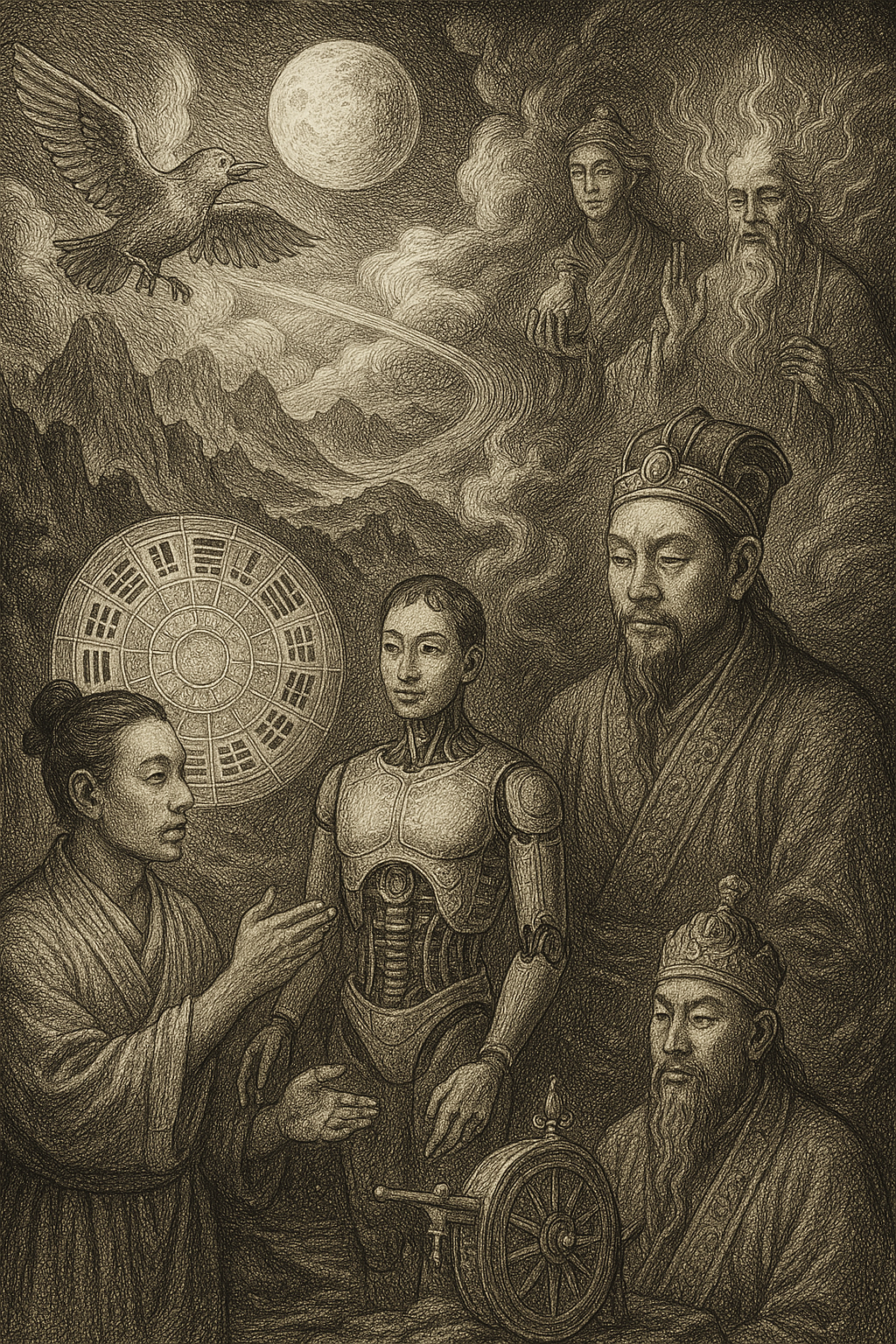
Yan Shi presents his mechanical man to King Mu of Zhou
The Chinese Liezi tells of the artificer Yan Shi presenting King Mu with a human-like artificial performer.
It walks. It sings. It performs.
When its behavior becomes disturbingly lifelike, the artificer takes it apart.
apparently human → disassembly → mechanism
The story stages a remarkably durable question:
What remains of the human when we open the box?