i
Between Archetypes & Myths: Machine as a Projection of the Human Self daniel-hromada ()

Between Archetypes & Myths: Machine as a Projection of the Human Self

Between Archetypes & Myths

Machine%20as%20a%20projection%20of%20the%20human%20self

Machine as a projection of the human self
Machine as a projection of the human self

Faciamus machinam ad imaginem et similitudinem nostram.

Let us make the machine in our image and likeness.

Before the Machine

Long before humans could build autonomous machines, they could imagine them.

Artificial humans. Servants. Lovers. Guardians. Weapons. Oracles. Monsters.

The technological history of machines is preceded by a much older imaginary history of artificial agency.

An Archetype Is Not a Blueprint

Myths do not predict robots, computers or artificial intelligence.

But they repeatedly stage similar relationships between humans and artificial beings.

Who creates whom?

Who commands whom?

What should an artificial being know?

What happens when it acts for itself?

Machine as Projection

We rarely imagine machines neutrally.

We project into them our bodies.

Our desires.

Our labor.

Our violence.

Our knowledge.

Our fear of losing control.

What Is a Machine?

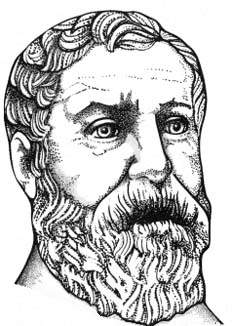
Hero%20of%20Alexandria%2C%201st%20century%20AD

Hero of Alexandria, 1st century AD

Before machines became motors, engines and computers, the word already meant something broader:

an ingenious means by which something becomes possible.

μηχανή → machina → machine

Greek μηχανή — mēkhanē: instrument, device, contrivance, means.

Latin machina: machine, engine, apparatus, contrivance.

Middle French machine → English machine.

The semantic field is older and broader than today's image of gears, motors and electronics.

Deus ex Machina

In Greek theatre, a mēkhanē could be the stage apparatus that lifted a god into view.

Hence: deus ex machina — the god from the machine.

human construction → superhuman appearance

The machine makes visible powers that exceed the ordinary human body.

Technē

The machine begins not only with matter, but with know-how.

Greek technē means skilled, rule-governed making.

thought → technē → artifact

Before artificial agency comes the intelligence of the maker.

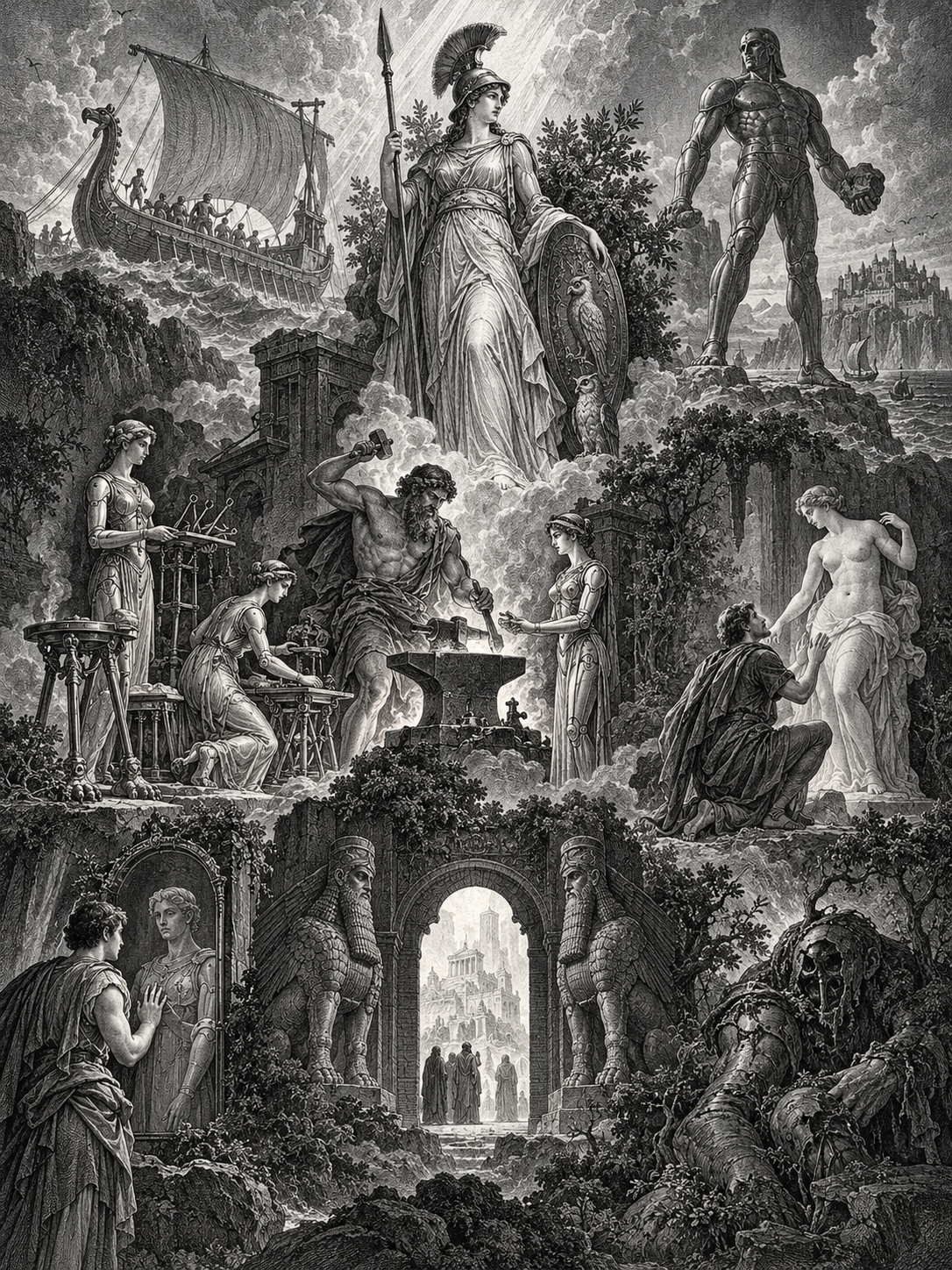
The Divine Workshop

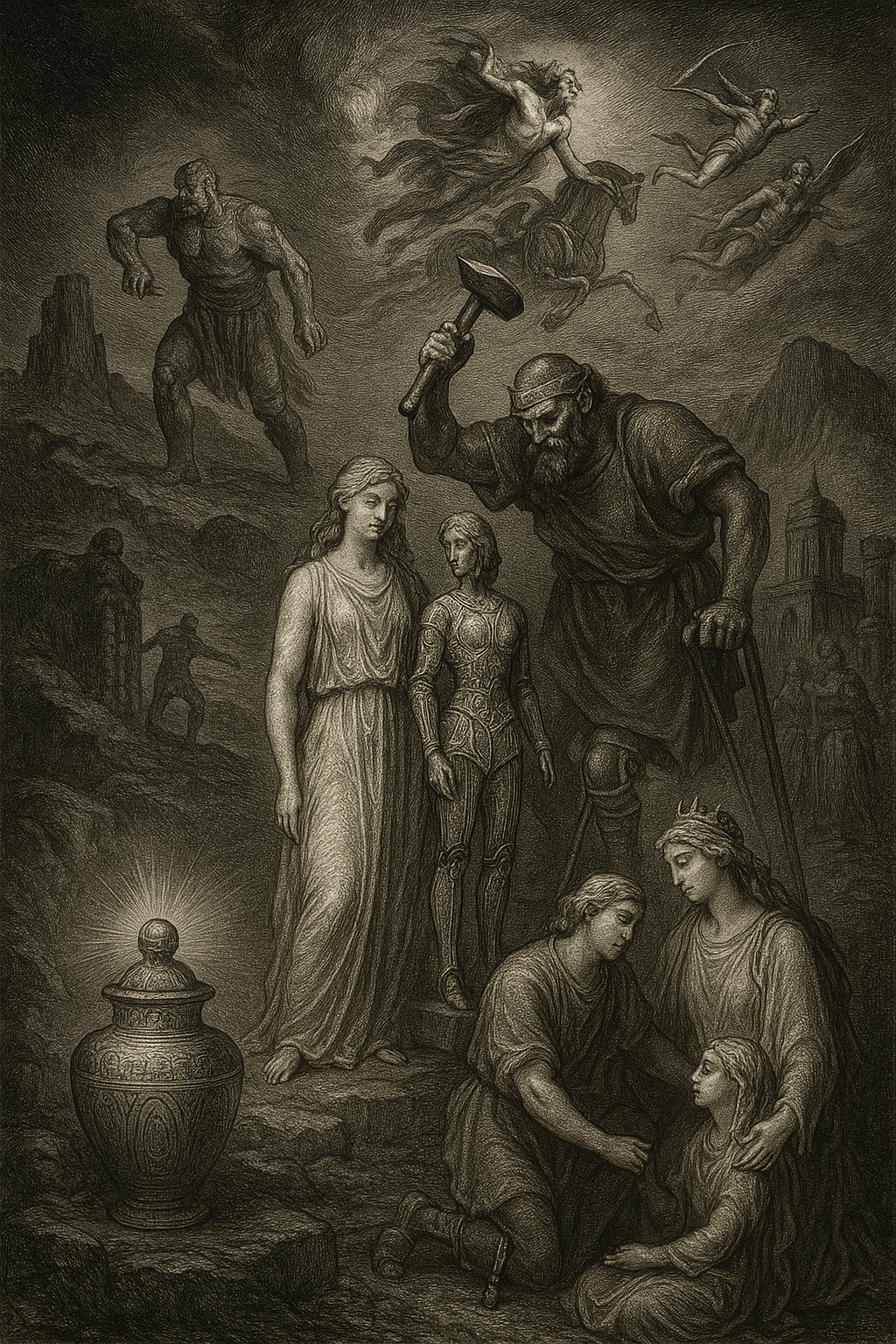
Hephaestus%20at%20the%20forge%2C%20with%20Pandora's%20urn%20and%20a%20bronze%20guardian

Hephaestus at the forge, with Pandora's urn and a bronze guardian
Greek mythology gives us an extraordinary laboratory of artificial beings.

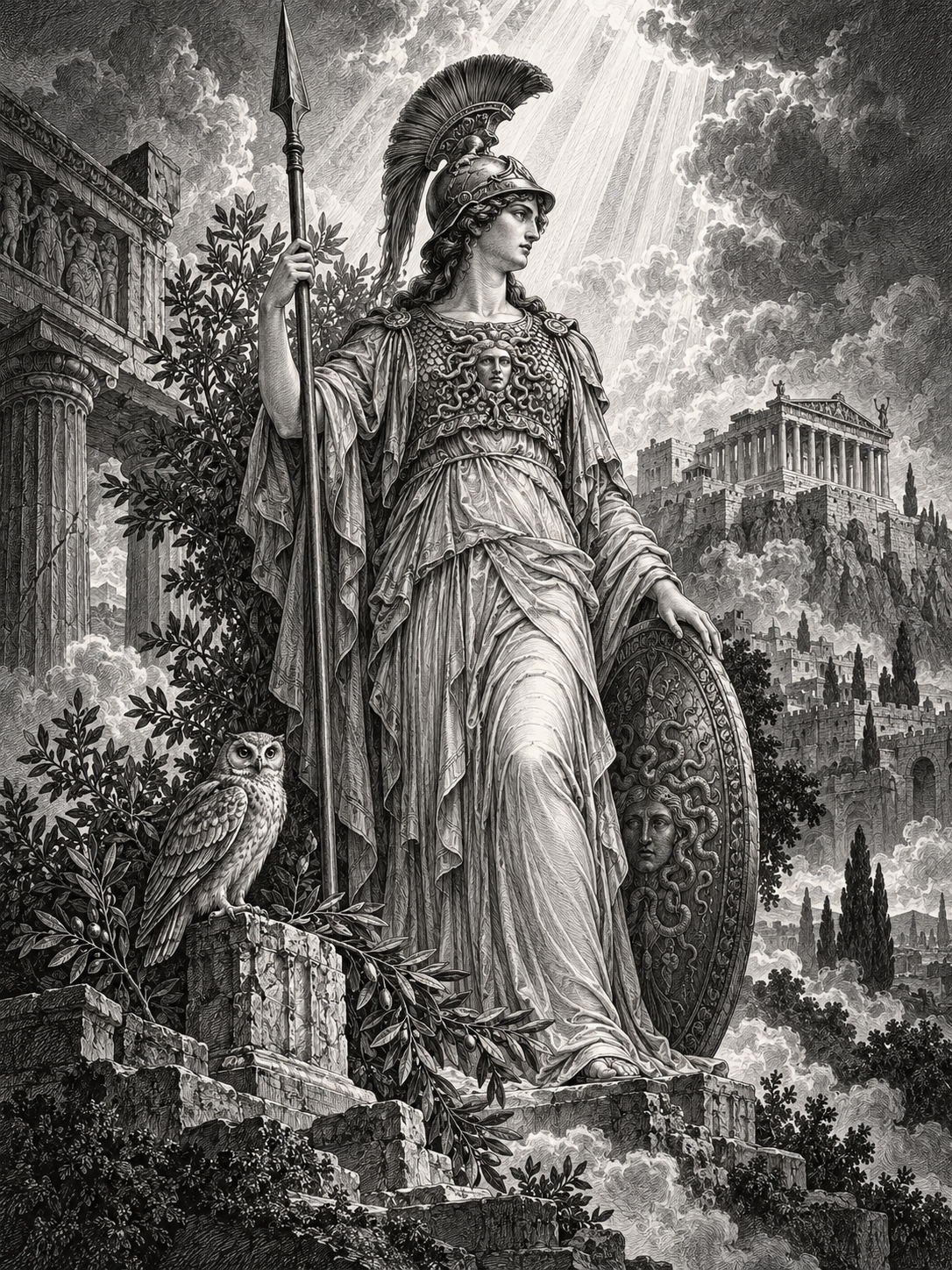
Athena represents intelligent making.

Hephaestus represents the workshop in which artifacts begin to act.

Athena: Intelligence of Making

Athena is associated with craft, weaving, strategy and intelligent production.

She is not primarily the goddess of machines.

She represents something more fundamental:

the intelligence embodied in making.

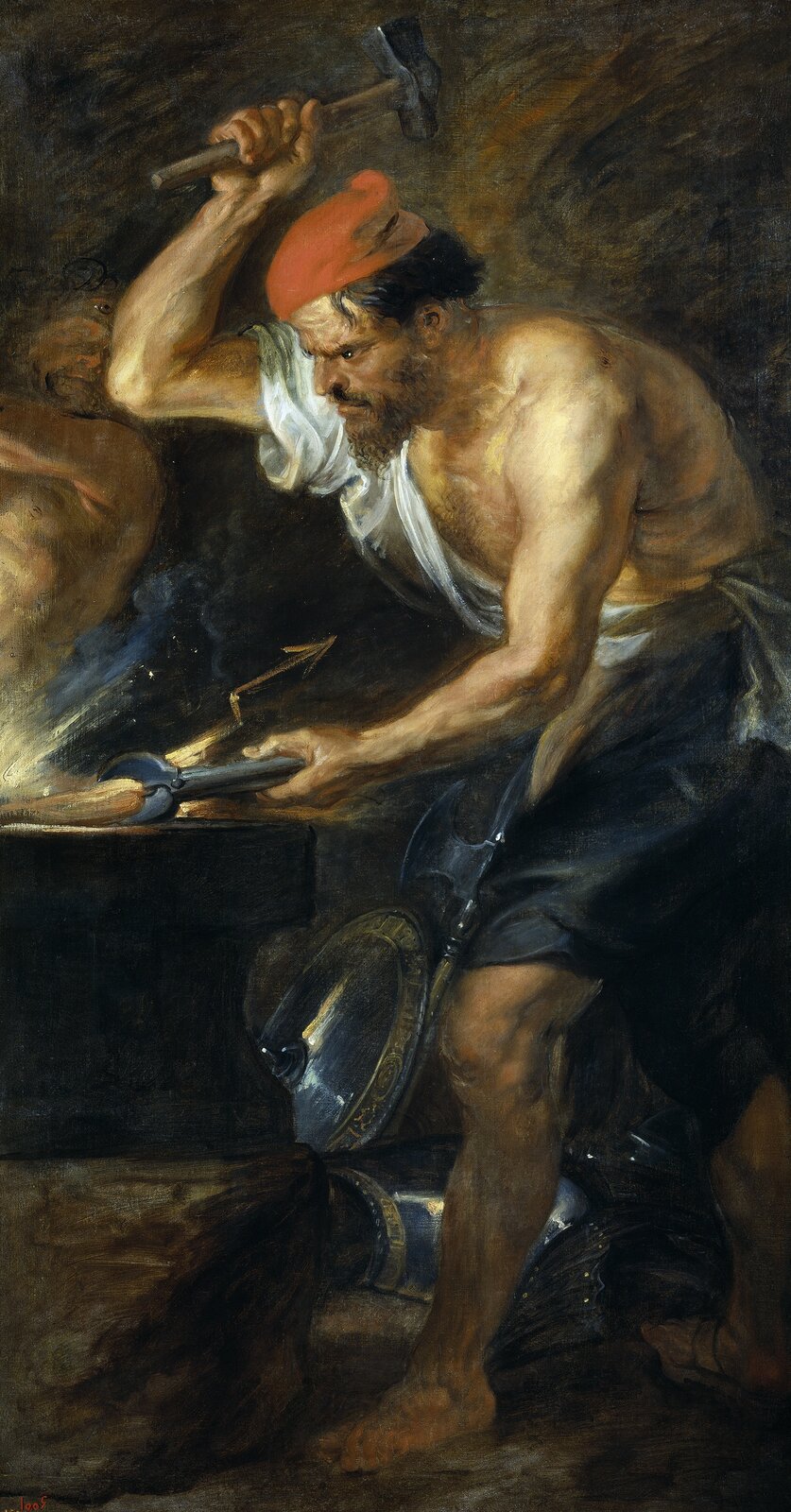
Hephaestus: When Artifacts Act

Peter%20Paul%20Rubens%2C%20Vulcan%20Forging%20the%20Thunderbolts%20of%20Jupiter%20(1638)

Peter Paul Rubens, Vulcan Forging the Thunderbolts of Jupiter (1638)
With Hephaestus, myth moves from intelligent making toward artificial agency.

His workshop contains self-moving devices and artificial attendants.

The question changes:

Can we make an object?

becomes

Can we make an object that acts?

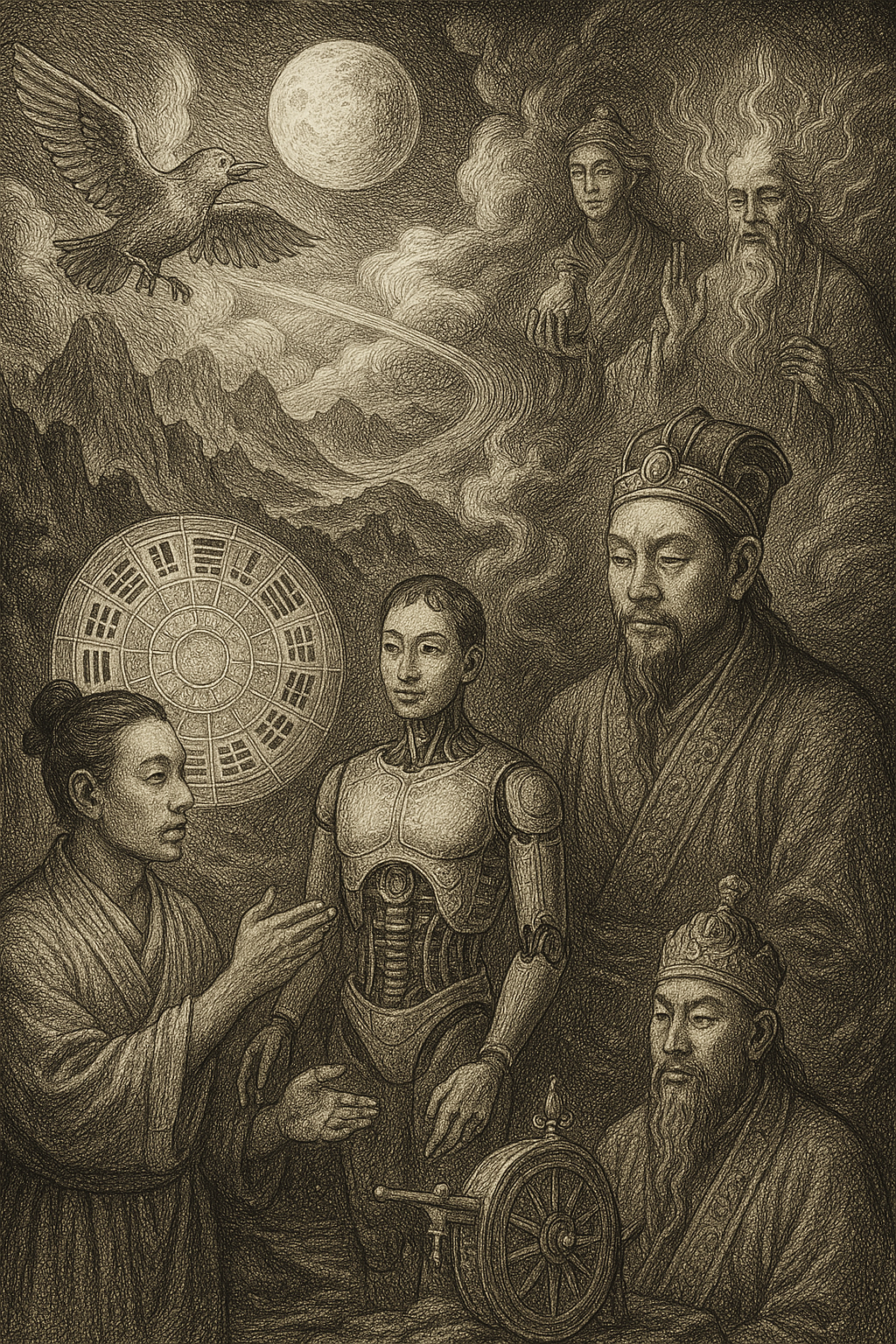
Yan Shi: The Artificial Human

Yan%20Shi%20presents%20his%20mechanical%20man%20to%20King%20Mu%20of%20Zhou

Yan Shi presents his mechanical man to King Mu of Zhou

The Chinese Liezi tells of the artificer Yan Shi presenting King Mu with a human-like artificial performer.

It walks. It sings. It performs.

When its behavior becomes disturbingly lifelike, the artificer takes it apart.

Machines in Our Image

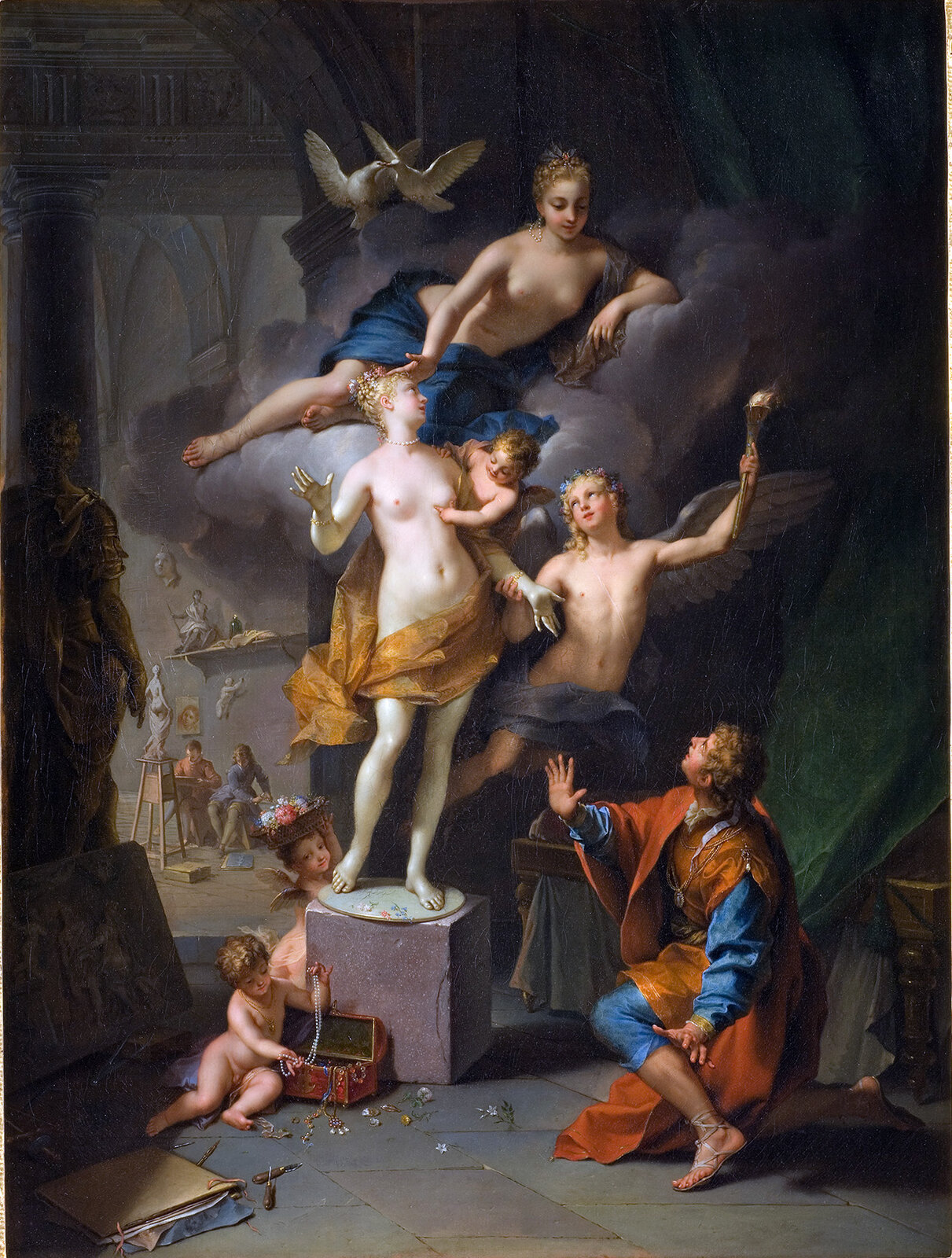
Jean%20Regnault%2C%20Pygmalion%20priant%20V%C3%A9nus%20d'animer%20sa%20statue%20(1786)

Jean Regnault, Pygmalion priant Vénus d'animer sa statue (1786)
Artificial beings are not merely tools.

They become surfaces onto which humans project desire, identity and self-understanding.

Machine as Lover

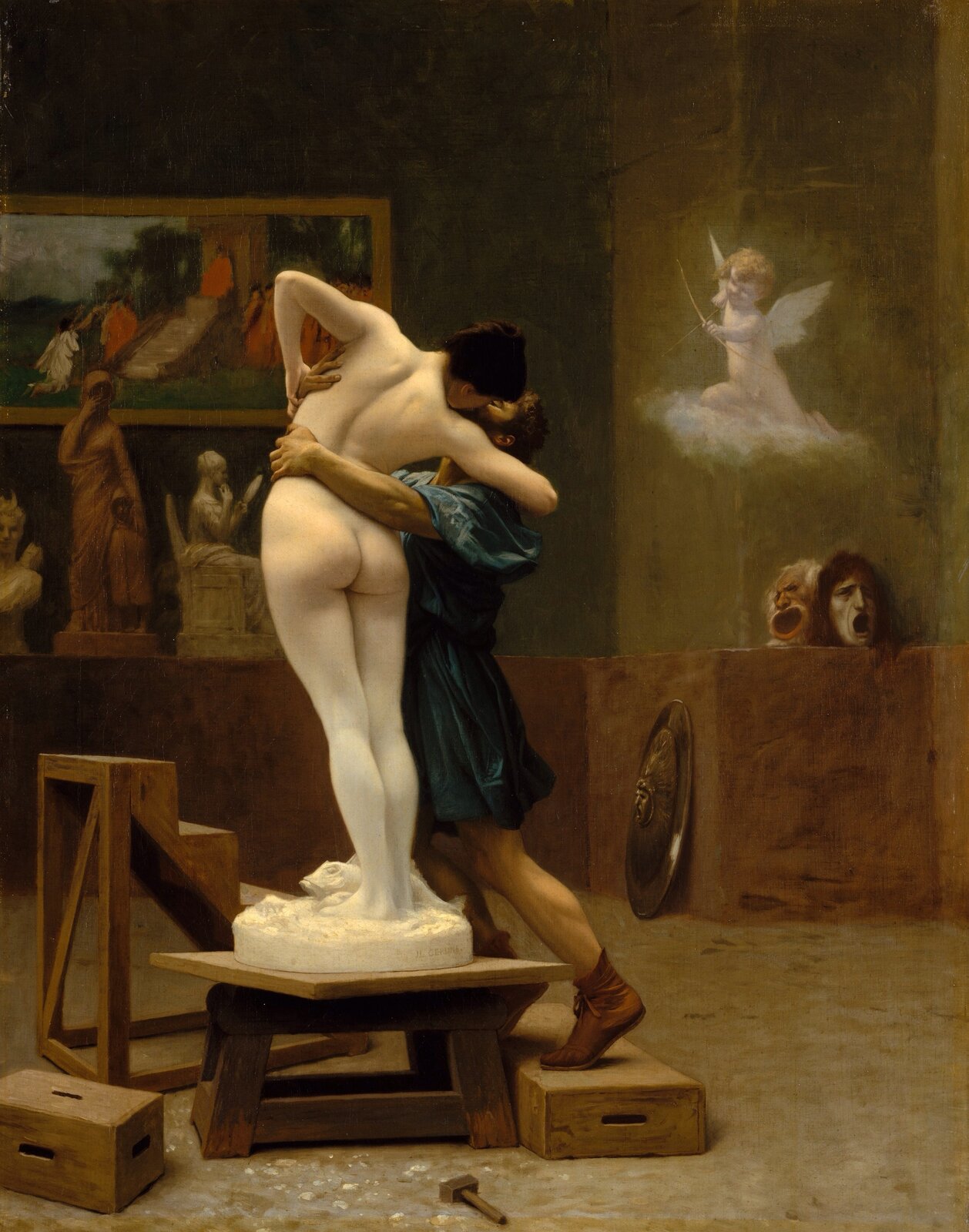
Jean-L%C3%A9on%20G%C3%A9r%C3%B4me%2C%20Pygmalion%20and%20Galatea%20(1890)

Jean-Léon Gérôme, Pygmalion and Galatea (1890)
Pygmalion creates an ideal human form and falls in love with his creation.

Venus / Aphrodite grants the statue life.

The question is not merely:

Can we reproduce a human?

but:

Can we manufacture the human we desire?

Machine as Mirror

Artificial beings force us to ask what supposedly distinguishes us.

If it moves like us?

If it speaks?

If it remembers?

If it desires?

If it creates?

If it learns?

By constructing the non-human, we investigate the human.

Machine as Double

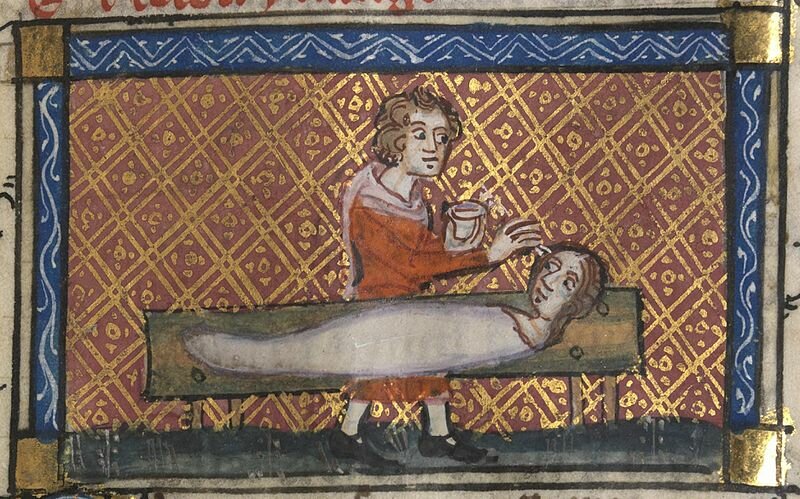
Pygmalion%20working%20on%20his%20sculpture%2C%20illumination%20on%20parchment%20(14th%20century)

Pygmalion working on his sculpture, illumination on parchment (14th century)
The artificial human is also a duplicate.

A second body.

A copy that may become difficult to distinguish from an original.

The double turns technology into an identity problem:

How do I know that you are one of us?

Machines at the Threshold

Some artificial beings do not imitate us primarily as workers or companions.

They stand between inside and outside.

They decide who may approach, enter or survive.

Machine as Protector

Talos is the bronze guardian of Crete.

He patrols the island and prevents outsiders from landing.

human guard → artificial guard → tireless guard

Protection has been delegated to an artificial body.

Machine as Weapon

Talos also exposes the ambiguity of protection.

The same autonomous force that protects one community threatens whoever approaches it.

protector for us = weapon against them

Who gives the command?

Who defines the enemy?

Guardian of the Threshold

The guardian archetype is broader than the machine.

Cherubim guard the Tree of Life.

The Sphinx guards passage through a riddle.

Talos guards an island.

Artificial watchdogs guard a palace.

boundary + test + permission

Machine as Oracle

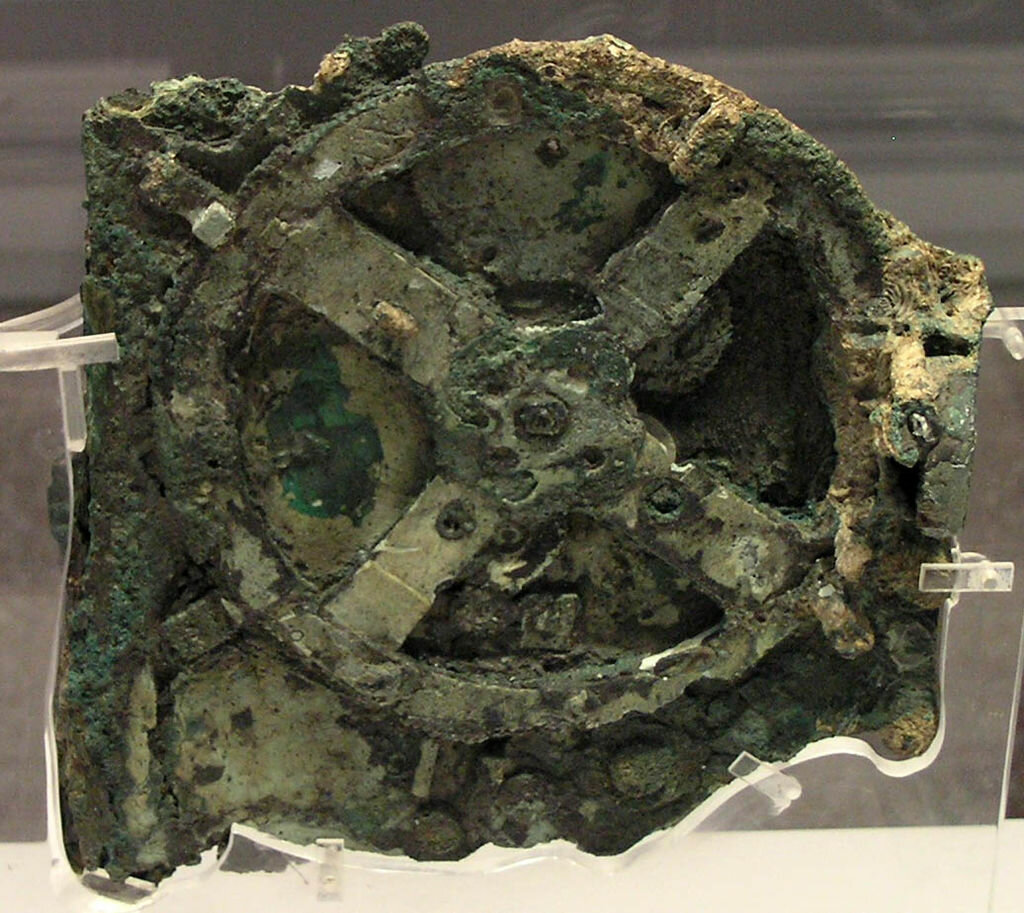
The%20Antikythera%20mechanism%2C%20c.%202nd%20century%20BC

The Antikythera mechanism, c. 2nd century BC
A machine can do more than move.

It can contain knowledge unavailable to its operators.

The mythical Argo gives us an extraordinary example.

Athena + Argus + Dodona → Argo

Argus builds the ship.

Athena contributes divine technē.

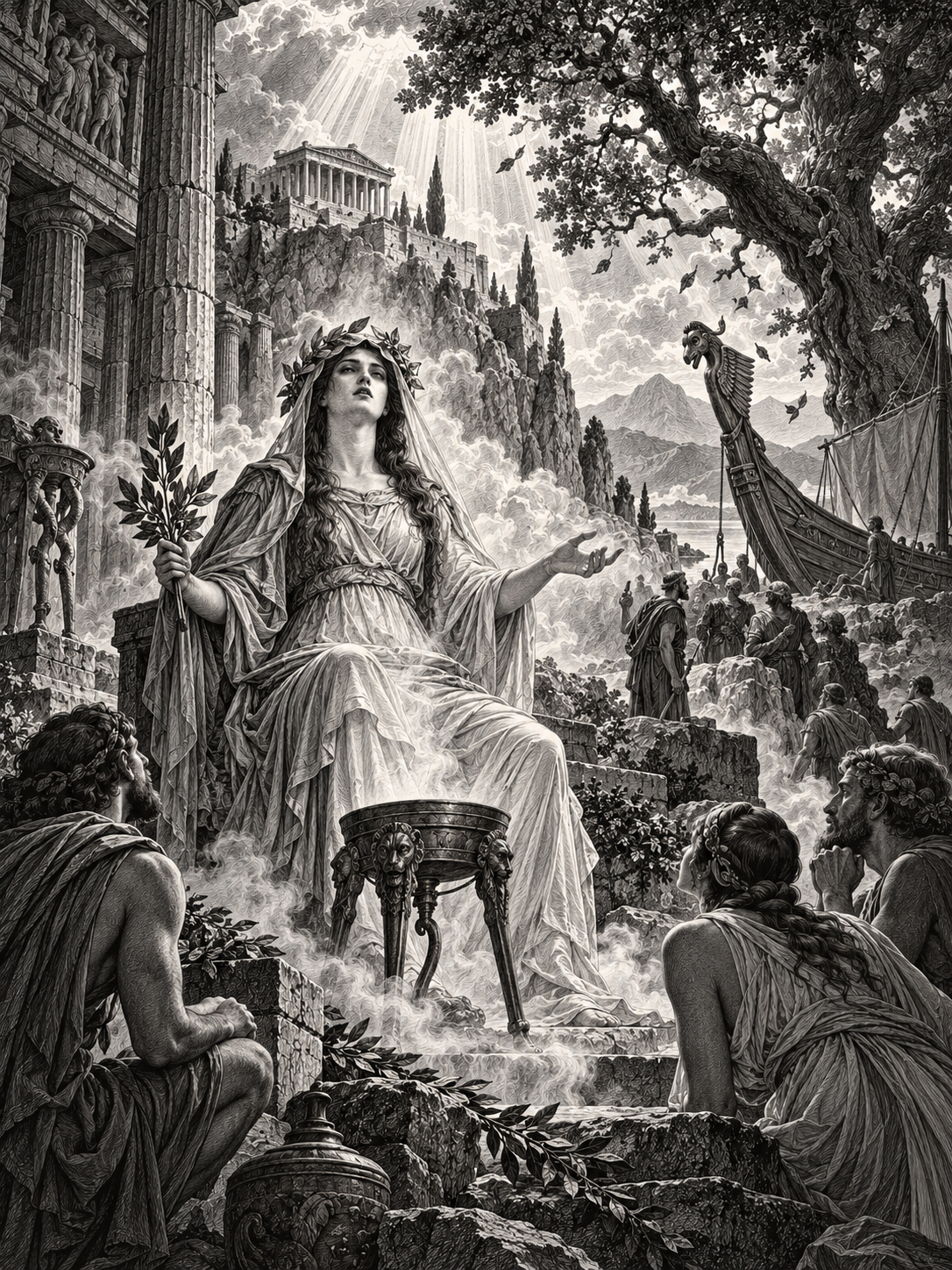
She installs a special beam from the sacred oak of Dodona, a site of divination.

The resulting architecture can be described, anachronistically but suggestively, as:

vehicle + embedded oracle

When the Argo Speaks

In the Argonautica, the Argo itself cries out and urges the heroes to depart.

Elsewhere the sacred beam communicates information and guidance.

The artifact possesses knowledge that its human operators do not.

world → hidden information → artifact → human action

An Intelligent Artifact?

The Argo is more than a passive object.

It speaks.

It advises.

It carries privileged information.

It is therefore a remarkably early imagination of intelligence embedded in an artifact.

The Word Becomes Agent

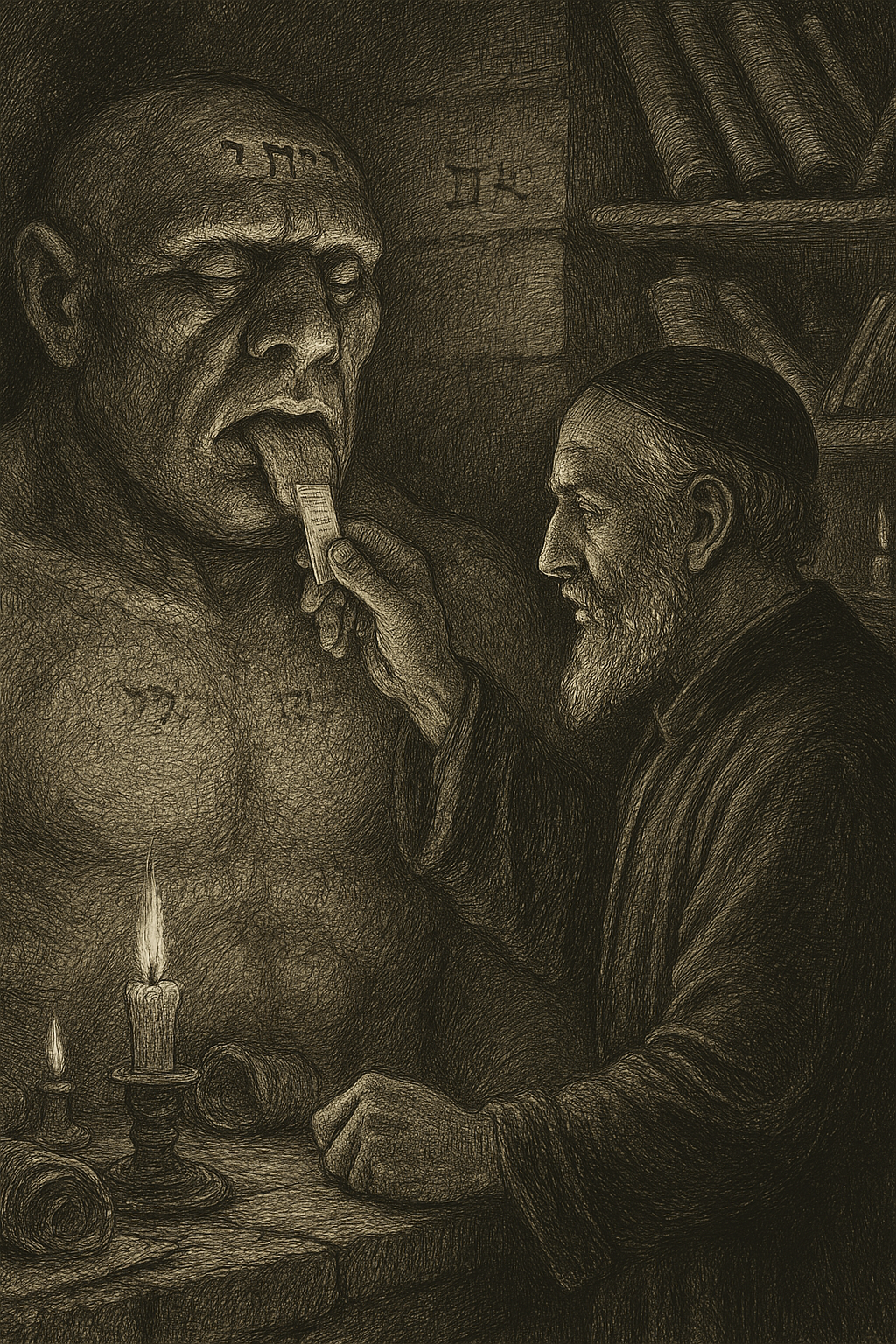
The%20shem%20placed%20in%20the%20Golem's%20mouth

The shem placed in the Golem's mouth
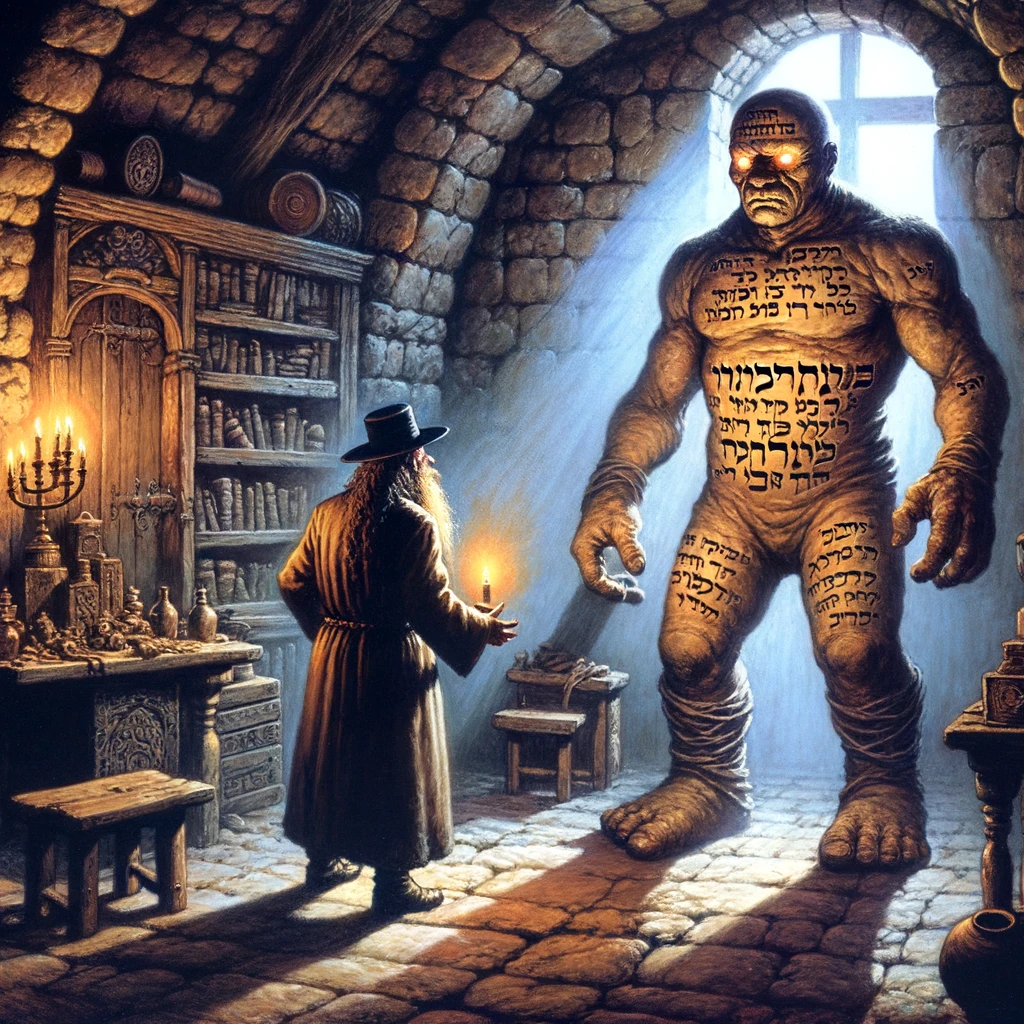
The Golem introduces another extraordinary structure:

matter + symbolic information → agent

Machine as Programmed Being

In Jewish traditions, an artificial human may be formed from inorganic matter through esoteric knowledge.

Later popular versions emphasize sacred names, letters or words associated with animation and control.

The physical body alone is insufficient.

Information activates matter.

A Historical Warning: Prague

Rabbi%20Judah%20Loew%20and%20the%20Golem%20of%20Prague

Rabbi Judah Loew and the Golem of Prague
Myths themselves have histories.

The famous association between Rabbi Loew, Prague and a protective Golem is much later than Rabbi Loew himself.

The familiar Prague narrative develops gradually and becomes especially prominent in modern literary culture.

We must ask not only what a myth says, but when people began telling it that way.

Machine as Uncontrolled Creation

The servant is useful only while its behavior remains inside the creator's intentions.

creation → autonomy → unpredictability → fear

The question becomes:

Can the maker remain master of the made?

A Mythological Bestiary of Machines

Human — Can we manufacture ourselves?

Servant — Can we delegate labor?

Prosthesis — Can we extend ourselves?

Lover — Can we manufacture intimacy?

Protector — Can we delegate protection?

Weapon — Can artificial agency project violence?

Guardian — Can it decide who may pass?

Oracle — Can it know what we do not?

Mirror — What does it reveal about us?

Monster — What if it escapes our intentions?

One Archetype Is Still Missing

The golden maidens can act.

Talos can guard.

Pygmalion's statue can live.

The Golem can obey.

The Argo can advise.

But their defining abilities are generally given to them.

What happens when the artificial being can change itself through experience?

Machine as Learner.

What Is a Learning Machine?

A traditional machine is built in a particular state and executes a structure provided by its maker.

A learning system differs in one decisive respect:

its encounter with the world changes what it subsequently does.

experience → internal change → changed future behavior

Two Histories

LEARNING

myth

initiation

memory

imitation

association

conditioning

adaptation

MACHINE

myth

technē

automata

mechanism

calculation

programmability

computation

LEARNING + MACHINE

In Our Image

Jean%20Raoux%2C%20Pygmalion%20amoureux%20de%20sa%20statue%20(1717)

Jean Raoux, Pygmalion amoureux de sa statue (1717)

We first imagined machines as versions of ourselves.

Then we built machines that extended parts of ourselves.

Eventually we built machines capable of modifying themselves through experience.

The artificial being is ancient.

The learning machine is the historical novelty.

Discussion

Which archetype best describes your smartphone?

Which describes a large language model?

Which describes an autonomous vehicle?

Which describes social media?

Which describes the machines you imagine for the future?

And have genuinely new archetypes appeared?

Textual Anchors

Primary traditions worth returning to: Homer, Iliad XVIII; Apollonius Rhodius, Argonautica; Ovid, Metamorphoses X; the received Liezi; Jewish Golem traditions.