**1926:** Hugo Gernsback launches *Amazing Stories*, defining “Sci-Fi” and creating the market.
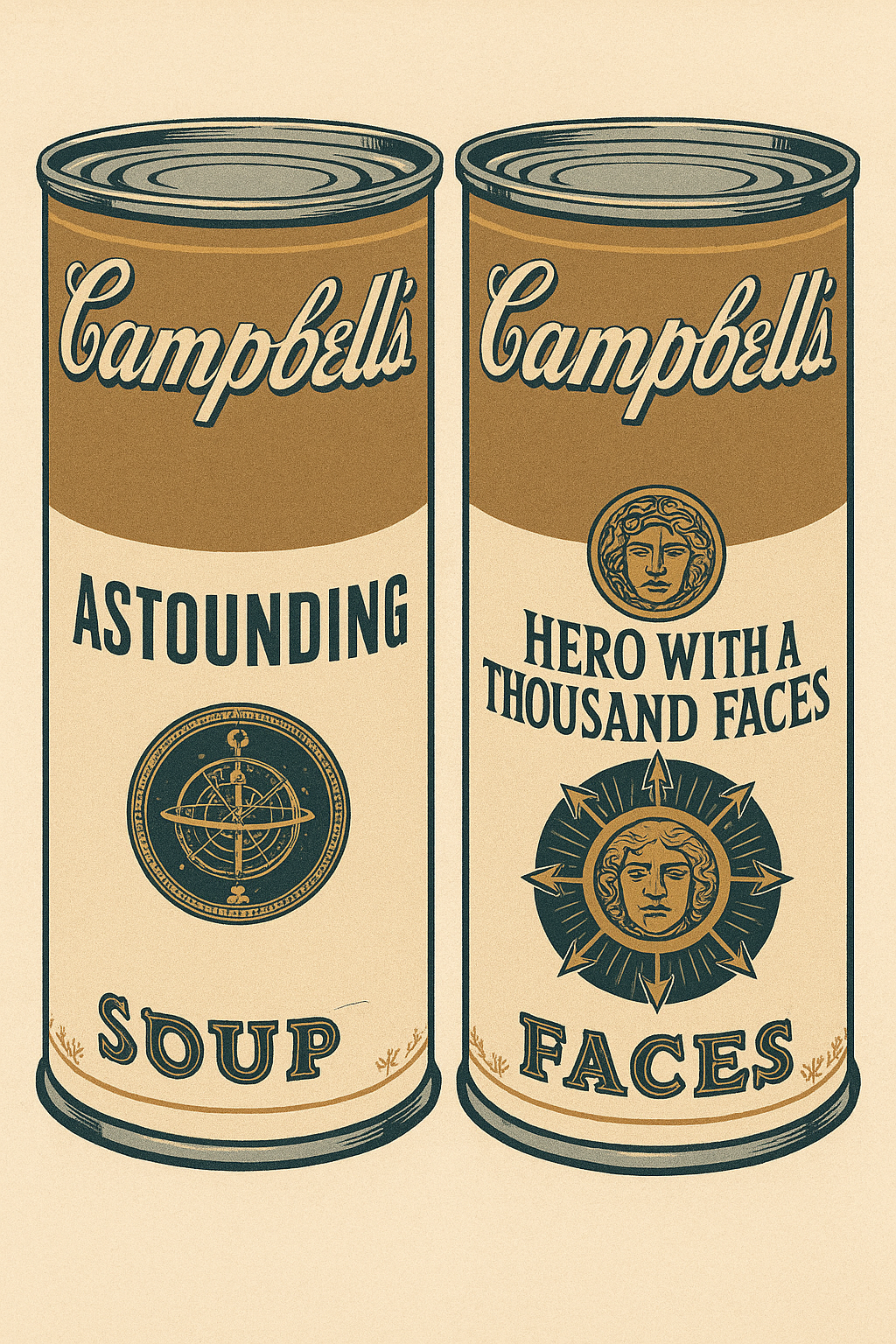
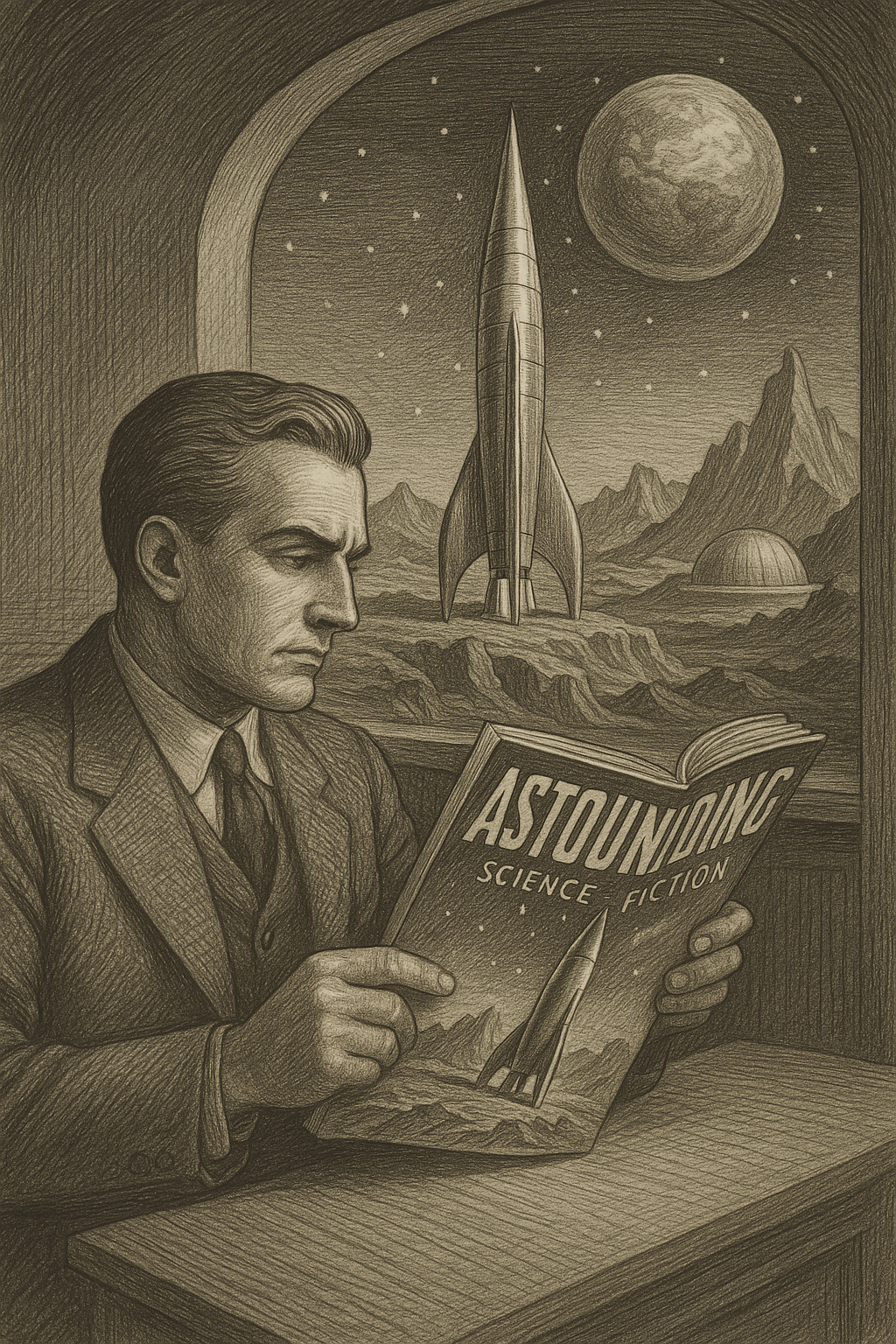
**1930:** *Astounding Stories* debuts under Clayton Magazines—pulp adventure with a scientific gloss.
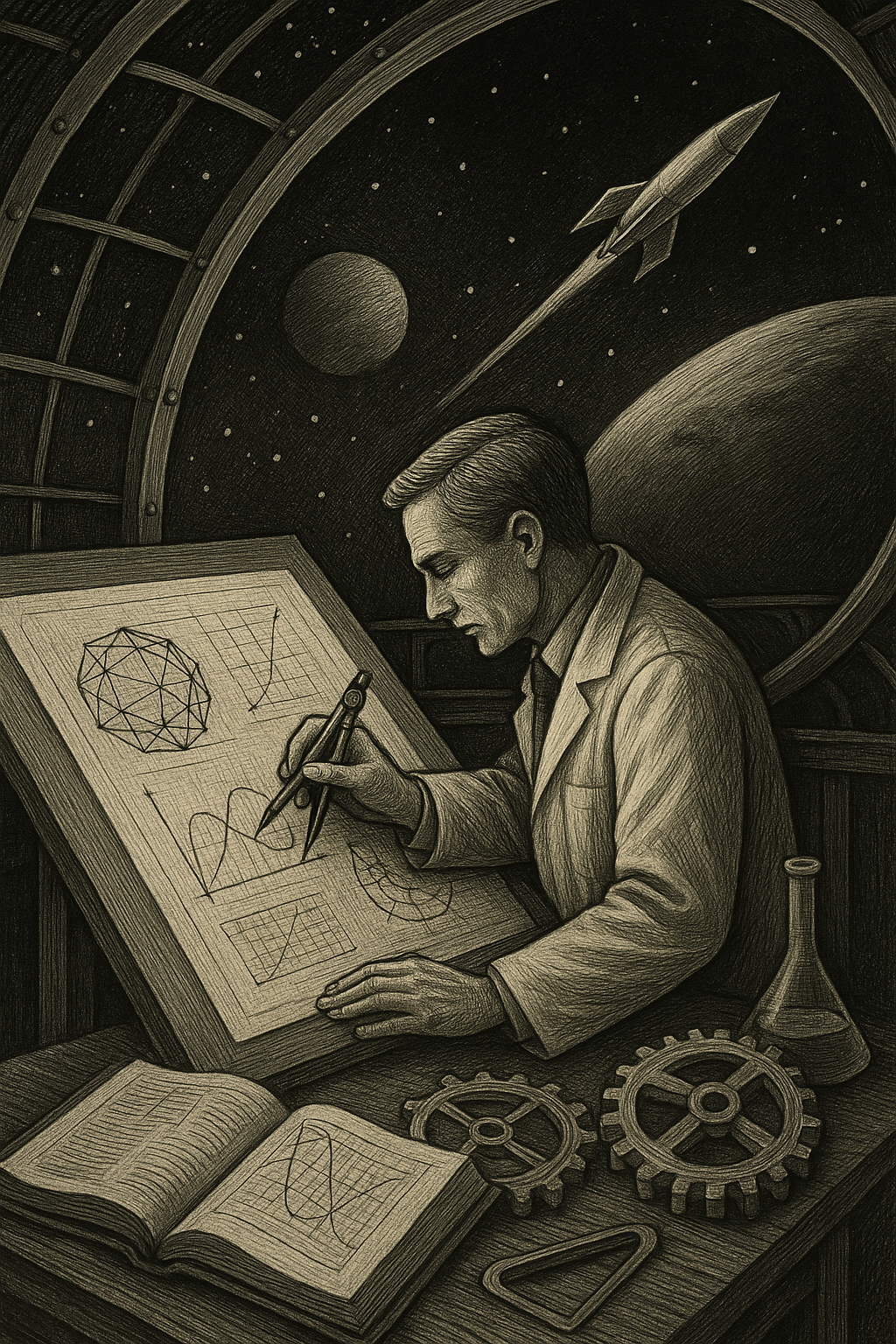
**1937:** John W. Campbell Jr. becomes editor; shifts tone from pulp thrills to rigorous, idea-driven SF.
Campbell cultivates Asimov, Heinlein, Clarke—solidifying the **Golden Age** template.
1950s: Campbell’s fixation on fringe sciences (psionics, Dianetics) alienates parts of the field.
1960: Magazine renamed **Analog**, signaling a retreat from its visionary early mission.
By late 1960s, New Wave authors bypass *Astounding*/**Analog**, marking its decline as SF’s central engine.
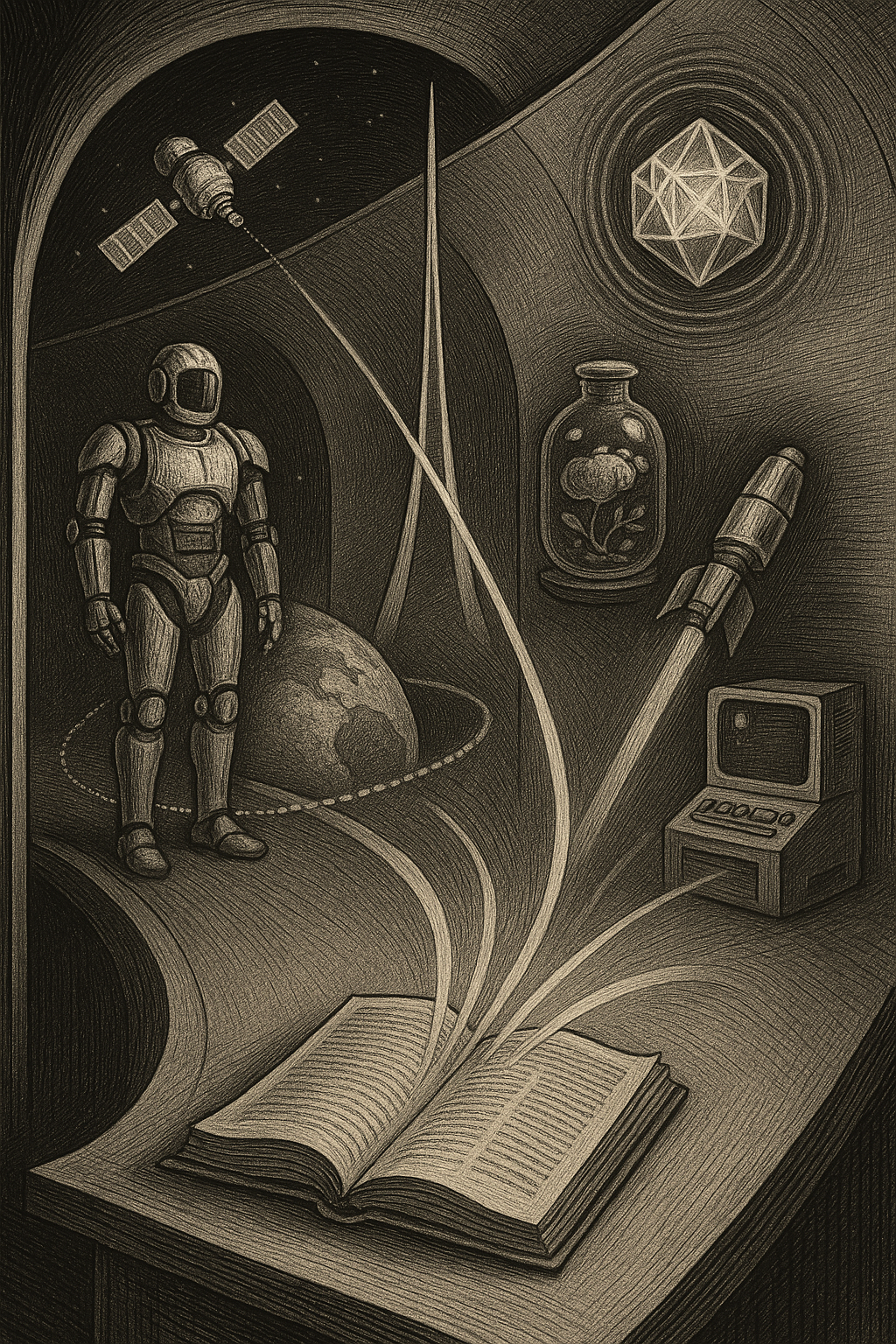
Heinlein’s **powered exoskeletons** in *“Waldo”* (1942) → modern robotic exosuits.
Clarke’s **geostationary communication satellites** in *“Extra-Terrestrial Relays”* (1945) → today’s orbital networks.
Clarke’s **space elevator** concept in *“The Space Elevator”* (1960, *Science Digest*; rooted in SF work for *Astounding*) → active engineering models.
Van Vogt’s **continuous monitoring computers** in *“The Weapon Shop”* (1942) → inspiration for real-time systems.
Campbell’s editorial promotion of **ion drives & nuclear rockets** (various 1940s issues) → tested in space propulsion.
Sturgeon’s **biotech symbioses** in *“Microcosmic God”* (1941) → conceptual parallels with directed evolution & synthetic biology.
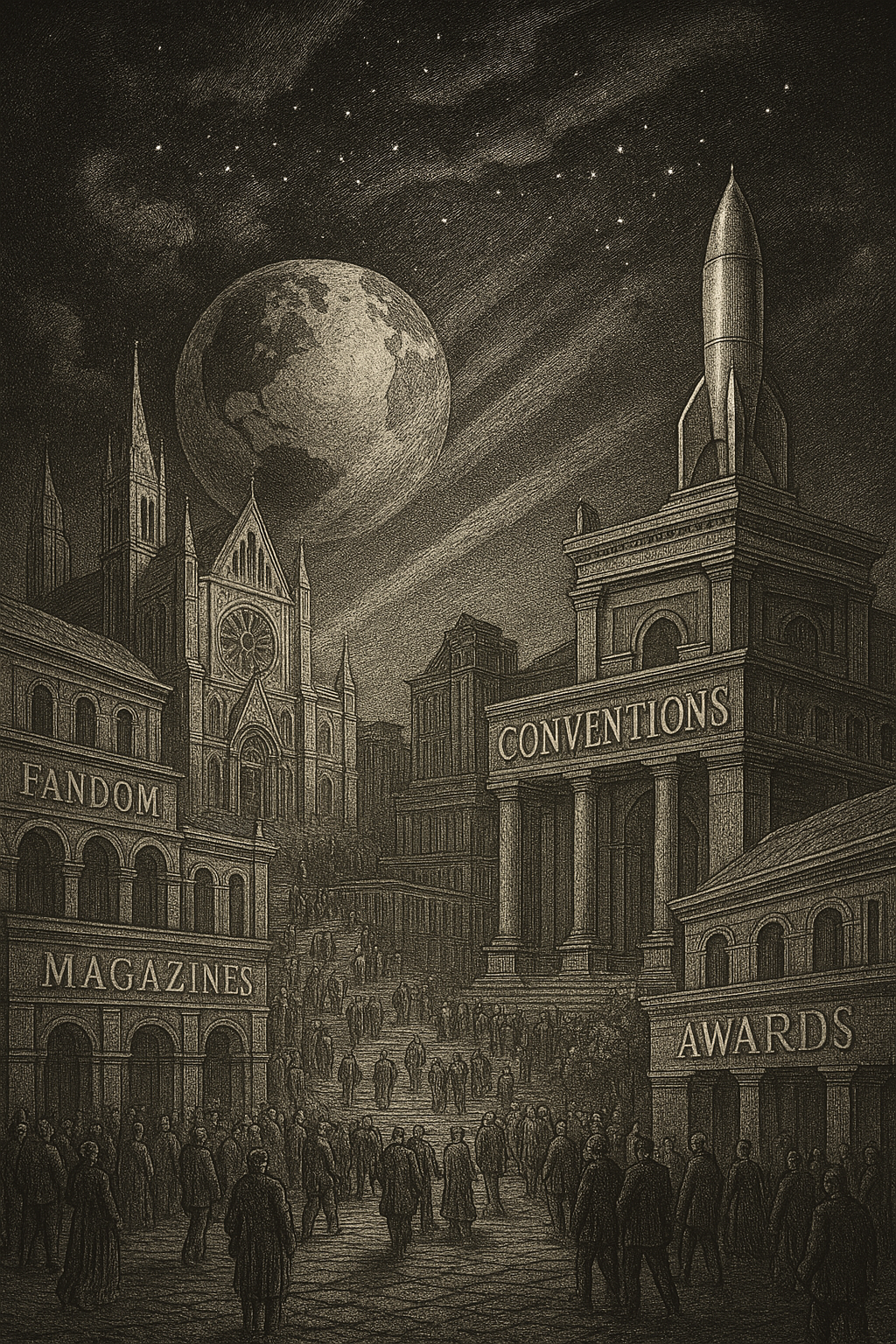
**Awards:** Hugos (since **1953**, fan-voted), Nebulas (**1965**, writer-voted), Locus (**1971**), BSFA (**1970**), Clarke Award (**1987**)—markers of global SF excellence.
**Conventions:** Worldcon (since **1939**), Eurocon (**1972**), plus regional cons—gathering points for fandom, panels, workshops, and Hugo voting.
**Organizations:** SFWA founded **1965** (authors), WSFS formalized mid-**1950s** (Worldcon/Hugos), national clubs (e.g., Japan’s SF大会 since **1962**).
**Magazines:** from *Astounding* (**1930**) to *Novae Terrae / New Worlds* (**1936**), *Analog* (**1960**) —platforms shaping the field.
**Fanzines → online communities:** historic fanzines (since **1930s**) evolve into today’s forums, Discords, AO3 (**2008**), Goodreads (**2007**).
**Academic SF studies:** first university courses appear in **1960s**, dedicated journals (e.g., *Science Fiction Studies*, **1973**).
**Global expansion:** major SF ecosystems emerge in China (**1980s-present**), Eastern Europe (**1960s-present**), Latin America (**1970s-present**).

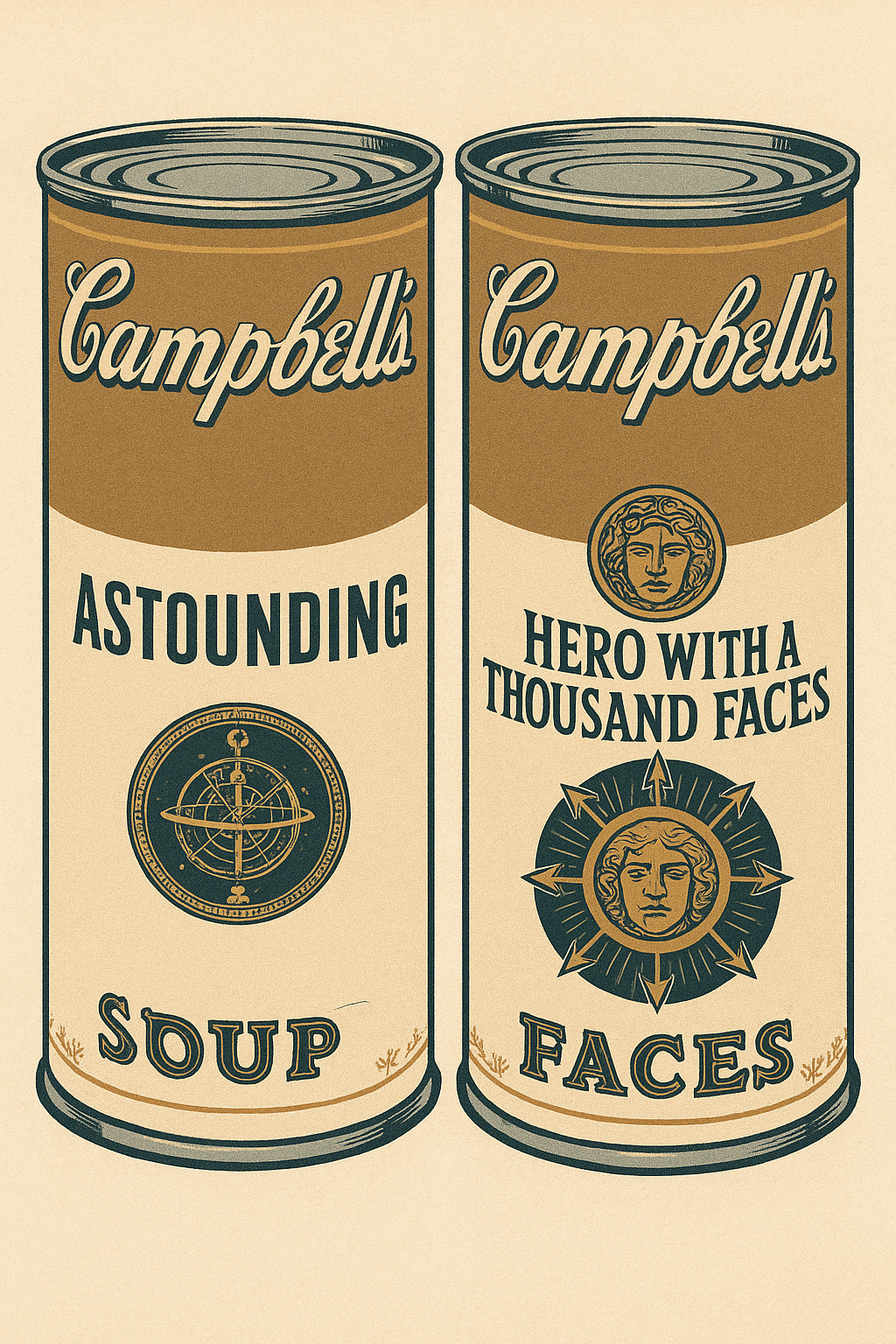
mythographer who argued that all stories follow a shared “monomyth” of departure, initiation, return.
His main work "The Hero with a Thousand Faces" emphasized inner transformation, archetypes, and symbolic journeys—contrasting Astounding’s engineering ethos.
His work prefigures New Wave SF’s shift toward psychology, myth, and subjective experience.
John W. Campbell Jr. (1910 - 1971)editor of *Astounding* (from 1937), reshaped SF into rigorous, idea-driven literature.
He demanded scientific plausibility and “competent characters,” defining the Golden Age tone of rational mastery.
Nurtured Asimov, Heinlein, Clarke and many others —but later drifted toward fringe science, weakening his influence.
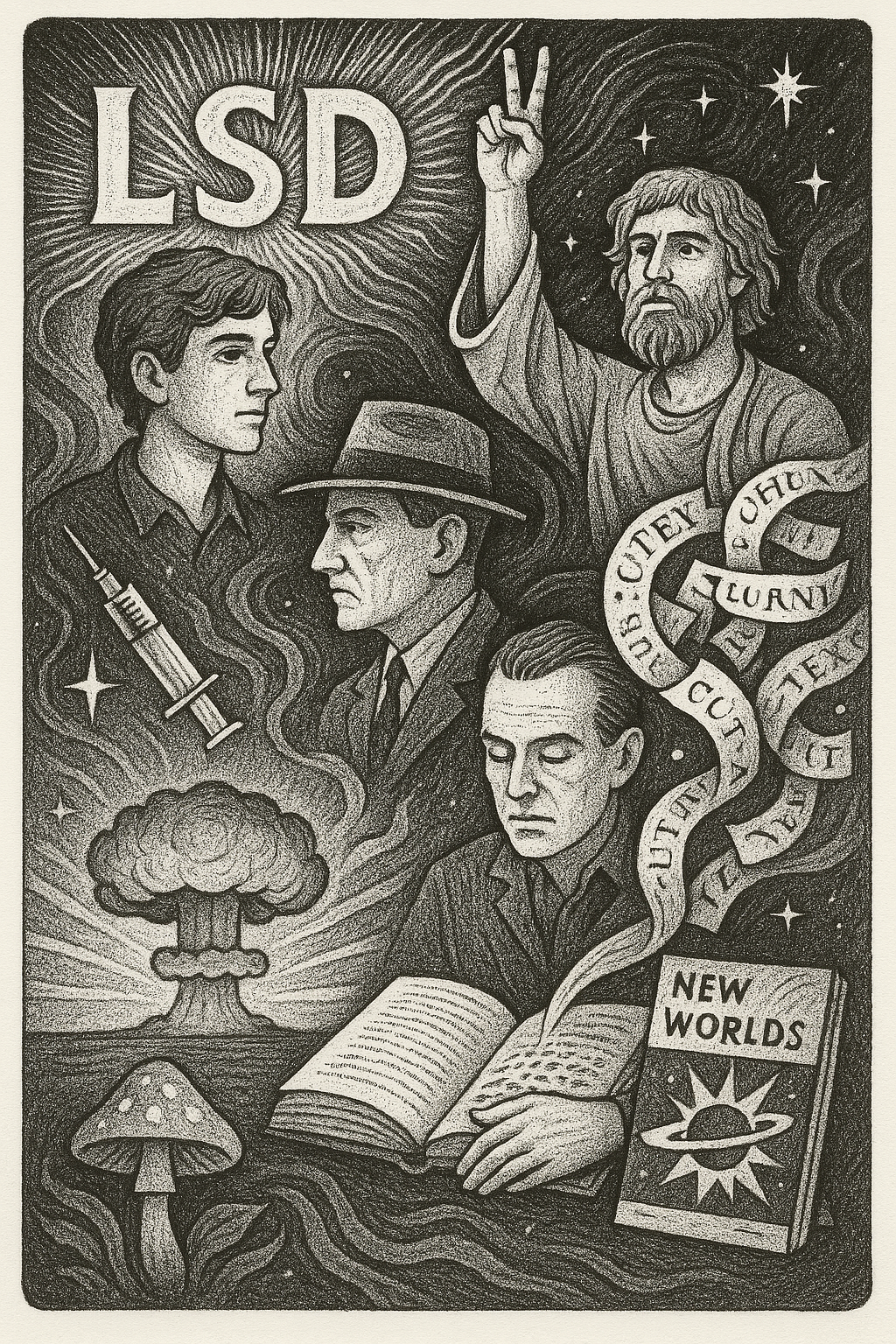
**1950s–60s counterculture:** rise of youth rebellion, anti-establishment politics, and experimentation with altered consciousness.
**LSD (discovered 1943, popularized 1960s):** reshaped cultural interest in perception, identity, and inner realities.
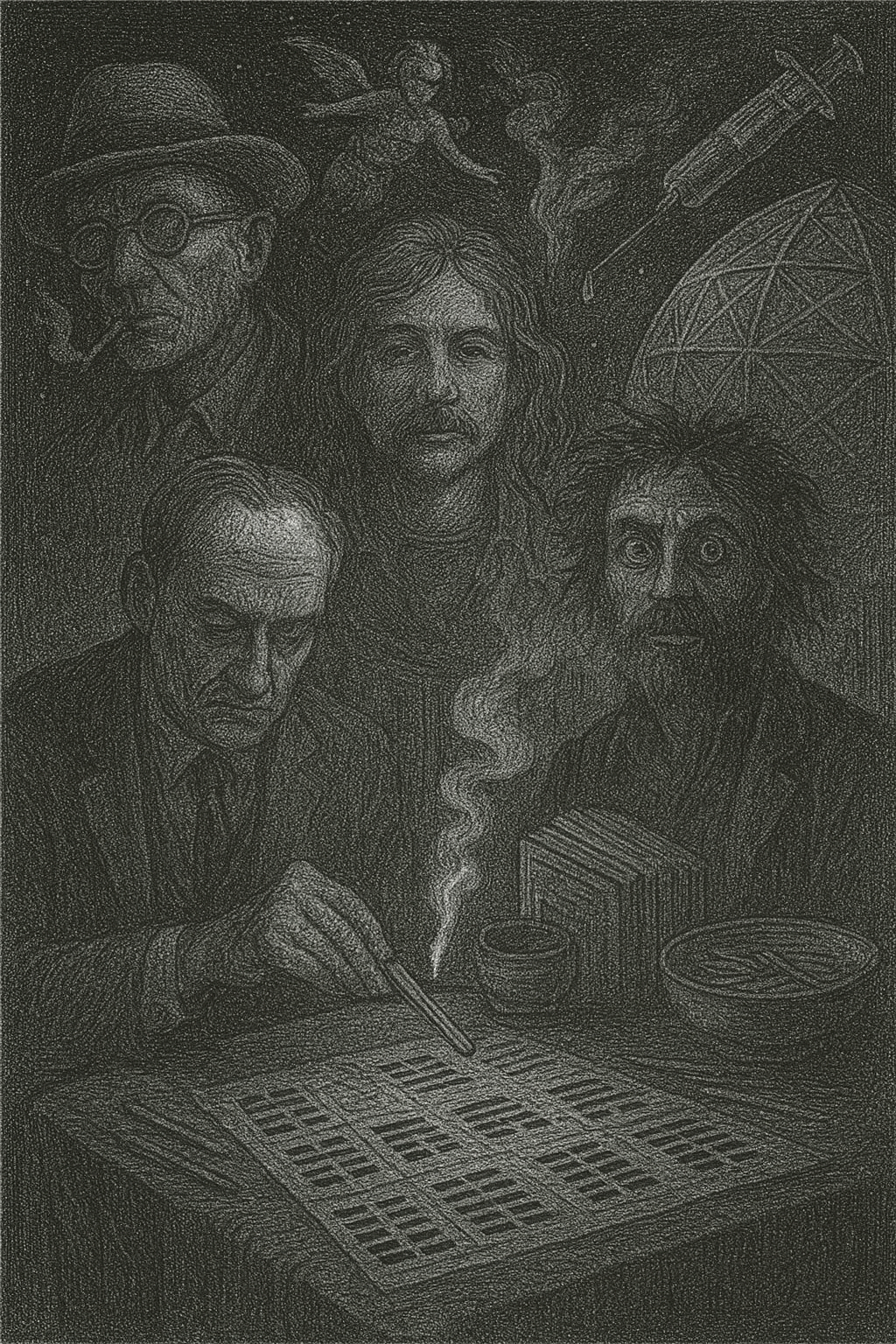
**William S. Burroughs:** cut-up techniques and surreal, transgressive prose became a stylistic blueprint for New Wave experimentation.
**Beat Generation:** Kerouac, Ginsberg, Ferlinghetti—subjectivity, fragmentation, and personal mythmaking enter SF’s toolbox.
**Modernist and postmodernist literature:** Joyce, Kafka, Pynchon, Borges—models for narrative play, ambiguity, and psychological depth.
**Cold War anxiety:** paranoia, nuclear threat, and bureaucratic control themes anticipate New Wave dystopias.
**Shift in magazines:** *New Worlds* under Michael Moorcock becomes the laboratory for radical, literary SF.
"Sci-Fi's Most Controversial Figure"
bipolar disorder
quite decorated: 8 Hugo Awards, 4 Nebula Awards, 5 Bram Stoker Awards, SFWA Grand Master
anthologies: Dangerous Visions (1967); Again, Dangerous Visions (1972); Last Dangerous Visions (2018)
Star Trek ("The City on the Edge of Forever"); Disney (well, not really); I, Robot (well, not really)
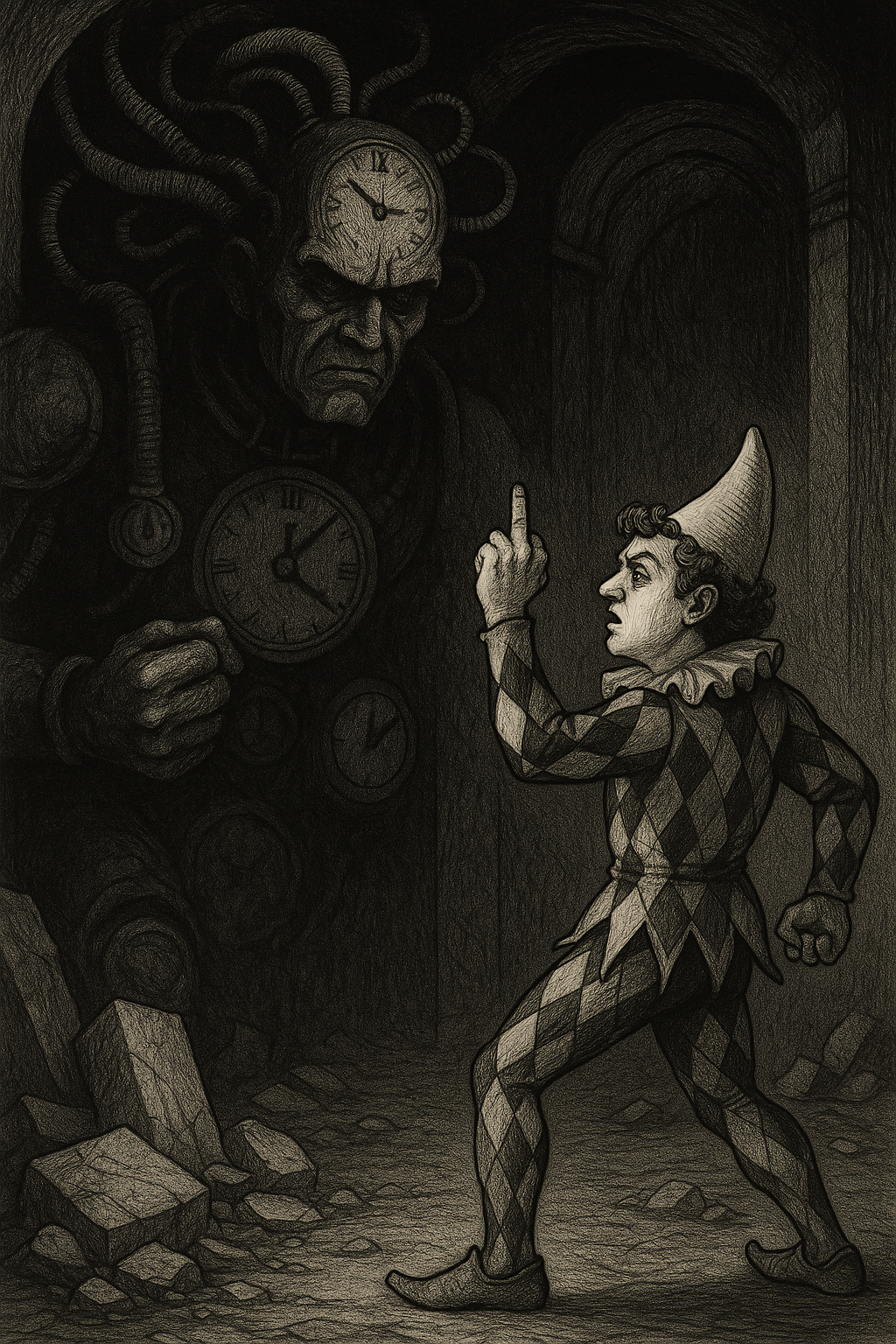
"Repent, Harlequin ! The Ticktockman said" (1965); I have no mouth and I must scream (1967); A boy and his dog (1967)
ultra-prolific (cca 45 novels, >120 short-stories)
his twin sister Jane died when he was six weeks old
first educated at Quaker schools, later at Berkeley
seller in record store, gets his first short-story "R🐶🐶G" published in 1951
amphetamine abuse; married 5 times; paranoia; schizophrenia;
self-described as "acosmic panentheist" - "I don't believe that the universe exists. I believe that the only thing that exists is God and (s)he is more than the universe. "
An Axis-dominated world with Berlin as the political and technological center.
Rocketry and aerospace supremacy redefining global power after WWII.
The chinese "Book of Changes" (I Ching) functioning as an oracle guiding characters and narrative fate.
“The Grasshopper Lies Heavy” as a forbidden alternate-history novel.
Fiction-within-fiction (resp. a negation-of-a-negation) destabilizing what counts as the “real” world.
Chew-Z as a gateway to layered, recursive realities.
Palmer Eldritch as alien–demiurgic intruder with three stigmata.
Corporate rivalry turning metaphysical: P.P. Layouts vs Eldritch.
Loss of agency: characters cannot trust their own perceptions.
Gnostic undertones: a hostile “god” hijacking subjective worlds.
Reality as a trap woven by a higher, unknowable intelligence.
A post-apocalyptic Earth emptied by nuclear fallout and mass extinction.
Empathy as the defining human trait, tested through the Voigt–Kampff ritual.
Rick Deckard hunting Nexus-6 androids who mirror humanity too closely.
Electric animals as status symbols in a world that has lost real life.
Mercerism - religion re-enacting the mix of Sisyphos / Golghotta experience by means of "empathic box" devices.
Androids questioning their own identity, autonomy, and worth.
The erosion of Deckard’s certainty: “What makes someone alive?”
Decaying reality sliding backward in time.
Cryonic half-life: the dead still communicate.
Jory as parasitic consciousness devouring worlds.
Ubik as quasi-cosmic product: salvation or illusion?
Corporate psi warfare destabilizing identity.
Omnipresent messages hinting at a hidden order.
Each “level” reveals another layer of unreality.
Substance D splitting perception and selfhood.
Surveillance turning protagonist into both watcher and watched.
Erosion of personality into fragmented doubles.
War on drugs portrayed as self-generating, self-devouring system.
Blurring of friendship, betrayal, and institutional control.
Paranoia as rational response to structural violence.
Compassion for the human wreckage of addiction (book's "epilogue" one of the most personal critiques of downsides of the 60s movement).
Theophany experienced as pink laser of information.
VALIS as alien intelligence or Gnostic God.
Schizophrenia, revelation, and ontology entangled.
A world ruled by a Black Iron Prison—false reality ("The Empire Never Ended")
Sophia as incarnated salvific child-figure.
Autobiographical fragmentation: Horselover Fat vs PKD.
Living information reshaping history from within.