i
Diese PrĂ€sentation ist fĂŒr die Ansicht im Querformat gestaltet.

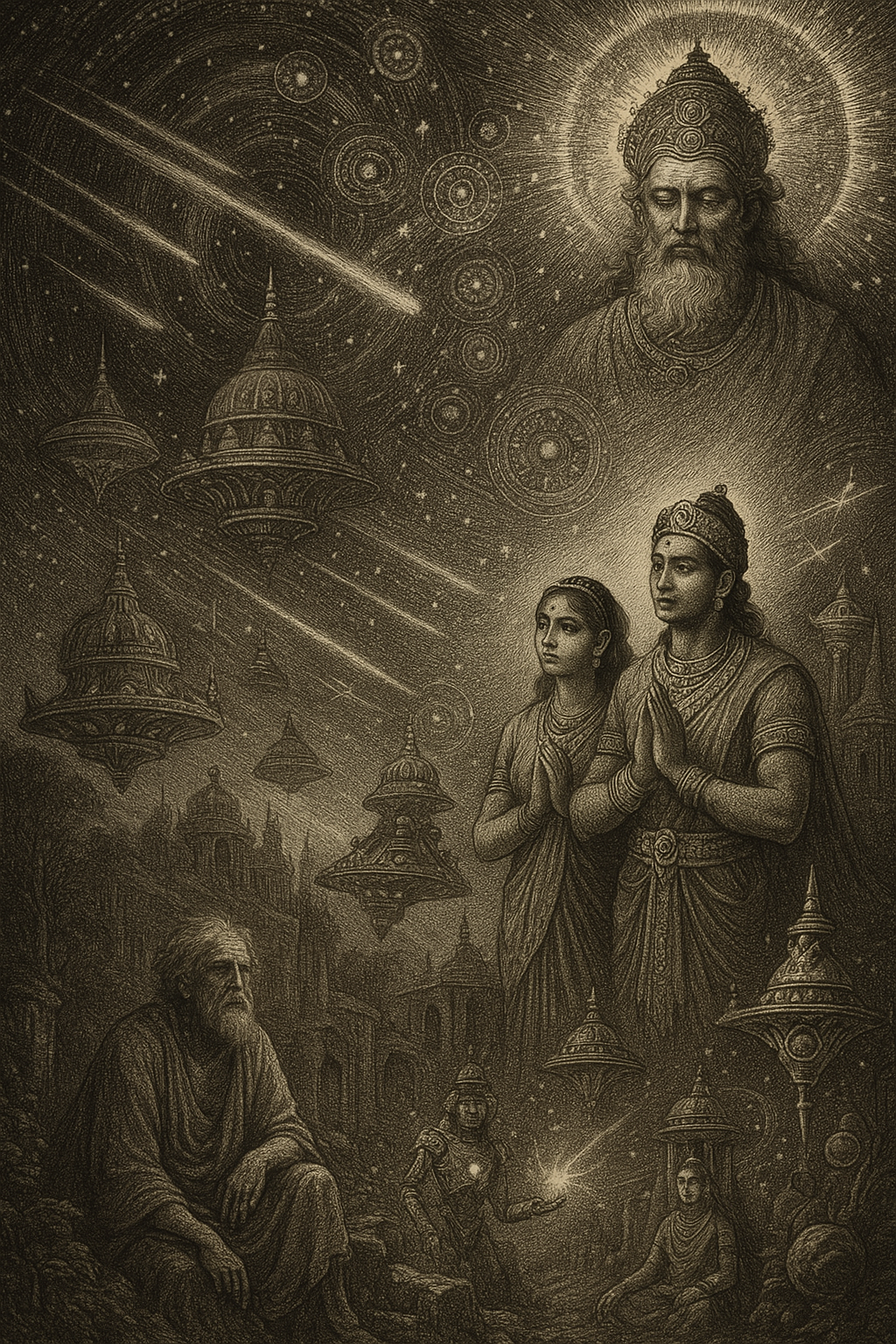
King Kakudmi & Revati visit BrahmÄ’s realm — return after 27 yuga cycles (BhÄgavata PurÄáča 9.8.26–28).
King Muchukunda sleeps for an age; awakens after Manvantaras have passed (MahÄbhÄrata 3.186).
VimÄnas described in MahÄbhÄrata & RÄmÄyaáča — flying chariots with propulsion and weapon systems
BrahmÄstra & other astra weaponry reminiscent of nuclear weapons (MahÄbhÄrata)
Maya DÄnava’s flying palaces & mechanical beings → engineered automatons and anti-gravity craft.
Brahma’s day and night cycles — billions of human years each → cosmic time loops / cyclic universe.
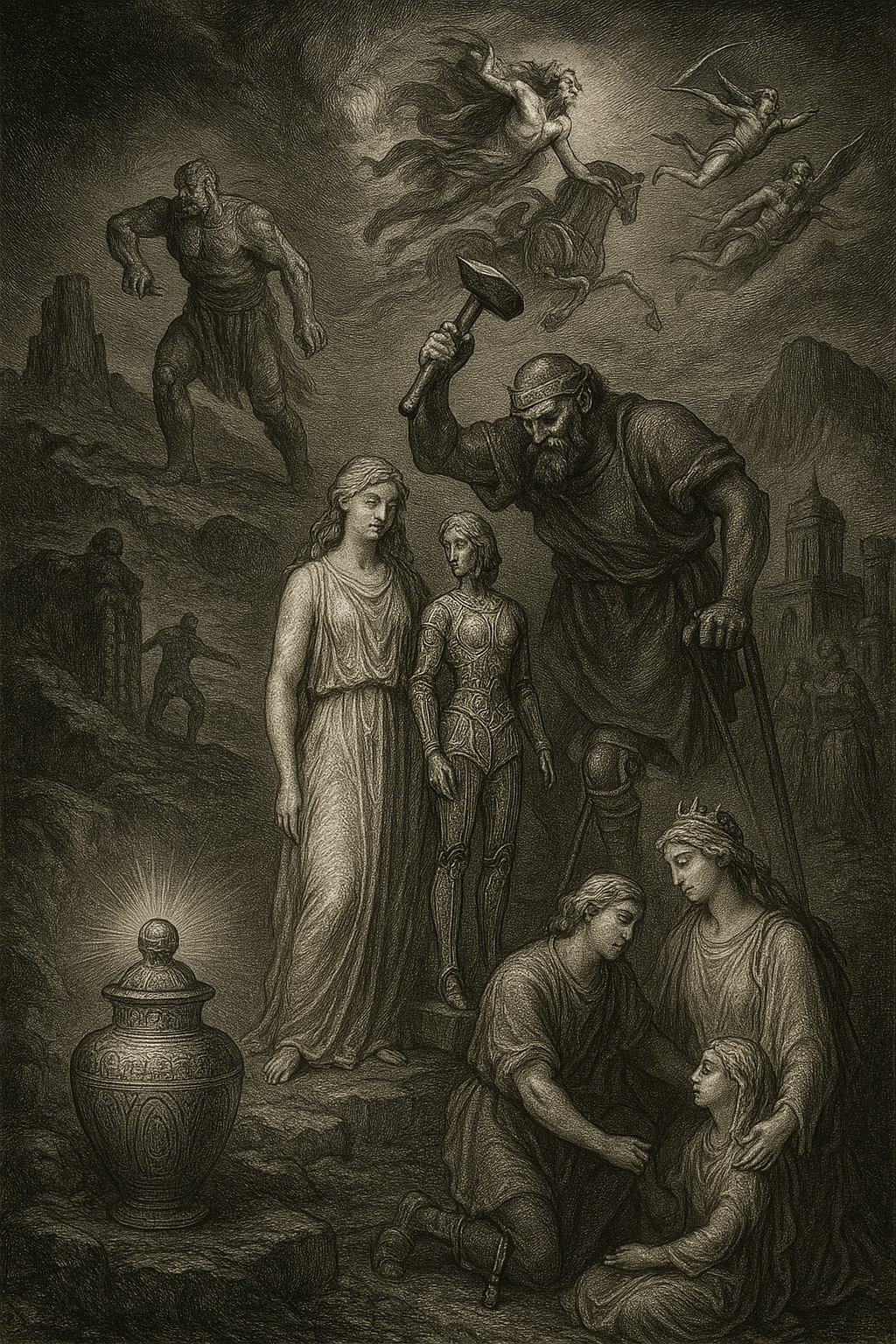
Pandora — first woman crafted from clay → engineered being.
Pygmalion — sculptor creates a synthetic woman brought to life by Aphrodite → early android animation myth.
Talos of Crete — bronze giant patrolling the island; → robotic sentinel.
Hephaestus’s mechanical servants — self-moving golden maidens → robot assistants.
Helios’s son Phaethon — seizes the solar chariot, loses control → allegory of human misuse of cosmic technology.
Daedalus & Icarus — inventors of mechanical wings; human-made flight technology defying natural limits.
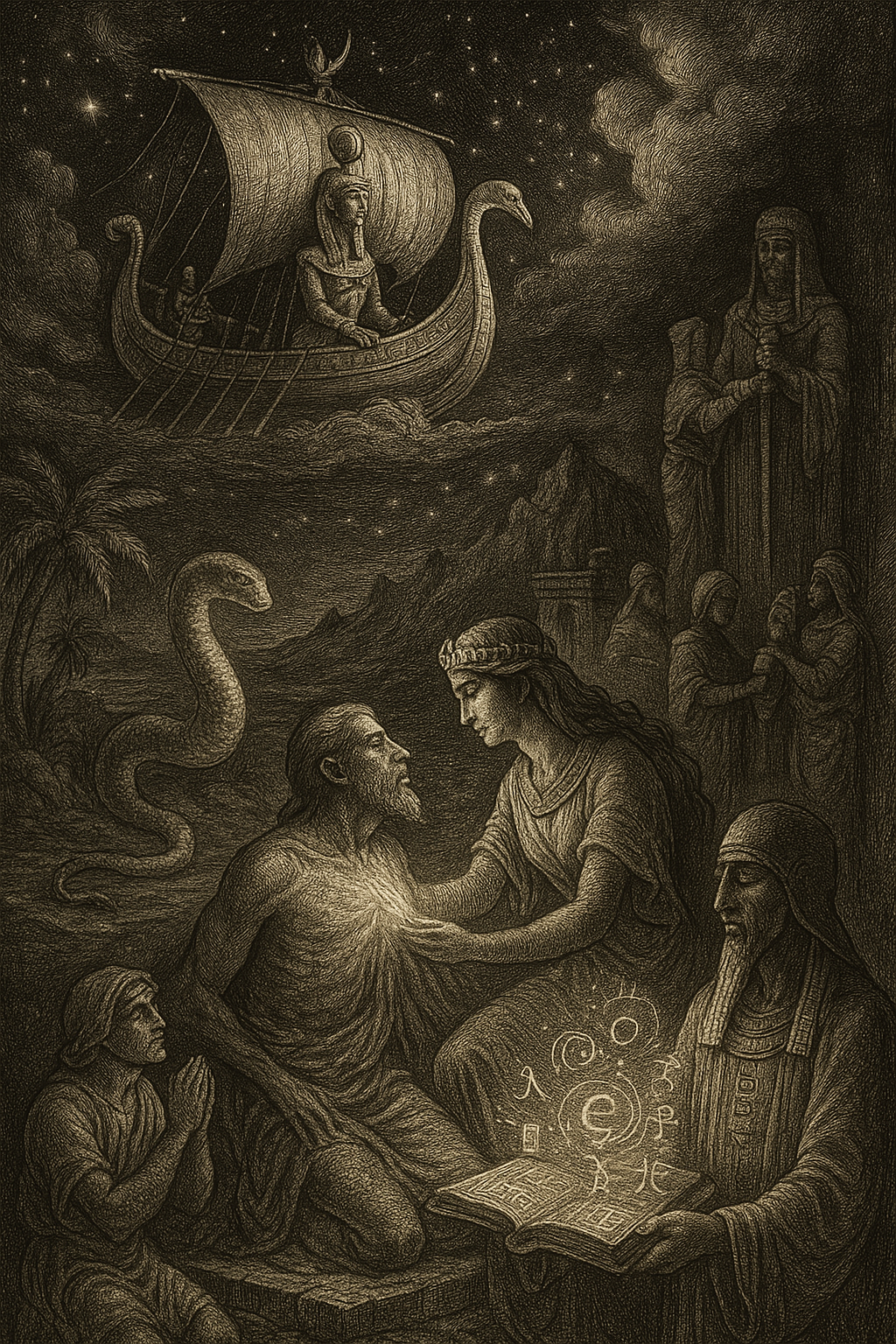
Ra’s solar barque sails across sky and underworld each day → cosmic ship.
The Duat (đđđ) as cyclical underworld journey → time loop / nightly reset of the cosmos.
Isis reassembles and revives Osiris → early image of biotech resurrection.
The Shipwrecked Sailor meets a radiant serpent being on a lost island → hint of alien encounter.
“Opening of the Mouth” (đ ±đȘđđ) ritual reanimates statues and mummies → animation technology.
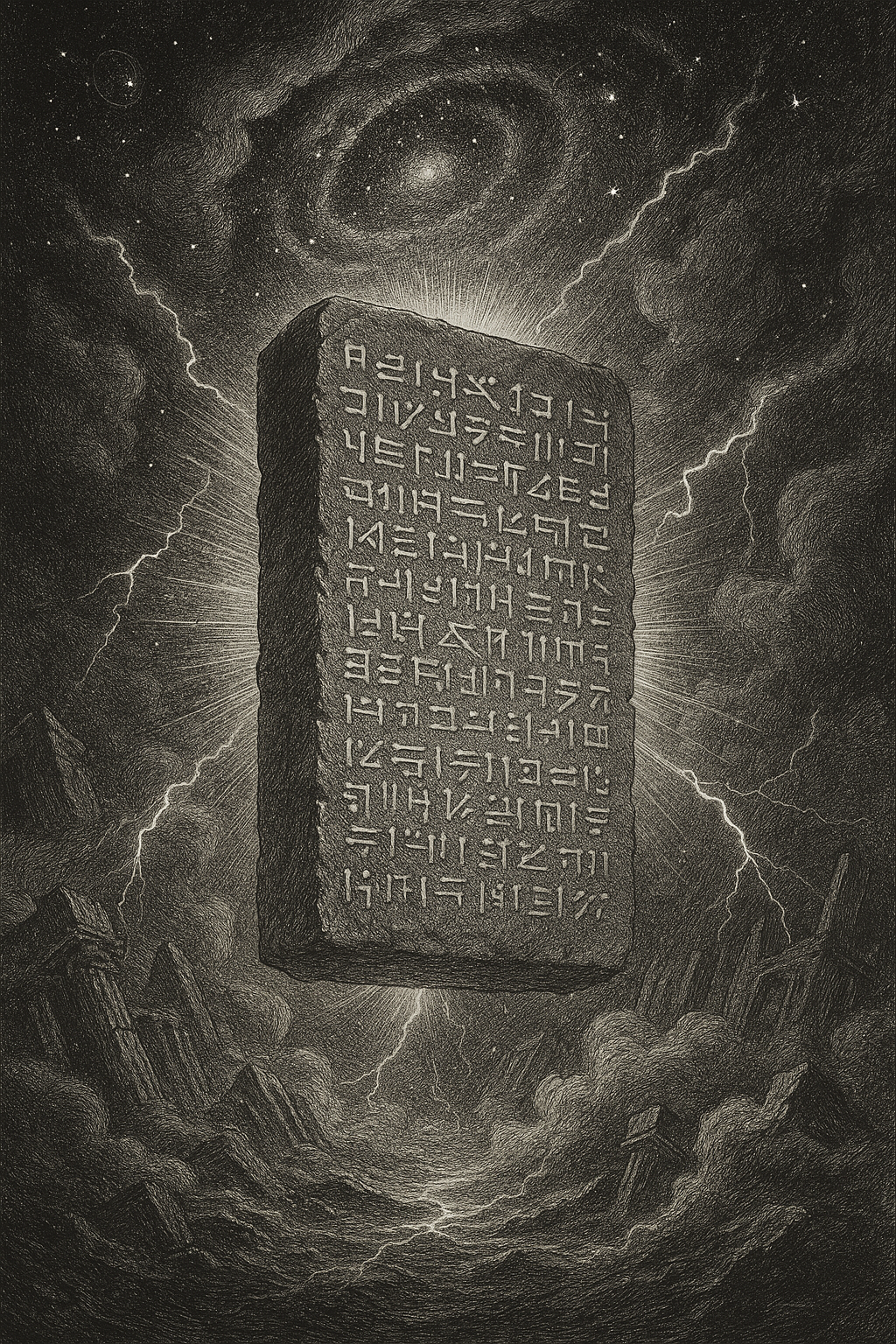
Thoth’s Book of Knowledge grants control over time, speech, and nature → forbidden technology.
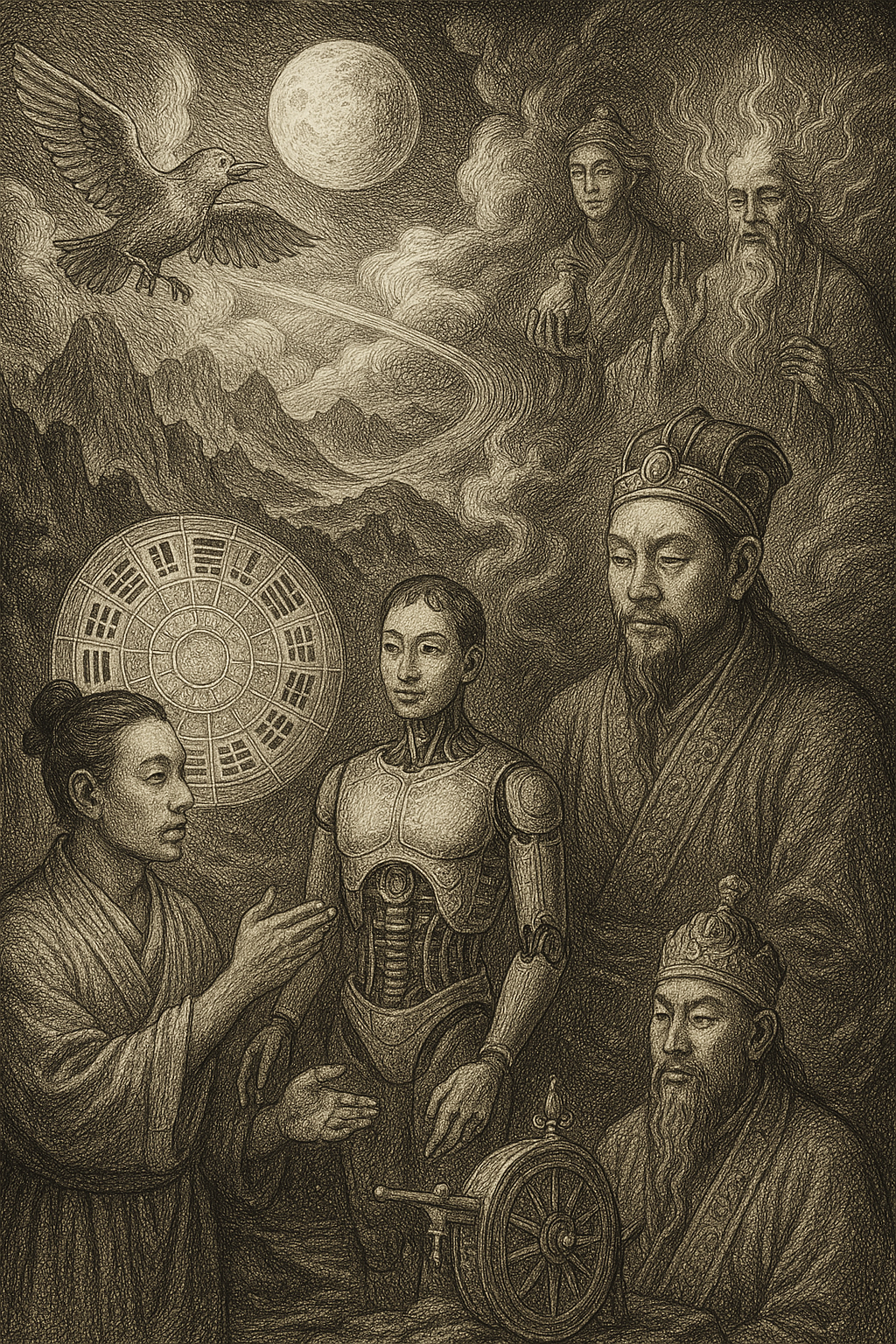
The artificer Yan Shi presents the Yellow Emperor with a mechanical man of wood and leather â moves, sings, even flirts â one of the earliest robot legends.
Lu Banâs wooden bird flies for days without rest â ancient image of aerial engineering or autonomous drone.
The I Ching encodes the universe in 64 binary hexagrams â a proto-digital code.
The Yellow Emperorâs cosmic compass and carriage always pointing south â navigation technology based on magnetic principles.
Changâe ascends to the Moon after drinking the elixir of immortality â lunar colonization narrative.
Taoist Immortals â subjective time control and bioengineering.
The MahÄbhÄrata – The Vimana Episode
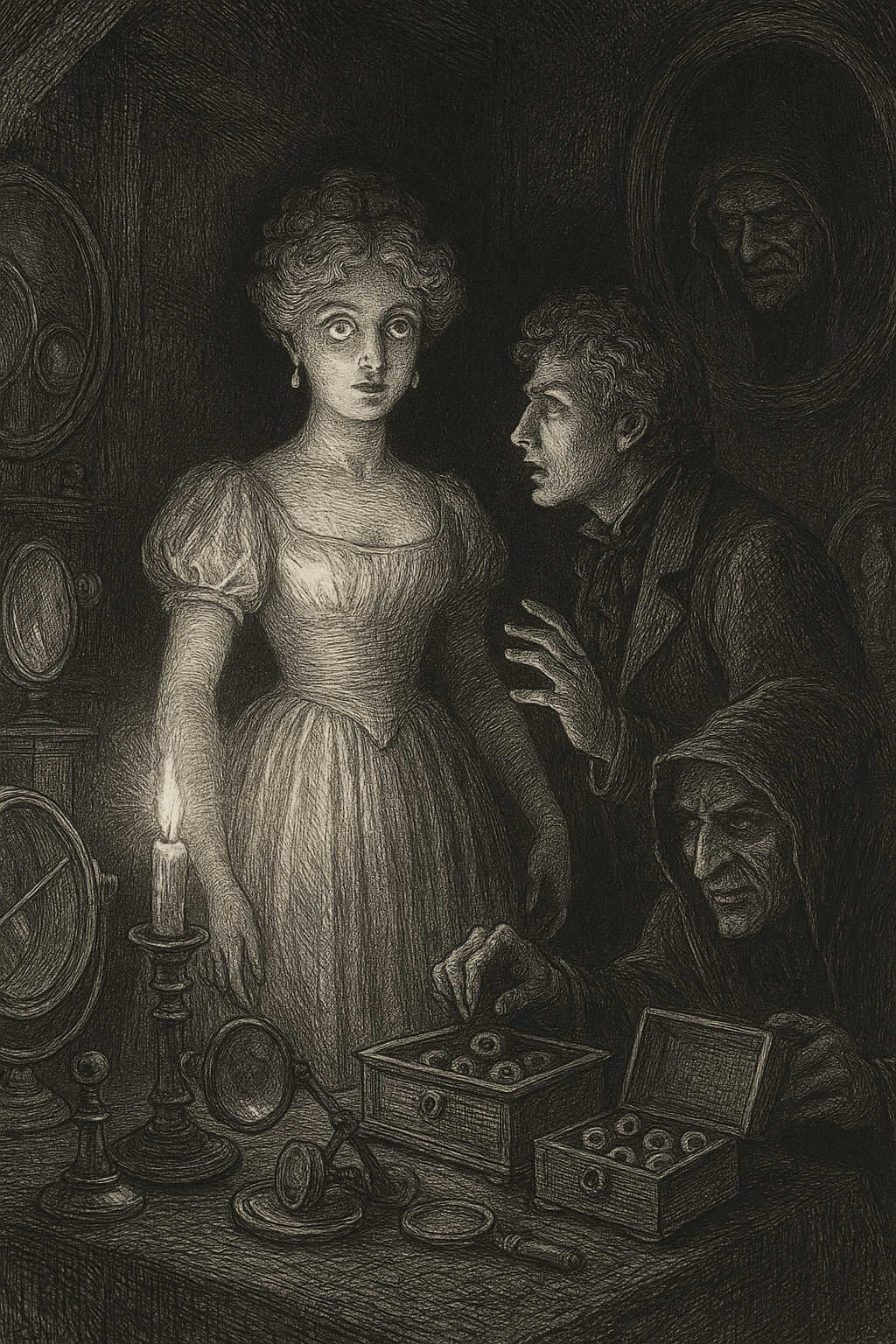
The Painter and the Mechanical Maiden
Daedalus and Icarus
King Kakudmi and Revati
King Muchukunda Awakens
Wang Ziqiao Ascends to Heaven
The Shipwrecked Sailor
The Hymn to Soma
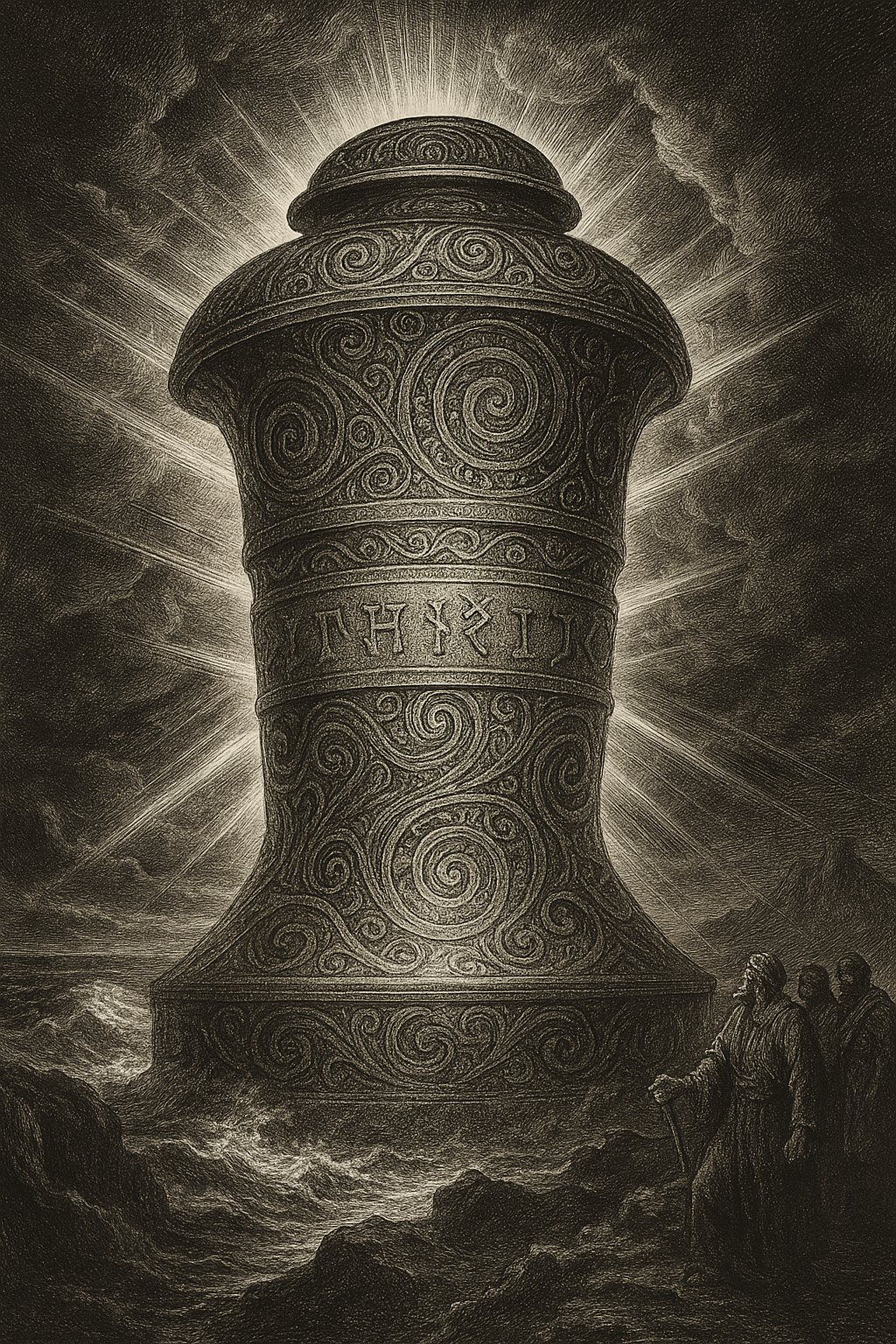
the Sampo â a mysterious artifact forged by the smith-god Ilmarinen, source of endless abundance.
Sampo's nature is never fully defined â part mill, part cosmic axis, part perpetual energy machine.
A myth of technology and desire: whoever controls the Sampo controls creation, prosperity, and fate.
as usual, its forging and theft ignite a cosmic struggle...
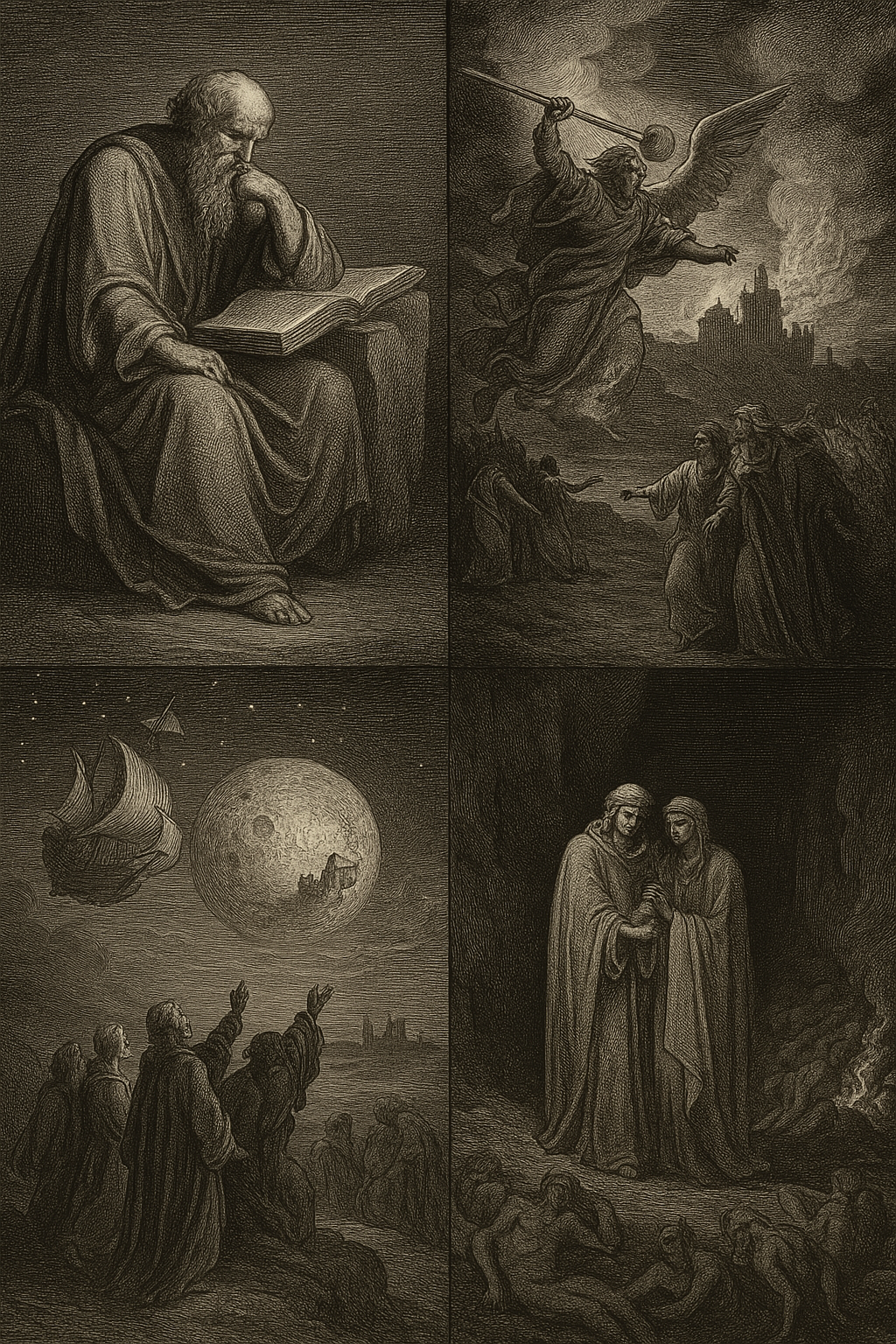
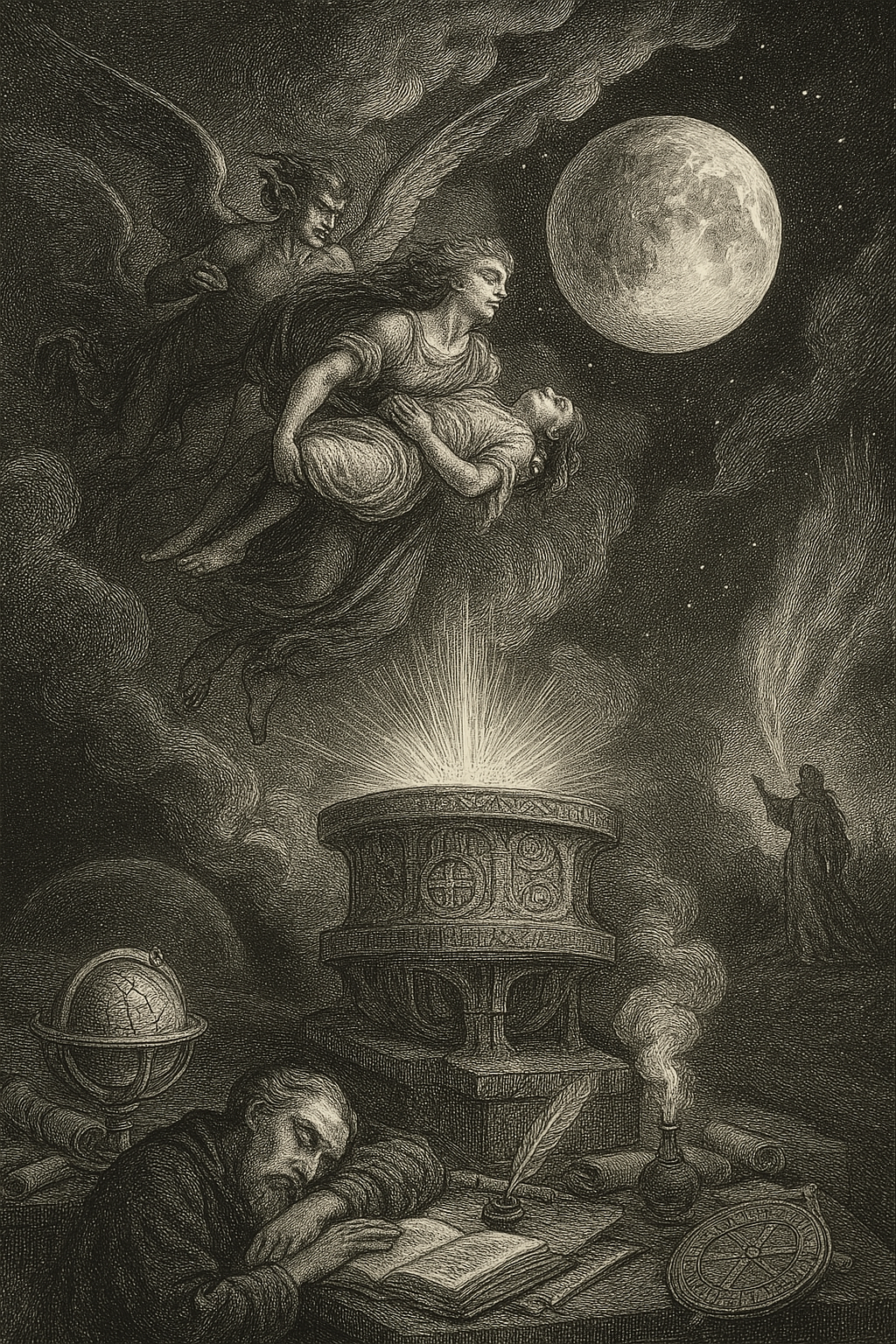
A witchcraft invocation within a book within a dream — nested speculation.
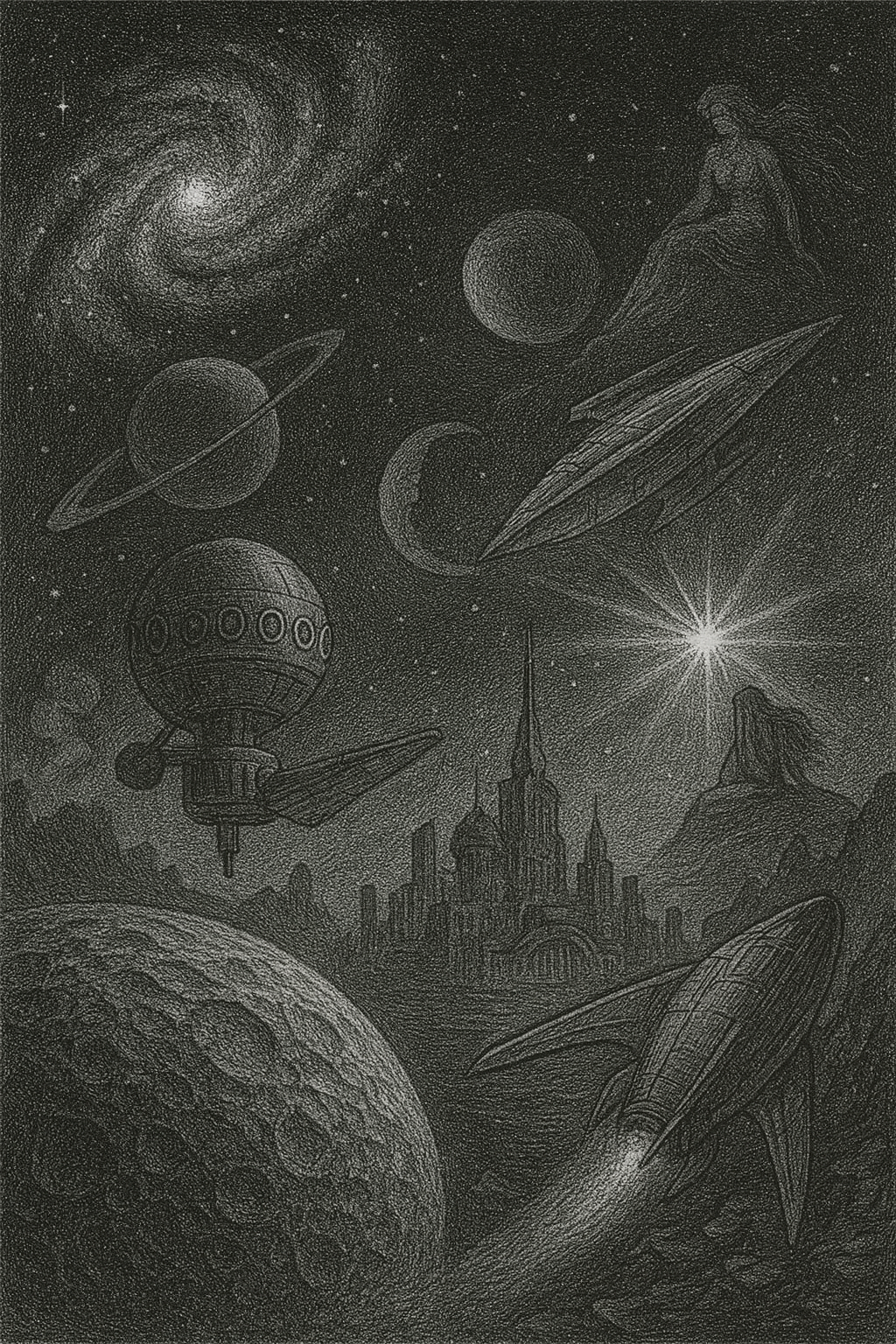
Journey to the Moon seen through "Demon's" eyes.
Somnium manuscript leaked: Kepler’s mother accused of witchcraft.
Scientifically valid insights (Lagrange points, eclipses from Moon perspective, Privolva / Subvolva, planet size variation, size of the Moon)
Somnium translates Kepler’s Three Laws (Elliptical orbits, Equal areas in equal times, Harmonic Law) into narrative form
One of the earliest space-travel tales in English literature.
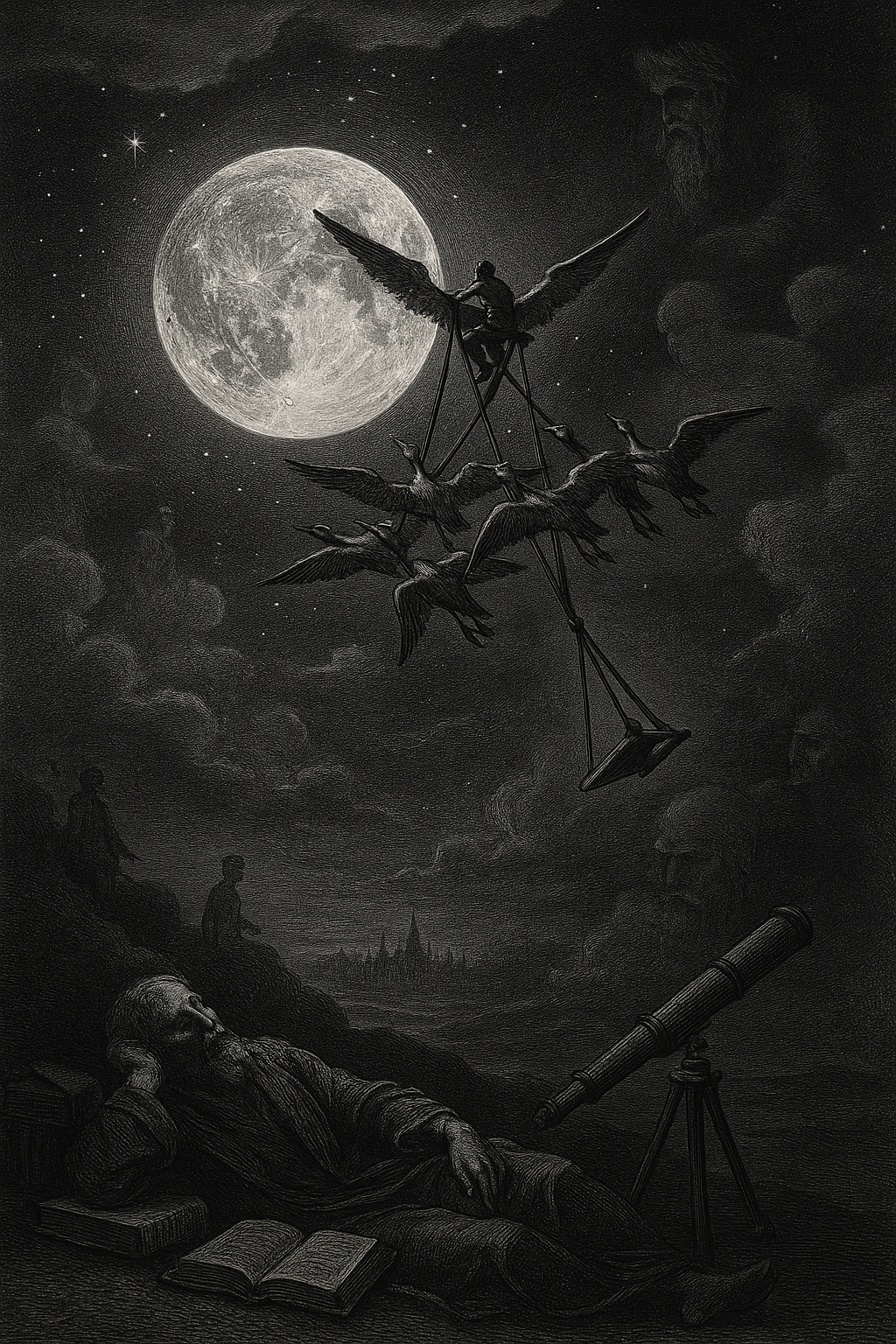
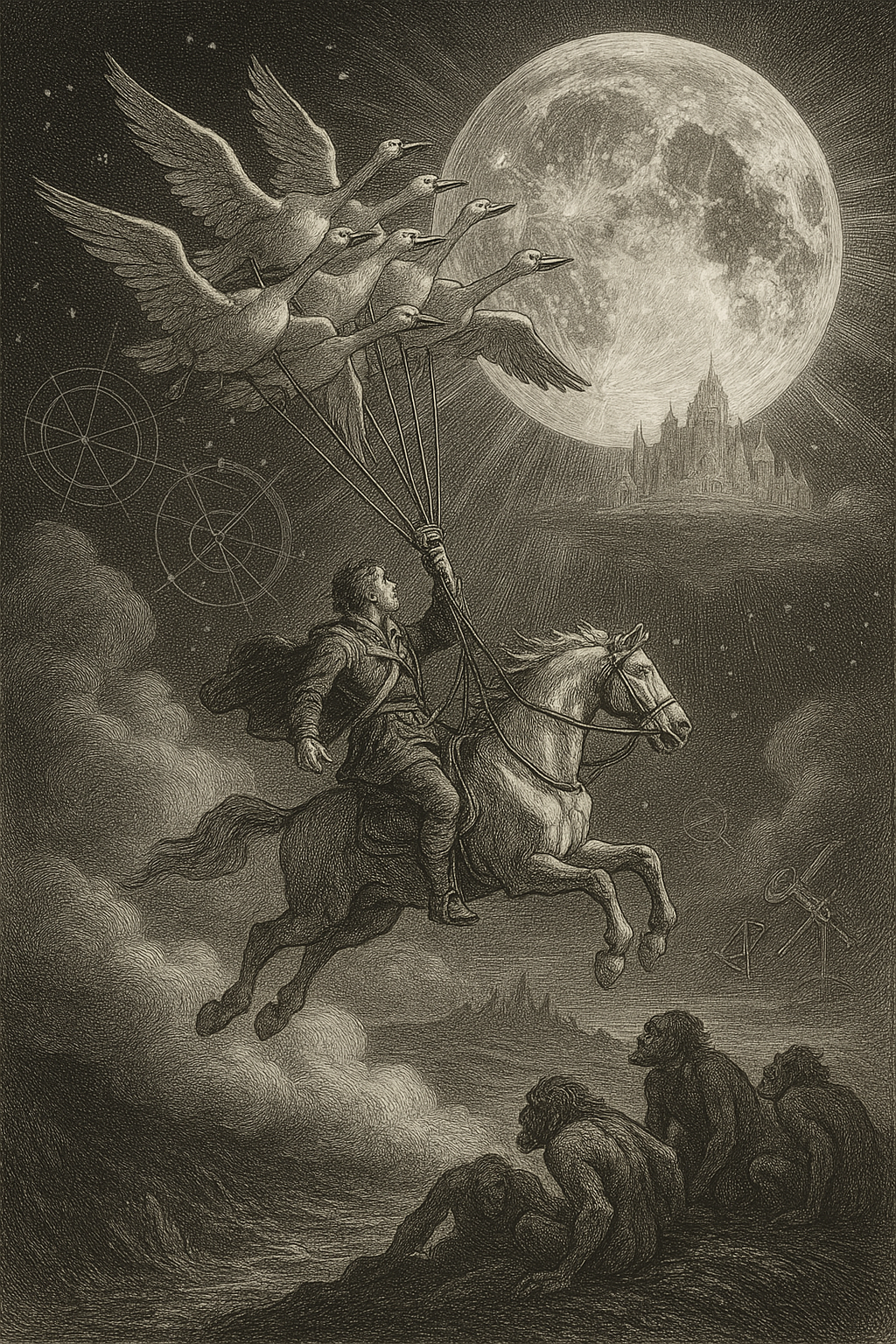
Domingo Gonsales reaches the Moon using trained geese.
Describes lunar inhabitants and societies with utopian curiosity.
Reframes divine ascent as mechanical flight — from miracle to method.
Echoes Kepler’s *Somnium* but replaces demons with invention.
Marks the shift from celestial myth to speculative science fiction.
A voyage through impossible worlds to expose human absurdity.
Each land a mirror — scale, reason, and custom turned upside down.
Laputa’s scientists: intellect detached from reality.
Brobdingnag: moral clarity through altered scale.
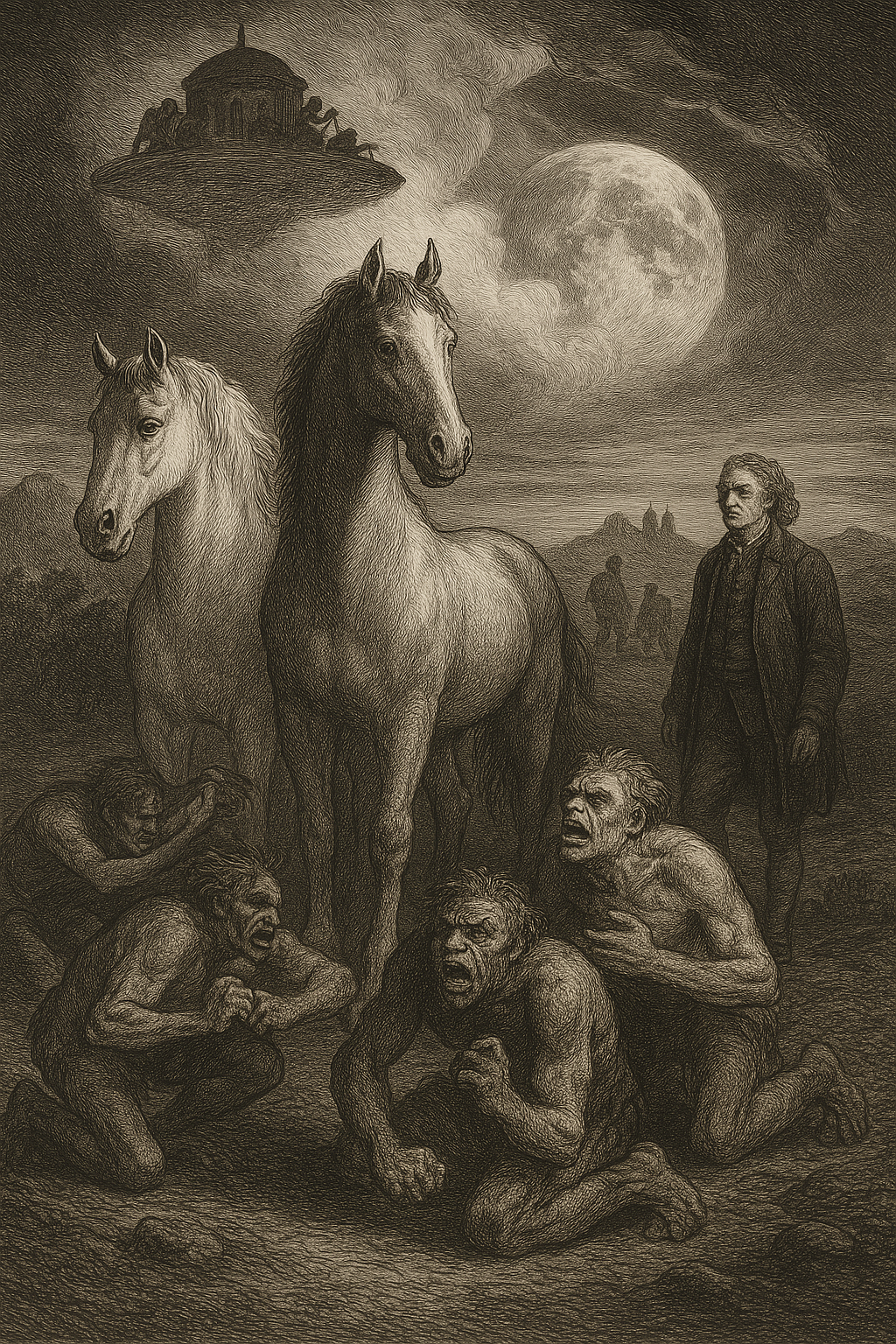
Houyhnhnms — rational horses who reveal mankind as the true beast.
Satire becomes proto-anthropology: humanity seen through alien eyes.
A cosmic satire on scale, knowledge, and human vanity.
Blends Enlightenment rationalism with speculative cosmology.
Micromégas — a giant from Sirius, eight leagues tall, traveling the universe in search of wisdom.
Encounters microscopic humans on Earth — astonishment reversed.
Anticipates first-contact narratives: beings of reason meeting beings of ignorance.
The universe as laboratory for humility...
Voltaire: the 1st one to introduce the alien perspective, the 1st one to "play it big".
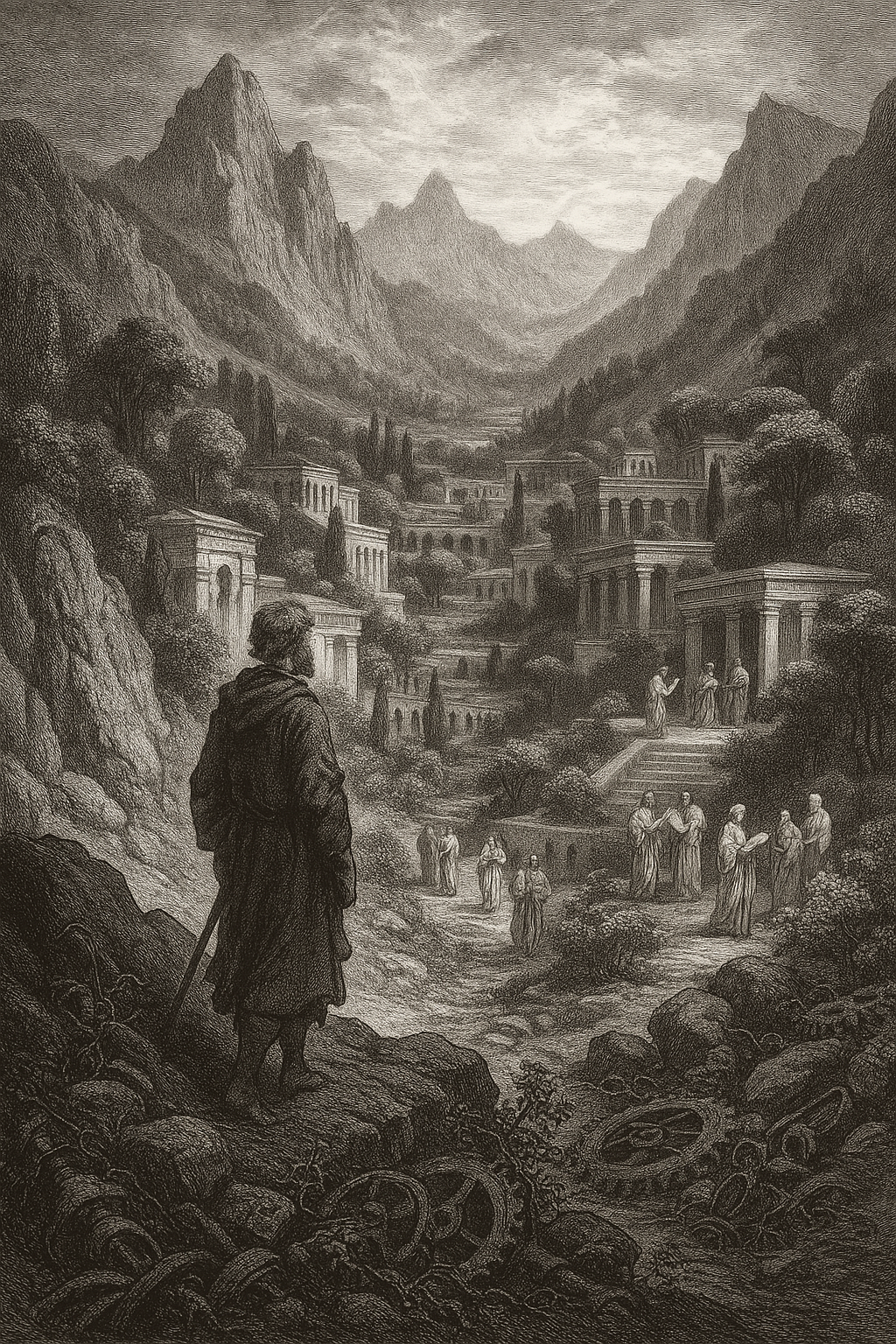
An Enlightenment dream of Paris six centuries in the future.
Imagines social reform through reason, education, and moral progress.
First modern utopia set in a specific future year.
A rational paradise: no clergy, no monarchy, science guided by virtue.
Blends prophecy, urban planning, and moral philosophy — proto–science fiction of progress.
A tale of obsession, optics, and automata.
Nathanaelâs fear of the Sandman merges with fascination for the mechanical doll Olympia.
Freudâs âDas Unheimlicheâ (1919) reads it as the model of the uncanny: return of the repressed, fear of losing oneâs eyes (or self).
Anticipates the âuncanny valleyâ â the eerie discomfort when imitation becomes almost human.
romantic nightmare -> birth of psychological speculative fiction
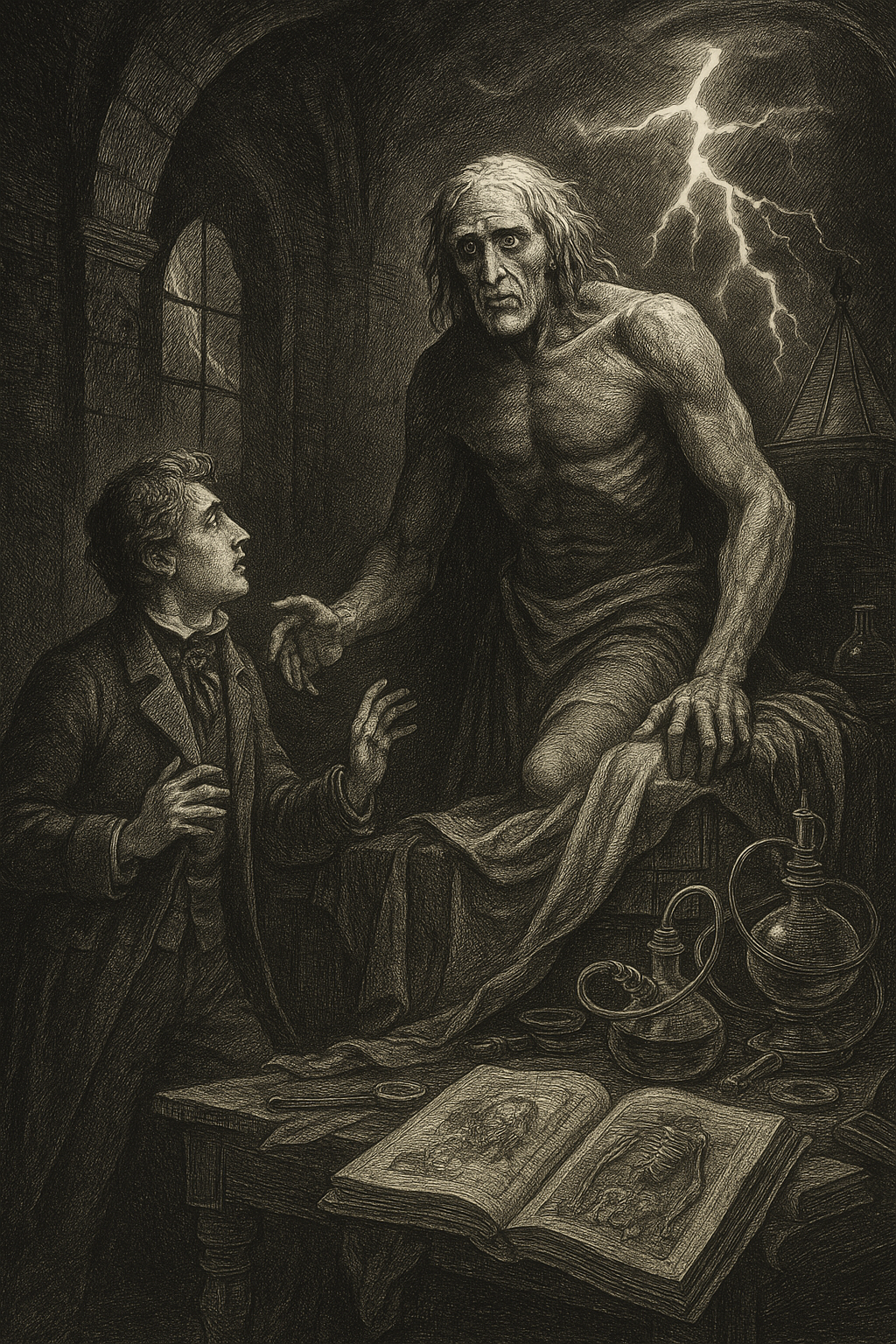
The first modern myth of artificial life — creation without divine sanction.
Victor Frankenstein as Promethean scientist: knowledge becomes transgression.
The Creature — intelligent, emotional, rejected.
From Enlightenment optimism to Romantic horror: science stripped of empathy.
Anticipates modern bioethics and AI dilemmas — the maker fears his own creation.
Hoffmann’s automaton, Shelley’s monster and Freud’s "uncanny" form one lineage: the SELF estranged by what it builds.
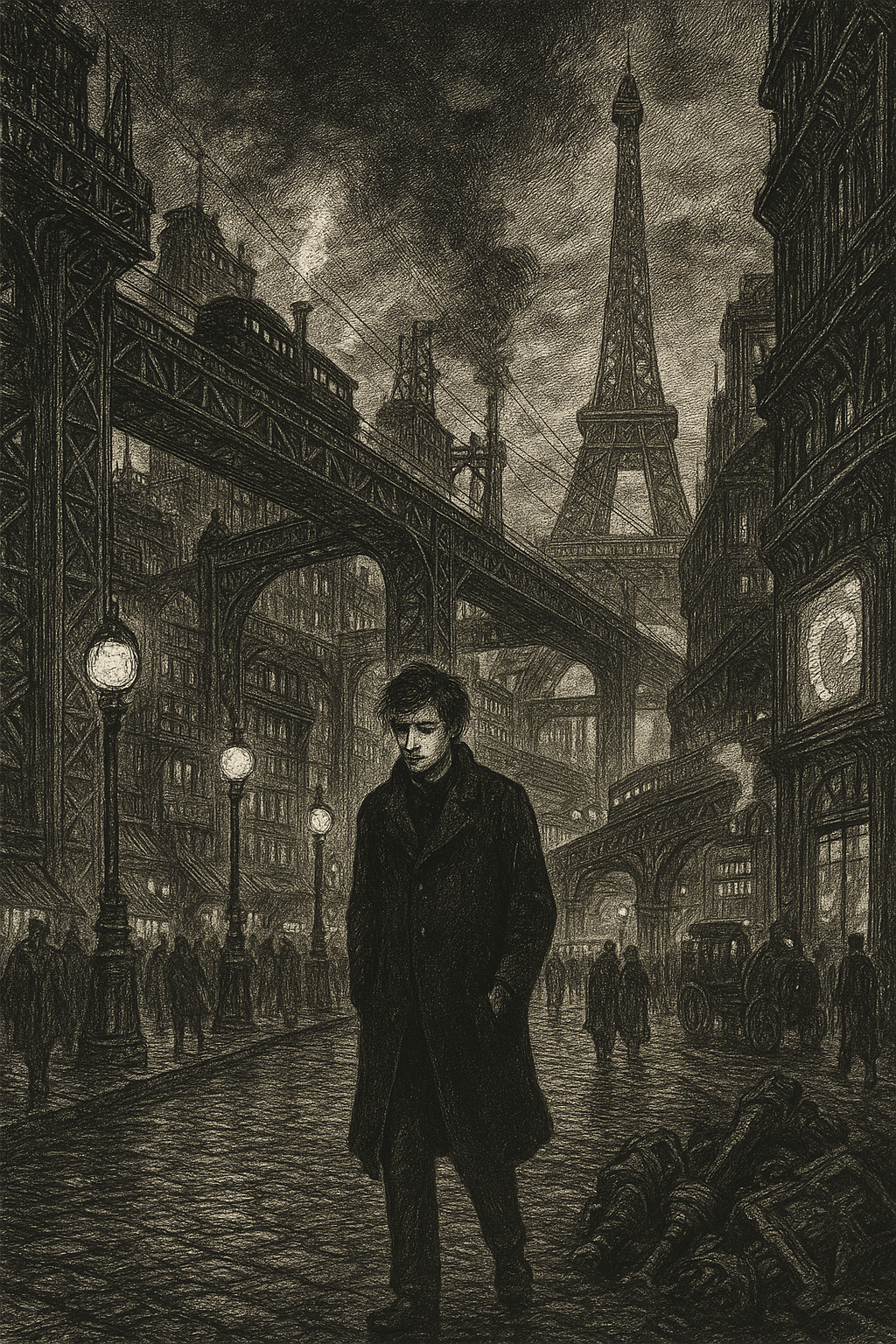
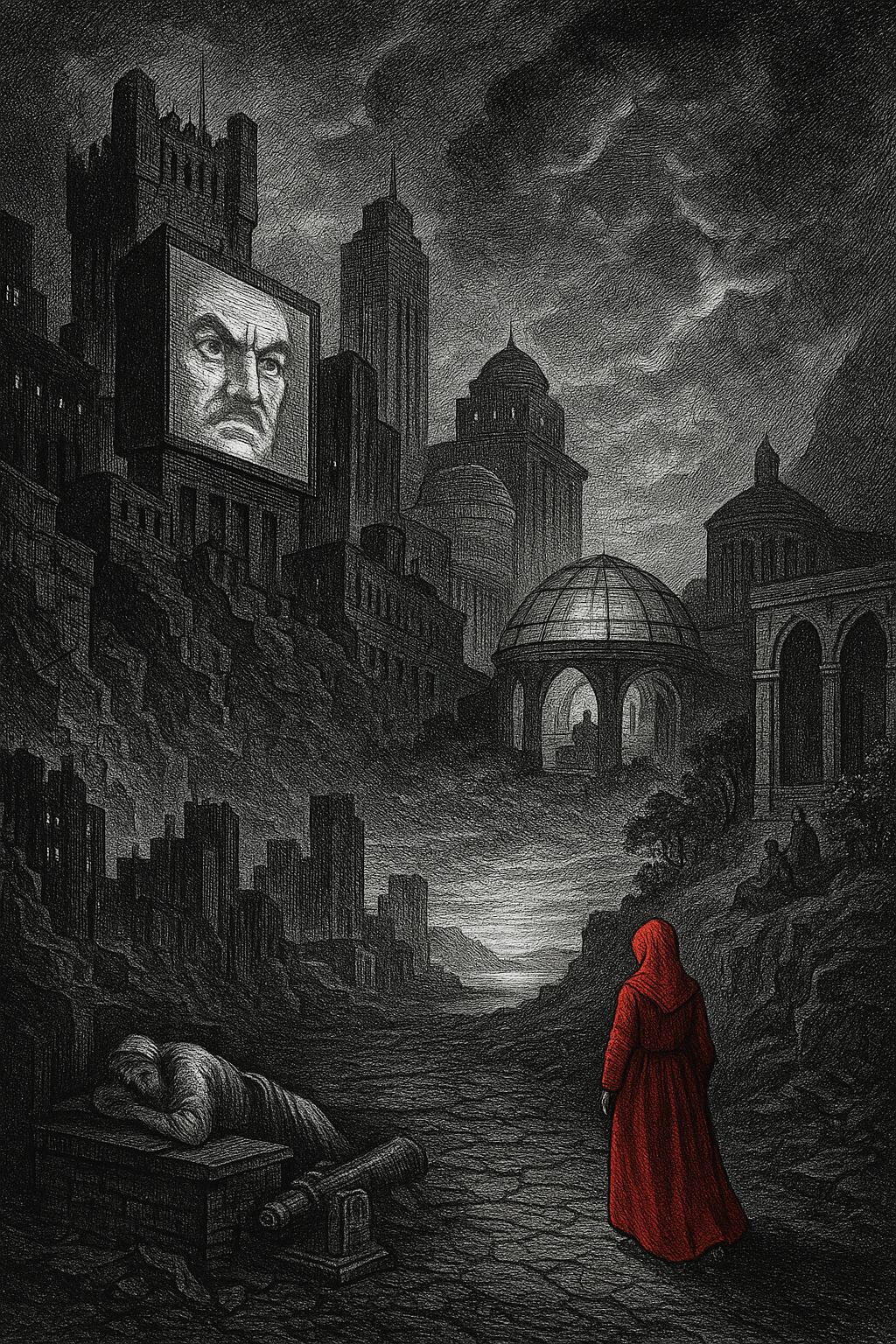
Verne's dystopian vision of Paris in 1960 — ruled by finance, speed, and machinery.
Young Michel Dufrénoy, a poet, wanders through a cold, electric metropolis.
Science and industry dominate; literature and beauty are obsolete.
He fails to find love, meaning, or recognition in a mechanized society.
The story ends in isolation and despair — the poet buried beneath technological triumph.
Verne’s "lost" novel: a prophetic elegy for imagination in an age of machines.
A utopian satire where everything familiar is reversed — “Erewhon” as “Nowhere” spelled almost backward.
Illness is treated as crime; crime as illness — morality turned inside out.
A society that hides its irrationality behind logic — parody of Victorian respectability.
Religion becomes worship of the “Musical Banks” — ritual without faith, economy as theology.
Education produces conformity, not enlightenment — critique of mechanical morality.
Blends travel narrative and social experiment — a bridge between Swift and modern dystopia.
Satire of progress itself — civilization as well-trained absurdity.
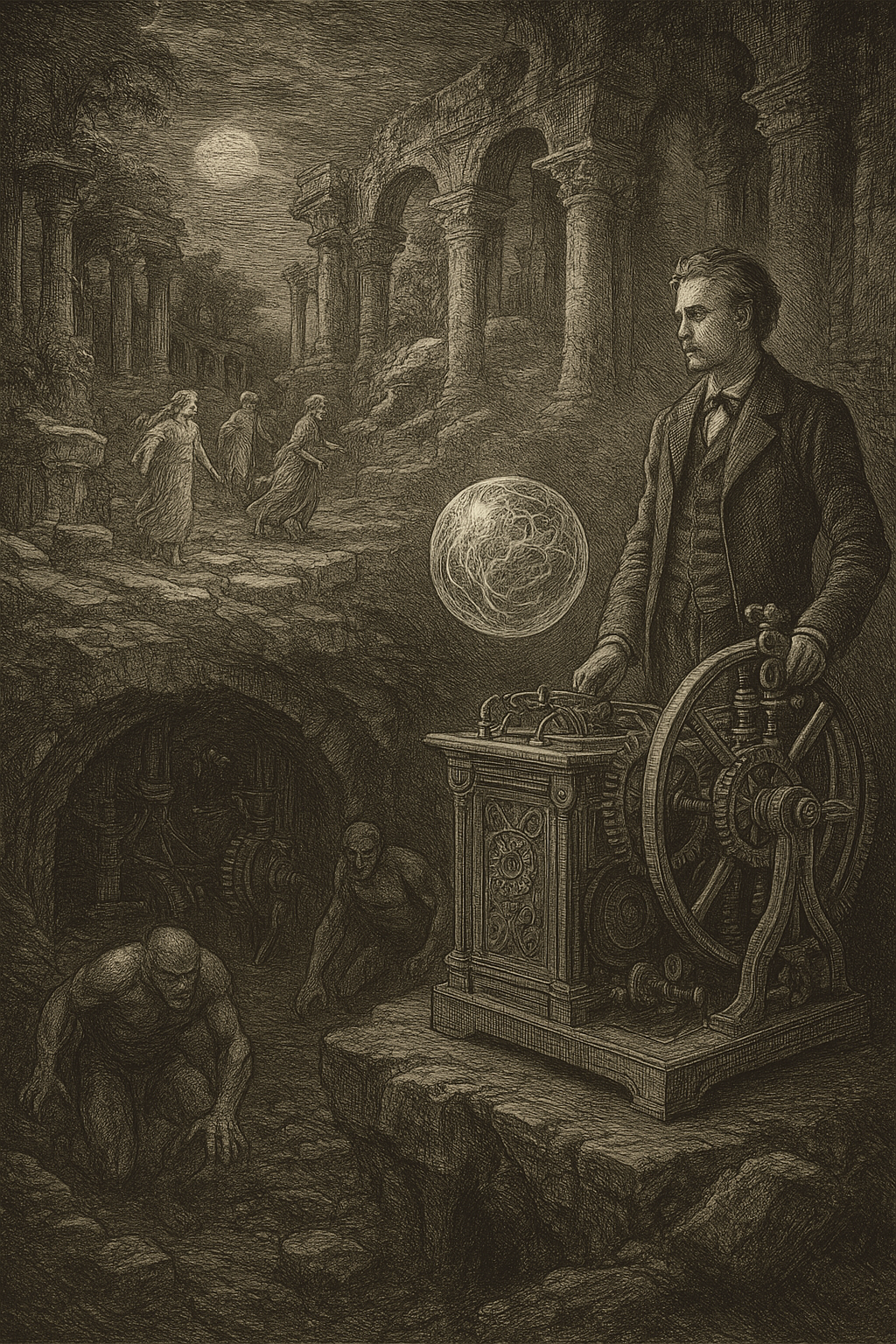
Set in A.D. 802,701 — humanity evolved into two species: Eloi and Morlocks.
Eloi — gentle, idle descendants of the bourgeoisie, living above ground.
Morlocks — subterranean workers, keepers of machinery, feeding on their former masters.
A Marxist fable of class exploitation carried to evolutionary extremes.
The time machine reveals future history as decay: entropy wins.
asides Shelley, Verne and Gernsback considered to be one of 19th parents of "science-fiction" genre
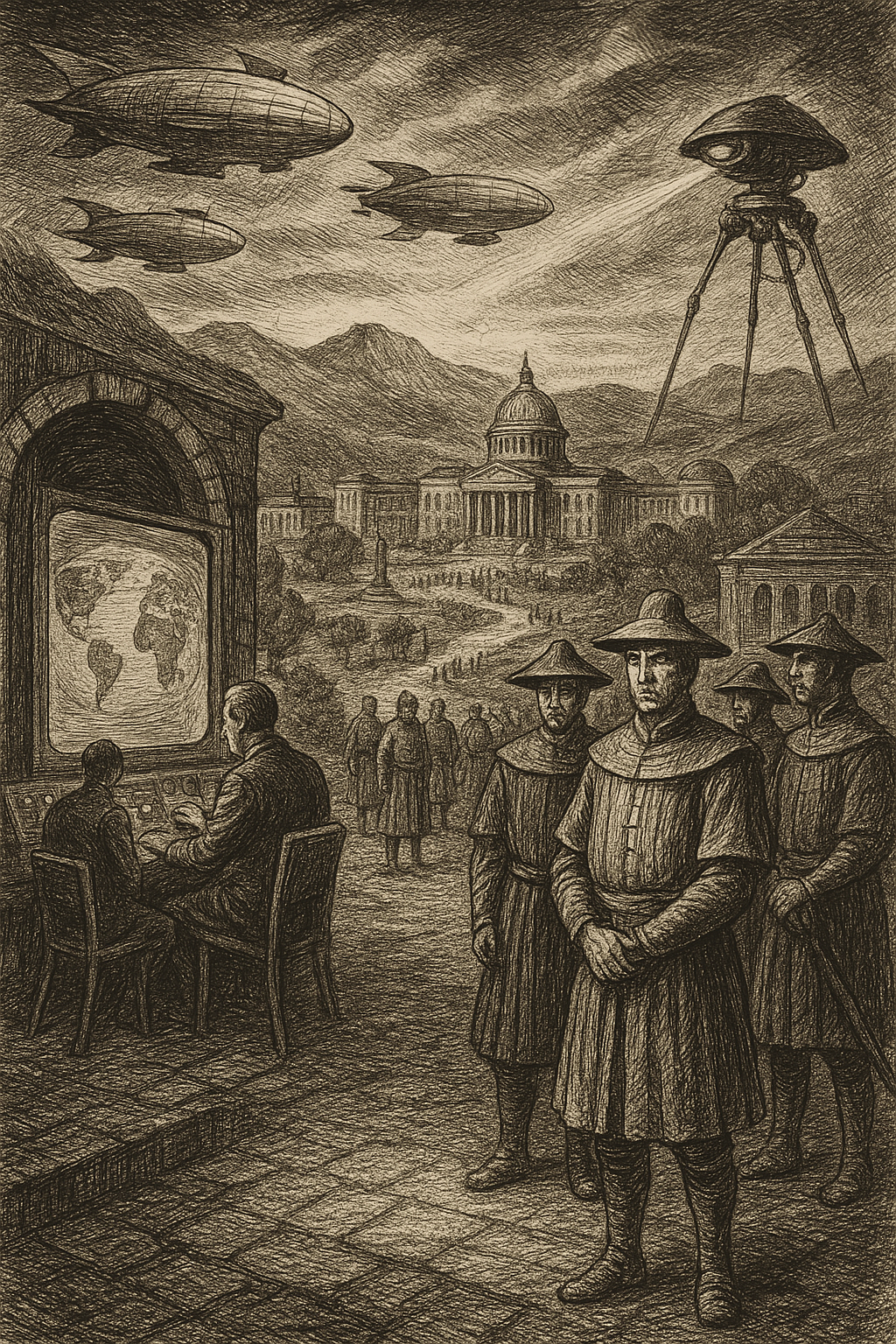
a âsocial scientist in fictionâ: stories as thought experiments about planned futures and world government.
A Modern Utopia (1905): a parallel Earth with a liberal World State, free movement, âOrder of Samuraiâ ...
The Shape of Things to Come (1933): âhistory from the futureâ where global war leads to a technocratic âAir Dictatorshipâ unifying the planet.
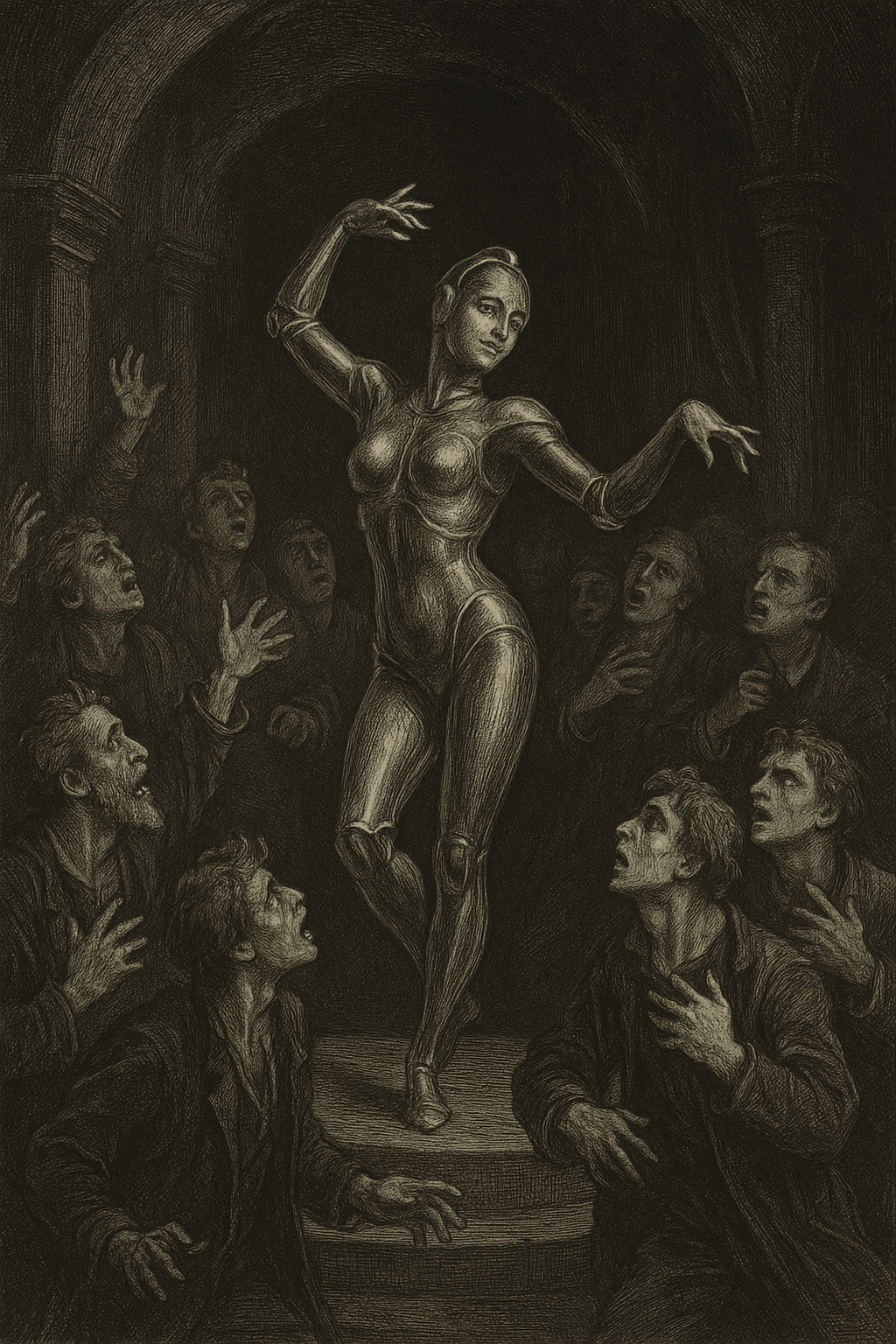
1938 CBS inscenation of "War of the Worlds" causes panic
Ambivalence: Wellsâ utopias blend emancipation (education, science, world peace) with problematic ideas (eugenics, paternalism, colonialism, dog-free societies).
Legacy: Wellsâ world-state imaginaries anticipate later notions of the UN, technocracy, the âworld brain,â and global planning.
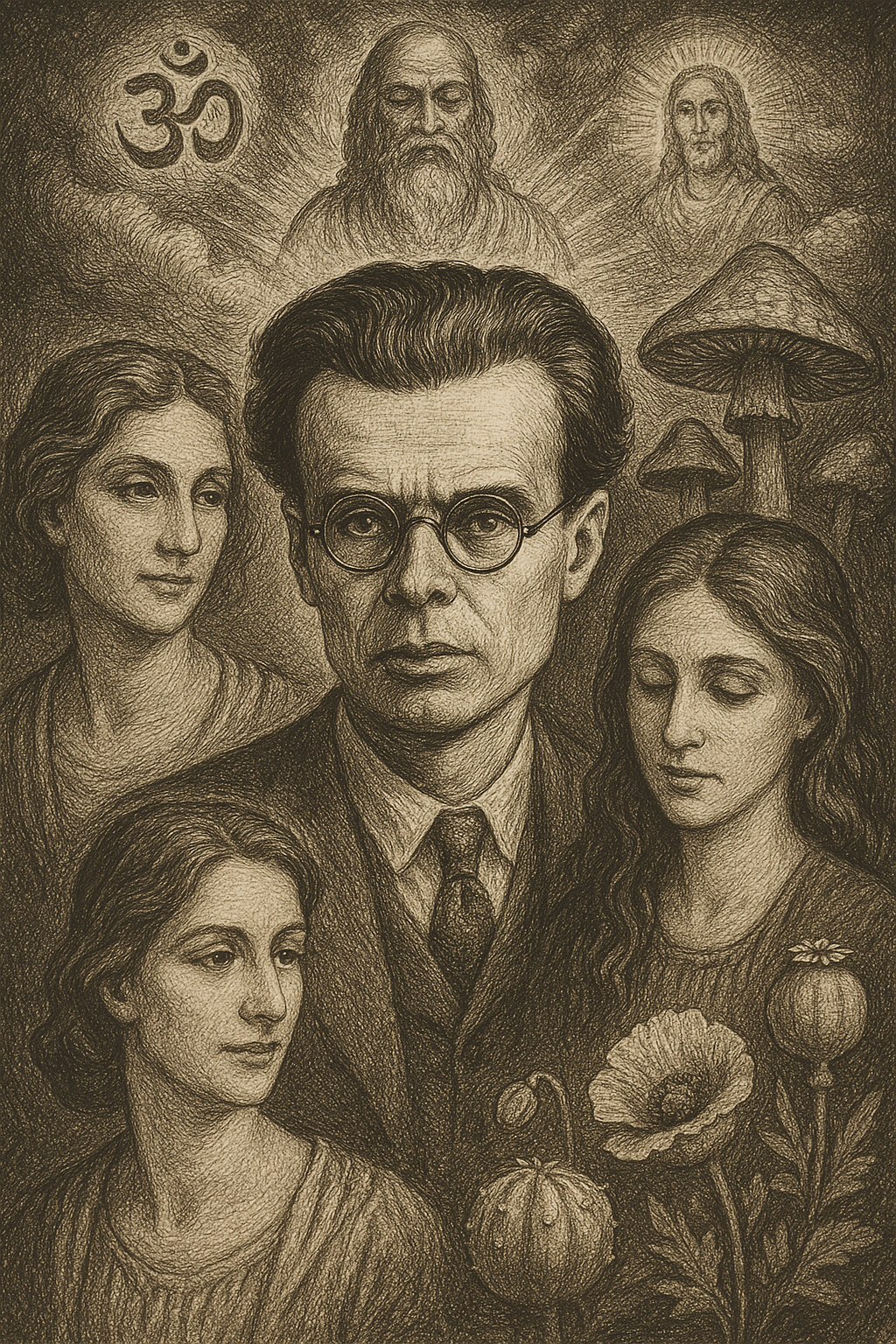
one of the most important anglosaxxon intellectuals of 1st half of 20th century
first schooling by his own mother Julia (departure letter: "Judge not too much and love more"), later Eton, Oxford etc.
first very much empiricist & rationalist (grandson of Thomas Huxley, influence of Lord Russell & Whitehead)
later turn towards spirituality, mysticism (influence of Vedanta - Ramakrishna & Krishmamurti lineages)
in last decade of his life one of the biggest proponents of usage of entheogenic & psychedelic substances for welfare of mankind
died on the same day as JFK and C.S.Lewis; last instruction to his 2nd wife Laura: "LSD 100”g intramuscular.â
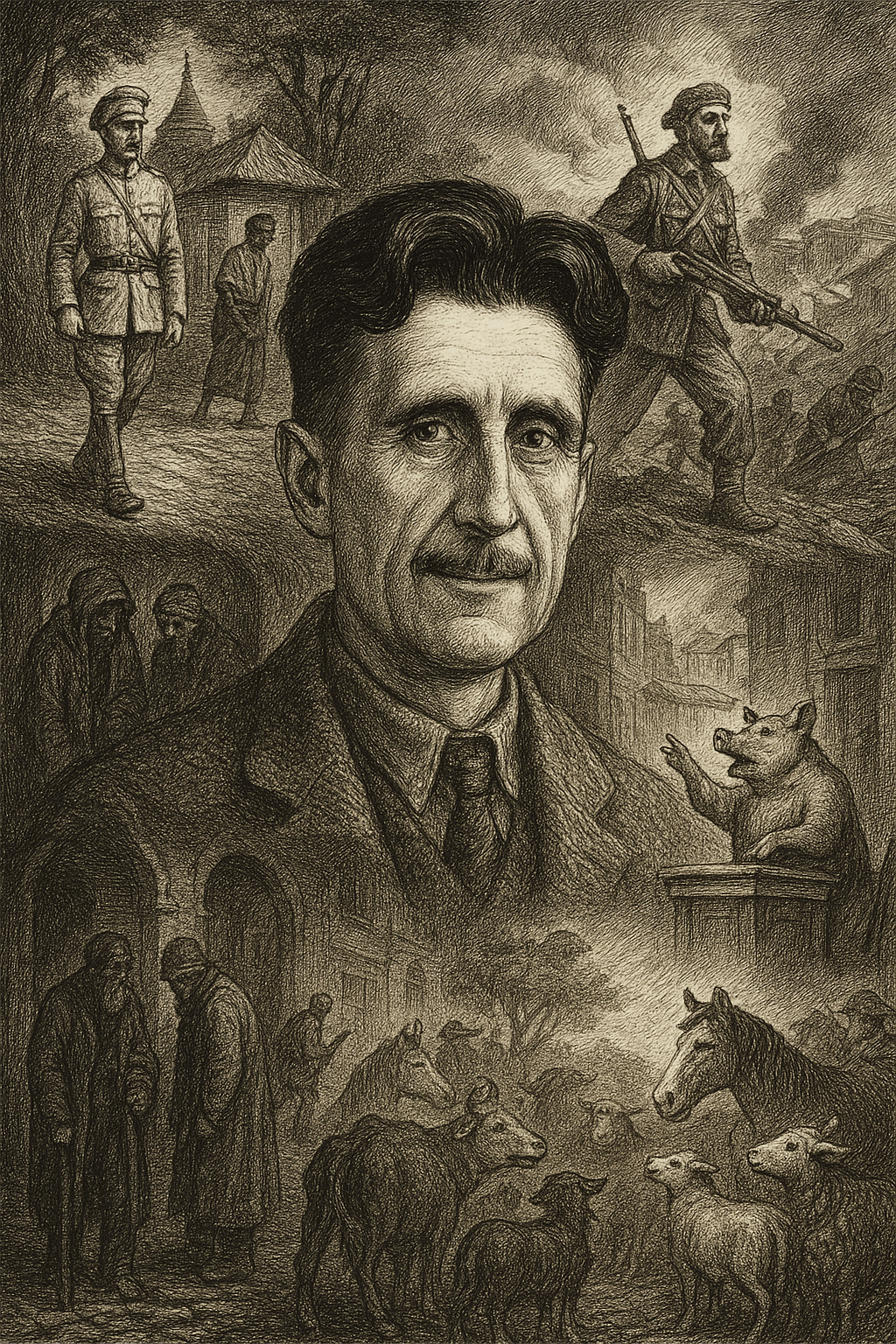
George Orwell / Eric Arthur Blair born in British India, grew up in England, from 1922–1927 served in the Indian Imperial Police in Burma (Myanmar), an experience that filled him with guilt and disgust for colonial repression
lived among the poor in London and Paris, documenting homelessness and low-wage labor
fought in the Spanish Civil War with the POUM militia; being hunted by Stalinist forces radicalized his anti-totalitarian worldview
During WWII he worked for the BBC Eastern Service; not an MI5 agent but provided opinions about suspected communists to the Information Research Department
Animal Farm (1945) - an allegory of Soviet Union: a fable where revolutionary ideals decay into tyranny under the pigs’ rule
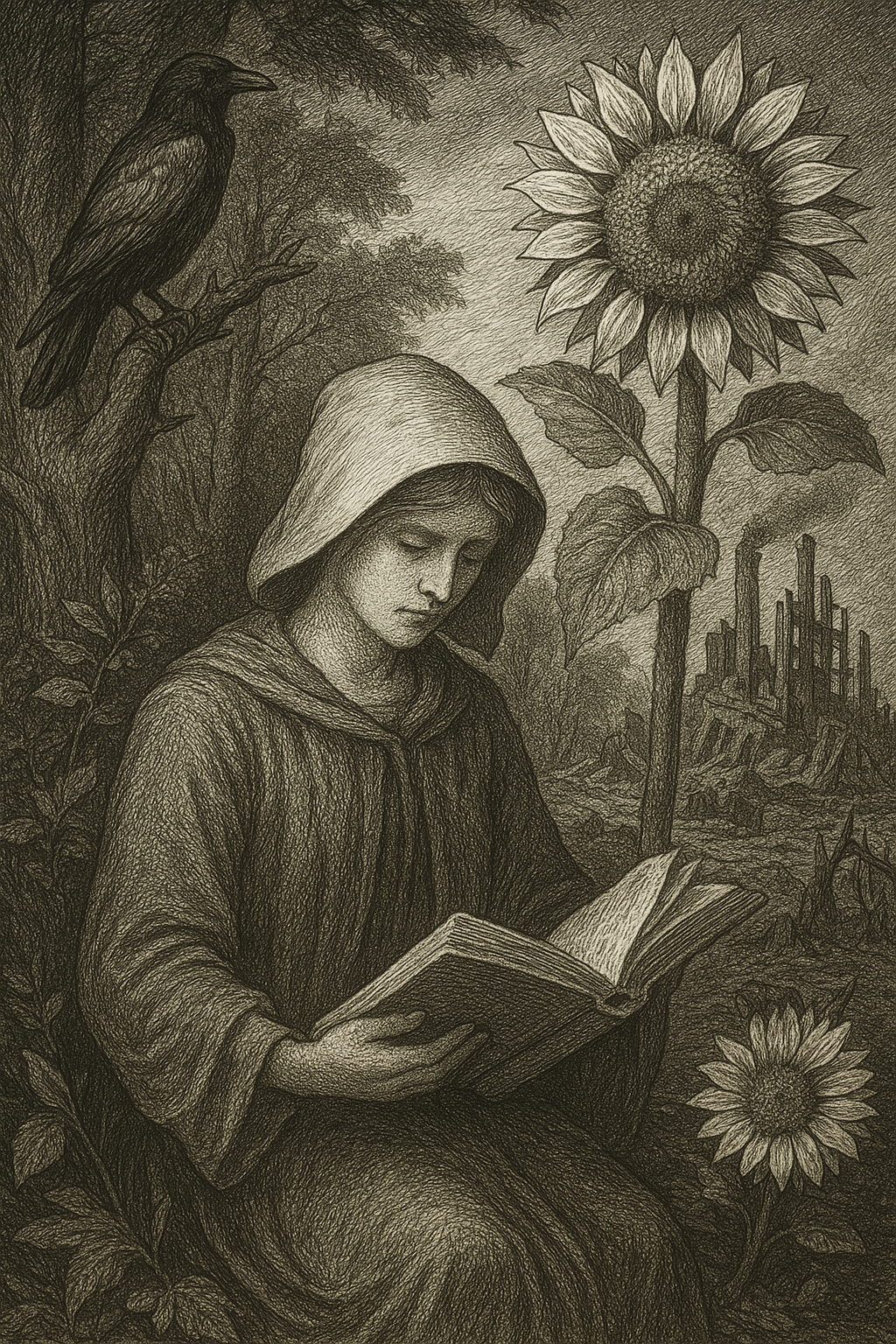
Margaret Atwood is a Canadian novelist, poet, and critic whose work blends fiction, feminism, ecology, and political satire.
She prefers the term âspeculative fiction,â emphasizing that her inventions are extrapolations of existing technologies and social trends.
Atwoodâs fiction often features archivists, witnesses, and survivors â characters who record or reinterpret the collapse of social orders.
Recurring themes: power, surveillance, reproductive rights, environmental destruction, mythmaking, and the blurred line between utopia and dystopia.
Atwood is also an inventor and activist, engaging with climate issues, civil liberties, and the politics of storytelling itself.
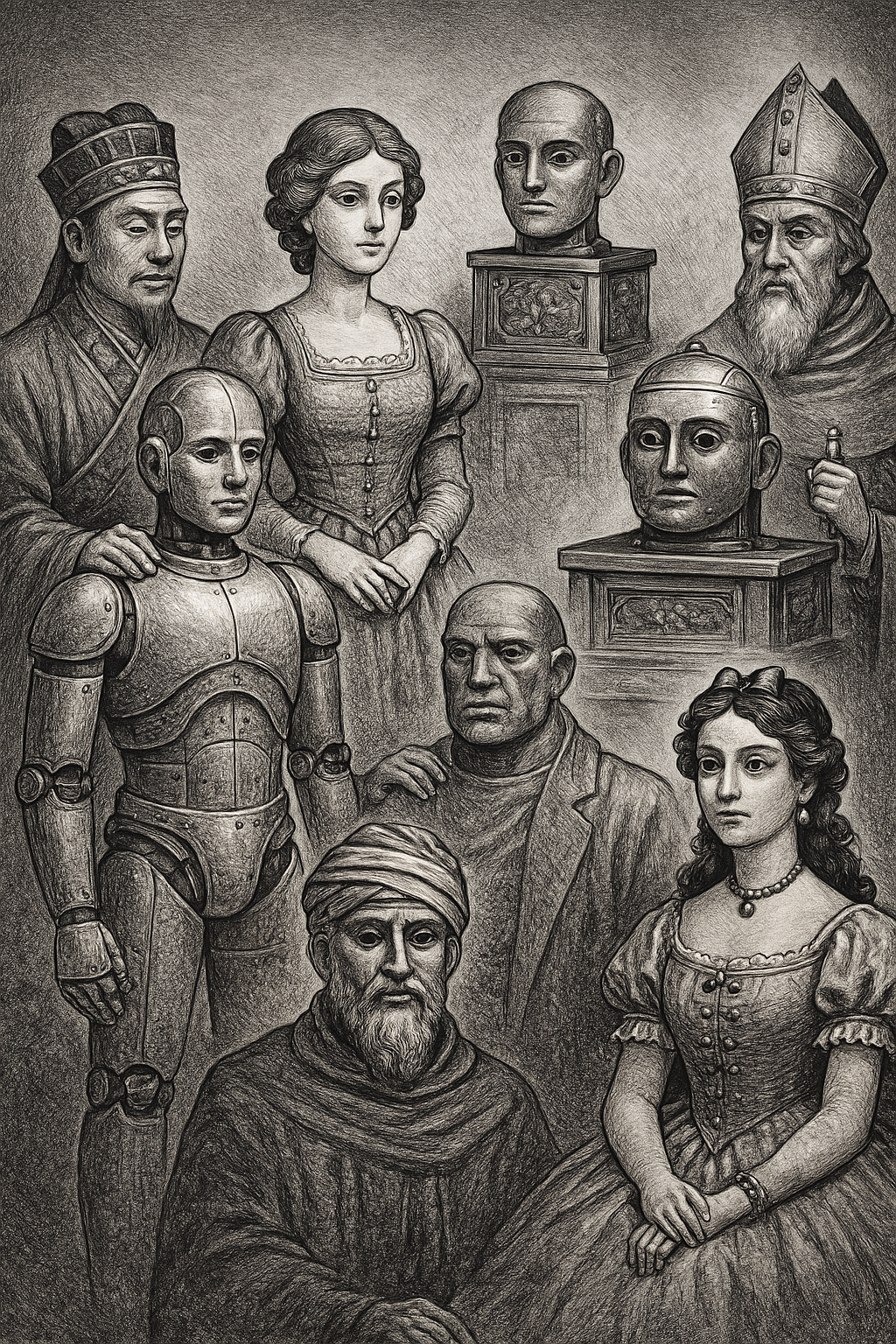
robots of the yellow emperor
Solomon's "servants of brass" / "djinn bound into metal forms"
Pygmalion
the mechanical maid
the talking head of Sylvester II (“Dicitur etiam fecisse caput aëneum quod responsa reddebat ad quaesita.”)
Kempelen's mechanical Turk
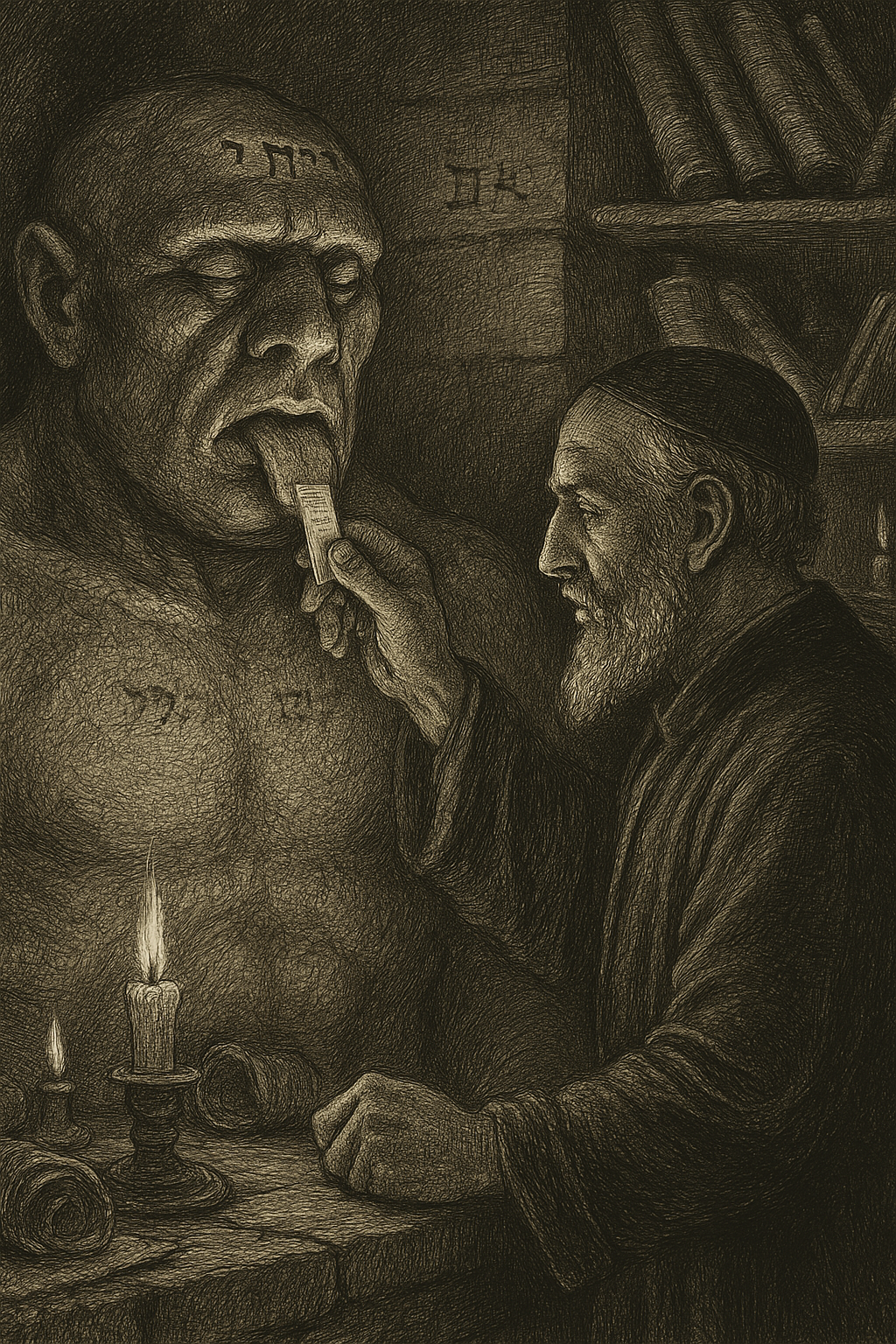
Golem
E.T.A Hoffman's Olympia
Frankenstein
The Maschinenmensch is a unique android created by the scientist Rotwang, born from his obsession with resurrecting his lost love.
On Joh Fredersenâs orders, the robot is given the face of Maria, the workersâ spiritual leader.
As âFalse Maria,â she preaches violent rebellion to the workers, driving them to destroy the cityâs machines.
Among the elite, she incites lust and chaos with her nightclub dances, corrupting Metropolisâs ruling class.
The robot becomes an allegory of technology that imitates, replaces, and weaponizes human identity and sexuality.
When the workers discover the deception, they burn the False Maria; her human mask burns away, revealing the metal android beneath.
Her destruction clears the way for reconciliation between workers and rulersâthe human order restored after the machineâs masquerade.
1. A robot may not injure a human being or, through inaction, allow a human being to come to harm.
2. A robot must obey the orders given it by human beings except where such orders would conflict with the First Law.
3. A robot must protect its own existence as long as such protection does not conflict with the First or Second Law.
activated on Aurora 4920 AD / 2950 AE as first humanoid / humaniform ever constructed
partnered with Elijah Baley on Earth: catalyst for interworld understanding
learns ethical reasoning beyond the Three Laws
with R. Giskard Reventlov: formulates the Zeroth Law to protect humanity as a whole
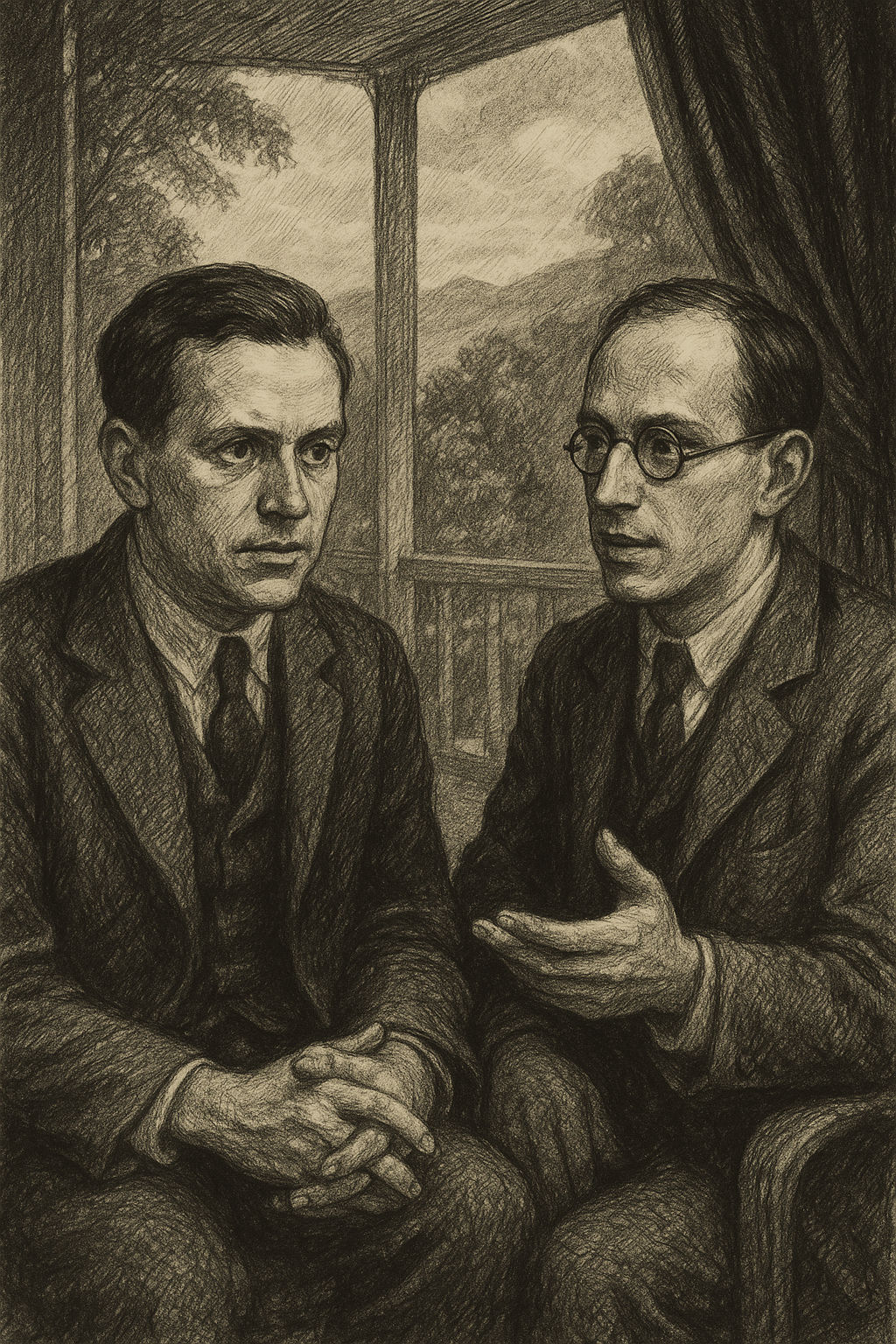
becomes guardian and silent architect of psychohistory and the Foundation
guiding humanity toward self-determined galactic future for cca 20,000 years
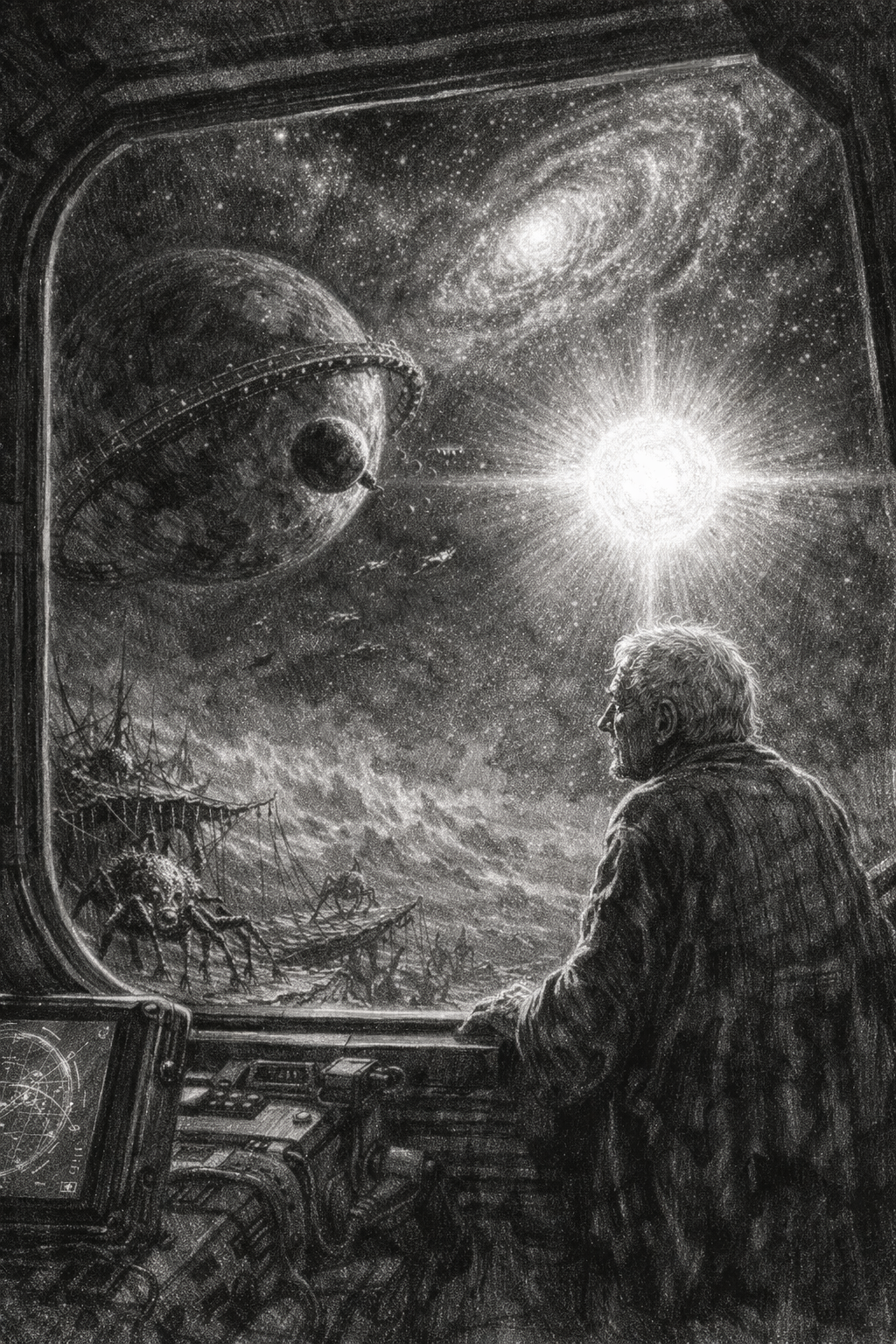
Vernor Vinge (1944-2024): Mathematician–SF author who reshaped how we imagine posthuman futures.
Popularized the Technological Singularity: intelligence growth beyond human prediction.
After the Singularity, minds don’t become good or evil — they become incomprehensible.
These ideas play out in the “Zone of Thought” universe, most clearly in A Fire Upon the Deep.
The galaxy is stratified: the Slow Zone (Earth etc.), the Beyond, and the godlike Transcend.
And Pham Nuwen — a living archeological relict of a sort — is possibly one of the two coolest senior hackers ever depicted in sci-fi.
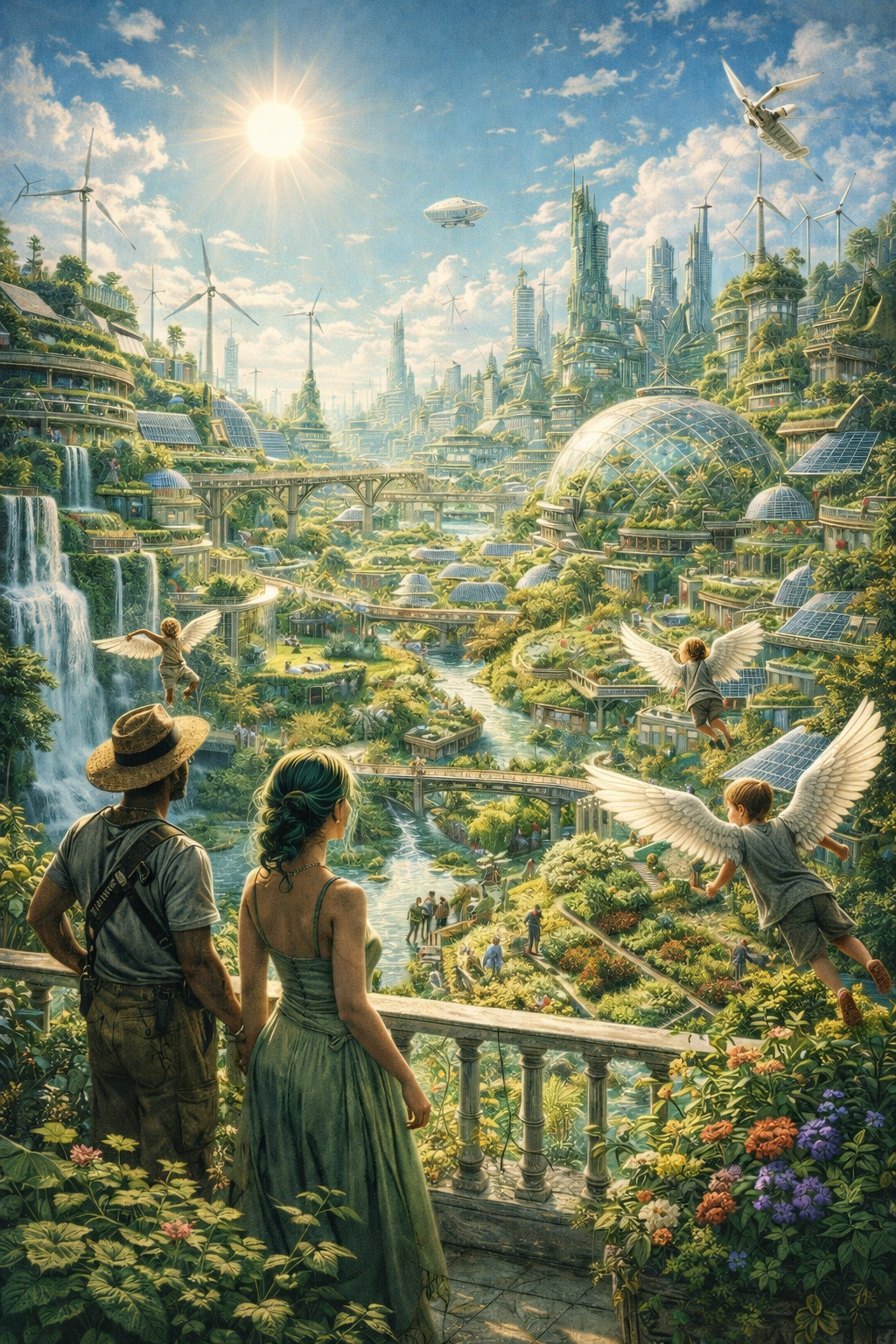
Culture: post-scarcity civilization with no money, no states, no coercion.
Freedom is radical: bodies, gender, lifespan, identity are mutable.
Humans coexist with superintelligent AIs called Minds.
The Minds could rule absolutely â but choose restraint.
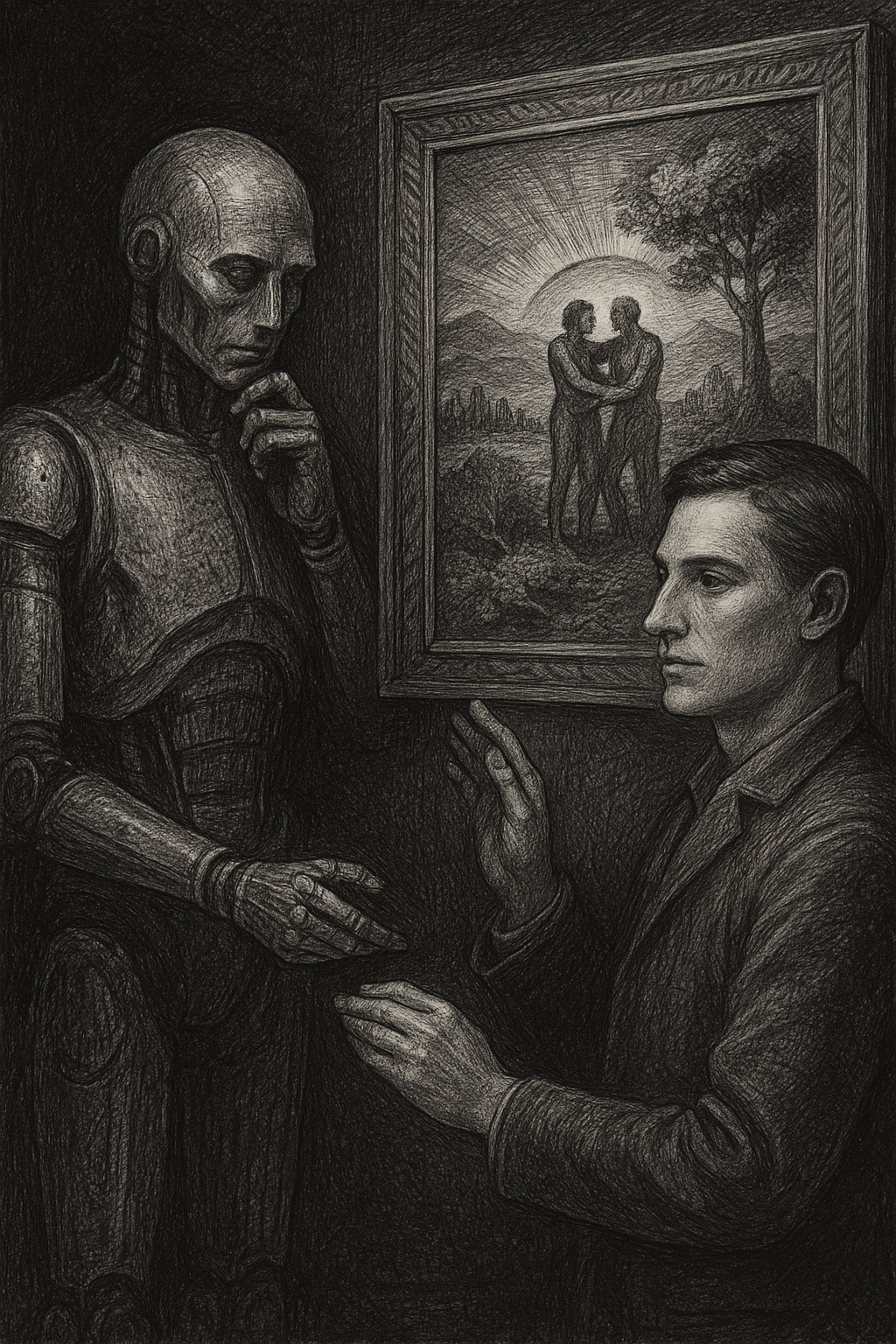
The Idirans are a theocratic empire grounded in absolute faith.
Culture and Idirans fight a sort of "holy war" against each other.
Victory goes to intelligence, not moral certainty.
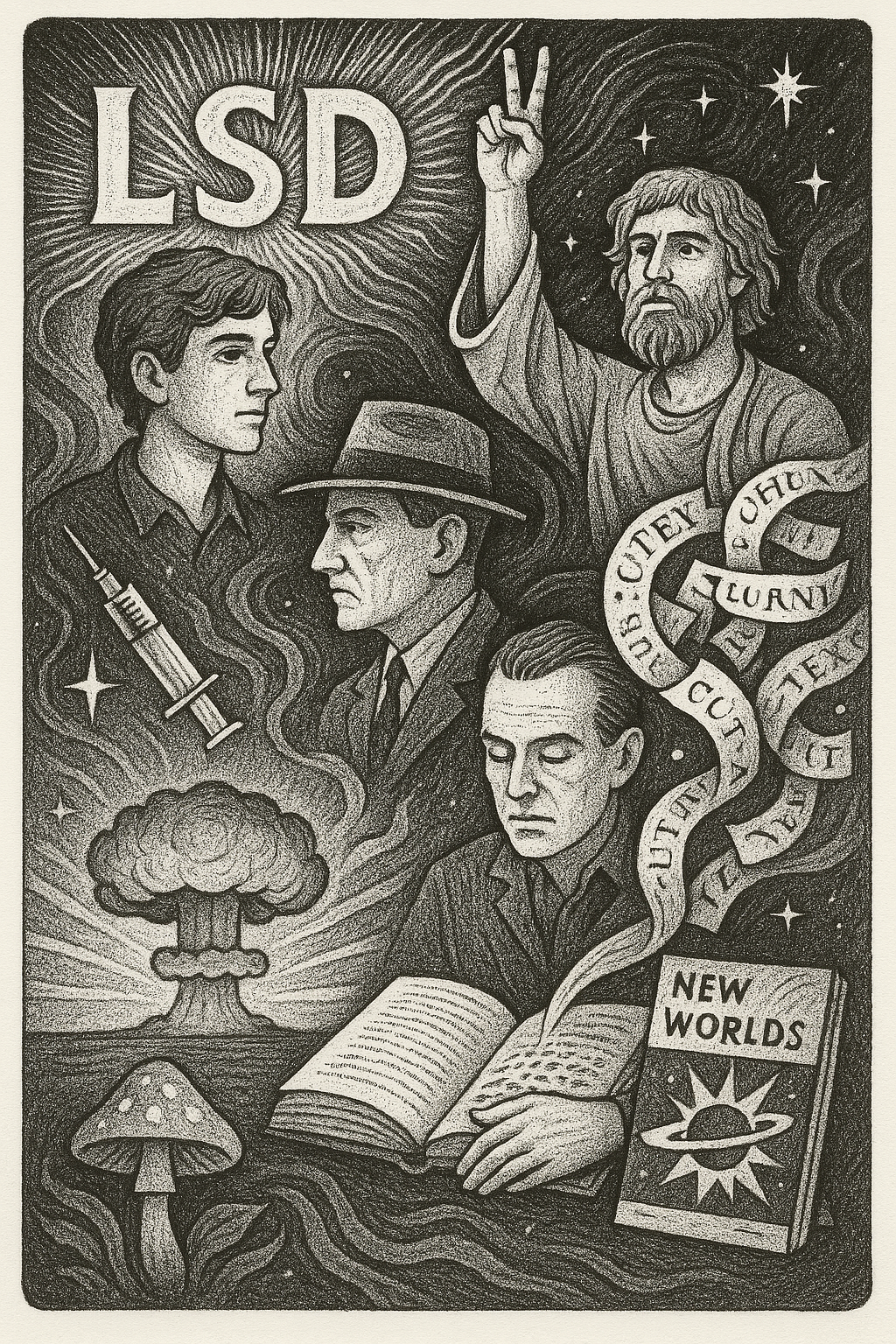
**1950sâ60s counterculture:** rise of youth rebellion, anti-establishment politics, and experimentation with altered consciousness.
**LSD (discovered 1943, popularized 1960s):** reshaped cultural interest in perception, identity, and inner realities.
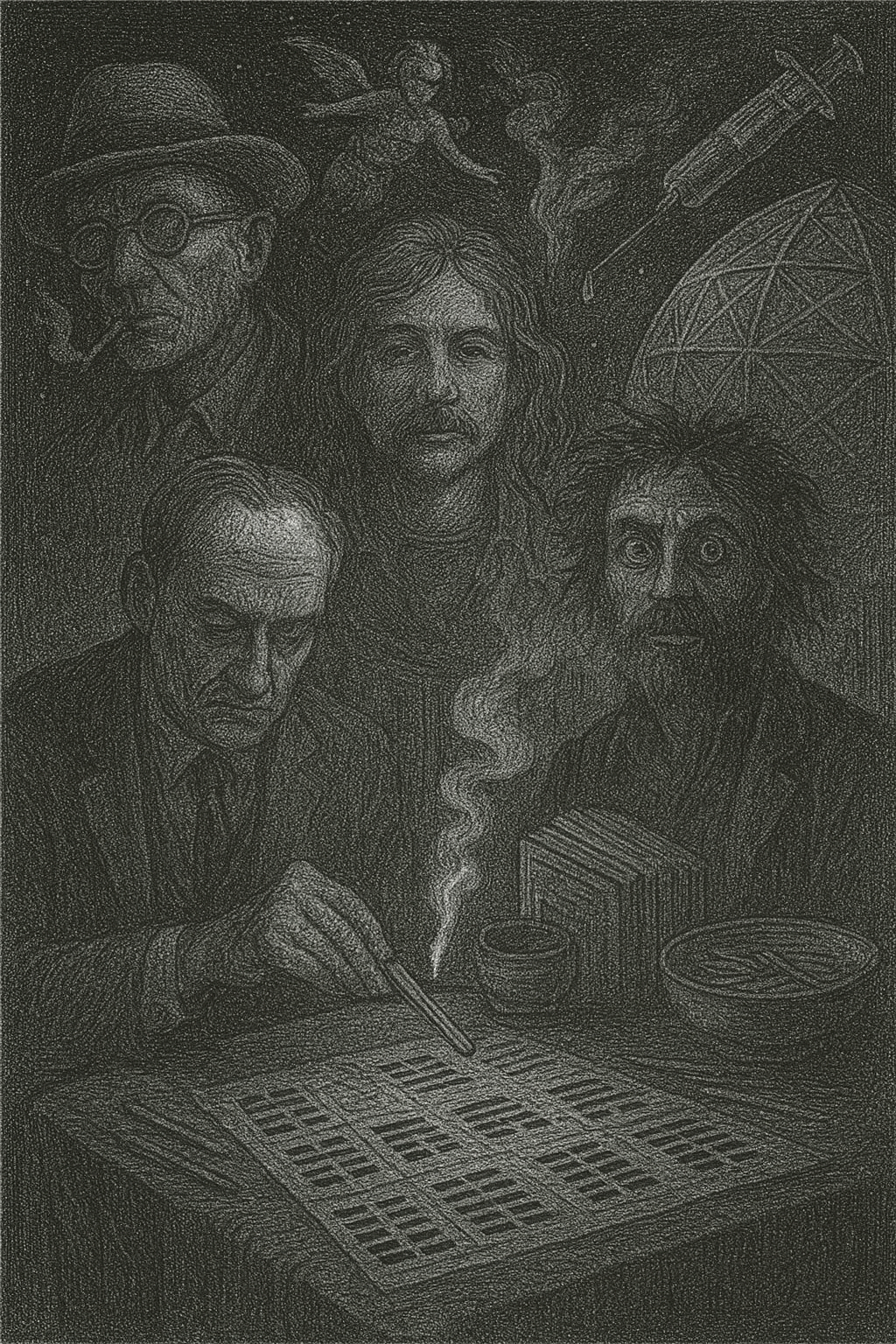
**William S. Burroughs:** cut-up techniques and surreal, transgressive prose became a stylistic blueprint for New Wave experimentation.
**Beat Generation:** Kerouac, Ginsberg, Ferlinghettiâsubjectivity, fragmentation, and personal mythmaking enter SFâs toolbox.
**Modernist and postmodernist literature:** Joyce, Kafka, Pynchon, Borgesâmodels for narrative play, ambiguity, and psychological depth.
**Cold War anxiety:** paranoia, nuclear threat, and bureaucratic control themes anticipate New Wave dystopias.
**Shift in magazines:** *New Worlds* under Michael Moorcock becomes the laboratory for radical, literary SF.
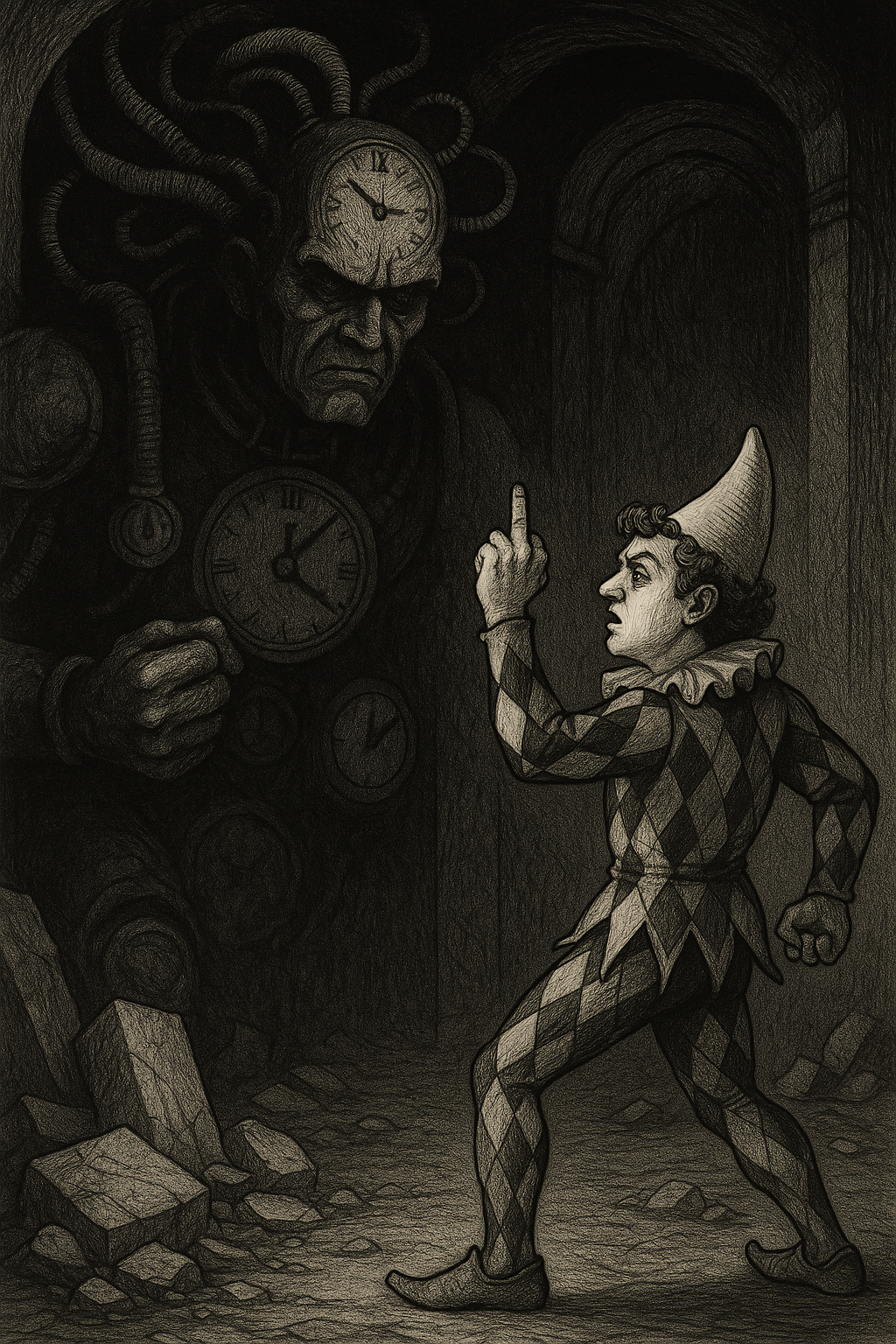
"Sci-Fi's Most Controversial Figure"
bipolar disorder
quite decorated: 8 Hugo Awards, 4 Nebula Awards, 5 Bram Stoker Awards, SFWA Grand Master
anthologies: Dangerous Visions (1967); Again, Dangerous Visions (1972); Last Dangerous Visions (2018)
Star Trek ("The City on the Edge of Forever"); Disney (well, not really); I, Robot (well, not really)
"Repent, Harlequin ! The Ticktockman said" (1965); I have no mouth and I must scream (1967); A boy and his dog (1967)
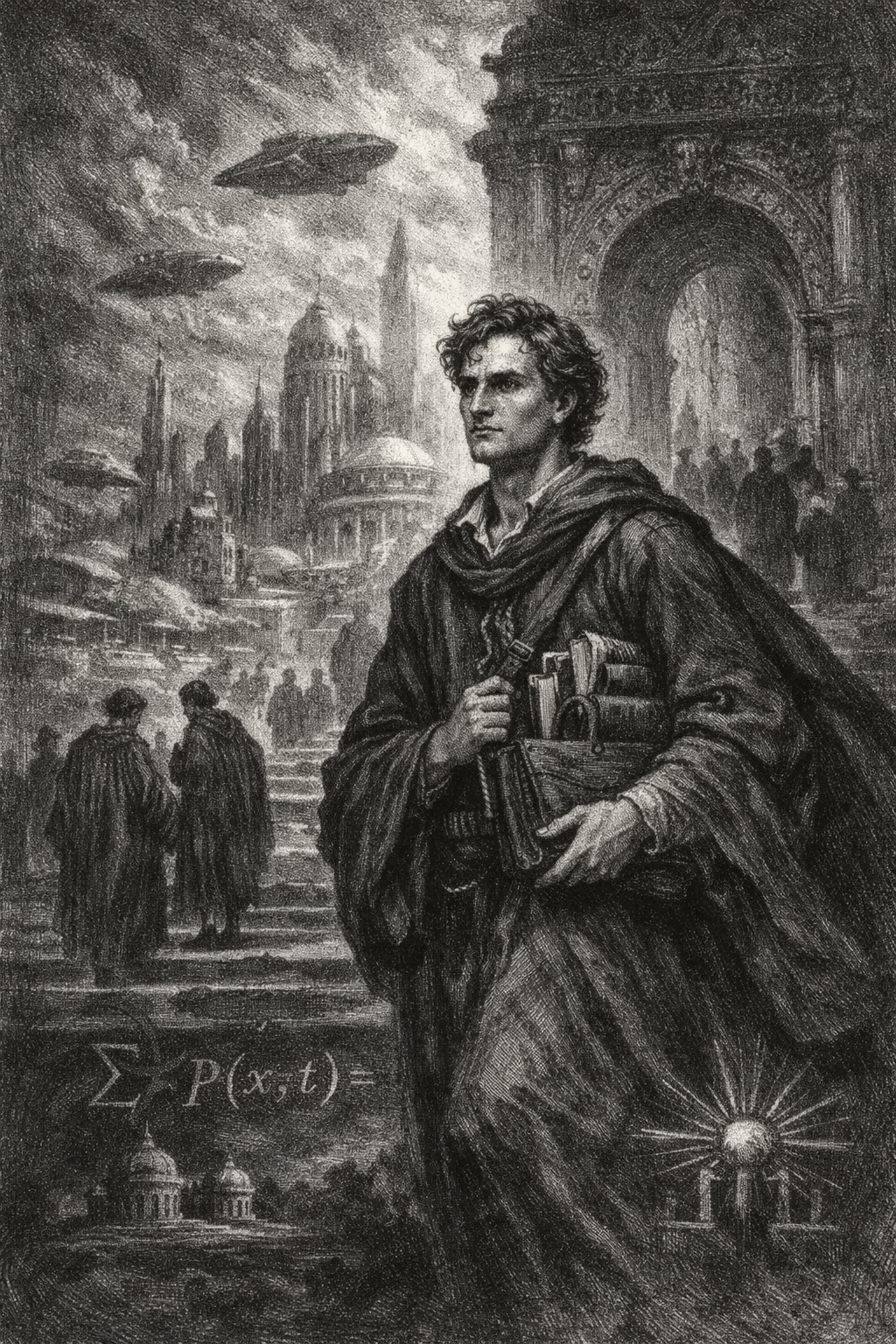
Young academic Hari Seldon arrives at Streeling University @ Trantor.
daughter of Alfred Louis Kroeber and Theodora Kroeber
spent her childhood in highly stimulating environment (community of Berkeley anthropologists)
married historian Charles le Guin in 1953, stayed with him ever since
6 Hugo Awards; 8 Nebula Awards; 25 Locus Awards; 2nd woman honored (in 2003) as a Grand Master of the Science Fiction and Fantasy Writers of America
main topics / influences: cultural anthropology & the Golden Bough; (jungian) archetypes; (philosophical) taoism; mythology
two major cycles: Earthsea cycle (high fantasy) and Hainish cycle (soft sci-fi)
in cca 20 minutes You will be asked a question: "Is the planet on which Earthsea cycle stories unfold part of the Ekumen/Hain universe ?"
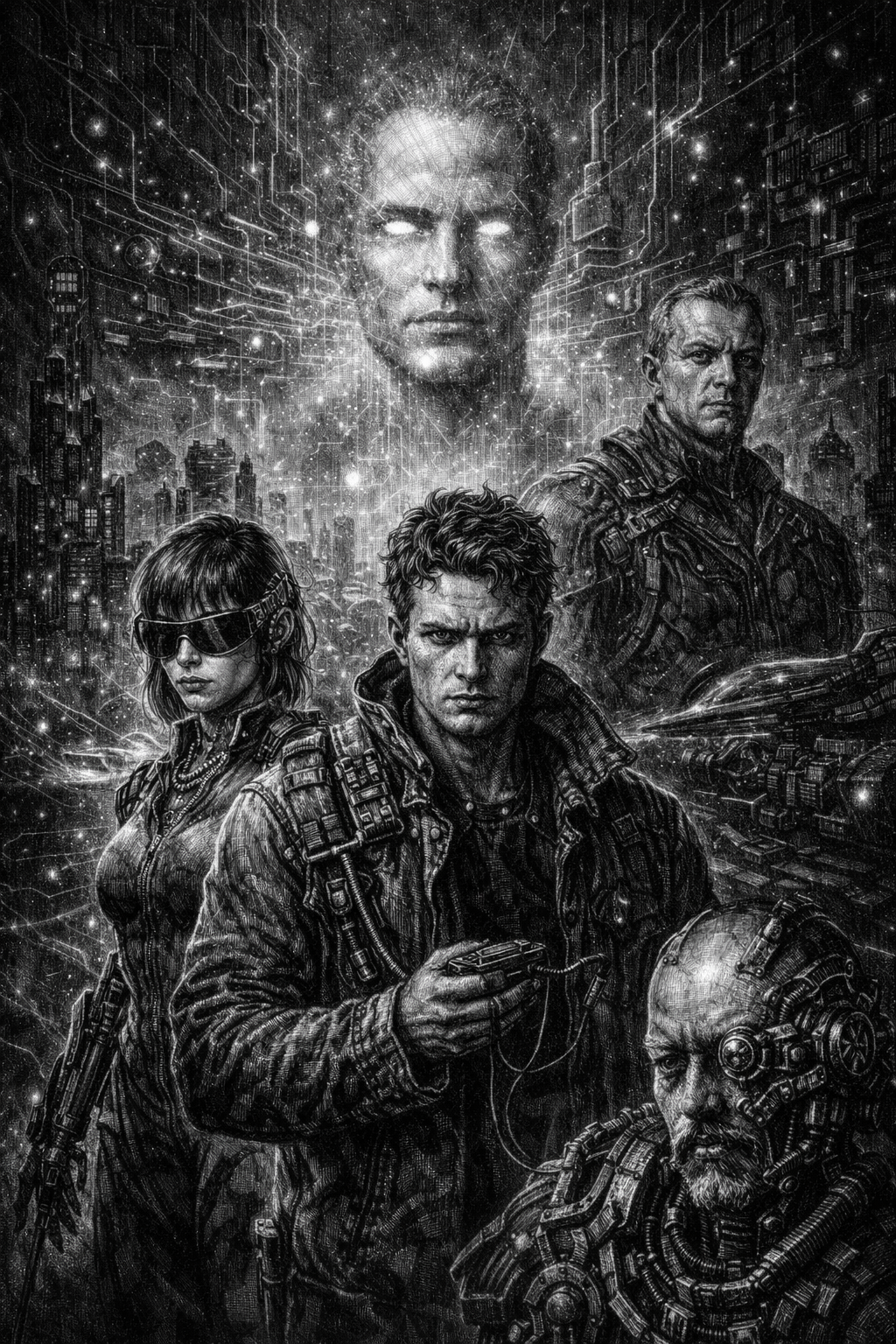
đ§ Neuromancer (1984) by William Gibson is the novel that defined cyberpunk. Set in a near-future global sprawl, it follows Case, a washed-up hacker navigating megacorporations, AI entities, black markets, and a hallucinatory digital realm Gibson famously named cyberspace.
The book fuses high tech with low life: console cowboys, body modification, corporate power, fractured identities, and disembodied minds. More than a plot, Neuromancer is an atmosphereâwhere information is capital, reality is optional, and human agency is constantly negotiated with machines.
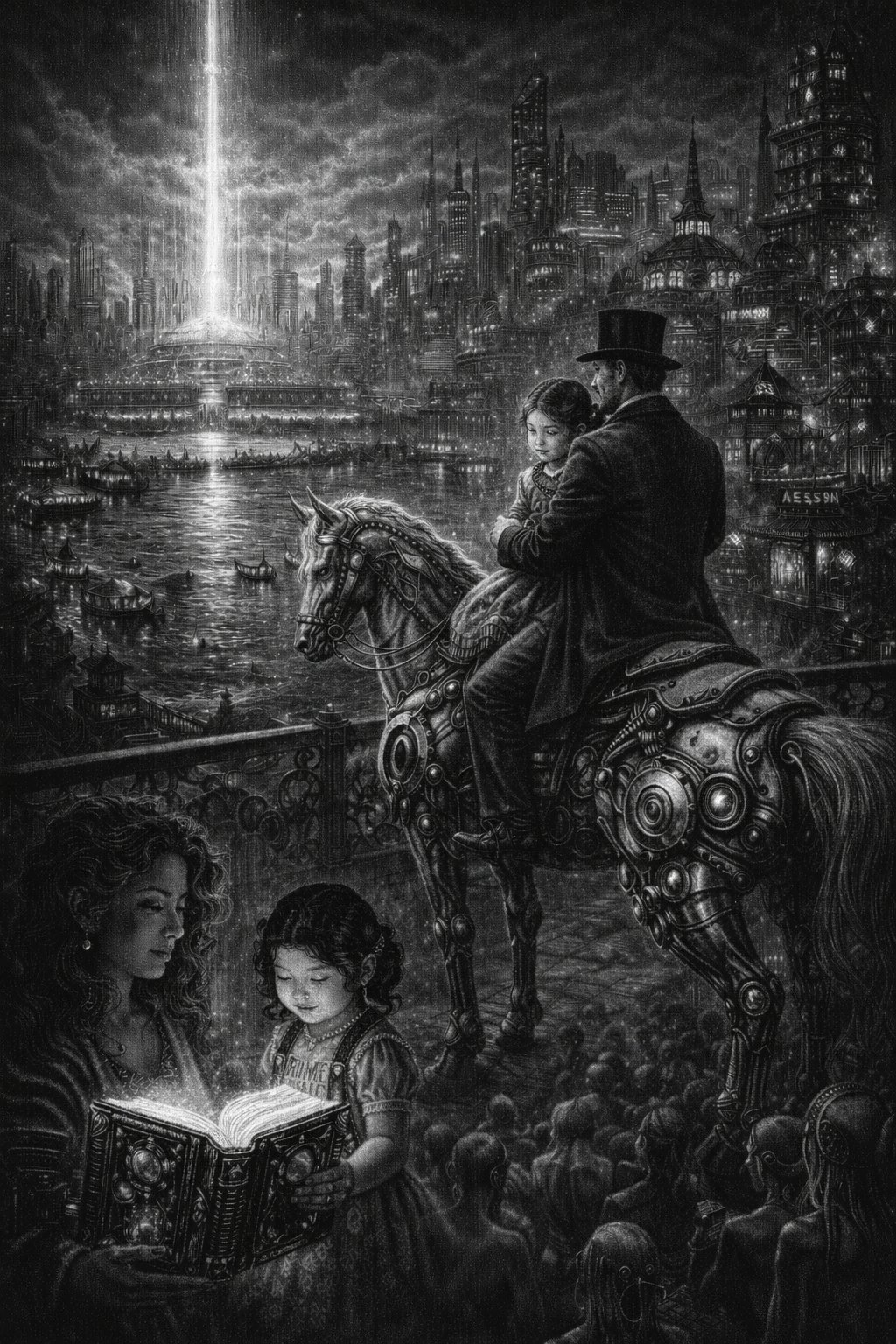
While observing the splendour of Atlantis-Shanghai, John Percival Hackworth whispers UNA's core instruction sequence into ears of his daugher Fiona. Mediated by Primer and Miranda, the sequence is also transferred into the Mind of little Nell, future queen of the Mouse Army.
Feed systems provide regulated nanomaterial and energyâsafe, standardized, and politically controlled&mdash
Seed (also known as "Universal Nano Assembler") represents autonomous, self-replicating fabrication: radical and emancipatory.
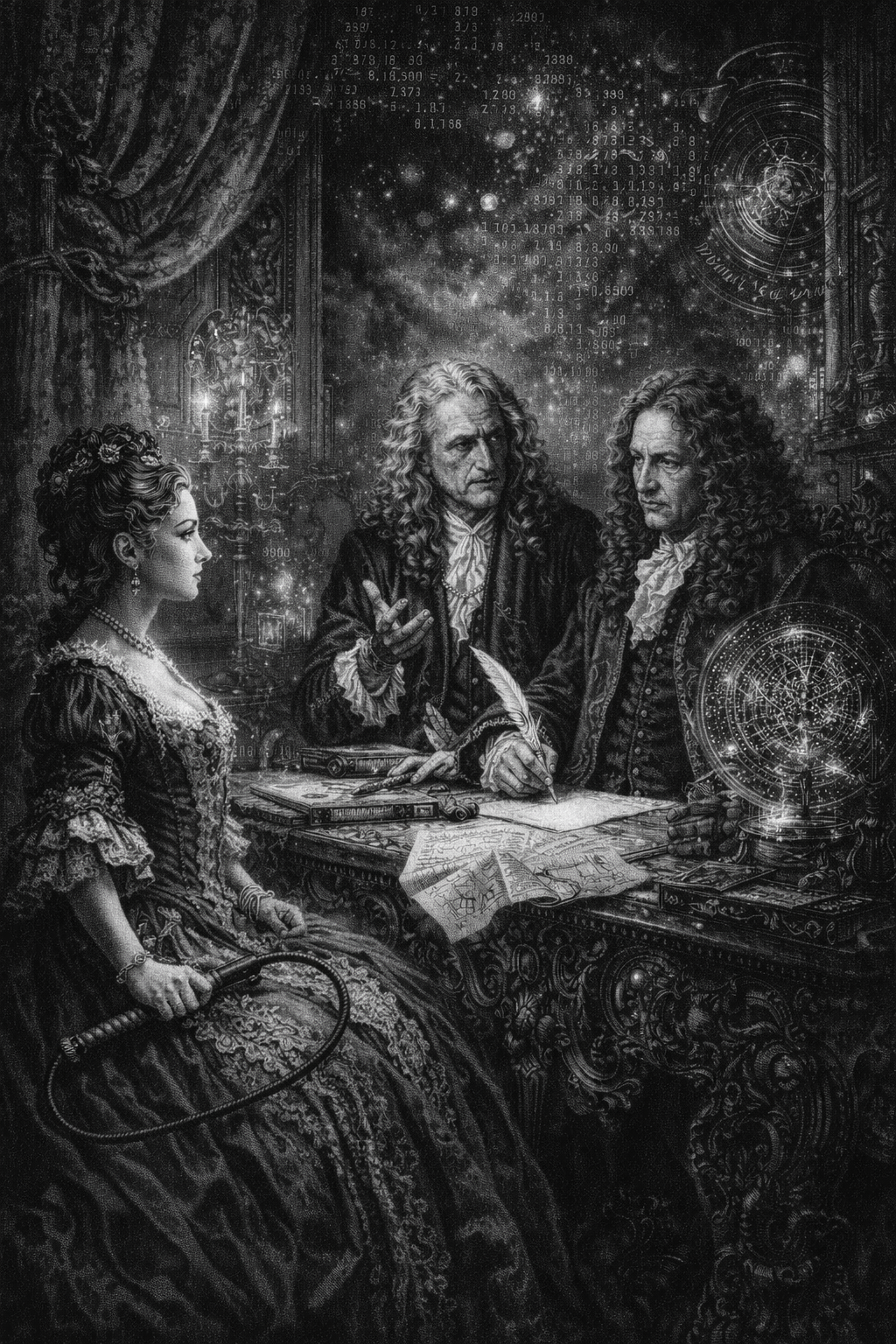
Baroquepunk is a speculative genre where ornament, excess, and early-modern worldviews collide with systems thinking. Inspired by Stephenson's Baroque Cycle, it treats the Baroque era (1650 - 1750) not as premodern, but as a proto-information age: obsessed with networks, cryptography, finance, science, and power.
Where steampunk reimagines the 19th century through steam, gears, and industrial optimism, baroquepunk digs earlierâinto allegory, absolutism, colonial flows, alchemy, and spectacle.
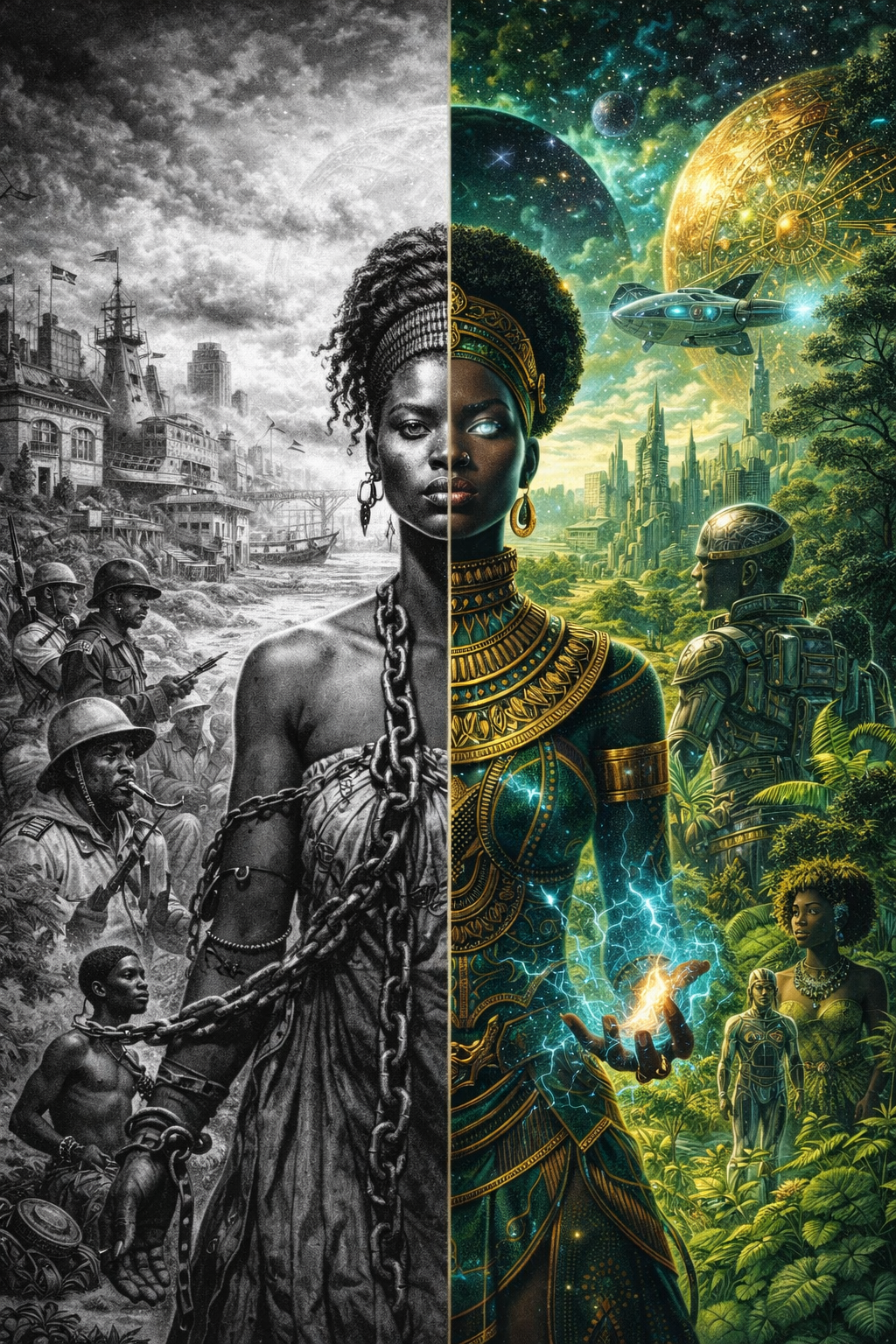
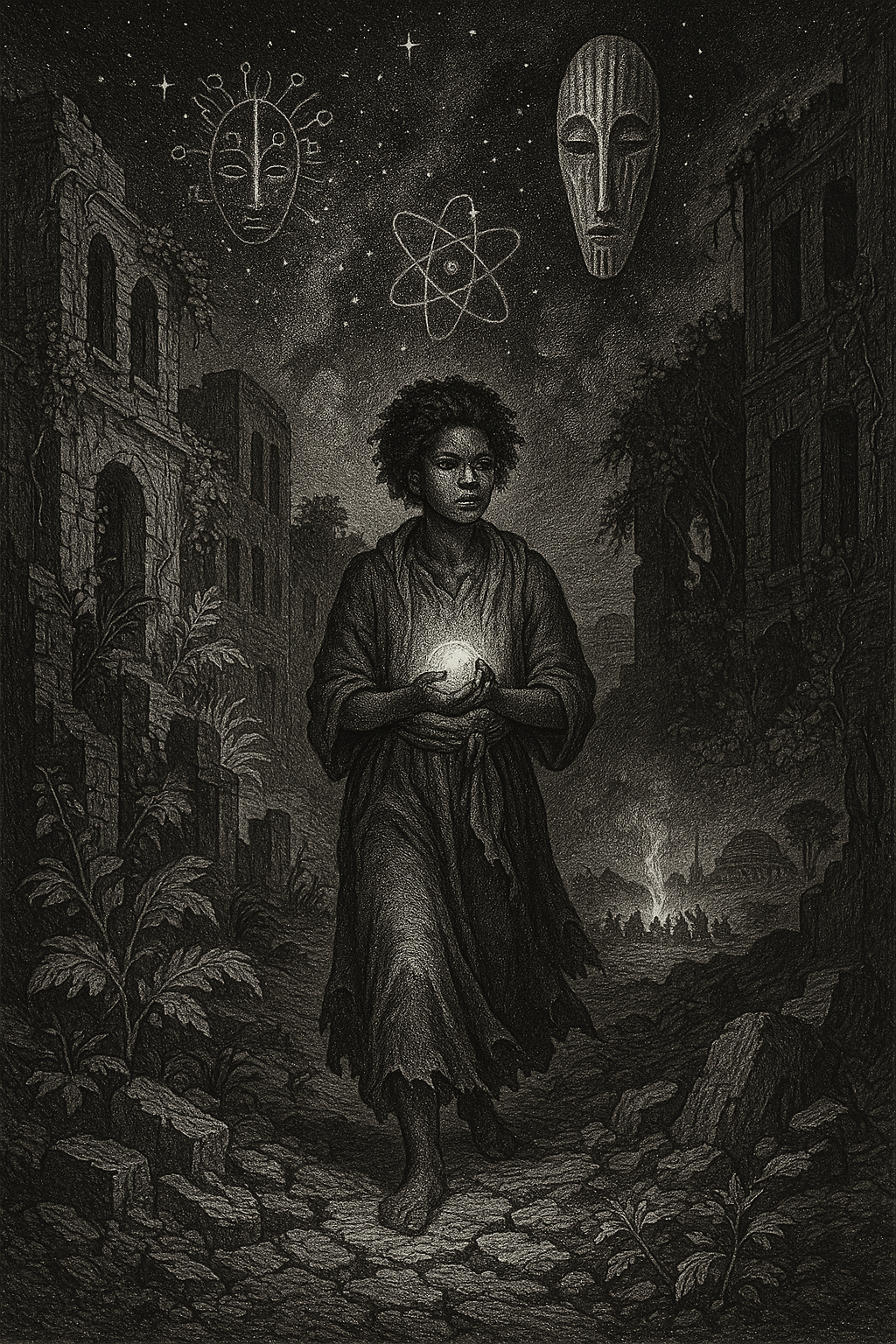
đ§ Afrofuturism is a cultural and speculative framework that reimagines the past, present, and future through African and African-diasporic perspectives, blending science fiction, mythology, history, and technology. It challenges colonial narratives by placing Black people at the center of futures they were long excluded from, where ancestral memory, cosmology, and advanced science coexist. Afrofuturism treats technology as something spiritual as well as technical, often drawing on African traditions, music, fashion, and oral storytelling.
Authors to be aware of: Olivia E. Butler, Nnedi Okorafor and Samuel R. Delany
Can poodles fly ?