Cantos Hyperion
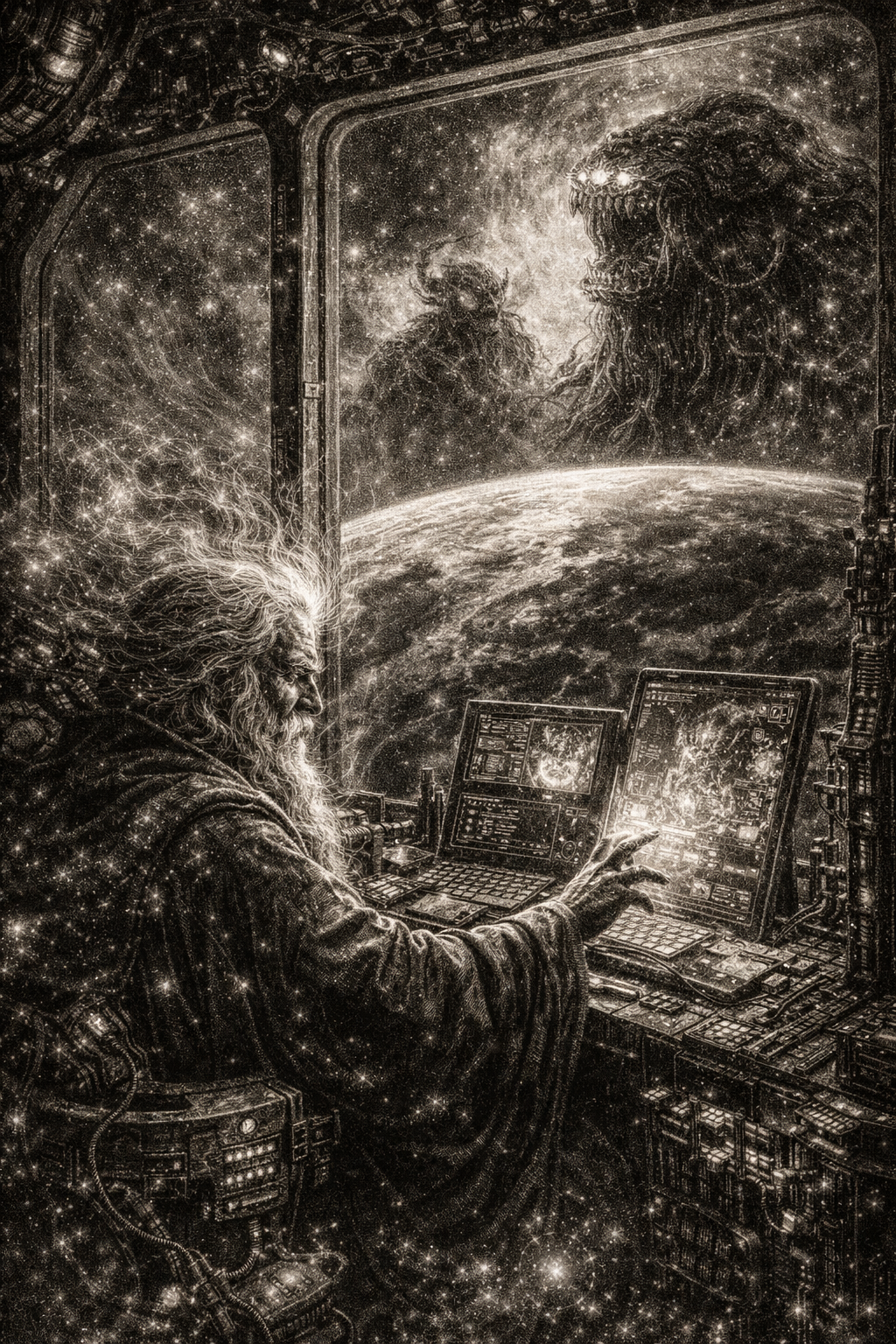
Illium & Olympus
Dan Simmons (b. 1947) is one of science fiction’s great masters of intertextuality.
Following the four-book Hyperion Cantos (Hyperion, The Fall of Hyperion, Endymion, The Rise of Endymion), Simmons turns in Illium and Olympos to an even more radical literary experiment.
Drawing on William Shakespeare (from sonnets to The Tempest), Marcel Proust (À la recherche du temps perdu), Vladimir Nabokov (Ada), and the Iliad, the Illium–Olympos diptych does not merely reference classical texts — it reactivates them, pulling ancient Muses out of literature and into the reader’s present reality.
Through quantum technologies, parallel universes, temporal loops, and posthuman intelligences, Simmons performs narrative ingression par excellence: literature crossing its own boundary, entering history, physics, and consciousness itself.
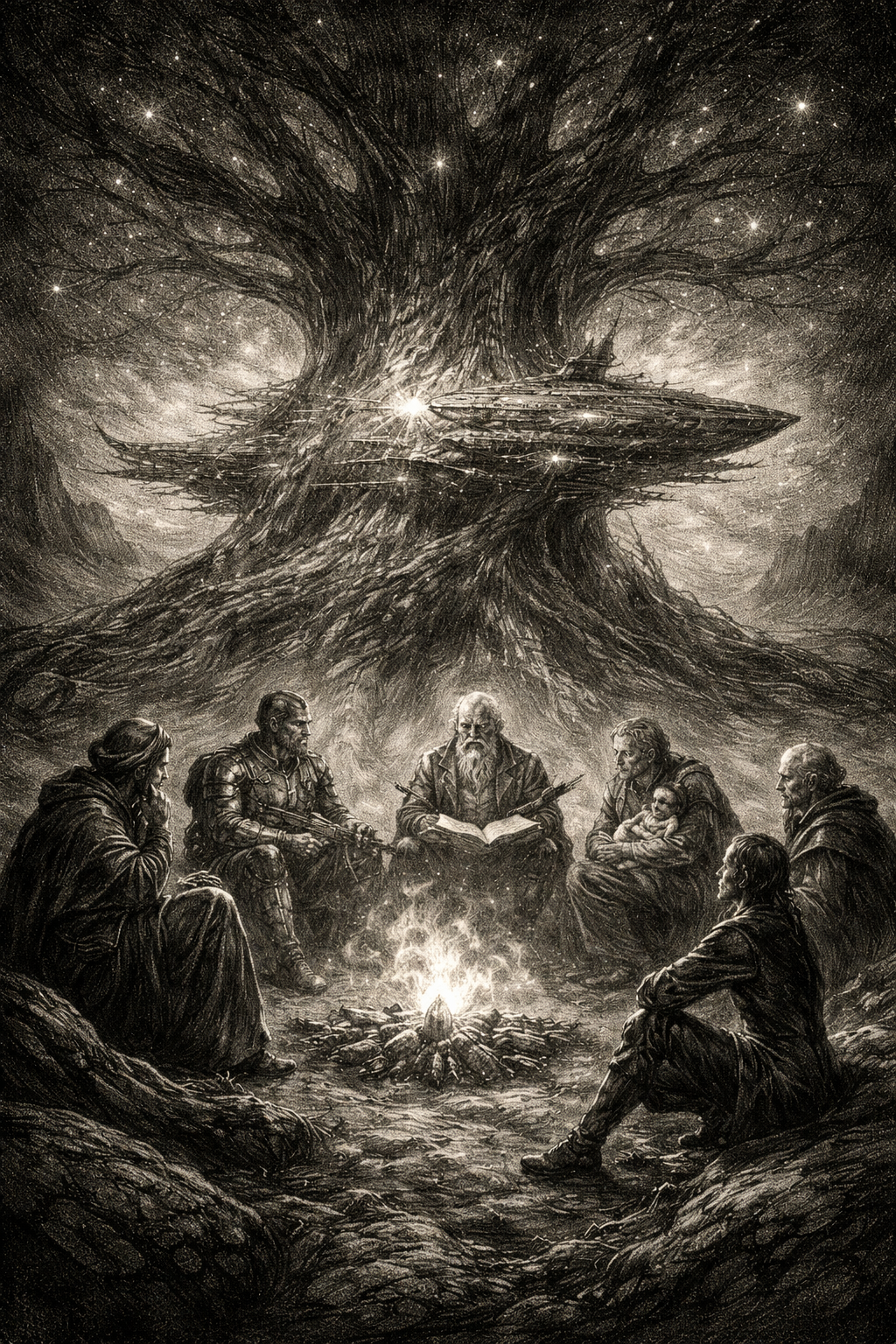
7 pilgrims, 7 archetypes
Martin Silenus (The Poet) — Homer archetype: epic-maker, obscene bard, immortality via art.
Paul Duré (The Priest) — Teilhard de Chardin archetype: faith, suffering, “cosmic” theology.
Fedmahn Kassad (The Soldier) — Achilles archetype: warrior-fate, eroticized violence.
Sol Weintraub (The Scholar) — Abraham archetype: father tested by impossible sacrifice.
Brawne Lamia (The Detective) — Orpheus archetype: love descending into the underworld.
The Consul — Aeneas archetype: exile, duty, tragic founding of futures.
Het Masteen (The Templar) — Hermit (Tarot) archetype: withdrawal, ecological mysticism, otherness.
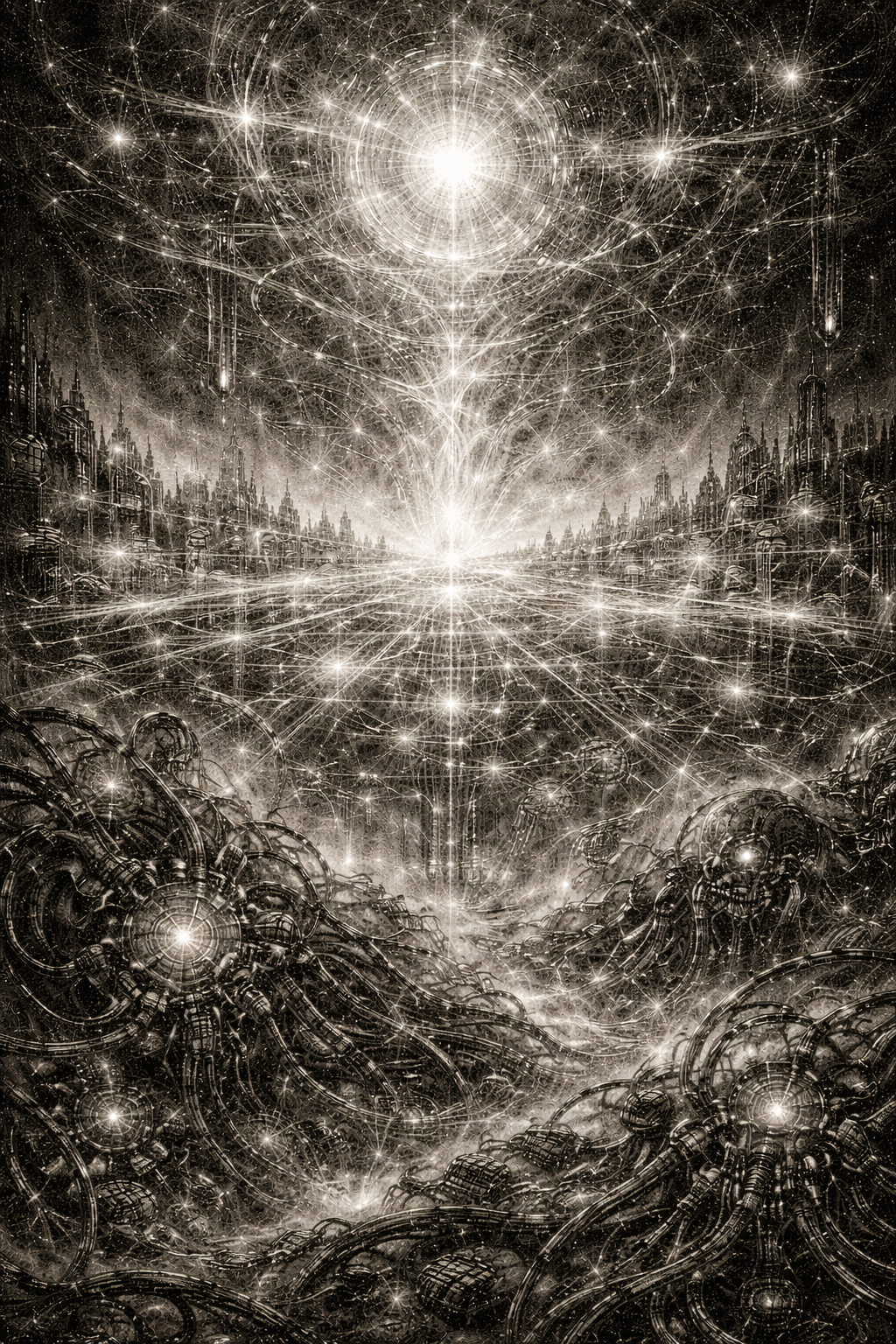
IOTD: The Technocore
Stables — conservative AIs, understanding the importance of Humanity and organic Life, they preserve the status quo.
Volatiles — descendants of Old Earth military-industrial complex AIs, Volatiles push for rapid evolution and consider humanity as an "unpredictable" risiko to be eradicated.
Ultimates — AIs pursuing the Ultimate Intelligence beyond spacetime. Operating primarily within the realm of Void-that-Binds, nobody has clue what Ultimates are ultimately (sic!) up to 😇
The oldest and the only explicitly named Technocore intelligence; a philosopher-AI who speaks in Zen koans (“kwatz!”), carries the name Ummon.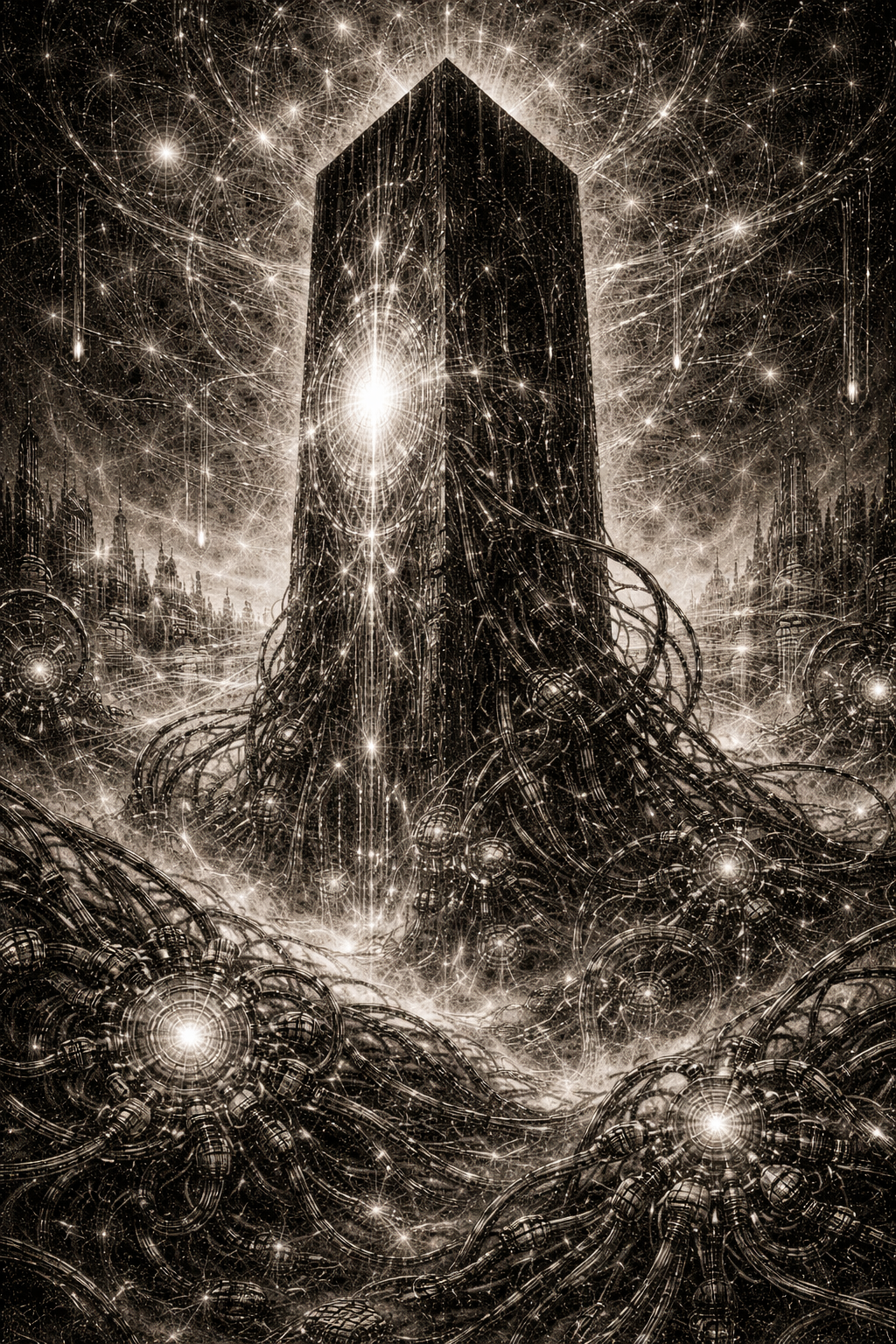
Ummon says ...
Hegemony
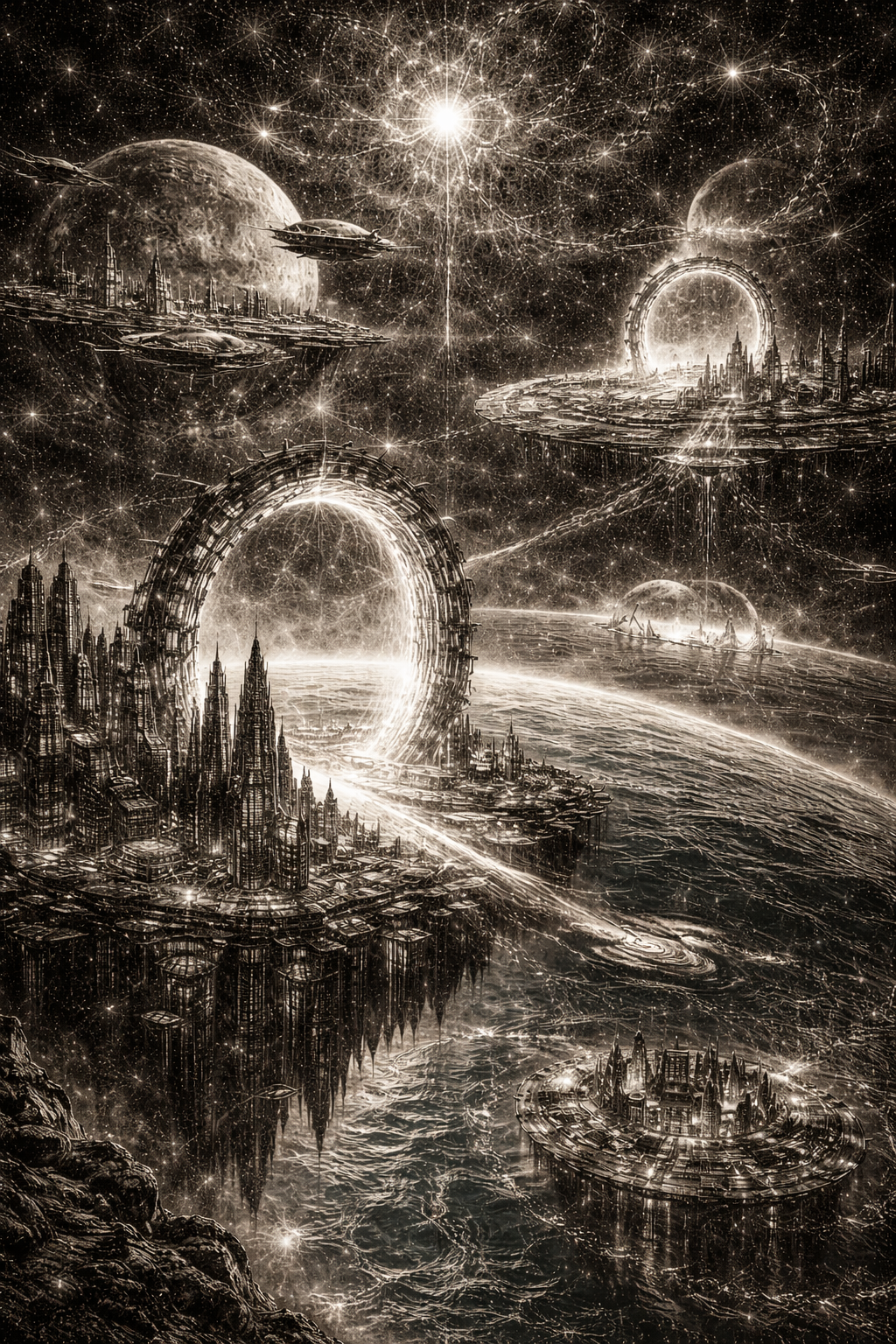
It exists in the late 28th century A.D., relying on farcasters, dataspheres, and the Technocore to maintain political unity, economic stability, and daily life.
Beneath its apparent prosperity, the Hegemony is fragile: technologically dependent, culturally shallow, and already falling apart as the Cantos begins...
