i
Antiquity to Renaissance DDH ()


Antiquity to Renaissance

Dark age & co.

Exercise

Think about the superpower You declared last week that You want to have. It's year 2070 and You fully developed it and use it. Your grand-children and/or students ask You to them Your know-how. What would You tell them ? Write it (or draw it).

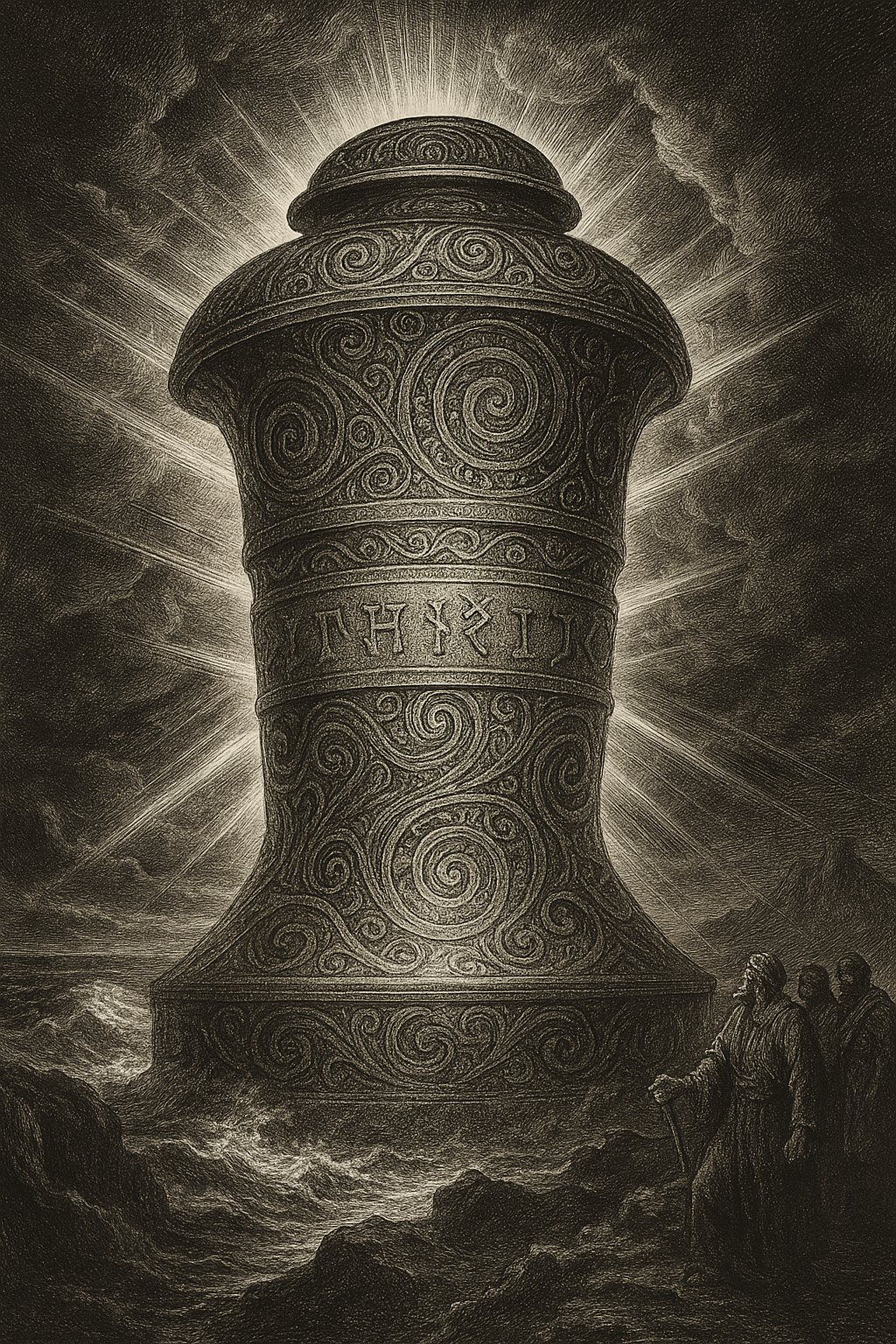
Artefact of the day: SAMPO

the Sampo — a mysterious artifact forged by the smith-god Ilmarinen, source of endless abundance.

Sampo's nature is never fully defined — part mill, part cosmic axis, part perpetual energy machine.

A myth of technology and desire: whoever controls the Sampo controls creation, prosperity, and fate.

as usual, its forging and theft ignite a cosmic struggle...
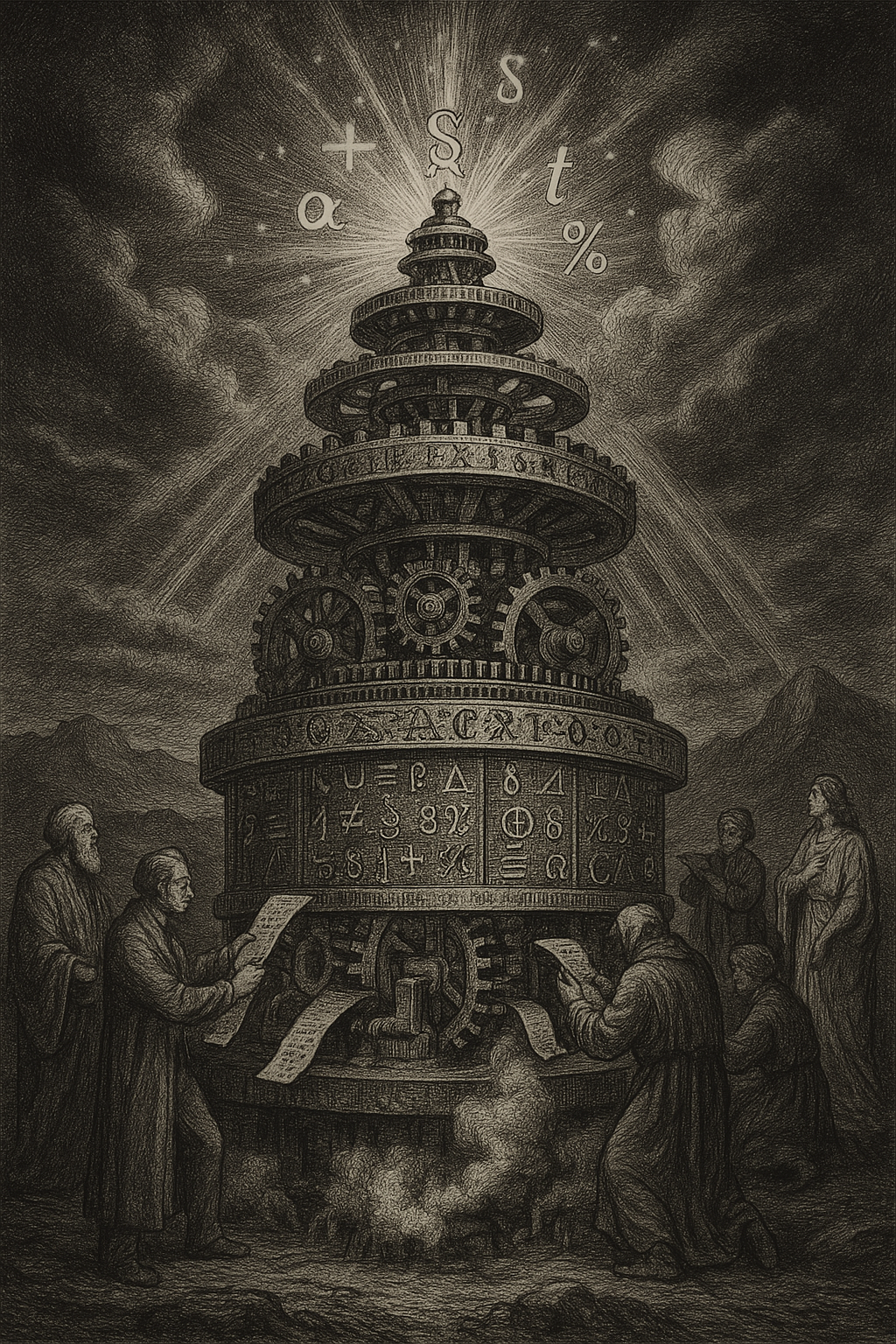
Invention of the day: Logic Mill

In Charles Babbage's "Analytical Engine", the “mill” performed operations on numbers (addition, subtraction, multiplication, etc.), while the “store” held data. This is conceptually equivalent to ... (mill) and ... (store).

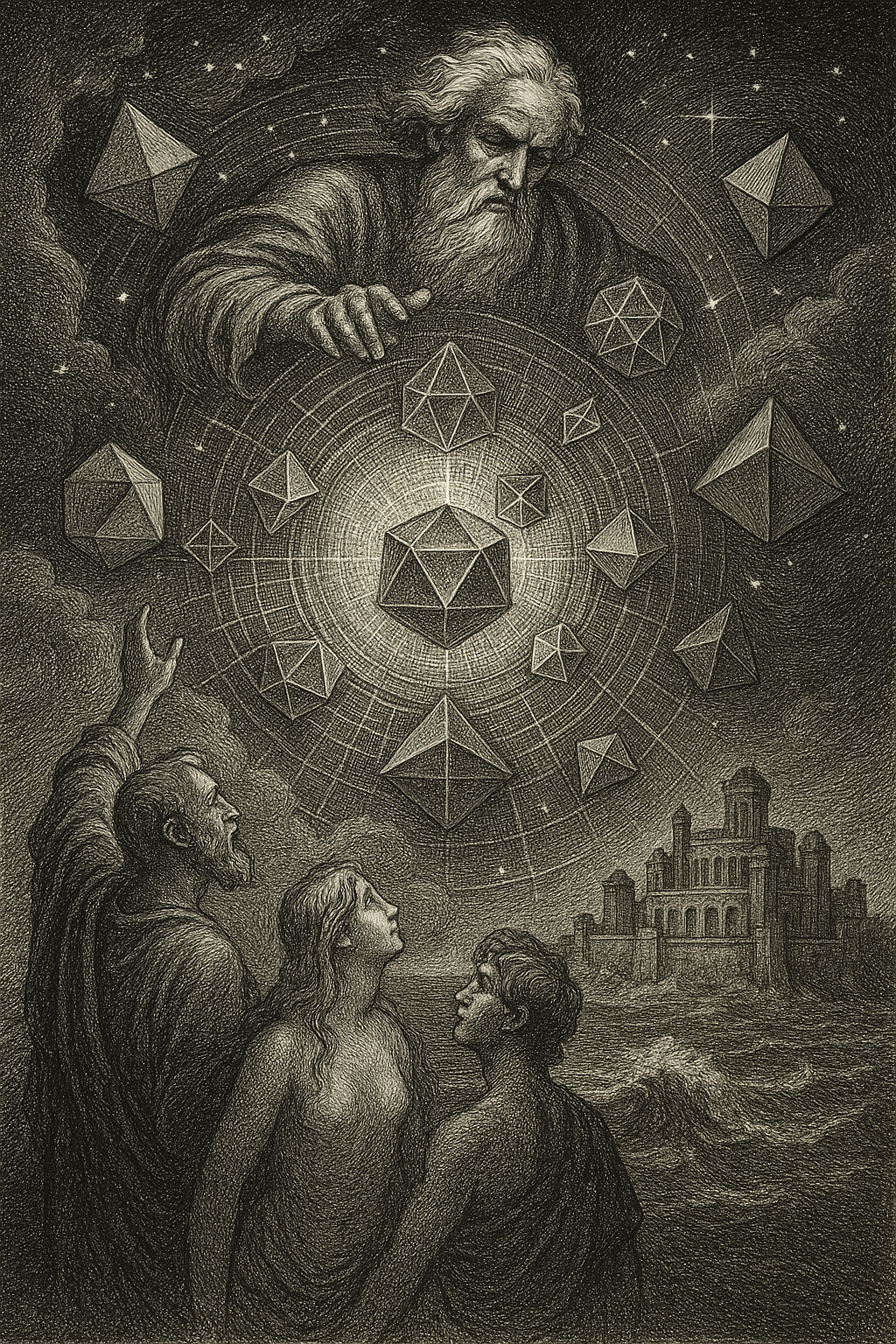
Timaeus

  • Cosmos as a living being — created by a divine craftsman (*Demiurge*).
  • Blending of ΜΥΘΟΣ and ΛΟΓΟΣ: a “likely story” (*eikôs muthos*) explaining the universe.
  • Mathematical harmony as the structure of reality — geometry as sacred order.
  • Creation of the human soul from cosmic ingredients — microcosm mirrors macrocosm.
  • Introduction of Atlantis — mythic civilization of technological ὝΒΡΙΣ (hybris).

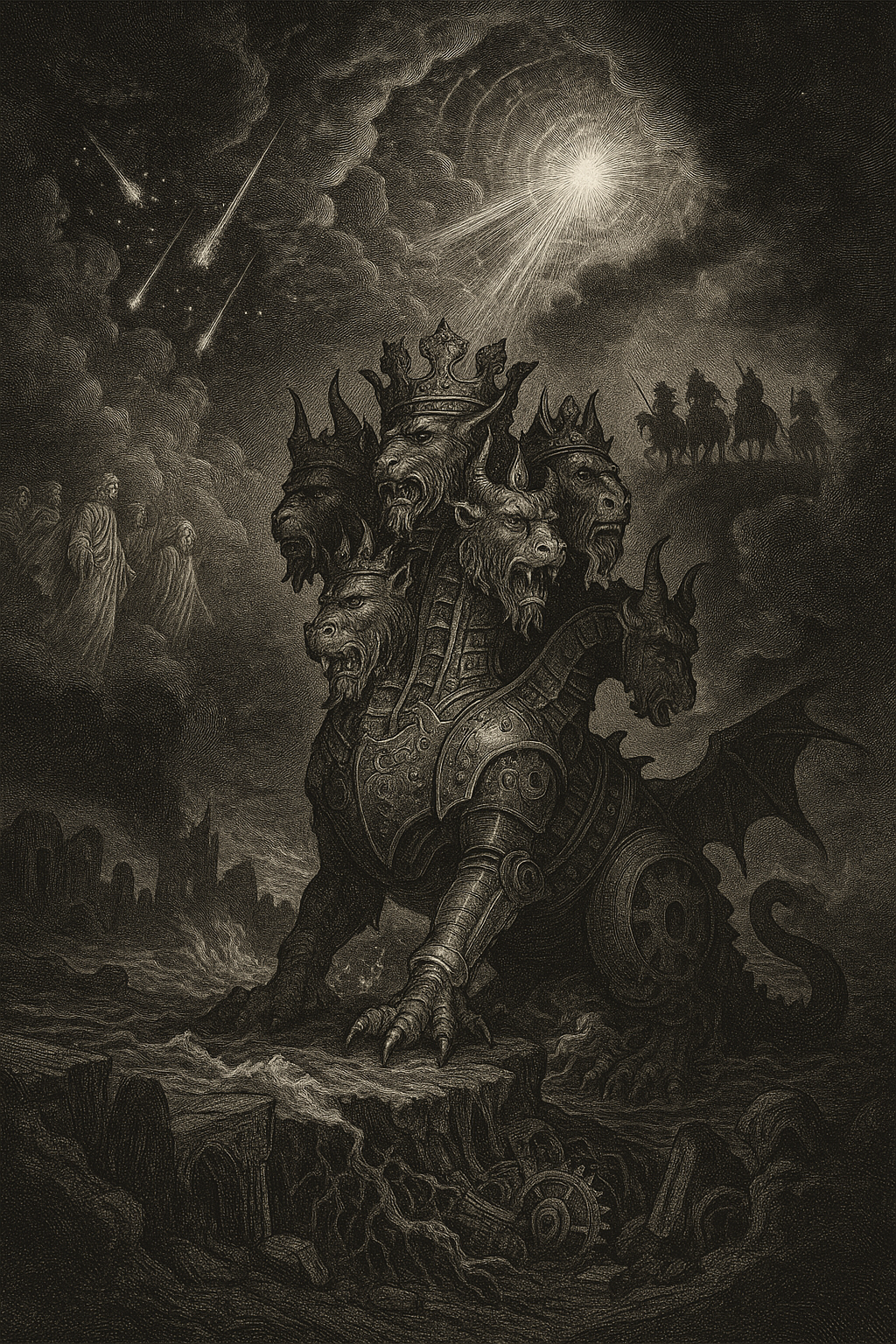
Apocalypse of John of Patmos

  • Combines Jewish apocalyptic motifs with Greco-Roman symbolism — the empire recast as beast-machine.
  • Cosmic imaginery: stars fall, beasts rise, heavens open.
  • Mythic archetypes of dualism — light vs. darkness, human vs. inhuman, cosmos vs. chaos.
  • Proto–science fiction imagination: global catastrophe, cosmic warfare, transformation of bodies and worlds.
  • Influence on modern dystopia, mythologies & technologies (e.g. tech bros building their bunkers are often influenced by this narrative).
  • note: added into the canon in 2nd half of 4th century (potentially due to confusion between two Johns)

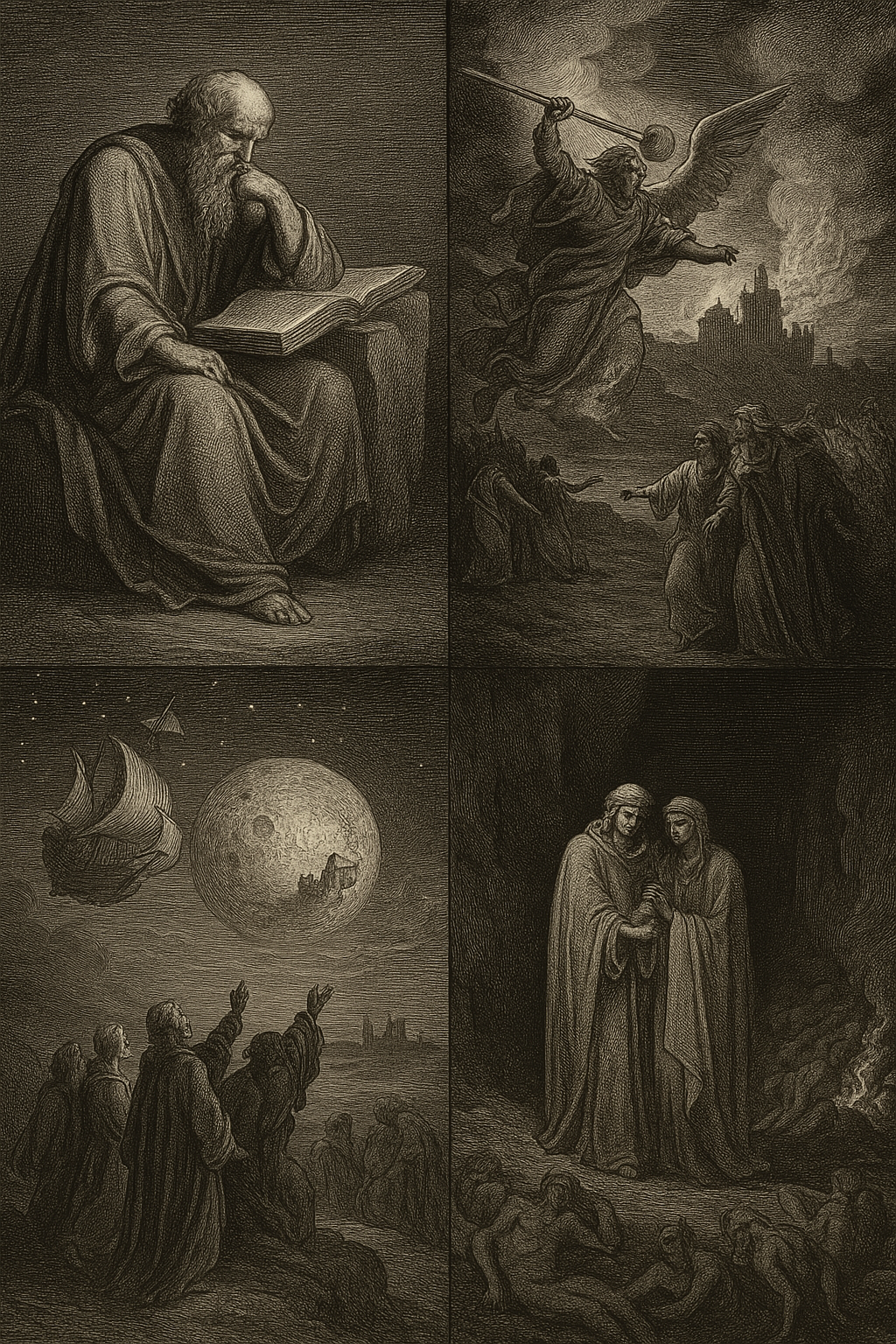
The True History

  • Lucian of Samostata, 2nd century AD.
  • Often called the first science-fiction narrative — a voyage beyond Earth.
  • Begins with a confession of lying; uses humot to expose the limits of human knowledge
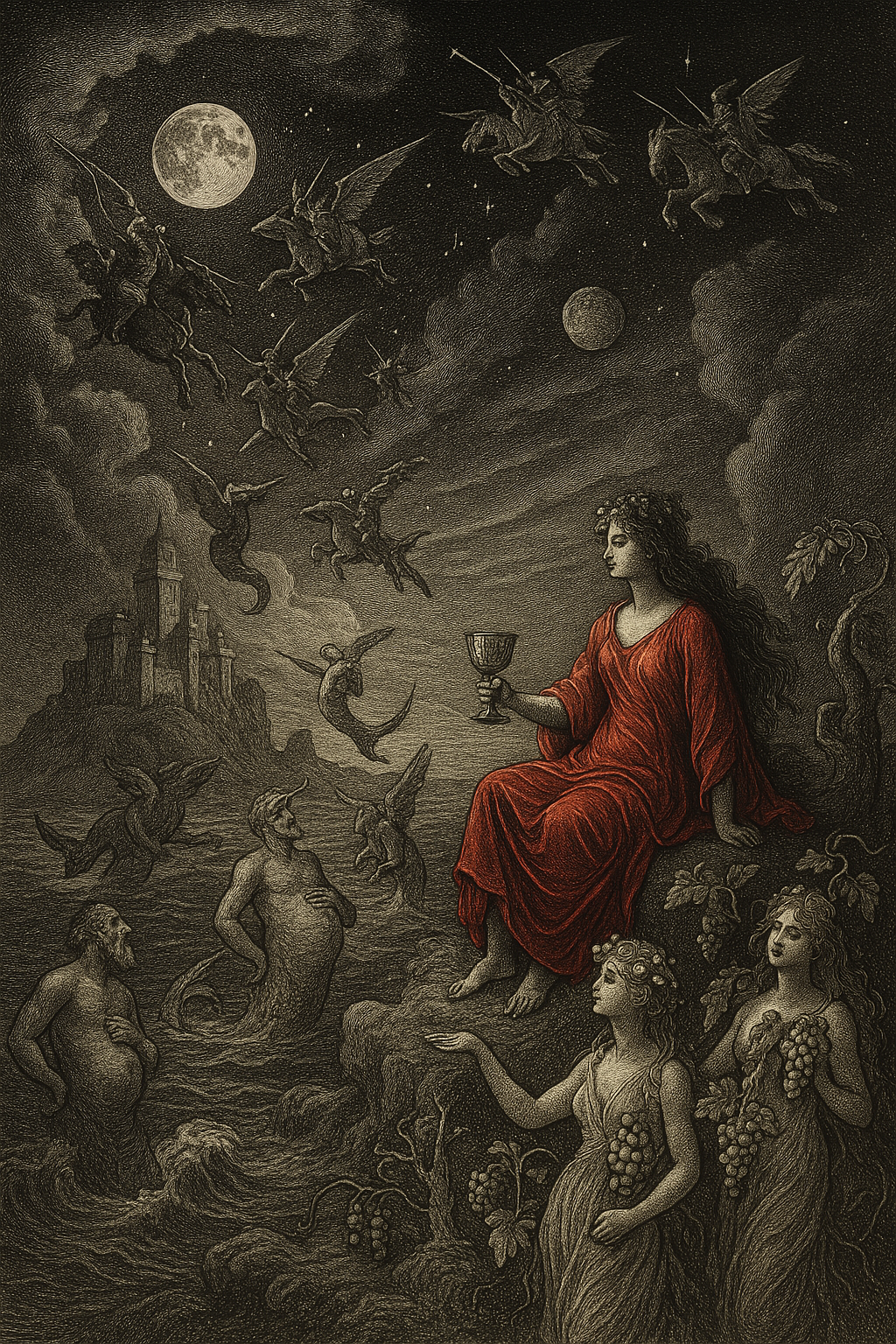
  • Journey to the Moon, interplanetary wars, alien societies, reproductive absurdities (pregnant men, vine women, grape-born offspring), hybrids (fish centaurs, whale villages).
  • Blends Homeric myth, travel narrative, and absurd exaggeration — an early meta-commentary on storytelling itself.

Divina Comedia

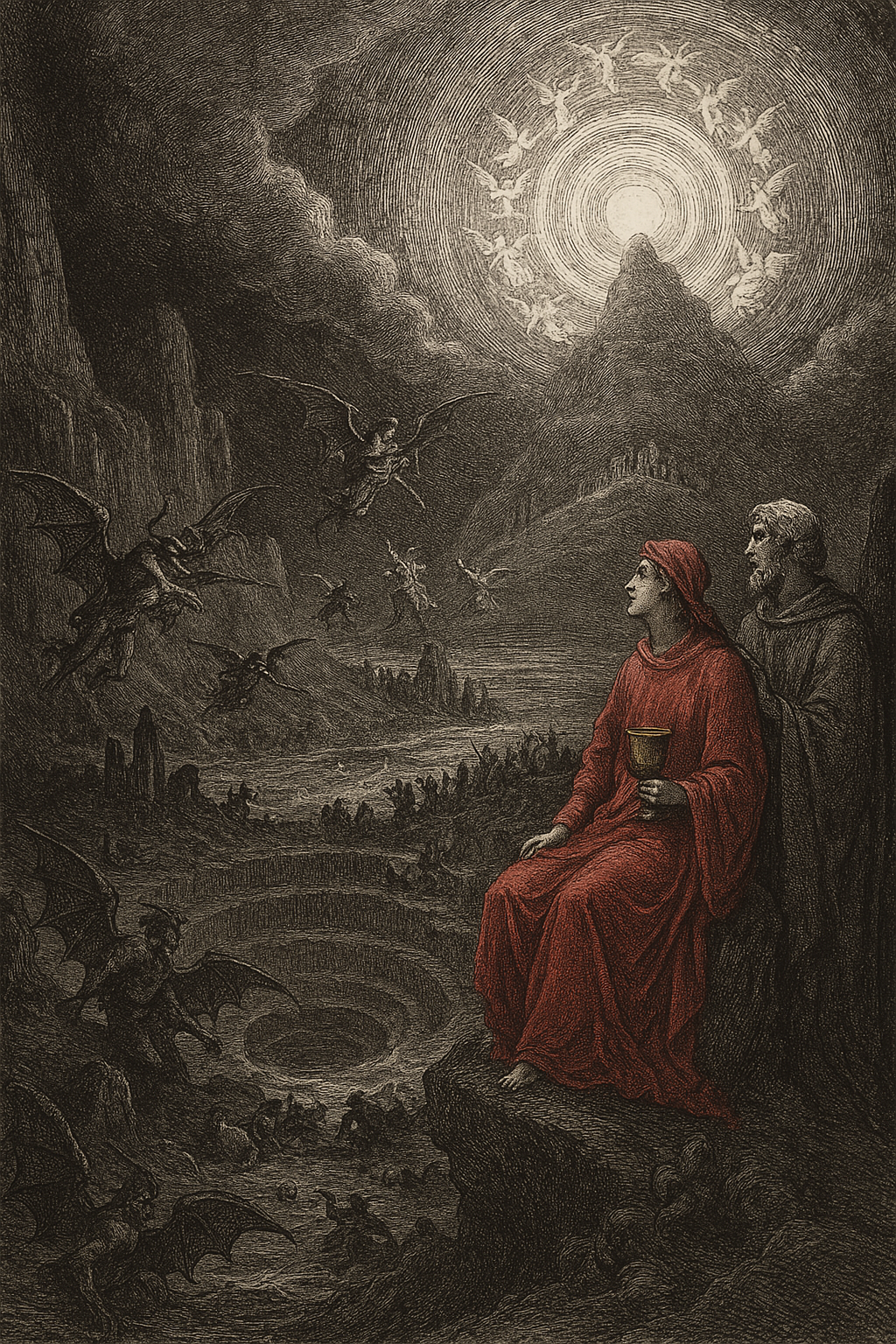
  • A structured journey through the cosmos — from infernal depth to celestial infinity.
  • Maps medieval cosmology with mathematical precision: concentric spheres, planetary orbits, Empyrean light.
  • Virgil and Beatrice as guides through knowledge systems — reason and revelation as dual navigation logics.
  • Cosmic odysseys — travel beyond Earth.
  • A synthesis of myth, science, and metaphysics — the medieval precursor of modern speculative world-building.