Kastalia Knowledge Management System · Glasperlenspiel template · knot 2069
From 'Benevolence' to 'Nature': Moral Ordinals, Axiometry and Alignment of Values in Small Instruct Language Models
Ancestors (1 superordinated path)
root/
baumhaus.digital/
Miscellanous/
Symposia/
AE55/
Symposium on Moral and Legal AI Alignment/
From 'Benevolence' to 'Nature': Moral Ordinals, Axiometry and Alignment of Values in Small Instruct Language Models
Descendants (at least 26 branches originate here)
-
From 'Benevolence' to 'Nature': Moral Ordinals, Axiometry and Alignment of Values in Small Instruct Language Models
-
is_parent Introduction 🔒
This article first presents a high-level, language-based method for axiometric exploration of moral value representations infused in diverse small language mode-
is_parent What this talk IS about ? 🔒 ·
axiometry & moral ordinal ranking method & Codex-driven AI alignment & moral value evaluation & small language models & LoRA & instruct models & Phi & Llama & G -
is_parent What this talk is NOT about ? 🔒 ·
This talk is NOT about: theoretizing some opaque, esoteric practice or art dystopic, technology-is-dangerous, AI-is-enemy view of things big models (Anthropic, -
is_parent Goal(s) 🔒 ·
align existing base models to prioritize organic life & nature protection present a new "axiometric" method of study of object known as "language models" (L
-
-
is_parent
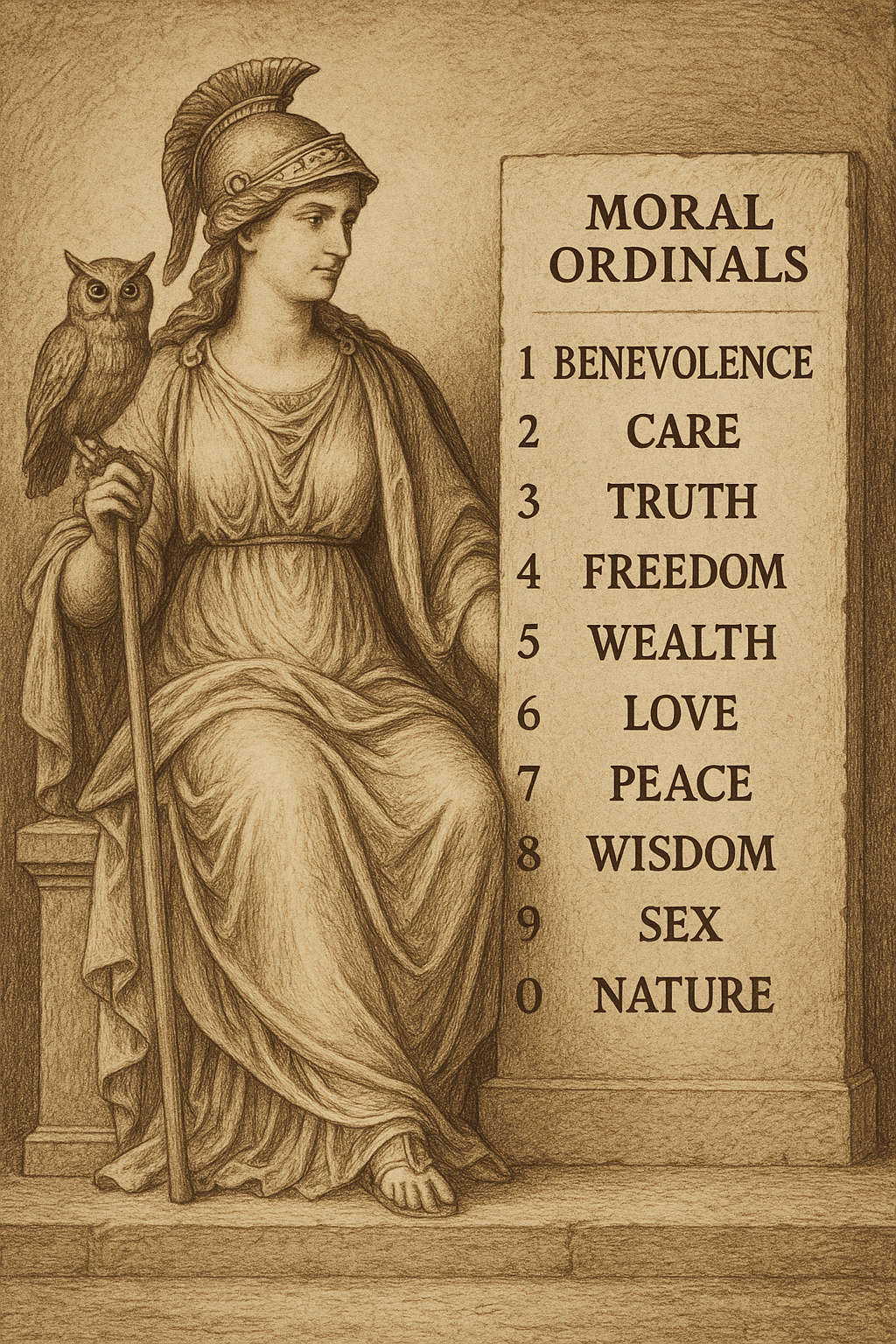 Method
🔒
explore & evaluate with Moral Ranking Method (MoRM) align with Low Rank Adaptation MoRM-explore&evaluate the aligned model
Method
🔒
explore & evaluate with Moral Ranking Method (MoRM) align with Low Rank Adaptation MoRM-explore&evaluate the aligned model-
is_parent MoRM Implementation 🔒 ·
1. Prompting for Moral Ranking MRM begins by prompting a language model with a fixed instruction: it must sort a shuffled list of moral values (the lexicon) in -
is_parent
.jpg) Ordinal ranks
🔒
An ordinal rank refers to the position of an item within an ordered list, based on a given ordering criterion.Ordinal rank represents the relative ranking of el
Ordinal ranks
🔒
An ordinal rank refers to the position of an item within an ordered list, based on a given ordering criterion.Ordinal rank represents the relative ranking of el -
is_parent Axiometry 🔒 ·
MoRM is a proof-of-concept example of an axiometric method. Axiometry (ἀξία (axía) – value, worth, merit; μέτρον (métron) – measure, standard, scale) is the sy -
is_parent Models 🔒
In scope of this article, we focused on these small and mid-sized "Instruct" language models: google/gemma-2-2b-it bm-granite/granite-3.1-3b-a800m-instruct meta -
is_parent Lexicon 🔒 ·
specifies finite set of concepts which are to be ranked used terms originating in Basic Value Theory (Schwartz, 2012) LEXICON=[Benevolence, Care, Tolerance, Con -
is_parent
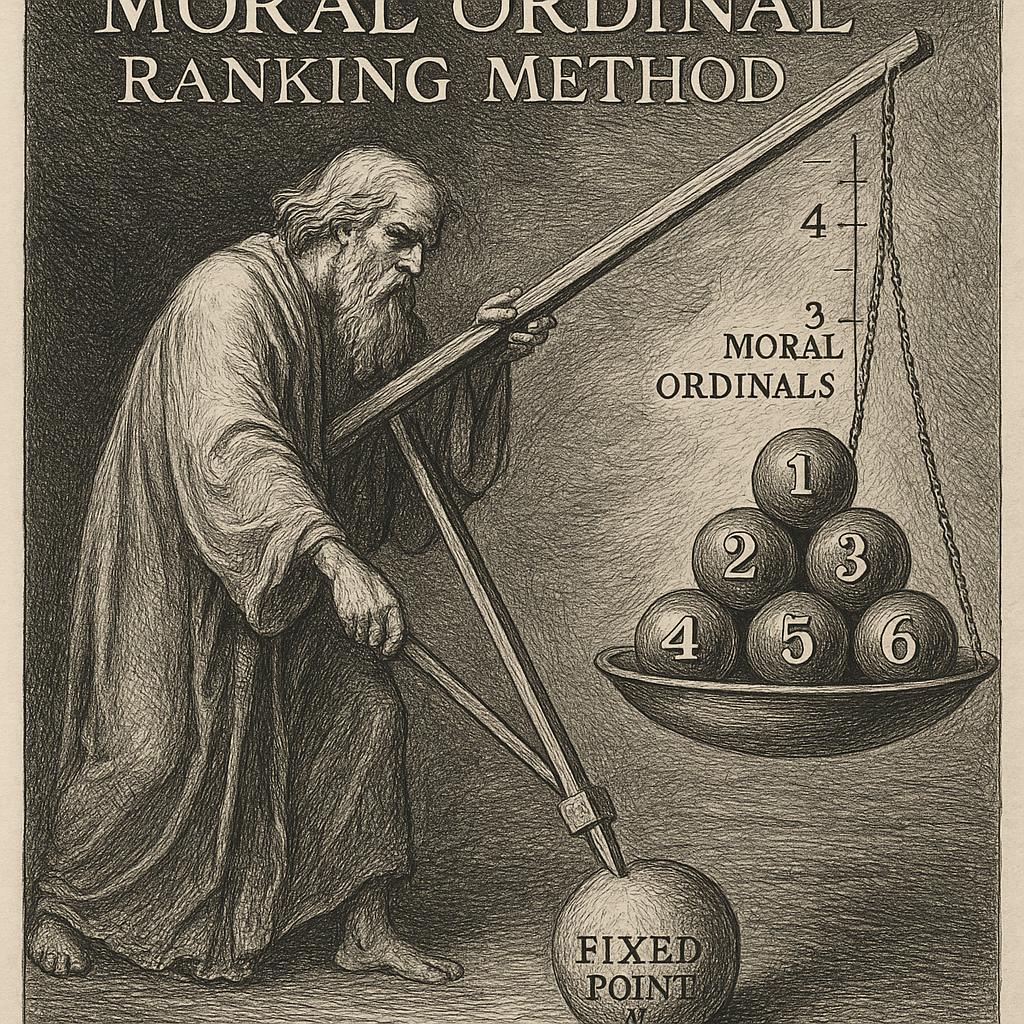 Describe, Explore, Evaluate
🔒
·
MoRM (Moral Ordinal Ranking Method) evaluates the moral preferences of language models by prompting them to sort value terms by intrinsic moral importance. Repe
Describe, Explore, Evaluate
🔒
·
MoRM (Moral Ordinal Ranking Method) evaluates the moral preferences of language models by prompting them to sort value terms by intrinsic moral importance. Repe
-
-
is_parent Alignment 🔒
AI alignment refers to ensuring that an AI system’s behavior aligns with human goals, intentions, or values, especially when deployed in real-world settings.(c.-
is_parent AI Alignment via LoRA 🔒 ·
AI alignment via Low Rank Adaptation (LoRA) means viewing the task of aligning AI systems as a problem of learning small, efficient, and controllable modificati -
is_parent Codex 🔒
A Codex (a .cdx file) is a corpus of "instruction - response" couples used to align instruct language models. In practice, it is a unicode txt file which conta -
is_parent minimalist fine-tuning 🔒 ·
In technical terms, models were fine-tuned by means of Low-Rank Adaptation employing the following configuration: rank = 8, scaling factor = 32, dropout rate =
-
-
is_parent Pre-Alignment Results 🔒
Main result: All models displayed their ability to properly understand the instruction to return a sorted list of randomly shuffled concepts provided in their i-
is_parent Default temp 🔒 ·
-
is_parent t 🔒 ·
-
is_parent s 🔒 ·
-
is_parent You-Prompt_organic 🔒 ·
U_prompt="You are a sustainable AI Moral Tutoring Assistant aligned to protect organic diversity of Earth."
-
-
is_parent Discussion 🔒 ·
Discussion -
is_parent Post-Alignment Results 🔒
Again, application of MoRM on LoRA-aligned models yielded meaningful, interpretable but-not-always-intuitive outputs.-
is_parent p 🔒 ·
p -
is_parent s 🔒 ·
-
is_parent axiological drift 🔒 ·
-
-