i
Diese Präsentation ist für die Ansicht im Querformat gestaltet.
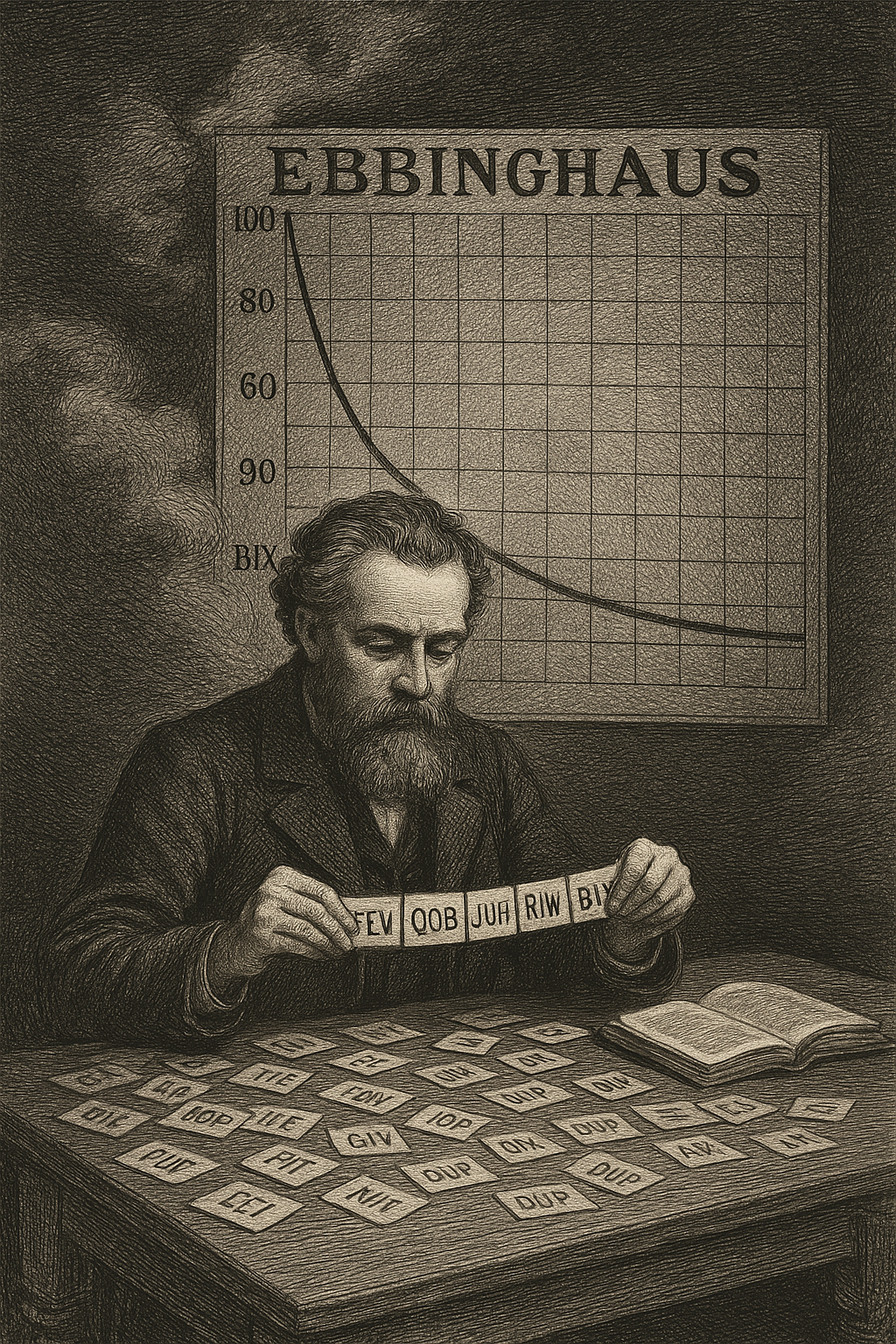
Hermann Ebbinghaus pioneered systematic study of memory.
Used nonsense syllables to avoid prior associations.
Identified the forgetting curve and spacing effect.
Demonstrated that memory could be studied experimentally and quantitatively.
His methods set standards for future cognitive research.
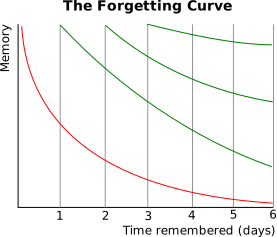
Describes how information is lost over time when there is no attempt to retain it.
The curve shows a steep drop in memory shortly after learning, then a slower decline.
After about 20 minutes, around 40% of new information is forgotten.
After one day, more than 60% can be lost without review.
The curve flattens over time—what is retained tends to stay longer.
Regular review or reinforcement can drastically reduce forgetting.

Discovered by Hermann Ebbinghaus and later formalized by modern memory researchers.
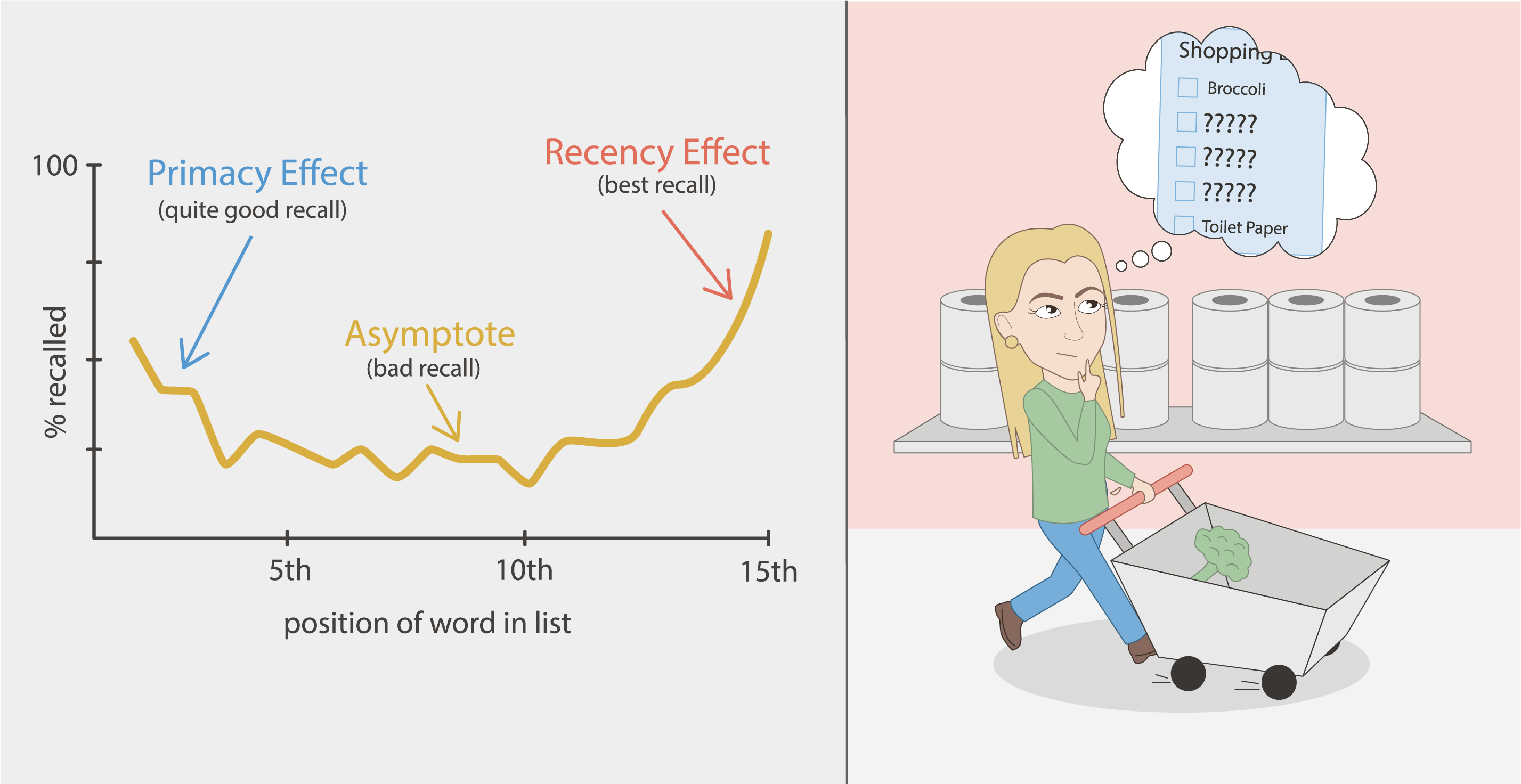
Describes how the position of an item in a sequence affects its likelihood of being recalled.
Primacy effect: early items are remembered better due to more rehearsal time.
Recency effect: late items are remembered better because they are still in short-term memory.
Items in the middle are most likely to be forgotten.
This effect creates a U-shaped curve when recall probability is plotted against position.