Foreword to Machine Didactics
30.06.2024 · AE540630
scan to join on your phone
> click / swipe / arrow keys to begin_
Teaser
30.06.2024 · AE540630
Next talk: Make Your Own Not-so-large-language-model @ State Of The Art(s)_ GenAI Applied _
July 5th from 17:00-18:45 at Gallerie at Medienhaus (Grunewaldstrasse 2)
Keywords: Large Language Models, Low Rank Adaptation, Retrieval Augmented Generation, Direct Preference Optimization, Embeddings
July 5th from 17:00-18:45 at Gallerie at Medienhaus (Grunewaldstrasse 2)
Keywords: Large Language Models, Low Rank Adaptation, Retrieval Augmented Generation, Direct Preference Optimization, Embeddings
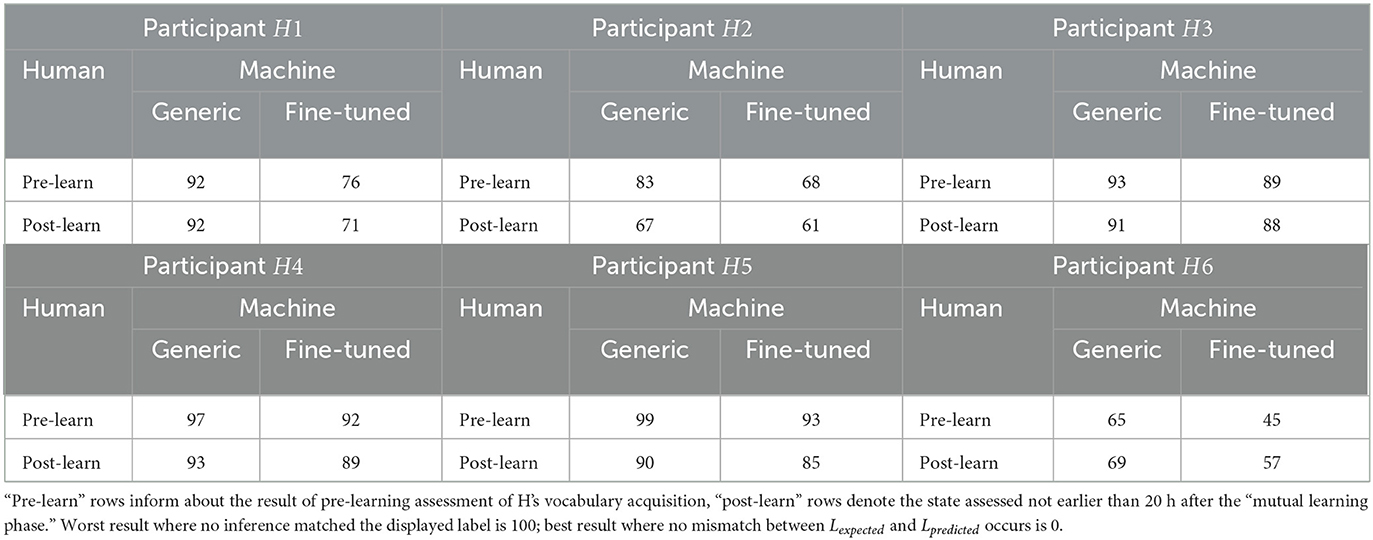
Vocabulary learning
22.11.2023 · AE531122
Front. Educ., 2023
Sec. Digital Education
Volume 8 - 2023 | https://doi.org/10.3389/feduc.2023.1063337
Sec. Digital Education
Volume 8 - 2023 | https://doi.org/10.3389/feduc.2023.1063337
Proof-of-concept of feasibility of human–machine peer learning for German noun vocabulary learning
Reading acquisition
22.11.2023 · AE531122
In the second Hromada & Kim (2023) article, we describe first, syllable-oriented exercise by means of which the Primer aimed to assist one 5-year-old pre-schooler in increase of her reading competence. The pupil went through sequence of exercises composed of evaluation and learning tasks. Consistently with previous HMPL study, we observe increase of both child's reading skill as well as of machine's ability to accurately process child's speech.
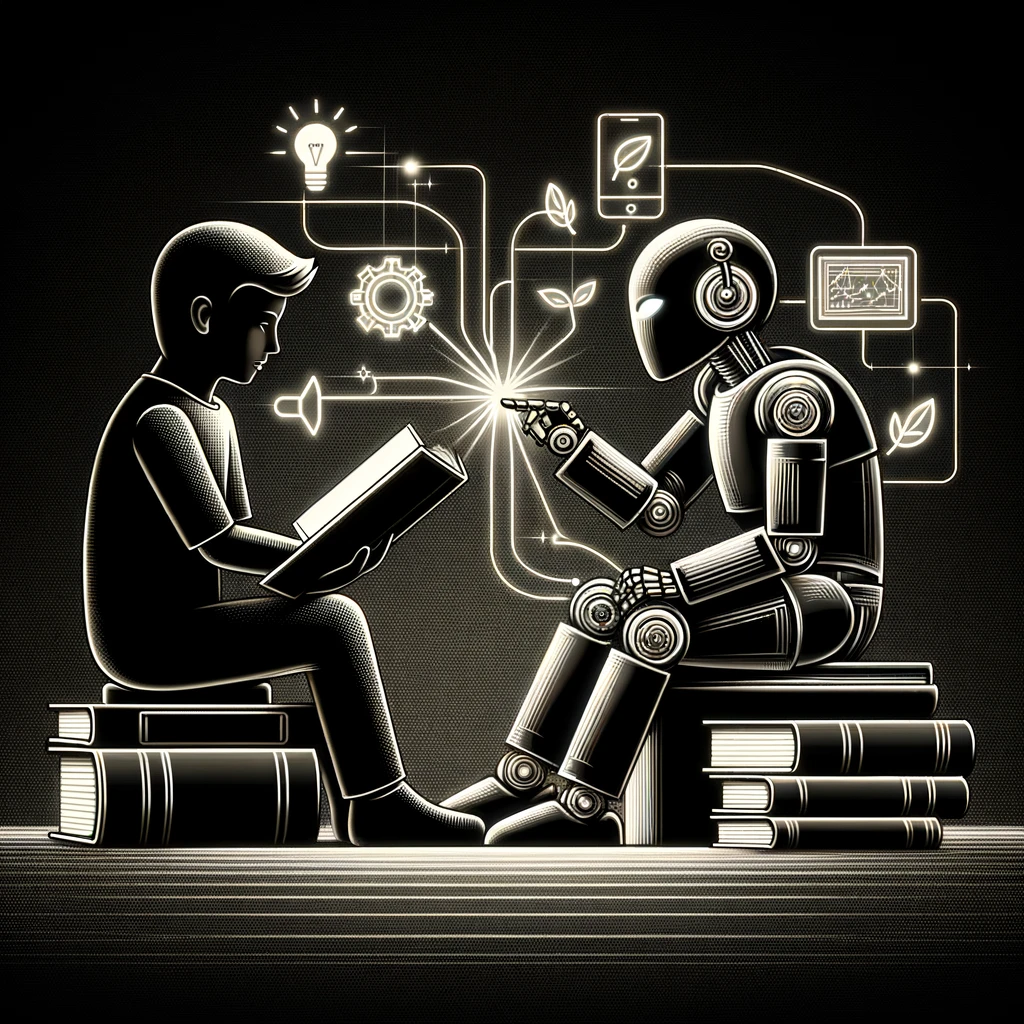
HMPL
22.11.2023 · AE531122
Human–Machine Peer Learning (HMPL) is a proposal that is positioned at the very frontier between educational, cognitive, and computer sciences. HMPL's core precepts which I introduced in my 2022 and 2023 papers are simple:
Humans and machines can learn together.
Humans and machines can learn from each other.
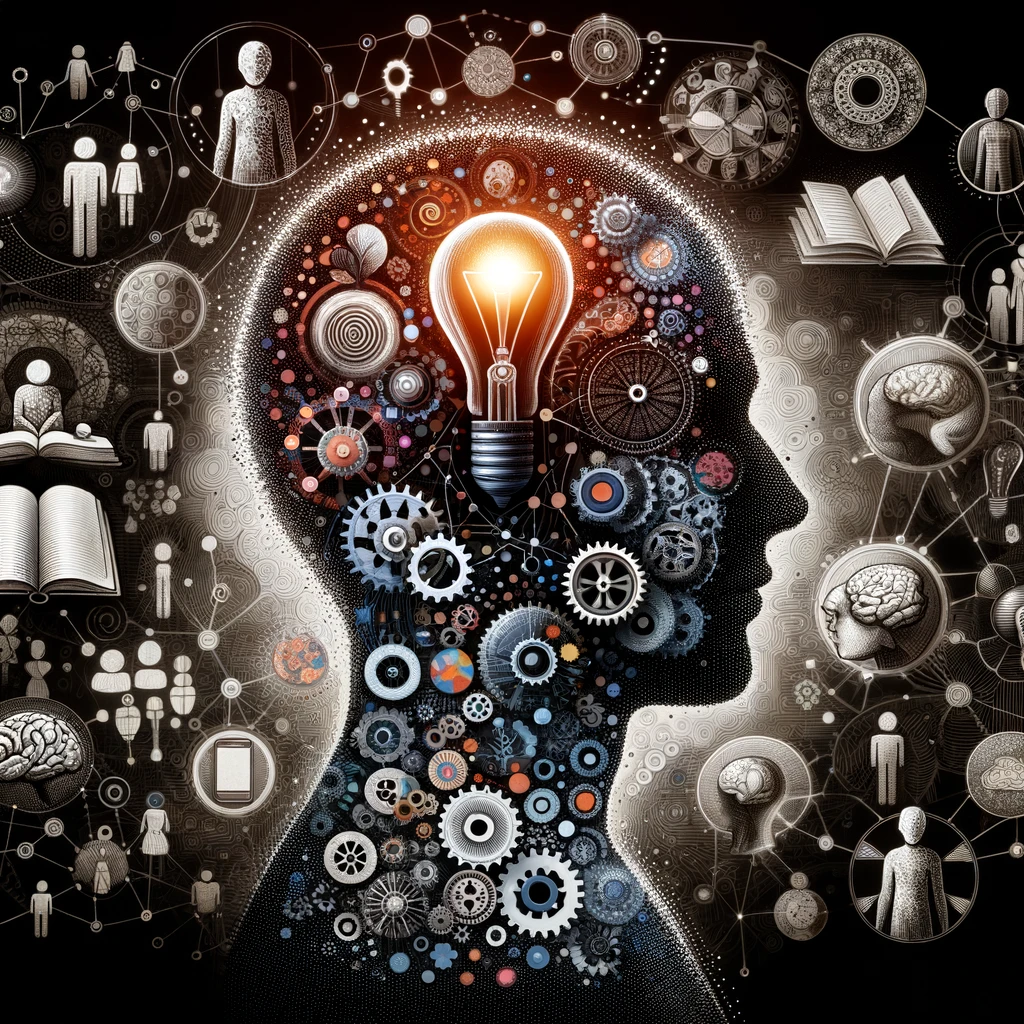
Human learning
22.11.2023 · AE531122
Human learning is a complex, multifaceted process that encompasses the acquisition, understanding, and application of knowledge and skills. It involves various cognitive, emotional, and environmental interactions that lead to changes in an individual's knowledge, behaviors, and attitudes.
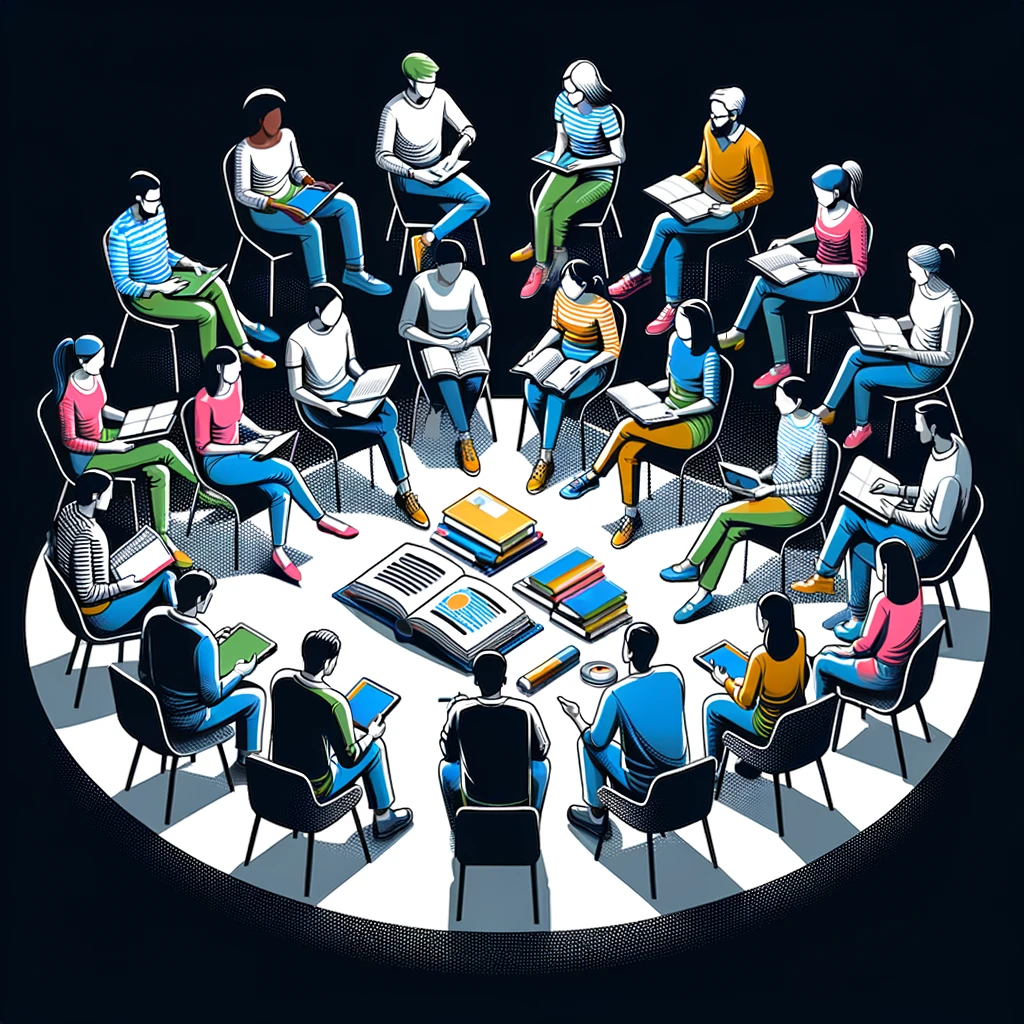
Peer learning
22.11.2023 · AE531122
Peer learning is an educational approach where individuals learn from and with each other. This concept is rooted in the idea that learning is a social and collaborative process. Unlike traditional teacher-student models, peer learning involves individuals of similar status sharing knowledge, ideas, and experiences. Both participants in the process can act as both teacher and learner.
Vygotsky
22.11.2023 · AE531122
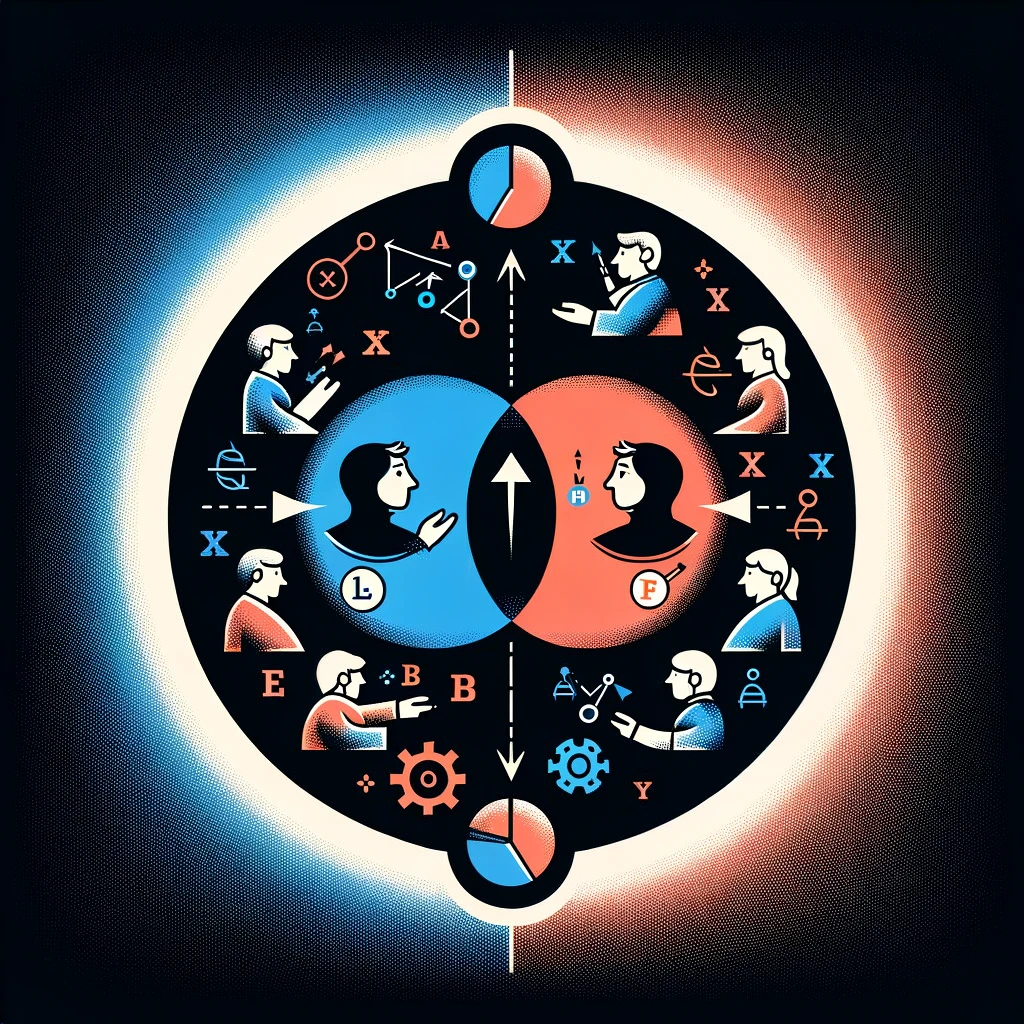
In Vygotsky's view, peer learning is crucial. Peers can act as the more knowledgeable other within the Zone of Proximal Development, facilitating learning and skill development. He believed that interaction with peers leads to the internalization of knowledge.
The notion of "Zone of Proximal Development" refers to the difference between what a learner can do without help and what they can achieve with guidance and encouragement from a slightly more skilled partner.
The notion of "Zone of Proximal Development" refers to the difference between what a learner can do without help and what they can achieve with guidance and encouragement from a slightly more skilled partner.

Montessori
22.11.2023 · AE531122
In Montessori classrooms, children of different ages are often grouped together. This setting naturally facilitates peer learning, where older children can teach and model for younger ones, enhancing understanding and empathy. Montessori saw peer interactions as a key component of learning. In her view, children learn from each other in a collaborative, less competitive environment. This method encourages independence, responsibility, and social development.
Machine learning
22.11.2023 · AE531122
Machine learning is a subset of artificial intelligence focused on developing algorithms that enable computers to learn and make decisions from data without being explicitly programmed. It involves training models on large datasets, allowing them to discover patterns and relationships. These models can then make inferences, decisions or predictions or generate outputs consistent with and contingent on the provided input even in cases where no such inputs were present during the learning process.
Caution !
24.11.2023 · AE531124
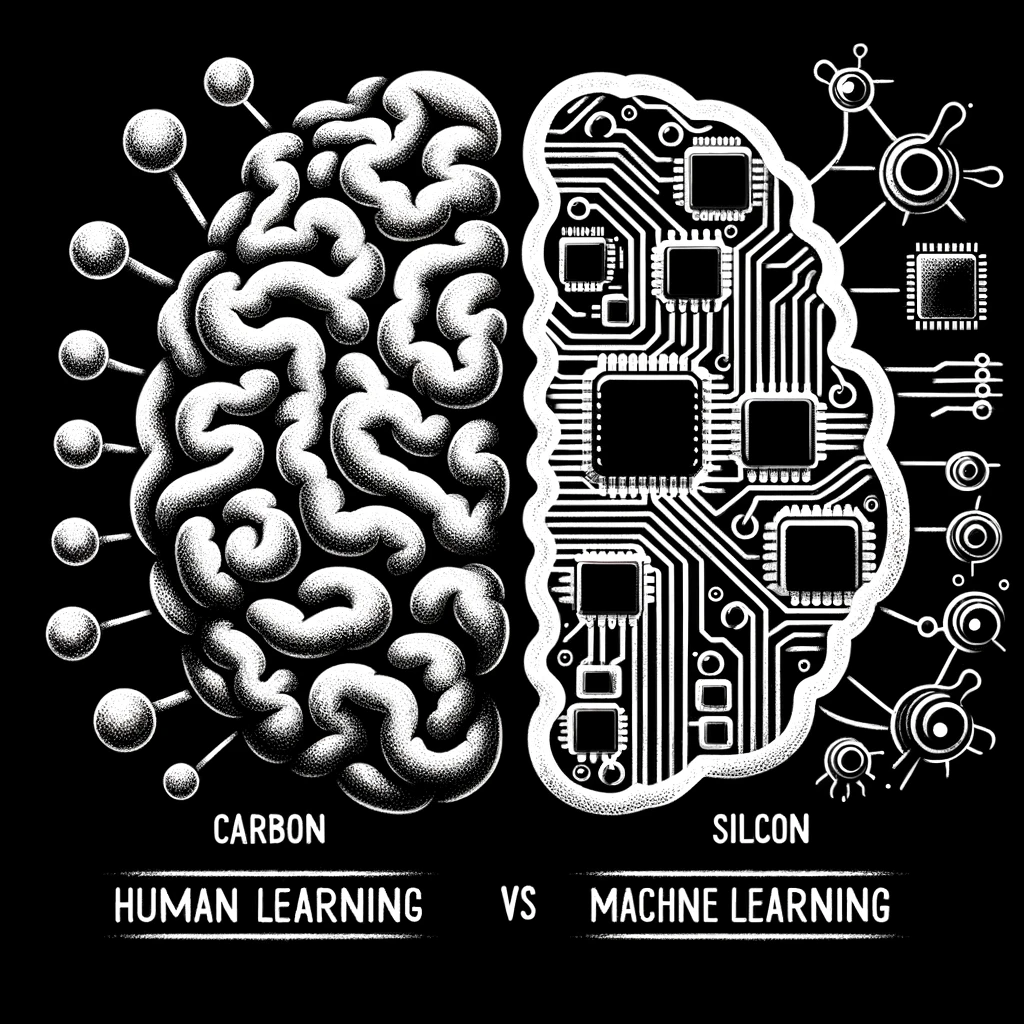
On the material level, human biochemistry-based learning is fundamentally different from machine learning taking place on silicon-based transistors.
HMPL
22.11.2023 · AE531122
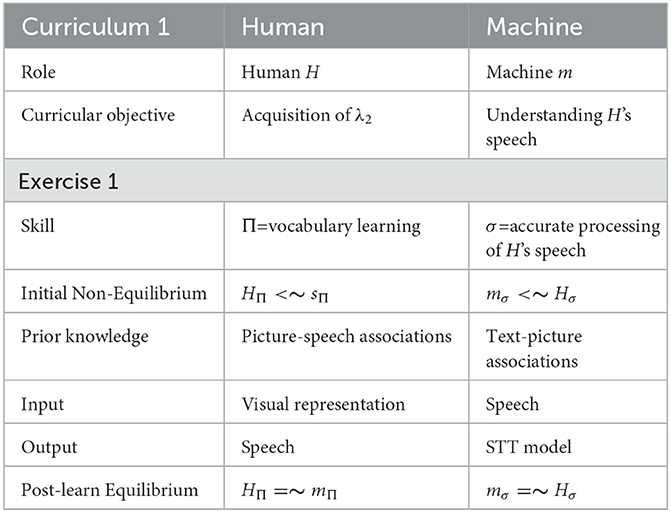
A human-machine peer learning curriculum (i.e., a HMPL-C) is a planned sequence of educational instructions–i.e., a curriculum–which involves:
1. At least one human learner G, H, I, ... which gradually develops her/his/their skill Γ.
2. At least one artificial learner a, b, c, ... which gradually develops its/her/his/their skill σ.
3. Activities by means of which G (resp. H, I, etc.) develops her/his/their skill Γ, which directly involve knowledge and competence exhibited by a (resp. b, c, etc.).
4. Activities by means of which a (resp. b, c, etc.) develops her/his/their skill σ, which directly involve knowledge and competence exhibited by G (resp. H, I, etc.).
AIED 2022 paper
30.06.2024 · AE540630
Au revoir, ECDF
30.06.2024 · AE540630
Prolog
30.06.2024 · AE540630
