i
Variation DDH ()


Variation

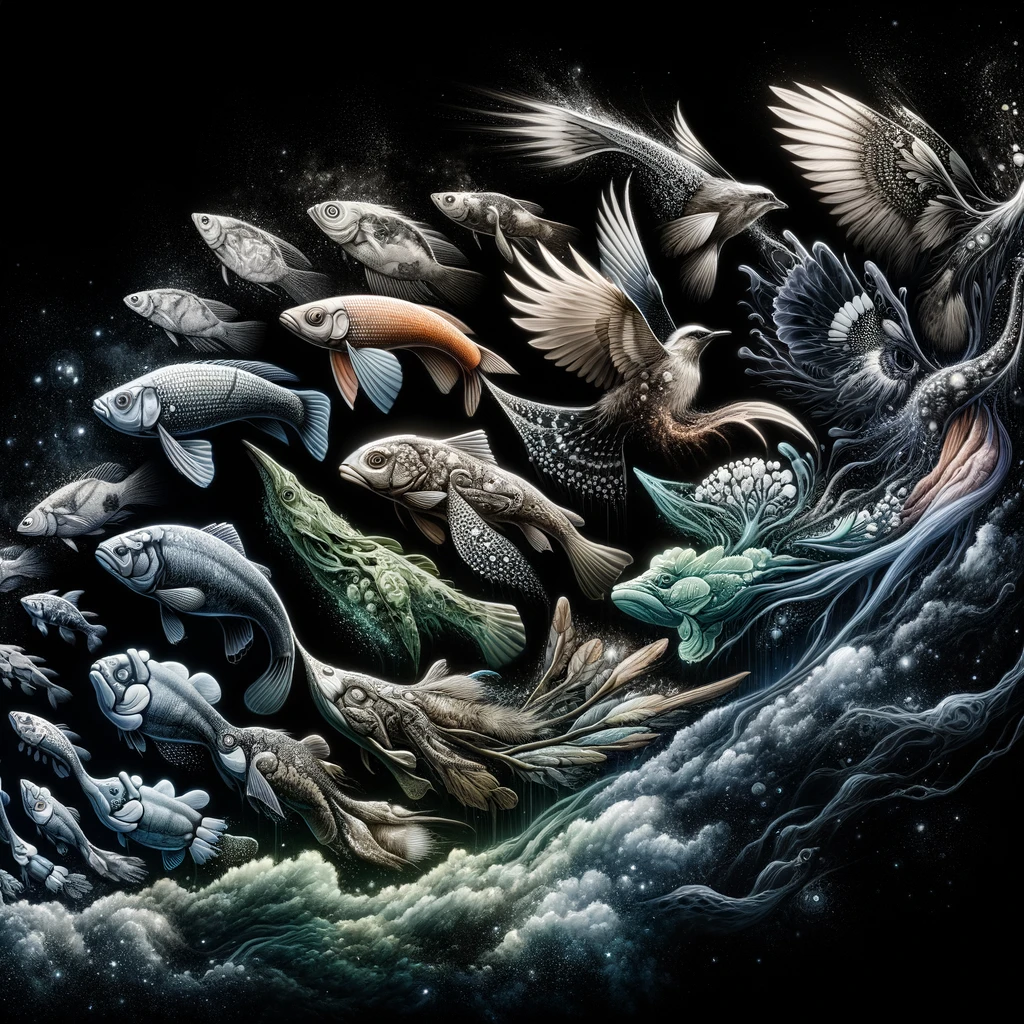
In evolutionary optimization, variation is the process of introducing diversity into the population of solutions. Like genetic mutations and breeding in nature, it involves altering the 'genes' (parameters) of candidate solutions to create new, different ones. This can be done through mutation (changing some parameters) or crossover (mixing parameters from two solutions). Variation is crucial for exploring new solutions and avoiding getting stuck with suboptimal ones, much like how biological diversity is key to the survival and evolution of species.

Mutation

for numeric genes: additive mutation, multiplicative mutation, complex (imaginary) mutation

for symbolic ones: removal, addition or replacement of a symbol; metathesis (e.g. MORF -> FORM)

NOTE: Mutation rates often fall in the range of 0.5% to 1% per gene. This rate is low enough to prevent excessive random search (which can disrupt good solutions) and high enough to introduce diversity and enable the algorithm to explore new areas of the solution space.
Crossover

Crossover