i
HMPL DDH ()


HMPL

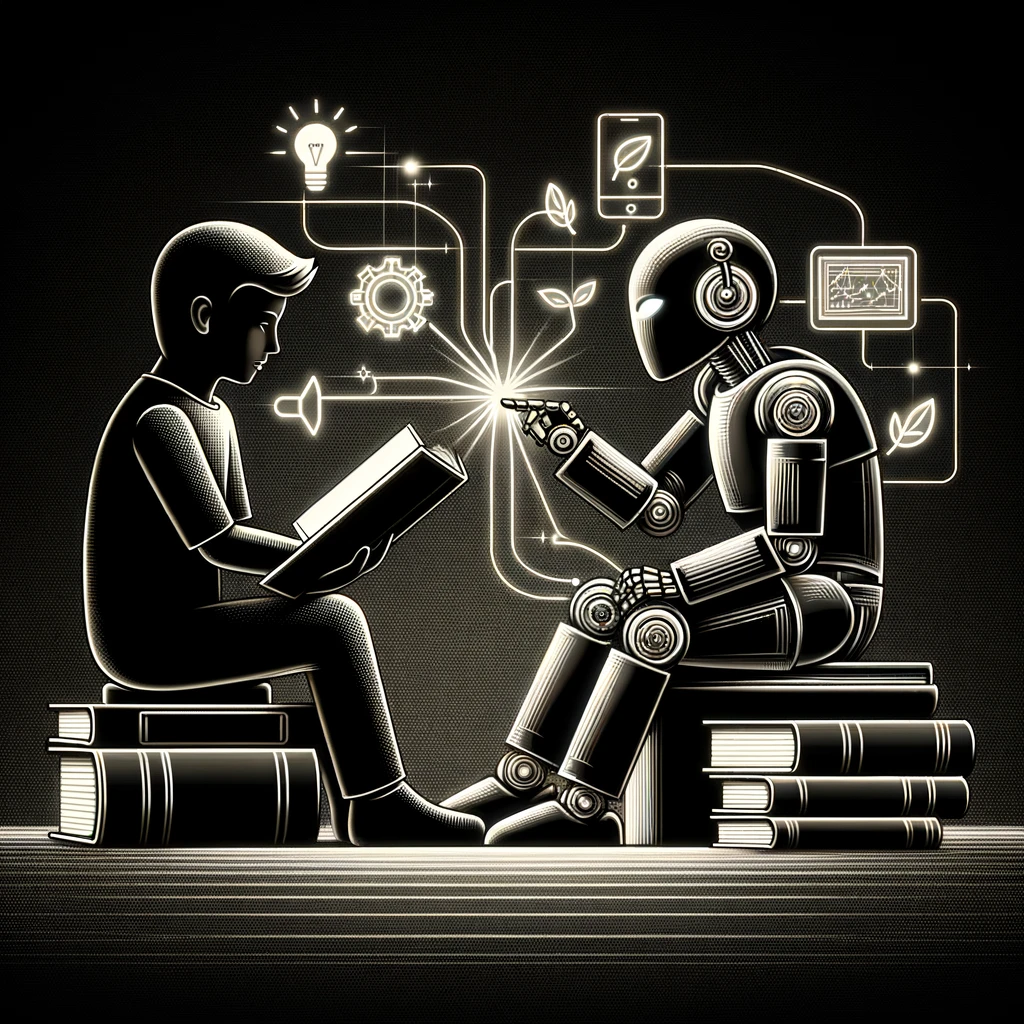
dall-e%203%3A%20%22illustration%20on%20black%20background%20of%20concept%20human-machine%20peer%20learning%20where%20machine%20learns%20from%20human%20and%20human%20learns%20from%20machine%22

dall-e 3: "illustration on black background of concept human-machine peer learning where machine learns from human and human learns from machine"
Human–Machine Peer Learning (HMPL) is a proposal that is positioned at the very frontier between educational, cognitive, and computer sciences. HMPL's core precepts which I introduced in my 2022 and 2023 papers are simple:

Humans and machines can learn together.
Humans and machines can learn from each other.

Human learning

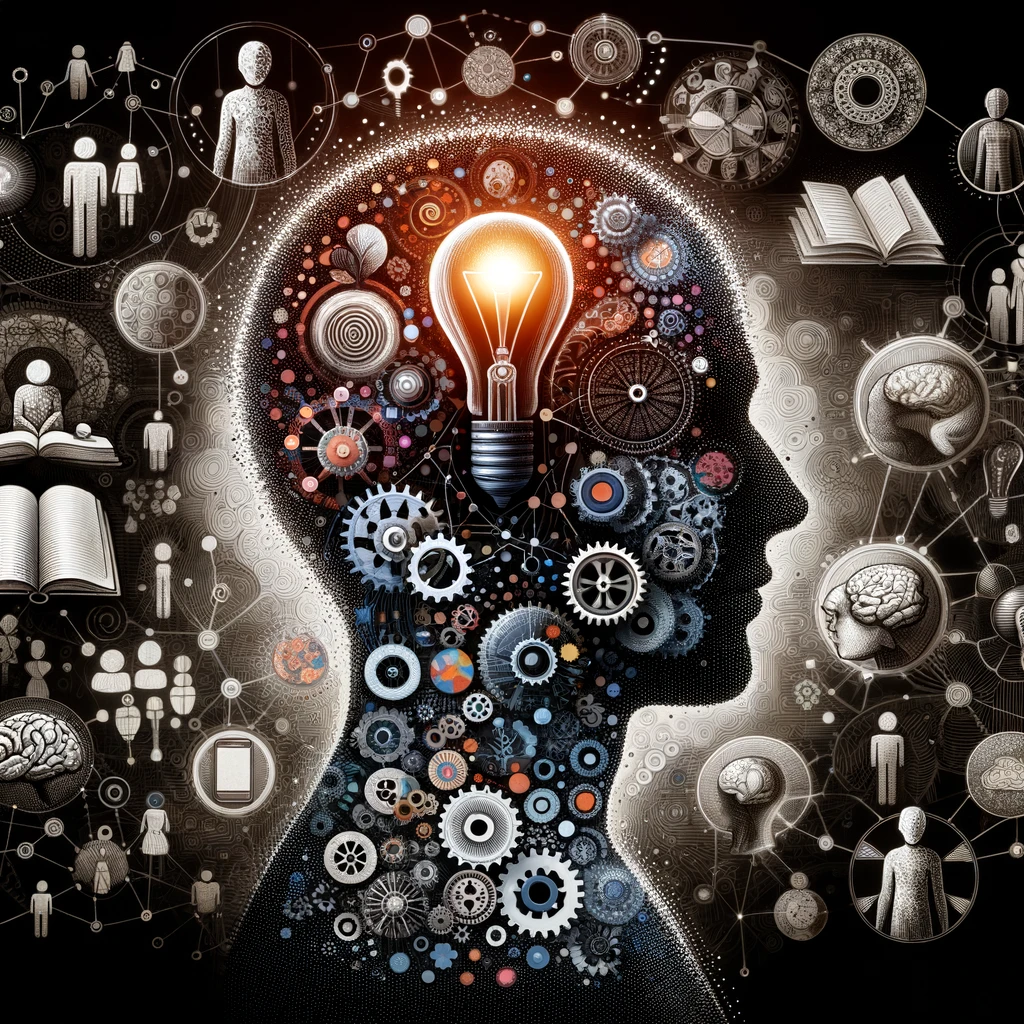
dall-e%203%3A%20%22illustration%20on%20black%20background%20of%20essence%20of%20human%20learning%22

dall-e 3: "illustration on black background of essence of human learning"
Human learning is a complex, multifaceted process that encompasses the acquisition, understanding, and application of knowledge and skills. It involves various cognitive, emotional, and environmental interactions that lead to changes in an individual's knowledge, behaviors, and attitudes.

Peer learning

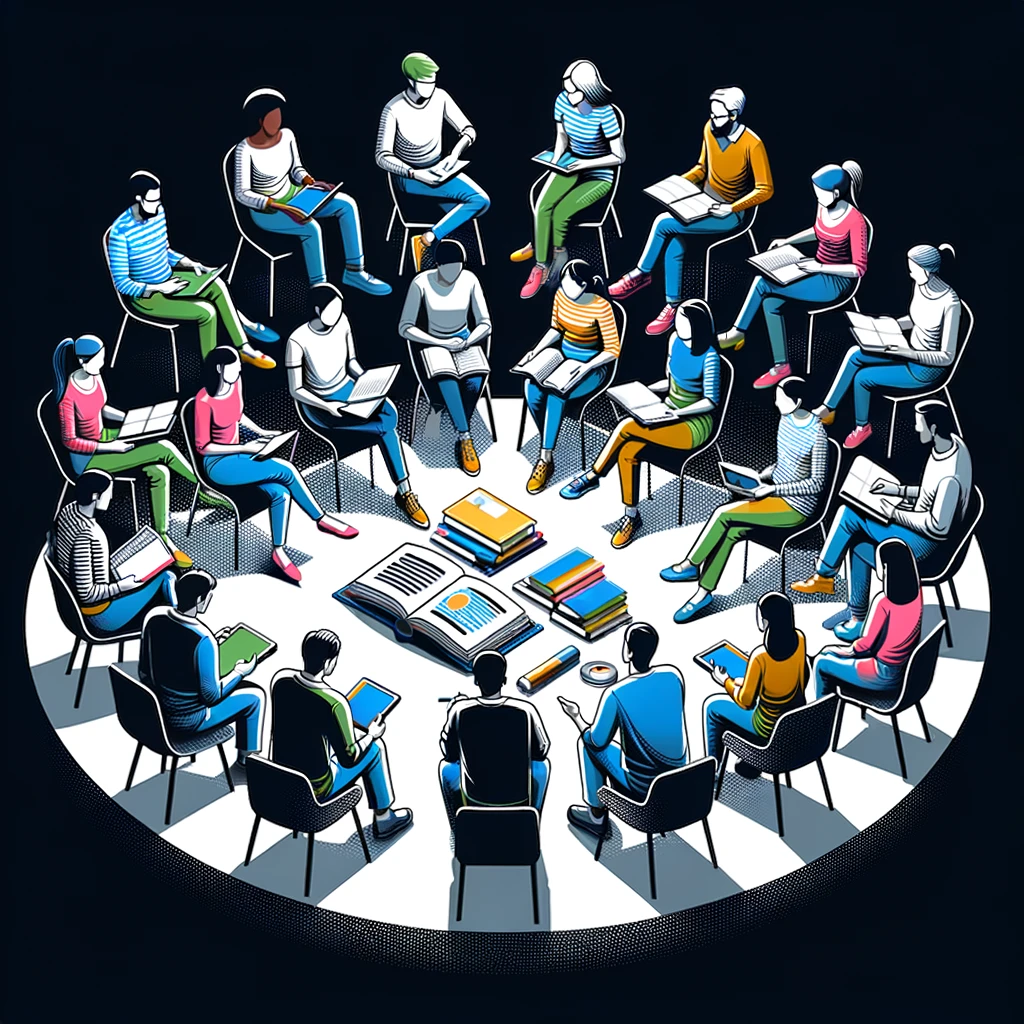
dall-e%203%3A%20%22illustration%20on%20black%20background%20of%20peer%20learning%22

dall-e 3: "illustration on black background of peer learning"
Peer learning is an educational approach where individuals learn from and with each other. This concept is rooted in the idea that learning is a social and collaborative process. Unlike traditional teacher-student models, peer learning involves individuals of similar status sharing knowledge, ideas, and experiences. Both participants in the process can act as both teacher and learner.

Machine learning

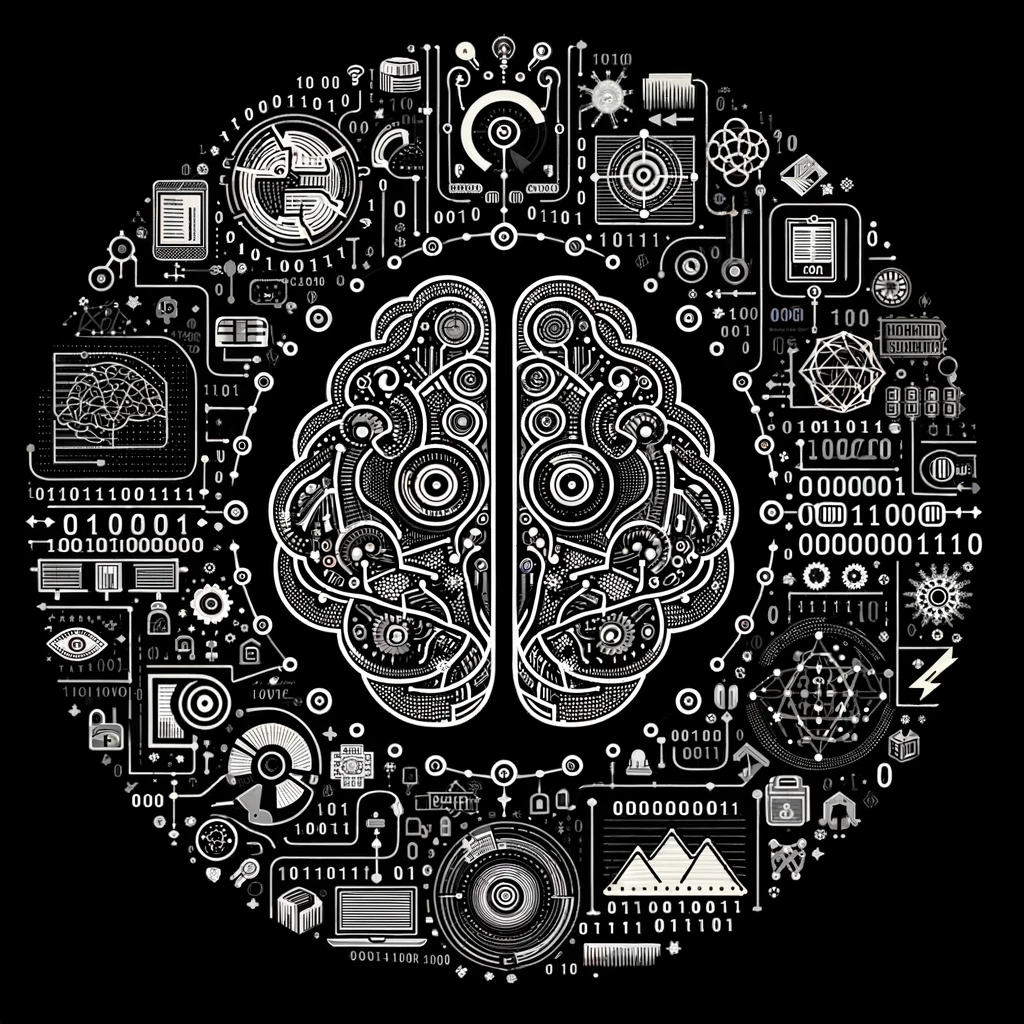
dall-e%203%3A%20%22illustration%20on%20black%20background%20of%20essence%20of%20machine%20learning%22

dall-e 3: "illustration on black background of essence of machine learning"
Machine learning is a subset of artificial intelligence focused on developing algorithms that enable computers to learn and make decisions from data without being explicitly programmed. It involves training models on large datasets, allowing them to discover patterns and relationships. These models can then make inferences, decisions or predictions or generate outputs consistent with and contingent on the provided input even in cases where no such inputs were present during the learning process.

Caution !

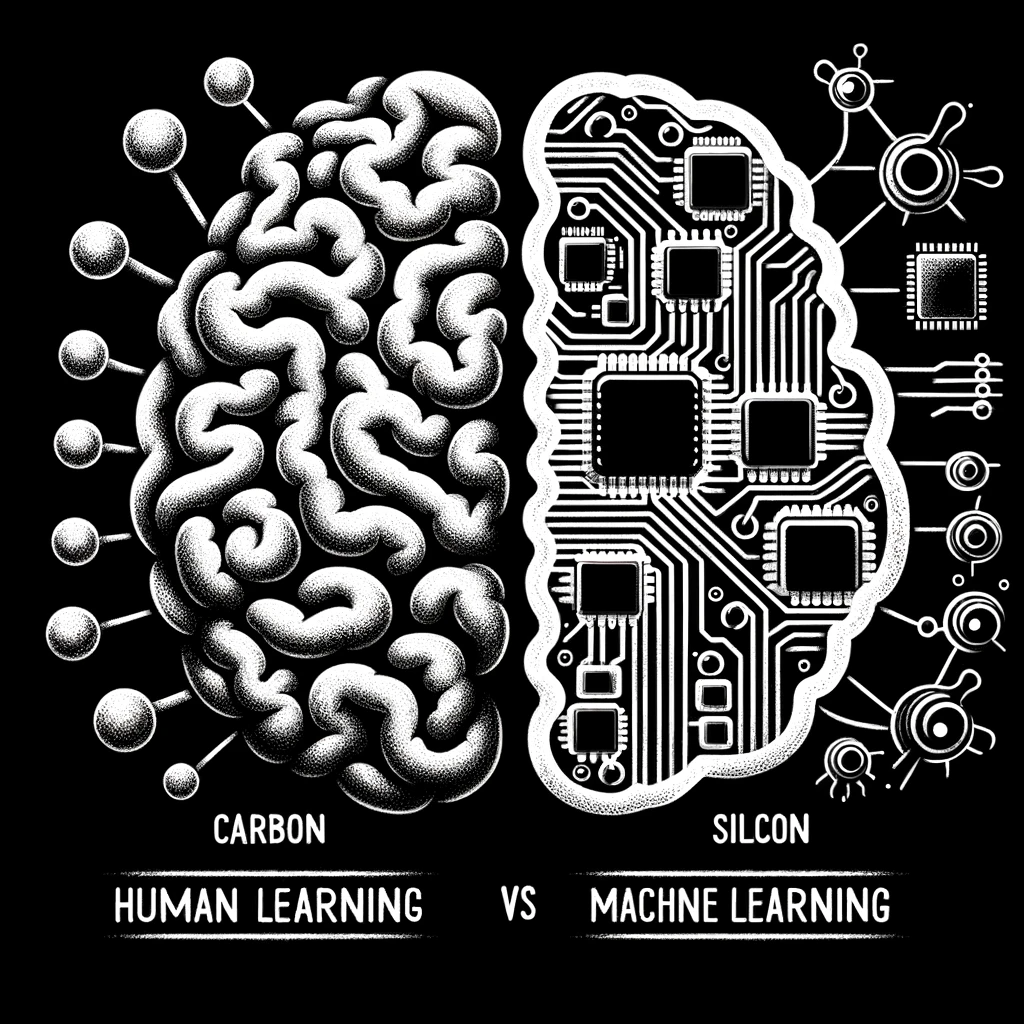
dall-e%203%3A%20%22illustration%20on%20black%20background%20elucidating%20difference%20between%20carbon-based%20process%20of%20human%2Forganic%20learning%20and%20silicon-based%20process%20of%20machine%20learning.%20do%20not%20use%20light%20bulbs%22

dall-e 3: "illustration on black background elucidating difference between carbon-based process of human/organic learning and silicon-based process of machine learning. do not use light bulbs"
On the material level, human biochemistry-based learning is fundamentally different from machine learning taking place on silicon-based transistors.

HMPL

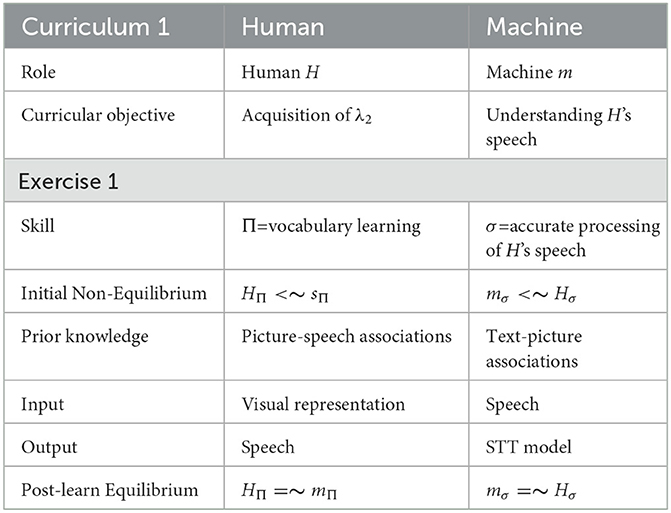
Table%201%20from%20article%20Hromada%20%26%20Kim%20(2023)%20Frontiers%20in%20Education

Table 1 from article Hromada & Kim (2023) Frontiers in Education

A human-machine peer learning curriculum (i.e., a HMPL-C) is a planned sequence of educational instructions–i.e., a curriculum–which involves:
1. At least one human learner G, H, I, ... which gradually develops her/his/their skill Γ.
2. At least one artificial learner a, b, c, ... which gradually develops its/her/his/their skill σ.
3. Activities by means of which G (resp. H, I, etc.) develops her/his/their skill Γ, which directly involve knowledge and competence exhibited by a (resp. b, c, etc.).
4. Activities by means of which a (resp. b, c, etc.) develops her/his/their skill σ, which directly involve knowledge and competence exhibited by G (resp. H, I, etc.).