i
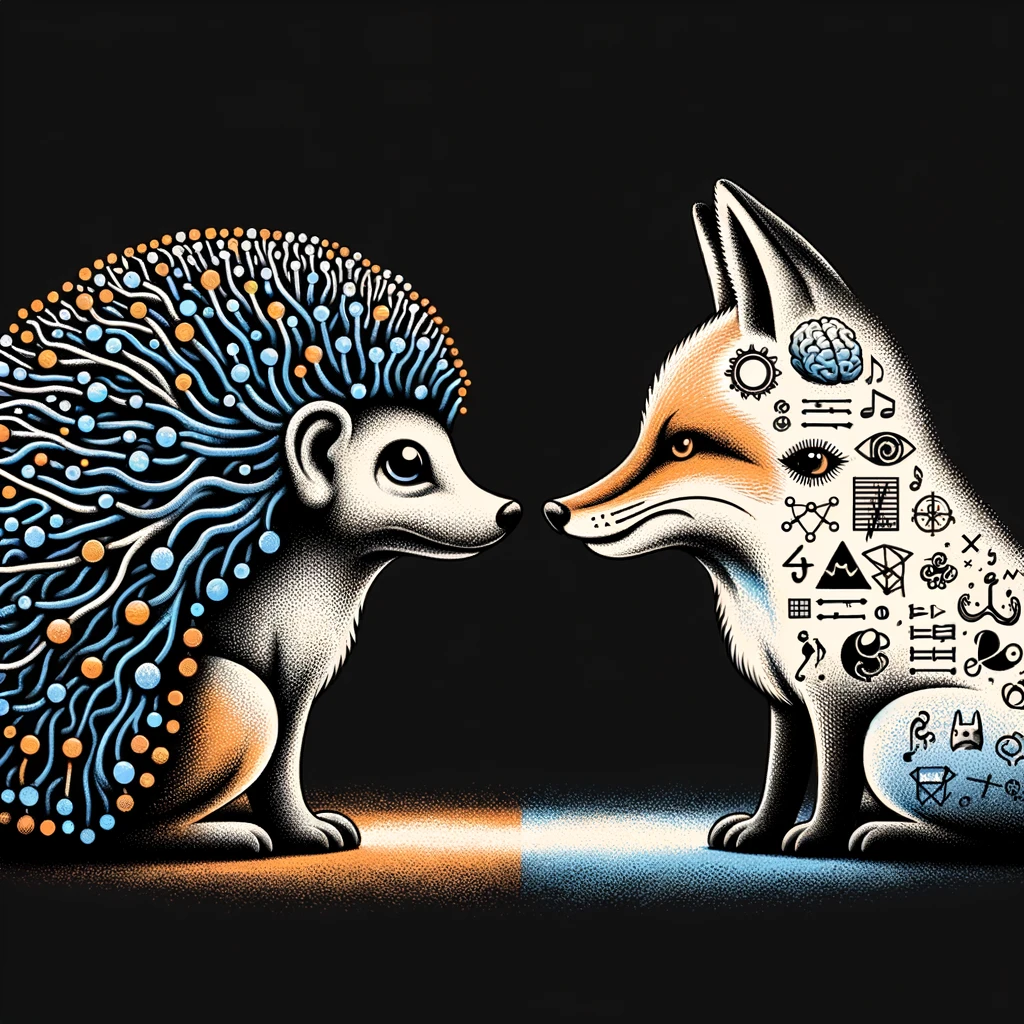
Hedgehogs and foxes DDH ()


Hedgehogs and foxes

πόλλ' οἶδ' ἀλώπηξ, ἀλλ' ἐχῖνος ἓν μέγα

Multa novit vulpes, verum echinus unum magnum

"a fox knows many things, but a hedgehog knows one big thing"

The Cat & The Fox

Once a Cat and a Fox were traveling together. As they went along, picking up provisions on the way—a stray mouse here, a fat chicken there—they began an argument to while away the time between bites. And, as usually happens when comrades argue, the talk began to get personal.

"You think you are extremely clever, don't you?" said the Fox. "Do you pretend to know more than I? Why, I know a whole sackful of tricks!"

"Well," retorted the Cat, "I admit I know one trick only, but that one, let me tell you, is worth a thousand of yours!"

Just then, close by, they heard a hunter's horn and the yelping of a pack of hounds. In an instant the Cat was up a tree, hiding among the leaves.

"This is my trick," he called to the Fox. "Now let me see what yours are worth."

But the Fox had so many plans for escape he could not decide which one to try first. He dodged here and there with the hounds at his heels. He doubled on his tracks, he ran at top speed, he entered a dozen burrows,—but all in vain. The hounds caught him, and soon put an end to the boaster and all his tricks.


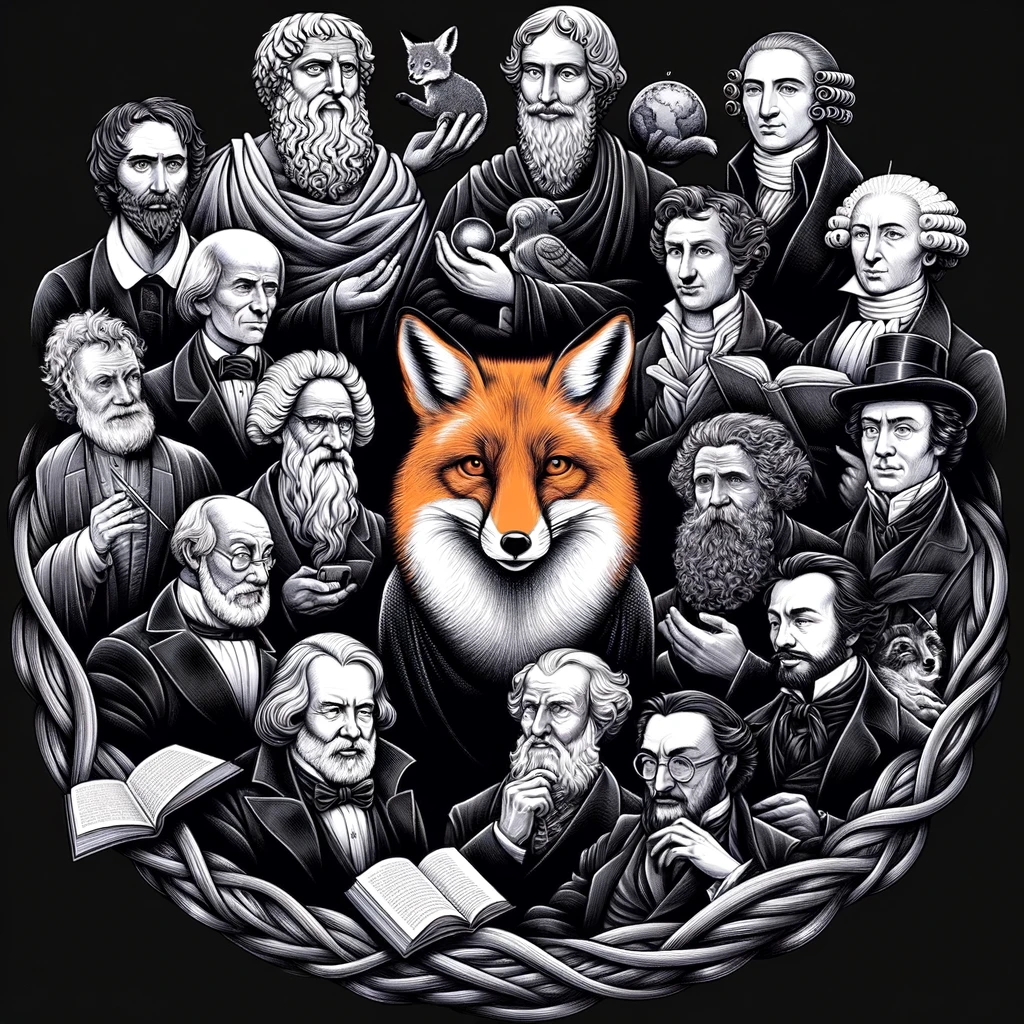
Foxes

Foxes draw on a wide variety of experiences. For foxes, the world cannot be boiled down to a single idea.

Berlin's examples from literature and philosophy: Herodotus, Aristotle, Desiderius Erasmus, William Shakespeare, Michel de Montaigne, Molière, Johann Wolfgang Goethe, Aleksandr Pushkin, Honoré de Balzac, James Joyce etc.

Fox theories of intelligence

Fox theories argue that intelligence is not a single, unitary quality but rather a collection of several distinct types of intelligences.

Howard Gardner's Theory of multiple intelligence is a fox theory par excellence.

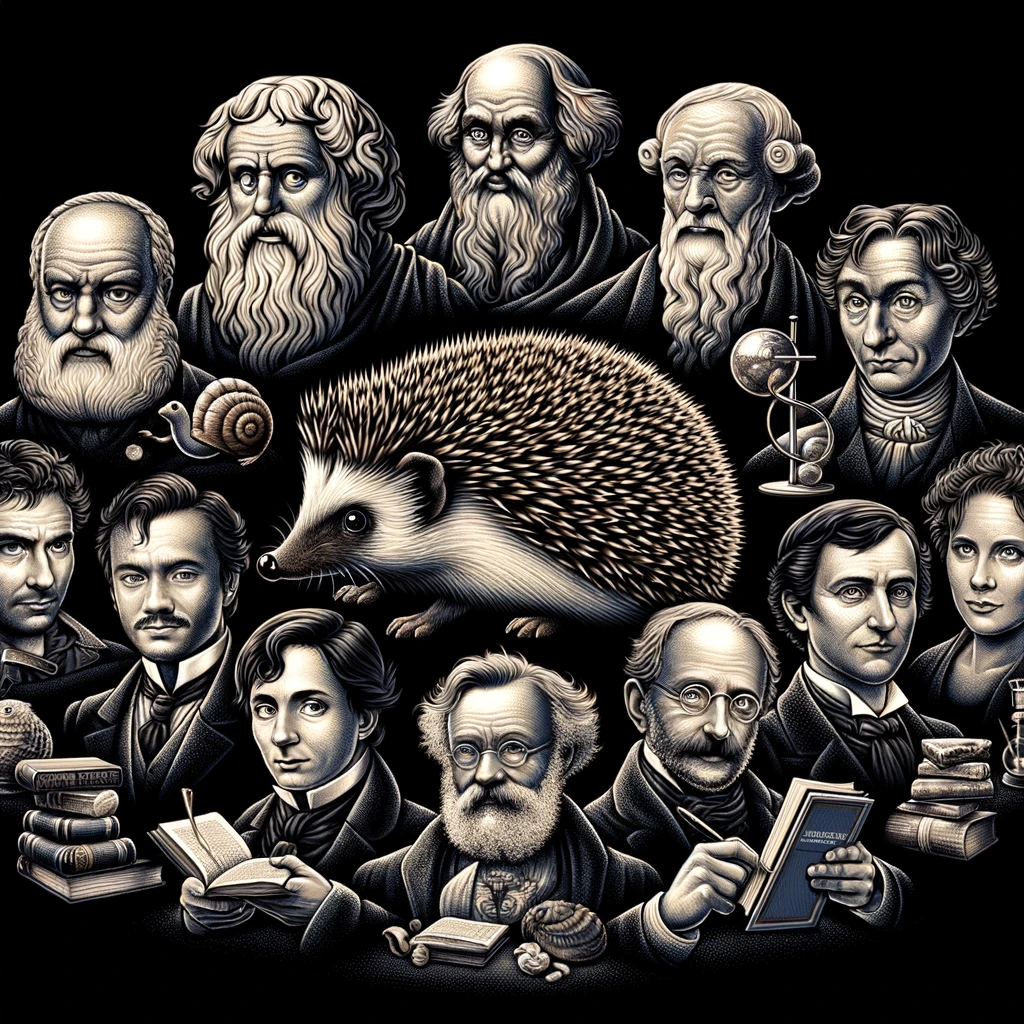
Hedgehogs

Hedgehogs view the world through the lens of a single defining idea.

Isaiah Berlin gives following examples in domains of art and philosophy: Plato, Lucretius, Dante Alighieri, Blaise Pascal, Georg Wilhelm Friedrich Hegel, Fyodor Dostoyevsky, Friedrich Nietzsche, Henrik Ibsen, Marcel Proust and Fernand Braudel.

Hedgehog theories of intelligence

Hedgehogs would represent individuals or theories that focus on a single type of intelligence or a unifying principle of intelligence. Traditional views of intelligence, such as IQ tests, often fall into this category, as they tend to measure a narrow set of abilities.

Questio

Are You a hedgehog or a fox ?