i
Piaget DDH ()


Piaget

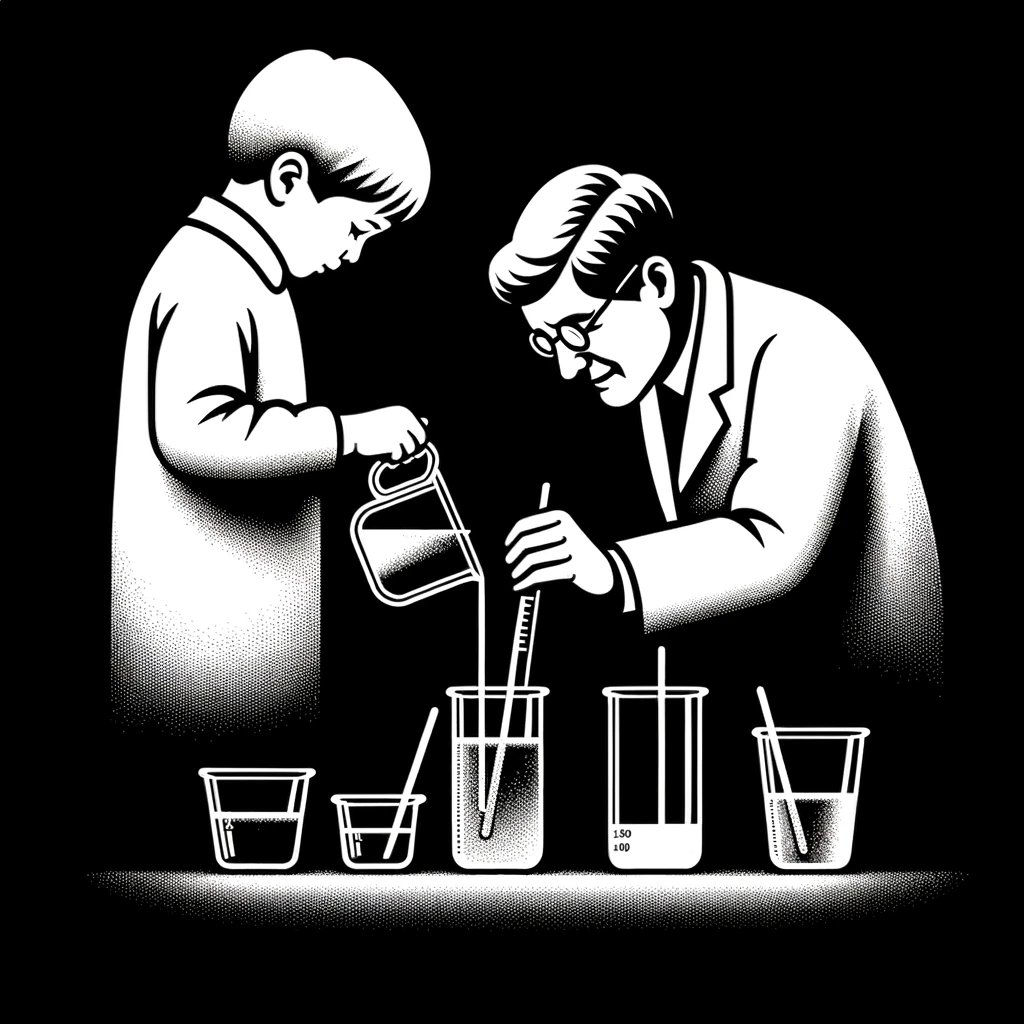
Illustration%20of%20jean%20piaget%20making%20and%20his%20son%20performing%20his%20famous%20experiment%20with%20water%20conservation%20in%20different%20glasses

Illustration of jean piaget making and his son performing his famous experiment with water conservation in different glasses

Jean Piaget (1896-1980) was a Swiss developmental psychologist and philosopher best known for his pioneering work in the study of child development and his theory of cognitive development.  He studied natural sciences at the University of Neuchâtel and later obtained a Ph.D. in zoology. However, his professional trajectory shifted when he began working at the Binet Institute in Paris, where he was tasked with standardizing intelligence tests for children. Through his observations, Piaget became intrigued by the systematic errors made by children, leading him to hypothesize that children think differently than adults. This marked the beginning of his extensive research into the nature and development of human intelligence.

Intelligence as reorganization of experience

"Piaget defined intelligence as an individual's ability to cope with the changing world through continuous organization and reorganization of experience. Reasoning is the essence of intelligence, and it is those reasoning processes which Piaget studied in order to discover how we know." (The Piaget Primer, p. 13)

Assimilation & Accomodation

Assimilation is the process of taking in new information and fitting it into a preconceived notion about objects or the world.

Accomodation means adjusting to new experience or objects by revising the old plan to fit the new information.

Schema

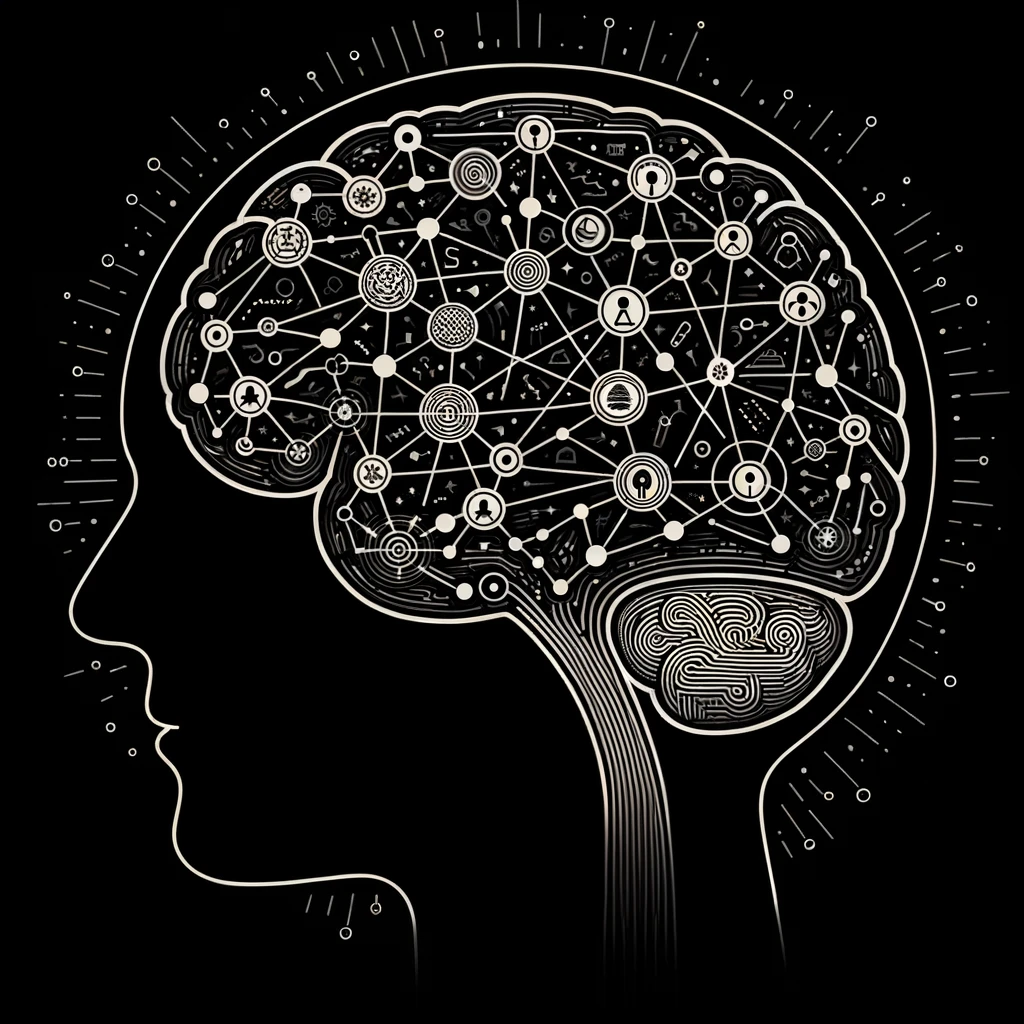
illustration%20of%20a%20cognitive%20schema

illustration of a cognitive schema

"Schema (pl. schemata) is a simple mental image or pattern of action, a form of organizing information that a person uses to interpret the things she sees, hears, smells and touches." (The Piaget Primer, p. 17)

In modern cognitive sciences, we more often use the term mental|cognitive|internal "representations" (C-representations = comprehension|understanding representations; P-representations = production|action representations)

Adaptation

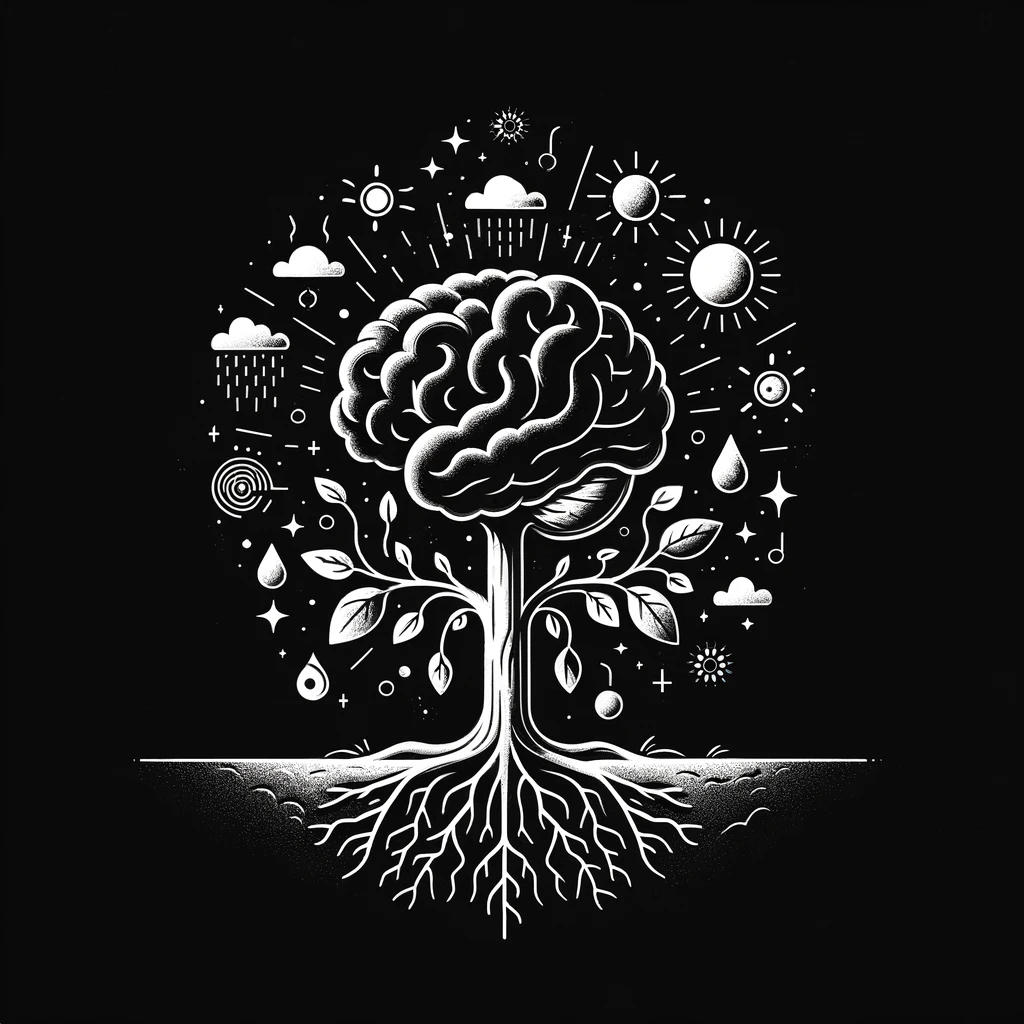
illustration%20of%20adaptation%20of%20developing%20mind%20to%20its%20environment

illustration of adaptation of developing mind to its environment

"Adaptation is a process of seeking an equilibrium between the self and the environment. This equilibrium, or equilibriation as Piaget refers to it, is a balance between the process of assimilation and accomodation." (The Piaget Primer, p.18)

"Over time, as these processes of assimilation and accommodation repeat and compound, they lead to major shifts in understanding—ushering children into a new developmental stage." (GPT4)

Stages of cognitive development


(0-2 years) Sensory - Motor Stage

In this stage, infants and toddlers learn primarily through sensory experiences and manipulating objects. Their understanding of the world is based on physical interactions and experiences. A key characteristic of this stage is the development of object permanence, the understanding that objects continue to exist even when they cannot be seen, heard, or touched. Initially, infants act as if objects removed from their view cease to exist, but by the end of this stage, they start to search for hidden objects, demonstrating their grasp of object permanence. Motor skills also develop significantly during this stage. As infants interact with their environment, they learn to coordinate their sensory experiences (such as seeing and hearing) with physical, motor actions. This stage lays the foundation for further cognitive development, as it helps children understand the world around them through physical interaction and sensory exploration.


(3-7 years) Preoperational Stage

During Preoperational Stage, children experience rapid language growth, symbol use, and imaginative play, but their thinking remains egocentric and intuitive, not logical. They struggle with understanding different perspectives, often assuming others see, think, and feel the same as they do. This stage also features the development of symbolic function, allowing them to represent objects and events with words or images. However, children in this stage lack the ability to perform operations, which are internalized mental actions that obey logical rules, such as conservation tasks. They tend to focus on one aspect of a situation, a phenomenon known as centration, and struggle with understanding that certain properties of objects remain constant despite changes in their form or appearance.

(7 - 11 years) Stage of Concrete Operations

In stage of concrete operations, children begin to think logically about concrete events. They gain a better understanding of the concept of conservation — the idea that quantity remains the same despite changes in shape or arrangement. This reflects their growing ability to decenter, or consider multiple aspects of a situation simultaneously. Children in the concrete operational stage also start to understand reversibility, recognizing that objects can be changed and then returned to their original form. They can classify items into different sets and subsets and understand their relationship, an ability known as class inclusion. At this stage, children are better at problem-solving, especially for tangible, real-life problems, but they still struggle with abstract and hypothetical thinking. Their reasoning is very much tied to concrete, physical reality, hence the term 'concrete operations'.

(11 - 16 years)  Stage of Formal Operations

Stage of formal operations represents the culmination of a child's cognitive development. In this stage, adolescents develop the ability to think abstractly and reason hypothetically. They are no longer limited to concrete, tangible concepts and can conceptualize ideas and possibilities that extend beyond their immediate experience. This stage is characterized by the emergence of deductive reasoning, where adolescents can develop hypotheses and systematically test them. They start to think about theoretical possibilities and can understand abstract concepts like justice, love, and free will. Their problem-solving abilities become more systematic and logical, including the ability to consider multiple variables and potential outcomes. Adolescents in the formal operational stage also exhibit metacognition – the ability to think about their own thought processes. This self-reflection enables them to analyze their reasoning and the conclusions they reach, enhancing their ability to learn and adapt.